

What do you think?

Lincoln at Gettysburg: The Words That Remade America
In a masterly work, Garry Wills shows how Lincoln reached back to the Declaration of Independence to write the greatest speech in the nation’s history.
The power of words has rarely been given a more compelling demonstration than in the Gettysburg Address. Lincoln was asked to memorialize the gruesome battle. Instead he gave the whole nation “a new birth of freedom” in the space of a mere 272 words. His entire life and previous training and his deep political experience went into this, his revolutionary masterpiece.
By examining both the address and Lincoln in their historical moment and cultural frame, Wills breathes new life into words we thought we knew, and reveals much about a president so mythologized but often misunderstood. Wills shows how Lincoln came to change the world and to effect an intellectual revolution, how his words had to and did complete the work of the guns, and how Lincoln wove a spell that has not yet been broken.
The power of words has rarely been given a more compelling demonstration than in the Gettysburg Address. Lincoln was asked to memorialize the gruesome battle. Instead he gave the whole nation “a new birth of freedom” in the space of a mere 272 words. His entire life and previous training and his deep political experience went into this, his revolutionary masterpiece.
By examining both the address and Lincoln in their historical moment and cultural frame, Wills breathes new life into words we thought we knew, and reveals much about a president so mythologized but often misunderstood. Wills shows how Lincoln came to change the world and to effect an intellectual revolution, how his words had to and did complete the work of the guns, and how Lincoln wove a spell that has not yet been broken.
320 pages, Paperback
First published January 1, 1992
About the author
Garry Wills
105 books267 followersGarry Wills is an American author, journalist, political philosopher, and historian, specializing in American history, politics, and religion, especially the history of the Catholic Church. He won a Pulitzer Prize for General Non-Fiction in 1993.
Wills has written over fifty books and, since 1973, has been a frequent reviewer for The New York Review of Books. He became a faculty member of the history department at Northwestern University in 1980, where he is an Emeritus Professor of History.
Wills has written over fifty books and, since 1973, has been a frequent reviewer for The New York Review of Books. He became a faculty member of the history department at Northwestern University in 1980, where he is an Emeritus Professor of History.
Ratings & Reviews
Friends & Following
Create a free account to discover what your friends think of this book!
Community Reviews
Displaying 1 - 30 of 336 reviews

November 19, 2015
Lincoln and Gettysburg have been inextricably interlinked ever since November 19, 1863 -- the day that Abraham Lincoln delivered his dedication address for the newly completed National Cemetery at Gettysburg. Four months had passed since the tremendous battle of July 1-3 had turned the tide of civil war permanently in the Union's favor, albeit at an exceedingly high cost -- 46,000 casualties, including almost 8,000 soldiers killed. It is now a matter of record that President Lincoln's Gettysburg Address put the Civil War on a new moral footing, gave it new meaning. Many authors have told that story before; but none, to my mind, has done so as well as Garry Wills in his Pulitzer Prize-winning 1993 book Lincoln at Gettysburg.
Wills, a prolific author who brings his formidable intellect and erudition to a wide range of historical topics, is particularly well-qualified to write about Abraham Lincoln and the Gettysburg Address. One of his most notable earlier books is Inventing America: Jefferson's Declaration of Independence (1978); and, as Wills points out, the links between the Declaration of Independence and the Gettysburg Address are many and strong. Lincoln revered Jefferson as the greatest advocate of American liberty and saw the Declaration as the one indispensable American text.
While the United States Constitution of 1787 contained indirect references to slavery, in a manner that showed how uncomfortable the Framers at Philadelphia were as they sought to address the existence of slavery in a new nation dedicated to liberty, Lincoln felt that "the Declaration somehow escaped the constraints that bound the Constitution. It was free to state an ideal that transcended its age, one that serves as a touchstone for later strivings" (p. 102). It is no accident that the Gettysburg Address begins with that four-score-and-seven-years ago reference to the Declaration.
Yet Lincoln at Gettysburg is not all about the DOI: far from it. Wills sets the Gettysburg Address within a cultural and historical context that encompasses Transcendentalism, Greek Revival culture, and the 19th century's striking attitudes regarding death and mourning.
For Wills, the Gettysburg Address goes beyond the Declaration, redefines the Declaration, in the American mind. It is for this reason that the book has the subtitle The Words That Remade America, as Wills makes clear in passages like this one:
"The Gettysburg Address has become an authoritative expression of the American spirit -- as authoritative as the Declaration itself, and perhaps even more influential, since it determines how we read the Declaration. For most people now, the Declaration means what Lincoln told us it means, as a way of correcting the Constitution itself without overthrowing it....By accepting the Gettysburg Address, its concept of a single people dedicated to a proposition, we have been changed. Because of it, we live in a different America." (pp. 146-47)
The book's epilogues and appendices are every bit as helpful as its core content. One epilogue, titled "The Other Address," relates the Gettysburg to Lincoln's other best-known address -- his Second Inaugural Address of March 4, 1865, itself the subject of another magnificent study, Ronald White's Lincoln's Greatest Speech (2003).
Edward Everett's two-hour oration from the cemetery dedication is here as well; it's perfectly passable, but seems bland and ordinary when Everett's words are compared with Lincoln's. Willis characterizes well the differences between the two addresses. Everett, with his formal classical education, "hoped to accomplish something like the impact of Greek drama" (p. 51). By contrast, Wills suggests, "Lincoln sensed, from his own developed artistry, the demands that bring forth classic art - compression, grasp of the essential, balance, ideality, an awareness of the deepest polarities in the situation (life for the city coming from the death of its citizens)" (p. 52). Everett was a scholar; Lincoln was both scholar (albeit self-taught) and artist.
You can even read the Athenian leader Pericles' renowned funeral oration from 431 B.C., the first year of the Peloponnesian War; as Wills notes, Pericles' oration from classical times had a marked influence on the attitudes toward military heroism and death that existed in Lincoln's time. Yet one can also see how Pericles' praises of Athenian democracy - "By title we are a democracy, since the many, not just the few, participate in governing, and citizens are equal in their legal dealings with each other" (p. 250) - may have influenced Lincoln's belief in American democracy.
Today, the Gettysburg Address is just as famous as the battle that prompted it, to the point that "Tourists, arriving at the military cemetery in Gettysburg, almost always ask where Lincoln was standing as he gave the Address. National Park Service markers have for years indicated the obvious place, where the tall column of the Soldiers' National Monument now stands" (p. 205).
Whether President Lincoln actually delivered the Address there or not, the Gettysburg Address remains an essential document of American democracy; and Lincoln at Gettysburg: The Words That Remade America is essential reading for anyone with an interest in Civil War history, Lincoln studies, or American history generally.
Wills, a prolific author who brings his formidable intellect and erudition to a wide range of historical topics, is particularly well-qualified to write about Abraham Lincoln and the Gettysburg Address. One of his most notable earlier books is Inventing America: Jefferson's Declaration of Independence (1978); and, as Wills points out, the links between the Declaration of Independence and the Gettysburg Address are many and strong. Lincoln revered Jefferson as the greatest advocate of American liberty and saw the Declaration as the one indispensable American text.
While the United States Constitution of 1787 contained indirect references to slavery, in a manner that showed how uncomfortable the Framers at Philadelphia were as they sought to address the existence of slavery in a new nation dedicated to liberty, Lincoln felt that "the Declaration somehow escaped the constraints that bound the Constitution. It was free to state an ideal that transcended its age, one that serves as a touchstone for later strivings" (p. 102). It is no accident that the Gettysburg Address begins with that four-score-and-seven-years ago reference to the Declaration.
Yet Lincoln at Gettysburg is not all about the DOI: far from it. Wills sets the Gettysburg Address within a cultural and historical context that encompasses Transcendentalism, Greek Revival culture, and the 19th century's striking attitudes regarding death and mourning.
For Wills, the Gettysburg Address goes beyond the Declaration, redefines the Declaration, in the American mind. It is for this reason that the book has the subtitle The Words That Remade America, as Wills makes clear in passages like this one:
"The Gettysburg Address has become an authoritative expression of the American spirit -- as authoritative as the Declaration itself, and perhaps even more influential, since it determines how we read the Declaration. For most people now, the Declaration means what Lincoln told us it means, as a way of correcting the Constitution itself without overthrowing it....By accepting the Gettysburg Address, its concept of a single people dedicated to a proposition, we have been changed. Because of it, we live in a different America." (pp. 146-47)
The book's epilogues and appendices are every bit as helpful as its core content. One epilogue, titled "The Other Address," relates the Gettysburg to Lincoln's other best-known address -- his Second Inaugural Address of March 4, 1865, itself the subject of another magnificent study, Ronald White's Lincoln's Greatest Speech (2003).
Edward Everett's two-hour oration from the cemetery dedication is here as well; it's perfectly passable, but seems bland and ordinary when Everett's words are compared with Lincoln's. Willis characterizes well the differences between the two addresses. Everett, with his formal classical education, "hoped to accomplish something like the impact of Greek drama" (p. 51). By contrast, Wills suggests, "Lincoln sensed, from his own developed artistry, the demands that bring forth classic art - compression, grasp of the essential, balance, ideality, an awareness of the deepest polarities in the situation (life for the city coming from the death of its citizens)" (p. 52). Everett was a scholar; Lincoln was both scholar (albeit self-taught) and artist.
You can even read the Athenian leader Pericles' renowned funeral oration from 431 B.C., the first year of the Peloponnesian War; as Wills notes, Pericles' oration from classical times had a marked influence on the attitudes toward military heroism and death that existed in Lincoln's time. Yet one can also see how Pericles' praises of Athenian democracy - "By title we are a democracy, since the many, not just the few, participate in governing, and citizens are equal in their legal dealings with each other" (p. 250) - may have influenced Lincoln's belief in American democracy.
Today, the Gettysburg Address is just as famous as the battle that prompted it, to the point that "Tourists, arriving at the military cemetery in Gettysburg, almost always ask where Lincoln was standing as he gave the Address. National Park Service markers have for years indicated the obvious place, where the tall column of the Soldiers' National Monument now stands" (p. 205).
Whether President Lincoln actually delivered the Address there or not, the Gettysburg Address remains an essential document of American democracy; and Lincoln at Gettysburg: The Words That Remade America is essential reading for anyone with an interest in Civil War history, Lincoln studies, or American history generally.

October 29, 2019
With the Pulitzer Prize winning book, Lincoln at Gettysburg: The Words That Remade America Garry Wills performs a literary dissection of sorts of a prominent American document, examining both its structure & function in an exceedingly formal & intricate manner. The author looks at Abraham Lincoln's very brief 3 minute statement at Gettysburg in terms of the classic rhetorical formats of Greek & Rome.
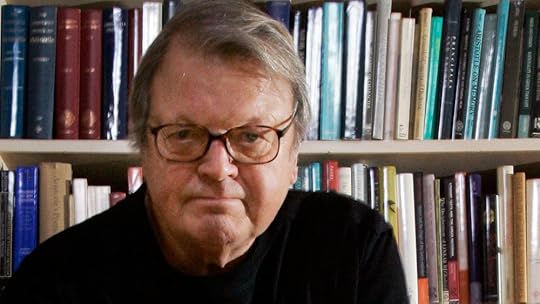
But beyond that, he juxtaposes Lincoln's comments with those of the president of Harvard University Edward Everett, who delivered a 2 hour "classical" address to the same audience. As Wills puts it, Everett's speech "embodied the calm reflection & grave authority of the statesman, as if he were using Greek ideals to explain America to Americans." Meanwhile, Lincoln was colloquial as well as brief, seemingly informal while representing a completely new & different rhetorical vanguard that was uniquely American in style & content.
The occasion was of course the aftermath of the Battle of Gettysburg, a turning point in the Civil War because it prevented the Confederacy from establishing a northern front, because of the size of the battle and the also because of the staggering loss of life involved. Both Everett & Lincoln spoke to honor the countless soldiers on both sides who died at the Battle of Gettysburg, with a new cemetery inaugurated as a final resting place for them. In fact, Wills talks about "cemetery culture" early on, indicating that Lincoln's speech to those assembled was not what they expected to hear from their president.
Thus, our "republican robe needed to be repurified" and Lincoln saw the Declaration of Independence replacing the gospel as an instrument of spiritual rebirth. The president refused to take a stance on the "intellectual inferiority of blacks to whites and astutely used one prejudice to counter another, comparing anti-slavery to anti-monarchism, while affording an "almost cult-like status" to the Declaration of Independence.
Curiously, the Gettysburg Address does not mention Gettysburg nor slavery nor even the union. In the address, Lincoln was "not aiming at Periclean effect as did Prof. Everett, for Lincoln was an artist, not just a scholar." More importantly, Lincoln's commentary at Gettysburg "created a political prose for America, to rank with the vernacular excellence of Mark Twain."
He sensed that many Americans revered (were prejudiced in favor of) the Declaration of Independence but many of them were also prejudiced in favor of slavery. Lincoln had a long tradition of arguing in ingenious ways, that "Americans must, in consistency, give up one or the other prejudice. For, the two could not exist in the same mind once their mutual enmity is recognized."

I found Wills' profiling Lincoln's ability as an "actor as well as a statesman" quite interesting, indicating that he had consistently used differing rhetorical stresses when speaking in downstate Illinois where southern sympathies prevailed than he employed in Chicago & other more northern precincts of the state.
Lincoln sought to speak of the Emancipation Proclamation as a "military measure", with Wills quoting Richard Hofstadter to say that the document had "all the moral grandeur of a bill of lading, containing no indictment of slavery but simply basing emancipation on military necessity".
To Lincoln's mind, just as the South could not unilaterally secede, the North could not unilaterally emancipate. Also & not just in the debates with Sen. Douglas, Lincoln was "accused of clever evasions & key silences."
Again, the fault lay with the Constitution's "imperfect treatment of slavery" with language that was considered shameful & at best provisional by Lincoln, meaning that slavery was meant to be abolished in due time. Thus, acco0rding to Lincoln, the Emancipation Proclamation did not free slaves in the nation at large but only in the theater of active insurrection & only as a "necessary war measure."
At Gettysburg, Lincoln not only did not but would not mention the document because "he meant to rise above the particular, the local & the divisive." Also, it is mentioned that until the Civil War, "the United States" was invariably a plural noun: "the United States are a free government." After Gettysburg, it became singular: "The United States is a free government." Wills stresses that
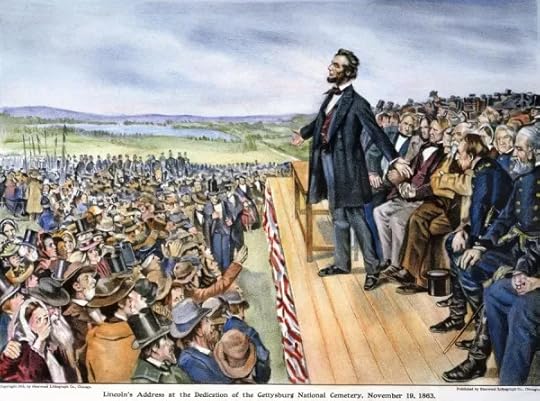
President Lincoln "spoke a modern language because he was dealing with a scientific age for which phrasings like "conceived in liberty" and "dedicated to a proposition" were appropriate. His speech is "economical, taut & interconnected" according to Wills and for Lincoln "words were weapons, even though he meant them to be weapons of peace in the midst of war. In his brief time before the crowd at Gettysburg, he wove a spell that has not, yet, been broken--he called up a new nation out of blood & trauma."
Lincoln at Gettysburg: The Words That Remade America provides a new frame for a document most Americans come to grapple with at some point in their education. It is a book based on a premise, one that is conveyed in the subtitle, coming with ample documentation by Garry Wills, though some may feel that his case is just a tad overstated.
I do quarrel with some of the terminology, including words such as: thanatopsic, autochthony, exordium, anaphora & archaize but then what are dictionaries &/or the Internet for but to be employed and some of the meanings can be guessed at within the specific context. Still, this reflection on Lincoln's Gettysburg Address is a rather scholarly work & may not be to everyone's taste.
*There are 70+ pages of appendices, including the Gettysburg Address itself & some variations on what reporters & others thought that he had said there. **Within my review, the 1st image is of the author, Garry Wills; the 2nd is an actual photo of Abraham Lincoln taken at Gettysburg; the 3rd. represents a painted recreation of that memorable speech.
But beyond that, he juxtaposes Lincoln's comments with those of the president of Harvard University Edward Everett, who delivered a 2 hour "classical" address to the same audience. As Wills puts it, Everett's speech "embodied the calm reflection & grave authority of the statesman, as if he were using Greek ideals to explain America to Americans." Meanwhile, Lincoln was colloquial as well as brief, seemingly informal while representing a completely new & different rhetorical vanguard that was uniquely American in style & content.
The occasion was of course the aftermath of the Battle of Gettysburg, a turning point in the Civil War because it prevented the Confederacy from establishing a northern front, because of the size of the battle and the also because of the staggering loss of life involved. Both Everett & Lincoln spoke to honor the countless soldiers on both sides who died at the Battle of Gettysburg, with a new cemetery inaugurated as a final resting place for them. In fact, Wills talks about "cemetery culture" early on, indicating that Lincoln's speech to those assembled was not what they expected to hear from their president.
Lincoln came not only to sweeten the air of Gettysburg but to clear the infected atmosphere of American history itself, tainted with official sins & inherited guilt. He would cleanse the Constitution by altering the document from within, by appeal from its letter to its spirit, subtly changing the recalcitrant stuff of that legal compromise, bringing it to its own indictment and by doing this, he performed one of the most daring of open air sleight-of-hand ever witnessed.For, as Garry Wills indicates, Lincoln was "an agnostic on slavery" but absolutely fanatical in his quest to preserve American unity. He commented that "My paramount object in this struggle is to save the union and not either to save or to destroy slavery." Beyond that, he realized that the American constitution was incomplete, espousing an ideal but not yet a reality.
The crowd departed with a new thing in its ideological luggage, that new Constitution Lincoln had substituted for the one they brought with them. Lincoln had revolutionized the Revolution, giving people a new past to live with that would change their future indefinitely.
Thus, our "republican robe needed to be repurified" and Lincoln saw the Declaration of Independence replacing the gospel as an instrument of spiritual rebirth. The president refused to take a stance on the "intellectual inferiority of blacks to whites and astutely used one prejudice to counter another, comparing anti-slavery to anti-monarchism, while affording an "almost cult-like status" to the Declaration of Independence.
Curiously, the Gettysburg Address does not mention Gettysburg nor slavery nor even the union. In the address, Lincoln was "not aiming at Periclean effect as did Prof. Everett, for Lincoln was an artist, not just a scholar." More importantly, Lincoln's commentary at Gettysburg "created a political prose for America, to rank with the vernacular excellence of Mark Twain."
He sensed that many Americans revered (were prejudiced in favor of) the Declaration of Independence but many of them were also prejudiced in favor of slavery. Lincoln had a long tradition of arguing in ingenious ways, that "Americans must, in consistency, give up one or the other prejudice. For, the two could not exist in the same mind once their mutual enmity is recognized."
I found Wills' profiling Lincoln's ability as an "actor as well as a statesman" quite interesting, indicating that he had consistently used differing rhetorical stresses when speaking in downstate Illinois where southern sympathies prevailed than he employed in Chicago & other more northern precincts of the state.
Lincoln sought to speak of the Emancipation Proclamation as a "military measure", with Wills quoting Richard Hofstadter to say that the document had "all the moral grandeur of a bill of lading, containing no indictment of slavery but simply basing emancipation on military necessity".
To Lincoln's mind, just as the South could not unilaterally secede, the North could not unilaterally emancipate. Also & not just in the debates with Sen. Douglas, Lincoln was "accused of clever evasions & key silences."
Again, the fault lay with the Constitution's "imperfect treatment of slavery" with language that was considered shameful & at best provisional by Lincoln, meaning that slavery was meant to be abolished in due time. Thus, acco0rding to Lincoln, the Emancipation Proclamation did not free slaves in the nation at large but only in the theater of active insurrection & only as a "necessary war measure."
At Gettysburg, Lincoln not only did not but would not mention the document because "he meant to rise above the particular, the local & the divisive." Also, it is mentioned that until the Civil War, "the United States" was invariably a plural noun: "the United States are a free government." After Gettysburg, it became singular: "The United States is a free government." Wills stresses that
The Gettysburg Address has become an authoritative expression of the American spirit--as authoritative as the Declaration itself, and perhaps even more influential because it determines how we read the Declaration.At the core of Abraham Lincoln's beliefs was his personal wish "that all men everywhere be free, that a House divided cannot endure, permanently half slave & half free." In Lincoln at Gettysburg Garry Wills indicates that in his use of the vernacular, Lincoln anticipates Mark Twain. And citing the brevity of the Gettysburg Address, there is a postwar quote from Mr. Twain about the need for brevity in any talk, indicating that "few sinners are saved after the first twenty minutes of a sermon."
For most Americans now, the Declaration means what Lincoln told us it means, as a way of correcting the Constitution itself without overthrowing it. It is this correction of the spirit, this intellectual revolution that is so important. By accepting the Gettysburg Address, its concept of a single people dedicated to a proposition, we have been changed. Because of it, we live in a different America.
President Lincoln "spoke a modern language because he was dealing with a scientific age for which phrasings like "conceived in liberty" and "dedicated to a proposition" were appropriate. His speech is "economical, taut & interconnected" according to Wills and for Lincoln "words were weapons, even though he meant them to be weapons of peace in the midst of war. In his brief time before the crowd at Gettysburg, he wove a spell that has not, yet, been broken--he called up a new nation out of blood & trauma."
Lincoln at Gettysburg: The Words That Remade America provides a new frame for a document most Americans come to grapple with at some point in their education. It is a book based on a premise, one that is conveyed in the subtitle, coming with ample documentation by Garry Wills, though some may feel that his case is just a tad overstated.
I do quarrel with some of the terminology, including words such as: thanatopsic, autochthony, exordium, anaphora & archaize but then what are dictionaries &/or the Internet for but to be employed and some of the meanings can be guessed at within the specific context. Still, this reflection on Lincoln's Gettysburg Address is a rather scholarly work & may not be to everyone's taste.
*There are 70+ pages of appendices, including the Gettysburg Address itself & some variations on what reporters & others thought that he had said there. **Within my review, the 1st image is of the author, Garry Wills; the 2nd is an actual photo of Abraham Lincoln taken at Gettysburg; the 3rd. represents a painted recreation of that memorable speech.

March 25, 2015
A REVIEW in 292:

Fundamentally, the thing I love about criticism is the ability to read a damn fine book about a damn fine speech and recognize the author of the book wrote a little more than a page for every word in the Gettysburg Address. If you count appendixes and notes (and why wouldn't you when the appendix and notes matter?).
I once teased my wife, during my early wooing stage, that I wanted to write an ode to every hair on her head (loads of odes). Garry Wills did. This book is both academic criticism (one chapter is infused with new historicism, one is textual criticism, one is formalist, one is mythological) and an ode to Lincoln, Language, and this damn fine speech. I could see Garry Wills publishing each chapter in some well-funded Civil War journal and eventually weaving each paper together. I'm not sure how it really happened. Wills might just have used the chapters and forms of literary criticism as an organizational framework. I am not going to do an exegesis on the book to find out. That would be far too meta.
Anyway, it was a quick and fascinating read and significantly deepened my understanding of Lincoln's motives for the speech while also acting as an Entmythologisierung* of the text. No. Lincoln did not write the text on the back of a napkin while on a train TO Gettysburg. Anyway, a must read for those who love history, the Civil War, Abraham Lincoln, or Transcendentalism.
* I'm using the German here as a joke, since there were several instances when Wills referenced Everett bringing back the seeds of Transcendentalism and higher criticism from his studies there. I'm also using it because it is 1.5x as fun as just saying demystification.
Fundamentally, the thing I love about criticism is the ability to read a damn fine book about a damn fine speech and recognize the author of the book wrote a little more than a page for every word in the Gettysburg Address. If you count appendixes and notes (and why wouldn't you when the appendix and notes matter?).
I once teased my wife, during my early wooing stage, that I wanted to write an ode to every hair on her head (loads of odes). Garry Wills did. This book is both academic criticism (one chapter is infused with new historicism, one is textual criticism, one is formalist, one is mythological) and an ode to Lincoln, Language, and this damn fine speech. I could see Garry Wills publishing each chapter in some well-funded Civil War journal and eventually weaving each paper together. I'm not sure how it really happened. Wills might just have used the chapters and forms of literary criticism as an organizational framework. I am not going to do an exegesis on the book to find out. That would be far too meta.
Anyway, it was a quick and fascinating read and significantly deepened my understanding of Lincoln's motives for the speech while also acting as an Entmythologisierung* of the text. No. Lincoln did not write the text on the back of a napkin while on a train TO Gettysburg. Anyway, a must read for those who love history, the Civil War, Abraham Lincoln, or Transcendentalism.
* I'm using the German here as a joke, since there were several instances when Wills referenced Everett bringing back the seeds of Transcendentalism and higher criticism from his studies there. I'm also using it because it is 1.5x as fun as just saying demystification.

November 23, 2017
A New Birth Of Freedom
The Battle of Gettysburg, a pivotal event in the Civil War, raged from July 1 to July 3, 1863. It was the largest battle ever fought in the Western Hemisphere and ended the Confederacy's second invasion of the North. Following the battle, the community of Gettysburg was thick with dead and wounded men. The Governor of Pennsylvania authorized the purchase of a cemetery for the reburial of the Union dead. The cemetery was dedicated in a ceremony on November 19, 1863. Edward Everett, a distinguished orator of the day, delivered a speech lasting over two hours. President Abraham Lincoln also accepted an invitation to deliver short remarks. His remarks of 272 became known as the Gettysburg Address. They constitute a seminal statement, and restatement of the American vision.
Garry Wills' study "Lincoln at Gettysburg" deserves the accolades it has received if for no other reason than it gave many readers the opportunity to read and think about the Gettysburg Address. This is a speech that is dulled and lost in childhood. It needs to be approached and rethought as an adult to get an understanding of the depth of Lincoln's message.
Wills sees the Gettysburg Address as recasting and remaking the American democratic experience. The speech expressly brings the hearer and reader back to the Declaration of Independence with its self-evident truth that "All men are created equal." This truth, Lincoln turns into a "proposition" on which our country was founded. (The Constitution, adopted thirteen years after the Declaration, countenances slavery and includes no language about human equality.) In his spare prose, Lincoln says little directly about the nature of "equality". Wills discusses the address and masterfully places it in the context of Lincoln's earlier speeches to help the reader understand the development of Lincoln's ideas on slavery, the antithesis of human equality.
The Gettysburg Address also sounded the theme of the United States as a single undivided nation rather than a union or confederation of States. Wills shows how this theme too derives from the Declaration, when the people of the colonies rose up in unity to declare their Independence from Britain. Wills also reminds the reader of the sources of the idea of Nationhood in American history. He alludes to the Federalism of Chief Justice John Marshall and Justice Joseph Story. In particular, Wills discusses the Webster-Hayne debates. Lincoln greatly admired Webster as well as his fellow Whig, Henry Clay. Webster uttered the famous line "Liberty and Union, now and forever, one and inseparable," which resonates through the Gettysburg Address.
Wills tries to show the influence on Lincoln's thought on the transcendentalism of Emerson and of Theodore Parker. I thought this one of the more challenging sections of the book. While the Declaration was born in the skepticism of British empiricism and of Deism, transcendentalism emphasized the ideal. The Declaration and the Address, and the American mission, Lincoln transformed into ideal to be struggled for and realized by the living to commemorate the sacrifice of those who gave their lives to attain it.
The book also includes an excellent treatment of rhetoric and speech, tracing Lincoln's address back to Thucydides and Georgias and ending with the observation that it marked the beginning of modern American prose.
Wills' book encourages the reader to think about the Gettysburg Address and the great nature of the American political experiment. (Original review edited on Thanksgiving Day, November 23, 2017).
Robin Friedman
The Battle of Gettysburg, a pivotal event in the Civil War, raged from July 1 to July 3, 1863. It was the largest battle ever fought in the Western Hemisphere and ended the Confederacy's second invasion of the North. Following the battle, the community of Gettysburg was thick with dead and wounded men. The Governor of Pennsylvania authorized the purchase of a cemetery for the reburial of the Union dead. The cemetery was dedicated in a ceremony on November 19, 1863. Edward Everett, a distinguished orator of the day, delivered a speech lasting over two hours. President Abraham Lincoln also accepted an invitation to deliver short remarks. His remarks of 272 became known as the Gettysburg Address. They constitute a seminal statement, and restatement of the American vision.
Garry Wills' study "Lincoln at Gettysburg" deserves the accolades it has received if for no other reason than it gave many readers the opportunity to read and think about the Gettysburg Address. This is a speech that is dulled and lost in childhood. It needs to be approached and rethought as an adult to get an understanding of the depth of Lincoln's message.
Wills sees the Gettysburg Address as recasting and remaking the American democratic experience. The speech expressly brings the hearer and reader back to the Declaration of Independence with its self-evident truth that "All men are created equal." This truth, Lincoln turns into a "proposition" on which our country was founded. (The Constitution, adopted thirteen years after the Declaration, countenances slavery and includes no language about human equality.) In his spare prose, Lincoln says little directly about the nature of "equality". Wills discusses the address and masterfully places it in the context of Lincoln's earlier speeches to help the reader understand the development of Lincoln's ideas on slavery, the antithesis of human equality.
The Gettysburg Address also sounded the theme of the United States as a single undivided nation rather than a union or confederation of States. Wills shows how this theme too derives from the Declaration, when the people of the colonies rose up in unity to declare their Independence from Britain. Wills also reminds the reader of the sources of the idea of Nationhood in American history. He alludes to the Federalism of Chief Justice John Marshall and Justice Joseph Story. In particular, Wills discusses the Webster-Hayne debates. Lincoln greatly admired Webster as well as his fellow Whig, Henry Clay. Webster uttered the famous line "Liberty and Union, now and forever, one and inseparable," which resonates through the Gettysburg Address.
Wills tries to show the influence on Lincoln's thought on the transcendentalism of Emerson and of Theodore Parker. I thought this one of the more challenging sections of the book. While the Declaration was born in the skepticism of British empiricism and of Deism, transcendentalism emphasized the ideal. The Declaration and the Address, and the American mission, Lincoln transformed into ideal to be struggled for and realized by the living to commemorate the sacrifice of those who gave their lives to attain it.
The book also includes an excellent treatment of rhetoric and speech, tracing Lincoln's address back to Thucydides and Georgias and ending with the observation that it marked the beginning of modern American prose.
Wills' book encourages the reader to think about the Gettysburg Address and the great nature of the American political experiment. (Original review edited on Thanksgiving Day, November 23, 2017).
Robin Friedman

April 4, 2014
This year my "Reading Challenge" is to re-read 10 books to see how they hold up to my memory. There is quite a bit in this book that I forgot over 15 years.
If you asked me last week, I'd have told you it was about the use of rhetorical devices and how this style of oratory harkens back to the Greek tradition. I would not have remembered nor told you it shows how Lincoln recast the meaning of the war and fixed the Declaration of Independence as subordinate to Constitution (as noted in the title); nor would I have remembered how Wills shows the influence of the transcendentalists on Lincoln's thinking; nor would I have remembered much about the choice of venue.
Wills defines the founding generation's preference for Roman (a republic, fearful of the masses) imagery to the late nineteenth century's preference for Greek (a democracy with more suffrage) imagery. He shows the development of Lincoln's mood and thought through previous speeches and bits of Lincoln's poetry and a discussion of the (later) second Inaugural Address. There is quite a bit on the 19th century American experience of death (using the word "Victorian" only as an adjective for authors) and the cemetery movement.
I remembered that by not naming a person, the battlefield being dedicated or the battle fought there, "the North" or "the South" or any place, or even the Declaration of Independence which the oratory is about, he makes the piece timeless. By using nouns instead of referent pronouns he creates stirring images. By using of balance he makes it poetic. I did not remember how the war was recast in that "the great task before us" is not emancipation, but the perpetuation of self-government.
It's funny how the memory works. There are a few poems that Lincoln wrote and I did not remember any of them. Most of them are forgettable, but the poem on pp. 92-93 where Lincoln lays out his beliefs on race should not have been.
The contrast with oratory of its day is shown in the Appendix III in the speech delivered that same day by Pennsylvania Governor Everett. Also in Appendix III is an example of the Greek funeral oratory from which the style is derived.
Were I to have rated this book last week, I'd have given it 5 stars. While it is an important book and Wills brings a lot together, today I see it as a 4 star book. While the book is short and it is not pithy. The pieces on psychobiography and the section on the transcendental influence ramble.
If you asked me last week, I'd have told you it was about the use of rhetorical devices and how this style of oratory harkens back to the Greek tradition. I would not have remembered nor told you it shows how Lincoln recast the meaning of the war and fixed the Declaration of Independence as subordinate to Constitution (as noted in the title); nor would I have remembered how Wills shows the influence of the transcendentalists on Lincoln's thinking; nor would I have remembered much about the choice of venue.
Wills defines the founding generation's preference for Roman (a republic, fearful of the masses) imagery to the late nineteenth century's preference for Greek (a democracy with more suffrage) imagery. He shows the development of Lincoln's mood and thought through previous speeches and bits of Lincoln's poetry and a discussion of the (later) second Inaugural Address. There is quite a bit on the 19th century American experience of death (using the word "Victorian" only as an adjective for authors) and the cemetery movement.
I remembered that by not naming a person, the battlefield being dedicated or the battle fought there, "the North" or "the South" or any place, or even the Declaration of Independence which the oratory is about, he makes the piece timeless. By using nouns instead of referent pronouns he creates stirring images. By using of balance he makes it poetic. I did not remember how the war was recast in that "the great task before us" is not emancipation, but the perpetuation of self-government.
It's funny how the memory works. There are a few poems that Lincoln wrote and I did not remember any of them. Most of them are forgettable, but the poem on pp. 92-93 where Lincoln lays out his beliefs on race should not have been.
The contrast with oratory of its day is shown in the Appendix III in the speech delivered that same day by Pennsylvania Governor Everett. Also in Appendix III is an example of the Greek funeral oratory from which the style is derived.
Were I to have rated this book last week, I'd have given it 5 stars. While it is an important book and Wills brings a lot together, today I see it as a 4 star book. While the book is short and it is not pithy. The pieces on psychobiography and the section on the transcendental influence ramble.

May 2, 2010
Lincoln was a “radical” in both senses: he broke with tradition by returning to the roots. The heart of Wills’s book is Lincoln’s elevation of the Declaration of Independence as a transcendental text above the earthly and provisional Constitution. The Constitution, with its tolerance of slavery, was felt by Lincoln and other transcendentalist political thinkers to require renewal by the Declaration, whose unequivocal proposition of equality for all constitutes the moral center of the American system, the American Idea in timeless and transcendent form. (Lincoln, like Emerson, was very much concerned with the ebb and flow of spiritual life in and out of established institutions.)
Wills argues that we owe to Lincoln our sense of a Constitution vividly informed and regularly amended by the people’s progressive approximation of a transcendent ideal. Wills also kicks over a few rocks to show us the judicial conservatives, “strict constructionists” and Neo-Confederate ideologues—Americans hostile to America’s founding ideals, statistically inevitable dregs and degenerates—who to this day begrudge Lincoln for making universal equality integral to the peoples’ conception of their Constitution. American bigots and subjectionists hate that there’s a potent liberation ideology built into the system. That must be so annoying.
The polished pearl of Lincoln’s constitutional thinking, the Gettysburg Address is also, of course, a funeral oration Lincoln delivered at the cemetery where 3,512 Union soldiers killed at the battle of Gettysburg are buried, and therefore it has its fascinating social-literary situation in “nineteenth century oratory, funerary conventions, and the poetry of death.” The Address’s birth-death-rebirth imagery and rhetorical reliance on antithesis, its brevity, abstraction and dense concision, show Lincoln consciously imitating the Athenian funeral oration, the Epitaphios Logos most memorably delivered by Pericles after the first year of the Peloponnesian War (Wills even writes of the Address as having “the chaste and graven quality of an Attic frieze”).
I love seeing American usage and institutions springing from the deep humanist culture of its founders and re-founders. The founders feared direct democracy, and focused their humanism on the Roman Republic; nineteenth century Americans preened themselves as heirs of democratic Athens, made Greek Revival the first truly national architectural style, and were, like much of Europe, enthralled by the Greek struggle for independence from the Ottomans. Edward Everett—the main event of the Gettysburg ceremony, not Lincoln—was “the voice of fashionably Romantic Hellenism” who had made his career speaking at fundraisers for Greek independence and delivering Periclean orations at Revolutionary War battlefields.
The location of the Athenian Kerameikos outside the city walls, in precincts of contemplative rusticity, near the groves of the Academy, inspired the “rural cemetery movement” across America, a movement of which the Gettysburg National Cemetery is a famous product (others are Boston’s Mount Auburn, which drew 30,000 visitors a year; and Concord’s Sleepy Hollow, whose dedication Emerson delivered). The Greek rural cemetery’s “pantheistic identification of dissolution with initiation,” and the Greek view of patriot graves as ideal educative sites for the young caught on with nineteenth century Americans for a variety of reasons:
1. The waning of traditional religion before the Transcendentalist cult of nature (the “theological gloom” of the churchyard and the cathedral vault exchanged for picturesque open-air sublimity, landscape-as-church).
2.The necrophiliac aspects of Romanticism, and the Romantic association of melancholy with genius, mourning with profundity (Lincoln’s law partner Herndon: “His apparent gloom impressed his friends, and created sympathy for him—one means of his great success”).
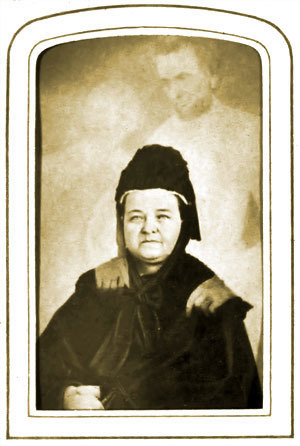
3. The limnality fetish—séances, spirit photography, dead babies with angel headstones (Mary Lincoln conducted séances in the White House, and later had a spirit photograph taken in which the ghost of her assassinated husband leans over her protectively).
A selection of morbid Victoriana:
1.Mary and Abe’s spirit photo
2.Assassination spread in Harper’s Weekly
3.Lincoln’s hearse
4.Gettysburg dead
1.
2.[image error]
3.
4. [image error]
Wills argues that we owe to Lincoln our sense of a Constitution vividly informed and regularly amended by the people’s progressive approximation of a transcendent ideal. Wills also kicks over a few rocks to show us the judicial conservatives, “strict constructionists” and Neo-Confederate ideologues—Americans hostile to America’s founding ideals, statistically inevitable dregs and degenerates—who to this day begrudge Lincoln for making universal equality integral to the peoples’ conception of their Constitution. American bigots and subjectionists hate that there’s a potent liberation ideology built into the system. That must be so annoying.
The polished pearl of Lincoln’s constitutional thinking, the Gettysburg Address is also, of course, a funeral oration Lincoln delivered at the cemetery where 3,512 Union soldiers killed at the battle of Gettysburg are buried, and therefore it has its fascinating social-literary situation in “nineteenth century oratory, funerary conventions, and the poetry of death.” The Address’s birth-death-rebirth imagery and rhetorical reliance on antithesis, its brevity, abstraction and dense concision, show Lincoln consciously imitating the Athenian funeral oration, the Epitaphios Logos most memorably delivered by Pericles after the first year of the Peloponnesian War (Wills even writes of the Address as having “the chaste and graven quality of an Attic frieze”).
I love seeing American usage and institutions springing from the deep humanist culture of its founders and re-founders. The founders feared direct democracy, and focused their humanism on the Roman Republic; nineteenth century Americans preened themselves as heirs of democratic Athens, made Greek Revival the first truly national architectural style, and were, like much of Europe, enthralled by the Greek struggle for independence from the Ottomans. Edward Everett—the main event of the Gettysburg ceremony, not Lincoln—was “the voice of fashionably Romantic Hellenism” who had made his career speaking at fundraisers for Greek independence and delivering Periclean orations at Revolutionary War battlefields.
The location of the Athenian Kerameikos outside the city walls, in precincts of contemplative rusticity, near the groves of the Academy, inspired the “rural cemetery movement” across America, a movement of which the Gettysburg National Cemetery is a famous product (others are Boston’s Mount Auburn, which drew 30,000 visitors a year; and Concord’s Sleepy Hollow, whose dedication Emerson delivered). The Greek rural cemetery’s “pantheistic identification of dissolution with initiation,” and the Greek view of patriot graves as ideal educative sites for the young caught on with nineteenth century Americans for a variety of reasons:
1. The waning of traditional religion before the Transcendentalist cult of nature (the “theological gloom” of the churchyard and the cathedral vault exchanged for picturesque open-air sublimity, landscape-as-church).
2.The necrophiliac aspects of Romanticism, and the Romantic association of melancholy with genius, mourning with profundity (Lincoln’s law partner Herndon: “His apparent gloom impressed his friends, and created sympathy for him—one means of his great success”).
3. The limnality fetish—séances, spirit photography, dead babies with angel headstones (Mary Lincoln conducted séances in the White House, and later had a spirit photograph taken in which the ghost of her assassinated husband leans over her protectively).
A selection of morbid Victoriana:
1.Mary and Abe’s spirit photo
2.Assassination spread in Harper’s Weekly
3.Lincoln’s hearse
4.Gettysburg dead
1.
2.[image error]
3.
4. [image error]

July 10, 2022
The prologue to this book is breathtaking. Civil War histories tell us about the Battle of Gettysburg, while Lincoln biographies tell us about his Gettysburg Address delivered four months later. Wills fills in the gap with a thorough and immersive look at everything that happened in between - the haphazard initial burials of the many bodies, the process of creating the cemetery, the daunting task of exhuming, identifying and reburying the bodies, the planning for the dedication ceremony, an account of Edward Everett’s often-overlooked oration that preceded Lincoln’s, and a bit of myth-busting in dispelling the popular notion that Everett’s speech was seen at the time as being overlong and overdone, or that Lincoln’s was seen as too short or slapdash.
The prologue is a bit deceiving, though. This is not a history book or a work of storytelling. It’s an intellectual exercise, analyzing the influences, content and context of Lincoln’s Gettysburg Address.
So with Chapter 1 comes a severe and abrupt change in tone. After the prologue’s captivating setup comes a deep, deep, deep, deep dive into the style and substance of ancient classical Greek oratory and how Lincoln echoed that style in his address. This subject matter is, well, Greek to me, but, hey, I’m willing to learn new things, so I dug in and read very carefully to try to discern how Wills aims to draw parallels between Pericles's Funeral Oration and Lincoln's Gettysburg Address. He makes the comparison in a rather broad context and in a manner that’s much more scholarly than accessible, though, so I had to pause and read a few "Ancient Athenians for Dummies"-type articles online about Lincoln and Pericles to better appreciate what Wills was going for here.
It’s all rather dense and slow going, but there are enough interesting nuggets to make a very close reading a rewarding experience. Wills explains the shift at the time away from the Revolutionary generation’s affinity for the ancient Romans, toward an appreciation for the ancient Greeks. So the Greek allusions in Everett’s oration and influences in Lincoln’s speech were much more apparent and appreciated then. Even the concept of a rural cemetery and the very word “cemetery” were derived from the Greeks. So Wills places the dedication ceremony in the context of its time, as part of the "recurrent rites of dedicating new parts of nature to the care of the dead," as opposed to previous generations' habit of conducting burials in dreary churchyards or dank crypts.
Later chapters show how Lincoln was influenced by Transcendentalists in his thinking about the country, the Declaration of Independence and its meaning, and what the concept of Union meant to Lincoln - all as a prelude to how he spoke of it in his Address.
The climactic chapter is ultimately where Wills kind of lost me. I was hoping, after all of this background and setup, that he would take us back to the scene and return to the storytelling style of the prologue. Instead, he thoroughly parses the Address but never returns the reader to the moment of its delivery (except in a second appendix, in which he describes later efforts to locate the spot from which Lincoln spoke).
And in analyzing the Address, he makes a whole lot of literary and antiquarian references that simply went over my head. I was able, with effort, to follow his earlier allusions to the ancient Greeks and the Transcendentalists. But here, he simply starts to assume knowledge on the part of the reader. To cite but one example, we learn that Lincoln, in an earlier piece of writing, once echoed "the poeticisms of Everett, the nature lore of Waugh's John Boot in Scoop, and the comic formality of Claudius and Gertrude." I couldn't tell if I didn't appreciate these references because of my own literary ignorance, or because Wills is being presumptuous or condescending, as though deigning to explain his references to anyone too ignorant to get them is somehow beneath him.
The book’s epilogue considers the Second Inaugural, which, with its themes of repentance and redemption, "complements and completes the Gettysburg Address." And a slew of appendices gives the impression of a book that doesn’t know where to end, and just keeps going until it peters out without a satisfying and definitive conclusion.
There is a lot to like about this book, though I respected it more than I loved it. Wills provides plenty of thought-provoking background and context, digs into the meaning and poetry of the Address, and provides appropriate attention to Everett’s address and his style of oration, which was appreciated at the time but, in preceding Lincoln’s radically different style of address, "was made obsolete within a half-hour of the time when it was spoken."
There is a difference, though, between dumbing something down and making it more accessible and understandable. I think Wills could have done the latter without doing the former. I’m glad this book exists and glad I read it, but - coming from someone who has read about three dozen Lincoln-related books in a row so far - this one may have been a slightly deeper dive into more esoteric areas than I bargained for.
The prologue is a bit deceiving, though. This is not a history book or a work of storytelling. It’s an intellectual exercise, analyzing the influences, content and context of Lincoln’s Gettysburg Address.
So with Chapter 1 comes a severe and abrupt change in tone. After the prologue’s captivating setup comes a deep, deep, deep, deep dive into the style and substance of ancient classical Greek oratory and how Lincoln echoed that style in his address. This subject matter is, well, Greek to me, but, hey, I’m willing to learn new things, so I dug in and read very carefully to try to discern how Wills aims to draw parallels between Pericles's Funeral Oration and Lincoln's Gettysburg Address. He makes the comparison in a rather broad context and in a manner that’s much more scholarly than accessible, though, so I had to pause and read a few "Ancient Athenians for Dummies"-type articles online about Lincoln and Pericles to better appreciate what Wills was going for here.
It’s all rather dense and slow going, but there are enough interesting nuggets to make a very close reading a rewarding experience. Wills explains the shift at the time away from the Revolutionary generation’s affinity for the ancient Romans, toward an appreciation for the ancient Greeks. So the Greek allusions in Everett’s oration and influences in Lincoln’s speech were much more apparent and appreciated then. Even the concept of a rural cemetery and the very word “cemetery” were derived from the Greeks. So Wills places the dedication ceremony in the context of its time, as part of the "recurrent rites of dedicating new parts of nature to the care of the dead," as opposed to previous generations' habit of conducting burials in dreary churchyards or dank crypts.
Later chapters show how Lincoln was influenced by Transcendentalists in his thinking about the country, the Declaration of Independence and its meaning, and what the concept of Union meant to Lincoln - all as a prelude to how he spoke of it in his Address.
The climactic chapter is ultimately where Wills kind of lost me. I was hoping, after all of this background and setup, that he would take us back to the scene and return to the storytelling style of the prologue. Instead, he thoroughly parses the Address but never returns the reader to the moment of its delivery (except in a second appendix, in which he describes later efforts to locate the spot from which Lincoln spoke).
And in analyzing the Address, he makes a whole lot of literary and antiquarian references that simply went over my head. I was able, with effort, to follow his earlier allusions to the ancient Greeks and the Transcendentalists. But here, he simply starts to assume knowledge on the part of the reader. To cite but one example, we learn that Lincoln, in an earlier piece of writing, once echoed "the poeticisms of Everett, the nature lore of Waugh's John Boot in Scoop, and the comic formality of Claudius and Gertrude." I couldn't tell if I didn't appreciate these references because of my own literary ignorance, or because Wills is being presumptuous or condescending, as though deigning to explain his references to anyone too ignorant to get them is somehow beneath him.
The book’s epilogue considers the Second Inaugural, which, with its themes of repentance and redemption, "complements and completes the Gettysburg Address." And a slew of appendices gives the impression of a book that doesn’t know where to end, and just keeps going until it peters out without a satisfying and definitive conclusion.
There is a lot to like about this book, though I respected it more than I loved it. Wills provides plenty of thought-provoking background and context, digs into the meaning and poetry of the Address, and provides appropriate attention to Everett’s address and his style of oration, which was appreciated at the time but, in preceding Lincoln’s radically different style of address, "was made obsolete within a half-hour of the time when it was spoken."
There is a difference, though, between dumbing something down and making it more accessible and understandable. I think Wills could have done the latter without doing the former. I’m glad this book exists and glad I read it, but - coming from someone who has read about three dozen Lincoln-related books in a row so far - this one may have been a slightly deeper dive into more esoteric areas than I bargained for.
July 28, 2026
⭐⭐⭐⭐☆ A Timeless Analysis of American Rhetoric and Rebirth
Reading Lincoln at Gettysburg while immersed in Gettysburg itself made this a memorable experience. After walking Little Round Top, Culp’s Hill, Seminary Ridge, and the High Water Mark with my three sons and my lifelong friend Pat (“Stump”), Lincoln’s 272-word address carried a weight I had never fully appreciated before. Garry Wills helped me understand not only what Lincoln said, but why those few words have echoed across American history for more than 160 years.
One of my biggest takeaways was Wills’s fascinating contrast between the intellectual worlds of the Founding Fathers and Abraham Lincoln. The founders looked primarily to Rome—its republican institutions, laws, and civic virtue—as they built a new nation. Lincoln, Wills argues, turned instead to the Greeks, drawing on the tradition of the funeral oration to transform the meaning of the Civil War. Rather than grounding his argument in constitutional technicalities, Lincoln elevated the Declaration of Independence and its promise that “all men are created equal” to the moral center of the American experiment. It is a compelling and persuasive interpretation.
Wills also excels at placing the Gettysburg Address within the broader intellectual currents of the nineteenth century. His discussions of Transcendentalism, education, public memory, and even the rural cemetery movement reveal how deeply Lincoln’s speech was rooted in the culture of his time. It is an impressive reminder that great speeches rarely emerge from thin air—they are shaped by a lifetime of reading, reflection, and careful craftsmanship.
My only reservation is that Wills occasionally seems so captivated by his own analysis that the focus drifts from Lincoln to Wills himself. At times I was reminded of a few Bob Dylan books I’ve read, where the subject can become overshadowed by the author’s interpretations and intellectual flourishes. I loved learning about the various drafts of the Gettysburg Address and Lincoln’s inspirations, but there were moments when I wondered whether I was reading about Honest Abe’s extraordinary writing or Wills’s own lofty ideas.
Still, that’s a minor criticism of an outstanding book. Even when I occasionally questioned his conclusions, Wills challenged me to think more deeply about one of the greatest speeches ever delivered. Reading this book while standing on the very ground where Lincoln spoke made the experience even more meaningful.
I’m glad I read it, and I would highly recommend it to anyone interested in Lincoln, the Civil War, or the extraordinary power of words to reshape a nation.
https://substack.com/@lposse1
Reading Lincoln at Gettysburg while immersed in Gettysburg itself made this a memorable experience. After walking Little Round Top, Culp’s Hill, Seminary Ridge, and the High Water Mark with my three sons and my lifelong friend Pat (“Stump”), Lincoln’s 272-word address carried a weight I had never fully appreciated before. Garry Wills helped me understand not only what Lincoln said, but why those few words have echoed across American history for more than 160 years.
One of my biggest takeaways was Wills’s fascinating contrast between the intellectual worlds of the Founding Fathers and Abraham Lincoln. The founders looked primarily to Rome—its republican institutions, laws, and civic virtue—as they built a new nation. Lincoln, Wills argues, turned instead to the Greeks, drawing on the tradition of the funeral oration to transform the meaning of the Civil War. Rather than grounding his argument in constitutional technicalities, Lincoln elevated the Declaration of Independence and its promise that “all men are created equal” to the moral center of the American experiment. It is a compelling and persuasive interpretation.
Wills also excels at placing the Gettysburg Address within the broader intellectual currents of the nineteenth century. His discussions of Transcendentalism, education, public memory, and even the rural cemetery movement reveal how deeply Lincoln’s speech was rooted in the culture of his time. It is an impressive reminder that great speeches rarely emerge from thin air—they are shaped by a lifetime of reading, reflection, and careful craftsmanship.
My only reservation is that Wills occasionally seems so captivated by his own analysis that the focus drifts from Lincoln to Wills himself. At times I was reminded of a few Bob Dylan books I’ve read, where the subject can become overshadowed by the author’s interpretations and intellectual flourishes. I loved learning about the various drafts of the Gettysburg Address and Lincoln’s inspirations, but there were moments when I wondered whether I was reading about Honest Abe’s extraordinary writing or Wills’s own lofty ideas.
Still, that’s a minor criticism of an outstanding book. Even when I occasionally questioned his conclusions, Wills challenged me to think more deeply about one of the greatest speeches ever delivered. Reading this book while standing on the very ground where Lincoln spoke made the experience even more meaningful.
I’m glad I read it, and I would highly recommend it to anyone interested in Lincoln, the Civil War, or the extraordinary power of words to reshape a nation.
https://substack.com/@lposse1

July 22, 2011
Just a beautiful piece of work that is also possibly the best book I've read on Abraham Lincoln. For one, Wills does a wonderful job of analyzing Lincoln's influences, from the Transcendentalism of Emerson and Theodore Parker to the oratory of the Greek revival movement to Romanticism, and all of it is so lucidly described and densely packed together that I often had to put the book down to absorb it all or think on it for a moment. Wills' main point though is that the Gettysburg Address, by making the Declaration of Independence America's most important "founding document" (written four score and seven years before 1863), and by substituting the aspirational call for equality made in the Declaration for the fuzzy compromises made in the Constitution, helped craft America as an international and on-going project for human betterment, rather than a local and limited one, and in so far as this speech reshaped generations of Americans' views of their country and its founding, Lincoln truly succeeded in ensuring a "new birth of freedom" for the nation. Overall it's a well-wrought description of the political and intellectual life of mid-nineteenth century America, one which also shows how a single genius managed to reshape that life going forward.

June 21, 2014
This is quite some time to spend on such a short text, but the author really makes it come alive. In particular, I learned from the author as he connected this speech to Greek oratory which ennobled specific events and people by connecting them to the larger identity of the body politic, and I learned from the author's knowledge of Lincoln's contemporary hearers. The strength of Romanticism in the 19th century, I learned, contributed to what Garry wills called a "culture of death" which connected easily with and admired Lincoln's melancholy nature.

December 1, 2017
An interesting and scholarly book on Lincoln and his speech at Gettysburg. Great information, but a bit dry at times. I appreciate this book's importance to USA History and can see why it won a Pulitzer.

October 25, 2014
In-depth analysis of Lincoln's famous Gettysburg Address. Wills sets the context for the Address, what Lincoln's speaking style was, what his writing style was, who in history he was influenced by, and the culture of death that seemed to permeate the country during that time period. He also talks at length about the featured speaker that day (no, it was NOT Lincoln, hard as that is to believe): Edward Everett, and how his own speeches were influenced by the Greeks. One of Lincoln's shortest speeches, yet also one of his most important ones.
Overall, I actually found this book to be somewhat stiff and uninteresting. I did like the section talking about how Americans during that period had somewhat of an infatuation with death and burials, and how this somewhat odd behavior (as we would see it today) was nurtured starting in childhood. But the chapter about the Greek influences on Everett was tough sledding, and the funeral orations in the Appendix were not relevant.
Grade: C+
Overall, I actually found this book to be somewhat stiff and uninteresting. I did like the section talking about how Americans during that period had somewhat of an infatuation with death and burials, and how this somewhat odd behavior (as we would see it today) was nurtured starting in childhood. But the chapter about the Greek influences on Everett was tough sledding, and the funeral orations in the Appendix were not relevant.
Grade: C+

November 20, 2017
This book contains so much interesting information about Lincoln and his speeches, but I can't say I really enjoyed reading it. The style wasn't my favorite, and I wish there had been more about the Gettysburg Address. It wasn't quite what I expected and I thought some parts seemed a little out of place and unnecessary in a book that's purportedly about a single speech.

August 26, 2019
My Overall Impressions:
Masterful.
Cognitive.
Coherent.
Well Organized.
Well Documented.
Some of the Rhetorical Basics are covered here. Wills describes the delivery of the Gettysburg Address in terms of
The Communication Triangle of Speaker, Message, Listener
Context:
Forum
Presentation
Being a Funerary/Memorial Service, Lincoln also uses the epainesis of the heroic death. Epainesis was used in the tradition of Pericles' funerary oration given in honor of heroes as recorded in History of the Peloponnesian War. Will explains how epainesis is traditionally used and how Lincoln used it in a modern setting at the first modern US American war.
Lincoln mixed Transcendentalism, 19th-century culture of death (proto-20th-century Gothicism?) his social-political theory, & deliberative rhetoric with funerary oration.
The appendices are reference materials, not supplemental information, necessary to more fully grasping all that Wills has written about in his book.
The argument that Wills presents is rather short, 171 pages. Yet the information is dense and requires the support of 83 Pages of appendices.
The Good News: This text is accessible to all who have a basic understanding of rhetoric, the Civil War, and Transcendentalism. Accessible, yes. Easy, no. I plan to return to this book again next year. And perhaps the year after that as there are so many ideas and details to be mined.
Masterful.
Cognitive.
Coherent.
Well Organized.
Well Documented.
Some of the Rhetorical Basics are covered here. Wills describes the delivery of the Gettysburg Address in terms of
The Communication Triangle of Speaker, Message, Listener
Context:
Forum
Presentation
Being a Funerary/Memorial Service, Lincoln also uses the epainesis of the heroic death. Epainesis was used in the tradition of Pericles' funerary oration given in honor of heroes as recorded in History of the Peloponnesian War. Will explains how epainesis is traditionally used and how Lincoln used it in a modern setting at the first modern US American war.
Lincoln mixed Transcendentalism, 19th-century culture of death (proto-20th-century Gothicism?) his social-political theory, & deliberative rhetoric with funerary oration.
The appendices are reference materials, not supplemental information, necessary to more fully grasping all that Wills has written about in his book.
The argument that Wills presents is rather short, 171 pages. Yet the information is dense and requires the support of 83 Pages of appendices.
The Good News: This text is accessible to all who have a basic understanding of rhetoric, the Civil War, and Transcendentalism. Accessible, yes. Easy, no. I plan to return to this book again next year. And perhaps the year after that as there are so many ideas and details to be mined.

March 4, 2026
Mr. Wills successfully researched the background of Lincoln's most known speech. Contrary to the myth, Lincoln did not write "The Gettysburg Address" on an envelope on his way to Pennsylvania. Lincoln well thought out what he wanted to convey; and he wrote numerous drafts before he left the White House that day.

August 30, 2006
There's a lot of junk by Gary Wills that I don't like, but I enjoyed this book enormously. Even more useful than Wills' gripping discussions of Lincoln's address, is the inclusion (in the appendices) of texts by Edward Everett, Gorgias, and Thucydides.

July 10, 2018
Why does it take Garry Wills 317 pages to explain Lincoln's 272 words delivered at Gettysburg? Because Lincoln's address was that magisterial and Wills' scholarship that magnificent. Wills, 84 at this writing and Professor Emeritus at Northwestern University, wrote Lincoln At Gettysburg in 1992.
While not dueling for oratory greatness, Lincoln's 272 words eclipse the famed oratory giant Edward Everett, the principal speaker at the dedication whose 13,000 words took two hours to deliver.
Why?
Wills explores the context and the text of Lincoln's famed address, but more than that, the forces that shaped his communication in general and this speech in particular. Readers are treated to the influences of Greek Revival, the "Culture of Death" of that day, the Transcendentalism of Theodore Parker, and the theory and oratory power of Daniel Webster.
The author also demonstrates Lincoln's mastery of thought and style. For Lincoln, the Civil War was about preserving the Union more than freeing slaves. He used the moment to connect people to the Declaration and Constitution -- "a single people dedicated to a proposition" -- and it was unity around that proposition that pushed the issue of slavery in our country toward obsolescence.
As to style, Wills shows us that Lincoln rendered obsolete the communication methods of his day, a mere thirty minutes after Everett spoke. The author's treatment of the power of words, along with the insights from Hugh Blair, Mark Twain, and John Hay is worth the price of the book.
Wills won the Pulitzer Prize for Lincoln At Gettysburg and it is not hard to understand why. This is not light reading, but it is fascinating and so insightful.
Five reasons to read:
1. Scholarship: Put on your deep diving gear; Wills plumbs the depths of this speech, taking us down through cold waters of history to the works of Pericles and Thucydides.
2. Communication: Lincoln At Gettysburg is essential reading for anyone who wants to improve their communication. It is enlightening, educating, and fascinating.
3. Context: Will deftly relays the "need for artful words to sweeten the poisoned air of Gettysburg." Each side claimed fifty thousand dead, wounded, and missing. Residents were forced to plant around bodies in the fields and gardens. Contractors were bidding to bury the bodies of soldiers, a work that intern 100 bodies a day. Will takes the speech out of our classrooms and puts us at Gettysburg.
4. Myth explosion:For years I have believed the myths that Will quickly dispels: (1) The Gettysburg Address was composed "on the fly." (2) That Lincoln was not pleased with the speech, e.g. purportedly saying, "That speech won't scour." Not so.
5. The Tycoon: Wills gives us glimpses of Lincoln through the eyes of his 25-year-old secretary, John Hay (who would later serve as Secretary of State to two Presidents.) Hay referred to Lincoln as "The Tycoon." These interactions are interesting and particularly helpful in examining the power of Lincoln's communication.
While not dueling for oratory greatness, Lincoln's 272 words eclipse the famed oratory giant Edward Everett, the principal speaker at the dedication whose 13,000 words took two hours to deliver.
Why?
Wills explores the context and the text of Lincoln's famed address, but more than that, the forces that shaped his communication in general and this speech in particular. Readers are treated to the influences of Greek Revival, the "Culture of Death" of that day, the Transcendentalism of Theodore Parker, and the theory and oratory power of Daniel Webster.
The author also demonstrates Lincoln's mastery of thought and style. For Lincoln, the Civil War was about preserving the Union more than freeing slaves. He used the moment to connect people to the Declaration and Constitution -- "a single people dedicated to a proposition" -- and it was unity around that proposition that pushed the issue of slavery in our country toward obsolescence.
As to style, Wills shows us that Lincoln rendered obsolete the communication methods of his day, a mere thirty minutes after Everett spoke. The author's treatment of the power of words, along with the insights from Hugh Blair, Mark Twain, and John Hay is worth the price of the book.
Wills won the Pulitzer Prize for Lincoln At Gettysburg and it is not hard to understand why. This is not light reading, but it is fascinating and so insightful.
Five reasons to read:
1. Scholarship: Put on your deep diving gear; Wills plumbs the depths of this speech, taking us down through cold waters of history to the works of Pericles and Thucydides.
2. Communication: Lincoln At Gettysburg is essential reading for anyone who wants to improve their communication. It is enlightening, educating, and fascinating.
3. Context: Will deftly relays the "need for artful words to sweeten the poisoned air of Gettysburg." Each side claimed fifty thousand dead, wounded, and missing. Residents were forced to plant around bodies in the fields and gardens. Contractors were bidding to bury the bodies of soldiers, a work that intern 100 bodies a day. Will takes the speech out of our classrooms and puts us at Gettysburg.
4. Myth explosion:For years I have believed the myths that Will quickly dispels: (1) The Gettysburg Address was composed "on the fly." (2) That Lincoln was not pleased with the speech, e.g. purportedly saying, "That speech won't scour." Not so.
5. The Tycoon: Wills gives us glimpses of Lincoln through the eyes of his 25-year-old secretary, John Hay (who would later serve as Secretary of State to two Presidents.) Hay referred to Lincoln as "The Tycoon." These interactions are interesting and particularly helpful in examining the power of Lincoln's communication.

November 27, 2011
This book is great. It's elegantly written, well-argued, well-documented and full of insight and information. Wills not only explains Lincoln's rhetorical techniques, he situates them in the context of classical rhetoric (in particular the ancient Greek funeral-for-heroes speech), American cultural trends of the mid 1800's (in particular Transcendentalism and the "rural cemetery" movement), and Lincoln's own history as a writer and giver of speeches.
Most importantly, he demonstrates how Lincoln used the address to promulgate his philosophy about the nature of the political Union that is the United States of America. Lincoln believed that the American people had decided that they were one people, one nation, at least as early as 1776, and emphatically proved they were with the Declaration of Independence and the Revolution. In Lincoln's view, the 1787 Constitution did not make the Union; it only made the already-existing Union (in the words of the Constitution's preamble) "more perfect". The Union was "given birth" by an idea, and its ideal was spelled out in the Declaration. The Constitution is nothing more or less than an imperfect attempt to make that ideal reality, subject to political constraints at any point in time.
Seen in this light, the stirring last sentence of the Gettysburg Address is more than a clever Jedi mind-trick to arouse patriotic fervor, it's a rebuttal to every kind of "States' Rights" revisionistic history, and a succinct statement of what the Civil War and the Battle of Gettysburg were all about.
The speech itself truly is a masterpiece, and Wills's book is equal to the task of explaining why and how this is so. Highly recommended.
Most importantly, he demonstrates how Lincoln used the address to promulgate his philosophy about the nature of the political Union that is the United States of America. Lincoln believed that the American people had decided that they were one people, one nation, at least as early as 1776, and emphatically proved they were with the Declaration of Independence and the Revolution. In Lincoln's view, the 1787 Constitution did not make the Union; it only made the already-existing Union (in the words of the Constitution's preamble) "more perfect". The Union was "given birth" by an idea, and its ideal was spelled out in the Declaration. The Constitution is nothing more or less than an imperfect attempt to make that ideal reality, subject to political constraints at any point in time.
Seen in this light, the stirring last sentence of the Gettysburg Address is more than a clever Jedi mind-trick to arouse patriotic fervor, it's a rebuttal to every kind of "States' Rights" revisionistic history, and a succinct statement of what the Civil War and the Battle of Gettysburg were all about.
The speech itself truly is a masterpiece, and Wills's book is equal to the task of explaining why and how this is so. Highly recommended.

August 28, 2009
Wills takes us back not only to the day that Lincoln gave this speech, but also he starts off crafting deftly, and laboriously, our experiences while visiting a cemetery such as this one. That realm between the living and the dead should be used to remember and commemorate those that have fallen so that we can finish the work before us. Our work to reinvent the Union should be founded upon giving new meaning to "all men are created equal."
Also, Wills explains how revolutionary Lincoln's Gettysburg address really was. And he proposes why it was so short, and also why so much was left out of it... like the words "slavery", "the South", or even the word "Union". And finally he examines how the Gettysburg Address and Lincoln's Second Inaugural are so similar, and why the "sin of slavery" was not part of the Gettysburg Address but was able to be included in his Second Inaugural.
If there ever was a book that I should reread, this is one of them.
Also, Wills explains how revolutionary Lincoln's Gettysburg address really was. And he proposes why it was so short, and also why so much was left out of it... like the words "slavery", "the South", or even the word "Union". And finally he examines how the Gettysburg Address and Lincoln's Second Inaugural are so similar, and why the "sin of slavery" was not part of the Gettysburg Address but was able to be included in his Second Inaugural.
If there ever was a book that I should reread, this is one of them.
May 26, 2025
Today is Memorial Day, 2025. I have just finished reading the Gettysburg address. Doing so reminds me of how lucky I am to live in a country that values freedom and liberty so entirely.
I just read that of the 197 countries that have population of half a billion people, only 24 have fully functioning democracies. As we mourn the deaths of way too many, we have to place the exceptionalism of our gift in perspective.
I just read that of the 197 countries that have population of half a billion people, only 24 have fully functioning democracies. As we mourn the deaths of way too many, we have to place the exceptionalism of our gift in perspective.

July 19, 2026
A deep, deep dive into the time, the place, and especially the words of that day the cemetery at Gettysburg was dedicated. Wills is very much out to set the record straight where he can, or at least to interrogate our received memory of Lincoln and his address, always with superb scholarship and thorough documentation. Some tidbits: The speech that preceded Lincoln's was the main event, and it was delivered by Edward Everett, a revered pastor, orator, and educator who was a great influence on Ralph Waldo Emerson, Daniel Webster, and many others. Lincoln's speech was not an afterthought, it was not composed in haste, and it was not overlooked or considered a flop at the time. In fact, there was quite a scramble to record and publish it, by multiple reporters and witnesses, and yet there is no definitive "original." Every version we have is different, and it is possible that none of them--not even the one inscribed at the Lincoln Memorial--is perfectly accurate. Wills provides plenty of background on the politics--as well as the zeitgeist--of the day, but his main thrust is to explore (and to some extent rehabilitate) the man and his thinking. Lincoln believed that the Declaration--not the Constitution-- was our founding document, and Wills does his best to untangle the seeming paradox of a man fully committed to the proposition that ALL men are created equal but also maddeningly reluctant to end slavery except through scrupulously Constitutional means. Lincoln was often ruthless in his determination to preserve the Union, and criticism of him and his deeds have been a cottage industry since before he entered office. But in my mind, there can be little doubt that he was better suited than any other man of his day to see our nation through the Civil War. Without Lincoln, we would likely be two nations, not one. Whether or not one agrees with Wills's arguments and conclusions, this is history at its best. For anyone interested in Lincoln and his time, or how a great speech is written, this book is essential.

December 5, 2019
Calling all lovers of hermeneutica, oration, and linguistics---This book is for you!
This is a phenomenal book, but its target audience is very small. You have to either be a Civil War fanatic, Lincoln fanatic, or interested in how great speeches are composed.
This book is literally about the 272 words (or so) that Lincoln spoke at Gettysburg.
Wills dissects the speech in every way imaginable. He parses every phrase. He covers the rhythmic patterns. He provides the historical context. He provides the literary context. He introduces how the study of oration by the ancient Greeks all came together and culminated in one of the best short speeches ever given.
The most amazing part of this, is that he makes this endeavor interesting.
Beyond the technical, he demonstrates how Lincoln reshaped the Declaration of Independence and the Constitution. In a mere 272 words, he took a document that was subservient to the Constitution--- document that focused on the monarchy and justified treason---and transformed it into the dominant document that espouses freedom and equality in America.
This book will not interest everybody, but it is one that everybody should probably read.
This is a phenomenal book, but its target audience is very small. You have to either be a Civil War fanatic, Lincoln fanatic, or interested in how great speeches are composed.
This book is literally about the 272 words (or so) that Lincoln spoke at Gettysburg.
Wills dissects the speech in every way imaginable. He parses every phrase. He covers the rhythmic patterns. He provides the historical context. He provides the literary context. He introduces how the study of oration by the ancient Greeks all came together and culminated in one of the best short speeches ever given.
The most amazing part of this, is that he makes this endeavor interesting.
Beyond the technical, he demonstrates how Lincoln reshaped the Declaration of Independence and the Constitution. In a mere 272 words, he took a document that was subservient to the Constitution--- document that focused on the monarchy and justified treason---and transformed it into the dominant document that espouses freedom and equality in America.
This book will not interest everybody, but it is one that everybody should probably read.

August 26, 2015
This is the best book I've read all year. I've been to Gettysburg six times so I don't know how I missed this Pulitzer Prize-winning book. In a detailed analysis, Wills (a trained classisist) sets up the context of Lincoln's most famous speech , the Gettysburg Address and then analyzes it, showing how Lincoln borrowed from the Ancient Greek funeral orations. The analysis is smart and detailed: showing the speakers (Clay, Webster, Calhoun) who influenced Lincoln's thoughts,along with the writers (Hugh Blair) , and how the cemetery itself was part of the "rural cemetery movement" (who knew?). Not only does this book provide context and analysis of the famous speech, but the reader learns so much about the changes in oratory of the time, Lincoln's evolutionary thought processes in regards to race, and how Lincoln's previous speeches influenced this one. This is rhetorical analysis at its best and I recommend it to anyone interested in Lincoln, 19th century oratory, or the Gettysburg Address secifically. Or people interested in Lincoln's previous speeches (e.g., House Divided, Lincoln Douglas Debates, Lincoln's First Inagural), as all are analyzed and assessed.

January 5, 2012
This is another book that I have come across that I thought I had left a review for. this book the author takes a look at Lincoln speaking at Gettysburg. What he was wanting to get across to the people there that day. what I found interesting is that the man who spoke before Lincoln did so for two hours people were restless tired then getting ready for the President and his words. most did not even understand there meaning until much later when his speech was published in newspapers throughout the country. Taking the country back to each man is created equal, you cannot have division these men who fought and died did so for the country to remain Untied. By incorporating the Consitution into his speech this was the rebirth of our Nation, to become one. A good book looking at the speech and what went on that day. Follow us at www.1rad-readerreviews.com

August 7, 2023
Garry Wills is quickly becoming one of my favorite authors. This work is a fantastic piece of history and thought. It uses Lincoln’s most famous speech to look at the mind and context of America’s greatest president. Wills does a fantastic job letting Lincoln speak for himself. Ending with the Second Inaugural speech genuinely made me emotional. If you like history, ideas, and rhetoric you will love this book!

February 6, 2018
Wills paints a sharp, clear-eyed portrait of Lincoln from an angle and in a setting I had never seen before - Lincoln's love of words and his skill at using them brought to the fore front. A lot of demythification here. The address emerges as almost perfectly constructed for its purpose.

December 5, 2017
This was a very scholarly Pulitzer Prize winning book about Lincoln and the greatest speech in our nation’s history. I memorized this speech in school but this author gives understanding to this short speech. In this book, the author examines the speech in minute and exacting detail. He analyzes Lincoln’s influences from the Transcendentalist of Emerson and the Greek oratory of Pericles. And he examines the place, the Gettysburg cemetery where the speech took place. With this speech, Lincoln succeeded in a “new birth of freedom” for the nation.
I can appreciate why this book received the Pulitzer Prize in General Nonfiction. His inclusion of the appendices and text by Edward Everett was very useful in the understanding of the discussion and completeness in the understanding of this important speech and this important time in our nation’s history.
I can appreciate why this book received the Pulitzer Prize in General Nonfiction. His inclusion of the appendices and text by Edward Everett was very useful in the understanding of the discussion and completeness in the understanding of this important speech and this important time in our nation’s history.

October 20, 2021
It may seem a little surprising that an entire book could be devoted to a speech that took only a few minutes to deliver and comprised 272 words, but as I was drawn to the Gettysburg Address from my high school days and consider it one of the greatest ever delivered, I decided to give it a try.
Wills sets the stage before analyzing the speech. The battle of Gettysburg in July 1863 took three days and produced 50,000 casualties, roughly equal numbers from both sides. 50,000. It was of course a pivotal battle, pushing the Confederates out of the North and turning the tide of the war, which could otherwise have been won by the South. Four months later a cemetery was to be dedicated, and the principal speaker for the day was to be former secretary of state Edward Everett, a member of the intelligentsia who like many in those days was an adherent of classical Greek revival. Everett proceeded to talk for two hours from memory, as was his style. Lincoln was there to speak afterwards to make the dedication more formal, but of course stole the show in his simple, profound way.
As Wills explains, Lincoln truly understood compression and restraint. In one of the sections of the book he maps the speech to classical Greek oratory, how he ‘got it’ far better than Everett, and noting the parallels between his speech and Pericles’ funeral oration during the Peloponnesian War. In another he shows how the speech is self-referential throughout, interlocking the lines in a way which amplified their meaning. This may sound a bit dry to some but I found it very interesting. Wills is insightful throughout, from relating the opening clauses of the speech to Psalm 90, to analyzing Lincoln’s other speeches, including the “before and after” version of his first Inaugural speech; originally penned by William Seward, and improved considerably by Lincoln.
The historical context for all of this is provided, along with the excellent point from the Southern perspective:
“Some think, to this day, that Lincoln did not really have arguments for union, just a kind of mystical attachment to it. That was the charge of Southerners, who felt they had a better constitutional case for secession than he had for compelling states to remain.”
Lincoln’s assertion of the Federal Government over the States was unprecedented and changed America forever, the fuzziness of the ‘rights’ by which he did this, his ambiguous nature of his views on slavery, his ability to see things from a larger perspective, the poetry in his words, and his vulnerability all make him fascinating to me, and Wills brings all of this out.
Quotes:
First, the speech itself. I get goosebumps starting from “But in a larger sense…”, and then continuing to “the world will little note…”, “…the last full measure of devotion”, and then of course the ending. It is absolutely brilliant.
“Four score and seven years ago, our fathers brought forth on this continent a new nation, conceived in liberty, and dedicated to the proposition that all men are created equal.
Now we are engaged in a great civil war, testing whether that nation, or any nation so conceived and so dedicated, can long endure.
We are met on a great battlefield of that war.
We have come to dedicate a portion of that field, as a final resting place for those who here gave their lives that the nation might live. It is altogether fitting and proper that we should do this.
But, in a larger sense, we cannot dedicate – we cannot consecrate – we cannot hallow – this ground. The brave men, living and dead, who struggled here, have consecrated it, far above our poor power to add or detract. The world will little note, nor long remember, what we do here, but it can never forget what they did here.
It is for the living, rather, to be dedicated to the unfinished work which they who have fought here have thus far so nobly advanced. It is rather for us to be here dedicated to the great task remaining before us – that from these honored dead we take increased devotion to that cause for which they gave the last full measure of devotion – that we here highly resolve that these dead shall not have died in vain – that this nation, under God, shall have a new birth of freedom – and that government of the people, by the people, for the people shall not perish from the earth.”
On oneness, from a poem Lincoln wrote in earlier years:
“The very spot where grew that bread
That formed my bones, I see.
How strange, old field, on thee to tread
And feel I’m part of thee.”
On Lincoln’s view of slavery:
“Lincoln was accused during his lifetime of clever evasions and key silences. He was especially indirect and hard to interpret on the subject of slavery. The puzzled his contemporaries, and has infuriated some later students of his attitude.”
It is clearly hard to read the following lines, from Lincoln, in 1858, as he ran for an Illinois senate unsuccessfully against Stephen Douglas, prior to his Presidential election in 1860. In Lincoln’s defense, Douglas was accusing Lincoln of being an abolitionist in a state that had just voted ten years before, in 1848, to deny all free blacks entry to the state, and Lincoln was actually the liberal in this debate … but still…
“I will say then that I am not, nor ever have been, in favor of bringing about in any way, the social and political equality of the white and black races – that I am not nor ever have been in favor of making voters or jurors of negroes, nor of qualifying them to hold office, nor of intermarrying with white people, and I will say, in addition to this, that there is a physical difference between the white and black races which I believe will forever forbid the two races living together on terms of political and social equality … and I, as much as any other man, am in favor of having the superior position assigned to the white race.”
And of course the well-known lines:
“My paramount object in this struggle is to save the Union, and not either to save or destroy slavery. If I could save the Union without freeing any slave, I would do it; if I could save it by freeing all slaves, I would do it; and if I could save it by feeing some and leaving others alone, I would also do that.”
On the other hand…:
“At the framing and adoption of the constitution, they forbore to so much as mention the word ‘slave’ or ‘slavery’ in the whole instrument. … Thus, the thing is hid away, in the constitution, just as an afflicted man hides away a wen or a cancer, which he dares not cut out at once, lest he bleed to death; with the promise, nevertheless, that the cutting may begin at the end of a given time.”
And:
“They [the fathers] did not mean to assert the obvious untruth, that all men were actually enjoying the equality, nor yet that they were about to confer it, immediately, upon them. In fact, they had no power to confer such a boon. They meant simply to declare the right, so that the enforcement might follow as fast as circumstances should permit.”
Lincoln on war a year before Gettysburg; as Wills points out, he had no illusions as to war’s ‘nobility’:
“Actual war coming, blood grows hot, and blood is spilled. Thought is forced from old channels into confusion. Deception breeds and thrives. Confidence dies, and universal suspicion reigns. Each man feels an impulse to kill his neighbor, lest he be killed by him. Revenge and retaliation follow.”
Lastly, on Lincoln’s poetic expression, the first being an example of parenthetical emphasis (the ‘fervently do we pray’ part), and also grammatical inversion (e.g. instead of wording it as ‘We fondly hope and fervently pray’):
“Fondly do we hope, (fervently do we pray), that this mighty scourge of war may speedily pass away.”
“Both parties deprecated war; but one of them would make war rather than let the nation survive; and the other would accept war rather than let it perish. And the war came.”
And finally this one; may we all react to difficult things in life with the ‘better angels of our nature’:
“The mystic chords of memory, stretching from every battlefield and patriot grave, to every living heart and hearthstone, all over this broad land, will yet swell the chorus of the Union, when again touched, as surely they will be, by the better angels of our nature.”
Wills sets the stage before analyzing the speech. The battle of Gettysburg in July 1863 took three days and produced 50,000 casualties, roughly equal numbers from both sides. 50,000. It was of course a pivotal battle, pushing the Confederates out of the North and turning the tide of the war, which could otherwise have been won by the South. Four months later a cemetery was to be dedicated, and the principal speaker for the day was to be former secretary of state Edward Everett, a member of the intelligentsia who like many in those days was an adherent of classical Greek revival. Everett proceeded to talk for two hours from memory, as was his style. Lincoln was there to speak afterwards to make the dedication more formal, but of course stole the show in his simple, profound way.
As Wills explains, Lincoln truly understood compression and restraint. In one of the sections of the book he maps the speech to classical Greek oratory, how he ‘got it’ far better than Everett, and noting the parallels between his speech and Pericles’ funeral oration during the Peloponnesian War. In another he shows how the speech is self-referential throughout, interlocking the lines in a way which amplified their meaning. This may sound a bit dry to some but I found it very interesting. Wills is insightful throughout, from relating the opening clauses of the speech to Psalm 90, to analyzing Lincoln’s other speeches, including the “before and after” version of his first Inaugural speech; originally penned by William Seward, and improved considerably by Lincoln.
The historical context for all of this is provided, along with the excellent point from the Southern perspective:
“Some think, to this day, that Lincoln did not really have arguments for union, just a kind of mystical attachment to it. That was the charge of Southerners, who felt they had a better constitutional case for secession than he had for compelling states to remain.”
Lincoln’s assertion of the Federal Government over the States was unprecedented and changed America forever, the fuzziness of the ‘rights’ by which he did this, his ambiguous nature of his views on slavery, his ability to see things from a larger perspective, the poetry in his words, and his vulnerability all make him fascinating to me, and Wills brings all of this out.
Quotes:
First, the speech itself. I get goosebumps starting from “But in a larger sense…”, and then continuing to “the world will little note…”, “…the last full measure of devotion”, and then of course the ending. It is absolutely brilliant.
“Four score and seven years ago, our fathers brought forth on this continent a new nation, conceived in liberty, and dedicated to the proposition that all men are created equal.
Now we are engaged in a great civil war, testing whether that nation, or any nation so conceived and so dedicated, can long endure.
We are met on a great battlefield of that war.
We have come to dedicate a portion of that field, as a final resting place for those who here gave their lives that the nation might live. It is altogether fitting and proper that we should do this.
But, in a larger sense, we cannot dedicate – we cannot consecrate – we cannot hallow – this ground. The brave men, living and dead, who struggled here, have consecrated it, far above our poor power to add or detract. The world will little note, nor long remember, what we do here, but it can never forget what they did here.
It is for the living, rather, to be dedicated to the unfinished work which they who have fought here have thus far so nobly advanced. It is rather for us to be here dedicated to the great task remaining before us – that from these honored dead we take increased devotion to that cause for which they gave the last full measure of devotion – that we here highly resolve that these dead shall not have died in vain – that this nation, under God, shall have a new birth of freedom – and that government of the people, by the people, for the people shall not perish from the earth.”
On oneness, from a poem Lincoln wrote in earlier years:
“The very spot where grew that bread
That formed my bones, I see.
How strange, old field, on thee to tread
And feel I’m part of thee.”
On Lincoln’s view of slavery:
“Lincoln was accused during his lifetime of clever evasions and key silences. He was especially indirect and hard to interpret on the subject of slavery. The puzzled his contemporaries, and has infuriated some later students of his attitude.”
It is clearly hard to read the following lines, from Lincoln, in 1858, as he ran for an Illinois senate unsuccessfully against Stephen Douglas, prior to his Presidential election in 1860. In Lincoln’s defense, Douglas was accusing Lincoln of being an abolitionist in a state that had just voted ten years before, in 1848, to deny all free blacks entry to the state, and Lincoln was actually the liberal in this debate … but still…
“I will say then that I am not, nor ever have been, in favor of bringing about in any way, the social and political equality of the white and black races – that I am not nor ever have been in favor of making voters or jurors of negroes, nor of qualifying them to hold office, nor of intermarrying with white people, and I will say, in addition to this, that there is a physical difference between the white and black races which I believe will forever forbid the two races living together on terms of political and social equality … and I, as much as any other man, am in favor of having the superior position assigned to the white race.”
And of course the well-known lines:
“My paramount object in this struggle is to save the Union, and not either to save or destroy slavery. If I could save the Union without freeing any slave, I would do it; if I could save it by freeing all slaves, I would do it; and if I could save it by feeing some and leaving others alone, I would also do that.”
On the other hand…:
“At the framing and adoption of the constitution, they forbore to so much as mention the word ‘slave’ or ‘slavery’ in the whole instrument. … Thus, the thing is hid away, in the constitution, just as an afflicted man hides away a wen or a cancer, which he dares not cut out at once, lest he bleed to death; with the promise, nevertheless, that the cutting may begin at the end of a given time.”
And:
“They [the fathers] did not mean to assert the obvious untruth, that all men were actually enjoying the equality, nor yet that they were about to confer it, immediately, upon them. In fact, they had no power to confer such a boon. They meant simply to declare the right, so that the enforcement might follow as fast as circumstances should permit.”
Lincoln on war a year before Gettysburg; as Wills points out, he had no illusions as to war’s ‘nobility’:
“Actual war coming, blood grows hot, and blood is spilled. Thought is forced from old channels into confusion. Deception breeds and thrives. Confidence dies, and universal suspicion reigns. Each man feels an impulse to kill his neighbor, lest he be killed by him. Revenge and retaliation follow.”
Lastly, on Lincoln’s poetic expression, the first being an example of parenthetical emphasis (the ‘fervently do we pray’ part), and also grammatical inversion (e.g. instead of wording it as ‘We fondly hope and fervently pray’):
“Fondly do we hope, (fervently do we pray), that this mighty scourge of war may speedily pass away.”
“Both parties deprecated war; but one of them would make war rather than let the nation survive; and the other would accept war rather than let it perish. And the war came.”
And finally this one; may we all react to difficult things in life with the ‘better angels of our nature’:
“The mystic chords of memory, stretching from every battlefield and patriot grave, to every living heart and hearthstone, all over this broad land, will yet swell the chorus of the Union, when again touched, as surely they will be, by the better angels of our nature.”

August 26, 2026
This could very well be my new high-water-mark for nonfiction. Genuinely sensational. Full credit to the KYE boys for getting me on the Wills train. To take a speech containing a mere ~272 words in total and be able to spend an entire full-length book analyzing the intellectual and philosophical influences, the historical significance, and the ideological consequences—and for that book to be great—is something I might have thought impossible before reading this. To know in retrospect that this speech, in this context, is to a large extent responsible for elevating the declaration over the constitution as the foundational idea of our nation in the public consciousness inspires in me so much civic pride, at a time when I feel primed to feel so little. Very, very impressive work.
April 15, 2010
The book "Lincoln at Gettysburg: Words That Remade America" by Garry Willis was a tough read for me. It took me nearly two-and-a-half weeks to read, and for most of the time, I didn’t understand what I was reading. When I did, however, I found the book extremely insightful, interesting, and thought-provoking.
To start, this book gives an in depth explanation on the relationship between the Greek oratory (speaking and writing) and Lincoln’s Address. The most inducing part of these chapters was when Willis shows that the words written by famous Greek philosophers and political figures can be so closely tied to what we write today. In particular, I enjoyed seeing the comparison between the Greeks speeches for fallen soldiers to the Gettysburg Address; they are almost identical. “The Greeks exhausted the resources of their exquisite art in adorning the habitations of the dead” (63). For example, speeches honoring dead were divided into two parts: the epainesis of the dead and the parainesis of the living. One part of the epainesis, the progonoi, describes how the heroes have the nobility of great answers. Lincoln’s progonoi begins: “Four score and seven years ago, our fathers brought forth on this continent a new nation . . .”
The book also delves into what triggered the need for a cemetery dedication to the soldiers at Gettysburg and the “culture of death” in the mid-late nineteenth century. This part of the book was interesting, but more difficult to understand. However, it helped transition into the book’s final chapters, where the speech itself and its importance were explained. Right behind the Greek oratory chapters, this was my favorite part of the book.
I can affirm with certainty that I will re-read this book. It is loaded with insightful facts and quotes that I am sure will prove to be more useful once I can better comprehend the book’s meaning. President Lincoln is high up on my favorite lists of Presidents, and I hope to continue my study on him and his impact on America.
To start, this book gives an in depth explanation on the relationship between the Greek oratory (speaking and writing) and Lincoln’s Address. The most inducing part of these chapters was when Willis shows that the words written by famous Greek philosophers and political figures can be so closely tied to what we write today. In particular, I enjoyed seeing the comparison between the Greeks speeches for fallen soldiers to the Gettysburg Address; they are almost identical. “The Greeks exhausted the resources of their exquisite art in adorning the habitations of the dead” (63). For example, speeches honoring dead were divided into two parts: the epainesis of the dead and the parainesis of the living. One part of the epainesis, the progonoi, describes how the heroes have the nobility of great answers. Lincoln’s progonoi begins: “Four score and seven years ago, our fathers brought forth on this continent a new nation . . .”
The book also delves into what triggered the need for a cemetery dedication to the soldiers at Gettysburg and the “culture of death” in the mid-late nineteenth century. This part of the book was interesting, but more difficult to understand. However, it helped transition into the book’s final chapters, where the speech itself and its importance were explained. Right behind the Greek oratory chapters, this was my favorite part of the book.
I can affirm with certainty that I will re-read this book. It is loaded with insightful facts and quotes that I am sure will prove to be more useful once I can better comprehend the book’s meaning. President Lincoln is high up on my favorite lists of Presidents, and I hope to continue my study on him and his impact on America.
Displaying 1 - 30 of 336 reviews