S.P. Somtow's classic sequel to "The Iliad" returns to the print. Firmly rooted in modern archaeological discoveries about Bronze Age cultures, "The Shattered Horse" paints a vivid picture of a decaying golden age seen through the eyes of the survivors of Trojan War . at the center of the story, Prince Astyanax, heir to the Trojan kingdom, marked for death as a child by the Greek conquerors, escaping perhaps by divine intervention . doomed, perhaps, to repeat history. An astonishing panoply of mythic characters come to life in this book, called by Gene Wolfe "in the true sense, a work of genius."
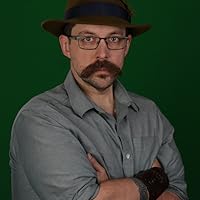
Called by the Bangkok Post "the Thai person known by name to most people in the world," S.P. Somtow is an author, composer, filmmaker, and international media personality whose dazzling talents and acerbic wit have entertained and enlightened fans the world over.
He was Somtow Papinian Sucharitkul in Bangkok. His grandfather's sister was a Queen of Siam, his father is a well known international lawyer and vice-president of the International Academy of Human Rights. Somtow was educated at Eton and Cambridge, and his first career was in music. In the 1970s (while he was still in college) his works were being performed on four continents and he was named representative of Thailand to the Asian Composer's League and to the International Music Commission of UNESCO. His avant-garde compositions caused controversy and scandal in his native country, and a severe case of musical burnout in the late 1970s precipitated his entry into a second career - that of author.
He began writing science fiction, but soon started to invade other fields of writing, with some 40 books out now, including the clasic horror novel Vampire Junction, which defined the "rock and roll vampire" concept for the 80s, the Riverrun Trilogy ("the finest new series of the 90's" - Locus) and the semi-autobiographical memoir Jasmine Nights. He has won or been nominated for dozens of major awards including the Bram Stoker Award, the John W. Campbell Award, the Hugo Award, and the World Fantasy Award.
Somtow has also made some incursions into filmmaking, directing the cult classic The Laughing Dead and the award winning art film Ill Met by Moonlight.
I discovered The Shattered Horse completely by accident while browsing the pages of Horse Books at my favorite online book shop. The cover caught my eye and when I read the blurb of the story, I knew I had to read it for myself. At the time I was reading Homer's The Iliad, and was entranced. What could be more exciting than a novel that imagines what might have happened in Troy ten years after the war to a character who might not have been killed after all?
I had never heard of S. P. Somtow so I had no idea what kind of writing to expect. I must confess I was stunned, absolutely stunned by this book. The concept behind it, the ideas expressed in it, the work and thought it must have taken to create. I did find some of the scenes crude, and the language here and there was disturbingly crass, but such jolts were not frequent enough to make me think any the less of either the story or the author.
At the time I saw this book, I was reading Homer's The Iliad. After that I read The Fall Of Troy by Hesiod, and then back to Homer for The Odyssey. As soon as I was able to get my hands on The Shattered Horse, I had to start reading. I was not ready to leave Troy, and I was curious about what kind of What Happened Next scenario a modern writer would imagine.
In a fascinating Appendix, Somtow cites this line as the inspiration for his book: "Some say . . . that Astyanax survived and became King of Troy after the departure of the Greeks." This comes from The Greek Myths by Robert Graves. Astyanax was the young son of Hector, hero of Troy.Prince Astyanax traditionally is depicted as being killed at the end of the war by being thrown against the cliffs of the city. But he is our hero in this book, and we follow him through an odyssey of grand adventures as he seeks revenge, his own identity, and the Truth about everything that is happening around him.
It is not necessary to have read Homer before tackling this book, but it helped me that the names of various characters were still fresh in my mind, and that I was fairly familiar with everyone's stories. I thought the weaving of characters into this story was masterful, and it all seemed quite plausible as well; even the more fantastical episodes felt as if they could very well have happened in this near-alternate universe Somtow created.
But this is not just a boy's adventure tale. There is a lot going on for Astyanax. Is he truly the man who heralds the end of the Bronze Age and ushers in the Iron Age? And is Somtow talking about simply those differences between what kinds of tools and weapons are used in the different eras or is he talking about the mythological Ages of Man? I was curious and learned about the latter after looking up dates for the former. It seems that Hesiod, a Greek poet who lived at the same time as Homer, was the first to actually discuss these mythological Ages of Man. He mentions Golden, Silver, Bronze, Heroic, and Iron Ages. The heroes of Troy lived in the Heroic Age, and while Somtow does not mention that, skipping (as did Ovid, a Roman poet of the 1st century) from Bronze to Iron, we see the changes in the world through Astyanax and his maturing from hidden shepherd to perhaps the only true hero of any age, mythological or real.
What distinguishes these Mythological Ages? I liked Ovid's descriptions best, they seem more clear. According to Wiki: In the Bronze Age, Ovid writes, men were prone to warfare, but not impiety. Finally, in the Iron Age, men demarcate nations with boundaries; they learn the arts of navigation and mining; they are warlike, greedy and impious. Truth, modesty and loyalty are nowhere to be found.
Astyanax finds himself the catalyst for one specific End Of The World, the shift from the Bronze Age to The Iron. His wish for revenge, set in motion when he was just a small child witnessing the destruction of his family and home, is actually part of a much greater wheel of Life than he had ever imagined. The final chapter is a tremendous stroke of intellectual riffing that brings the story (and Homer, among other noted historical characters) together in what to me is a stroke of pure genius.
I want to read the Richmond Lattimore translations of Homer's epic poems, as well as a different translation of Hesiod's The Fall Of Troy. When I get to the end of that next cycle, I will reread The Shattered Horse. This book certainly deserves to be read more than once. There is much more here than I have even mentioned!
I had wanted to read something by this incredible writer and by accident I started with a story he first wrote at age 10. It's a bit philosophical but also has plenty of action to move it along. Astyanax's yearning for the truth rings true for us all ("Why does Skyfather not appear in blazing majesty and reveal the truth?") as well as the anguish of discovering how much our perception of the world changes as we age ("Why had I persisted in believing in the things of my childhood, against all the evidence of the outside world?"). I don't know if these ideas were in the original story written by a child of ten, but if they were - WOW.
If you are interested in writing this kind of novel that draws from history but takes flight from it, you may enjoy the author's description of his process in his appendix at the end.
Very dense and episodic. A bit like the Oddyssy in a way; I wonder if that was deliberate.
I think it detracted a bit, though; the story kept building up momentum and then losing it in a change of direction.
I've always loved the theme of the ending of an age. Tolkein did it best, I suppose, but this was wonderful and more real, because it built on a real mythology, an age that passed and was believed in, and alas the great god Pan is dead. The battle of the last two heroes of the age of bronze had me in tears, and I only wish there'd been more of that, more of the splendour of the age so I could see what was being lost.
After reading, Shattered Horse I can definitely say Somtow is a man of the classics and this proves he can journey well beyond the basic horror tomb for which he's known. Shattered Horse follows right after 'The Iliad' and takes on the journey of Prince Astyanax. It's a marvelous tale of the hero's journey with the backdrop being the ending of an era, The Age of Bronze. Shattered Horse doesn't engage the senses as well as his other novels; however, it is intellectually visceral and worth the read for those that enjoy the Iliad, Odyssey, Bill Moyers, or journey mythos.
I think this book has undoubtedly problematic moments that show its age, but I also think that it is a neglected masterpiece. The amount of blood and sexual violence will turn readers away, to be sure, and I would not blame them for that. If you have an interest in fantasy rooted in the Bronze Age or in Homer, it feels like a must read.
It reminded me a fair amount of Marion Zimmer Bradley's The Firebrand, but while Kassandra's Mother-based faith was at least able to co-exist somewhat alongside the Greco-Trojan pantheon, Astyanax can't bring himself to trust Snakemother and her priestesses no matter how many times he has to ask a favor or plea for help. As is par for the course in Somtow, good but weird. Trigger warnings for sexual violence, cannibalism (mind those Maenads!) and a lot of male whining.
As other reviewers will tell you, excellent. What I particularly want to commend here is the gathering up of threads into a final, extended, completely satisfying climax. That feat reminded me strongly of Simon R. Green.