I would have to agree with Nabokov in that this is one of the greatest short stories ever written. The Lady With the Dog breaks all the rules of short story form, but breaks them wonderfully. There is no plot in this story, is there? No resolution at the end. A simple narrative of two characters falling in love despite the best of their efforts. In many ways, The Lady with the Dog feels like a novel. The principal characters are as beautifully complex as the most successfully portrayed protagonists of best classical novels. Well, at least in my view, they are.
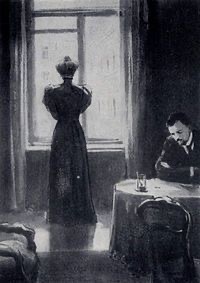
At the start of the story, Dmitri Gurov is a rather poor excuse for a human being, isn't he? A womanizer who despises woman, can there be a worse men? Casanova was a pathological womanizer, but at least he was capable of sincere friendship with women and didn't speak of them badly. Dmitri is married with children, and hates his wife whom he had only married out of convenience. Dmitri thinks of women as infinitely inferior to man, a lower race, yet he cannot live without them. Dmitri is a cynic and even worse a hypocrite. You know, I think that cynics are often sensitive people, the kind of people who have the capacity to love, but give it all up because of our human weakness- the fear of getting hurt. If I'm indifferent, I can't get hurt, we think in our human silliness. How wrong we are. To be indifferent is to be in a coma, in a state of spiritual paralysis. There is no happiness without sorrow. Without a combination of lightness and darkness, there is only the void. But back to the subject. Dmitri, despite all his flaws, or many because of them, manages to catch and retain the reader's interest from start to finish.
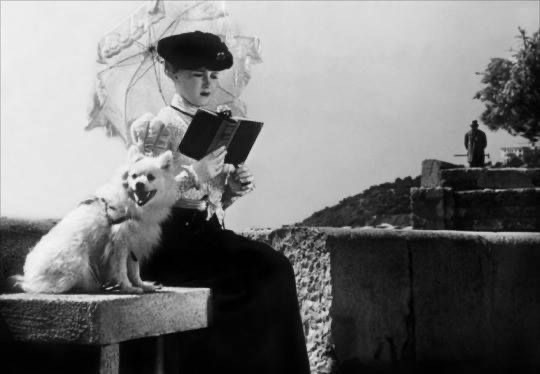
Anna, on the other hand, is principally seen through Dmitri's eyes. This doesn't mean that we don't warm up to her. Quite on the contrary. While we watch and observe the psychological transformation of a horrible cynic Dmitri in a person capable of love, we see Anna's growth in maturity as well. Anna is the force that made that transformation possible. Anna is a married woman, who allows herself to fall in love, who despite her young years, has the courage to admit that her life is devoid of meaning and that her marriage is unhappy. As the title indicates, The Lady with the Little Dog is the true heroine of this story. Anna is not stupid, nor does she enter the affair out of a caprice or boredom. She is aware of the danger, yet she quite bravely chooses to love. Anna sees Dmitri both as what he is and what he can be, and chooses to forgive him his past. Dmitri does the same. Both of them are transformed by love. If the characterization was any less subtle, the story would be banal. If the dialogues were any less natural, the story would lack strength. Fortunately, the writing is quite brilliant.
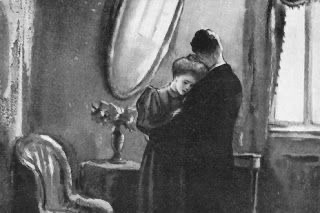
Neither of our protagonists is perfect, but together they are pretty close to perfection. Perfect in the sense they are willing to face their human weakness and surpass it. The psychological portray of these two was masterfully done. I found it very comforting to see that people can find love even in worst of times. Here we basically have a highly believable story about two individuals transformed by love. If that is not writing magic, I don't know what is. This is definitely one of the best love stories I have ever read, perhaps even the best one.
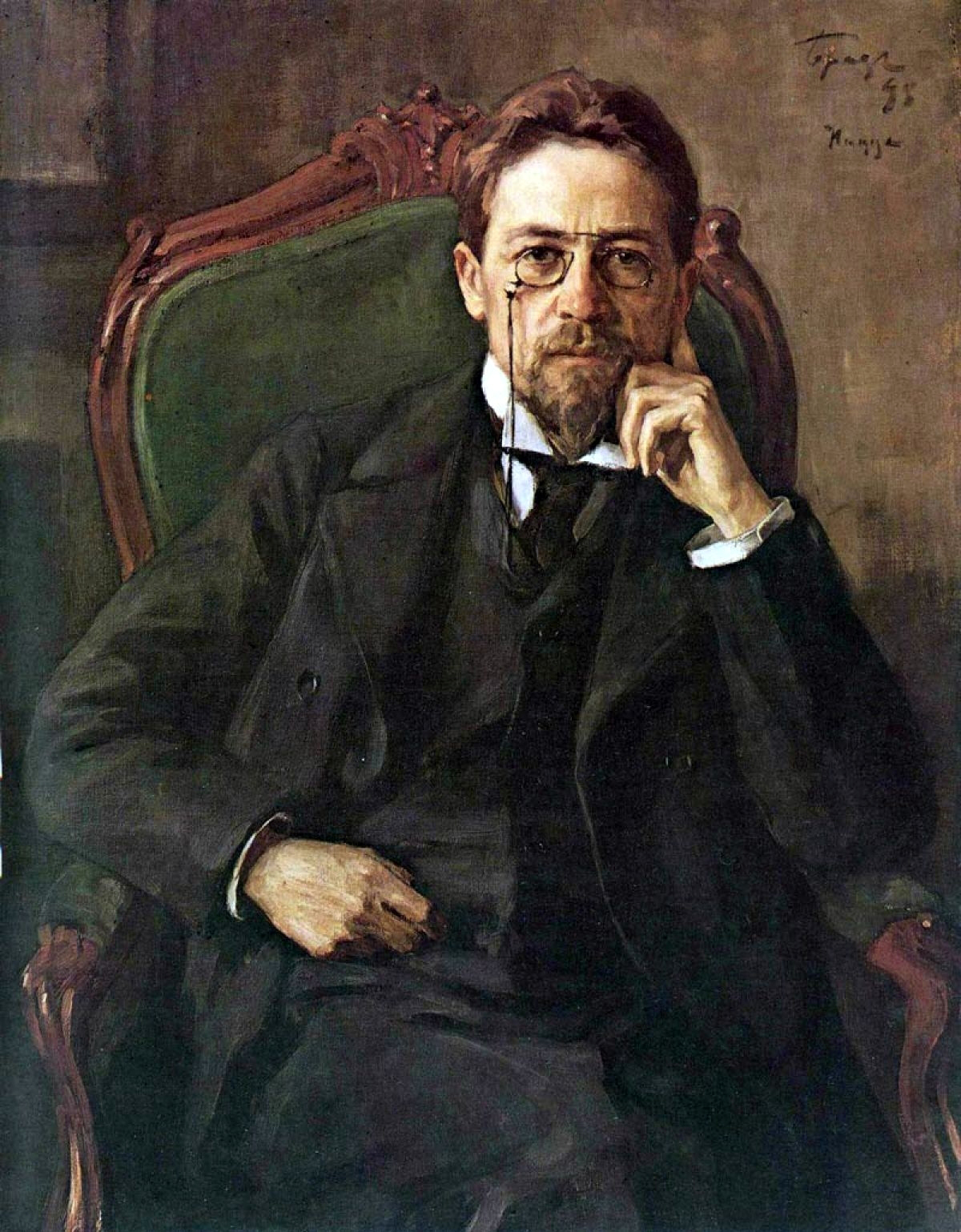
Despite its short form, The Lady with the Dog is a deeply touching story. I'm not even sure how many times I have read it. I think the last time I reread it was in February. I own a few vintage Chekhov short story collections, and I often reread this one. Sometimes I listen to audio versions of this story in different languages. It always sounds amazing, in every language. If I had to choose my favourite story by Chekhov, it would be a tie between this one and Ward No.6. It might seem an odd choice as Ward No.6 is a rather depressive story, but if you look closely so is The Lady With the Little Dog. We get a feeling that love is such a rare thing, it is almost non existent. We get a feeling that most people leave bleak and hopeless lives. Is that a romantic view of life? Certainly no. But then again, one can't accuse Russian writers of shying away from dark sides of human nature. They typically just dig in, don't they? Moreover, is there a happy ending for these two? Not exactly. We don't know what happens next with them. All we can see is something frozen on page- an example of real love. Will it last? That my dear readers, is completely uncertain. Perhaps the true tragedy of the principal character (the doctor) of Ward no. 6 is that he has never found love. Perhaps love does redeem us, even while it torments us. With love, there is always hope. Even if it is always uncertain. Even if it might go away tomorrow. That doesn't make it any less real.