

What do you think?

The 38 Most Common Fiction Writing Mistakes
When you write fiction, you march onto a minefield. This book gives you a map.
conquer procrastination - and put ink on paper regularly
dump wimpy characters - and build characters ready to act
look for trouble - and create conflicts for your characters
cut coincidence - and put better-than-life logic into fiction
escape the fog - and find and stick to your story's direction
free feelings - and fire your fiction with passion and emotion
In short, Bickham helps you take a giant step toward publication.
Oh, what tricky terrain you're traveling! You must reckon with: Character, Conflict, Point of View, Dialogue, Editors, Editors, and Editors, who - by returning stories they see as problem-plagued - can burst your hopes of publication.
Where are the problems? Editors rarely take the time to map them out, so Jack Bickham has. In this book, he spotlights the 38 most common fiction writing land mines - writing mistakes that can turn even dynamite story ideas into slush pile rejects. And he guides you in overcoming them.
In to-the-point style, he shows you how to:
conquer procrastination - and put ink on paper regularly
dump wimpy characters - and build characters ready to act
look for trouble - and create conflicts for your characters
cut coincidence - and put better-than-life logic into fiction
escape the fog - and find and stick to your story's direction
free feelings - and fire your fiction with passion and emotion
In short, Bickham helps you take a giant step toward publication.
Read this book. Strengthen your writing. And start setting off explosions where they belong: on the sales charts.
128 pages, Hardcover
First published January 1, 1992
About the author
Jack M. Bickham
66 books45 followersPseudonyms:
Jeff Clinton, John Miles, Arthur Williams
Jeff Clinton, John Miles, Arthur Williams
Ratings & Reviews
Friends & Following
Create a free account to discover what your friends think of this book!
Community Reviews
Displaying 1 - 30 of 180 reviews

February 5, 2016
قراءة في كتاب "أكثر 38 خطأ في الكتابة"
تأليف جاك بيكهام
ترجمة صدقي حطاب
الكاتب هو استاذ جامعي ومؤلف روائي ..
أعتقد أن الكاتب حاول أن يجمع زبدة خبراته في هذا الكتاب، يبقى الخلل في الترجمة التي أدت إلى ضياع بعض الأفكار وصعوبة القراءة والاضطرار إلى إعادة القراءة أكثر من مرة حتى تستوعب ما تريده الجملة، إلا أنه لا يخلوا من فائدة كبيرة، خصوصا للمبتدئين في الكتابة.
من أهم النصائح التي قدمها الكاتب:
1- لا تأخذ دور الواعظ، فإن كنت تريد أن تقدم النصح فتوجه للخطابة والوعظ من على المنابر، واترك التأليف.
2- دع القارئ يقلق وهو يقرأ.
3- يجب أن يكون الشر مقنع وله مبرراته تماما كالخير في القصة.
4- أكتب بمشاعرك.
5- لا تحاول اغضاب أحد، يمكنك فقط أن تثير التساؤل.
6- إياك ثم إياك أن تذر معلومة لست متأكد منها، ابحث أولا وثانيا وثالثا..
7- لا تكن واضحا جدا ولا غامضا جدا، ولا تستهن بذكاء القارئ ولا تثق فيه أكثر من اللازم.
8- إن كنت جاد، لا تشترك في المسابقات.
9- لا تستشر نوادي أو جماعات القراءة في أعمالك.
10- ابحث عن معلم.
11- في مهنة الكتابة قد يأتي النجاح متأخر، فلا تهتم في السوق .. وعليك الحفر في الصخر.
12- أكتب.
بالطبع هذه النصائح كما فهمتها ولم تأتي بهذه الطريقة ولكن هي نفس الأفكار والمعنى.
في الختام أنصح بقراءته لكل من يود أن يمتهن الكتابة وعليه أن يصبر في فهم الترجمة السيئة نوعا ما.
تأليف جاك بيكهام
ترجمة صدقي حطاب
الكاتب هو استاذ جامعي ومؤلف روائي ..
أعتقد أن الكاتب حاول أن يجمع زبدة خبراته في هذا الكتاب، يبقى الخلل في الترجمة التي أدت إلى ضياع بعض الأفكار وصعوبة القراءة والاضطرار إلى إعادة القراءة أكثر من مرة حتى تستوعب ما تريده الجملة، إلا أنه لا يخلوا من فائدة كبيرة، خصوصا للمبتدئين في الكتابة.
من أهم النصائح التي قدمها الكاتب:
1- لا تأخذ دور الواعظ، فإن كنت تريد أن تقدم النصح فتوجه للخطابة والوعظ من على المنابر، واترك التأليف.
2- دع القارئ يقلق وهو يقرأ.
3- يجب أن يكون الشر مقنع وله مبرراته تماما كالخير في القصة.
4- أكتب بمشاعرك.
5- لا تحاول اغضاب أحد، يمكنك فقط أن تثير التساؤل.
6- إياك ثم إياك أن تذر معلومة لست متأكد منها، ابحث أولا وثانيا وثالثا..
7- لا تكن واضحا جدا ولا غامضا جدا، ولا تستهن بذكاء القارئ ولا تثق فيه أكثر من اللازم.
8- إن كنت جاد، لا تشترك في المسابقات.
9- لا تستشر نوادي أو جماعات القراءة في أعمالك.
10- ابحث عن معلم.
11- في مهنة الكتابة قد يأتي النجاح متأخر، فلا تهتم في السوق .. وعليك الحفر في الصخر.
12- أكتب.
بالطبع هذه النصائح كما فهمتها ولم تأتي بهذه الطريقة ولكن هي نفس الأفكار والمعنى.
في الختام أنصح بقراءته لكل من يود أن يمتهن الكتابة وعليه أن يصبر في فهم الترجمة السيئة نوعا ما.

February 3, 2014
بالرجوع إلى الوراء إلى زمن الدراسة الابتدائية والمتوسطة، كانت محاولاتي لكتابة قصص هي أكثر مقارنة بالفترة بعدها، بالطبع أغلبها محاولات فاشلة، مجرد كتابة لنيل درجة التعبير. هذه الكتابات التي لا تستند لأي قواعد واشتراطات كانت هي المرجع الذي أحتكم إليه في مدى مراعاتي لتطبيق معايير بيكهام وإن كان قد أخذها من جانب سلبي بمعنى لا تفعل كذا وكذا. لا تجعل للصدفة وجودا كثيرا فهي تنفي الاثارة، لا تكن متبخترا بمعلوماتك الموسوعية ولا تنظر بدونية لمن يشاركونك هم الكتابة فالقراء يشمون كل هذا من مسافة بعيدة، لا تجعل شخصياتك ضعيفة وانما قوية حرِكة لا تمل، ولا تجعلها كذلك واقعية، ولا تجعلها تثرثر كثيرا ، ولا تفسد حديثها بلغة عامية، لا تجعلها تحاضر ولا تقدم معلومات جاهزة، لا تختلق لنفسك المعاذير في تأجيل خططك الكتابية، لا تستسلم للاحباط ، اذا ما رفضك أحدهم واصل ، لا تتجاهل الحرفيين ولا تستشير أعضاء نادي الكتاب!، وجهة النظر واتجاه القصة وحبكتها وبناء المشهد حافظ عليها في خضم كتابتك، لا تخش انطباعاتك الحسية والمشاعر فهي جزء مهمة مع التفكير، كن واثقا ناقدا وأخيرا لا تشغل نفسك برأي أمك
الكتاب محرّض للكتابة، يجعلك تفكر مليا في إخراج المشاريع المؤجلة المسوّفة إلى حيز الوجود.
الكتاب محرّض للكتابة، يجعلك تفكر مليا في إخراج المشاريع المؤجلة المسوّفة إلى حيز الوجود.

March 10, 2012
Bickham is well aware that there cannot be a 'one-size-fits-all' approach to advice on writing, but he does seem aggressive in his presentation that there is a formula (left somewhat nebulous) to the craft.
What is most disappointing is his absolute insistence that readers are stupid, lazy, and need to be spoon fed every little bit of information, whereas published authors and editors are definitionally masters of the craft and the only voices an unpublished, aspiring author should consider worthy of his or her time. If this is not how Professor Bickham feels, then he needs to make a few revisions to this work, because it is clearly what he wrote. (At the same time, he attacks the academic interpretation of literature and a small, possibly imagined cadre of authors who claim that they don't have a formula for writing.)
I would say that about ten of his mistakes are arguably not mistakes at all (not even artistic choices), but rather an expression of a man who is too used to writing formula fiction and motivating students to produce easily digestible text every week. Maybe six of the sections have meaningful insight. The rest kind of do what most books on writing seem to do, which is to reinforce that writers need to write if they want to be writers, and that the story must be coherent in order for it to mean anything to the reader.
What is most disappointing is his absolute insistence that readers are stupid, lazy, and need to be spoon fed every little bit of information, whereas published authors and editors are definitionally masters of the craft and the only voices an unpublished, aspiring author should consider worthy of his or her time. If this is not how Professor Bickham feels, then he needs to make a few revisions to this work, because it is clearly what he wrote. (At the same time, he attacks the academic interpretation of literature and a small, possibly imagined cadre of authors who claim that they don't have a formula for writing.)
I would say that about ten of his mistakes are arguably not mistakes at all (not even artistic choices), but rather an expression of a man who is too used to writing formula fiction and motivating students to produce easily digestible text every week. Maybe six of the sections have meaningful insight. The rest kind of do what most books on writing seem to do, which is to reinforce that writers need to write if they want to be writers, and that the story must be coherent in order for it to mean anything to the reader.
February 10, 2017
بسم الله
لم أصادف ترجمة سهلة كهذا الكتاب
ممتع يحتاج لجلوس وقلم وكراس وتلخيص
يسرد عبر فصول الاخطاء القصصية التي يمكن أن تعترض الكاتب
وفعلا وجدت نفسي مخالفة لما يمكن أن يكون
والحمد لله رب العالمين
لم أصادف ترجمة سهلة كهذا الكتاب
ممتع يحتاج لجلوس وقلم وكراس وتلخيص
يسرد عبر فصول الاخطاء القصصية التي يمكن أن تعترض الكاتب
وفعلا وجدت نفسي مخالفة لما يمكن أن يكون
والحمد لله رب العالمين

March 7, 2018
مفيد جداً و أنصح به

May 11, 2012
Some excellent ideas and some I disagree with. Worth trying for beginning writers.
I’ve edited quotations for brevity.
TWO IDEAS I LIKE:
1. Character Actions.
(page 104) Characters should “do things for what they see as good reasons and that will achieve their ends. Don’t have characters do things just because you, the author, want them to.” Personally, I do not like the following which I have seen too often.
1. a character lies which does not fit his motivations.
2. heroine stupidity. I’m happy to read about a flawed or stupid heroine, but don’t make a rational heroine do something illogical.
2. Too Much Pondering.
(page 66). “Scenes (peaks) represent the high points of excitement and conflict. Sequels (valleys) are quieter times when conflict is not on stage - when the character has time to feel emotion, reflect on recent developments, and plan ahead. Your character reacts to the disaster that just took place...then plans what he is going to do next. Scenes move swiftly; sequels move slowly. If your story feels slow, you may need to expand your scenes and cut or shorten sequels.”
(page 22) “Don’t write about wimps. It isn’t interesting, watching somebody sit in his easy chair and ponder things. Your character has to be a person capable of action. He doesn’t have to be a super hero. He may be active - refuse to give up or stop trying - yet still be scared or unsure of himself.”
(pages 14-15): “Don’t do long descriptions. Fiction is movement. Any description stops movement. Characters’ thoughts and feelings are descriptions. Descriptions of the character’s state of mind and emotion should be brief. The accomplished writer will tell (describe) a little, and demonstrate (show in action) a lot.”
SEVEN IDEAS I QUESTION OR DISAGREE WITH:
1. Disasters.
(pages 62 and 104) Bickham says every scene/chapter must end in a disaster. I disagree. Bickham defines disaster as “Whatever your viewpoint character wants he must not get at the end of the scene. For if he does, he has suddenly become happy...story tension relaxes...the reader goes to sleep...and your story has failed. Most of your chapters must end with developments that hook the reader with a new twist, disaster or realization that defies the reader to quit at that point.” Personally, hooks don’t keep me reading. I read for specific periods of time and often stop in the middle of a chapter (like when I’m on the treadmill, when I’m in a waiting room, or when I’m on the train). I don’t need hooks. Sometimes I don’t want hooks. I look at the book as a whole. Things will be solved at the end. That keeps me reading.
I don’t like requiring authors to jump through hoops to create hooks when it doesn’t fit the flow. Scenes have natural endings. Some of them end with here’s what I need to do next, or I’ve just met a new person.
2. Adjectives and Adverbs.
(page 59) Bickham discourages the use of adjectives and adverbs. Most experts agree with him. The thinking is don’t use an adverb to help a weak verb. Use a stronger verb. That sounds reasonable to me, but I think too many experts go overboard in their ostracism of adverbs. J.K. Rowling uses tons of adverbs in the Harry Potter books. And her books are the most successful fiction books in the world! Following are some wonderful adverb examples from the first Harry Potter book. “eyed them angrily” “whispering excitedly” “acting oddly today” “said as casually as he could” “appeared so suddenly and silently.” And for those of you who may argue that certain genres lend themselves to adverbs, please note that John Grisham also uses them liberally in his legal thrillers. Grisham is another top selling author. Examples from Grisham’s book “The Client:” “slowly looked at Ricky” “he exhaled calmly.” “Mark carefully picked a cigarette from his shirt pocket.” “Mark suddenly remembered.” “He mumbled loudly.”
One author who writes about cutting adverbs wrote the following sentence in her novel. “Mary awaited his visits with the utmost impatience.” This is clunky. I prefer “Mary impatiently awaited his visits.”
Some editors say adverbs are like spices, use a little not a lot. They would probably consider Rowling and Grisham as too many. The bigger question is who should define “good writing” - english dept. academics and the experts they educate or all the people who buy the book? Personally I love the way Rowling and Grisham write.
I think the rule should be write the first word that comes to your mind. Then when you reread, evaluate the adverbs. Remove them if they are not helpful, if they are redundant, or if you find something better. But don’t remove them because Big Brother says.
3. Tough Guys.
(page 97) Bickham discourages having a tough guy/gal because it represents a false pose. “The character denies all impulse at the delicate or the soft by being over-tough, over-cynical, over-gruff, or over-bitter.” I wish Bickham would have shown examples. I would probably agree if he was talking about the cartoon villain tying the damsel to the railroad tracks. But one of my favorite characters is tough guy Jack Reacher by Lee Child. He’s a top selling author. Tough guys are not always bad.
4. Check Facts.
I know “some” readers want facts, figures, and historical accuracy in their fiction. Therefore, I reluctantly accept Bickham’s recommendation to fact check everything. But personally I don’t care. I want to be entertained. And if the author makes things up I’m fine with it. In fact, sometimes made-up-things are more fun than existing things. I’m not reading fiction for an education. That’s what encyclopedias are for. I recall a contemporary suspense book with a stealth helicopter that made no noise. The heroine was alerted to its presence by wind chimes. I thought the wind chimes alert was so cool. Even though those helicopters probably don’t exist.
5. Outlines Rule, Don’t Deviate With A Muse.
(page 69) Bickham wants writers to create an outline and not deviate. “Beware of late-blooming ideas that seem to come from nowhere during your writing of the project.” I think this depends on the author. In my opinion, if you are moved, let the muse take you. Worry about logic and plot later. You can cut creative bursts later - maybe use them for something else. It’s lack of creativity that hurts most books.
Stephen King never plans a plot. He thinks of a situation, puts characters into it, and then watches the characters try to work themselves out of it. Most of the time the outcome is something he never expected. He says “I plot as little as possible. Plotting and the spontaneity of real creation are not compatible” from his book “On Writing.”
6. Don’t Use Real People in Your Story.
(page 18) Bickman says they are dull. “Your idea for a character may begin with a real person, but to make him vivid enough for your readers to believe in him, you have to exaggerate tremendously, you have to make him practically a monster - for readers to see even his dimmest outlines.” I don’t have an opinion on this. But I do know that using real life people worked well for Stephen King. His first hit novel “Carrie” was based on two girls he knew - the two loneliest most reviled girls in his high school class. One of them had an overly religious mother. Steve combined the two girls into Carrie and used the religious mother as Carrie’s mother. And yes he exaggerated the characters in his book. Steve might be an exception, but he is a top selling author.
7. Point of View.
(pages 34 and 35) “In a novel, there may be several viewpoints, but one must clearly dominate. It’s a fatal error to let your viewpoint jump around from character to character, with no viewpoint clearly dominating. Figure out whose story it is. Get inside that character - and stay there.” My thoughts follow.
A. I usually do not like stories that are told from one viewpoint. For example, a bad guy enters a home and kidnaps a child. The main character (detective) is told that the child was kidnaped and takes action to solve the case. Because I was never in the bad guy’s head or the child’s head, I never saw how it happened, I never had a feeling about the bad guy, and I never experienced the child’s fear or trauma. So I like multiple viewpoints, which Bickham allows but discourages.
B. In the novel “Carrie,” no one is the main viewpoint character. The reader is in the minds of many different characters throughout the book. It worked. I liked watching the thoughts and feelings of various characters. But this was an exception and may not be the best advice for others.
SEVEN MORE IDEAS I LIKE:
1. Start your story with a threat - change.
2. Fiction must be more logical than real life.
3. Be obvious, not subtle.
4. Don’t write in slang where you drop letters and use apostrophes.
5. (pages 29 and 104) Avoid excessive luck or coincidence. Fix it so the character has the desired experience by trying, rather than by luck. Reading about someone blundering along, getting lucky, is neither interesting nor inspiring.
6. Once you introduce a character, like a doorman saying something, use the doorman later to do other things. It’s better to have fewer characters. The same applies to events. If you have a car accident, try to do other things relating to it. For example someone has an injury. Someone else saw the accident and does something as a result.
7. (page 104) The ending of the book “must answer the question you posed at the outset - clearly and unequivocally.” My thoughts: I’ve read too many books with unsatisfying endings because they were incomplete or too abrupt. I love epilogues.
DATA:
Story length: 117 pages. Swearing and sexual content: none. Copyright: 1992. Genre: nonfiction.
I’ve edited quotations for brevity.
TWO IDEAS I LIKE:
1. Character Actions.
(page 104) Characters should “do things for what they see as good reasons and that will achieve their ends. Don’t have characters do things just because you, the author, want them to.” Personally, I do not like the following which I have seen too often.
1. a character lies which does not fit his motivations.
2. heroine stupidity. I’m happy to read about a flawed or stupid heroine, but don’t make a rational heroine do something illogical.
2. Too Much Pondering.
(page 66). “Scenes (peaks) represent the high points of excitement and conflict. Sequels (valleys) are quieter times when conflict is not on stage - when the character has time to feel emotion, reflect on recent developments, and plan ahead. Your character reacts to the disaster that just took place...then plans what he is going to do next. Scenes move swiftly; sequels move slowly. If your story feels slow, you may need to expand your scenes and cut or shorten sequels.”
(page 22) “Don’t write about wimps. It isn’t interesting, watching somebody sit in his easy chair and ponder things. Your character has to be a person capable of action. He doesn’t have to be a super hero. He may be active - refuse to give up or stop trying - yet still be scared or unsure of himself.”
(pages 14-15): “Don’t do long descriptions. Fiction is movement. Any description stops movement. Characters’ thoughts and feelings are descriptions. Descriptions of the character’s state of mind and emotion should be brief. The accomplished writer will tell (describe) a little, and demonstrate (show in action) a lot.”
SEVEN IDEAS I QUESTION OR DISAGREE WITH:
1. Disasters.
(pages 62 and 104) Bickham says every scene/chapter must end in a disaster. I disagree. Bickham defines disaster as “Whatever your viewpoint character wants he must not get at the end of the scene. For if he does, he has suddenly become happy...story tension relaxes...the reader goes to sleep...and your story has failed. Most of your chapters must end with developments that hook the reader with a new twist, disaster or realization that defies the reader to quit at that point.” Personally, hooks don’t keep me reading. I read for specific periods of time and often stop in the middle of a chapter (like when I’m on the treadmill, when I’m in a waiting room, or when I’m on the train). I don’t need hooks. Sometimes I don’t want hooks. I look at the book as a whole. Things will be solved at the end. That keeps me reading.
I don’t like requiring authors to jump through hoops to create hooks when it doesn’t fit the flow. Scenes have natural endings. Some of them end with here’s what I need to do next, or I’ve just met a new person.
2. Adjectives and Adverbs.
(page 59) Bickham discourages the use of adjectives and adverbs. Most experts agree with him. The thinking is don’t use an adverb to help a weak verb. Use a stronger verb. That sounds reasonable to me, but I think too many experts go overboard in their ostracism of adverbs. J.K. Rowling uses tons of adverbs in the Harry Potter books. And her books are the most successful fiction books in the world! Following are some wonderful adverb examples from the first Harry Potter book. “eyed them angrily” “whispering excitedly” “acting oddly today” “said as casually as he could” “appeared so suddenly and silently.” And for those of you who may argue that certain genres lend themselves to adverbs, please note that John Grisham also uses them liberally in his legal thrillers. Grisham is another top selling author. Examples from Grisham’s book “The Client:” “slowly looked at Ricky” “he exhaled calmly.” “Mark carefully picked a cigarette from his shirt pocket.” “Mark suddenly remembered.” “He mumbled loudly.”
One author who writes about cutting adverbs wrote the following sentence in her novel. “Mary awaited his visits with the utmost impatience.” This is clunky. I prefer “Mary impatiently awaited his visits.”
Some editors say adverbs are like spices, use a little not a lot. They would probably consider Rowling and Grisham as too many. The bigger question is who should define “good writing” - english dept. academics and the experts they educate or all the people who buy the book? Personally I love the way Rowling and Grisham write.
I think the rule should be write the first word that comes to your mind. Then when you reread, evaluate the adverbs. Remove them if they are not helpful, if they are redundant, or if you find something better. But don’t remove them because Big Brother says.
3. Tough Guys.
(page 97) Bickham discourages having a tough guy/gal because it represents a false pose. “The character denies all impulse at the delicate or the soft by being over-tough, over-cynical, over-gruff, or over-bitter.” I wish Bickham would have shown examples. I would probably agree if he was talking about the cartoon villain tying the damsel to the railroad tracks. But one of my favorite characters is tough guy Jack Reacher by Lee Child. He’s a top selling author. Tough guys are not always bad.
4. Check Facts.
I know “some” readers want facts, figures, and historical accuracy in their fiction. Therefore, I reluctantly accept Bickham’s recommendation to fact check everything. But personally I don’t care. I want to be entertained. And if the author makes things up I’m fine with it. In fact, sometimes made-up-things are more fun than existing things. I’m not reading fiction for an education. That’s what encyclopedias are for. I recall a contemporary suspense book with a stealth helicopter that made no noise. The heroine was alerted to its presence by wind chimes. I thought the wind chimes alert was so cool. Even though those helicopters probably don’t exist.
5. Outlines Rule, Don’t Deviate With A Muse.
(page 69) Bickham wants writers to create an outline and not deviate. “Beware of late-blooming ideas that seem to come from nowhere during your writing of the project.” I think this depends on the author. In my opinion, if you are moved, let the muse take you. Worry about logic and plot later. You can cut creative bursts later - maybe use them for something else. It’s lack of creativity that hurts most books.
Stephen King never plans a plot. He thinks of a situation, puts characters into it, and then watches the characters try to work themselves out of it. Most of the time the outcome is something he never expected. He says “I plot as little as possible. Plotting and the spontaneity of real creation are not compatible” from his book “On Writing.”
6. Don’t Use Real People in Your Story.
(page 18) Bickman says they are dull. “Your idea for a character may begin with a real person, but to make him vivid enough for your readers to believe in him, you have to exaggerate tremendously, you have to make him practically a monster - for readers to see even his dimmest outlines.” I don’t have an opinion on this. But I do know that using real life people worked well for Stephen King. His first hit novel “Carrie” was based on two girls he knew - the two loneliest most reviled girls in his high school class. One of them had an overly religious mother. Steve combined the two girls into Carrie and used the religious mother as Carrie’s mother. And yes he exaggerated the characters in his book. Steve might be an exception, but he is a top selling author.
7. Point of View.
(pages 34 and 35) “In a novel, there may be several viewpoints, but one must clearly dominate. It’s a fatal error to let your viewpoint jump around from character to character, with no viewpoint clearly dominating. Figure out whose story it is. Get inside that character - and stay there.” My thoughts follow.
A. I usually do not like stories that are told from one viewpoint. For example, a bad guy enters a home and kidnaps a child. The main character (detective) is told that the child was kidnaped and takes action to solve the case. Because I was never in the bad guy’s head or the child’s head, I never saw how it happened, I never had a feeling about the bad guy, and I never experienced the child’s fear or trauma. So I like multiple viewpoints, which Bickham allows but discourages.
B. In the novel “Carrie,” no one is the main viewpoint character. The reader is in the minds of many different characters throughout the book. It worked. I liked watching the thoughts and feelings of various characters. But this was an exception and may not be the best advice for others.
SEVEN MORE IDEAS I LIKE:
1. Start your story with a threat - change.
2. Fiction must be more logical than real life.
3. Be obvious, not subtle.
4. Don’t write in slang where you drop letters and use apostrophes.
5. (pages 29 and 104) Avoid excessive luck or coincidence. Fix it so the character has the desired experience by trying, rather than by luck. Reading about someone blundering along, getting lucky, is neither interesting nor inspiring.
6. Once you introduce a character, like a doorman saying something, use the doorman later to do other things. It’s better to have fewer characters. The same applies to events. If you have a car accident, try to do other things relating to it. For example someone has an injury. Someone else saw the accident and does something as a result.
7. (page 104) The ending of the book “must answer the question you posed at the outset - clearly and unequivocally.” My thoughts: I’ve read too many books with unsatisfying endings because they were incomplete or too abrupt. I love epilogues.
DATA:
Story length: 117 pages. Swearing and sexual content: none. Copyright: 1992. Genre: nonfiction.
February 5, 2013
I agree with several of the author's common-sense based rules (avoid using too much profanity, don't show off when your write ) but some things he calls "mistakes" simply aren't. Funny how he tells us not to assume our reader is dumb and then goes on to emphasize the importance of making things over-the-top obvious or else our reader won't "get" it. No, just because Charles Dickens was a master at creating larger than life, exaggerated characters, this does not mean we should all strive to do the same. A little subtlety can be just fine.

August 6, 2015
I've heard the content elsewhere except, "Don't Take it to the Writer's Club Meeting." This advice I have long suspected and intend to act on. I greatly admire Bickham, but this book is getting somewhat dated. The advice is still sound, but most of it is covered in, "Scene and Structure."

March 13, 2014
The only thing that bothered me was tip #30, which goes way overboard telling authors not to seek out or consider feedback from anyone other than professionals. Of course, he's entitled to his opinion, but every writer I know (including myself) has improved tremendously through the input of a healthy mix of people – family and friends, target audience, critique groups, and partnerships with other authors, published or otherwise.
Working alongside and receiving feedback from fellow writers at any stage of the game is one of the biggest joys of writing for me. Hell, I probably wouldn't be doing it at all if I closed myself off to everyone but the professionals he suggests.
But as with all writing advice, you take what makes sense for you on a personal level and discard what doesn't. So this one still deserves a good rating – there's a lot of useful stuff here.
Working alongside and receiving feedback from fellow writers at any stage of the game is one of the biggest joys of writing for me. Hell, I probably wouldn't be doing it at all if I closed myself off to everyone but the professionals he suggests.
But as with all writing advice, you take what makes sense for you on a personal level and discard what doesn't. So this one still deserves a good rating – there's a lot of useful stuff here.

January 18, 2016
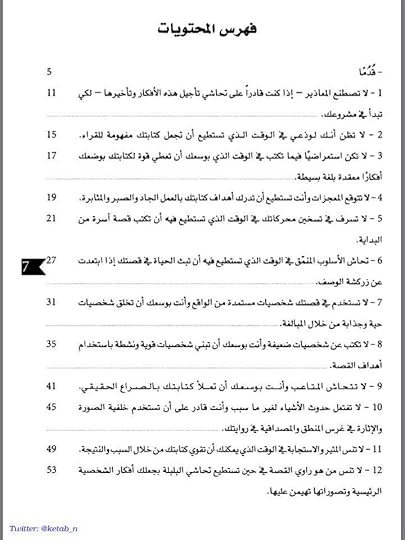
كتاب رائع بمعنى الكلمة، أفادني كتير وضافلي كتير، هاتبع ارشادات وهأطلع عليه كل فترة عشان اتأكد إني بأعمل بنصايحه وافضل متذكرة دايمًا كل نصيحة قالها، اتمنى فعلا أكون طالبة للكاتب.. ولو عن طريق كتابه فقط :))
***
 ***
***
 ***
***
 ***
***
***
*********
December 17, 2013
أكثر 38 خطأ في الكتابة القصصية – جاك بيكهام
جاك بيكهام هو روائي أمريكي وأستاذ جامعي سابق في جامعة أوكلاهوما.. وقد ألف ما يقارب الـ 75 رواية.. بالإضافة إلى العديد من الكتب في الكتابة كـ "المكان والمشهد والبناء" و"كتابة روايتك وبيعها".
من اسم الكتاب يبدو جلياً أنه نصائع فيما لا يجب أن تفعله أثناء قيامك بفعل الكتابة المحترفة. وكي أكون منصفاً مع هذا النوع من الكتب أقول إنه من غير الممكن أن تصنع هذه الكتب من شخص ما كاتباً إن لم يكن يمتلك الملكة التي تجعل منه كاتباً. فإن كان يملكها، فقد تساعد مثل هذه الكتب على صقل موهبته وتشذيب أسلوبه وهو أمر مهم أيضاً.
باختصار، الكتاب جيد في تقديم نصائح قيمة للكتاب المبتدئين وعن نفسي أضعه ضمن أفضل 3 أو 4 كتب قرأتهم في هذا المجال.
جاك بيكهام هو روائي أمريكي وأستاذ جامعي سابق في جامعة أوكلاهوما.. وقد ألف ما يقارب الـ 75 رواية.. بالإضافة إلى العديد من الكتب في الكتابة كـ "المكان والمشهد والبناء" و"كتابة روايتك وبيعها".
من اسم الكتاب يبدو جلياً أنه نصائع فيما لا يجب أن تفعله أثناء قيامك بفعل الكتابة المحترفة. وكي أكون منصفاً مع هذا النوع من الكتب أقول إنه من غير الممكن أن تصنع هذه الكتب من شخص ما كاتباً إن لم يكن يمتلك الملكة التي تجعل منه كاتباً. فإن كان يملكها، فقد تساعد مثل هذه الكتب على صقل موهبته وتشذيب أسلوبه وهو أمر مهم أيضاً.
باختصار، الكتاب جيد في تقديم نصائح قيمة للكتاب المبتدئين وعن نفسي أضعه ضمن أفضل 3 أو 4 كتب قرأتهم في هذا المجال.

February 6, 2018
مع أنني بدأت مترددا إلا أن الكتاب كان أعلى مما توقعت، وخصوصاً أنني أكتب القصص القصيرة، فكانت مواجهة بين قارئ وكاتب وكاتب، لكنه حاز على الإعجاب.
لا أوافقه في ال 38 نصيحة، لأن لكل شخص أسلوبه ومنهجه، لكنني أوافقه في أكثر من 30 واحدة، لم أعارضه إلا بقليل، وهذا لا يضر، كنت أرى نفسي جيداً فيما كتب بيكهام.
الكتاب مدخل جيّد لمن يحب كتابة القصص.

July 8, 2014
This book gives pieces of advise on how to write a fiction like Twilight, not something great which adds to civilization like Crime and Punishment.
And it's weirdly so much like Wired for Story Telling, but the last one was much better told, though from the same pop-commercial culture !
And it's weirdly so much like Wired for Story Telling, but the last one was much better told, though from the same pop-commercial culture !

January 16, 2018
كتاب مفيد جدًا وحمسني أعيد النظر في مشروعات الروايات التي بدأتها ولم تكتمل أبدًا. أعتقد أنني سأعود إليه أكثر من مرة وأتمنى لو أجد كتبًا تشبهه.

Read
June 9, 2011One of the first books I ever purchased on writing - alongside 'Writing the Breakout Novel' - is this one.
Don’t describe sunsets, don’t waste your plot ideas, don’t worry what mother will think and don’t just sit there!
When I read this book I find myself thinking many things:
'That’s a huge no-no I often spot in other people’s writing...and my own.'
'That’s a worry I have that I should really smother.'
'Why have I forgotten about this vital element? I need to put that in.'
Most of all, I learn a lot.
This book brings to light 38 common mistakes when writing fiction. There are so many books on writing that bring up what to do when trying to write good stuff but they often skim what not to do. This is where this book comes in handy. It’s a slim thing but it’s full of valuable points and thoughts.
This is a book that makes you think. I promise it will not make your eyes glaze over. It is definitely worth reading as it highlights a lot of points other books may be light on.
Don’t fret too much over what not to do, however. Remember, the important thing to do is to write. This is a great book to come back to when you are looking to edit your fiction, maybe not so much when you are on the first draft and worrying about whether you are doing everything right.
(From my blog, Quill Café)
Don’t describe sunsets, don’t waste your plot ideas, don’t worry what mother will think and don’t just sit there!
When I read this book I find myself thinking many things:
'That’s a huge no-no I often spot in other people’s writing...and my own.'
'That’s a worry I have that I should really smother.'
'Why have I forgotten about this vital element? I need to put that in.'
Most of all, I learn a lot.
This book brings to light 38 common mistakes when writing fiction. There are so many books on writing that bring up what to do when trying to write good stuff but they often skim what not to do. This is where this book comes in handy. It’s a slim thing but it’s full of valuable points and thoughts.
This is a book that makes you think. I promise it will not make your eyes glaze over. It is definitely worth reading as it highlights a lot of points other books may be light on.
Don’t fret too much over what not to do, however. Remember, the important thing to do is to write. This is a great book to come back to when you are looking to edit your fiction, maybe not so much when you are on the first draft and worrying about whether you are doing everything right.
(From my blog, Quill Café)

January 17, 2018
Every aspiring writer should read this book. I did learn some new things from the book, but I really wish someone had told me to read it fifteen years ago because I have been correcting these mistakes as I found out about them, slowly, and one-at-a-time. Reading this would have accelerated my progress.
Essential book.
Essential book.

May 8, 2015
استمتعت به
نصائح مختصرة وموجزة
يخاطب الكاتب القارئ بأسلوب صديق
فلا يتفلسف ولا يتقعر في النصح والكلمات
يورد أمثلة بسيطة لا تحتاج إلى إطلاع روائي فذ وواسع
شعرت أنني أخالفه في البعض النقاط لكنه في بعض المواضع اقنعني
وضع يده على المشكلة في نصائح أخرى
استفدت منه
نصائح مختصرة وموجزة
يخاطب الكاتب القارئ بأسلوب صديق
فلا يتفلسف ولا يتقعر في النصح والكلمات
يورد أمثلة بسيطة لا تحتاج إلى إطلاع روائي فذ وواسع
شعرت أنني أخالفه في البعض النقاط لكنه في بعض المواضع اقنعني
وضع يده على المشكلة في نصائح أخرى
استفدت منه

May 29, 2018
جميل ومفيد..
رغم أنني وجدت نفسي لا اتفق مع الكاتب في بعض النقاط إلا أن في الكتاب تحذيرات أساسية وهامة للكاتب القصصي الجادّ.
أسلوب الكاتب مسلّي وظريف مما جعل الكتاب ممتع وسهل الهضم.
رغم أنني وجدت نفسي لا اتفق مع الكاتب في بعض النقاط إلا أن في الكتاب تحذيرات أساسية وهامة للكاتب القصصي الجادّ.
أسلوب الكاتب مسلّي وظريف مما جعل الكتاب ممتع وسهل الهضم.

Read
February 2, 2015 يقدم جاك بيكهام في هذا الكتاب نصائح للكتّاب الجدد حول كيفية بناء وتسويق عملهم القصصي، وإن كنت ممارساً للكتابة فعلى الأرجح أنك خلال قراءتك ستتذكر كتاباتك الخاصة وتستطيع تحديد الأخطاء التي وقعت فيها وتفاديها في ما تعمل عليه حالياً. الجميل في هذا الكتاب أنه رغم إقراره بأن الكتابة عمل شاق ومتعب إلا أن هناك أساسيات تجعله يبدو أكثر سهولة وفي متناول اليد فيخرجك من الإحباط والتفكير السلبي الذي قد يقع فيه الكانب أحياناً تجاه نفسه أو تجاه نصه. إن كنت مهتماً بالكتابة أو إن كنت تعمل أو تخطط للعمل على مشروع قصصي أو روائي فأنصح بشدة بقراءة هذا الكتاب قبل الشروع في العمل أو أثناءه
الكتاب مكتوب باللغة الإنجليزية أصلاً لكنني قرأت النسخة المترجمة إلى العربية رغم عدم تفضيلي للأعمال المترجمة، وقد التقطت بعض الأخطاء (أو التي اعتبرتها شخصياً أخطاء) في الترجمة، وأعتقد أنها تسيء نقل النص الأصلي لكونها مرادفات حرفية أو غير دقيقة، لكن بشكل عام كانت الترجمة جيدة وتوصل المطلوب من الكتاب
الكتاب مكتوب باللغة الإنجليزية أصلاً لكنني قرأت النسخة المترجمة إلى العربية رغم عدم تفضيلي للأعمال المترجمة، وقد التقطت بعض الأخطاء (أو التي اعتبرتها شخصياً أخطاء) في الترجمة، وأعتقد أنها تسيء نقل النص الأصلي لكونها مرادفات حرفية أو غير دقيقة، لكن بشكل عام كانت الترجمة جيدة وتوصل المطلوب من الكتاب

September 2, 2009
I didn't agree with everything this guy had to say, but through a lot of the book he was talking right to me. It encouraged me to keep going, helped me to recognized some mistakes I've been making, and told me how to fix a lot of them. I'm sure I'll go back and read it again when my writing has taken a plummet.

June 4, 2008
I liked that this book kept things simple and easy to digest. Each mistake had a short chapter to itself, with explanations and examples. There were some useful things that I already knew, but that this highlighted -- for example, he emphasised using conflict/change to drive a story, and not letting characters be weak. Lo and behold, what is the problem with a couple of my original characters? They aren't necessary because they don't change or act for most of the story, but simply go with the flow. (For those who know Epidemic-verse -- Niamh, I am looking at you.)
Unfortunately, I really hated the tone of it. I felt very much as if the author was secretly saying, "Here I am, up on my pedestal, and now all you little amateurs must sit and listen, because I am better than you". Really.
He also alienated me by being just plain wrong. He gave "the rosy fingers of dawn" as an example of the kind of purple prose writers who are in love with their own writing fall prey to. "The rosy fingers of dawn" is, of course, an epithet used in the epics of Homer (and occasionally, Virgil's Aeneid). And that, of course, is not only work in translation anyway, but work from an oral tradition in which epithets were an expected and necessary part of the narrative.
Pah.
Unfortunately, I really hated the tone of it. I felt very much as if the author was secretly saying, "Here I am, up on my pedestal, and now all you little amateurs must sit and listen, because I am better than you". Really.
He also alienated me by being just plain wrong. He gave "the rosy fingers of dawn" as an example of the kind of purple prose writers who are in love with their own writing fall prey to. "The rosy fingers of dawn" is, of course, an epithet used in the epics of Homer (and occasionally, Virgil's Aeneid). And that, of course, is not only work in translation anyway, but work from an oral tradition in which epithets were an expected and necessary part of the narrative.
Pah.
May 24, 2013
Here is a book that I will not be donating. As a writer, I'm always looking for books that help me improve my craft. When I was a young writer I would pick up anything. As I've aged, I've seeped a little patience here and there. Now I won't stick with a writing improvement book unless it's well focused, easy to read, entertaining, and gets to the point quickly.
Bickham's book is all that. He promises you 38 valuable lessons, which he delivers in 38 short chapters, the kind you can easily finish, one a day perhaps, while sitting in the bathroom (sorry to be graphic―but you do read in the bathroom, don't you?). As I read I’m going “Yes! I’ve seen that problem before!” He provides many “aha” moments. He facilitates these revelations by explaining each writing bugaboo with its solution in exceedingly plain, common vernacular. He uses small and few words.
We should all do this. Like I said, I won’t be donating this book as I do with so many others, because this book should be read annually as a reminder of what is good and what is bad about fiction writing.
112 pages
Includes an index
Bickham's book is all that. He promises you 38 valuable lessons, which he delivers in 38 short chapters, the kind you can easily finish, one a day perhaps, while sitting in the bathroom (sorry to be graphic―but you do read in the bathroom, don't you?). As I read I’m going “Yes! I’ve seen that problem before!” He provides many “aha” moments. He facilitates these revelations by explaining each writing bugaboo with its solution in exceedingly plain, common vernacular. He uses small and few words.
We should all do this. Like I said, I won’t be donating this book as I do with so many others, because this book should be read annually as a reminder of what is good and what is bad about fiction writing.
112 pages
Includes an index

January 16, 2014
على العكس من معظم كتب النصائح التي قرأتها شخصيا حتى الان، أتى هذا الكتاب من واقع خبرة شخصية لكاتبه، وهذا ما أسعدني جدا..
الكثير من النصائح ساعدتني للإنتباه لبعض أخطائي ككاتبة هاويه " تكوين الشخصيات وقانون الفعل وردة الفعل في الحبكة".
كتاب جيد وممتع، واحب أن أشكر والي على كونه طالباً صعب المراس ومتمسك بتطوير ذاته حتى استفدنا من تجاربة كأمثلة جاهزة في الكتاب :D
الكثير من النصائح ساعدتني للإنتباه لبعض أخطائي ككاتبة هاويه " تكوين الشخصيات وقانون الفعل وردة الفعل في الحبكة".
كتاب جيد وممتع، واحب أن أشكر والي على كونه طالباً صعب المراس ومتمسك بتطوير ذاته حتى استفدنا من تجاربة كأمثلة جاهزة في الكتاب :D

January 17, 2015
كتاب مهم، مفيد ، سلسل و بسيط
أستطع الخروج منه بثلاث صفحات مختصرة من النصائح المهمة .
لكن هذا لا ينفي وجود بعض النصائح الغير منطقية ، و الغير مجدية .
في المجمل مفيد .
سيكون لكّ مستقبل مادمت تدرس و تكتب و تتحسن ،.
أستطع الخروج منه بثلاث صفحات مختصرة من النصائح المهمة .
لكن هذا لا ينفي وجود بعض النصائح الغير منطقية ، و الغير مجدية .
في المجمل مفيد .
سيكون لكّ مستقبل مادمت تدرس و تكتب و تتحسن ،.

December 29, 2013
إرشادات ونصائح أدباء السبوبة

January 18, 2015
لم اكن اتوقع ان باقي الفصول قصيرة وسهلة تجاوزت بعضها لآن اغلبها نصائح معروفة من قبل الكتاب الموجودين او ربما اكتسبتها بذكائك
ينصح به لمن يريد ان يدخل عالم الكتب والكتابة القصصية والروائية
ينصح به لمن يريد ان يدخل عالم الكتب والكتابة القصصية والروائية

March 18, 2016
نصائح مفيدة و عملية جمعها الكاتب و سجلها في كتاب بقصد تقديم المساعدة و العون لمن يريد كتابة أي نوع من أنواع الأدب .
كتاب مفيد
كتاب مفيد

February 28, 2021
I found this entertaining and some tips were helpful, but I would take a lost of the "mistakes" with a grain of salt. He contradicts a lot of other creative writing teachers, and I think some of these differences come down to the genres Bickham wrote: mostly crime and western. If, like me, you're rather into introspective slow literary novels, some of the advice just sounds really off.

June 9, 2018
Practical, to the point, easy read. Maybe a bit severe on some points, but it is good to understand the basics before you allow yourself a bit of fooling around. Best advice: a story has to move forward, always, to be appreciated by the reader. Make clear what the main characters goal is and stick to it.
June 16, 2017
An easy read and good summary of things to watch out for when you write.
Displaying 1 - 30 of 180 reviews