

What do you think?

Nachlaß zu Lebzeiten
Meisterliche Prosastücke von Robert Musil, den die Londoner "Times" den "bedeutendsten deutschschreibenden Romancier der ersten Hälfte unseres Jahrhunderts und zugleich unbekanntesten Schriftsteller dieses Zeitalters" nannte. Dieser zuerst 1936 veröffentlichte Band enthält Bilder, Betrachtungen und Geschichten, darunter die berühmte Erzählung "Die Amsel". Die meisten dieser Stücke sind zwischen 1920 und 1929 entstanden, Nebenprodukte bei der Arbeit am "Mann ohne Eigenschaften". (Amazon)
179 pages, Paperback
First published January 1, 1936
About the author
Robert Musil
321 books1,519 followersAustrian writer.
He graduated military boarding school at Eisenstadt (1892-1894) and then Hranice, in that time also known as Mährisch Weißkirchen, (1894-1897). These school experiences are reflected in his first novel, The Confusions of Young Törless.
He served in the army during The First World War. When Austria became a part of the Third Reich in 1938, Musil left for exile in Switzerland, where he died of a stroke on April 15, 1942. Musil collapsed in the middle of his gymnastic exercises and is rumoured to have died with an expression of ironic amusement on his face. He was 61 years old.
He graduated military boarding school at Eisenstadt (1892-1894) and then Hranice, in that time also known as Mährisch Weißkirchen, (1894-1897). These school experiences are reflected in his first novel, The Confusions of Young Törless.
He served in the army during The First World War. When Austria became a part of the Third Reich in 1938, Musil left for exile in Switzerland, where he died of a stroke on April 15, 1942. Musil collapsed in the middle of his gymnastic exercises and is rumoured to have died with an expression of ironic amusement on his face. He was 61 years old.
Ratings & Reviews
Friends & Following
Create a free account to discover what your friends think of this book!
Community Reviews
Displaying 1 - 30 of 60 reviews

April 6, 2023
Comunque sia, e tralasciando il problema se un’opera postuma abbia valore o se si tratti semplicemente di un pregio convenzionale, io ho deciso di oppormi alla pubblicazione dei miei scritti prima che sia troppo tardi perché la possa curare io stesso. E il mezzo più sicuro, che vi si consenta o no, è quello di darli alle stampe mentre sono ancora vivo.
Non saranno allo stesso livello dei capolavori di Musil, ma almeno dieci di questi brevi testi – trenta in tutto, pubblicati in origine su quotidiani e riviste – meritano una lettura. Alcuni si trovano nella sezione “Considerazioni sgradevoli”, dove si parla ad esempio della frustrazione dei monumenti, delle cartoline inviate da posti magnifici, della differenza tra pittore e pitturatore come tra scrittore e letterato, oppure del rapporto tra scrittore e lettore.
Non si può che essere stupiti, sfogliando le pagine dei notiziari e delle recensioni su giornali e riviste, del numero sconvolgente di maestri, di grandi e profondi trascinatori di anime che appaiono nello spazio di pochi mesi; e quante volte, in così poco tempo, si esclama: “Finalmente, ecco un poeta autentico!”, quante volte si afferma che è stata scritta la più bella storia di animali e il miglior romanzo degli ultimi dieci anni. Poche settimane dopo nessuno ricorda più quelle impressioni indimenticabili.
Nella sezione “Immagini” ci sono i testi che ho apprezzato di più. Su tutti “L’isola delle scimmie”, osservata da Musil nel parco di Villa Borghese.
Quest’isola singolare è abitata da tre famiglie variamente composte. L’albero è popolato da una quindicina di maschi e femmine muscolosi e turbolenti, che hanno all’incirca la statura di un bambino di quattro anni; ma ai piedi del tronco, nell’unico edificio dell’isola, in un palazzo della forma e della dimensione di un canile, vive con un figlio ancora piccolissimo una coppia di scimmie assai più potenti. Sono i monarchi dell’isola e il principe ereditario. I genitori non si avventurano mai sullo spiazzo lontano da lui; gli siedono a destra e a sinistra, immobili come sentinelle, e fissano gli occhi davanti a sé, lungo i loro musi, nel vuoto. A intervalli di un’ora, il re si alza e si arrampica sull’albero per un giro d’ispezione. Avanza lentamente lungo i rami e sembra indifferente al rispetto, al timore con i quali tutti si scostano al suo passaggio, e, per evitare la fretta e il disordine, indietreggiano a fianco a fianco, finché giunti all’estremità del ramo non possono più andare oltre e non rimane loro che saltare sul duro cemento a costo di rompersi il collo. Il re percorre così i due bronchi, l’uno dopo l’altro, e lo sguardo più attento non riesce a distinguere se il suo aspetto esprima il compimento di un dovere sovrano o di una passeggiata igienica; finché tutti i rami sono vuoti e lui torna indietro. Nel frattempo il principe ereditario resta solo sul tetto della casa – perché, strano a dirsi, la madre si allontana ogni volta nello stesso momento – e il sole, attraverso le sue sottili orecchie a ventola, brilla di un rossore corallino. E’ raro vedere una cosa più sciocca, più lamentevole e tuttavia circondata da invisibile maestà di questo giovane scimmiotto. Una dopo l’altra le scimmie respinte sul terreno passano davanti a lui e con un solo gesto potrebbero torcergli il collo sottile, perché sono molto irritate, ma invece gli descrivono intorno un ampio cerchio e gli dimostrano tutte la venerazione e l’osservanza dovute alla sua famiglia.
Ci vuole un po’ di tempo per accorgersi che l’isola, oltre a questi esseri, viventi una loro vita ben regolata, ospita ancora altre creature. E’ un popolo numeroso di piccole scimmie, che cacciato dalla superficie e dall’aria, abita giù nel fossato. Se una sola di esse s’arrischia a mostrarsi sull’isola, è tosto respinta nel fosso dalle scimmie dell’albero, non senza aver subito una dura punizione.
Non saranno allo stesso livello dei capolavori di Musil, ma almeno dieci di questi brevi testi – trenta in tutto, pubblicati in origine su quotidiani e riviste – meritano una lettura. Alcuni si trovano nella sezione “Considerazioni sgradevoli”, dove si parla ad esempio della frustrazione dei monumenti, delle cartoline inviate da posti magnifici, della differenza tra pittore e pitturatore come tra scrittore e letterato, oppure del rapporto tra scrittore e lettore.
Non si può che essere stupiti, sfogliando le pagine dei notiziari e delle recensioni su giornali e riviste, del numero sconvolgente di maestri, di grandi e profondi trascinatori di anime che appaiono nello spazio di pochi mesi; e quante volte, in così poco tempo, si esclama: “Finalmente, ecco un poeta autentico!”, quante volte si afferma che è stata scritta la più bella storia di animali e il miglior romanzo degli ultimi dieci anni. Poche settimane dopo nessuno ricorda più quelle impressioni indimenticabili.
Nella sezione “Immagini” ci sono i testi che ho apprezzato di più. Su tutti “L’isola delle scimmie”, osservata da Musil nel parco di Villa Borghese.
Quest’isola singolare è abitata da tre famiglie variamente composte. L’albero è popolato da una quindicina di maschi e femmine muscolosi e turbolenti, che hanno all’incirca la statura di un bambino di quattro anni; ma ai piedi del tronco, nell’unico edificio dell’isola, in un palazzo della forma e della dimensione di un canile, vive con un figlio ancora piccolissimo una coppia di scimmie assai più potenti. Sono i monarchi dell’isola e il principe ereditario. I genitori non si avventurano mai sullo spiazzo lontano da lui; gli siedono a destra e a sinistra, immobili come sentinelle, e fissano gli occhi davanti a sé, lungo i loro musi, nel vuoto. A intervalli di un’ora, il re si alza e si arrampica sull’albero per un giro d’ispezione. Avanza lentamente lungo i rami e sembra indifferente al rispetto, al timore con i quali tutti si scostano al suo passaggio, e, per evitare la fretta e il disordine, indietreggiano a fianco a fianco, finché giunti all’estremità del ramo non possono più andare oltre e non rimane loro che saltare sul duro cemento a costo di rompersi il collo. Il re percorre così i due bronchi, l’uno dopo l’altro, e lo sguardo più attento non riesce a distinguere se il suo aspetto esprima il compimento di un dovere sovrano o di una passeggiata igienica; finché tutti i rami sono vuoti e lui torna indietro. Nel frattempo il principe ereditario resta solo sul tetto della casa – perché, strano a dirsi, la madre si allontana ogni volta nello stesso momento – e il sole, attraverso le sue sottili orecchie a ventola, brilla di un rossore corallino. E’ raro vedere una cosa più sciocca, più lamentevole e tuttavia circondata da invisibile maestà di questo giovane scimmiotto. Una dopo l’altra le scimmie respinte sul terreno passano davanti a lui e con un solo gesto potrebbero torcergli il collo sottile, perché sono molto irritate, ma invece gli descrivono intorno un ampio cerchio e gli dimostrano tutte la venerazione e l’osservanza dovute alla sua famiglia.
Ci vuole un po’ di tempo per accorgersi che l’isola, oltre a questi esseri, viventi una loro vita ben regolata, ospita ancora altre creature. E’ un popolo numeroso di piccole scimmie, che cacciato dalla superficie e dall’aria, abita giù nel fossato. Se una sola di esse s’arrischia a mostrarsi sull’isola, è tosto respinta nel fosso dalle scimmie dell’albero, non senza aver subito una dura punizione.

July 13, 2010
The unnatural, which has become a second nature in nature, recovers its natural aspect in woods like this. (from Who Made You, Oh Forest Fair?)Great little book, great translation, Musil's strengths come through even in these tiny prose pieces. The incredible clarity of his sentences. The complexity of his thought, that is at the same time made tangible through language. The wry wit that cuts through the world of appearances.
The kitchens and bedrooms look outwards and downwards on all this; they lie close together like love and digestion in the human anatomy. (from The Blackbird)I especially loved Flypaper, Can a Horse Laugh?, Awakening, Clearhearing, Slovenian Village Funeral, Maidens and Heroes, Black Magic, The Paintspreader, A Culture Question, Art Anniversary, Who Made You Oh Forest Fair?, and The Blackbird.
If twenty clocks are hanging on one wall and you suddenly look at them, every pendulum is in a different place; they all tell the same time and yet don't, and the real time flows somewhere in between. (from Boardinghouse Nevermore)Yes, I know I just referenced about half the book. Oh well. Curiously, I enjoyed his prose observations and critical pieces more than his stories... which were more like essays in story form (Musil calls them Unstorylike Stories). But the last story in the book (Blackbird) is one of the strangest most beautiful stories I've ever read. I don't know what to think of it at all, and I bet that was the desired effect. I love it so much.
I know you're rushing for my sake; so all this must be absolutely necessary, part of your most intimate I, and like the mute motion of animals from morning till evening, you reach out with countless gestures, of which you're unaware, into a region where you've never heard my step! (from Clearhearing)PS- This probably doesn't belong on this review, but I just noticed something that kinda freaked me out and thought I had to share. After writing this review, I decided to check to see what Amazon reviews it's gotten. There were only two reviews, exactly 10 years apart (January 19, 1998 and January 19, 2008). The second was an unfavorable review (2 stars) by James Elkins from Chicago IL. To understand why this is freaky, you must understand that the last book I read before this one, i.e. 2 days ago, was Pictures & Tears by James Elkins from Chicago IL!

November 3, 2012
I went on a little six mile walk today. I made a few mental test-runs at how I'd put this. This is not one of the ways in which I was thinking. I think my edition of this book is a little different than the listed book - mine is way longer and comes after Into the Millenium.
The idea of bringing a book to a bar interests me. You can be walking down the street with your book(s) and get an invite to go drinking and just show up. You can go bookshopping on a Spring Sunday afternoon, take a seat at one of the backyard picnic tables, have some beer and skim through your finds. You can bring a book on a date at a bar arranged with someone you know who/you heard might be impressed with this one book. You could meet someone for a drink who had mentioned their favorite book, ___________________, in a near blackout, and when you meet with them again astonish them by bringing the book you would have forgotten also but had scribbled on an old receipt in marker. You can flat out just want to read in public for the sake of getting out of the house but you can't drink caffeine because then you'll be up all night and you don't want quiet anyhow - that's why you're leaving the house. You can bring a book to a bar with the intentions of someone noticing it if you are feeling lonely and could use a friend, or lover, if even only for the night, to fill a kind of empty space that's come to drain any liquid from the cactus where your heart once was*. You can always bring a book to a bar that might serve several purposes in one: Say, for instance, you have three copies of Moby Dick. One is dog-eared copy you read; the next is a copy you picked up cheap in which you're waiting to give to someone as a present; the next is this great, enormous hardcover edition of a tough leather material which comes with beautiful watercolor drawings and gold-outlined pages and weighs about three or four lbs.; You can use this sort of book to attract attention of all varieties: 'Wow, nice edition.' 'What is that? Oh wow, I've been meaning to read that!' 'Wow, those paintings are beautiful. Sheesh. I'm _____, by the way.' 'How could you have left that inside when you stepped out! Are you fucking insane!!!!' etc. but then, of course, you could use the book as a weapon, if need be - a weapon of literally the most innocent sort. If you get out of the bar and are walking around and the aftermath of an all-day ______ heritage/pride/anniversary drunken orgy of a parade is dispersing and crossing your lonely path, the one guy with really bad breath that has to come up to you and say something simultaneously racist/sexist/threatening and you have an inkling he might actually turn around and commit a random act of violence as you swoop past the mob with a fuzzy vision and turn around in time to deck the guy in the face with the book before he strikes first. His friends will laugh at him, for being bloodied by a book, and they'll sort of like you more than him for a long time. There might be other reasons for bringing a book to a bar, but I'm unsure of what they are.
There are many sorts of books to read while sitting, while having a drink, while doing both. For me, The Man Without Qualities is not one of them. It demands your attention is the kindest, most intelligent way possible, and is astonishingly consistent. I realized, on my walk today, that I had nothing to say about Ulrich or anyone else, but that I reccomend you read this book laying in bed. Read the whole thing in bed. The last time I tried to read this sitting down was in the subway after the DMV. Neither situation worked.
Then I hopped into bed for a long time.
*I actually saw Stephin Merrit a couple of months ago crossing 10th Street, from A to B. He was wearing the ugliest-colored suit I have ever seen (Cross between fertizilizer/fool's gold/spicy mustard) that after a few seconds of studying became beautiful. We crossed paths, nodded, and some five or six seconds later simultaneously looked back at each other. I really wanted to go back but I couldn't. He looked exhausted and out of shape. I was running late to an appointment and hadn't slept more than four hours in a day or two. I sipped my tea en route to the bar. Stephin Merrit writes all of his songs in bars. I read the liner notes for 69 Love Songs in a bar, which includes a long interview over tea. When asked what book character from a book he would be if he could be a character from a book, SM says 'The man without qualities.' So that's how I ever heard of Musil anyhow.
The idea of bringing a book to a bar interests me. You can be walking down the street with your book(s) and get an invite to go drinking and just show up. You can go bookshopping on a Spring Sunday afternoon, take a seat at one of the backyard picnic tables, have some beer and skim through your finds. You can bring a book on a date at a bar arranged with someone you know who/you heard might be impressed with this one book. You could meet someone for a drink who had mentioned their favorite book, ___________________, in a near blackout, and when you meet with them again astonish them by bringing the book you would have forgotten also but had scribbled on an old receipt in marker. You can flat out just want to read in public for the sake of getting out of the house but you can't drink caffeine because then you'll be up all night and you don't want quiet anyhow - that's why you're leaving the house. You can bring a book to a bar with the intentions of someone noticing it if you are feeling lonely and could use a friend, or lover, if even only for the night, to fill a kind of empty space that's come to drain any liquid from the cactus where your heart once was*. You can always bring a book to a bar that might serve several purposes in one: Say, for instance, you have three copies of Moby Dick. One is dog-eared copy you read; the next is a copy you picked up cheap in which you're waiting to give to someone as a present; the next is this great, enormous hardcover edition of a tough leather material which comes with beautiful watercolor drawings and gold-outlined pages and weighs about three or four lbs.; You can use this sort of book to attract attention of all varieties: 'Wow, nice edition.' 'What is that? Oh wow, I've been meaning to read that!' 'Wow, those paintings are beautiful. Sheesh. I'm _____, by the way.' 'How could you have left that inside when you stepped out! Are you fucking insane!!!!' etc. but then, of course, you could use the book as a weapon, if need be - a weapon of literally the most innocent sort. If you get out of the bar and are walking around and the aftermath of an all-day ______ heritage/pride/anniversary drunken orgy of a parade is dispersing and crossing your lonely path, the one guy with really bad breath that has to come up to you and say something simultaneously racist/sexist/threatening and you have an inkling he might actually turn around and commit a random act of violence as you swoop past the mob with a fuzzy vision and turn around in time to deck the guy in the face with the book before he strikes first. His friends will laugh at him, for being bloodied by a book, and they'll sort of like you more than him for a long time. There might be other reasons for bringing a book to a bar, but I'm unsure of what they are.
There are many sorts of books to read while sitting, while having a drink, while doing both. For me, The Man Without Qualities is not one of them. It demands your attention is the kindest, most intelligent way possible, and is astonishingly consistent. I realized, on my walk today, that I had nothing to say about Ulrich or anyone else, but that I reccomend you read this book laying in bed. Read the whole thing in bed. The last time I tried to read this sitting down was in the subway after the DMV. Neither situation worked.
Then I hopped into bed for a long time.
*I actually saw Stephin Merrit a couple of months ago crossing 10th Street, from A to B. He was wearing the ugliest-colored suit I have ever seen (Cross between fertizilizer/fool's gold/spicy mustard) that after a few seconds of studying became beautiful. We crossed paths, nodded, and some five or six seconds later simultaneously looked back at each other. I really wanted to go back but I couldn't. He looked exhausted and out of shape. I was running late to an appointment and hadn't slept more than four hours in a day or two. I sipped my tea en route to the bar. Stephin Merrit writes all of his songs in bars. I read the liner notes for 69 Love Songs in a bar, which includes a long interview over tea. When asked what book character from a book he would be if he could be a character from a book, SM says 'The man without qualities.' So that's how I ever heard of Musil anyhow.

June 21, 2025
A espaços, e só a espaços, conseguimos encontrar o Musil de "O homem sem qualidades". Contudo, sobretudo nos textos de teor ensaístico da 2⁰ parte do livro, encontramos um Musil que não é fácil encontrar em nenhuma das suas ficções; um autor carregado de ironia e de um humor fino que emprestam aos textos uma vivacidade rara na sua obra. A escrita é sublime, do melhor que há em autores da época, muito pensada, crítica e com um sentido de globalidade que a torna, cem anos depois, absolutamente actual.

October 9, 2012
I can't agree with the five-star review on Amazon (as of 2008). This is a minor book. It's a miscellany of very short pieces, together with some ideas for stories.
The opening piece about flies caught on flypaper is brilliant, yes, but it's also one of a kind, and it's short. "Prose poems" of that sort were practiced from Goethe, Baudelaire, and Heine onward.
A piece on kitsch later in the book is trivial -- it makes fun of itself -- and its insights are not anywhere near as interesting as those of Hermann Broch or Walter Benjamin on the same subject.
The translator tells us that Musil considered the longest piece in the collection, "Blackbird," an example of "daylight mysticism" (taghelle Mystik), but it isn't that far from von Hofmannsthal or some of Poe, reined in by a twentieth-century sense of the real.
From a philosophic standpoint, the most substantial piece in the book is "Art Anniversary," a meditation on the way that art, when it is re-encountered after a period of absence, can fail to move us. But even there, "great art" is excepted -- in a brief aside, apparently cleverly but actually carelessly tacked onto the end of the essay.
For me the only interesting piece is "A Man Without Character," which the translator says, complicatedly, is "from the seed out of which the novel erupted like a magic beanstalk." (I don't see why it isn't the seed itself -- is there another text that is the actual beginning of the novel?) At any rate, there's an interesting equivocation in "A Man Without Character" between the use of "character" to denote moral strength and manliness, and "character" to denote "qualities." The former echoes the story before this one in the collection, which is a satire on manly qualities. The latter is the more interesting usage, because it prefigures (or echoes?) the novel "A Man Without Qualities." The narrator in "A Man Without Character" says "When you become a man you take on... a sexual, a national, a state, a class, a geographical character... you have a writing character, a character of the lines in your hand, of the shape of your skull..." There are a lot of potential parallels with the novel, but for some reason that escapes me, the translator says nothing more about "A Man Without Character."
These are minor. Read the masterpiece.
The opening piece about flies caught on flypaper is brilliant, yes, but it's also one of a kind, and it's short. "Prose poems" of that sort were practiced from Goethe, Baudelaire, and Heine onward.
A piece on kitsch later in the book is trivial -- it makes fun of itself -- and its insights are not anywhere near as interesting as those of Hermann Broch or Walter Benjamin on the same subject.
The translator tells us that Musil considered the longest piece in the collection, "Blackbird," an example of "daylight mysticism" (taghelle Mystik), but it isn't that far from von Hofmannsthal or some of Poe, reined in by a twentieth-century sense of the real.
From a philosophic standpoint, the most substantial piece in the book is "Art Anniversary," a meditation on the way that art, when it is re-encountered after a period of absence, can fail to move us. But even there, "great art" is excepted -- in a brief aside, apparently cleverly but actually carelessly tacked onto the end of the essay.
For me the only interesting piece is "A Man Without Character," which the translator says, complicatedly, is "from the seed out of which the novel erupted like a magic beanstalk." (I don't see why it isn't the seed itself -- is there another text that is the actual beginning of the novel?) At any rate, there's an interesting equivocation in "A Man Without Character" between the use of "character" to denote moral strength and manliness, and "character" to denote "qualities." The former echoes the story before this one in the collection, which is a satire on manly qualities. The latter is the more interesting usage, because it prefigures (or echoes?) the novel "A Man Without Qualities." The narrator in "A Man Without Character" says "When you become a man you take on... a sexual, a national, a state, a class, a geographical character... you have a writing character, a character of the lines in your hand, of the shape of your skull..." There are a lot of potential parallels with the novel, but for some reason that escapes me, the translator says nothing more about "A Man Without Character."
These are minor. Read the masterpiece.

February 9, 2018
ข้อเขียนหลังมรณกรรมของนักประพันธ์ที่ยังมีชีวิตอยู่ คือ งานเขียนที่ผู้เขียนชิงเขียนไว้ก่อน (ก็ไม่เชิงว่าเป็นพินัยกรรมการเขียน..แอบคิดว่างั้น)แล้วตีพิมพ์ออกจำหน่ายก่อนที่เจ้าตัวจะเสียชีวิตก่อน โดยไม่ต้องรอให้ตัวเองตายก่อนแล้วให้ผู้จัดการดูแลมาทำให้ผู้ตายทีหลัง (เจ้าตัวจัดการเองเสร็จสรรพว่างั้น)
เห็นชื่อหนังสือทีแรกกะว่า เป็นพวกงานเขียนแนววิชาการจ๋าทำนองนั้นแน่ๆ เราคงไม่อ่านแน่นอน แต่เห็นเพื่อนในgoodreads รีวิว ก็เลยว่า น่าจะออกแนวเรื่องสั้นเฉยๆมั้ง เลยลองอ่านดู
แต่...ปรากฏว่า
มันทั้งวิชาการและไม่วิชาการ ทั้งเข้าใจได้ปรุโปร่งเมื่ออ่านอย่างผิวเผิน หรือจับใจความหลักเอา แต่ก็จะไม่เข้าใจอะไรเลยหากเราจดจ่ออ่านอย่างตั้งใจทุกบรรทัด เป็นการเขียนที่แปลกประหลาดดี งงใจกับมูซิลผู้แต่ง ต้องเป็นคนคิดซับซ้อนขนาดไหนถึงจะเขียนได้ยังงี้
อ่านบทกล่าวตามของบรรณาธิการพอจะกระจ่างขึ้นได้ว่า เรื่องสั้นแต่ละเรื่อง จัดแบ่งออกเป็น 3 ภาคหลัก คือ
1.บรรยายแบบเป็นภาพ 2.บรรยายแบบการสังเกตการณ์อย่างไม่ผูกมิตร 3.บรรยายแบบเรื่องเล่าที่ไม่เหมือนเรื่องเล่า
แบบ1 ชอบเรื่อง"กาวดักแมลงวัน"นะ เห็นภาพชัดเจน
แบบ2 ชอบเรื่อง"ที่นี่สวยงามน่ารักมาก" (จิกกัดดีแท้ แสบๆคันๆ)
แบบ3 มีเรื่องเดียวคือเรื่อง"แบล็คเบิร์ด"เป็นเรื่องสุดท้ายในเล่ม จะว่าชอบก็ชอบ จะว่าไม่ชอบก็ไม่ชอบ นี่คิดไปก็งงกับตัวเอง แต่อ่านตอนนี้จบก็ทำให้อยากลองอ่านแบบเรื่องยาว หรือนวนิยายอื่นๆของมูซิลต่ออยู่เหมือนกัน
เห็นชื่อหนังสือทีแรกกะว่า เป็นพวกงานเขียนแนววิชาการจ๋าทำนองนั้นแน่ๆ เราคงไม่อ่านแน่นอน แต่เห็นเพื่อนในgoodreads รีวิว ก็เลยว่า น่าจะออกแนวเรื่องสั้นเฉยๆมั้ง เลยลองอ่านดู
แต่...ปรากฏว่า
มันทั้งวิชาการและไม่วิชาการ ทั้งเข้าใจได้ปรุโปร่งเมื่ออ่านอย่างผิวเผิน หรือจับใจความหลักเอา แต่ก็จะไม่เข้าใจอะไรเลยหากเราจดจ่ออ่านอย่างตั้งใจทุกบรรทัด เป็นการเขียนที่แปลกประหลาดดี งงใจกับมูซิลผู้แต่ง ต้องเป็นคนคิดซับซ้อนขนาดไหนถึงจะเขียนได้ยังงี้
อ่านบทกล่าวตามของบรรณาธิการพอจะกระจ่างขึ้นได้ว่า เรื่องสั้นแต่ละเรื่อง จัดแบ่งออกเป็น 3 ภาคหลัก คือ
1.บรรยายแบบเป็นภาพ 2.บรรยายแบบการสังเกตการณ์อย่างไม่ผูกมิตร 3.บรรยายแบบเรื่องเล่าที่ไม่เหมือนเรื่องเล่า
แบบ1 ชอบเรื่อง"กาวดักแมลงวัน"นะ เห็นภาพชัดเจน
แบบ2 ชอบเรื่อง"ที่นี่สวยงามน่ารักมาก" (จิกกัดดีแท้ แสบๆคันๆ)
แบบ3 มีเรื่องเดียวคือเรื่อง"แบล็คเบิร์ด"เป็นเรื่องสุดท้ายในเล่ม จะว่าชอบก็ชอบ จะว่าไม่ชอบก็ไม่ชอบ นี่คิดไปก็งงกับตัวเอง แต่อ่านตอนนี้จบก็ทำให้อยากลองอ่านแบบเรื่องยาว หรือนวนิยายอื่นๆของมูซิลต่ออยู่เหมือนกัน

December 12, 2018
Mükemmel. Hayatımda okuduğum en yoğun, dolu, bulanık anlatılardı. Bir baş ucu yazarıyla tanışmış olmaktan memnunum.
August 23, 2023
I bund og grund ret uinteressante litterære efterladenskaber, som ikke stimulerede min lyst til at læse Musils mesterværk “Manden uden egenskaber”.
November 1, 2024
Virtuoos en vermakelijk, Musil is tijdloos en verslavend wie immer, een soort bevrijding uit de “allseitige Harmonie der Brutalität”. “De ziel is op dit uur van de dag immers al lang weer aan banden gelegd, en ik heb nu schoon genoeg van dat ding.” En in de woorden van Ingeborg Bachmann: “Musils voor- en richtbeelden willen ons niet verleiden, ze zijn enkel bedoeld om ons te laten ontsnappen aan een clichématige en conventionele manier van denken.”

June 25, 2007
"The kitchens and bedrooms look outwards and downwards on all this; they lie close together like love and digestion in the human anatomy."
even though i've read musil's 'man without qulaities' twice, and all his diaries, and all his essays, and all his other stories, this book shocked me yet again with how great a writer he is. so much more care and attention go into the crafting of each sentence of his books than so much of what is read. an incredibly mathematical mind who uses his exactness to craft langugae and put you right where you wants you.
I always want to be in your embrace robert!
even though i've read musil's 'man without qulaities' twice, and all his diaries, and all his essays, and all his other stories, this book shocked me yet again with how great a writer he is. so much more care and attention go into the crafting of each sentence of his books than so much of what is read. an incredibly mathematical mind who uses his exactness to craft langugae and put you right where you wants you.
I always want to be in your embrace robert!
February 11, 2016
ขอปฏิเสธคำพูดที่บอกว่าอ่านหนังสือเล่มนี่คั่นเวลา ถ้าคุณอ่านหนังสือเล่มนี้อย่างผิวเผินหรืออ่านเพียงให้มันจบ ๆ ไปแล้ว มันก็เปล่าประโยชน์ที่จะทำเช่นนั้น เพราะหนังสือเล่มนี้ของมูซิลไม่ใช่หนังสือที่อ่านง่ายเลย ไม่แปลกที่จะกลับไปอ่านบรรทัดเดิมซ้ำ ๆ เพื่อทำความเข้าใจมัน
ชอบบทกล่าวตาม ที่ทำให้คนอ่านเข้าใจบริบทของชีวิตมูซิลมากขึ้น อย่างน้อยมันก็ทำให้การอ่านหนังสือเล่มนี้ไม่เคว้งคว้างจนเกินไป แม้ว่าผมจะใช้เวลาอ่านไม่ถึงวัน แต่ถามว่าได้อะไรกลับมาบ้าง ผมก็คงบอกคุณไม่ได้ เพราะคิดว่าคงจะต้องอ่านซ้ำอีกสักหลาย ๆ รอบ จึงพอจะตอบคำถามนั้นได้บ้าง
อย่างที่กล่าวไว้นั่นแหละ มันไม่ใช่หนังสือคั่นเวลาน่ะคุณ
ชอบบทกล่าวตาม ที่ทำให้คนอ่านเข้าใจบริบทของชีวิตมูซิลมากขึ้น อย่างน้อยมันก็ทำให้การอ่านหนังสือเล่มนี้ไม่เคว้งคว้างจนเกินไป แม้ว่าผมจะใช้เวลาอ่านไม่ถึงวัน แต่ถามว่าได้อะไรกลับมาบ้าง ผมก็คงบอกคุณไม่ได้ เพราะคิดว่าคงจะต้องอ่านซ้ำอีกสักหลาย ๆ รอบ จึงพอจะตอบคำถามนั้นได้บ้าง
อย่างที่กล่าวไว้นั่นแหละ มันไม่ใช่หนังสือคั่นเวลาน่ะคุณ

May 17, 2016
ไม่ใช่งานเขียนที่เราจะอ่านมันอย่างผิวเผินและปล่อยผ่านไปอย่างสามัญธรรมดา เราควรตระหนักและวิเคราะห์ในเนื้อความและเหตุการณ์ในเรื่องเล่านั้นๆอย่างท่องแท้ แม้ว่าเราจะกระทำอย่างนั้นแล้วแต่มันก็ยังคงไม่เผยโฉมหน้าแห่งความเข้าอย่างทะลุปรุโปร่งออกมาเสียทีเดียว มันยังคงถูกเคลือบคลุมไว้ด้วยปรัชญาซึ่งต้องทำให้เรากลับมาคบคิดมันอีกครั้งหลังจากวางหลังสือเล่มนี้ลง
December 6, 2020
So apparently my procrastination re: finishing Man Without Qualities (I passed the halfway point but am projecting maybe mid-2021?) has now extended to reading other books by Musil lol.
Papers is inconsistent, but "Blackbird" is quite good, and I was also curious to read "A Man Without Character," a four-page mini-story that formed the nucleus of Man Without Qualities, similar to Murakami's story "On Seeing the 100% Perfect Girl" serving as the basis of 1Q84.
In any event, plenty of quotable Musil in Papers, e.g.:
Papers is inconsistent, but "Blackbird" is quite good, and I was also curious to read "A Man Without Character," a four-page mini-story that formed the nucleus of Man Without Qualities, similar to Murakami's story "On Seeing the 100% Perfect Girl" serving as the basis of 1Q84.
In any event, plenty of quotable Musil in Papers, e.g.:
Is not art then a tool we employ to peel the kitsch off life?
I would not know what in our admiration of antiquity could shield a budding philosopher from suicide, if not the fact that Plato and Aristotle wore no pants; pants have contributed far more than you might think to the intellectual development of Europe, for without them, Europeans would most likely never have gotten over their classical-humanistic inferiority complex vis-à-vis the antique.
I was very pleased to discover in my study of psychoanalytical literature that all those persons who do not believe in the infallibility of Psychoanalysis are immediately shown to have their reasons for disbelieving, reasons which can be naturally only be of a psychoanalytic nature.
No one in the world can free his thinking from the manner in which time wears the cloak of language.
Ask any man of today, not yet confused by critical chatter, what he prefers, a landscape painting or a lithograph, and he will answer without hesitation that he prefers a good lithograph. For the uncorrupted man loves clarity and idealism, and industry is infinitely better at both than art.

December 1, 2022
Framed and Fleeting Fashions in Forgetting Oneself.
I find it shocking that Musil saw this collection as the leftovers of his artistic life, stories that would be found and likely published posthumously if he had not published them while he was alive (hence the title). Perhaps it’s good then that I chose this collection of stories, pictures, and “ill-tempered observations” as my first experience of reading Musil.
Like Proust, Musil is a modernist master in disclosing everyday phenomena—happenings that darkly subsist right under the readers nose—and making them shine like a mine full of crystals. Frame by frame Musil describes snapshots of fishermen in the Baltic Sea, an island full of monkeys, a fly caught in a trap, and in them he reveals something both vicious and tender in the animal and natural world as well as the invisible annihilations that take place as we pass by forgotten monuments and dress in the latest fashions, forgetting the mothers that bore us.
This type of description, a binocular look at life through an opened curtain, had me making comparisons not only to Proust but to Melville and Cărtărescu as well. But in Musil I felt something new. I felt the restraint of a great writer that can use brevity as a mode of poetry, and a genius the likes of which one only see a few flickering times in a lifetime.
I find it shocking that Musil saw this collection as the leftovers of his artistic life, stories that would be found and likely published posthumously if he had not published them while he was alive (hence the title). Perhaps it’s good then that I chose this collection of stories, pictures, and “ill-tempered observations” as my first experience of reading Musil.
Like Proust, Musil is a modernist master in disclosing everyday phenomena—happenings that darkly subsist right under the readers nose—and making them shine like a mine full of crystals. Frame by frame Musil describes snapshots of fishermen in the Baltic Sea, an island full of monkeys, a fly caught in a trap, and in them he reveals something both vicious and tender in the animal and natural world as well as the invisible annihilations that take place as we pass by forgotten monuments and dress in the latest fashions, forgetting the mothers that bore us.
This type of description, a binocular look at life through an opened curtain, had me making comparisons not only to Proust but to Melville and Cărtărescu as well. But in Musil I felt something new. I felt the restraint of a great writer that can use brevity as a mode of poetry, and a genius the likes of which one only see a few flickering times in a lifetime.

December 1, 2021
Small book on big topics, wittily written.
The first part, entitled "Pictures", includes stories of the subtle kind, but also good character descriptions. The second part, "Unhappy Considerations," consists of mid-flash essays on art, literature and forestry (!). Particularly striking is the chapter on memorials, which we forget and overlook as soon as they are erected. Musil's reflections on kitsch, tourism, popular writers and thoroughly civilized nature are also worth taking with you. The third part, "Stories that are not," contains a sparkling satire about the last convulsions of male chauvinism approx. 1927. (Based on the Norwegian translation by Ole Michael Seberg).
The first part, entitled "Pictures", includes stories of the subtle kind, but also good character descriptions. The second part, "Unhappy Considerations," consists of mid-flash essays on art, literature and forestry (!). Particularly striking is the chapter on memorials, which we forget and overlook as soon as they are erected. Musil's reflections on kitsch, tourism, popular writers and thoroughly civilized nature are also worth taking with you. The third part, "Stories that are not," contains a sparkling satire about the last convulsions of male chauvinism approx. 1927. (Based on the Norwegian translation by Ole Michael Seberg).

June 19, 2020
Musil is an interesting guy, and a great user of wit. His writings can be simultaneously poignant and facetious...and sometimes you're not exactly sure which. The book itself has a funny premise and the short stories in it mostly have a consistency between serious and satirical that makes it easy and pleasant to read. Considering setting of its writing (20s Germany), it's remarkably upbeat. There are also a few choice quotes in it that have remarkably durability vis-a-vis our time of pandemic

January 19, 2025
“How lovely are you servant girls with your peasant legs and those peaceful eyes, about which you just can’t tell, do they wonder about everything or about nothing?! You lead the master’s dog by the leash like a cow on the line. Are you thinking about how the bells back in the village are ringing now, or are you thinking that the movie’s about to begin? The only sure thing is that you sense in some secret way that more men live in between the corners of the city than in all your country and you move at every moment through this male dominion, even if it doesn’t belong to you, as though through a farm field that brushes up against your skirts.
But are you aware, while your eyes pretend to know nothing, that it’s a man you lead by the leash? Or don’t you realize at all that Lux is a man, that Wolf and Amri are men? A thousand arrows pierce their hearts at every tree and lamppost. Men of their breed have left as their mark the dagger-sharp smell of ammonia, as though they’d stuck a sword into a tree; combats, brotherhoods, braveries, and desire, the whole heroic world of man unfolds itself into their sniffing imagination. How they lift a leg with the noble poise of a warrior’s salute, or the heroic sweep of a beer-glass-toasting arm at a drinking bout! With what earnest do they carry out their duty, that is surely a consecrated drink-offering like no other! And you girls? So thoughtlessly you drag these dogs after you. Tug on the leash; don’t grant them time, without even looking back at them. It’s a sight that’d make one want to throw stones at you.
Brothers! On three legs Lucky or Wolf hop after the girls; too proud, too injured in their pride to howl for help; incapable of any other protest than headstrong and stubbornly, in desperate farewell, not to let the fourth leg drop, while the leash drags them ever onwards. What inner-dog dismay must come of such moments, what desperate neurasthenic complexes lie buried there! And the main thing: Do you sense the sad comradely look he casts at you when you pass such a scene? In this way, he even loves the soul of these thoughtless girls. They aren’t heartless; their heart would be moved if they knew what was happening. But they just don’t know. And aren’t they for that very reason so ravishing, these hard-hearted things, because they know nothing at all about us? Thus speaks the dog. They will never understand our world!” (pp. 36-37)
“Then I sometimes snuck over to Mrs. Nevermore’s office or slipped down the hallway in search of Ottavina. I could just as well have cast a glance at the stars in heaven, but Ottavina was more beautiful. She was the second chambermaid, a nineteen-year-old peasant girl who had a husband and a little son at home; she was perhaps the most beautiful woman I have ever seen. Let no one tell me there are many different beauties, beauty of many types and degrees: I know all that. In fact, I never even held much by Ottavina’s type of beauty; it was Raphael’s type, to which I even have an aversion: But despite this beauty, what overpowered my eye was Ottavina’s beauty! Fortunately, I can permit myself to say that for those who have never seen the like, it is impossible to describe. How revolting are the words harmony, symmetry, perfection, noble bearing! We have stuffed them so full of meaning, they stand before us like fat women on tiny feet and cannot even move. But once you have seen real harmony and perfection, you are astounded how natural it is. It is down to earth. It flows like a stream, not at all evenly, with the unabashed self-regard of nature, without straining for grandeur or perfection. If I say about Ottavina that she was big, strong, aristocratic, and elegant, I have the feeling that these words were borrowed from other people. She was big, but no less graceful. Strong, but in no way staid. Aristocratic without any loss of originality. At once a goddess and the second chambermaid. I never succeeded in speaking with the nineteen-year-old Ottavina, because she found my broken Italian unsuitable, and to everything I said, responded only with a very polite yes or no; but I think I worshipped her. Of course I don’t even know for sure, because with Ottavina, everything meant something else. I did not desire her, I suffered no loss, I did not swoon; quite the contrary, every time I saw her, I tried to make myself as inconspicuous as a mortal who has stumbled into the company of the gods. She could smile without a wrinkle forming on her face. I imagined her in a man’s arms in no other way than with that smile and a soft blush that spread out over her like a cloud, behind which she escaped the onslaught of desire.” (pp. 45-46)
“Life is living: you cannot describe it to someone who does not know it. It is friendship and enmity, enthusiasm and disenchantment, peristalsis and ideology. Thinking has, among other functions, to establish an intellectual order in life. As well as to destroy that order. Every concept combines many disparate phenomena in life, and just as frequently, a single phenomenon will give rise to many new concepts. It is common knowledge that our poets have stopped wanting to think ever since they thought they heard the philosophers say that thought is no longer supposed to be a matter of thinking, but rather of living.
Life is to blame for everything.
But in God’s name: What is living?” (pp. 56-57)
“Two syllogisms emerge from these assertions.
Art peels kitsch off of life.
Kitsch peels life off of language.
And: The more abstract art becomes, the more it becomes art.
Also: The more abstract kitsch becomes, the more it becomes kitsch.
These are two splendid syllogisms. If only we could resolve them!
According to the second, it appears that kitsch equals art. According to the first, however, kitsch equals language minus life. Art equals life minus kitsch equals life minus language plus life equals two lives minus language. But according to the second, life equals three times kitsch and, therefore, art equals six times kitsch minus language.
So what is art?” (p. 57)
“This can no doubt be explained. Anything that endures over time sacrifices its ability to make an impression. Anything that constitutes the walls of our life, the backdrop of our consciousness, so to speak, forfeits its capacity to play a role in that consciousness. A constant, bothersome sound becomes inaudible after several hours. Pictures that we hang up on the wall are in a matter of days soaked up by the wall; only very rarely do we stand before them and look at them. Half-read books once replaced among the splendid rows of books in our library will never be read to the end. Indeed, it is enough for some sensitive souls to buy a book whose beginning they like, and then never pick it up again. In this case, the attitude is already becoming outright aggressive; one can, however, also follow its inexorable course in the realm of feelings, in which case it is always aggressive, in the family life, for instance. Here the firm bond of marriage is distinguished from the fickleness of desire by the much-repeated sentence: Do I have to tell you every fifteen minutes that I love you?! And to what heightened degree must these psychological detriments of durability manifest themselves in bronze and marble!” (p. 66)
“But what conclusions may we draw from the fact that it is just as ridiculously unpleasant to look at old fashions (so long as they have not yet become costumes), as it is ridiculously unpleasant to look at old pictures, or the outmoded façades of old-style houses, and to read yesterday’s books? Clearly, there is no other conclusion except that we become unpleasant to ourselves the moment we gain some distance from what we were. This stretch of self-loathing begins several years before now and ends approximately with our grandparents, that is, the time to which we begin to be indifferent. It is only then that what was is no longer outdated, but begins to be old; it is our past, and no longer that which passed away from us. But what we ourselves did and were lies almost completely in the realm of self-loathing. It would indeed be intolerable to be reminded of everything that we once considered most important, and the great majority of people would remain surprisingly little moved if, at an advanced age, you were to show them again, in the form of a movie, their grandest gestures and once most stirring scenes.
How are we to make sense of this? Apparently inherent to the nature of temporal matters is a certain degree of exaggeration, a ‘superplus’ and superabundance. Even a slap in the face requires more rage than you can be accountable for. This enthusiasm of ‘now’ burns up, and as soon as it has become superfluous, it is extinguished by forgetting, a very productive and fertile activity by means of which we only really first become – and are ever and anew reconstituted as – that easygoing, pleasant, and consequent person for whose sake we excuse everything on earth.
Art rocks the boat in this regard. Nothing emanates from it that could endure without enthusiasm. It is, as it were, nothing but enthusiasm without bones and ashes, pure enthusiasm that burns for no reason and nonetheless is stuck in a frame or in between the covers of a book, as though nothing had happened. It never becomes our past, but always remains that which has passed from us. It is understandable then that we should look back at it every ten or twenty-five years with an uneasy eye!
Only great art, that indeed which alone, strictly speaking, merits being called art, constitutes an exception. But the latter has never really fit that well in the society of the living.” (pp. 85-86)
“‘What matters to me,’ Robert Musil wrote in a diary notation dated 1910, ‘is the passionate energy of the idea.’
What matters to us is the product of that passion tapped like a fermented sap from his overripe mind, a blend of deeply felt thoughts and dispassionately reasoned feelings filtered through vivid metaphors rooted in a life from which Musil maintained a lifelong remove. Steeped in military science, engineering, mathematics, philosophy and behavioral psychology, each sentence is a poetic treatise unto itself, taking aim like a sharpshooter’s rifle, whirring like a well-oiled engine, fitted with the perfect balance of a theorem, a rigorously reasoned philosophical substrata, and keen psychological insight, the whole capped off with the mysticism of a skeptic. It’s a rich dish indeed, the mark of a true Dichter, that untranslatable German composite of poet and philosopher with a sprinkling of the prophet and a touch of the fanatic.” (p. 171)
But are you aware, while your eyes pretend to know nothing, that it’s a man you lead by the leash? Or don’t you realize at all that Lux is a man, that Wolf and Amri are men? A thousand arrows pierce their hearts at every tree and lamppost. Men of their breed have left as their mark the dagger-sharp smell of ammonia, as though they’d stuck a sword into a tree; combats, brotherhoods, braveries, and desire, the whole heroic world of man unfolds itself into their sniffing imagination. How they lift a leg with the noble poise of a warrior’s salute, or the heroic sweep of a beer-glass-toasting arm at a drinking bout! With what earnest do they carry out their duty, that is surely a consecrated drink-offering like no other! And you girls? So thoughtlessly you drag these dogs after you. Tug on the leash; don’t grant them time, without even looking back at them. It’s a sight that’d make one want to throw stones at you.
Brothers! On three legs Lucky or Wolf hop after the girls; too proud, too injured in their pride to howl for help; incapable of any other protest than headstrong and stubbornly, in desperate farewell, not to let the fourth leg drop, while the leash drags them ever onwards. What inner-dog dismay must come of such moments, what desperate neurasthenic complexes lie buried there! And the main thing: Do you sense the sad comradely look he casts at you when you pass such a scene? In this way, he even loves the soul of these thoughtless girls. They aren’t heartless; their heart would be moved if they knew what was happening. But they just don’t know. And aren’t they for that very reason so ravishing, these hard-hearted things, because they know nothing at all about us? Thus speaks the dog. They will never understand our world!” (pp. 36-37)
“Then I sometimes snuck over to Mrs. Nevermore’s office or slipped down the hallway in search of Ottavina. I could just as well have cast a glance at the stars in heaven, but Ottavina was more beautiful. She was the second chambermaid, a nineteen-year-old peasant girl who had a husband and a little son at home; she was perhaps the most beautiful woman I have ever seen. Let no one tell me there are many different beauties, beauty of many types and degrees: I know all that. In fact, I never even held much by Ottavina’s type of beauty; it was Raphael’s type, to which I even have an aversion: But despite this beauty, what overpowered my eye was Ottavina’s beauty! Fortunately, I can permit myself to say that for those who have never seen the like, it is impossible to describe. How revolting are the words harmony, symmetry, perfection, noble bearing! We have stuffed them so full of meaning, they stand before us like fat women on tiny feet and cannot even move. But once you have seen real harmony and perfection, you are astounded how natural it is. It is down to earth. It flows like a stream, not at all evenly, with the unabashed self-regard of nature, without straining for grandeur or perfection. If I say about Ottavina that she was big, strong, aristocratic, and elegant, I have the feeling that these words were borrowed from other people. She was big, but no less graceful. Strong, but in no way staid. Aristocratic without any loss of originality. At once a goddess and the second chambermaid. I never succeeded in speaking with the nineteen-year-old Ottavina, because she found my broken Italian unsuitable, and to everything I said, responded only with a very polite yes or no; but I think I worshipped her. Of course I don’t even know for sure, because with Ottavina, everything meant something else. I did not desire her, I suffered no loss, I did not swoon; quite the contrary, every time I saw her, I tried to make myself as inconspicuous as a mortal who has stumbled into the company of the gods. She could smile without a wrinkle forming on her face. I imagined her in a man’s arms in no other way than with that smile and a soft blush that spread out over her like a cloud, behind which she escaped the onslaught of desire.” (pp. 45-46)
“Life is living: you cannot describe it to someone who does not know it. It is friendship and enmity, enthusiasm and disenchantment, peristalsis and ideology. Thinking has, among other functions, to establish an intellectual order in life. As well as to destroy that order. Every concept combines many disparate phenomena in life, and just as frequently, a single phenomenon will give rise to many new concepts. It is common knowledge that our poets have stopped wanting to think ever since they thought they heard the philosophers say that thought is no longer supposed to be a matter of thinking, but rather of living.
Life is to blame for everything.
But in God’s name: What is living?” (pp. 56-57)
“Two syllogisms emerge from these assertions.
Art peels kitsch off of life.
Kitsch peels life off of language.
And: The more abstract art becomes, the more it becomes art.
Also: The more abstract kitsch becomes, the more it becomes kitsch.
These are two splendid syllogisms. If only we could resolve them!
According to the second, it appears that kitsch equals art. According to the first, however, kitsch equals language minus life. Art equals life minus kitsch equals life minus language plus life equals two lives minus language. But according to the second, life equals three times kitsch and, therefore, art equals six times kitsch minus language.
So what is art?” (p. 57)
“This can no doubt be explained. Anything that endures over time sacrifices its ability to make an impression. Anything that constitutes the walls of our life, the backdrop of our consciousness, so to speak, forfeits its capacity to play a role in that consciousness. A constant, bothersome sound becomes inaudible after several hours. Pictures that we hang up on the wall are in a matter of days soaked up by the wall; only very rarely do we stand before them and look at them. Half-read books once replaced among the splendid rows of books in our library will never be read to the end. Indeed, it is enough for some sensitive souls to buy a book whose beginning they like, and then never pick it up again. In this case, the attitude is already becoming outright aggressive; one can, however, also follow its inexorable course in the realm of feelings, in which case it is always aggressive, in the family life, for instance. Here the firm bond of marriage is distinguished from the fickleness of desire by the much-repeated sentence: Do I have to tell you every fifteen minutes that I love you?! And to what heightened degree must these psychological detriments of durability manifest themselves in bronze and marble!” (p. 66)
“But what conclusions may we draw from the fact that it is just as ridiculously unpleasant to look at old fashions (so long as they have not yet become costumes), as it is ridiculously unpleasant to look at old pictures, or the outmoded façades of old-style houses, and to read yesterday’s books? Clearly, there is no other conclusion except that we become unpleasant to ourselves the moment we gain some distance from what we were. This stretch of self-loathing begins several years before now and ends approximately with our grandparents, that is, the time to which we begin to be indifferent. It is only then that what was is no longer outdated, but begins to be old; it is our past, and no longer that which passed away from us. But what we ourselves did and were lies almost completely in the realm of self-loathing. It would indeed be intolerable to be reminded of everything that we once considered most important, and the great majority of people would remain surprisingly little moved if, at an advanced age, you were to show them again, in the form of a movie, their grandest gestures and once most stirring scenes.
How are we to make sense of this? Apparently inherent to the nature of temporal matters is a certain degree of exaggeration, a ‘superplus’ and superabundance. Even a slap in the face requires more rage than you can be accountable for. This enthusiasm of ‘now’ burns up, and as soon as it has become superfluous, it is extinguished by forgetting, a very productive and fertile activity by means of which we only really first become – and are ever and anew reconstituted as – that easygoing, pleasant, and consequent person for whose sake we excuse everything on earth.
Art rocks the boat in this regard. Nothing emanates from it that could endure without enthusiasm. It is, as it were, nothing but enthusiasm without bones and ashes, pure enthusiasm that burns for no reason and nonetheless is stuck in a frame or in between the covers of a book, as though nothing had happened. It never becomes our past, but always remains that which has passed from us. It is understandable then that we should look back at it every ten or twenty-five years with an uneasy eye!
Only great art, that indeed which alone, strictly speaking, merits being called art, constitutes an exception. But the latter has never really fit that well in the society of the living.” (pp. 85-86)
“‘What matters to me,’ Robert Musil wrote in a diary notation dated 1910, ‘is the passionate energy of the idea.’
What matters to us is the product of that passion tapped like a fermented sap from his overripe mind, a blend of deeply felt thoughts and dispassionately reasoned feelings filtered through vivid metaphors rooted in a life from which Musil maintained a lifelong remove. Steeped in military science, engineering, mathematics, philosophy and behavioral psychology, each sentence is a poetic treatise unto itself, taking aim like a sharpshooter’s rifle, whirring like a well-oiled engine, fitted with the perfect balance of a theorem, a rigorously reasoned philosophical substrata, and keen psychological insight, the whole capped off with the mysticism of a skeptic. It’s a rich dish indeed, the mark of a true Dichter, that untranslatable German composite of poet and philosopher with a sprinkling of the prophet and a touch of the fanatic.” (p. 171)

November 15, 2022
My first Musil, though I think many ease into him this way. How else could I commit to his life's work, the multi-volume opus, A Man Without Qualities? Here we have many short works: essays in miniature, scraps of ideas, flourishes of descriptive writing, sometimes only a few pages long. But they are written with such clarity and precision that when the most abstractly investigative piece glimmers like a finely cut diamond. Musil is such an intentional writer. I know that sounds silly and maybe a obvious but it is this aspect of his voice that comes across the most clearly. From the content of a piece right down to the level of sentence construction not a word or grammatical phrasing is taken for granted. I found, while reading, every paragraph was worth showing down for. In fact, as short as the pieces collected here they each demanded such a careful pace of reading that the collection didn't feel as short as it looked.
I highly recommend this volume for anyone contemplating Musil. It felt like an excellent introduction to his work and I came away from the book excited to take on his grand tome.
I highly recommend this volume for anyone contemplating Musil. It felt like an excellent introduction to his work and I came away from the book excited to take on his grand tome.
October 11, 2024
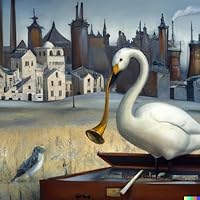
I agree Herr Musil that the sheep is the most beautiful and refined of God's creatures, the perfect animal


April 27, 2018
"O Melro e outros escritos publicadas em vida" possui uma nota introdutória potente, em que Musil reflete sobre sua condição: “Não publicar nada além de pequenas histórias e observações em meio a um mundo que troveja e geme”, “para falar de incidentes quando há tantas questões vitais; para desabafar a raiva dos fenômenos que estão longe do caminho comum: isso pode, sem dúvida, parecer uma fraqueza para alguns, e prontamente admitirei que tive todos os tipos de dúvidas sobre a decisão de publicar." Ele também comenta, com ironia, que as obras póstumas guardam uma suspeitosa semelhança com as liquidações, baixando o preço dos livros, e que ele prefere, então, publicar a sua ainda em vida.
A primeira seção é chamada de Imagens e reúne uma série de esboços de contos e observações cotidianas sobre cavalos, risos, sarcófagos e pensões. O primeiro, "O Papel Mata-Moscas", é um dos melhores textos do livro. Em apenas duas páginas, são feitas reflexões acerca da guerra em imagens convulsionantes de uma mosca presa à morte, ainda que viva. Sua descrição é comovente, analisando os últimos momentos de um ser que ninguém dá valor em sua morte, como os soldados que morriam aos milhares. Por que continuar a lutar quando sabe-se da derrota? No caso das moscas, sabem elas da derrota? E o que isso importa em época de guerra?
Seu segundo texto, uma vinheta surreal sobre macacos é inspirada em Kafka, apesar de não possuir a densidade de tal. Alguns trechos são interessantes, quando comenta sobre o fosso social existente em que os macacos menos privilegiados abusam do pouco poder que possuem contra aqueles que têm menos privilégios do que eles.
Em seguida, estão dispostos ensaios que lidam com uma variedade de assuntos, em sua maioria ligados a percepções alemãs, como o amor pela natureza; arte e kitsch e monumentos públicos. Poemas em prosa desse tipo eram praticados a partir de Goethe, Baudelaire e Heine. No artigo sobre a arte e kitsch, ele faz graça de si mesmo, lembrando as observações de Hermann Broch ou Walter Benjamin sobre o mesmo assunto. É uma meditação sobre o modo como a arte, quando é reencontrada após um período de ausência, pode falhar em nos mover.
Outra peça que merece atenção é "Um homem sem caráter", que reflete entre o uso de "caráter "para denotar força moral e masculinidade, e" caráter "para denotar" qualidades ". O primeiro é uma sátira sobre qualidades masculinas. O último é o uso mais interessante, porque prefigura o romance "Um homem sem qualidades".
Seguem-se mais peças ficcionais de contos absurdos e parábolas até chegar ao texto que leva o título do livro. "O Melro" é uma estranha história que mistura aspectos imaginativos e analáticos de seus dois personagens. É um diagnóstico social que reverbera algumas das inquietações de seu tempo. "Talvez Deus não seja absolutamente nada além daquilo que nós, pobres mendigos, vaidosamente nos vangloriamos na limitação de nosso ser: um parente rico no céu". O tradutor da obra inglesa conta que Musil considerou a peça mais longa da coleção um exemplo de "misticismo da luz do dia" (taghelle Mystik), mas não tão longe de von Hofmannsthal ou de Poe.
Com textos-miniaturas e por vezes epifânicos, a linguagem é atraente, trabalhada e metafórica o suficiente para despertar o interesse. Do primeiro texto ao último, Musil escreve em sátiras ou parábolas de inteligência e percepções originais, iluminando fenômenos da vida humana e "os pequenos traços pelos quais se revela descuidadamente". Pode-se considerar essa obra o trabalho mais acessível de Musil.
A primeira seção é chamada de Imagens e reúne uma série de esboços de contos e observações cotidianas sobre cavalos, risos, sarcófagos e pensões. O primeiro, "O Papel Mata-Moscas", é um dos melhores textos do livro. Em apenas duas páginas, são feitas reflexões acerca da guerra em imagens convulsionantes de uma mosca presa à morte, ainda que viva. Sua descrição é comovente, analisando os últimos momentos de um ser que ninguém dá valor em sua morte, como os soldados que morriam aos milhares. Por que continuar a lutar quando sabe-se da derrota? No caso das moscas, sabem elas da derrota? E o que isso importa em época de guerra?
Seu segundo texto, uma vinheta surreal sobre macacos é inspirada em Kafka, apesar de não possuir a densidade de tal. Alguns trechos são interessantes, quando comenta sobre o fosso social existente em que os macacos menos privilegiados abusam do pouco poder que possuem contra aqueles que têm menos privilégios do que eles.
Em seguida, estão dispostos ensaios que lidam com uma variedade de assuntos, em sua maioria ligados a percepções alemãs, como o amor pela natureza; arte e kitsch e monumentos públicos. Poemas em prosa desse tipo eram praticados a partir de Goethe, Baudelaire e Heine. No artigo sobre a arte e kitsch, ele faz graça de si mesmo, lembrando as observações de Hermann Broch ou Walter Benjamin sobre o mesmo assunto. É uma meditação sobre o modo como a arte, quando é reencontrada após um período de ausência, pode falhar em nos mover.
Outra peça que merece atenção é "Um homem sem caráter", que reflete entre o uso de "caráter "para denotar força moral e masculinidade, e" caráter "para denotar" qualidades ". O primeiro é uma sátira sobre qualidades masculinas. O último é o uso mais interessante, porque prefigura o romance "Um homem sem qualidades".
Seguem-se mais peças ficcionais de contos absurdos e parábolas até chegar ao texto que leva o título do livro. "O Melro" é uma estranha história que mistura aspectos imaginativos e analáticos de seus dois personagens. É um diagnóstico social que reverbera algumas das inquietações de seu tempo. "Talvez Deus não seja absolutamente nada além daquilo que nós, pobres mendigos, vaidosamente nos vangloriamos na limitação de nosso ser: um parente rico no céu". O tradutor da obra inglesa conta que Musil considerou a peça mais longa da coleção um exemplo de "misticismo da luz do dia" (taghelle Mystik), mas não tão longe de von Hofmannsthal ou de Poe.
Com textos-miniaturas e por vezes epifânicos, a linguagem é atraente, trabalhada e metafórica o suficiente para despertar o interesse. Do primeiro texto ao último, Musil escreve em sátiras ou parábolas de inteligência e percepções originais, iluminando fenômenos da vida humana e "os pequenos traços pelos quais se revela descuidadamente". Pode-se considerar essa obra o trabalho mais acessível de Musil.

December 30, 2010
Posthumous Papers of a Living Author begins with a section called “Pictures,” which features a series of sketches. These include short stories and some observations about things like horses and a village funeral. The writing here, some of Musil’s earliest published work, is polished. These are miniatures that suggest Kafka in a surreal vignette about monkeys; while there are a number of little prose poems. It is easy to dismiss these, but they portray a subtle style that is deeper than it appears. There is a small piece that shows up again in his collection Five Women. And memorable sentences like this from "Maidens and Heroes": "How lovely are you servant girls with your peasant legs and those peaceful eyes, about which you just can't tell, do they wonder about everything or about nothing?"(p 37) Or this from his essay on waking up at dawn: “I discover strange fellows, the smokestacks. In groups of three, five, seven and sometimes alone, they stand up on the rooftops; like trees in a landscape. Space winds around them and into the deep.”(p 19-20)
There is also some very enjoyable fiction: absurd tales, parables, and long narrative jokes. Finally, in “The Blackbird,” the strange, visionary story that ends this collection, Musil discovers how to combine the imaginative and analytical sides of his character. The story is a masterpiece, and the collection is worth owning for it alone. It was the last volume Robert Musil published before his sudden death in 1942. Musil had begun to fathom the impossibility of completing his monumental masterpiece The Man Without Qualities and this volume reveals his shift to a radically different form. Musil observes a fly’s tragic struggle with flypaper, the laughter of a horse; he peers through microscopes and telescopes, dissecting both large and small. Musil’s quest for the essential is a voyage into the minute.
There is also some very enjoyable fiction: absurd tales, parables, and long narrative jokes. Finally, in “The Blackbird,” the strange, visionary story that ends this collection, Musil discovers how to combine the imaginative and analytical sides of his character. The story is a masterpiece, and the collection is worth owning for it alone. It was the last volume Robert Musil published before his sudden death in 1942. Musil had begun to fathom the impossibility of completing his monumental masterpiece The Man Without Qualities and this volume reveals his shift to a radically different form. Musil observes a fly’s tragic struggle with flypaper, the laughter of a horse; he peers through microscopes and telescopes, dissecting both large and small. Musil’s quest for the essential is a voyage into the minute.

March 21, 2015
มีถูกใจหลายเรื่องอยู่ ชอบแนวคิดที่เสนอออกมา ยิ่งพอทราบว่ามันอิงจากประสบการณ์ส่วนตัวไปอีกก็ยิ่งทึ่ง (แต่อ่านทั่วไปก็สามารถผูกเข้ากับของตัวเองได้) ลองอ่านภาษาอังกฤษนิดหนึงพบว่าแม้ศัพท์จะยากแต่เรื่องรูปประโยคเรารู้เรื่องกว่าแหะ อนึ่ง ชอบบทกล่าวตามมากๆที่ทำให้เราเห็นประวัติและบริบทของศิลปะสมัยนั้น ทำให้เราอยากหางานของมูซิลมาอ่านเพิ่ม
June 2, 2014
ละเอียดลออ สะท้านสะเทือนความคิดมาก
January 24, 2020
Charming though slight, and still well worth reading. It took me years to get through, for some reason.
September 29, 2008
delightful and worth reading again. and again.
June 6, 2022
Inúmeras são as vezes em que temos de repensar a vida e redigir lhe um novo olhar. A literatura é uma ponte para isso mesmo, o espólio literário em vida de Robert Musil é um caminho para alcançar esse novo olhar, cuja procura não se assoma muitas vezes como premente, mas que se mostra um trilho de verdade e descoberta, assim que se alcança.
Um autor que surgiu na minha estante ao acaso, decisão não premeditada, as vantagens do acaso. A prova de que na literatura há espaço para o que o Homem quiser, desde à satirização cómica até a pungentes ensaios. Obra que na própria carreira do autor surge como uma necessidade de repensar a vida, neste caso a sua própria vida, fruto do malefício que afetava muitos promotores de arte na reta ascendente do novo mundo: a necessidade de publicar, criar e mostrar para daí retirar o seu sustento. De uma necessidade física e de subsistência, alimenta-se a nova necessidade que o leitor deve procurar nos escritos de Robert Mussil que, pelas próprias palavras do escritor, mostram ser intemporais. Incólumes da usura do tempo, numa outra magnificência da literatura: a capacidade de permanecer sempre atual. Há ensaios que nos marcam pela sua intemporalidade na reflexão da jerarquia e iniquidade na sociedade, outros pela tonalidade de mistério e segredo e por fim, uns outros que nos arrebatam tal a melifulia e afincada descrição da fragilidade dos homens.
A publicação data de 1936, altura que representa na Europa o decorrer da guerra civil espanhola e o preparo para o surgir da segunda grande guerra. De entre jorros de sangue e sofrimento, surge Robert Musil com a sua obra Espólio em Vida, rapidamente censurada e o autor exilado.
A verdadeira amostragem de que o ato de pensar e refletir será sempre a maior e mais poderosa arma.
Um autor que surgiu na minha estante ao acaso, decisão não premeditada, as vantagens do acaso. A prova de que na literatura há espaço para o que o Homem quiser, desde à satirização cómica até a pungentes ensaios. Obra que na própria carreira do autor surge como uma necessidade de repensar a vida, neste caso a sua própria vida, fruto do malefício que afetava muitos promotores de arte na reta ascendente do novo mundo: a necessidade de publicar, criar e mostrar para daí retirar o seu sustento. De uma necessidade física e de subsistência, alimenta-se a nova necessidade que o leitor deve procurar nos escritos de Robert Mussil que, pelas próprias palavras do escritor, mostram ser intemporais. Incólumes da usura do tempo, numa outra magnificência da literatura: a capacidade de permanecer sempre atual. Há ensaios que nos marcam pela sua intemporalidade na reflexão da jerarquia e iniquidade na sociedade, outros pela tonalidade de mistério e segredo e por fim, uns outros que nos arrebatam tal a melifulia e afincada descrição da fragilidade dos homens.
A publicação data de 1936, altura que representa na Europa o decorrer da guerra civil espanhola e o preparo para o surgir da segunda grande guerra. De entre jorros de sangue e sofrimento, surge Robert Musil com a sua obra Espólio em Vida, rapidamente censurada e o autor exilado.
A verdadeira amostragem de que o ato de pensar e refletir será sempre a maior e mais poderosa arma.

October 9, 2022
"The circle, the ring of people, the school, or the widespread success that emanates from anyone involved in an intellectual activity is negligible compared to the plenitude of sects whose souls are nourished on eating cherries, on the theater of the great outdoors, on musical gymnastics, on Eubiotics, or any one of a thousand other oddities. It is impossible to say how many such Romes there are, each of which has its own Pope, whose name the uninitiated have never heard, whose followers, however, look to him for the salvation of mankind. All of Germany is teeming with such spiritual brotherhoods: and from this great Germany, in which famous scientists can live only by their teaching and select poets at best by marketing journalistic bagatelles, from this same Germany, innumerable lunatics are swarmed with the means and participants for the development of their whims, for the printing of their books and the founding of their periodicals. For that reason, before bad times recently set in in Germany, more than a thousand magazines were founded annually and more than thirty thousand books appeared, and this was deemed the sign of a towering intellectual achievement."

July 7, 2023
Een bundel prozastukken die ontstonden tijdens de pauzes bij het schrijven van "De man zonder eigenschappen". "Het postume werk..." bevat situatieschetsen, satirische teksten en korte verhalen. Zeer wisselvallig van kwaliteit, maar af en toe gevat genoeg om je toch verder te laten lezen.
"Groeit niet, naarmate een boek dikker is, van bladzij tot bladzij een tot nu toe onverklaarde weerzin, vooral wanneer het om een literair kunstwerk gaat, een weerzin overigens die niets zegt over het genoegen of ongenoegen waarmee het boek wordt gelezen? [...] Veel mensen verkeren tegenwoordig, als ze een boek lezen, in een onnatuurlijke staat, zij voelen zich het slachtoffer van een operatie waar zij geen vertrouwen in hebben."
"Welnu, daarop kijken de keukens en de slaapkamers uit en neer; dicht bij elkaar liggen ze, zoals de liefde en de spijsvertering bij het menselijk lichaam."
"Groeit niet, naarmate een boek dikker is, van bladzij tot bladzij een tot nu toe onverklaarde weerzin, vooral wanneer het om een literair kunstwerk gaat, een weerzin overigens die niets zegt over het genoegen of ongenoegen waarmee het boek wordt gelezen? [...] Veel mensen verkeren tegenwoordig, als ze een boek lezen, in een onnatuurlijke staat, zij voelen zich het slachtoffer van een operatie waar zij geen vertrouwen in hebben."
"Welnu, daarop kijken de keukens en de slaapkamers uit en neer; dicht bij elkaar liggen ze, zoals de liefde en de spijsvertering bij het menselijk lichaam."
January 2, 2023
With this I think I'm done with Musil's prose available in English, with the exception of some plays if my memory serves me.
Collections of little writings that bear no impact on his major work(s), but to someone like me they're of great value.
EDIT: After a bit of reflection, Musil here as elsewhere seems to be focused on what we take for granted in our habits of language and day-to-day perception of reality. Most of the writings here, though small since they were meant to be read in mediums such as the newspaper, aim to strip ordinary live of its usual coherence to reveal layers of uncanny horror and maybe even beauty.
Collections of little writings that bear no impact on his major work(s), but to someone like me they're of great value.
EDIT: After a bit of reflection, Musil here as elsewhere seems to be focused on what we take for granted in our habits of language and day-to-day perception of reality. Most of the writings here, though small since they were meant to be read in mediums such as the newspaper, aim to strip ordinary live of its usual coherence to reveal layers of uncanny horror and maybe even beauty.
Displaying 1 - 30 of 60 reviews