Jump to ratings and reviews
Rate this book

The Nothing Man

Rate this book
War changed Clinton Brown. Permanently disfigured by a tragic military accident, he's struggling to find satisfaction from life as a rewrite man for Pacific City's Courier . Shame has led him to isolate himself from closest friends and even his estranged, still faithfully devoted wife, Ellen. Only the bottle keeps him company.

But now Ellen has returned to Pacific City, and she's ready to do whatever it takes to get Brown back. Even if it means exposing his deepest secret ... a painful truth Brown would do anything to stop from coming to light. He'd kill a whole lot of people just to keep this one thing quiet--and soon enough, the bodies just happen to start piling up around him...

THE NOTHING MAN is Thompson at his most psychologically astute, in a deeply suspenseful and tragic portrait of one man's journey through the dark side of the Postwar Boom.

256 pages, Paperback

First published January 1, 1954

54 people are currently reading
1429 people want to read

About the author

Jim Thompson

160 books1,630 followers
Librarian Note: There is more than one author in the GoodReads database with this name. See this thread for more information.

James Myers Thompson was a United States writer of novels, short stories and screenplays, largely in the hardboiled style of crime fiction.

Thompson wrote more than thirty novels, the majority of which were original paperback publications by pulp fiction houses, from the late-1940s through mid-1950s. Despite some positive critical notice, notably by Anthony Boucher in the New York Times, he was little-recognized in his lifetime. Only after death did Thompson's literary stature grow, when in the late 1980s, several novels were re-published in the Black Lizard series of re-discovered crime fiction.

Thompson's writing culminated in a few of his best-regarded works: The Killer Inside Me, Savage Night, A Hell of a Woman and Pop. 1280. In these works, Thompson turned the derided pulp genre into literature and art, featuring unreliable narrators, odd structure, and surrealism.

The writer R.V. Cassills has suggested that of all pulp fiction, Thompson's was the rawest and most harrowing; that neither Dashiell Hammett nor Raymond Chandler nor even Horace McCoy, author of the bleak They Shoot Horses, Don't They?, ever "wrote a book within miles of Thompson". Similarly, in the introduction to Now and on Earth, Stephen King says he most admires Thompson's work because "The guy was over the top. The guy was absolutely over the top. Big Jim didn't know the meaning of the word stop. There are three brave lets inherent in the forgoing: he let himself see everything, he let himself write it down, then he let himself publish it."

Thompson admired Fyodor Dostoevsky and was nicknamed "Dimestore Dostoevsky" by writer Geoffrey O'Brien. Film director Stephen Frears, who directed an adaptation of Thompson's The Grifters as 1990's The Grifters, also identified elements of Greek tragedy in his themes.

Ratings & Reviews

What do you think?
Rate this book

Friends & Following

Create a free account to discover what your friends think of this book!

Community Reviews

5 stars
317 (25%)
4 stars
453 (37%)
3 stars
344 (28%)
2 stars
89 (7%)
1 star
18 (1%)
Displaying 1 - 30 of 106 reviews
Profile Image for Orsodimondo.
2,457 reviews2,429 followers
October 13, 2025
NELLA MENTE DELL'ASSASSINO

description
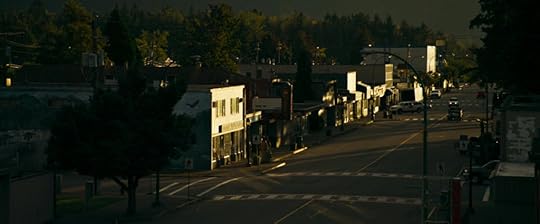
Main Street

Immagino che lascerà di stucco il lettore medio di gialli classici. Ma forse è giusto che quel lettore resti sconcertato. Magari la voglia di intrattenimento lo costringerà alle temibile occupazione di pensare.
Così scrive Jim Thompson di questo suo romanzo, scritto nel 1954 al culmine di una felicissima e fulminea fase creativa: dodici romanzi (tra cui una mezza dozzina di capolavori) in un anno e mezzo, seguendo i ritmi forsennati dei paperback da edicola.
Romanzi come “L'assassino che è in me" o "Diavoli di donne", costruiti utilizzando le tecniche del grande romanzo modernista: io narranti che in realtà sono morti, voci narranti che si alternano (come "Mentre morivo" di Faulkner) o addirittura si sovrappongono nello stesso paragrafo.
Secondo il suo biografo Robert Polito, lo stile di questi romanzi è un ventriloquio psicotico.
I personaggi sono in preda a un'ansia febbrile, a una percezione stravolta della realtà; maschi carichi di violenza e di malessere.

description
Railroad Crossing

Stanley Kubrick, che qualche anno dopo scriverà con Thompson "Rapina a mano armata" e "Orizzonti di gloria", disse che "L'assassino che è in me" era il più agghiacciante e credibile resoconto in prima persona di una mente criminale deviata in cui mi sia mai imbattuto.

In "Un uomo da niente" la figura dello psicotico assassino si incrocia con quella dello scrittore fallito.
Clinton Brown è un giornalista alcolizzato, autore di poesie che ricordano quelle della beat generation, e che non ha mai pubblicato. (Titolo: Vomito e altri versi.)
Ma Brown ha un altro, più temibile segreto: in guerra, a causa di una mina anti-uomo, ha subito una mutilazione ai genitali, e non può avere rapporti sessuali.
Il cumulo di frustrazioni, l'ansia che questo segreto emerga, lo spingono a uccidere la moglie, e per coprire il primo omicidio, a commetterne altri.
Gli indizi che sembrano inchiodarlo sono proprio le poesie, come se la letteratura (come e più del sesso) fosse in fondo il vero osceno segreto che scatena la propria diversità e violenza.

description
Lucky

Nel raccontare l'ambiente della borghesia dei sobborghi californiani (Pacific City, si chiama la città), e dei piccoli giornali, Thompson ripercorre la propria infelice esperienza di giornalista in testate locali, nel decennio precedente. Luca Briasco, nella postfazione al libro, cita come antecedente del personaggio il Jake Barnes di Fiesta di Ernest Hemingway, e soprattutto collega il romanzo al precedente "Diavoli di donne", altro noir "sperimentale" che finiva in un'allucinata, orgiastica scena di evirazione, in un capitolo spezzettato tra i corsivi.

description
Union Station

Thompson è la dimostrazione dei livelli di profondità e verità cui può arrivare la letteratura di genere, senza rinunciare alla propria selvaggia immediatezza, anzi proprio in virtù di quella.
I romanzi di Thompson sono tutti dentro le complessità della grande letteratura del Novecento, e lontanissimi dal midcult ci fanno attraversare una "terra desolata" con sincerità brutale.

E c'è dell'altro, come "Un uomo da niente" mostra in maniera evidente.
La cupezza esistenziale dei romanzi di Thompson può essere letta anche in termini storici e sociali. Thompson viene dall'impegno politico degli anni Trenta, dal lavoro nel Federal Writers' Project di Roosevelt e, pare, da una militanza nel partito comunista.
Cantore dei vagabondi degli anni della Depressione, gli hobos, e hobo egli stesso per un periodo, Thompson incarnerà quella mitologia tragica e cinica negli eroi dell'hard boiled, nei losers e negli spostati dei suoi romanzi anni Cinquanta.
Gli hobos sottoproletari diventano i rifiuti della borghesia, serial killer, poliziotti o scrittori (a volte più cose insieme).

description
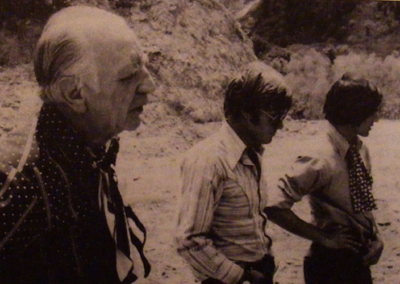
Jim Thompson e Robert Redford.

Dimenticato già alla fine del decennio, in crisi creativa, ridotto a scrivere pigre "novellizzazioni" di film e telefilm, Thompson sarà riscoperto non a caso a partire dagli anni Ottanta, come correttivo alla visione rosea degli anni Cinquanta su cui il decennio reaganiano si modellava.

Dopo lunghe discussioni, Thompson acconsentì ad addolcire appena il finale di "Un uomo da niente".
Che però rimane, negli sviluppi quasi allegorici della trama, nella sgradevolezza dei personaggi, nell'impasse cui conduce personaggi e lettore, una delle opere più radicali del suo autore.
EMILIANO MORREALE

description
James Myers “Jim” Thompson si divertiva a raccontare di essere nato in prigione, nel 1906 ad Anadarko, in Oklahoma. La prigione si trovava sotto all’appartamento in cui abitava con la sua famiglia.
Profile Image for Still.
641 reviews117 followers
September 18, 2023
I purchased this -brand new at the time- in 1989 but set it aside with my other Thompson novels.


Alcoholic newspaperman/former combat veteran is up to his bloodshot eyeballs in mayhem, wiseguy-itry and right in line for a fame-up for murder.
Don't read any reviews where the frammis is given to you in a spoiler or two.

This fast-mover of a novel is absolutely up there with The Killer Inside Me by Jim Thompson , The Grifters by Jim Thompson , or After Dark, My Sweet by Jim Thompson and is possibly even better.

Great cast of characters, each one expertly drawn out. The dialogue is snappy. The situation unlike anything faced by a main character in anything outside of lesser James Caine.

Highest Recommendation!
Profile Image for Dave.
3,656 reviews450 followers
July 27, 2023
The Nothing Man was one of five novels Thompson published in 1954, a rather productive year buy any standard. It is set in fictional Pacific City, which appears to be some kind of fictionalized version of San Diego as its near the Mexican border and there is an island there- Rose Island (perhaps a version of Coronado Island or perhaps a total fiction) which is hard to get to in a storm when the ferries aren’t running) and is connected to the mainland by a series of reefs that perhaps in good weather can be walked by the brave.

The lead character in this story- and you always hesitate to call any of Thompson’s psychopathic killers a hero, cause they are more like anti-heroes – is one Clint Brown (called Brownie by his familiars) who is a rewrite man at the Pacific Courier under the watchful eye of Dave Randall, who Clint merilessly kids and cajoles, calling him colonel to get under his skin. Clint came back from the Korean War minus some of the plumbing that makes a man a man. “It was a tragedy. It was a hell of a thing to happen to any man, and it must ten times as hard when the guy was young and good-looking, and – and it was his fault.”

And, understandably, he is bitter, cynical, and twisted. But Clint may be more broken than you think. He sees himself as different from “all those clear-eyed, clear-thinking people — people with their heads in the clouds and their feet firmly on the ground.” He thinks bitterly how those people can go home to their kids and family, but he is happily wed to the Courier and that is his family. He tells Randall, “My work is my bride and I am consummating our wedding.” Underneath, he is seething: “Simultaneously I wanted to lash out at everything and do nothing about anything.”

Clint is asked to take the dear friend of the boss’s wife, Deborah Chasen, out around town. He evaluates her and decides, taken feature by feature, “she was anything but pretty.” He gets her drunk and takes her to the dog pound. Nevertheless, he tells Ms. Chasen that he is married unfortunately and then his estranged wife Ellen rolls into town and stays at a cottage on the island.

What stands out is the sarcasm that Clint shows, such as when he tells Lem Stukey, the police chief, that seeing him engaged in honest work has thrown Clint into a shock, stunned him, and thrown him for a loop. And when the coroner won’t release his estranged wife’s body, Clint tells the coroner that, if he just had to have a body, Clint would buy him one from the local rendering plant, a cow, a horse, or anything he named. Clint here is someone with no muzzle on, no editor, no one to tell him to shut up and can it.

But Clint is properly twisted and has this two-way personality thing going and he sends his regrets of the necessity of murdering Ellen Tanner Brown. There is never much doubt that he murders – or tries to murder the women he is involved with by arson, by strangling, by throwing off a train, but somehow the way he does it always leaves open some doubt that he was the final one who did the dastardly dead. There is always some room for doubt – for someone else to have come in at the last second and complete the homicide. He even seems to fail at that.

Clint Brown is a sort of version of Lou Ford, a serial murderer who is hidden among us and no one suspects is the bad guy that he really is. Brown gives hints every so often that he is sort of off his rocker and has this two-way personality and that to him, it’s all just a game. It is an odd tale and probably quite odd at the time- 1954.
Profile Image for WJEP.
322 reviews21 followers
October 28, 2021
Emasculated by an anti-personnel mine, Clint Brown returns home from the war and acts like a dick. Gallons of whisky, non-stop jackassery, and bad poetry no longer gave him any satisfaction. The next step is wanton killing. But is he man enough to pull it off?

This book is more overtly comic than Thompson's other three serial-murderer stories (The Killer Inside Me, A Hell of a Woman, and Pop. 1280), but it's just as brutal and deranged.
Profile Image for Andy.
Author 18 books153 followers
August 7, 2008
Psychotically slapstick tale of an ace reporter who lost his private parts in the war, unfortunately the newshound is handsome as hell, so the ladies all chase after him like nobody’s business. What’s a hostile, castrated hunk to do but kill all the women?
Best scene in the book is when the boss’ babytalking wife gets her fat ass handed to her by our dickless hero. Shortly after he throws up her nauseating dinner of frankfurters cooked in mayonnaise (dig the phallic symbolism). One of Thompson’s most demented works.

Profile Image for Gibson.
690 reviews
April 24, 2019
Un uomo senza palle

L'uomo del titolo è Clinton Brown, e la guerra gli ha strappato le palle; e non è una metafora.
Questo segreto lo conoscono in pochi - e così deve continuare ad essere.

Clint fa il giornalista a Pacific City, affoga i dispiaceri nell'alcol, ha una mente acuta e manipolatrice con la quale potrebbe fare molto, guadagnandosi il rispetto dei colleghi, e invece combina poco lasciando le cose sempre uguali.

Comunque sia, la sua mente, quasi per gioco, comincia a fargli uccidere la ex moglie Ellen, per poi passare all'invasata Deborah e infine a Constance, l'editor che avrebbe potuto pubblicare le sue poesie, e in mezzo a tutto questo, sempre lei, la sua mente, a muovere alcuni fili essenziali per pilotare la pista delle indagini.

Un Thompson, le cui dinamiche chirurgiche - forse troppo convergenti? chi se ne frega - rendono questa storia meno corrosiva di altre, ma comunque capace di divertire e irretire nella sua ragnatela di follia, quella follia che le sue mani rendono sempre splendente.
Profile Image for Andy Weston.
3,191 reviews226 followers
May 16, 2024
Something I will always remember Jim Thompson for, which is of course the case here, is his quote..
There is only one plot - things are not as they seem.

Clinton Brown works as a rewrite man for the Pacific City Courier newspaper in a small town close to the Mexican border. His editor, Dave Randall, was his commanding officer during the Vietnam war and responsible for an order that meant Brown suffered injuries from a mine detonation, from which he became desexed.
At the beginning of the book Brown is working on a story on the Sneering Slayer murders, and as narrator, informs the reader that the last part of his story will need to be written by someone else. A hint at what is to come.
Unlike the books that Thompson is most renowned for, here Brown does not set out to be a serial killer, the first half of the book examines the circumstances that led him down that route. Similar though to most of Thompson’s work, is a protagonist creeping his way towards self-destruction, bad decision follows bad decision so that any hope the reader may have for him disappears. Brown is a good example of a Thompson protagonist in that he things he is smarter than he actually is, and has just run out of luck.
Something to admire in this particular novel is how the pace gradually increases to represent Brown’s growing casualness and ease with murder; descriptions of the kills become more detailed and graphic.
If there’s a disappointment, it is in the ending, which suggests Thompson himself wasn’t sure how to finish it. The ending of a book like this is important, as it tends to be that that readers remember most. The fun in reading Thompson though is far more than the plot, specifically for me, odd passages that stand-out, demand reading several times, and are unmistakably his work - worth quoting even..

"You're very soft," I said. "Very soft and warm, X."
"I don't have any pants on," she said. "I guess that's why I feel that way."
"I'll tell you something," I said. "You'll never die, X. There is no death in you, only life. So long as there is laughter, so long as there is warmth and light, so long as there is soft flesh, fresh and sweet-smelling like no perfume ever made, so long as there is a breast to cup and a thigh to caress... you'll live, X. You'll never die."
"That's awfully pretty," she said.
"Want me to tell you something?"
"Please do," I said.
"I don't care if I do die. Not now, Brownie. Not after tonight." We drove on to Pacific City.
We got to my shack just before dawn.
And I killed her.

and
X cooked with mayonnaise; it was her rod and her staff, kitchen-wise. Mayonnaise was to X as can opener is to a Newlywed. I felt reasonably sure that she had whole hogsheads of the stuff concealed in the cellar. If one could surprise her at just the right moment-catch her while she was dipping out a couple of ten-gallon pails for the evening meal-well...
But probably she had become immune to it; probably she could breathe in it as a fish breathes in water. In any event there were other ways, and all very pleasant to contemplate.
One might ash tray her to death, for example. You could place her at the end of a vast room while you sat at the other end. And you would be equipped with unlimited cigarettes and a thimble-size ash tray, and she with a pair of binoculars.
Profile Image for Erik.
258 reviews26 followers
December 11, 2010
Classic nihilistic Thompson. Clinton Brown is work-a-holic, alcoholic, sociopathic wiseass, void of all emotion, and capable of fooling all of his small-town, lame brained coworkers into doing just about anything he wants. He drinks whiskey around the clock, uses his good looks to manipulate women, yet has no problem in resorting to extreme acts of violence when he feels that his cherished loneliness is in danger. When Clinton gets personally involved in the death of his former wife, a mystery unravels as to whether or not he is guilty of a booze-fueled murder, or if he is a victim of an intense set up. Overall, a classic, boozy, hard boiled crime story...
Profile Image for Paige.
68 reviews21 followers
November 24, 2007
God, I love Jim Thompson. On a whim, I decided to reread some of my favorites. The Nothing Man is a blast. A poetry-writing newspaper man, fifths of whisky downed in a few hours, women who fall in love easily and quickly, and murder. What's not to love?
Profile Image for Adam  McPhee.
1,525 reviews339 followers
August 12, 2020
I said, "There's just one way you can help, Stuke. I—"
       "Huh-uh," he said, firmly. "That's out, keed. I couldn't do it. I ain't goin' to. So forget it. You're goin' to snap out of it, Brownie. You're goin' to get your mind off of that—off of yourself, and start thinkin' about something else. That—it ain't everything. It—"
       "Isn't it?" I said. "Isn't it rather easy for you to talk, Stuke?"
"It'd be easier not to, keed. A hell of a lot easier."
       "But you don't know! You don't know what it's like to—"
       "Keed"—he tapped me on the chest—"don't tell me what I don't know. You'd be talking for the next forty years and we ain't got much time. You've got to get cleaned up, get yourself something to eat and a little sleep. You've got to be in here on the job in the morning, and you've got to work harder than you ever worked before. You're going to go on swinging your weight against the rats and the cheaters in this town, but this time you're going to swing it the right way. It ain't going to be a needle job. It's going to mean something. .. . Remember what I told you the other night? Well, I meant it. If the graft wasn't here to take, I wouldn't be taking it."
       "But you don't know—I can't! God, how can I?"
       "You ain't got no choice," he said.
       His eyes were soft, sympathetic, friendly. They were firm and unwavering.


I wasn't entirely onboard with how the three murders were solved, or rather explained away. Also feels vaguely misogynistic that three women die and yet the ending is very much dude's rock.

What I really liked is how the protagonist narrator so cynical and hateful but by the end is able to redirect his anger in a more productive manner and thus find a reason to live. Wish there had been more of an exploration of what I came to think of as the Red Harvest element though.

I know better than to say the hardships of our era will produce great art, but man it would be great if something pushed us back to that attitude of the best noir writers (Chandler, Hammett & Jim Thompson) of morality without being moralizing.

I really liked the cop and how Thompson found sympathy and humanity and even maybe the tiniest shred of idealism in his characters despite him being a corrupt sleaze.

Jim Thompson taking a break from his hardboiled noir to go off on landlords:

A New Deal man through and through:

There's a very 1950s husband and tradwife dinner served consisting of spoiled hotdogs weiners and mayonnaise. Adds to the phallic theme but also shows that Thompson was very aware of how his era would be remembered by future generations:

Longer review here: https://sentinelcrab.blogspot.com/202...
288 reviews3 followers
April 9, 2022
At least 3.5 stars, rounded up.

Wow, another one of those more more off-beat books, but off-beat or bizarre is nothing too unusual for Jim Thompson.

Clinton Brown is a journalist working for a small city paper. During the war, he lost a private part of his body, and this has affected his life ever since. It has turned him into an insecure, self-loathing man who desperately wants his disability to remain a secret from any women who show an interest in him, including his ex-wife. He enjoys tormenting his work colleague who is also the colonel partly responsible for Clint's physical deficiency.

Along with his resentment against the world, Clint succeeds in killing three women who make the mistake of wanting to be close to him or are blackmailing him.

Or does he? Perhaps he's not as smart or as evilly clever as he thinks he is.
Maybe he will not be successful in achieving his particular objective from his actions.

Perhaps not the very best of Jim Thompson, but still a good, fast-moving read.
Profile Image for Massimo Carcano.
520 reviews6 followers
February 19, 2015
Lo ammetto, non conoscevo Jim Thompson, mi sono solo piaciute la copertina e la trama ma ora posso dire di aver fatto una grande scoperta. Scrittura fluida e potente, trama avvincente e originalità della narrazione fanno senza dubbio innamorare fin dalle prime pagine di questo libro. Chi è Clinton Brown? Qual è il suo problema? Fin dove ci trascinerà con la sua follia? Domande alle quali urge dare una risposta e alle quali Jim Thompson ci inchioda con sapienza. Ora urge assolutamente dare seguito a questa lettura con qualche altro romanzo di questo maestro dell'hardboiled!
Profile Image for David Rush.
412 reviews38 followers
December 17, 2024
Strange, disturbing, uncomfortable, these are words to use in a Jim Thompson book review.

It has been 30 years since I last read a Jim Thompson novel. I went through a phase and read a few and I remember telling people he was really interesting. And yes, this did hold my interest throughout. But it was painful at times, so maybe I have changed more than I realize. Some hard boiled detective stuff can be gritty and dark, but still fun. Not so much with this one. It was dark, gritty, darker still, cruel, and uncomfortable.

Parts of it were really off-putting, at least to me. Hard to explain though, the main character was cruel, deliberately, but somehow Thompson made him feel human in his coldness, and that magically makes reading about the violence even more disturbing. Not like some writers who seem to revel in the inhumanity, nor somebody putting in character ambivalence, this is something different. Something strange.

For a while it came across as misogyny, but again it was kind of strange, in that the women victims seemed like real characters, not cardboard cutouts of female victims. And there is a twist in the end that changes the tone of all the violence. I am not sure what to make of it.

A minor spoiler, but I think it is revealed early on so I am going to spill it here to make a point, because it does seem goofy that it is the plot motivation and explains the title. The deal is the main Character comes back from “the war” with an injury that removes any chance of sex. Ok he had his johnson blown off, and that is why he is a “nothing man” and because of that he really is no man at all. Basically that defines "a man". Without it there is nothing.

[it was] newspaper in name only, I was a man in name only. There was nothing in either of us. We were façade for emptiness. Pg. 174

Published in 1954, it was interesting they were talking about the demise of local papers even back them.

“Dave’s all on edge, Brownie…..he’s got a lot of dough tied up in a house here, and he’s not a kid anymore, and newspapers are folding all over the country.” Pg 84 copyright

Also, aside from all the violence and meanness, one of the most disturbing parts is when Clinton gets a home cooked meal from the wife of a newspaper rival and she cooks..

Iced frankfurters in in hot mayonnaise-parsnip ring Pg. 124

I mean, THAT is really grotesque.

For my own notes here are some of the characters

Clinton Brown: The main character, a newspaper guy
Ellen Brown: Clinton's estranged wife
Deborah Chasen: Amorous widow fixated on Clinton Brown, unrequited.
Dave Randall: Fellow newspaperman who Clinton constantly insults.
Lem Stukey: corrupt local detective
Profile Image for Jim.
2,413 reviews800 followers
September 22, 2021
This is not one of Jim Thompson's best novels, but it is interesting. While in the war, Clinton Brown had stepped on a mine that destroyed his sex life. When The Nothing Man begins, he is working as a newspaper writer for a small California city. He winds up committing a series of murders of women whom he feels put him into a bad situation. He is a close friend of Police Chief Lem Stukey, who is investigating these murders, and delights in throwing a lot of pixie dust his way. I thought the ending was fairly unsatisfactory.

The one character who should have been killed but wasn't was Kay Randall, wife of his editor, who prepares a dish of cold hot dogs with mayonnaise and parsnips for him that made me feel nauseated. Unfortunately, she gets away.
Profile Image for Antonella Montesanti.
1,104 reviews25 followers
September 7, 2013
Un bel noir scritto molto bene da un autore di cui non
avevo ancora letto nessun libro.
Thompson ha saputo fondere in modo magistrale
ironia e schizofrenia del personaggio principale, un
giornalista del Courier separato dalla moglie e reduce
da una missione militare che lo ha lasciato menomato
della sua virilità.
Forse a causa di questo egli non riesce ad instaurare con
nessuna donna un rapporto normale di coppia e si
trova invischiato in una serie di omicidi che lo vedono
protagonista sotto vari punti di vista….
La lettura è scorrevole ed incalzante anche se la fine
un po’ troppo soft è forse l’unica pecca di questo noir
tra i più classici letti finora.
Profile Image for Sarinys.
466 reviews173 followers
November 24, 2014
Noir da manuale, Un uomo da niente è narrato dalla voce del protagonista Clinton Brown, saldamente ancorato alla spirale discendente delle proprie azioni. L’intreccio, filtrato dal suo punto di vista, presenta fatti aperti ad interpretazioni sempre nuove, rendendo impossibile stabilire cosa sia reale e cosa no. Brown sprofondando in se stesso atterra nel caos, dove l’esistente è un vortice nauseante privo di punti di riferimento.
Scritto nel 1954, pubblicato per la prima volta in Italia nei Gialli Proibiti Longanesi nel 1955 e poi nel 1989, viene ristampato in pompa magna da Einaudi Stile Libero nel 2013.
Profile Image for Kyle Spishock.
492 reviews1 follower
September 9, 2024
“The Nothing Man” is a dime store noir where nothing really happens.
An investigative reporter has Patrick Bateman-level scenarios of killing numerous women. As he commits the murders, he covers them up, weaving an intricate web of conspiracies around him.
Ultimately, he fails at even homicide, leaving the story with little point, and the reader’s a little worse for wear.
Profile Image for Richard Schaefer.
364 reviews12 followers
May 10, 2022
The Nothing Man takes a tried and true Jim Thompson formula (our hero/anti-hero has a secret side the world doesn’t know about) and turns it into an interesting exploration of fragile masculinity: the nothing man in question, a sardonic, bitter journalist named Clinton Brown, had his dick blown off by a landmine. It causes no end of resentment and frustration for him, in his interactions with the women he can’t satisfy and in life in general. The anger Clinton feels about his emasculation is taken out in violence toward the women around him… or is it? The book plays with the unreliable narrator trope to the extreme, for Clinton might be lying to himself as well as the reader. Did he actually murder anyone? Or is he innocent and delusional? There’s a certain irony (very typical of Thompson) in thinking of this man, whose emasculation has caused so much anger, being ultimately denied even the satisfaction of the revenge he thinks he’s taking. While the ending isn’t Thompson’s most satisfying, that irony isn’t lost on me, nor on the poor, dickless Clinton Brown.
Profile Image for Giorgio Palumbo.
Author 4 books19 followers
August 6, 2015
Su Jim Thompson ammetto la mia colpevole ignoranza invece, ho visto un film tratto da L’assassino dentro di me (The Killer Inside Me) ed è stato uno di quelli che per vari motivi (Winterbottom su tutti) ha lasciato qualcosa dentro (e non fate i cattivi su che fate blink blink nudge nudge perché c’era Jessica Alba) di disturbante, cosa che i grandi film riescono a fare se ti si incastrano nello stomaco.
Un uomo da niente è come dire, un libro della Madonna, differentemente da Cain (siamo nello stesso campo di gioco del noir) Thompson ha uno stile claustrofobico, folle (come il suo protagonista, anche lui narratore in prima persona) e a tratti soffocante anche se mai sopra le righe, ti fa tornare sulle righe per leggere “se ha veramente scritto quello che ho letto, se gli ha fatto veramente fare quello che ho capito”. Provocare quel senso di non dico empatia ma comprensione per un pazzo assassino è un’impresa ardua ma ad un certo punto vi troverete quasi ad anticipare le mosse di chi narra nelle efferatezze e nella discesa agli inferi. Viene in mente il Patrick Bateman di Ellis lo so a dirla così ed in parte è vero, qui però la follia è più lucida, più lineare, una sequela di azioni che un motivo lo hanno e un raziocinio anche, a loro modo.
Se per Cain c’è un vincitore morale per Thompson non c’è però, c’è l’ineluttabilità degli eventi, delle situazioni e del malaffare, c’è che anche un folle e il suo disordine mentale e morale è secondo in scala rispetto a chi a suo modo tira veramente le fila (e qui il finale è sì sconvolgente) e ha una lettura minimale, se la si registra in un contesto in cui siamo qualcosa non in funzione di ciò che facciamo (sia esso anche un delitto) ma in funzione di come viene usato, e percepito.
Thompson rispetto a Cain dà risalto principalmente al protagonista, alle situazioni che portano scalino dopo scalino a considerare normale la follia (la cena dal capo, per dire) e sovverte i canoni del noir, per cui l’antieroe è a suo modo un eroe, un reietto che diventa una vittima ed è destinato alla sconfitta nei confronti della causa.
Anche qui siamo dalle parti non dico del capolavoro, ma del libro grosso grosso.
Profile Image for Melody.
1,320 reviews431 followers
June 22, 2013
Ok. That's my last Jim Thompson. Even if we have another one at the house I will not read it. It's the same dang story anyway. I'm not even going to put a spoiler alert here because if you've read one of them you need to know you have pretty much read them all. Or at least the one's I've read. The main character kills women. Then he uses his much greater intellect to confuse and trick the dumb people who are around him to believe that he could not possible have been the murderer.

The only new thing in this book is it seems Clinton Brown may not have had a penis. I can not swear to it, nor can I get anyone else to acknowledge it. But I think that is what we are supposed to wonder about.

The only thing I was intrigued by (besides the question about the lack of or the presence of a penis) in this book published in 1954 is that newspapers are evidently closing right and left. hmmmm maybe video didn't kill the radio star. Or whatever little ditty would be used for the same sentiment about technology and print.
Profile Image for Bill Wallace.
1,324 reviews58 followers
December 9, 2025
Thompson's undependable narrator combined with a convoluted plot make something of a mess here. Whether impotence extends to an inability to murder is one of several questions the reader may be left with.
Profile Image for venticinque_lettori.
126 reviews20 followers
November 25, 2015
Che fatica finirlo! Non mi è piaciuto, la storia non incalza, resta in superficie e sembra sempre che manchi qualche dettaglio, i personaggi sono buttati lì a caso, compreso il protagonista. Eppure l'autore è stato uno sceneggiatore di successo (ha lavorato anche con Kubrick). Per me bocciato.
Profile Image for Dug Gly.
2 reviews
August 9, 2008
I've read this book six or seven times, and it just keeps getting funnier every time.
Profile Image for LindaJ^.
2,517 reviews6 followers
July 19, 2021
Clinton Brown, aka "Brownie," returned from WWII missing a most crucial part of himself, at least for a man. Now he's a journalist, working on the Pacific Times. The editor is Colonel under who he served in the war and the only person, or so Brownie believes, who knows what his war injury is. Brownie's a decent reporter. He is also a consumer of tremendous amounts of whiskey. He's also a mentally damaged, harboring a rage that threatens to do him in. He sent Ellen, the woman he had married before the war, away but cannot get her to divorce him or leave him alone. He's handsome, and women find him attractive. Brownie sometimes has another personality that talks to him. The two seem to trade off being the bad guy.

Brownie and the chief of police Stukey do a lot of drinking together. Stukey wants Brownie to support him in a run for judge, but Brownie wants nothing to do with it. Then Brownie's wife Ellen returns to town. Stukey tells him because Brownie was not at the paper when she called to tell him. She's staying on the island but a major storm hits making transport across the bay to the island impossible - even the ferry shuts down. Brownie, drunk, manages to fall into a rowboat and make it over. He confronts Ellen, tries to get her to leave, and then realizes she knows his secret. Fearing she will tell, he smashes her over the head with a whiskey bottle, sets the cottage on fire, falls back into the rowboat, and lets nature take its course. Of course, he ends up back on the mainland and much more sober. When he reaches his house, his phone is ringing and it is his editor saying he and the publisher will be right over with bad news. Then Stukey shows up and accuses him of murdering Ellen, whose body has been found. But somehow the facts don't add up - Ellen died by asphyxiation. Brownie is loving the game. He convinces Stukey he did not do it and in front of the editor and publisher demands Stukey clean up the city and find the killer.

More murders follow, or at least Brownie thinks he kills two more women. And Brownie almost dies himself, after getting food poisoning from the editor's wife's cooking.

The story has multiple twists and turns and the ending is quite a turnabout. I enjoyed the book. It is very noir, with Stukey always calling Brownie "keed."
Profile Image for Alex.
194 reviews2 followers
June 28, 2020
"Where the hell do you get off drawing a pension anyway?”“It is puzzling,” I said, “isn’t it? Obviously I am not disabled for employment. Obviously I have suffered no disfigurement. I am even more handsome than on the day I was born, and my mother boasted—with considerable veracity, I believe—that I was the prettiest baby in town.” His eyes narrowed. “I get it. You’re a fairy, huh?”“Is that an assertion,” I said, “or merely a surmise?”“Don’t think I’m afraid of you, Brown!” “Aren’t you?” I said. “Then perhaps you’d like to do something about my statement, made herewith, that you are a nosy, dull-witted son-of-a-bitch and a goddamned lousy newspaperman.”

A war veteran with an injury that left him missing some uh... important parts, begins to commit murder. Or does he?

Loaded with dark humor and psychological mayhem. Thompson loves his whiskey too. Definitely worth a read if you want something different.
Profile Image for The Professor.
239 reviews22 followers
November 20, 2019
“How long could you live in a world where everyone knew you didn't have a pecker?” Ah that sunny fellow Jim Thompson, how he keeps me warm on my commute with his tales of male FUBARs going off the deep end. “Nothing” is the usual first rate man-fic which, even if it doesn’t reach the heights of “The Killer Inside Me” or “Pop.1280” is still larded with deliciously unpalatable truths about what happens when it all gets a bit much for your average homicidal maniac.

The average homicidal maniac here is Clinton Brown, a journalist with a florid turn of phrase, a taste for stirring shit and, thanks to an, um, unfortunate event in the army a lack of certain appendages down below. Note the “Nothing” of the title is much more to do with existential meaninglessness rather than the cramp the absence of Mr Happy puts on Brown’s luck with the ladies. Luck he does have, by the way, much of it good while his wife Ellen and wannabe paramour Deborah Chasen certainly have the worst of it. Once those two irritate the hard-drinking, endlessly self-pitying Brown (“Was every move I made designed to extract payment from the world for the hell I dwelt in?”) they are offed in single brutal sentences and that, one realises with a sick feeling, is just the start. Brown is a man on a short fuse whose collection of poetry is called “Puke and Other Poems” and he doesn’t keep his head down after his murders, he fiendishly sticks around to influence the investigations.

So admittedly the hook of the novel is “when is this sonovabitch going to get his comeuppance?” and Thompson sustains and escalates this right to the end and the unexpected conclusion. Thompson is boffo at male monsters. He wheels on characters – all men – who you know from the first page are going to go intergalactically off the deep end sooner or later and his narratives therefore hum with suspense from the off even if the actual movement of the pieces around the chessboard are fairly humdrum. Also present and correct is the surreal touch; with his talk of the “two-way pull”, the “sideways world” and “They were pulling me off to one side, moving me down a course that was completely out of the world, yet of it” Thompson depicts a wooziness, a sickness of the soul that is messing with Brown’s perceptions, although considering Brown’s whisky intake (and, indeed, Thompson’s) it could all be the booze talking. Or undiagnosed schizophrenia. Certainly some may complain the women in “Nothing” aren’t much to write home about – tart with a heart, shrewish wife, old doyenne – but this is a first person narrative and as such they are all filtered through and misrepresented by the distinctly messed up perceptions of Clinton Brown. In the end the black joke of “The Nothing Man” is that the supposed “Sneering Slayer” is ineffectual not because of what is – or isn’t – in his pants but because he can’t even kill people properly. There is nothing in life or death he can succeed at. It’s yet another masterful dissection of a toxic personality loaded with all-too-true one-liners and developments that just won’t let your eyes away from the page. “What does a man do when he can accept nothing less than the unachievable?”
Profile Image for Jon.
538 reviews37 followers
October 12, 2024
Jim Thompson is rad as hell. The Nothing Man twists and turns on a darkly comic journey through male post-war anxiety and disillusionment. Which, in Thompson’s hands is both distressingly heavy and slapstickingly ludicrous. The literal emasculation anxiety and shame is deeply comical, and simultaneously a disturbingly poignant critique of white heterosexual masculinity—something that’s found new levels of disturbing relevance in the age of beta males, MRAs, incels and #metoo.

The danger, naturally, is that our protagonist, Brownie, is not only quite funny and charismatic, but Thompson’s prose tease and blur boundaries in ways as enticing as they are terrifying. He’s putting us in a moral dilemma, where we become complicit to the committed crimes—even as we’re horrified. Pop. 1280 does a similar thing, but I find the charm laced through The Nothing Man, as well as the hints of optimism, much more sinister.

Such an angle has some serious traction during the optimistic, self-assured 50s American Utopia (which wasn’t actually Utopic at all). In many respects, the Oedipal castration anxiety of The Grifters is merged with the existential absurdism of The Getaway, with hints of the sociopathic protagonists of Pop. 1280 and The Killer Inside Me, now synthesized into a delightfully sick, and somewhat ambiguous, socio-political takedown of post-war America.

While Thompson’s novel certainly retains its bite by offering a window into a different era, its staying power is equally impressive. There’s plenty of application to our current Trumpian nightmare world in here. Which not only makes Thompson an incisive critic of his own time, but an eerily prophetic voice who might have known exactly where America was headed decades before most began catching on. So it often was with crime noir, whose dark vision of America has, with time and in the hands of a clutch of great thinkers and writers, been proven tragically accurate.

Thompson was his generation's madman in the wilderness, where “The emptiness...that continued, too. Only broadening now, widening, spreading its deafening atmosphere farther and farther, until as far as one could see there was nothing but desert, parched and withered and lifeless, where a dead man walked through eternity.”
Profile Image for Sam Quixote.
4,801 reviews13.4k followers
October 24, 2025
Clinton Brown is the best reporter at the Pacific City Courier, a small Californian newspaper - but he has a secret. Horribly maimed in the war after accidentally wandering onto an anti-personnel mine, Brown has left his wife believing their marriage is over now that he no longer has a penis - and worries that, now that she’s returned to try to change his mind, she will tell others about his loss. The only way to keep his secret: murder…

There’s a lot I liked about Jim Thompson’s The Nothing Man - it’s an entertaining story, there are some creative decisions in the storytelling, a few vivid scenes - but also disliked other aspects to it - the convenience of so many plot points, the almost comedic way Brown’s killing spree unfolds, and the overall treatment of his mental state. It’s a novel I appreciate more than I can say I enjoyed.

The choice of having a main character who lost his manhood in the war is, forgive the pun, a ballsy choice. Because there must have been a number of poor bastards who came back from World War 2 with that and other horrendous injuries and whose lives were so irreparably ruined that they envied the dead, and yet I don’t think I’ve read any novels that had a character with this specific injury (I think A Farewell to Arms has a similar scenario but I’ve not read that). It’s indicative of Thompson’s willingness to engage with the grim realities of his society in his work.

And while on the surface it might seem to some observers like Thompson is writing the same story over and over - ANOTHER main character who’s nuts and murders people - that character and the story treatment is different each time. Nick Corey from Pop. 1280 is as distinct from Frank Dillon in A Hell of a Woman who in turn is as distinct as Clinton Brown in this novel. The personalities aren’t just different but the way their murderous motivations and, in Corey and Brown’s cases, insanity is handled differently. He tries to get in their heads and extrapolate their worldview for the reader to make their reprehensible actions seem “reasonable”, at least from the character’s perspective - it’s really clever and creative writing from Thompson.

That said, the storytelling here is hampered in two ways that you could interpret however you want, but both unfortunately bring the quality of the narrative down. The first one: once Brown begins his murders, things go too much his own way - Lem Stukey, the local chief of police, is such an incompetent boob that he never gets close to arresting Brown. Worse, other idiots, like his hack colleague Tom Judge, blunder into guilt’s way by chance, taking any potential heat away from Brown, which makes for a far too contrived, and unsatisfying, story. There’s no tension in Brown ever getting captured or stopped because everyone in the story is a moron which allows Brown to do whatever he likes without consequence.

Or, the second one: Brown is so fucking crazy that everything that’s happening is all happening in his broken mind. Which is as bad as saying “...and it was all a dream” because then the story has no weight and feels as pointless as reading the ramblings of a drooling dunce. But he is also an undeniably unreliable narrator who misses out important elements in the story - there’s weird time jumps and empty patches of detail here and there - which makes this interpretation seem possible.

My feeling is that it’s the first - contrivance galore - with a smattering of the second - Brown’s a nutjob - but that doesn’t make for a great story. It even gets comical at a certain point. After killing one woman who threatens his wellbeing, he meets another, then another, and his reaction is the same in each instance: time for another murder! Which he pulls off without a hitch and gets away with it easily, so why wouldn’t a crazy person who views death as a game think differently?

All of which isn’t to say that the story isn’t enjoyable to read because it certainly is - Thompson is such a capable writer and gifted storyteller that the pages glide by effortlessly. Certain scenes are very memorable for their weirdness - his bizarre relationship with his editor (who also happened to be his commanding officer during the war and was directly involved in his injury - more convenience) and his wife, who invites him over to their house for dinner so she can poison him with spoiled food (frankfurters and mayonnaise - geddit)?! And the whole time this lunatic Brown is brooding about getting even with the guy so I was expecting him to add his editor to the body count too, making this scene that much more tense.

Brown’s sad way of life, the odd twists and turns of the murder investigations by that twit Stukey, the general dialogue which is often startling and darkly humorous - there’s plenty to like about this novel, and for a lesser writer this would be the most notable book in their career instead of merely “mainly one for the fans” in Jim Thompson’s case.

As bonkers as this sounds, the story put me in mind of A Christmas Carol with each of Brown’s victims representing a different ghost: Ellen, his wife, representing his past; Deborah, representing the present; Constance, the would-be publisher of his terrible poetry, representing the future. And Stukey as his very own Jacob Marley, particularly in that final chapter. I don’t know why Thompson would do his own dark retelling of Dickens’ classic so this is almost certainly in my own head only, but I still saw it as a very unexpected possibility, especially as Thompson has done subtle retellings of classics like Crime and Punishment in A Hell of a Woman, or the ancient world’s vision of the afterlife in The Getaway - he’s such a smart writer, I’ve come to expect more than what he presents the reader on the surface.

One final thing I’ll say is to re-read the first chapter after you finish the book because it hits differently given what happens and really clears up any misdirection presented in that cloudy final chapter. I only realised this because, when I review a book, I first flick through the pages and put my thoughts down in note form, and I found myself simply re-reading that first chapter again and understanding that Thompson was clearly signposting who and what Brown was right from the beginning - again, this is a deeper writer than he appears and deserves greater consideration.

The book may not end in the most satisfying way but it does seem fitting given Brown’s ruined state of mind and the general impression Thompson’s been hinting at of the character throughout the novel.

The Nothing Man isn’t as brilliant as Pop. 1280 or as fun and exciting as A Hell of a Woman but it certainly has its merits - artistically speaking - even if there was too much mundanity in the story proper. I can see why it’s not among his better known books but it’s still worth checking out if you’re interested in this author and it’s more imaginative than the average crime thriller that’s out there - The Nothing Man is a far from nothing novel.
391 reviews21 followers
June 18, 2013
I really enjoy Thompson, but. man, he can put you through the wringer. His protagonists are just so flat-out im- or at least amoral that the reading can be, well, uncomfortable. This book is no exception, with a war-wounded dissolute and embittered newspaperman, whose rage at the world is taken out on all those around him - ex-wife, colleagues, chief of police, etc. The characters are good, and even if not likeable are enjoyable. There's a real sense of place and period... it's a good, engaging, slightly idiosyncratic noir.

Thompson does a good job of keeping you just off balance - whenever you think you know on where it's all going to land up he just knocks you a different way.

This has some lighter moments compared with other Thompson novels, and in the end the misanthropy is somewhat, well, evened-up, so long as you don't take it too seriously. And in the end I think that's the one niggle I have - other Thompson novels seem serious, weighty. This one I had to take a little less seriously in order to enjoy it.
Displaying 1 - 30 of 106 reviews

Can't find what you're looking for?

Get help and learn more about the design.