Jump to ratings and reviews
Rate this book

Love/War/Death #1

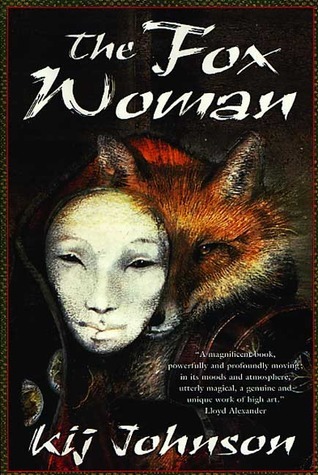
The Fox Woman

Rate this book
Yoshifuji is a man fascinated by foxes, a man discontented and troubled by the meaning of life. A misstep at court forces him to retire to his long-deserted country estate, to rethink his plans and contemplate the next move that might return him to favor and guarantee his family's prosperity.

Kitsune is a young fox who is fascinated by the large creatures that have suddenly invaded her world. She is drawn to them and to Yoshifuji. She comes to love him and will do anything to become a human woman to be with him.

Shikujo is Yoshifuji's wife, ashamed of her husband, yet in love with him and uncertain of her role in his world. She is confused by his fascination with the creatures of the wood, and especially the foxes that she knows in her heart are harbingers of danger. She sees him slipping away and is determined to win him back from the wild ... for all that she has her own fox-related secret.

Magic binds them all. And in the making (and breaking) of oaths and honors, the patterns of their lives will be changed forever.

384 pages, Paperback

First published January 1, 2000

50 people are currently reading
4560 people want to read

About the author

Kij Johnson

108 books500 followers
Kij Johnson is an American writer of fantasy. She has worked extensively in publishing: managing editor for Tor Books and Wizards of the Coast/TSR, collections editor for Dark Horse Comics, project manager working on the Microsoft Reader, and managing editor of Real Networks. She is Associate Director for the Center for the Study of Science Fiction at the University of Kansas, and serves as a final judge for the Theodore Sturgeon Memorial Award.

Johnson is the author of three novels and more than 38 short works of fiction. She is best known for her adaptations of Heian-era Japanese myths. She won the Theodore Sturgeon Memorial Award for the best short story of 1994 for her novelette in Asimov's, "Fox Magic." In 2001, she won the International Association for the Fantastic in the Art's Crawford Award for best new fantasy novelist of the year. In 2009, she won the World Fantasy Award for "26 Monkeys, Also The Abyss," which was also a finalist for the Hugo and Nebula awards. She won the 2010 Nebula Award for "Spar" and the 2011 Nebula Award for "Ponies," which is also a finalist for the Hugo and World Fantasy awards. Her short story "The Evolution of Trickster Stories Among the Dogs of North Park After the Change" was a finalist for the 2007 Hugo, Nebula, Sturgeon, and World Fantasy awards. Johnson was also a finalist for the 2004 World Fantasy Award for her novel Fudoki, which was declared one of the best SF/F novels of 2003 by Publishers Weekly.

Ratings & Reviews

What do you think?
Rate this book

Friends & Following

Create a free account to discover what your friends think of this book!

Community Reviews

5 stars
556 (31%)
4 stars
636 (36%)
3 stars
410 (23%)
2 stars
112 (6%)
1 star
42 (2%)
Displaying 1 - 30 of 201 reviews
Profile Image for karen.
4,012 reviews172k followers
February 1, 2019
so this is a story about a fox who falls in love with a married human man, and in order to get his attention, she uses secret ancient fox magic and she and her family become human, or illusions of humans, and trick the man into falling in love with her and believing that their illusory world is real, as he lives and eats and mates with them and time stands still for a little while.

the setting is ancient japan, and the story is full of details of the expected behavior of men and women in civilized, noble, japan,(read: "restrained") which contrasts sharply with the wild world of the fox, who have no formal standards of "proper" behavior.

it is fine, but not super-fine.

and my lack of ardor has nothing to do with the triple taboo of having incest, bestiality, and gay human sex all in one volume!! but really, save something for the sequel, honey!

i have no problem with mixing species when it comes to the physical act of love. whether it be woman and bear or man and troll or man and angel or man and gourd - but i just don't buy this love. "love at first sight may sound trite but it's true, you know." maybe somewhere, but not so much here. i believe in love, i just don't believe in this fox's love for this man upon first sight. what is it in a human physiognomy that is attractive to a fox?? the other way 'round, i can understand (please do not put me on any watch lists - i am not having sex with animals) but i can understand the desire to be/be with a wild animal more than i can understand a fox's desire to wear clothes and shoes and spend all day in quiet contemplation, waiting for the man to come to her for the sweaty intercourse.

because the female life in feudal (is this feudal? - i am unsure of time periods in the olde east) japan is totally dull.everything is formal and correct and polite and distant and smacks of ritual.i don't see a fox sitting still for long enough to want in on this world, where every emotion seems to be a burden:

"tranquility is best, of course. one strives in one's life for calm acceptance of circumstance, whether good or bad. happiness is the pleasantest of emotions; because of this, it is also the most dangerous. having once felt happiness, one will do anything to maintain it, and losing it, one will grieve. regret and sadness. one grieves for the dead, but also for friends forgotten, and things lost or mislaid. i lost a writing desk long ago; even now, i remember it on occasion and feel a pang of regret. anger is never acceptable. it is a sort of madness pulled from one's soul by the cruelty or carelessness of others."

jeez louise - what fox is gonna choose to live like that? me, i prefer my propriety undercut with a little merteuil.


and i could see a fox wanting to live her life - full of sly manipulation and power struggles, not the complete submission and sublimation of this poor wife. plus, better wardrobes.

the juxtaposition of the civilized and the wild is painfully obvious, but gets emphasized to death in scenes like this:

"fleas (and their equivalents, all the tiny harassments of life) are everywhere in this world, an unpleasant reminder that life is not as perfect as we would prefer. but i was travelling to attend the princess; such a reminder at such a time was unwelcome. onaga saw my distress, and using a soft paper that had been tucked in her sleeve, she crushed the tiny animal and dropped it through the window-grille."

some of the details of the ritual of communication, i found quite lovely, where married couples exchange poetry, in which even the paper color choice and its texture have an understood meaning. but overall, i found the pacing too deliberate for me, and the details too precious.

i am a wild fox and i need to run free.

come to my blog!
Profile Image for Algernon (Darth Anyan).
1,838 reviews1,163 followers
November 6, 2015
I have always been interested in fantasy with oriental flavor and in haiku poetry, so this book is right up my alley. Basically, this is an expansion of a classical japanese fairytale, a three character study about love, relationships, aspirations. Plot-wise nothing really happens, basically a nobleman, his wife and a magical fox note down in their diaries everyday impressions and spend a lot of time gazing at their navels. This is an extreme simplification of the book, for behind these apparent eventless days there is a lot of drama dealing with the condition of women in 10th century, the rigid tenets of social life, the disillusionment of middle-age and most of all the nature of love and self-discovery.
The main selling point for me is the relationship with nature - source of beauty and wisdom and mirror of characters emotions. Western tradition sees nature as an adversary to be conquered, here it is a garden to be preserved, admired and respected.

[edit for spelling 2015]
Profile Image for Margaret.
1,521 reviews67 followers
April 11, 2017
Some kitsune, the Japanese word for foxes, have magic—can shape-shift into human beings. But that choice has costs, as all choices do. The Fox Woman weaves three diaries into a story about a kitsune who falls in love with a human. First, there’s the fox woman herself, whose love of Yoshifuji drives her to become human. She forces her family to become human with her and creates an entirely magical world in order to seduce Yoshifuji. Yoshifuji’s entries describe his growing fascination with the foxes, and also the frustrations of his marriage to Shikujo. Shikujo is the ideal 10th century Japanese wife, but that ideal means she’s rarely free to act out her own desires, or to even know what those desires are. Shikujo’s entries show her perfection, but also how that perfection inhibits her relationships with everyone.

The Fox Woman once again reiterates why I’m so glad I was born in the 1980s. Taking place in 11th century Japan, the social norms for women were stifling, suffocating. But this is a novel about agency, about how the choices we make affect us and everyone around us, even if we follow the social norms. Shikujo has to choose to break away from perfection to be herself, to become more wild, while Kitsune has to shed some of her wildness and magic to find what it really means to be human. She finds agency in human emotion and complexity. Yoshifuji, as the husband, isn’t restricted in the same ways, but he is also imprisoned by the social restrictions on women, for he wants a wife that is his equal. What kind of life is it for him if the people he loves aren’t allowed to interact with him in healthy ways?

This is a subtle, lovely novel. I recommend also reading Sei Shonagen’s The Pillow Book. It’s a zuihitsu (a diary in lists) by an 11th century Japanese court lady, and I can tell it influenced the writing of The Fox Woman (as Johnson mentions in her acknowledgements). It’s also a fun read.
Profile Image for Althea Ann.
2,255 reviews1,209 followers
September 27, 2013
Kij Johnson's first novel is an expansion of her Sturgeon-award-winning short story. It is a quiet, rather slow-moving story of three weak, unhappy people. It's based on the Japanese folk legends of "kitsune," foxes, which are rumored to have the ability to turn into people, especially beautiful women.
Yoshifuji, finding himself out of a job for the season, decides to move back to his country home, taking his wife, Shikujo with him. Once there, a young fox, Kitsune, sees Yoshifuji and falls in love with him at first sight, developing the irresistible urge to follow and pursue him, driven to great lengths to become human so that she has a chance that he will love her.
Yoshifuji is depressed, full of malaise, with no energy to pursue his career – or anything. Shikujo is also depressed, feeling constricted in her society and mildly unhappy with her marriage. (She also has a seemingly inexplicable hatred of foxes.) Kitsune is most dissatisfied of all, not to mention self-centered, as she pursues her "love" with no regard for Yoshifuji himself, his wife, or her own family's well-being.
Having flawed, human characters can certainly improve a novel. But I found all three main characters annoying and unsympathetic. I also think the book would have worked better if it was set in a Nippon-esque fantasy world rather than specifically in Heian-era Japan. Johnson obviously did a lot of research on the time period, adding in many period details – but I didn't feel that the ‘mindset' really fit the place and time. The words and thoughts of the characters often seemed, to me, to betray a modern perspective (with criticism implicit) of the society of the time, rather than coming from within that society. For example, in a society where it was customary for servants to always be present, a character would not feel the need to comment on the constant presence of those servants and muse on the nature of being alone. It would be taken for granted. There are many other such bits – comments on the place of women in society, the ‘instincts' of animals, the role of a wife, etc, all of which I felt betrayed a non-period attitude. I felt like the message of these folktales had been changed, to the point where this is more a retelling of ‘The Little Mermaid' with Japanese trappings, than a true Japanese tale.
Also, in the book, Shikujo must mention over a dozen times how, "in the tales, foxes are always evil." This is not the case (although yes, the tales often end in tragedy). Still, (according to wikipedia) "Japanese folklorist Kiyoshi Nozaki argues that the Japanese regarded kitsune positively as early as the 4th century A.D." There were shrines to fox spirits, where people left offerings. Also, a fox who could change shape gained this ability through enlightenment gained over a long life (often 100 years). In contrast, the Kitsune of the novel is less than a year old, and is decidedly non-enlightened.
All that said, the book was well-written, and had a particularly well-done, powerful ending.
Profile Image for Cathy Douglas.
329 reviews24 followers
October 6, 2009
I picked up this book because I read one of Johnson's short stories, The evolution of trickster stories among the dogs of North Park after the Change [all those capitalization choices are hers – don't ask me!:], and enjoyed it. I wound up liking her longer work even better. This lyrical, layered mythological story won't be everyone's cup of tea, but I loved it. At first I found the pace so slow that it was easy to put the book down, but once things got rolling, there were enough delightful moments and enough originality to make it well worth the read.

The narrative consists of the three main characters' diaries: Kitsune, the fox who becomes a woman; Kaya no Yoshifuji, the perpetually dissatisfied noble; and Shikujo, his too-perfect wife. Yoshifuji has lost his job in the capital, so that his family is forced to move back to their country estate, where foxes have taken to living under the old house. He grows obsessed with the foxes, Kitsune grows obsessed with him, and his wife becomes obsessed with his obsession.

The diary format provides some excuse for the slowness and inward focus, as the characters spend a lot of time mulling over their thoughts at almost every juncture. The three of them sound very much alike, more like one person arguing three different points of view than three distinct voices. One odd thing is that Kitsune's diary isn't a diary at all; in it, she is speaking from the time of the story's end. I kept thinking there would be some mention of this eventually, but this was never justified. Maybe “Foxes don't keep diaries” will just have to do. Really the whole diary business felt like an artistic ploy, but without it the story would turn out quite different.

The story itself, an expanded version of a Japanese folktale, is roomy enough to allow Johnson to play and invent. Her take on magic works as well as any I've ever seen in fiction. Kitsune has fallen in love with Yoshifuji and needs to be his wife. Her magical means of doing this takes advantage of Yoshifuji's own needs. By allowing him to see what he want to see, disguising his desires as expected facts, the foxes are able to fool Yoshifuji into joining their family for ten years. Even though they make some entertaining mistakes, like practicing calligraphy on the walls and writing horrid poetry, the man buys into it. The foxes fascinate him so much that he accepts their version of the human world, even though it must strike him odd that, for example, his new wife doesn't have a name.

One detail I loved was the way the constructs -- the servants and other people invented as part of the magic to make it look real -- have the ability to come to life. Not all do; unsurprisingly, when the magic loses power most of its visible results fade. But a few develop an existence in their own right, and stay. For awhile I even thought Shikujo might be a fox-magic construct herself.

The theme of a civilized society interacting with the wild world really struck a chord with me. The book did a fine job of exploring the nature of life in both worlds, and what it means to be human.
Profile Image for Amanda.
840 reviews327 followers
March 3, 2016
I think this would have been a five star read had I not read "Fox Magic" from Johnson's short story collection first. This was elegant and beautiful, quiet and slow, full of pain and magic. I loved the themes of humanity and love. At first Kitsune's point of view was my favourite, but I came to really enjoy Shikujo's, which I had not expected to. I'm so pleased I read this and eagerly look forward to Fudoki.
Profile Image for Kristen.
340 reviews335 followers
June 1, 2016
The Fox Woman is a book I found more interesting than enjoyable. The writing is beautiful and the narrative voices of the three main character's journals are quite fitting to their personalities, but their accounts can also be bogged down by minutiae. It takes about half the novel for it to seem like it's going somewhere, and Kaya no Yoshifuji is so morose I don't understand why multiple individuals were in love with him. Though slow and occasionally tedious, I did think this was a very artfully written novel.

Full Review: http://www.fantasybookcafe.com/2016/0...
Profile Image for ambyr.
1,077 reviews100 followers
July 14, 2025
Thematically, this goes some interesting places in examining the cost of valuing both illusion over substance and substance over illusion, of the thin line between the two. But that wasn't enough to get me past finding all the characters bland and the worldbuilding awkwardly exotifying.
Profile Image for Romeo.
57 reviews2 followers
November 26, 2019
I read the short version of this story before but this novel gives it more depth in the characters and the atmosphere of the story.
41 reviews1 follower
February 16, 2016
Really not sure how to rate this one. I mean...the writing was beautiful and the story was intriguing (fox spirits in 10th-century Japan?! That's cool!). The world-building had obviously been undertaken with great care, so that even someone like me, whose level of knowledge about medieval Japan tends to come exclusively from Kurosawa movies, couldn't get too lost. Plus, the way I read these days, I appreciated the break-up into tiny little chapters that I could take a few pages at a time and not feel like I was dropping the book in the middle of something.

But maybe the fact that I *could* put the book down and not pick it up again for a while signals the biggest problem for me:

Oh...my...God...it was...so...SLOW.

The author spends so MUCH time on the world-building that I found myself wondering when we were going to get to the meat of the story, which is when our little fox-woman character decides she's in love with the main male human character and forces her whole fox family into an illusion of humanity so that she can be with him.

Oh, there's the other problem. The foxes I found delightful... The humans, for the most part...not so much. The aristocratic husband and wife particularly, who share the narrative, simply annoyed the crap out of me. For the life of me, I could not figure out why little Kitsune even WANTED this whiny, self-absorbed guy. Why not leave him to his whiny, self-absorbed wife, and go hunt bugs with your brother and grandfather, who are obviously way more fun?

(Because NO STORY then, yeah, I know - I get it. But there's a problem when you find yourself yelling at the main character, like the Skipper to Gilligan, "DON'T GO IN THERE, LITTLE BUDDY!" Basically, I just SO shared the fox-family's bewilderment as to why Kitsune was so hell-bound bent on having her human lover that it made me question my own sanity in continuing to read.)

Maybe that was the point - that obsessive love is always a complete mystery not only to the onlookers, but the obsessive lovers themselves. But I have to not only suspend my disbelief, I have to hang it higher than Haman, to buy that a guy who is so passive and uninvolved with everything around him - except the foxes - somehow manages to inspire this incredible interspecies passion. I had an exceptionally hard time imagining he could possibly be worth all the angst. And if you're going to draw me into somebody's obsessive love, I have to fall at least a little bit in love myself to go along with you. Some touch of whimsy, some touch of self-awareness, some SOMETHING to make me believe. But not this guy, nope. He's a wet mess from beginning to end. As a result, I just...didn't buy it.

So, I had a very hard time finishing this one, but I am glad I stuck it out to the end, because there is some tear-jerkingly beautiful writing in the last chapter. I just can't recommend it whole-heartedly.


Profile Image for Emma Deplores Goodreads Censorship.
1,419 reviews2,011 followers
December 12, 2012
I liked this book, although I liked Fudoki, Johnson’s later novel, better.

This one is a fairy tale retelling set in medieval Japan, about a fox who falls in love with a man and turns into a human (or an illusion of a human) in order to have him. It’s told in epistolary form, through the diaries of the three main characters: the fox, the man, and the man’s wife. Multiple narrators are the curse of the ambitious debut author, but while all three voices clearly come from the same writer, this didn’t bother me here, perhaps because of the fairy-tale ambiance and the elegant prose. Additionally, the book switches between narrators every couple of pages, which helps counteract the story’s very leisurely pace and keep readers’ interest.

There is a lot to admire here: well-drawn characters, a strong sense of a place and respectful, apparently well-researched handling of the setting, the insertion of non-embarrassing bits of poetry that the characters often use to communicate. Johnson does a great job of creating and maintaining a mood: pensive, reflective, almost melancholy, which fits the story exactly. And the themes of wilderness vs. civilization and illusion vs. reality are well-handled and leave room for reflection. The foxes’ world is an illusion: but how much of human civilization is a fiction in one way or another?

Still, I prefer Fudoki: Johnson’s writing style, while good here, improved between the two books, and Fudoki has more relationships between women and less icky sex and obsessive romance. (The romance between the man and fox here may not have been intended to be romantic; in any case, it isn’t.) But if you’re looking for a good historical fantasy or fairy-tale retelling and don’t mind a slower pace, you could do far worse than The Fox Woman.
Profile Image for Jebediah.
223 reviews234 followers
April 18, 2013
This book is like wandering through a dream. It's so well-written I COULD DIE. The story is very simple. It's about a little fox and her family, and about how she falls in love with a man and does a whole lot of crazy magical shit to make him fall in love with her. (Obviously, no good can come of this, but our little fox wants what she wants and she's a fox and they don't really think about consequences.) The genius is all in the writing.

A lot of people seem Upset about this book because of two things (1) ew, FOX INCEST!! and (2) why a wild, free fox could possibly want to become a woman in a repressive/oppressive/suppressive Japan 9th century. I'm wondering if people making the first complaint have pets? Potentially from the same litter? Who end up humping each other when they're about six months old? (Ew, BABY PORN!) As for the repressed woman issue, I can't believe I'm actually saying this in the context of a fantasy novel, but morally judging societies from hundreds of years ago through a 21st century feminist lens is just crass and limited. Also er, what the hell does feminism have to do with a FOX? I'm actually losing brain cells as I write this. I gotta go prevent my cats from having teh illegalz buttsex now.
344 reviews1 follower
July 27, 2021
"Are you upset?" he asked me.
A good wife is never upset, never unsettled, and I was, in truth, both. And a good husband never corners his wife in this fashion, forcing her to decide between what is correct and what is true. "Of course not," I said.
His unhappiness affects us all.


The Fox Woman is the story of three people : Kitsune, a young fox who longs to be a human woman, Yoshifuji, a man whose recent failure has him fleeing for his country home and it's simplicity and feeling inadequate compared to his perfect wife, and Shikujo, a wife who is sad, angry and lonely, but who is a prisoner of her own courtesy that she wears like an armor.

It's an unconventional fairy tale full of poetry, magic and dreams. It asks profound questions about love, life and death, what it means to be human and the power of illusions, and it lets you figure the answers out for yourself.

It's beautiful, enchanting and bittersweet. I'm so glad I looked into other stories by Kij Johnson after having read The Dream-Quest of Vellit Boe, because I can't get enough of her dreamlike, compassionate and unabashedly feminist prose.
Profile Image for Bibliophile.
785 reviews53 followers
October 9, 2007
Gorgeous retelling of a Japanese fable about a fox who falls in love with a man and transforms herself into a woman to earn his love - a little slow-moving in parts, but that's part of its charm: it's a reflection on what it means to be human, and therefore the slower pace is entirely appropriate. And Johnson's language is spectacularly evocative!
Profile Image for Nighteye.
1,005 reviews53 followers
August 26, 2018
A new favorite, really like this setup focusing on actions and their feelings for the 3 involved parts: the man, the wife and the fox. You follow the fox getting in love with a humen and their life rich with inspiration of Japanese traditional culture (who seams very boring and suffocating for some, especially the women).
I liked the fox narrative best true the whole story but you could feel the lonelyness and the sorrow wibrating true the pages.
Profile Image for Kate♡.
1,450 reviews2,153 followers
Read
December 15, 2017
I’m really not in the mood for this rn but i May try it again when I want something quiet and slow and traditional Japanese
Profile Image for Kara.
Author 27 books95 followers
August 5, 2011

There are two stories playing out here.

The first is the story of three people chasing each other: The Longing Heart, the Jealous Heart, and the Indecisive Heart. It’s a story as old as the Bible and as recent as today’s soap opera episode.

In this version, it is a man and two women, the man indecisive about what he wants, one woman longing for him, the other woman jealous that he is indecisive about who he wants. I have seen this played out many ways – a boy and two girls, and girl and two boys, all boys, all girls, and any manner of hetero and homosexual attraction and pairings – and any way you figure it, the equation always equals pain for someone. And its heartbreaking to watch – even in the lightest, most carefree French farces, there is an element of sadness underneath all the laughter that someone can’t be with who they love.

The second story is also very old, often retold and seen throughout the history of human stories. It is the story of the animal, plant, angel, demon, doll, puppet, statue, house, computer, android, hologram, cell phone, etc that has the self awareness to know its not human – and longs with all its inhuman (and possible non-existent) heart to be human so that they can have a shot at being loved.

Johnson did her homework on 10th century Japan, bringing to life every detail the life of the royal courtiers. A glossary of some sorts would have been nice to explain a few things, but context clues get the gist of it across and it is easy to see that these people were more wrapped up in rigid customs and rules than the residents of Versailles.

One of her main characters, the nobleman Yoshifuji, is emo way before it was cool, wandering around and practically bumping into things, his head is so far into the clouds (or up his butt, depending on how tolerant you are of his I–am-comfortably-well-off-with-no-practical-problems-so-life-is-meaningless angst. )

Shikujo is his wife and doesn’t know what to do with him, in love with him, yet frustrated that he isn’t playing along with the game like the rest of the court, and also frustrated by the inkling that there is more to life than being a 10-century Japanese edition of a Stepford wife, yet having no idea how to break out of that restricting mold.

And then there is the fox, who longs with all her foolish heart to be human and to be loved, eager to run towards it, paying no heed to her grandfather’s warnings that foxes who gain a human heart risk breaking it…
Profile Image for K.R. Gastreich.
Author 7 books354 followers
May 12, 2014
This is an extraordinary book, poetically written and a very worthwhile read. Based on a traditional Japanese fairy tale, it is the story of fox who falls in love with a man, and the mysterious magic she invokes to be with him.

The book is occasionally bogged down by an excess of introspection. This is to be expected, I suppose, as the story is told entirely through the diaries of the main characters. Also, I wasn't entirely convinced by Kaya No Yoshifuji as a romantic hero; all too often he came across as an idle, self-absorbed nobleman. It was hard to understand why everyone (men and women alike) kept falling head over heels in love with him. Of course, that's the way love works sometimes, and the journeys of the two women characters, Shikujo and Kitsune, were more than enough to keep me thoroughly engaged, and reading late into the night.

The denouement was at once heartbreaking and deeply fulfilling. This is one of those rare fantasies that captures an important truth of the human experience, and reflects it back to the reader with sometimes uncomfortable intensity. Recommended for all fans of fantasy with a literary bent, especially those who like vivid stories told in the tradition of classic fairy tales - with a little fox magic thrown in.
Profile Image for Shelece.
213 reviews
February 18, 2011
This book was not for me.

The author is very talented. She has a beautiful poetic quality to her words, fitting for a fairy tale. You can tell she has done a lot of research to capture this historical period accurately, as well as the life of a fox.

However, to me the plot loses strength as it goes along. I stopped reading about halfway through and skimmed the rest. The romance was not believable to me, and less enjoyable because the male love interest is married. I didn't buy the idea of a fox falling for a human-I needed more explanation for how and why she fell in love. It seemed too sudden to me.

Warnings, if you do decide to read: there are some sex scenes present here which I had to skip over, a bit graphic. This includes a couple scenes of sex between animals-incest/rape between animals, in fact. Yuck. Sex is viewed very casually by the main male character-he thinks nothing of sleeping around with other women, girls, and boys outside of his marriage. If you are a conservative person like me, this will put a serious damper on the story for you.
Profile Image for Jim.
3,092 reviews155 followers
November 14, 2016
i love the myth of the fox woman, and this is a wonderful rendition of the story... heavy on Japanese cultural elements, which i found quite interesting through most of the book... the back and forth between fox and woman, man and myth, dream and reality, was fascinating... the tale became a bit heavy with detail towards the final 40-50 pages, alas, but the ending was finely crafted... all in all, a fable in the truest sense...
Profile Image for Margaret.
55 reviews2 followers
November 13, 2014
It took me forever to read this book because it was so boring! Even the soft porn it is chock full of is boring!
Profile Image for Joy Pixley.
262 reviews
July 31, 2020
This is a fascinating, beautiful fantasy story unlike any others I've read. The setting adds a good deal of novelty for me (being pretty bored with quasi-Medieval Europe at this point), as it is set in Heian Era Japan. I don't know nearly enough about Japanese culture and history to judge how accurate the book is, but wow, the level of detail in these characters' everyday lives was amazing. The focus is narrow and personal: everything revolves around the humans in a country home in rural Japan and the foxes who live beneath it.

Three main characters take turns giving their perspectives, all in first-person diary form. The husband has been failing at court and has run away here to lick his wounds. His wife, who is of higher status and was doing well at court, joins him, trying to help him regain status. Then there's Kitsune, a fox who falls in love with the husband, and envies the wife and all her fancy clothes and servants, to the point where she uses magic to become human. (Well, sort of. The take on illusion magic is creative.)

At first, I loved it for the contrast in cultures between Kitsune's fox life and the human couple's elite, formal life. I never thought about what living in a dark den or going into heat would be like from a fox's perspective, or how odd humans and their customs would seem.

I also loved how the story explored the married couple's relationship, and how it is constrained and patterned by the strictures of their culture, where they can barely see one another (she is hidden behind screens) except when having sex, and are always surrounded by her ladies in waiting. He wants to talk, to have and be an intellectual partner, while she keeps trying to be what she perceives as a good wife who is subservient and has no opinions. They are both profoundly frustrated, loving each other and trying to make the marriage work, but unable to understand what the other wants.

Meanwhile, Kitsune has her own conflicts with her family, who she counts on to help maintain the illusion by also pretending to be humans. Her grandfather does it well (and seems to know more than he lets on), her brother strongly resists it, and her mother is so feral and dumb that she has a hard time keeping up the pretense. The more Kitsune pretends to be human, the more her self-image changes. It's a wonderful parallel for assimilation, and more broadly explores the theme that if you pretend to be something long enough, you become it -- for better or worse, you cannot go home again. Her brother's arc in particular was heartbreaking.

At another level, the husband and wife echo this theme, of pretending to be something they aren't, and struggling to learn some other way of being.

I found myself rooting for all three of the main characters, even though their goals were contrary to one another and they could not all win this zero-sum situation. Normally I would be turned off by a love triangle and a man cheating on his wife, but the way this was portrayed didn't push my buttons that way. The fox woman's sense of morality is so foreign, at least at first, that I couldn't really blame her for breaking the humans' moral codes. She enchants the husband so that he's confused about where and even who he is, so he can't really be blamed for cheating (and besides, he lives in a culture where married men have mistresses).

The ending was surprising, but consistent with all that had come before, and felt satisfying.

The overall feel of this story is magical and emotional and intimately personal. It's an excellent example of a character-driven story where the plot still makes sense (and drives the character arcs). I especially loved the fantasy elements, and how it didn't shy away from them being real (no tricks at the end where maybe it was all in their minds). Highly recommended for fantasy and historical fiction lovers.
Profile Image for Ashley.
404 reviews
January 17, 2019
This was a book I received at a book club event (thanks Beth!).

This was an interesting one - I liked the writing a lot and didn't find it as slow in the beginning as most other reviewers seemed to. I think that's mostly because I've read many books like this before so I was a little more used to the style. This had an original plot and took place during a time period I don't read much about. Our three main characters are also all very distinct and have their own problems - no one is perfect and I was rooting for different people during different parts of the book which was a nice change of pace from "this is the protagonist, root for them."

This book did drag a bit or was just a little too dark at parts where I would need to put it down for a bit. There was also more sex than I was expecting (and it was a bit more graphic too) and some of it was a little uncomfortable to read.
Profile Image for Kristi.
167 reviews11 followers
April 23, 2023
After languishing on my shelf for years, I finally got around to reading this. It's an adaptation of a Japanese fairy tale, told in journal entries from each of the main characters. The story is entrancing, much like the fox magic at the heart of the tale, and explores the nuances of propriety, society, and humanity itself. The story takes several dark turns--after all, magic always has its price--but the rich prose and evocative settings make it so much more than a simple fairy tale.

It's also a nice departure from Western tropes.
Profile Image for Irene Lázaro.
738 reviews37 followers
October 3, 2020
No sé ni por dónde empezar la reseña ¿Por la mezcla perfecta de realismo y cuento de hadas? ¿Por la escritura que te transporta a Japón? ¿Por los personajes tan vívidos y reales? ¿Por el profundo conocimiento de la cultura japonesa de la autora? ¿Por los poemas? Si tienes ocasión, lee esta novela que además es perfecta para otoño.
Profile Image for Nina.
235 reviews7 followers
December 12, 2018
Fairy tale and poetry, joined into the form of a novel. Beautiful! I felt enchanted by fox magic while I was reading it.
Profile Image for ❄ Pixelflocke ❄.
332 reviews42 followers
December 13, 2015
Ich bin eigentlich nur durch Zufall in der Bibliothek auf "Die Fuchsfrau" gestoßen, zuvor hatte ich weder von der Autorin noch von dem Roman etwas gehört. Und ich bin sehr beeindruckt! Der Roman ist wirklich ungewöhnlich und selten hat der Klappentext ein Buch so gut beschrieben: "magisch, erotisch, voller fernöstlicher Zauber".
Zunächst sollte aber gesagt werden, dass der Roman ein gewisses Wissen über Japan, japanische Mythen und die Geschichte, insbesondere die Welt der Adligen der Heian-Zeit, voraussetzt. Ich hatte während meines Studiums einige Kurse über japanische Literatur und japanische Kulturgeschichte belegt und ohne die wäre ich so manches Mal wohl verloren gewesen. Die Autorin wirft den Leser ohne Erklärungen in die Welt der Heian-Zeit, was auf der einen Seite dafür sorgt, dass die gesamte Geschichte unheimlich authentisch wirkt, aber gleichzeitig für mich manchmal auch schwer zugänglich war. Einige Dinge habe ich tatsächlich auch während des Lesens immer wieder mal nachgeschlagen.
"Die Fuchsfrau" ist sehr poetisch geschrieben, voller Metaphern, Bilder, Gedichte und Subtilitäten. Erzählt wird die Geschichte aus der Sicht der 3 Hauptcharaktere, die sich gemäß der damaligen gesellschaftlichen Konventionen in Tagebüchern, Anekdoten, Notizen oder Gedichten mitteilen.
Johnson erzählt nicht nur einen berühmtem japanischen Mythos neu (die tragische Geschichte der Fuchsfrau, welche sich in einen Menschen verliebt), sondern schafft ebenso ein lebendiges Zeitbild. Es geht um Konventionen und gesellschaftliche Zwänge, Traum und Wirklichkeit und was das Menschsein überhaupt ausmacht. Da jeder der 3 Protagonisten aus einer anderen Position heraus schreibt, gelingt es Johnson ganz verschiedene Facetten und Sichtweisen aufzuzeigen. All dies geschieht nahezu wertfrei, man kann tatsächlich jede der 3 irgendwie nachvollziehen (zugegeben, vielleicht gelingt dies bei den beiden Frauen einen Tick besser).
An einigen Stellen hatte ich das Gefühl, nicht so recht voran zukommen, die Gedanken der Charaktere kreisten immer wieder um ein und dasselbe Thema, was dazu führte, dass der Roman einige wenige Längen hatte. Und einige der Auflösungen zum Ende hin waren nicht sonderlich überraschend. Aber allzu viel mehr gibt es für mich auch nicht zu kritisieren (+ die oben schon angesprochene teils schwere Zugänglichkeit). Das Buch ist für mich auch definitiv keine leichte Lektüre, die man mal so zwischendurch liest, gewesen. Sicher es gibt deutlich schwerere Bücher, aber "Die Fuchsfrau" erfordert aufgrund ihrer Detailliertheit schon sehr genaue Aufmerksamkeit, und ich bin mir nicht sicher, ob ich auch wirklich alle Andeutungen etc verstanden habe.
Kurzum, eine wunderschöne Infragestellung der vom Menschen mühevoll geschaffenen Wirklichkeit des Lebens, verpackt in eine dunkle mythisch-phantastische Geschichte.
Profile Image for Leah.
804 reviews48 followers
February 5, 2017
A fox falls in love with a human and does everything in her power to win him for herself, no matter what. The biggest problem, other than her being a fox and him human, is that he's already married to a woman he loves. She ignores her grandfather's warnings and the numerous times she's chased off or outright attacked by the humans. She's in love and doesn't care the cost. But Yoshifuji, the object of her love, is equally fixated on the foxes. And his wife, Shikujo, who believes that foxes are evil tricksters dangerous to humans, watches as the obsession consumes her husband. All three are caught in a web of dishonesty, guilt and forbidden desires, and all three must find their own way out. One of the best endings I've read in recent memory.

Recommended if you enjoy historically accurate retellings based on Japanese fairy tales told in diary form.

3.5 stars

(SPOILER)(END SPOILER)

A few passages I bookmarked:

"I didn't wish I were still a mere fox, but I wished being a woman were less of a burden." (Kitsune)

"But perhaps there is something more correct even than elegance. My father owns a set of sake cups, a treasure that has been in his family for a thousand years (or so he says). They are hand-formed of rough pottery randomly splashed with black and green and silver. There is nothing delicate, nothing elegant, about them...As a child, I liked them better than the facile perfection of porcelain. 'They are honest,' my father said then. 'They do not break when you drink wine.' Perhaps honesty could be stronger, more beautiful than elegance and correctness." (Shikujo)

"...and so instead I take my tiny steps toward honesty and whisper the great truth here in my pillow book, and perhaps someday into my husband's ear (whether Yoshifuji or another). Perhaps there is a Pure Land where we go when we die. But perhaps there is not. And either way, it is wise to live well, here and now. I will not run. I will be alive. The fox woman, my husband and I. Of us all, she understood this best." (Shikujo)

"If he sees the ball rolled across the snow, I will be so happy, but it does not matter; I will still build a world of the best of all these things." (Kitsune)
Profile Image for Michele.
675 reviews210 followers
November 11, 2013
This was a beauty of a book, a mix of myth, fairy tale, love story, and cautionary tale.

The kitsune, the fox-woman, is a well-known figure in Japanese folklore and myth; here, Johnson places the story of a fox who wishes to become a woman against that of a young couple whose marriage is faltering under the weight of artifice and constraint. Above, in the house, Yoshifuji and his wife Shikujo communicate by writing each other haikus open to multiple interpretations, neither knowing what the other wants or thinks; beneath the floor Kitsune, the young fox, comes into season and mates with her brother because, well, that's what animals do. Kitsune wants (or thinks she wants) the trappings of humanity: to learn to read, to write, to understand art, to wear beautiful clothes and speak from behind a screen. Yoshifuji watches the foxes from his window and wishes he had their freedom.

Telling the story in diary form allows you to see through the eyes of each of the three main characters in turn, which gives the story both the immediacy of first person and the complexity of a multiple POVs.

Of all of them, though, I felt sorriest for Kitsune's mother and brother, dragged into this transformation mostly against their will; if I had one complaint about the book it's that Johnson doesn't offer a compelling explanation for why they have to pay the price for Kitsune's obsession with Yoshifuji.

Although the ending is left open, leaving me uncertain as to what if anything Yoshifuji or Kitsune learned from their experience (are they wiser? or more determined?), this was a real pleasure to read. Johnson is an artistic writer with a gift for description, evoking seasons, settings and the life and attitudes of Old Japan with a light touch and a painterly eye for detail.
Displaying 1 - 30 of 201 reviews

Can't find what you're looking for?

Get help and learn more about the design.