Jump to ratings and reviews
Rate this book

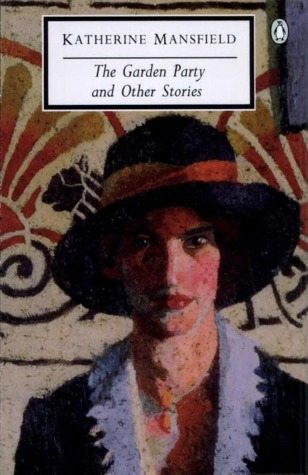
The Garden Party and Other Stories

Rate this book
Written during the final stages of her illness, "The Garden Party and Other Stories" is full of a sense of urgency and was Katherine Mansfield's last collection to be published during her lifetime. The fifteen stories featured, many of them set in her native New Zealand, vary in length and tone from the opening story, "At the Bay, " a vivid impressionistic evocation of family life, to the short, sharp sketch "Miss Brill, " in which a lonely woman's precarious sense of self is brutally destroyed when she overhears two young lovers mocking her. Sensitive revelations of human behaviour, these stories reveal Mansfield's supreme talent as an innovator who freed the story from its conventions and gave it a new strength and prestige.

159 pages, Paperback

First published January 1, 1922

757 people are currently reading
16152 people want to read

About the author

Katherine Mansfield

972 books1,202 followers
Kathleen Mansfield Murry (née Beauchamp) was a prominent New Zealand modernist writer of short fiction who wrote under the pen name of Katherine Mansfield.

Katherine Mansfield is widely considered one of the best short story writers of her period. A number of her works, including "Miss Brill", "Prelude", "The Garden Party", "The Doll's House", and later works such as "The Fly", are frequently collected in short story anthologies. Mansfield also proved ahead of her time in her adoration of Russian playwright and short story writer Anton Chekhov, and incorporated some of his themes and techniques into her writing.

Katherine Mansfield was part of a "new dawn" in English literature with T.S. Eliot, James Joyce and Virginia Woolf. She was associated with the brilliant group of writers who made the London of the period the centre of the literary world.

Nevertheless, Mansfield was a New Zealand writer - she could not have written as she did had she not gone to live in England and France, but she could not have done her best work if she had not had firm roots in her native land. She used her memories in her writing from the beginning, people, the places, even the colloquial speech of the country form the fabric of much of her best work.

Mansfield's stories were the first of significance in English to be written without a conventional plot. Supplanting the strictly structured plots of her predecessors in the genre (Edgar Allan Poe, Rudyard Kipling, H. G. Wells), Mansfield concentrated on one moment, a crisis or a turning point, rather than on a sequence of events. The plot is secondary to mood and characters. The stories are innovative in many other ways. They feature simple things - a doll's house or a charwoman. Her imagery, frequently from nature, flowers, wind and colours, set the scene with which readers can identify easily.

Themes too are universal: human isolation, the questioning of traditional roles of men and women in society, the conflict between love and disillusionment, idealism and reality, beauty and ugliness, joy and suffering, and the inevitability of these paradoxes. Oblique narration (influenced by Chekhov but certainly developed by Mansfield) includes the use of symbolism - the doll's house lamp, the fly, the pear tree - hinting at the hidden layers of meaning. Suggestion and implication replace direct detail.

Ratings & Reviews

What do you think?
Rate this book

Friends & Following

Create a free account to discover what your friends think of this book!

Community Reviews

5 stars
2,739 (26%)
4 stars
4,144 (39%)
3 stars
2,829 (26%)
2 stars
636 (6%)
1 star
166 (1%)
Displaying 1 - 30 of 1,048 reviews
Profile Image for Vit Babenco.
1,781 reviews5,775 followers
March 23, 2024
The book is a collection of fine expressionistic short stories…
At the Bay… A summer day spent by the sea… Adults and children… Talks, games and thoughts…
It was all very well to say it was the common lot of women to bear children. It wasn’t true. She, for one, could prove that wrong. She was broken, made weak, her courage was gone, through child-bearing. And what made it doubly hard to bear was, she did not love her children.

The Garden Party is a tale of contrasts… Frivolous festivity…
…people began coming in streams. The band struck up; the hired waiters ran from the house to the marquee. Wherever you looked there were couples strolling, bending to the flowers, greeting, moving on over the lawn.

And the accidental death nearby…
The Daughters of the Late Colonel… Death in a family… Although the subject is tragic the story is quite sarcastic… Silliness… Pretensions… Conventionality…
Then, as they were standing there, wondering what to do, he had suddenly opened one eye. Oh, what a difference it would have made, what a difference to their memory of him, how much easier to tell people about it, if he had only opened both! But no – one eye only. It glared at them a moment and then… went out.

We exist between two poles – between light and darkness, between bliss and misery.
Profile Image for Violet wells.
433 reviews4,480 followers
October 8, 2016
Piazza del Duomo is my least favourite place in Florence. I always hurry through it. Probably San Marco (except at four in the morning) and St Peters are my least favourite places in, respectively, Venice and Rome so I guess I just don’t respond very well to the grandiose. I prefer what’s smaller, more secret, more ostensibly self-effacing. A criticism often levelled at Katherine Mansfield’s stories are that they are small things, limited in scope. Lawrence in Women in Love famously depicted her as Gudren, a brilliant but limited miniaturist. She herself, close to death, remarked that she’d only produced “little stories like birds bred in cages”.

She’s often compared (unfavourably) with Virginia Woolf. But it’s worth remembering that had Woolf died the same year as Mansfield she would only have written her first three books (The Voyage Out, Night and Day and Jacob’s Room) and consequently almost certainly would not now be known to us as one of the great moderns. In all probability her reputation would be on a par with many of the more obscure women writers of that time now published by Virago. Had she died at the same age as Mansfield she would only have written The Voyage Out. Herein lies the tragedy of KM’s early death. Had she lived even another ten years it’s not unlikely she would have gone on to equal Woolf’s achievement. The best stories in this collection are more innovative and fresh and lively than anything Woolf had written at this time. In fact she makes Woolf appear at this point in her writing career a bit of a stiff frumpy Victorian in comparison.

She knew she was going to die while writing many of these stories and this is evident in the wonder the natural world has for her ( easy to see why her and Lawrence got on so well – both take the same kind of delight in the natural world. Woolf’s nature descriptions, on the other hand, are always more aridly intellectualised.) It’s also evident in the depths of loneliness and longing in virtually all the characters, the alienation they feel from the warm vibrant central thrust of life. But never does she strike a morbid or self-pitying note. Mostly she writes with great wit and vitality and a keen eye for the telling detail of any given moment. She’s also brilliant at extracting nuggets of gold from the mundane. In one story, Ma Parker is a housekeeper whose beloved grandson has just died. She cleans for a literary gentleman every Tuesday. The literary gentleman offers his condolences but his real concern is to reproach her for mislaying a spoon of cocoa. People wonder how Nazism happened or Aleppo goes on happening. Here’s how – at bottom the absence of cocoa in the house is more likely to rouse us to protest than the suffering of a fellow human being we don’t know.

The first three stories – At the Bay, The Garden Party and The daughters of the Late Colonel are absolute gems. The other stories are mostly tremendously readable without quite hitting the heights of the first three and there’s a couple of duds towards the end.
My favourite photo of her -


Profile Image for Lisa.
1,108 reviews3,290 followers
June 1, 2020
And as I got this collection from my son for Christmas, I had to let it jump the queue.

As it rushed past the pile of waiting, bitterly frustrated heavy and important novels, it winked cheerfully. What is it to a Katherine Mansfield short story that other books, in my possession for decades, have an important message to deliver? After all, she delights by pointing at the small, private gestures and parallel existences without judging either more than necessary.

A successful garden party coincides with a fatal accident, leaving a young woman a widow with many small children in a poverty-stricken street. A first ball offers a moment of insight into future boredom, only to wipe out the deeper understanding immediately again, not to spoil the moment. A work life spent creating an ideal family nears its exhaustion, a woman faces rejection and rehabilitation within an hour of perfect terror, another thinks about choices made in life, for service, against marriage. Would the opposite have made her happier, unhappier, different, the same? Who knows.

Katherine Mansfield, the only author of whose writing Virginia Woolf claimed to have been jealous, moves between social classes, age groups, and gender with the ease of a truly great and careful observer. She moves from grief to happiness and worry, and back again, creating a microcosm of perfect accuracy wherever she lets her mind stop to describe in a few words a world complete in its complex relationships.

What a delightful way to close my reading year - by finally getting to read an author long postponed, and then be blown away by her lighthearted depth.
Profile Image for Steven Godin.
2,782 reviews3,373 followers
June 19, 2018
Considering Katherine Mansfield was stricken with tuberculosis at the time of writing this collection, you simply wouldn't believe that to be the case whilst indulging in her gorgeous prose. I imagine her, pen in hand, under clear blues skies, relaxed in a tranquil garden, with various birds singing a joyful tune, whilst the distant sound of the sea caressing the shore, cool and calmly creating a scene of such bliss. When in all likelihood she was cooped up in bed feeling terrible. Most writers nowadays can't write this good, even with the added benefit of not being seriously ill.

Widely regarded as a pioneer of the form, Mansfield focused on capturing the psychology and inner lives of characters through free indirect discourse and epiphanies, with sudden moments of realisation and insight playing a big part in the stories. Unlike traditional narratives, the stories typically begin in the heart of a moment and end abruptly. The writing is so convincing, it's almost like an invasion of privacy, you feel so close to the heart of the characters actions and words, that they could suddenly turn to the reader at any given moment and whisper "please, give me some space".

Some of the later stories barely last fifteen pages, but even then, just within this short period of time, she manages to connect easily with her audience, as Mansfield strove for absolute precision and distillation, writing in a letter that, ideally, ‘there mustn’t be one single word out of place, or one word that can be taken out’. That's precisely the feeling you get. It's little wonder Virginia Woolf was jealous of Mansfield's work. This coming from one of the great writers of the 20th century. Mansfield’s influence and contribution to literary modernism has even played a big part in shaping writers to this day.

After reading only the first few pages of the opening story 'At the Bay' it was easy to discover that she had a great talent. After getting through all of them, I am in little doubt, she is one of the finest short-story writers I have come across. The stories here work not in plots, but in moods and emotions built on a fascination with people, the substance and different shades of life. There are passing joys, and the lingering of sadness, the particular feeling of a time of day, the brief state of minds that chase each other across human souls like small shadows across the water. A collector of small emotions was she, caught on the wing, never pinned down or bottled in her pages, but kept alive there in all their fragile iridescent colours.

Mansfield was a connoisseur of the gentle ripples that carried much more significance than the thrashing waves. She had a prodigious ability to give you in a story a total effect of beauty without using phrases of which any single one stands out, and without letting you know how she has done it.

Highlights -

'At the Bay'
'The Garden Party'
'The Daughters of the Late Colonel'
'Life of Ma Parker'
'The Voyage'
'Miss Brill'
'Her First Ball'
Profile Image for Georgia Scott.
Author 3 books324 followers
December 4, 2025
If there was just one sentence I could save from a fire, it would be this one from The Garden Party:

"And the perfect afternoon slowly ripened, slowly faded, slowly its petals closed."

Here is life in all its order. Rhythmic in sound and symbol, hushed as a prayer. Read it again out loud. Though "loud" is all wrong. It's impossible to say without nearly whispering the words. Assonance and alliteration are the paint pots of poets. Yet, Mansfield uses them here. Expertly, she conveys a picture of perfect roses. Just the thing for the perfect garden party. Isn't perfection what this family is all about? There is a perfect spot for the tables. There are multiple varieties of sandwiches to meet every taste. Perfection. That is the aim. And praise for its makers. That's the point of the event. And the story. Right?

But someone dies, you say. Someone does. That's not nice, you add. I agree. That's life though. It goes on in spite of sorrow. It must and we must. Say after me:

"And the perfect afternoon slowly ripened, slowly faded, slowly its petals closed."

It's one thing to give thanks for what we get. But thanks for what is taken is another thing. These and more thoughts are mine since I read this deceptively simple short story. If that's just me, give it a try yourself and see.
Profile Image for Dolors.
605 reviews2,811 followers
February 12, 2018
I could probably list like twenty good literary reasons to pick any of Mansfield’s collection of short stories; her prowess as a writer, her life experiences, which probably served as inspiration for many of her tales, the strong resemblance of her modern narrative outline with Chekov’s, the subtle portrayal of the quotidian as a still frame for social stereotyping and gender roles, her acute observations and insights into the human psyche… but I will stop here because I believe all those reasons are secondary to the matter at hand.

Mansfield is a must-read simply because she has a voice of her own, like no other, and her voice is magnetic, elegant, alert, and sharp as a needle. Her refreshing descriptive skills are never at odds with her poetic evocation of time and place and her characters possess a sinuous simplicity, a graceful spontaneity that exude vulgarity and charm in equal measures, making them faithful mirrors to our fears, expectations and concerns.
In Mansfield’s dexterous hands, even misery and frustration have a sense of rhythm that is suspended in time by the sheer delight of reading perfectly composed sentences that tell millions of stories within other stories, lifetimes within lifetimes, realities lost in what could have been, all of them tightly woven into a still moment, forever a possibility, immune to the passage of time.

Favorite stories in this collection:

* At the Bay
* Mr and Mrs Dove
* Marriage à la Mode
* Her First Ball
Profile Image for Kalliope.
738 reviews22 followers
December 25, 2020


I read this years ago as I was crossing New Zealand. As I was surrounded by the most beautiful landscape I have ever seen, I did not pay too much attention to the landscape descriptions in this collection of stories. They are not long descriptions; usually just a couple of very evocative sentences that made me pause in my reading, and reread them:
Out of the smudgy little window you could see an immense expanse of sad-looking sky, and whenever there were clouds they looked very worn, old clouds, frayed at the edges, with holes in them, or dark stains like tea.

In this second reading I was also much more aware of Mansfield’s themes – those of life and death, of women, of gender relations, of social differences. Her characters are most often women who seek to live a fuller life, or at least to decide for themselves.
That's the way to live - carelessly, recklessly, spending oneself. .. To take things easy, not to fight against the ebb and flow of life, but to give way to it... To live, to live!"

and
I've only one night or one day, and there's this vast dangerous garden, waiting out there, undiscovered unexplored.

For these women marriage and children are not particularly enthralling.
The point is - she shook her head - I couldn't possibly marry a man I laughed at.

Or:
he was so incredibly handsome the the looked like a mask or a most perfect illustration in an American novel rather than a man.

And
And what was left of her time was spent in the dread of having children.

Mansfield has an eye, or an ear, for those details that will succinctly portray and situate a person in his or her society:
She had become really quite expert, she thought, at listening as though she did not listen, at sitting in other people's fives for just a minute while they talked round her.

Or
Oh, would you trust a gold watch to a native?

Realizing that Mansfield died young, in her recurrent references to death, I felt uncomfortable.
The shortness of Life! The shortness of life!

Or:
Why did the photographs of dead people always fade so?.. as soon as a person was dead their

But I think what drew most of my attention was her narrative style; how she could take just a slice of life without a clear beginning, and most often with an open ended or ambiguous ending and flesh it out creating an absorbing encapsulating world. Mansfield was certainly a modernist but without the at time self-consciousness found in other writers. The most striking feature was her interlacing internal dialogues (not quite stream-of-consciousness) with observations of the outer world. Mansfield stories require an attentive reader since crucial elements could be easily missed. The stories nonetheless flow naturally; attentiveness does not imply mental games.

Apart from feelings of empathy, her short live made me regret Mansfield had not managed to leave us a more copious work.
Profile Image for kohey.
51 reviews233 followers
November 20, 2015
It is always a joyful occasion for me to meet an author whose words and phrases I cherish and reflect on in my mind.
I’m truly amazed at her imagination to capture every little moments in life,and to turn the unimaginable into the tangible through her sensitive and sometimes curious eyes.Fifteen short stories contained here are only an extension of mundane,everyday life,but it shows us a good indication of how colorful,passionate,and tragic our life can become under a great writer.I highly recommend this to every one who likes reading between the lines,and intricate nuances and charcters rather than plots.
This novel gives me pause to think one-sitting books aren’t always wonderful.
I’d like to save another star aside for rereading^ ^
Profile Image for Antoinette.
1,049 reviews237 followers
March 30, 2025
Katherine Mansfield’s short stories are mind boggling excellent. She gave me lots to think about and consider. She focuses on women and their place in society. Her stories take place in the early 1900’s to 1920. We encounter themes of fitting into society and the possibility of deviating from it. In this collection of 15 stories, there was only one I did not care for. The rest were all top notch.
My favourites and standouts: ( to just highlight a few)

Miss Brill- Miss Brill’s Sunday pastime was going to the park, dressed in her finery, and spending time watching the people and feeling like she belonged. This one Sunday, her illusions are shattered when she overhears a conversation about herself. Mansfield shines the light on Miss Brill being an outsider. This story broke my heart.

The Stranger- John Hammond is so excited as his wife is returning after a 10 month absence visiting a daughter who lives abroad. These were the days of ocean travel so the journey was long. All John wants is to be alone with Janey, but Janey seems a bit removed once they are together. She then recounts an event that occurred the previous evening on board. Wow what a closing line in this one.

Marriage a la Mode- This one was quite different from the others in this collection as this time, I felt sympathy for the husband and not the wife. Another that touched my heart.

So many memorable stories in this collection, including The Garden Party- a look at high society versus the lower class from a young girl’s view.

I highly recommend this book. Sadly, Katherine Mansfield died at age 34, so her body of work is not huge, but I look forward to reading all that she has written.

Published: 1922
Profile Image for Agnieszka.
259 reviews1,131 followers
June 19, 2018

Some of these stories feel more like impressions or sketches, seconds caught in one precise moment. The young protagonist from Her first ball, like the title itself implies, attends her very first ball, she’s excited and a little nervous, and observing dancers experiences disturbing thought: was this first ball only the beginning of the her last ball after all ?

Eponymous Miss Brill is a middle-aged woman spending her leisure time in park observing other people, considering it as a kind of play even she had a part to finally find herself an object of scrutiny and mockery from young couple. Or the hero from The stranger impatiently awaiting on the shore for his wife to find out that the latter was the only witness of death of young man on the ship, and this knowledge is like a thorn to him, for this revelation spoilt their being alone together. There always will be a ghost of young stranger between them.

Miss Meadows from The singing lesson is having a hard time because Basil broke off her engagement so the teacher orders the girls to sing sad melodies, but when it appears to be a false alarm the tone of the song changes radically. Mr and Mrs Dove in turn is a story of Reginald and Anne, he's docile and she's capricious and there is no chance for marriage, for it would mirror life of her birds, away she runs, and after her...comes poor Mr Dove, bowing and bowing...and that's their whole life.

This collection is rather uneven but it contains some gems, and these for me were The daughters of the late Colonel, in turns poignant and hilarious look at two old women facing reality after their despotic father’s death, the title Garden Party where young, sensitive Laura must face the truth that where some people are having good time others at this time die, and At the bay, rather novella than story, that looks like impressionistic picture, you almost can see brush strokes here and that reminded me a bit of Virginia Woolf.

Mansfield was a keen observer, both people and surrounding world. She has created a whole gallery of various types - from a jailbailt from The young girl, switching from babyish to coquettish demeanour, through The lady's maid dismissing chance for marriage and personal life to stay with her mistress to hunted old woman from Life of Ma Parker looking only for a place where she could hide and keep herself to herself. Mansfield looks closely at the world as well - the beach, the gardens, the writer's apartment, the dead old man's room or the ladies' dressing room. She had an eye for detail and these stories are like little etudes from ordinary life, excercises from mundanity; seemingly nothing happens and life just goes on.
Profile Image for Paul Bryant.
2,408 reviews12.6k followers
August 23, 2013

I read that D H Lawrence once wrote to Katherine Mansfield

You are a loathsome reptile - I hope you will die.

(Thank you, Lynne). Ah, the people I have often wished to say the same thing to! (Not you, of course, never you!) But I am not made of such stern stuff as DH. Anyhow, I did not think Miss Mansfield was a loathsome reptile. Quite the reverse – she was a beautiful reptile. She had a cool gaze which swept insight and judgement over this human race of ours, the parts that she knew anyway, and she judged life to be sad. Not tragic, just very sad. Husbands desperate for their wives to love them when they know they never will, for instance. This turns up in a couple of stories – in one, “Marriage a la Mode”, the husband works in London all week earning a pile and comes home to his family at weekends. His wife gets herself a whole new crowd of friends – Bohemian artists, poets, you know – and he’s completely out of his depth. She’s drifting away. They’re always there. After one weekend like this, on the train back to London, he writes his wife a long letter. She reads it in amazement, and starts laughing her head off. Her friends want to know what’s so funny. So she reads it out.

When she reached the end they were hysterical : Bobby rolled on the turf and almost sobbed. … “Oh Isabel,” moaned Moira, “that wonderful bit about holding you in his arms!”

I wasn’t especially brimming over with Mansfield love when I was reading most of this stuff, in the back of my head I was thinking okay, another one to tick off from The List of Unread Literature (o the awful List! – keep it away from me!) – but I found that the stories have an afterglow, they’re like those lovely paintings by Corot, Pissarro and Sisley, just ordinary streets and fields, but so intensely understated, or understatedly intense.

One story, “Her First Ball” reminded me specifically of Renoir’s brilliant “Her First Evening Out”


So I give this a generous 4 stars, really I think it’s 3.5.

My favourite story was “The Daughters of the Late Colonel”. Oh fine women of Goodreads who are on the whole demographically between the ages of 25 and 40


(see https://www.quantcast.com/goodreads.com for further interesting details)

please never turn into the daughters of the late colonel when you grow up! But I can’t imagine that you would for a moment. My God, I remember creatures like this from my tiny youth, ancient relatives like Aunt Alice who was not any kind of real aunt. Ah I recoiled, recoiled from the plunging dramatic unexpected powdery kisses, and oh how I had to sit there, not there, and eat this seed cake and say how lovely it was even though I was about puking, oh the unfathomable rules of social engagement, I practically had to tell them thank you for the air I gratefully breathed whilst in these old houses with their doyleys and antimacassars and rugs for the unwary (was I clumsy? I was). I was bound to knock over some knick knack, usually a glass pony or some animal rendered into a delicate shape designed to shatter if you looked at it wrong. No, old women aren’t like that any more, thank God. They’re so much better. They go shark wrangling and ski backwards up Mount Kilimanjaro these days. The plates of dainties have been abandoned along with the inch thick face powder. I know global warming’s a major downer, but some things are so much better than they used to be.


Profile Image for Jan-Maat.
1,684 reviews2,488 followers
Read
January 12, 2019
I wondered as I read, Mansfield seemed to be somewhere between Chekhov and Kafka, but I only see tuberculosis linking the three. Short fragments of an emotional life revealed. Have you ever seen the mirror scene from Duck Soup? I picture Virgina Woolf and Katherine Mansfield like that the same, but different, but one maybe clinging to an idealised lost mother, the other keen to escape, the mirror in fragments.

In the face of death, which in a variety of flavours seems present in all these stories either as an event, a presence, a promise, or at a slight remove - social death, the death of hopes. In the face of all this death there is a hunger for emotional intimacy, but (The Stranger) it can't compete, death will play the last card and win the trick. I was struck by An ideal Family how the work of the paterfamilias funds the leisured life of the rest of the family, this is a familiar notion, even still an ideal, yet here it is deeply unsatisfactory, the father doesn't really recognise his youngest daughter and there is a strong sense that neither daughters nor wife have any connection with him anymore, this deeply normative division of labour is here fundamentally alienating and the old man can only dream of his tired body walking away mechanically without him.

The first story in this collection At the Bay is like a single continuous panning camera shot flowing from character to character, person to person. Personally I lost track completely, when characters reappeared in camera view I could not remember if they were children last seen playing on the beach or adults held rigid and upright by imperial corsetry (corsets, upon reflection pop up regularly in these stories too). So I might feel this was still a writer learning her craft, playing with styles and approaches, a Virginia Woolf working on a broader social canvas on a smaller scale. A sense of a slightly desperate playfulness, laughing before the plague, a keenness for emotional intimacy which will either be denied or achieved at a cost (Mr & Mrs Dove, Marriage a la Mode).

I am struck by how unrelenting Mansfield's vision is in the face of death one only strives for emotional contact or shrinks from life, nothing else gives comfort, not the natural world - people only recognise Roses apparently although some plants can be used as set dressing - though they may damage one's clothes (The Garden Party), there is music but that seems to come from one's emotional state so it reflects rather than transforms (The Singing Lesson). Hedonism is possible and has value as a distraction from DEATH but that's about it. It gives a double sense of the outsider to her writing, not only was she a colonial, but also disconnected from the normal business of the daily grind, because for her that rat race would be far shorter than average and had no power to blind her to the looming grave.
Profile Image for Magrat Ajostiernos.
724 reviews4,876 followers
June 27, 2021
3,5/5
Relatos que encierran la tragedia dentro de lo cotidiano.
Me ha gustado mucho la voz de Mansfield, una mezcla de Virginia Woolf y Chéjov... Desde luego el relato que más más me ha gustado ha sido 'Fiesta en el jardín', pero también me encantaron 'Las hijas del difunto coronel' y 'Vida de Ma Parker'. El resto me gustaron pero creo que no permanecerán mucho tiempo en mi memoria... Seguiré leyendo a esta autora, me ha parecido que tiene una sensibilidad muy especial
Pd. Para leer a poquitos
Profile Image for Piyangie.
625 reviews769 followers
July 24, 2025
This collection of short stories is my first experience with Katherine Mansfield. True to any short story collection, the enjoyment of it was varied; some of the stories I liked a lot, some were alright, and a few were not to my liking. This is to be expected when you read many different stories in a short space; it is not easy to jump from one story to another and connect equally with the different characters and the different stories.

Most of the stories in The Garden Party and Other Stories reflect on the lives of women, and if you follow them closely, you can find common thematic grounds in many of them. Mansfield exposes various themes in this collection, but life, death, marriage, family, and duty play a dominant role. Written in the last years of her life, Mansfield's own deep reflections on life and death have been poured into these stories. There is undeniably a lot of depth in them; one needs a lot of patience and concentration to understand and appreciate what was being said. These in-depth meditations, while suited to some, were quite unfitting for some others, given their short length. On the whole, I think the stories were a little too short for her dense exploration, and hence, the meanings were lost in some of them.

Those which connected with me the most were The Garden Party, Marriage A La Mode, The Singing Lesson, and The Stranger. I enjoyed Mansfield's deeper penetration into life, death, love, and marriage in them. Although most of these were penned from a woman's point of view, Mansfield is balanced and has done her due by men as well.

While I enjoyed her thematic explorations, what drew me most to this story collection is her writing. It is beautiful; mostly realistic, but abstract as well. It has such a dreamy quality which, if I may, can be compared with only one other - and that is of Virginia Woolf's. Also, Mansfield's words are powerful. They compel us to go through her stories, even those which are not to our taste. I find that quite remarkable. Although my overall rating of the collection borders on the average, I'm very much keen on reading her more. Now that I somewhat understand her style, I need to choose the right time and mood to read her, just like I do when I read Virginia Woolf.

More of my reviews can be found at http://piyangiejay.com/
Profile Image for Mark  Porton.
600 reviews801 followers
April 21, 2025
A collection of nine short stories set in Europe and New Zealand about the causes of human happiness and despair. The Garden Party was probably the best story out of this collection, but for me, this didn't reach any great heights and was a bit disappointing.

Comments on individual stories below in 'reading progress'.

3 Stars
Profile Image for Lynne King.
500 reviews829 followers
August 22, 2013
When I was going through my “Bloomsbury period” about twenty years ago, I read everything I could about the “central members”, and as a consequence Katherine Mansfield came into the equation through being a friend of Virginia Woolf. I read biographies about the former which I loved as she appeared to be such an interesting and gifted person; and I particularly enjoyed the biography by Antony Alpers which delves into many other aspects of her somewhat short tragic life, including “her final search for truth in the teachings of the Russian mystic G.I. Gurdjieff.”

I found her letters and journals excellent but her short stories rather “slow” and “lacklustre” at the time (many people will no doubt disagree with me). Nevertheless, I thought that perhaps now was a good time to try some different unread stories by her; “The Garden Party and Other Stories” seemed as good a time as ever.

It’s interesting to note how her friends viewed her and that “Virginia Woolf once said: “I was jealous of her writing. The only writing I have ever been jealous of.’ Woolf also, jealously, wrote, “the more she is praised, the more I am convinced she is bad.”

And as for “D.H. Lawrence, with whom Mansfield had a fraught friendship. Well can you imagine a supposed “friend” behaving in the following fashion? On one occasion he visited Wellington, New Zealand, her birthplace, and was moved to send Mansfield a postcard bearing a single Italian word, ‘Ricordi’ (‘memories’). It was a small and cryptic gesture of reconciliation; they’d fallen out badly and in his previous letter he had said ‘You are a loathsome reptile - I hope you will die.’

Returning to this book, as I’ve digressed, I think the fifteen stories that make up this set are skilfully written, but not for me.

Many people, no doubt, will also agree on the following review that was given about this book:

“Innovative, startlingly perceptive and aglow with colour, these fifteen stories were written towards the end of Katherine Mansfield's tragically short life. Many are set in the author's native New Zealand, others in England and the French Riviera. All are revelations of the unspoken, half-understood emotions that make up everyday experience - from the blackly comic "The Daughters of the Late Colonel", and the short, sharp sketch "Miss Brill", in which a lonely woman's precarious sense of self is brutally destroyed, to the vivid impressionistic evocation of family life in "At the Bay". 'All that I write,' Mansfield said, 'all that I am - is on the borders of the sea. It is a kind of playing.”

If I hadn’t read this book before reading that review, I would have been swayed immediately and acquired it and that’s for sure. But I’m street-wise now, in that I’ve recently found out I’m my own person and will not let others influence me. That’s what I’m saying now anyway.

There’s a certain naivety about “The Garden Party”. I also found it odd that two such similar names were used for the brother and sister, Laurie and Laura Sheridan. She is supposedly in charge of organizing the garden party, as her mother doesn’t really feel up to it, and has the very “difficult task” of having to decide the exact location of the marquee. She also rather likes the workmen involved there.

“Oh, how extraordinarily nice workmen were, she thought. Why couldn’t she have workmen for her friends rather than the silly boys she danced with and who came to Sunday night supper? She would get on much better with men like these.”

It’s all very frivolous and absurd in that she is confined inside her own safe world with comfortable surroundings (the family has a tennis court, and for the garden party there are many flowers, niceties and yet a vulgarity such as flags on sandwiches, etc.), and yet it’s “us” as opposed to “them”, i.e. the working class, the unfortunate creatures who live along the road. So when a poor young carter, Mr Scott, is killed rather closely to their house, Laura wants to have the garden party cancelled as a sign of respect:

“But we can’t possibly have a garden-party with a man dead just outside the front gate.”

Nevertheless, her very silly mother breathes a sigh of relief when she hears that he has not been killed on their property and so that was fine to continue with the garden party. Laura is thus dispatched at her mother’s insistence to visit the widow, carrying some of the “remains” of their garden party food in a basket (what an insult) and upon arrival there, she is quite horrified to find herself in this “disgusting” working class house and then the biggest humiliation arrives when she is forced to view Mr Scott laid out in the house:

“There lay a young man, fast asleep – sleeping so soundly, so deeply, that he was far, far away from them both. Oh, so remote, so peaceful. He was dreaming. Never wake him up again…..He was given up to his dream. What did garden-parties and baskets and lace frocks matter to him? He was far from all those things. He was wonderful, beautiful.” And Laura wanted to cry.

I have ambivalent feelings about this story in that I loved and loathed it at the same time. The last two paragraphs of this short story were inane and I nearly abandoned the book there and then. But then again, I reasoned, the others may be better? That’s the beauty of short stories, there’s always choice.

“Miss Brill” and her fur, I must admit, were slightly different and there is a rather amusing ending.

“Although it was so brilliantly fine – the blue sky powdered with gold and great spots of light like white wine splashed over the Jardins Publiques – Miss Brill was glad that she had decided on her fur.”

“Her First Ball” with Leila was also good, The wonders of the dance and the “quite an old man – fat, with a big bald patch on his head – took her programme and murmured, “Let me see, let me see” and disappears… with an excellent ending too.

On the whole though, the other twelve stories are rather mundane and I’m not too impressed with the writing style or the content. Short stories have to sparkle and these appear to be trite and meaningless, and so, so dated; well to me anyway. I’m sure, however, that there are many people who love the works of this author.
Profile Image for Reading_ Tamishly.
5,302 reviews3,461 followers
December 5, 2021
I absolutely love reading Sylvia Platt and Virginia Woolf. And I wasn't expecting Katherine Manfield's writing and the central themes of it would be mainly about women and our roles. But hell yes, I was surprised and I was surprised good.
I love how the characters are so visible and thorough.

These stories talk about melancholy and solitude in most; speaks bluntly about the want and the need to feel important yet how futile it seems.

Some stories portray relatable characters when they just couldn't make up their mind about the most feeble things. But most importantly the author dealt with what's most important to everyone, young or old, that intense need to be understood and find ourselves when we need us for us.

1. At the Bay
5 🌟
2. The Garden Party
5 🌟
3. The Daughters of the Late Colonel
3 🌟
4. Mr and Mrs Dove
5 🌟
5. The Young Girl
3 🌟
6. Life of Ma Parker
5 🌟
7. Marriage à la Mode
4 🌟
8. The Voyage
4 🌟
9. Miss Brill
3 🌟
10. Her First Ball
3 🌟
11. The Singing Lesson
3 🌟
12. The Stranger
3 🌟
13. Bank Holiday
4 🌟
14. An Ideal Family
4🌟
15. The Lady's Maid
5 🌟

A beautiful collection. One of the best classic short story collections I have come across.
Profile Image for Marc Lamot.
3,461 reviews1,970 followers
August 13, 2025
My first encounter with the New Zealand writer Katherine Mansfield (1888-1923). Short stories were apparently her specialty, and here are 15 of them. Most are concise atmospheric sketches, with an eye for realistic detail, set in a bourgeois setting. And so it's rather obvious that she's quickly compared to Chekhov. But what a skillful pen! No modernist experiments in her work, but stylistically, the comparison with Joyce (The Dead) and Woolf (Mrs. DallowayMrs. Dalloway) is certainly valid. I was particularly captivated by her insight into social relations: as indicated, the environments in which her stories take place are usually bourgeois, but in an almost perfidious way she manages to make the indecency of distinctions between social classes really tangible. Take – from this collection – the brilliant "Mr. And Mrs. Dove," in which a man and a woman, clearly attracted to each other, are afraid to commit themselves for fear of social conventions. Or the title story, "The Garden Party," which in many ways could be called a precursor to Woolf's Mrs. Dalloway: ingeniously, she exposes the ambivalence of the bourgeoisie. It’s tragic that Katherine Mansfield died of tuberculosis at the age of 34.
Profile Image for Jo .
930 reviews
April 9, 2022
I came across Katherine Mansfield rather unexpectedly when I was reading The Illustrated Letters of Virginia Woolf. According to those letters, Katherine Mansfield was a good friend of Woolf, and Woolf was even quoted to have said that she was somewhat jealous of Mansfield and her gift for writing.

Personally, I think they are both equally gifted writers, and I enjoyed this collection of stories, and ironically, my favourite was in fact "The garden party". It was incredibly twee, but it was just what I needed at this particular time in my life.

As with many short story collections, I usually have mixed feelings, and it is rare that I happen to love them all. This book is no exception. I loved three of them, but the rest were fairly bland. The writing style was whimsical and it kept me entertained, but the content was lacking somewhat. I wanted those short stories to blow me away, but unfortunately, that was not the case.

I think Mansfield was a wonderful wordsmith, who was tragically taken before her time, and I definitely intend to read more of her works.
Profile Image for Marchpane.
324 reviews2,846 followers
June 5, 2019
Tender and understated, the stories in The Garden Party and Other Stories are like little studies in empathy. It has a bit of an ‘Upstairs, Downstairs’ vibe in that many of the stories are about well-off, genteel families, while others give a glimpse into the lives of their servants, or poorer neighbours. Mansfield seems mostly interested in the secret hurts people carry within themselves; there’s a vulnerable quality to each of her characters – whether it be a shy nervousness, pangs of regret or bone-deep grief – which they are all hiding beneath a brittle outer shell of stoicism. Gentle, quietly moving, lovely. 4.5 stars.
Profile Image for Roman Clodia.
2,895 reviews4,646 followers
December 18, 2025
Wonderful to re-read these stories of illuminating moments: Mansfield can switch seamlessly from comedy or irony to tragedy and pain. Her ability to show us our own emotions is staggering.

----------- Original review ---------------

I somehow hadn't read Mansfield before, confusing her in my head with Elizabeth Bowen... From this book of short stories, she's a writer interested in small but illuminating moments in a life: a young woman coming face-to-face with death for the first time (The Garden Party); another young woman at her first ball who suddenly gets a glimpse of what her future might be (Her First Ball); the schoolteacher whose lesson covers over her fraught emotions roused by a letter from her fiancé (The Singing Lesson).

There are places where Mansfield is very visual in her style, almost as if she's looking at a painting by someone like Renoir and penetrating beneath the surface to tell the stories under the paint. At others, she concentrates on the tensions between how people, often women, look and behave socially and what is running through their heads and hearts.

The events in these tales are often small, almost inconsequential in some cases, but Mansfield squeezes out their significance with consummate ease. There's a wry humour here along with compassion and a relentless gaze, and her attention is to class as well as gender. There's nothing big and dramatic here, but these tales linger well beyond their page footprint.
Profile Image for Mark André .
216 reviews338 followers
October 5, 2024
A most wonderful book. Five🌟stars, plus! Incredible final story.
A must read! Challenges any collection I’ve ever read for top spot.
Profile Image for Christmas Carol ꧁꧂ .
963 reviews834 followers
February 6, 2019
It was time for me to revisit the work of my favourite New Zealand author, Katherine Mansfield.

KM wrote the way an Impressionist painter painted -with deft paint strokes she painted her world. Plagued with ill health, her life was cut tragically short, dying at Fountainbleau when aged only 34. This collection of short stories,published just before her death, contain some of her finest work.

At the Bay.

One of the stories set in NZ with a fictionalised version of KMs family. Crescent Beach is Days Bay. (now part of Wellington) My husband grew up near by - even

The notes with my Penguin give the setting as Karori, but it definitely isn't. Karori is an inland suburb.

KM handles multiple POV effortlessly.

I liked the impressionist style and lack of plot. Probably a little long. For me 4★

The Garden Party

Wow what a mistresspiece this jewel of a short story is. A child's bewilderment at her world is beautifully realised. Possibly some symbolism by Mansfield as a poverty stricken New Zealander living in England but not really fitting in in British society? 5★

The Daughters of the Late Colonel

This is clever writing! Both comedy & tragicomedy. 5★

Mr and Mrs Dove

This is sweet. & cleverly written. Maybe needed to be fleshed out a bit more. 4.5★

The Young Girl

More clever writing! A young girl with all the affectations of a modern teen 5★

Life of Ma Barker

Incredibly sad & moving! 5★

Marriage a la Mode

The story most open to different interpretations. 5★

The Voyage

Beautiful writing of the slice of life kind. 4★

Miss Brill

For me, the saddest story. My heart ached before I started reading (as I knew what was coming) I wish I could give 6★, but 5 it is.

Her First Ball

Doesn't KM capture the feeling of anticipation you felt for your first ball/dance? Another story based on KM's own family 5★

The Singing Lesson

Well written, but all a bit obvious. By far the weakest for me! 3★

The Stranger

I've had to read this one through twice. After the first time I felt like I had missed something. A tale of smothering possessiveness. Again, I wish I could give it more, but 5★ it is.

Bank Holiday

Mansfield at her most Impressionist. A beautiful fragment. 4★

The Ideal Family

Another one that should be 6★. Amazing writing.

& finally

The Lady's Maid

A tale of manipulation. KM captures the dialogue so beautifully. 5★
Profile Image for Iris ☾ (iriis.dreamer).
485 reviews1,178 followers
December 13, 2021
Katherine Mansfield fue una de las escritoras más influyentes y que sin lugar a dudas, revolucionó la narrativa de cuentos y relatos cortos. Su muerte prematura deja huérfanos a sus lectores, y deseando más de su narración sensible y de su agudeza exquisita para plasmar y penetrar en la intimidad de las relaciones humanas. En este recopilatorio hallaremos siete escritos titulados: El viento sopla, Felicidad, La señorita Brill, Vida de Ma Parker, Las hijas del difunto coronel, Fiesta en el jardín y La mosca publicados entre 1911 y 1922.

Si hay algo obvio e indudable es que el estilo narrativo de la autora es maravilloso y que tendría mucho más renombre si hubiera vivido más años y nos hubiera podido brindar numerosos cuentos o quién sabe, quizás alguna novela. Katherine describe la vida cotidiana, se sumerge en describirnos las relaciones sociales de la clase media a la perfección. Indaga en las penas, en la felicidad, en la diferencia de clases e incluso en el egoísmo del ser humano.

Ella misma señaló que su escritura estaba influenciada por Chéjov, uno de los autores que tengo más pendientes y que deseo encarecidamente leer el próximo año sin más demora pero también he sentido en ciertos momentos que su estilo me recordaba al de Virginia Woolf, con la que además mantuvo una amistad. Sin poder comparar, solo os puedo decir que este es un compendio delicado y primoroso y del que debo destacar: Las hijas del difunto coronel, Felicidad y Fiesta en el jardín.

Mansfield aparenta sencillez pero sus historias son excepcionales, no sucede nada transcendente, es realmente como si se narraran hechos de las vidas de estos personajes en momentos en concreto donde sus almas cambiaban o se veían alteradas por algún hecho. Tiene una destreza digna de mención al escoger las palabras adecuadas, centrándose principalmente en pequeños detalles que son mucho más importantes de lo que aparentan.

En definitiva, solo me queda añadir que he disfrutado enormemente de todos y cada uno de los relatos de esta selección, unos me han gustado más que otros pero ninguno me ha dejado indiferente. Pocas veces he hallado situación parecida, pero la autora me ha emocionado, me ha llevado por el camino que ella deseaba y ha logrado que me vuelva loca intentando buscar más textos suyos. Si os apetece leer algo ligero, escrito exquisitamente bien, aprovechad la oportunidad, buscad este libro que además de económico, tiene una traducción digna de mención y elogio.
Profile Image for Lee.
381 reviews7 followers
January 25, 2023
No wonder Virginia Woolf was jealous. Stories unlike anyone else's (apart from Chekhov, who was less enamoured of people). You can see the influence on writers like Sylvia Townsend Warner, Ali Smith et al -- the desire to capture or portray the ineffably bittersweet -- but these are uniquely wonderful.
Profile Image for zed .
598 reviews155 followers
June 29, 2022
I first heard of Katherine Mansfield after an afternoon tour bus took me to her house in Wellington New Zealand. Pressed for time and wanting to see the sites a few of us took up the chance of seeing this damn fine city and part of the tour was her house. Being the reading type I got this famous title and now after many a year have finally read it.

First I have enjoyed it though it took me to read an explainer after the first story that had left me wondering what I was missing, Modernism apparently. Once I got the gist of what was trying to be achieved, I enjoyed these short stories a lot more than I might have.

The style seemed all very much a comment on the bourgeois middle class of the times, with a couple of exceptions. Also, very colonial, but then Katherine Mansfield was of that class.

I suspect that this is not really my style of literature, glad to have read and enjoyed it but now know why I did not enjoy Virginia Woolf when I read her in my youth. I further suspect that I would not have enjoyed this if I was made to read it in high school.
Profile Image for Helle.
376 reviews452 followers
December 25, 2015
(3.5 stars) Katherine Mansfield creates stories set in a small, narrow world in which the details of life seem to be blown all out of proportion, at least to the sensibilities of a (this) modern reader. On the other hand, the same details take on a curious kind of importance in her stories precisely because they are singled out; it’s as if they are encased in glass for readers to gaze at and contemplate precisely because of their minuteness, which puts them in the very foreground of life for our scrutiny and wonder.

Mansfield’s stories have an ephemeral quality to them. Even when her topics combine alienation and love – and they often do – there is something almost soothing, certainly mystical, about them. In many of the stories she expertly shows us how life sometimes hinges on the smallest events; in others she dwells on the frivolity of certain life styles and the indulgent insouciance of some of the people living these lives.

There are fifteen stories in all in this collection, which, to me, represent everything between a 2.5 and a 5 star reading experience. To mention a few:

At the Bay is an impressionistic ‘story’ – painting rather - that has no plot but is centred around a summer resort in New Zealand and is full of musings on nature and life. The texture of it reminded me of Virginia Woolf’s To the Lighthouse. A bit more story wouldn’t have been amiss.

The Garden Party takes a look at the privileged life of the upper classes and their superficiality and sets it, jarringly, against a fatal accident (which reminded me of Mrs. Dalloway’s party when someone inadvertently mentions death, upsetting her state of mind). True to Mansfield’s love of symbols, a big, velvet hat is involved.

The Daughters of the Late Colonel is my favourite in this collection. I first read it at uni many years ago and still find it utterly brilliant. Mansfield weaves a special kind of magic here in how she shows the dread felt by two spinsters at the death of their father while simultaneously, tragically even, illustrating how they feel a kind of Stockholm syndrome and cannot escape their own sense of confinement even when freedom is right under their nose. Just exquisite.

Marriage á la Mode is a rather devastating portrait of a marriage, demonstrating the social inadequacy and cruelty that pervade many of her stories. Again, I was reminded of Woolf, this time her short story The Legacy, which also deals in mutual alienation and treachery.

Some of the other stories felt a bit tepid to me and tried my patience. When she is at her best, however, she seems to take her readers for a ride. The characters take on a life of their own, revealing all through their internal monologues and dialogues, often baffling us. Subtle, strange, impressionistic, her short stories were an absolutely unique contribution to the genre.
Profile Image for Betsy Robinson.
Author 11 books1,228 followers
March 11, 2018
Katherine Mansfield lived from 1888 to 1923, but she would have been revolutionary in any era, and she is an obvious predecessor to John Cheever and Shirley Jackson in their tradition of exposing the underbelly of families and working men. This collection of fifteen stories and sketches illustrates class differences and tensions in 1910s–'20s Europe, and Mansfield manages to straddle the shallowness culturally required of women in the time and what lies underneath it. (Don't read the preface until after you read the whole book—it reveals stories' endings.) I enjoyed the free-flying nature of the writing. The title story is the real tour de force, but the whole book is worth reading—particularly if you are interested in the early twentieth century upper-crust sound and customs.

Here are briefs, written as I finished each story.

At the Bay is a cinematic yet microscopic trip from early morning to night in the lives of several families living in a small beach town (probably in New Zealand, unlike the other stories' European locales) The writing is free in the best sense. Unbounded, it flows from reality to fantasies, ripping off facades and showing a more real reality. Although this was written in the early 1920s, the writing is experimentally bold and the people are familiar in any century—because both writing and people are honest.

The Garden Party moves like a locomotive, not even pausing as pretensions collide with truth and shatter. Young Laura stands at the apex between the willfully shallow concerns of her upper class garden-party-hosting family and her own awareness of the unfairness of class divides. This is a stunning story. It urgently expresses all the well-honed shallowness endemic to denial of other people's pain, the seductiveness of privilege even as it requires you to deny what you know is true and fair, the self-congratulatory nature of this realization and concurrent superiority complex, the crash of that superior pretension when it encounters authentic devastation, and finally the chaos of being aware of the whole messy drama. This is a story of the 1920s but it has something to say about any era. In the space of a few pages, Mansfield writes an epic. And this is because of her daring leaps—in time, thoughts, and action—trusting the reader to stay with her, and we do. This is the opposite of Women's Fiction: just the essentials, allowing what's not said to scream.

I'm really enjoying Mansfield's style in The Daughters of the Late Colonel. Two flibbertigibbet sisters cope after the death of their father, and the way profound concerns about life and meaning surface is wonderful.

Mr. and Mrs. Dove is a mating ritual of manners.

The Young Girl is kind of a character study of an angry seventeen-year-old upper-class British girl on a holiday in France in the 1920s. I don't know if I'm reading this into the story, but it seems to me to express the frustration women secretly felt in the customs and expressions that feel like being trapped in a corset.

Life of Ma Parker, the hopeless story of cleaning woman with a very hard life, could be hard to follow, but by the time I got to this place in the book, I'd become accustomed to the style and transitions.

Marriage a la Mode broke my heart. This is a John Cheever type commuter/marriage story set in the 1920s.

The Voyage evokes all the feelings of leaving home for somewhere new and unknown, from a child's eye view.

Miss Brill is a story that people watchers will relate to. Since I am one, I think it's brilliant.

Her First Ball is a time travel trip for the reader and the protagonist. If I ever wanted a firsthand nitty gritty experience of a ball in the early twentieth century, this was it. But not only did it transport me to a new experience, but within the story, the protagonist is further transported to her own old age. Wonderful story.

The Singing Lesson is an emotional roller coaster ride that a lot of co-dependent women will relate to. But the genius of it is how Mansfield exposes the fickleness of it. That it should end on a positive note for the protagonist indicates her complete disconnection from true emotional reality.

The Stranger again shows the collision of obsession and manners with real feeling. Brilliantly done.

Bank Holiday is a word painting, not a story. Like a camera, Mansfield pans around crowds enjoying a holiday (in England somewhere) and zooms in and vividly describes each scene. The writing is so good you can taste it.

An Ideal Family, the story of old Mr. Neave in his "perfect family," evokes the work of Mansfield's successors, John Cheever and Shirley Jackson. It's a description of family life that exposes what's hidden.

The Lady's Maid is a character sketch of a servant in the form of a monologue. Once again, the truth surfaces through the façade. This is good enough to work as an actor's monologue. It begs to be performed.
Profile Image for Jenny (Reading Envy).
3,876 reviews3,709 followers
August 10, 2016
I read some Katherine Mansfield during my year of reading Oceania, since she is from New Zealand, and knew I needed to read more. This set of stories is from the end of her life, the same era as the years right after the first world war. The endings are often obscure, and would make for great discussion in a group.

Another element of Mansfield's stories that I really like is that the NZ landscape is always present. The first story, "At the Bay," really highlights this on a coastal sheep farm where more is going on than just a few sheep!

"The Garden Party" creates a perfect awkward moment that has no good solution, definitely a good cringe for the reader. "Mr. and Mrs. Dove" might be the most realistic love story I've read (or is it?), and "The Voyage" has a secret that is at first masked by traveling clothes. I suppose the trick to Mansfield is that she is never writing about what it appears she is at first, and the joy is in the discovery.

I received an advance copy of this new edition from the publisher through Edelweiss, although these stories had previously been published.
Profile Image for Maxwell.
1,441 reviews12.4k followers
November 16, 2016
Katherine Mansfield's writing is very sharp. She is extremely attuned to human nature, to the pitfalls and pressures of society and its standards. In her stories there is almost always something left unsaid, an elephant in the room, that only the reader can see—or that the characters are unwilling to acknowledge. That being said, some of the stories did feel a bit lacking for me. It took me a while to adjust to her storytelling, which meant quite a few stories left me scratching my head. But when they clicked, they were really good. It's a shame she isn't taught in high schools (maybe she is but not widely) because she's easy to read and her stories would provide lots to discuss.
Displaying 1 - 30 of 1,048 reviews

Can't find what you're looking for?

Get help and learn more about the design.