

What do you think?

The Swan Gondola
A lush and thrilling romantic fable about two lovers set against the scandalous burlesques, midnight séances, and aerial ballets of the 1898 Omaha World’s Fair.
On the eve of the 1898 Omaha World’s Fair, Ferret Skerritt, ventriloquist by trade, con man by birth, isn’t quite sure how it will change him or his city. Omaha still has the marks of a filthy Wild West town, even as it attempts to achieve the grandeur and respectability of nearby Chicago. But when he crosses paths with the beautiful and enigmatic Cecily, his whole purpose shifts and the fair becomes the backdrop to their love affair.
One of a traveling troupe of actors that has descended on the city, Cecily works in the Midway’s Chamber of Horrors, where she loses her head hourly on a guillotine playing Marie Antoinette. And after closing, she rushes off, clinging protectively to a mysterious carpetbag, never giving Ferret a second glance. But a moonlit ride on the swan gondola, a boat on the lagoon of the New White City, changes everything, and the fair’s magic begins to take its effect.
From the critically acclaimed author of The Coffins of Little Hope , The Swan Gondola is a transporting read, reminiscent of Water for Elephants or The Night Circus .
On the eve of the 1898 Omaha World’s Fair, Ferret Skerritt, ventriloquist by trade, con man by birth, isn’t quite sure how it will change him or his city. Omaha still has the marks of a filthy Wild West town, even as it attempts to achieve the grandeur and respectability of nearby Chicago. But when he crosses paths with the beautiful and enigmatic Cecily, his whole purpose shifts and the fair becomes the backdrop to their love affair.
One of a traveling troupe of actors that has descended on the city, Cecily works in the Midway’s Chamber of Horrors, where she loses her head hourly on a guillotine playing Marie Antoinette. And after closing, she rushes off, clinging protectively to a mysterious carpetbag, never giving Ferret a second glance. But a moonlit ride on the swan gondola, a boat on the lagoon of the New White City, changes everything, and the fair’s magic begins to take its effect.
From the critically acclaimed author of The Coffins of Little Hope , The Swan Gondola is a transporting read, reminiscent of Water for Elephants or The Night Circus .
458 pages, Hardcover
First published February 6, 2014
About the author
Timothy Schaffert
21 books187 followersAuthor of five novels: The Swan Gondola, The Coffins of Little Hope, Devils in the Sugar Shop, The Singing and Dancing Daughters of God, and The Phantom Limbs of the Rollow Sisters. Director of the (downtown) omaha lit fest. Contributing editor, Fairy Tale Review. Assistant Professor in the University of Nebraska-Lincoln creative writing program.
"The Singing and Dancing Daughters of God" is part of the Barnes and Noble Discover Great New Writers program, and was the 2007 Omaha Reads one-book-one-city selection. "Devils in the Sugar Shop" was a New York Times Book Review Editors' Choice and a Book Sense pick.
"The Singing and Dancing Daughters of God" is part of the Barnes and Noble Discover Great New Writers program, and was the 2007 Omaha Reads one-book-one-city selection. "Devils in the Sugar Shop" was a New York Times Book Review Editors' Choice and a Book Sense pick.
Ratings & Reviews
Friends & Following
Create a free account to discover what your friends think of this book!
Community Reviews
Displaying 1 - 30 of 316 reviews

July 3, 2016
It is always these three star reviews that for me at least are the most difficult to write. It isn’t as though the book was a waste of my time but neither did it hold me enthralled in its claws as those four and five star books are want to do.
As the story opens Emmaline and Hester, known as The Old Sisters Egan, are enjoying a peaceful afternoon when suddenly their house goes all dark, and begins to creak and shake, rattle and roll, quite urgently, causing books, china and balls of yarn to go flying about as they are ripped from their resting spots. Stranger still as Hester opens the front door to determine what all the commotion is, she finds the doorway cloaked in billowing silk. Upon making their way through the silk and stepping away from the house it soon becomes clear that their little abode has been struck by a hot air balloon. The pilot is one Bartholomew “Ferret” Skerritt. As Ferret heals from his injuries, the Old Sisters Egan gradually learn of the events that caused him to fall from the sky.
These events take place in 1898 on the eve of Omaha’s World Fair. (in reality the Trans-Mississippi and International Exhibition) “Ferret” as it happens is the orphaned son of a prostitute, who in order to survive became a con man. But he is actually scraping out an honest living as a ventriloquist and letter writer for hire, when he first lays eyes on the enigmatic Cecily and subsequently tracks her to Omaha’s World Fair. It is love at first sight for Ferret and he doggedly pursues and romances Cecily until such time as she takes notice of him and agrees to join him for a ride in the Swan Gondola.
This story is chock full of colourful characters including Ferret’s other friends from his earlier days of not making such an honest living. Among them we meet August, his best friend and hands down my favourite character in the book. August is a flamingly, eccentric gay man who positively adores Ferret, who of course only has eyes for Cecily, but who also returns to Augusts’ warm and nurturing care; where he is always welcome, where he can lick his wounds and find the strength to move on. I so wanted for August to get his happy ever after.
Ferret and Cecily also develop an unlikely friendship with Omaha’s wealthiest citizen, Billy Wakefield. Wakefield has an unhealthy obsession with Ferret’s dummy “Oscar” and a tragic history that casts a shadow over Ferret and Cecily.
These are but the bare bones of this intensely quirky love story, yet despite the great potential and the fascinating setting; despite being brimming with interesting characters and rich in nefarious twists and turns, Schaffert failed to pull me in. I couldn’t smell the popcorn, hear the hucksters or get caught up in the revelry of the midway. I could not connect with or much care for Cecily and had a short supply of sympathy for Ferret. Maybe this was because Schaffert never successfully convinced me that their actions were in fact their own and not the by-product of some carefully camouflaged or otherwise hidden puppeteer, armed with the choreograph of a preordained script.
So, I finished the story, which I doubt I will remember for very long and am awarding it 2.5 meh stars which I’ve rounded up to 3 cause man the table holds all the requisite elements of a fantastic feast.
As the story opens Emmaline and Hester, known as The Old Sisters Egan, are enjoying a peaceful afternoon when suddenly their house goes all dark, and begins to creak and shake, rattle and roll, quite urgently, causing books, china and balls of yarn to go flying about as they are ripped from their resting spots. Stranger still as Hester opens the front door to determine what all the commotion is, she finds the doorway cloaked in billowing silk. Upon making their way through the silk and stepping away from the house it soon becomes clear that their little abode has been struck by a hot air balloon. The pilot is one Bartholomew “Ferret” Skerritt. As Ferret heals from his injuries, the Old Sisters Egan gradually learn of the events that caused him to fall from the sky.
These events take place in 1898 on the eve of Omaha’s World Fair. (in reality the Trans-Mississippi and International Exhibition) “Ferret” as it happens is the orphaned son of a prostitute, who in order to survive became a con man. But he is actually scraping out an honest living as a ventriloquist and letter writer for hire, when he first lays eyes on the enigmatic Cecily and subsequently tracks her to Omaha’s World Fair. It is love at first sight for Ferret and he doggedly pursues and romances Cecily until such time as she takes notice of him and agrees to join him for a ride in the Swan Gondola.
This story is chock full of colourful characters including Ferret’s other friends from his earlier days of not making such an honest living. Among them we meet August, his best friend and hands down my favourite character in the book. August is a flamingly, eccentric gay man who positively adores Ferret, who of course only has eyes for Cecily, but who also returns to Augusts’ warm and nurturing care; where he is always welcome, where he can lick his wounds and find the strength to move on. I so wanted for August to get his happy ever after.
Ferret and Cecily also develop an unlikely friendship with Omaha’s wealthiest citizen, Billy Wakefield. Wakefield has an unhealthy obsession with Ferret’s dummy “Oscar” and a tragic history that casts a shadow over Ferret and Cecily.
These are but the bare bones of this intensely quirky love story, yet despite the great potential and the fascinating setting; despite being brimming with interesting characters and rich in nefarious twists and turns, Schaffert failed to pull me in. I couldn’t smell the popcorn, hear the hucksters or get caught up in the revelry of the midway. I could not connect with or much care for Cecily and had a short supply of sympathy for Ferret. Maybe this was because Schaffert never successfully convinced me that their actions were in fact their own and not the by-product of some carefully camouflaged or otherwise hidden puppeteer, armed with the choreograph of a preordained script.
So, I finished the story, which I doubt I will remember for very long and am awarding it 2.5 meh stars which I’ve rounded up to 3 cause man the table holds all the requisite elements of a fantastic feast.

January 3, 2014
The Swan Gondola is an interesting story that left me confused as to how I feel about it all. I keep moving between 3 and 4 stars.
Ferret Skerritt one day lands on top of the house of two elderly sisters living in the middle of nowhere, covering the house with the hot air balloon he was flying in. Nobody knows where he came from or what his story is and he’s not inclined to open up about it initially. He begins composing letters to his lost love and finally tells his story to the sisters. Soon we find out that he is a ventriloquist and pickpocket suffering from a freshly broken heart. It seems that he is in love with a ridiculously elusive actress named Cecily. The backdrop of their love story is the Omaha World Fair of 1898 (in real life known as the Trans-Mississippi and International Exposition).
There were many things about this story that I liked- the setting and descriptions of the fair, the way the story is told from the point of view of a self-sufficient yet naive hustler, a balloon randomly falling on the house of two kooky old women, and some of the Ferret’s friends (especially August in all of his eccentricities).
The story in its entirety, though, didn't mesh well to me. Things got a little slow after the balloon fell out of the sky in the beginning, then picked back up, then slowed down, then picked up, then slowed down, etc. At some points I was ready to give up only to be sucked back in before wanting to give up again for good, but I had to finish it to see if the ending would glue it all together.
I don’t understand why Ferret fell in love with Cecily. She was not likable to me but everybody loved her for whatever reason. I really couldn't even picture her in my mind. The ghost aspect lost me a little. The Trilby aspect lost me a little. Wakefield, the rich guy with the metal arm, was a constant enigma to me even after I learned what his motivation was supposed to be. I don’t know WHAT he’s supposed to be. There were seeeeeveral unnecessary parts that could have been cut out. Also, you will need a dictionary nearby for all of the antiquated words that thoroughly pepper this work.
At the same time I'm glad I read this book. There are some parts that I really loved (Hester with her gun at the beginning, Rosie's comical anarchists, August in drag). I appreciate that it was clearly very well researched. It painted a vivid picture of life, especially among the poor, at the turn of the 20th century. I could even see it making a decent movie in the hands of the right people who know what to cut out and what to emphasize. I would love to see August’s character brought to life and to see Wakefield developed a bit more.
Ferret Skerritt one day lands on top of the house of two elderly sisters living in the middle of nowhere, covering the house with the hot air balloon he was flying in. Nobody knows where he came from or what his story is and he’s not inclined to open up about it initially. He begins composing letters to his lost love and finally tells his story to the sisters. Soon we find out that he is a ventriloquist and pickpocket suffering from a freshly broken heart. It seems that he is in love with a ridiculously elusive actress named Cecily. The backdrop of their love story is the Omaha World Fair of 1898 (in real life known as the Trans-Mississippi and International Exposition).
There were many things about this story that I liked- the setting and descriptions of the fair, the way the story is told from the point of view of a self-sufficient yet naive hustler, a balloon randomly falling on the house of two kooky old women, and some of the Ferret’s friends (especially August in all of his eccentricities).
The story in its entirety, though, didn't mesh well to me. Things got a little slow after the balloon fell out of the sky in the beginning, then picked back up, then slowed down, then picked up, then slowed down, etc. At some points I was ready to give up only to be sucked back in before wanting to give up again for good, but I had to finish it to see if the ending would glue it all together.
I don’t understand why Ferret fell in love with Cecily. She was not likable to me but everybody loved her for whatever reason. I really couldn't even picture her in my mind. The ghost aspect lost me a little. The Trilby aspect lost me a little. Wakefield, the rich guy with the metal arm, was a constant enigma to me even after I learned what his motivation was supposed to be. I don’t know WHAT he’s supposed to be. There were seeeeeveral unnecessary parts that could have been cut out. Also, you will need a dictionary nearby for all of the antiquated words that thoroughly pepper this work.
At the same time I'm glad I read this book. There are some parts that I really loved (Hester with her gun at the beginning, Rosie's comical anarchists, August in drag). I appreciate that it was clearly very well researched. It painted a vivid picture of life, especially among the poor, at the turn of the 20th century. I could even see it making a decent movie in the hands of the right people who know what to cut out and what to emphasize. I would love to see August’s character brought to life and to see Wakefield developed a bit more.

November 3, 2013
Love ripens everyday, near and far, in a variety of ways. Sometimes, it can feel bigger than life and becomes one’s whole being. Take such a love story; add in the 1898 Omaha World’s Fair, a little mysticism, and you have Timothy Schaffert’s “The Swan Gondola”.
The bare bones of “The Swan Gondola”, which follows the relationship of Bartholomew “Ferret” Skerritt and his love for Cecily; could be simply described as a plain, romantic tale. However, the novel is anything but simple and ordinary. Told amongst the backdrop of the Omaha World’s Fair, complete with the magic of carnival life; Schaffert delivers a spiritual and whimsical plot which is unique and utterly compelling. “The Swan Gondola” is a special novel which demands page-turning.
The content of “The Swan Gondola” is not a typical novel as there isn’t a ‘traditional’ introduction or growth of a story and instead the reader is instantly thrown into what feels like the thick of a plot. This works to the novel’s benefit, however, making it both intriguing and multi-dimensional. Schaffert’s storytelling is poetic and highly illustrative adding to the depth of “The Swan Gondola”. In fact, the take is so imaginative that the text flows like a film with strong, vivid imagery that the reader can almost claim to see. Suddenly, pages have passed without even noticing!
Schaffert provides a cast of characters with individualist personalities and quirks; with each experiencing personal self-growth. Ferret isn’t what one might think he seems to be and he bonds well with the reader. This adds strength to “The Swan Gondola” and compels the reader to want to know what happens.
Although the essence of the book is a love story, it is not told in a way that is cheesy or overdone. The plot is well-paced, smooth, cohesive, and believable. Often times, Schaffert delivers lines which are heartfelt, deep, and lyrical while also encouraging the reader to dwell on what was just said (in a good way). The prose is accessible and relatable. However, some readers may be discouraged by Schaffert’s high focus on details/descriptions of surroundings to help create the story. Although Schaffert’s use of this makes sense and has sufficient reasoning; this style isn’t for everyone. The Swan Gondola” also isn’t a dialogue-heavy novel which may deter some readers.
One of the strongest characteristics of “The Swan Gondola” is that it is never predictable. It is suspenseful in its own right but again, in a very natural way. There are some allusions made to “The Wizard of Oz”, which Schaffert admits to; but these are not in relation to the plot and more so with small details and symbolism. In no way does “The Swan Gondola” feel like the same story, so have no fear.
There is an issue with an inconsistency with historical accuracy. Although Schaffert’s description of the World Fair, carnival life, and the general way of American life during McKinley’s presidency is lush and colorful; there are jumps where the text is too modern but then reverts back to a historical back-peddle. Fortunately, this doesn’t effect the novel too much but it is noticeable.
Regrettably, the last quarter of “The Swan Gondola” slumps in strength and fails to provide the, ‘oomph’ Schaffer presents throughout the novel. The plot takes an elementary turn which is both unbelievable and forced. Although these concluding chapters attempt to capture the spiritualism of the era, the text plays out more like a young adult novel. Yet, despite this, Schaffert offers quite a few surprises while also solving some of the novel’s riddles. Not to mention, the symbolism is heavy and becomes clear making “The Swan Gondola” gripping with a burst of philosophy underneath it all. The ending is a bit too ‘happily ever after’ but this also agrees with the fairy tale-like aspects of the novel.
Overall, “The Swan Gondola” is a terrific novel with depth, surprises, and well-written text. Other reviewers have compared it to “Water for Elephants” and “The Night Circus” which I can’t attest to, not having read these novels (I have only seen the film version of “Water for Elephants”). I would, however, compare it the film, “Big Fish”. “The Swan Gondola” is the type of sleepy novel which will certainly arouse large audiences in due time and will flutter a few film studios into a film adaptation. Either way, the novel is great and recommended for those interested in a historical fiction love story during the turn of the century. I would certainly read more from Timothy Schaffert in the future.
The bare bones of “The Swan Gondola”, which follows the relationship of Bartholomew “Ferret” Skerritt and his love for Cecily; could be simply described as a plain, romantic tale. However, the novel is anything but simple and ordinary. Told amongst the backdrop of the Omaha World’s Fair, complete with the magic of carnival life; Schaffert delivers a spiritual and whimsical plot which is unique and utterly compelling. “The Swan Gondola” is a special novel which demands page-turning.
The content of “The Swan Gondola” is not a typical novel as there isn’t a ‘traditional’ introduction or growth of a story and instead the reader is instantly thrown into what feels like the thick of a plot. This works to the novel’s benefit, however, making it both intriguing and multi-dimensional. Schaffert’s storytelling is poetic and highly illustrative adding to the depth of “The Swan Gondola”. In fact, the take is so imaginative that the text flows like a film with strong, vivid imagery that the reader can almost claim to see. Suddenly, pages have passed without even noticing!
Schaffert provides a cast of characters with individualist personalities and quirks; with each experiencing personal self-growth. Ferret isn’t what one might think he seems to be and he bonds well with the reader. This adds strength to “The Swan Gondola” and compels the reader to want to know what happens.
Although the essence of the book is a love story, it is not told in a way that is cheesy or overdone. The plot is well-paced, smooth, cohesive, and believable. Often times, Schaffert delivers lines which are heartfelt, deep, and lyrical while also encouraging the reader to dwell on what was just said (in a good way). The prose is accessible and relatable. However, some readers may be discouraged by Schaffert’s high focus on details/descriptions of surroundings to help create the story. Although Schaffert’s use of this makes sense and has sufficient reasoning; this style isn’t for everyone. The Swan Gondola” also isn’t a dialogue-heavy novel which may deter some readers.
One of the strongest characteristics of “The Swan Gondola” is that it is never predictable. It is suspenseful in its own right but again, in a very natural way. There are some allusions made to “The Wizard of Oz”, which Schaffert admits to; but these are not in relation to the plot and more so with small details and symbolism. In no way does “The Swan Gondola” feel like the same story, so have no fear.
There is an issue with an inconsistency with historical accuracy. Although Schaffert’s description of the World Fair, carnival life, and the general way of American life during McKinley’s presidency is lush and colorful; there are jumps where the text is too modern but then reverts back to a historical back-peddle. Fortunately, this doesn’t effect the novel too much but it is noticeable.
Regrettably, the last quarter of “The Swan Gondola” slumps in strength and fails to provide the, ‘oomph’ Schaffer presents throughout the novel. The plot takes an elementary turn which is both unbelievable and forced. Although these concluding chapters attempt to capture the spiritualism of the era, the text plays out more like a young adult novel. Yet, despite this, Schaffert offers quite a few surprises while also solving some of the novel’s riddles. Not to mention, the symbolism is heavy and becomes clear making “The Swan Gondola” gripping with a burst of philosophy underneath it all. The ending is a bit too ‘happily ever after’ but this also agrees with the fairy tale-like aspects of the novel.
Overall, “The Swan Gondola” is a terrific novel with depth, surprises, and well-written text. Other reviewers have compared it to “Water for Elephants” and “The Night Circus” which I can’t attest to, not having read these novels (I have only seen the film version of “Water for Elephants”). I would, however, compare it the film, “Big Fish”. “The Swan Gondola” is the type of sleepy novel which will certainly arouse large audiences in due time and will flutter a few film studios into a film adaptation. Either way, the novel is great and recommended for those interested in a historical fiction love story during the turn of the century. I would certainly read more from Timothy Schaffert in the future.

November 19, 2013
I really liked the tone of this book. Schaffert's fair is beautiful and surprising and his tone is often funny and apt. As a love story, it deserves 5 stars; as a ghost story it wasn't so fabulous.
The beginning reminded me of Morgenstern's The Night Circus; the descriptions of the fair and the way that Schaffert highlights the underground world that is made up of all the "carnies" is great. His character development and descriptions are lovely and the book is quite compelling. Frequently he uses great turns of phrase to highlight the truth in very funny ways:
"The best comedy plays on your very worst fears, it seems"
"Childhood is too awful a thing to make happen to somebody."
"When you have someone to protect, someone to look after, bravery runs through you, sharp, like the fear used to."
"The house was noisy with light, if such a thing could be said."
Unfortunately, as soon as it turned to a ghost story I had problems, both with the plot and its construction. I was annoyed that Schaffert did not introduce any new characters; both Pearl and Mrs. Margaret turn up and he even drags Pheobe back into things to play the medium at Wakefields. I would have liked to see new people (after all Omaha is a decent sized city, we shouldn't keep running into the same old characters everywhere). I did not like the lack of clarity; usually I do prefer some ambiguity but it really came across as if Cecily was in fact haunting, but they wanted not to believe it (rather than that she was definitively not haunting or even better definitively haunting, but doing so with some intention). I was not convinced that Schaffert had something in mind; I felt like he was trying to leave it up to the reader.
The end felt like a cop-out. I understand why the Egan sisters take Ferrett in after his balloon lands on their home. I even understand why they might like to "adopt" him (as older women in need of a young man to take care of them and the farm), but once he leaves I am not sure why they take him back. Especially given that he comes back with the news that the police are on his trail. I was surprised not only that they cover for him, but that once the investigation is over the ENTIRE TOWN is willing to be complicit in his escape from the law. And I was really unsure how he is able to become a large distributor of donation funds with Emmaline and have is PICTURE IN THE PAPER and remain free from questioning by either the police or Wakefield. I was also not really sure about his relationship with Eulalie. It seemed a bit simplistic that she would marry him (especially since he is clearly still over the moon about Cecily and...as Eulalie herself points out...barely even interested in Eulalie).
As an aside, I was a bit worried at first about the Wizard of Oz references but they are not too overt or belabored.
Overall Schaffert paints a great picture of the Fair. His world is surprising and enchanting and compelling. Definitely a worthwhile read.
The beginning reminded me of Morgenstern's The Night Circus; the descriptions of the fair and the way that Schaffert highlights the underground world that is made up of all the "carnies" is great. His character development and descriptions are lovely and the book is quite compelling. Frequently he uses great turns of phrase to highlight the truth in very funny ways:
"The best comedy plays on your very worst fears, it seems"
"Childhood is too awful a thing to make happen to somebody."
"When you have someone to protect, someone to look after, bravery runs through you, sharp, like the fear used to."
"The house was noisy with light, if such a thing could be said."
Unfortunately, as soon as it turned to a ghost story I had problems, both with the plot and its construction. I was annoyed that Schaffert did not introduce any new characters; both Pearl and Mrs. Margaret turn up and he even drags Pheobe back into things to play the medium at Wakefields. I would have liked to see new people (after all Omaha is a decent sized city, we shouldn't keep running into the same old characters everywhere). I did not like the lack of clarity; usually I do prefer some ambiguity but it really came across as if Cecily was in fact haunting, but they wanted not to believe it (rather than that she was definitively not haunting or even better definitively haunting, but doing so with some intention). I was not convinced that Schaffert had something in mind; I felt like he was trying to leave it up to the reader.
The end felt like a cop-out. I understand why the Egan sisters take Ferrett in after his balloon lands on their home. I even understand why they might like to "adopt" him (as older women in need of a young man to take care of them and the farm), but once he leaves I am not sure why they take him back. Especially given that he comes back with the news that the police are on his trail. I was surprised not only that they cover for him, but that once the investigation is over the ENTIRE TOWN is willing to be complicit in his escape from the law. And I was really unsure how he is able to become a large distributor of donation funds with Emmaline and have is PICTURE IN THE PAPER and remain free from questioning by either the police or Wakefield. I was also not really sure about his relationship with Eulalie. It seemed a bit simplistic that she would marry him (especially since he is clearly still over the moon about Cecily and...as Eulalie herself points out...barely even interested in Eulalie).
As an aside, I was a bit worried at first about the Wizard of Oz references but they are not too overt or belabored.
Overall Schaffert paints a great picture of the Fair. His world is surprising and enchanting and compelling. Definitely a worthwhile read.

January 10, 2014
I have a feeling many people are going to be talking about this novel in 2014, though it might be bigger in another year or two, when some studio picks it up and adapts it for film. I could be wrong, but there’s a certain mix here that I believe many will eat up. The novel has a wonderful atmosphere about it, and the love story and tension—it’s all very attention-grabbing. The Swan Gondola is unique in many ways, yet it is extremely reminiscent of other novel’s I’ve read.
The most obvious initial comparison is to Water for Elephants, a comparison made by the publisher itself. Yes, it certainly captures some of the tone and romanticism of Sara Gruen’s most beloved novel, but I would argue The Swan Gondola is far more realized and mature than Water for Elephants. The fair is more engrossing than the circus was. More is at stake in this love story. And the tension kept me riveted. The publisher and other reviewers have also compared The Swan Gondola to Night Circus, but this one I have not read, so I cannot confirm this observation.
As far as tone, The Swan Gondola reminded me most of Dexter Palmer’s The Dream of Perpetual Motion at times. There is a dark mysticism to the novel that felt genuine. Being at the fair, I felt surrounded by the cogs of this great beast that was somehow both beautiful and terrifying. It’s this tone, along with the engaging love story of “Ferret” and Cecily, that propels this story and makes it so wonderful.
Finally, in its entirety, this novel reminded me greatly of Wuthering Heights. The structure and the plot certainly bear some familiarity to Emily Bronte’s only novel, but I wouldn’t go so far as to say The Swan Gondola emulates or parallels Wuthering Heights; it is its own creation, but the two novels share a strong bond to one another.
The Swan Gondola is a great read and will likely attract the attention of many. I do feel the romance was rushed initially and that the final hundred pages or so are disappointing in light of the rest of the novel, but these small things should not detract readers from giving this story a go.
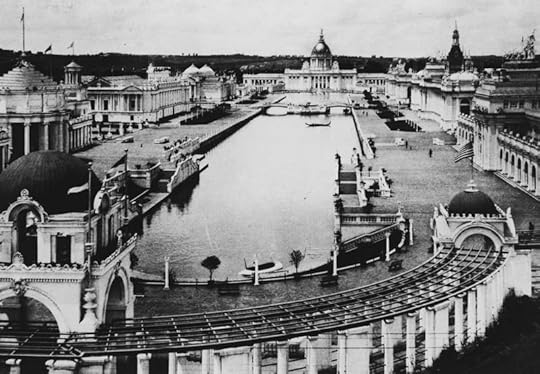
For those curious about the “Omaha World Fair” at the novel’s center, it is based on the Trans-Mississippi Exposition that took place in 1898. Schaffert did an amazing job giving life to the fair in this novel.
The most obvious initial comparison is to Water for Elephants, a comparison made by the publisher itself. Yes, it certainly captures some of the tone and romanticism of Sara Gruen’s most beloved novel, but I would argue The Swan Gondola is far more realized and mature than Water for Elephants. The fair is more engrossing than the circus was. More is at stake in this love story. And the tension kept me riveted. The publisher and other reviewers have also compared The Swan Gondola to Night Circus, but this one I have not read, so I cannot confirm this observation.
As far as tone, The Swan Gondola reminded me most of Dexter Palmer’s The Dream of Perpetual Motion at times. There is a dark mysticism to the novel that felt genuine. Being at the fair, I felt surrounded by the cogs of this great beast that was somehow both beautiful and terrifying. It’s this tone, along with the engaging love story of “Ferret” and Cecily, that propels this story and makes it so wonderful.
Finally, in its entirety, this novel reminded me greatly of Wuthering Heights. The structure and the plot certainly bear some familiarity to Emily Bronte’s only novel, but I wouldn’t go so far as to say The Swan Gondola emulates or parallels Wuthering Heights; it is its own creation, but the two novels share a strong bond to one another.
The Swan Gondola is a great read and will likely attract the attention of many. I do feel the romance was rushed initially and that the final hundred pages or so are disappointing in light of the rest of the novel, but these small things should not detract readers from giving this story a go.
For those curious about the “Omaha World Fair” at the novel’s center, it is based on the Trans-Mississippi Exposition that took place in 1898. Schaffert did an amazing job giving life to the fair in this novel.

February 19, 2014
Really unimpressive. I rage quit about 200 pages in. The main characters are shallowly formed, and what is defined is insipid and stupid. I get it, Cecily is pretty and good at everything and always dresses uniquely. The love story was also oddly paced- I was reading about them kissing and found myself thinking "wait... They're in love now? Did I skip a chapter?" Completely disinterested in if they end up together, and as that is the central focus of the plot, I am completely disinterested in reading the rest.
That being said, it's not a 1 star review, because some of the imagery is lovely and some of the side characters are actually fun and interesting. Some people liken this book to Night Circus, which I did like, but it is alike in all the worst ways. The lagging beginning, the focus on world rather than plot, and the highfalutin with no substance love story do not make for an engaging read.
That being said, it's not a 1 star review, because some of the imagery is lovely and some of the side characters are actually fun and interesting. Some people liken this book to Night Circus, which I did like, but it is alike in all the worst ways. The lagging beginning, the focus on world rather than plot, and the highfalutin with no substance love story do not make for an engaging read.

February 15, 2014
I really liked his earlier book, The Coffins of Little Hope, so was looking forward to this one.
I am not a quitter, but at page 261, I have decided to throw in the towel. This story started out so well, and I love the setting of the 1898 Omaha World's Fair. However, the main characters are not well fleshed out, I found the romance boring, and I lost interest with where the story was headed. I've made myself sit down with it several times after I lost interest, but to no avail.
On the plus side, there are some luminous passages, and I love some of the imagery the author conjured up. Also, there are some really interesting minor characters. I really wanted to love this book, but alas did not.
I am not a quitter, but at page 261, I have decided to throw in the towel. This story started out so well, and I love the setting of the 1898 Omaha World's Fair. However, the main characters are not well fleshed out, I found the romance boring, and I lost interest with where the story was headed. I've made myself sit down with it several times after I lost interest, but to no avail.
On the plus side, there are some luminous passages, and I love some of the imagery the author conjured up. Also, there are some really interesting minor characters. I really wanted to love this book, but alas did not.

June 4, 2014
For more reviews, check out talesfromideath.blogspot.com
This book started off really well, with main character, ventriloquist, Ferret, falling from the sky in a stolen hot air balloon, crashing into the farm owned by the Old Sisters Egan, to whom he tells the tale of how he got there.
Unfortunatly, like Ferrets balloon, the book plummets quickly.
The main problem with the book is the central romance that lies at the heart of it. It’s simply not interesting. Ferret’s love for the glamorous Cecily is love at first sight (always a bad sign), when he meets her backstage at a play. He bumps into her again when he sneaks into the 1898 Omaha World’s Fair and their relationship goes on from there.
Cecily herself resists Ferret for a little while, but not too long. For Cecily it’s more like love at fourth sight…
Sadly, despite the four hundred pages dedicated to it, the relationship still feels incredibly underdeveloped. Both Ferret and Cecily are boring characters from the off and remain so throughout. It’s hard to see what anyone finds interesting about Cecily, the only character trait she seems to have throughout the whole novel is that she dresses unusually. But even that wears thin quickly when the writer constantly breaks the narrative to tell us what she’s wearing. Cecily has dresses decorated with paper butterflies, flowers, lace, swans, insects….that’s all she has to offer.
It wouldn’t have been so bad perhaps if there was something else going on in the book but sadly it’s not the case. There are a host of other characters, the Cross dressing August, the anarchist Rosie, the mysterious old woman Mrs Margaret, who disguises herself as a dummy and the villainous, one handed, Mayfield.
All of these characters are great, I’d happily read a whole novel about any one of them, here though, they’re unforgivably underused. They do nothing but put in the occasional line of dialogue, almost always about the relationship between Ferret and Cecily.
There’s a sort of subplot involving the anarchists planning to assassinate President McKinley but it comes to nothing, as do the constant allusions to the Wizard of Oz which the author admits are only there because he’d recently read the book.
One thing the book gets right is it’s depiction of the Fair itself. Based on the 1898 Trans-Mississippi & International Exhibition, the worlds fair is a town sized collection of shows, scientific advancements, cultural exports, music, street performers, trinkets, parties, occult curiosities and gambling.
It’s at once exciting, mysterious, dangerous and intriguing, a character all to itself. I wanted to crawl into the book and experience all the wonders it had to offer for myself.
Unfortunately, like the rest of the characters, far too often it felt like the interesting thing was in the background and I was glancing around the main characters to see the good stuff.
I wanted very much to like this book, but with a bland love story that drags on too long and still feels underdeveloped and hints of great things that sadly remained undelivered, I was very disappointed.
This book started off really well, with main character, ventriloquist, Ferret, falling from the sky in a stolen hot air balloon, crashing into the farm owned by the Old Sisters Egan, to whom he tells the tale of how he got there.
Unfortunatly, like Ferrets balloon, the book plummets quickly.
The main problem with the book is the central romance that lies at the heart of it. It’s simply not interesting. Ferret’s love for the glamorous Cecily is love at first sight (always a bad sign), when he meets her backstage at a play. He bumps into her again when he sneaks into the 1898 Omaha World’s Fair and their relationship goes on from there.
Cecily herself resists Ferret for a little while, but not too long. For Cecily it’s more like love at fourth sight…
Sadly, despite the four hundred pages dedicated to it, the relationship still feels incredibly underdeveloped. Both Ferret and Cecily are boring characters from the off and remain so throughout. It’s hard to see what anyone finds interesting about Cecily, the only character trait she seems to have throughout the whole novel is that she dresses unusually. But even that wears thin quickly when the writer constantly breaks the narrative to tell us what she’s wearing. Cecily has dresses decorated with paper butterflies, flowers, lace, swans, insects….that’s all she has to offer.
It wouldn’t have been so bad perhaps if there was something else going on in the book but sadly it’s not the case. There are a host of other characters, the Cross dressing August, the anarchist Rosie, the mysterious old woman Mrs Margaret, who disguises herself as a dummy and the villainous, one handed, Mayfield.
All of these characters are great, I’d happily read a whole novel about any one of them, here though, they’re unforgivably underused. They do nothing but put in the occasional line of dialogue, almost always about the relationship between Ferret and Cecily.
There’s a sort of subplot involving the anarchists planning to assassinate President McKinley but it comes to nothing, as do the constant allusions to the Wizard of Oz which the author admits are only there because he’d recently read the book.
One thing the book gets right is it’s depiction of the Fair itself. Based on the 1898 Trans-Mississippi & International Exhibition, the worlds fair is a town sized collection of shows, scientific advancements, cultural exports, music, street performers, trinkets, parties, occult curiosities and gambling.
It’s at once exciting, mysterious, dangerous and intriguing, a character all to itself. I wanted to crawl into the book and experience all the wonders it had to offer for myself.
Unfortunately, like the rest of the characters, far too often it felt like the interesting thing was in the background and I was glancing around the main characters to see the good stuff.
I wanted very much to like this book, but with a bland love story that drags on too long and still feels underdeveloped and hints of great things that sadly remained undelivered, I was very disappointed.

December 15, 2013
I won a copy of The Swan Gondola by Timothy Schaffert from a firstreads giveaway. Ferret Skerritt is a ventriloquist living in Omaha at the time of the Omaha World's Fair. He falls in love with the beautiful actress named Cecily who has traveled to town to find work at the Exhibition, and quickly spends all he has to watch her perform as Marie Antoinette over and over in a Chamber of Horrors on the midway.
The story begins with Ferret crashing into a Nebraska farm house in a hot air balloon, and being taken in by two elderly sisters. There are obvious allusions to the Wizard of Oz here, but they're not so overt as to be distracting. Ferret's narration shifts back and forth effectively from the goings on at the farm, to his story before he crashed. The whole story, being set at a time where it is difficult to distinguish magic from technology, and with all of the spectacle of a fair intended to outdo the Chicago Exhibition is rife with illusions and misdirects.
Ferret also meets William Wakefield, the tragic rich widower whose son and wife died recently. Wakefield has money to burn, or at least to blow on artificial tornadoes. He tries to buy Ferret's dummy, and dotes on Ferret and Cecily until he gets what he wants.
To be clear, Cecily is a turn of the century manic-pixie dream girl. She has aspirations, but this is Ferret's book about how much in love he is with her, how he wants to take care of her, and how he wants to make a family with her. She doesn't even get a last name until she gets married. Her presence brings much of the whimsy to the story, from her heart-shaped tattoo and the story of how she got it, to her eccentric repurposed clothing. In truth, I had a hard time picturing Cecily beyond her accoutrements. All I could ever get about her was that she was attractive and that people fall in love with her and want to take care of her.
It is the same for the rest of Ferret's friends, they are two-dimensional. August is a Native American, selling snake oil and books, also gay and in love with Ferret--I know it sounds interesting, but when his love for Ferret comes up every time they interact it gets old. Especially when the interactions between Ferret and Cecily are a better-received (by Cecily) straight analogue.
I suppose it's fine that the characters are unbelievable, though. This book is about illusion and love and ghosts and how the living keep on living. The setting is fantastic and engaging, with bizarre settings around every corner, and eccentric billionaires footing the bill. Even if I couldn't connect with the characters, I could get lost in the 1898 Omaha World's Fair.
The story begins with Ferret crashing into a Nebraska farm house in a hot air balloon, and being taken in by two elderly sisters. There are obvious allusions to the Wizard of Oz here, but they're not so overt as to be distracting. Ferret's narration shifts back and forth effectively from the goings on at the farm, to his story before he crashed. The whole story, being set at a time where it is difficult to distinguish magic from technology, and with all of the spectacle of a fair intended to outdo the Chicago Exhibition is rife with illusions and misdirects.
Ferret also meets William Wakefield, the tragic rich widower whose son and wife died recently. Wakefield has money to burn, or at least to blow on artificial tornadoes. He tries to buy Ferret's dummy, and dotes on Ferret and Cecily until he gets what he wants.
To be clear, Cecily is a turn of the century manic-pixie dream girl. She has aspirations, but this is Ferret's book about how much in love he is with her, how he wants to take care of her, and how he wants to make a family with her. She doesn't even get a last name until she gets married. Her presence brings much of the whimsy to the story, from her heart-shaped tattoo and the story of how she got it, to her eccentric repurposed clothing. In truth, I had a hard time picturing Cecily beyond her accoutrements. All I could ever get about her was that she was attractive and that people fall in love with her and want to take care of her.
It is the same for the rest of Ferret's friends, they are two-dimensional. August is a Native American, selling snake oil and books, also gay and in love with Ferret--I know it sounds interesting, but when his love for Ferret comes up every time they interact it gets old. Especially when the interactions between Ferret and Cecily are a better-received (by Cecily) straight analogue.
I suppose it's fine that the characters are unbelievable, though. This book is about illusion and love and ghosts and how the living keep on living. The setting is fantastic and engaging, with bizarre settings around every corner, and eccentric billionaires footing the bill. Even if I couldn't connect with the characters, I could get lost in the 1898 Omaha World's Fair.
This entire review has been hidden because of spoilers.

February 22, 2014
When I found Timothy Schaffert's THE SWAN GONDOLA in my local B&N, I snatched it up and half-walked, half-ran to the nearest cashier, somewhat expecting to have the book stolen right out from under me by some other greedy fan.
The thing is, even though this is the first novel I've read by Schaffert, I already loved his writing. I first read his short story, "The Mermaid in the Tree," a retelling of The Little Mermaid published in MY MOTHER SHE KILLED ME, MY FATHER HE ATE ME. I'm still hoping that he continues writing Desiree and Miranda's adventures someday, haha. Then I found the short e-book story "Lady of the Burlesque Ballet" and was once again impressed with Schaffert's blending of quirky characters, macabre themes, and strange adventures.
I'm also a big fan of anything old, weird, and kinda magical, and so THE SWAN GONDOLA, set during the 1898 Omaha World’s Fair, seemed like the perfect Schaffert book to start with. And I wasn't disappointed.
Without trying to spoil the plot... hm, okay, the characters were a big deal for me. I love it when I'm reading a book and can not only love the main characters, but also the minor ones. Ferret Skerritt, our tenacious, lovestruck protagonist, is wonderful. He has his flaws, but is lovable despite them. I can see why his friends continued to fight for him, even though he sometimes couldn't help but break their hearts (I'm looking at you, August). Billy and Billie Wakefield were formidable foes, but Mrs. Margaret honestly scared me the most (I don't know how Ferret managed to survive all that choking, brrr).
Pearl was, and continues to be, one of my favorite characters in the book. I love that her passion is for designing window displays. Cecily grew on me, Doxie enchanted me (how could I not feel that way when Ferret loved her so much?), and Eulalie burrowed her way into my heart quite quickly - and just in time!
The story itself was formatted in such a great way. Although one of Schaffert's strengths is his descriptive writing, his letter writing via Ferret and Cecily was one of my favorite parts of the book. To the point where I think Keats' love letters to Fanny have a little competition, haha. And the swan room. THE SWAN ROOM (if you've read the book, you know what I'm talking about. OMG).
I could keep going. There's just so much to talk about. So I guess I'll just have to convince my friends to read THE SWAN GONDOLA so I can stay up late discussing this book :)
The thing is, even though this is the first novel I've read by Schaffert, I already loved his writing. I first read his short story, "The Mermaid in the Tree," a retelling of The Little Mermaid published in MY MOTHER SHE KILLED ME, MY FATHER HE ATE ME. I'm still hoping that he continues writing Desiree and Miranda's adventures someday, haha. Then I found the short e-book story "Lady of the Burlesque Ballet" and was once again impressed with Schaffert's blending of quirky characters, macabre themes, and strange adventures.
I'm also a big fan of anything old, weird, and kinda magical, and so THE SWAN GONDOLA, set during the 1898 Omaha World’s Fair, seemed like the perfect Schaffert book to start with. And I wasn't disappointed.
Without trying to spoil the plot... hm, okay, the characters were a big deal for me. I love it when I'm reading a book and can not only love the main characters, but also the minor ones. Ferret Skerritt, our tenacious, lovestruck protagonist, is wonderful. He has his flaws, but is lovable despite them. I can see why his friends continued to fight for him, even though he sometimes couldn't help but break their hearts (I'm looking at you, August). Billy and Billie Wakefield were formidable foes, but Mrs. Margaret honestly scared me the most (I don't know how Ferret managed to survive all that choking, brrr).
Pearl was, and continues to be, one of my favorite characters in the book. I love that her passion is for designing window displays. Cecily grew on me, Doxie enchanted me (how could I not feel that way when Ferret loved her so much?), and Eulalie burrowed her way into my heart quite quickly - and just in time!
The story itself was formatted in such a great way. Although one of Schaffert's strengths is his descriptive writing, his letter writing via Ferret and Cecily was one of my favorite parts of the book. To the point where I think Keats' love letters to Fanny have a little competition, haha. And the swan room. THE SWAN ROOM (if you've read the book, you know what I'm talking about. OMG).
I could keep going. There's just so much to talk about. So I guess I'll just have to convince my friends to read THE SWAN GONDOLA so I can stay up late discussing this book :)

October 20, 2013
I don't quite know how to review this book. I didn't like it, but found some really interesting bits in it. Sort of The Wizard of Oz meets the underbelly of the Omaha World Fair which isn't populated by cute munchkins, but carney's, charlatan's, and pick pockets. Ferret and Cecily have a sublime love affair but all the characters in the novel are weird and odd. This is a highly unusual novel complete with the Emerald City, Dorothy, cyclones and a wicked witch; not for everyone, not for me, but it will definitely find an audience.

October 29, 2013
I loved the part of the book that was set at the Trans-Mississippi & International Exposition, and thought it gave a good sense of what that fair might have been like for some....the part that was set out in rural Nebraska and the Wizard of Oz tie-in were less successful--seemed forced and rather self-consciously quirky.

February 15, 2014
I wanted to like this book given the topic and that fact he used the library as a resource. However, I just could not get into the Wizard of Oz fantasy thing. I would have loved to hear more about the fair. This was a tough read for me.

April 18, 2025
It took me longer than usual to catch the groove in this book and I might have given up if not for two things:
1) I've read and really enjoyed this author in the past.
2) This title fulfills a square in my 2025 book BINGO.
Ultimately, my dedication paid off in an off-kilter, turn of the 19th century that felt like a wild combination of The Great Gatsby, Oliver Twist and The Wizard of Oz. I loved the characters and the worlds fair setting. It's both gritty and midwestern and I always enjoy a good midway. I just wish it had been a little quicker to take off.
1) I've read and really enjoyed this author in the past.
2) This title fulfills a square in my 2025 book BINGO.
Ultimately, my dedication paid off in an off-kilter, turn of the 19th century that felt like a wild combination of The Great Gatsby, Oliver Twist and The Wizard of Oz. I loved the characters and the worlds fair setting. It's both gritty and midwestern and I always enjoy a good midway. I just wish it had been a little quicker to take off.

June 3, 2014
3.5 stars. First, I feel the need to clarify that primarily this is a book about obsession, rather than the World's Fair, or Omaha, or even a standard love story. Those elements all play their part, but they are overwhelmingly swallowed up by the concept of Ferret's obsession with Cecily. That is not a good thing, but it also didn't ruin the book for me. No complaints about the writing. Schaffert's prose is beautifully evocative and moving. His description of the fair and all its characters is a perfect confection of words. The whole book reads like cotton candy-airy, nuanced, fragile and beautiful-which is perfect for the setting of the fair. The narrative began well but sort of breaks down toward the end. With about 100 pages to go, the whole book goes spectacularly off the rails. It isn't that the story is no longer compelling-it absolutely is-more that the author seems to abandon all logic after carefully respecting reality for the first 3/4 of the book. If Schaffert was trying to show what obsession does to a man, kudos. Otherwise, the editor should have stepped in and cleaned this up a bit. The characters were kind of a mixed bag. Ferret is an excellent hero whom you want to root for unquestioningly. The problems come when you start to wonder if someone like Cecily, who was the most underdeveloped character in the book, is worth all that fuss. The secondary characters, for the most part, were excellent. All played their roles well. We would all be lucky to count Rosie and August as friends, and Wakefield, while a bit one-dimensional and trite as a villain, fits perfectly with the vaudeville feel of the book. In the end it's a little bit Gatsby, a little but Night Circus, and is also reminiscent of Kevin Baker's Dreamland to me. What I really didn't get much of was the Wizard of Oz motif which the author stated he was going for. Yes, there is a balloon. Yes, it says "Omaha" on it. To me, the similarity ended there. Despite all the complaints though, I thoroughly enjoyed the book. It wasn't at all what I was expecting, but that wasn't necessarily a bad thing in the end.

November 15, 2013
A lush and thrilling romantic fable about two lovers set against the scandalous burlesques, midnight séances, and aerial ballets of the 1898 Omaha World’s Fair.
On the eve of the 1898 Omaha World’s Fair, Ferret Skerritt, ventriloquist by trade, con man by birth, isn’t quite sure how it will change him or his city. Omaha still has the marks of a filthy Wild West town, even as it attempts to achieve the grandeur and respectability of nearby Chicago. But when he crosses paths with the beautiful and enigmatic Cecily, his whole purpose shifts and the fair becomes the backdrop to their love affair.
One of a traveling troupe of actors that has descended on the city, Cecily works in the Midway’s Chamber of Horrors, where she loses her head hourly on a guillotine playing Marie Antoinette. And after closing, she rushes off, clinging protectively to a mysterious carpetbag, never giving Ferret a second glance. But a moonlit ride on the swan gondola, a boat on the lagoon of the New White City, changes everything, and the fair’s magic begins to take its effect.
From the critically acclaimed author of The Coffins of Little Hope, The Swan Gondola is a transporting read, reminiscent of Water for Elephants or The Night Circus.
-- My thoughts:
I loved EVERY minute of this book. I stopped and reread sentences and lines, eager for each word, savoring it because it ended way too fast. I loved Ferret. He was a good guy, a little down on his luck. But that seemed like it changed when he met Cecily. I just think everyone should read this book. It is that amazing! I will think about this wonderful read for years to come!
You start out with Ferret landing at the sister's home, and then we go back, way back to find out why. Why was in he that balloon? I loved the bit of mystery, lots of love, friendship and more in this fabulous book! Read it NOW! You won't be sorry!
I received this book from Goodreads first read program in exchange for my honest opinion!
On the eve of the 1898 Omaha World’s Fair, Ferret Skerritt, ventriloquist by trade, con man by birth, isn’t quite sure how it will change him or his city. Omaha still has the marks of a filthy Wild West town, even as it attempts to achieve the grandeur and respectability of nearby Chicago. But when he crosses paths with the beautiful and enigmatic Cecily, his whole purpose shifts and the fair becomes the backdrop to their love affair.
One of a traveling troupe of actors that has descended on the city, Cecily works in the Midway’s Chamber of Horrors, where she loses her head hourly on a guillotine playing Marie Antoinette. And after closing, she rushes off, clinging protectively to a mysterious carpetbag, never giving Ferret a second glance. But a moonlit ride on the swan gondola, a boat on the lagoon of the New White City, changes everything, and the fair’s magic begins to take its effect.
From the critically acclaimed author of The Coffins of Little Hope, The Swan Gondola is a transporting read, reminiscent of Water for Elephants or The Night Circus.
-- My thoughts:
I loved EVERY minute of this book. I stopped and reread sentences and lines, eager for each word, savoring it because it ended way too fast. I loved Ferret. He was a good guy, a little down on his luck. But that seemed like it changed when he met Cecily. I just think everyone should read this book. It is that amazing! I will think about this wonderful read for years to come!
You start out with Ferret landing at the sister's home, and then we go back, way back to find out why. Why was in he that balloon? I loved the bit of mystery, lots of love, friendship and more in this fabulous book! Read it NOW! You won't be sorry!
I received this book from Goodreads first read program in exchange for my honest opinion!

February 17, 2014
i really liked schaffert's geron-rural novel "little coffins" The Coffins of Little Hope he has a real knack for portraying "old folks" as real folks, with their wisdom (or long-perfected stupidity, as the case may be) sex drives, health matters, intellectualism, the fuck-it factor (no need to worry too much about scolding sinners or righting wrongs right? gonna kick it pretty soon anyway)
so his new "swan" novel is a much bigger enterprise but he mines his same strengths: rural ways, old folks, old wisdom facing new modern life, intellectual curiosity, love/friendship/sexiness/solitude....
set in 1898 omaha nebraska and the world's fair held there (after chicago's, but before buaffalo's but president mckinley visits all 3, buffalo's being his last fair as anarchists shot him mortally) and follows the orphan ferret skerrit from alley boy pickpocket to ventriloquist's assistant to kidnapper and balloon stealer and pseudo-prophet to poor ass farmers.
so lots going on and at times too much, and has elements of gothic ghost story romance melded (at times not so well) with postmodern angst and gilded age hubris.
has nice author;s note one should read before the novel, and link to great archive,
and in novel so many shout outs to libraries and librarians and how they made and saved ferret one wonders if libraries are the most long lasting modernization and benefit to all 'modern' progress.
yes, i do believe they are :)
http://trans-mississippi.unl.edu/
so his new "swan" novel is a much bigger enterprise but he mines his same strengths: rural ways, old folks, old wisdom facing new modern life, intellectual curiosity, love/friendship/sexiness/solitude....
set in 1898 omaha nebraska and the world's fair held there (after chicago's, but before buaffalo's but president mckinley visits all 3, buffalo's being his last fair as anarchists shot him mortally) and follows the orphan ferret skerrit from alley boy pickpocket to ventriloquist's assistant to kidnapper and balloon stealer and pseudo-prophet to poor ass farmers.
so lots going on and at times too much, and has elements of gothic ghost story romance melded (at times not so well) with postmodern angst and gilded age hubris.
has nice author;s note one should read before the novel, and link to great archive,
and in novel so many shout outs to libraries and librarians and how they made and saved ferret one wonders if libraries are the most long lasting modernization and benefit to all 'modern' progress.
yes, i do believe they are :)
http://trans-mississippi.unl.edu/
January 22, 2014
[4.5 Stars] This book was both what I expected and wanted and exactly what I didn't. Rather than reminding me of The Night Circus, it really reminded me of Moulin Rouge and the Wizard of Oz. It was not nearly so exuberant and bright and filled with energy as the two I previously mentioned, but it had some similar qualities. This book reads like a dream, like a simple story of love and loss and finding happiness and moving forwards.
I was hooked from the beginning by the writing and by the characters. It was easy to fall in love with our hero Ferret Skerrit. Cecily I had a little more trouble falling in love with, but I did eventually. This book does not try to make itself into this grand love story, but at the same time it does. I'm not sure what else to say. I loved this book so much, but the ending let me down slightly. This would have been a 5 star rating had it not ended in such an anti-climatic way. I expected more and was thoroughly shocked when I turned the page to discover I had finished the book.
I want more. I feel as if this book is wisps of that summer and Ferret and Cecily and everything that happened. They come together to make an enchanting story, but it still leaves me wanting more and just I'm not quite sure. It didn't leave me satisfied, but I enjoyed the ride while it lasted.
I loved this and I didn't. I don't know. I'm torn. I wish it hadn't ended in such a way, but at the same time it was kind of perfect wasn't it?
I was hooked from the beginning by the writing and by the characters. It was easy to fall in love with our hero Ferret Skerrit. Cecily I had a little more trouble falling in love with, but I did eventually. This book does not try to make itself into this grand love story, but at the same time it does. I'm not sure what else to say. I loved this book so much, but the ending let me down slightly. This would have been a 5 star rating had it not ended in such an anti-climatic way. I expected more and was thoroughly shocked when I turned the page to discover I had finished the book.
I want more. I feel as if this book is wisps of that summer and Ferret and Cecily and everything that happened. They come together to make an enchanting story, but it still leaves me wanting more and just I'm not quite sure. It didn't leave me satisfied, but I enjoyed the ride while it lasted.
I loved this and I didn't. I don't know. I'm torn. I wish it hadn't ended in such a way, but at the same time it was kind of perfect wasn't it?

July 9, 2014
This book starts off with a killer opening scene - a hot air balloon dramatically makes an emergency landing and collapses atop a decrepit farmhouse owned by a pair of eccentric elderly sisters. Echoes of the Wizard of Oz abound. I'm smitten with the sisters, thinking there might be a little magical realism here, fascinated by the idea of a hot air balloon covering my house. But no. Most of the book leaves out the fetching sisters altogether, and takes place at the Omaha World's Fair of 1898. It's complex and depressing. The book features a relatively complex plot, because you have the story that happened prior to the hot air balloon landing on the farmhouse and then, eventually, the story of what happens after the landing, plus a lot of love letters - but at the same time, it kept feeding the reader irritating commentary loaded with foreboding, so there was no sense of mystery whatsoever. It was full of complex but increasingly deperate people.
Overall, The Swan Gondola drew me in with a lighthearted and entertaining opening and then devolved (slowly, painfully) into pure, unadulterated tragedy. The book was overwritten and terribly long. It had a tiny happy ending of sorts but that didn't even come close to making up for all of the damn misery.
Recommended for people who want to sink into a depressive funk whilst also feeling a growing sense of rage. One star.
Overall, The Swan Gondola drew me in with a lighthearted and entertaining opening and then devolved (slowly, painfully) into pure, unadulterated tragedy. The book was overwritten and terribly long. It had a tiny happy ending of sorts but that didn't even come close to making up for all of the damn misery.
Recommended for people who want to sink into a depressive funk whilst also feeling a growing sense of rage. One star.

February 18, 2014
It's not often that I pick up a book that ends up completely surprising me by the time the end comes around. The Swan Gondola did exactly that. It surprised me in a few ways. First, it referenced one of my favorite childhood stories in a subtle, tasteful, and...really, quite perfect way. Second, it brought to mind one of my favorite (and the newest work) books of Neil Gaiman. Schaffert beautifully mixes history, intrigue, romance, love, and a bit of magic in a way that took me back to my childhood in Omaha, Nebraska through the referencing of streets, of history, and of a time long past when Omaha was living a dream of becoming a real "white city." I loved reading the history of the place I spent my youth, and I loved even more reading the story of a man who just fell in love and desperately wanted to make a life with the woman he fell head over heels for.
Read the rest of this review at The Lost Entwife on Feb. 21, 2014.
Read the rest of this review at The Lost Entwife on Feb. 21, 2014.

September 26, 2016
Oh.... my goodness.
A few times last year I made the mistake of checking out books from the library, reading them, and then returning them before marking them as currently-reading or read on goodreads. Most of the time I would remember to do it afterwards. Most of the time.
So... I read this book sometime last year and it's been chilling on my to-read ever since. I actually realized this several months ago and was like, "Haha, I should fix that." But I never did because I can't make myself function normally.
But I'm finally doing it, sheesh. I'm a little annoyed with myself. I'm just going to guestimate when exactly I read this.
As for the book itself, I really liked it! Even thought I can't remember exact details, I remember the feeling of reading this book. It was quite an evocative and [bitter]sweet story.
A few times last year I made the mistake of checking out books from the library, reading them, and then returning them before marking them as currently-reading or read on goodreads. Most of the time I would remember to do it afterwards. Most of the time.
So... I read this book sometime last year and it's been chilling on my to-read ever since. I actually realized this several months ago and was like, "Haha, I should fix that." But I never did because I can't make myself function normally.
But I'm finally doing it, sheesh. I'm a little annoyed with myself. I'm just going to guestimate when exactly I read this.
As for the book itself, I really liked it! Even thought I can't remember exact details, I remember the feeling of reading this book. It was quite an evocative and [bitter]sweet story.

October 25, 2019
Roll up! Roll up!
One day, just as the Omaha World Fair of 1898 draws to a close, two elderly sisters are sitting quietly in their Nebraska farmhouse when an extraordinary event occurs – a hot-air balloon crashes onto their roof. In it is Ferret Skerritt, ventriloquist and magician. He has survived but with a badly broken leg which means that he has to stay in the farmhouse while he recovers – an intrusion the old ladies find a welcome break from their dull routine. They ask him for his story and he is at first reluctant to tell them, instead telling us, the readers. We hear about his early life as an orphan, why he became a ventriloquist, his fascination with the World Fair, his puppet Oscar. And most of all, we learn about his great love for Cecily, an actress also working in the Fair. Finally, we will learn why he was in the hot-air balloon on the day of the crash...
By all rights I should have hated this one. Mostly it’s a romance, with much sighing over Cecily’s many perfections, and it has generous hints of the kind of trendy liberal political correctness that normally has me running a mile. But the writing is gorgeous and all the stuff about the World Fair is wonderful. I kept expecting to reach a point where the love aspect got too much for me, especially when in the later stages it takes on a kind of ghostly, mystical element, but it kept my attention to the end, and I was well content to gloss over the relative weakness of the plot and its too tidy resolution.
As well as Cecily and Ferret, there’s a cast of characters who would be eccentric in most lifestyles but who are well and believably drawn as the street entertainers, small-time actors and grifters who haunt the periphery of the Fair. August is Ferret’s best friend – a gay half-caste Indian (using the terminology of the time) who is madly in love with Ferret but knows his love will never be returned. Billy Wakefield is a rich man with a tragic past which somehow fails to make him sympathetic – he’s by no means a stock baddie, but he’s a man who is used to getting his own way regardless of who may get hurt in the process. Cecily works in a company of actors who are performing in the House of Horrors – Cecily herself playing Marie Antoinette being beheaded many times a day for the gruesome delight of the paying customers. And the Nebraskan sisters have their own peculiarities, such as their intention to build a kind of temple on their ground with Ferret as an unlikely prophet.
The characterisation is more whimsical than profound, and Cecily herself is an enigma, to me at least. I found her irritating and not a particularly loveable person, but everyone seems to love her anyway. The story, which looks as if it’s going to be a straightforward romance at first, takes off in an unexpected direction halfway through. I don’t want to include spoilers so I won’t say more on that, except that every time I thought I’d got a handle on where the story was going Schaffert would surprise me – not with shocks and twists, but with an almost fairy-tale like quality of unreality, or illusion.
For me, the Fair itself was the star of the show. Schaffert shows all the surface glamour, and all the hidden tawdriness beneath: the Grand Court where the rich play, the midway for the common herd. He shows the unofficial street entertainers, the whores, the drunks, the sellers of obscene photographs, the many ways to fleece the gullible. But there’s a feeling that the open grifting and true friendships on midway are somehow more honest than the insincerity among the rich, where friendships are superficial and people live for scandal and gossip. Schaffert’s plot runs the full length of the Fair, so that we see it from its dazzling opening with all the buildings white and shining in the sun, to its close, when the veneer is already peeling off, glamour gone, showing the cheap shabbiness beneath and the last fair people left stealing anything they can before they leave.
I’m glad I stepped out of my comfort zone to read this one – an odd one, but a surprise winner.
www.fictionfanblog.wordpress.com
One day, just as the Omaha World Fair of 1898 draws to a close, two elderly sisters are sitting quietly in their Nebraska farmhouse when an extraordinary event occurs – a hot-air balloon crashes onto their roof. In it is Ferret Skerritt, ventriloquist and magician. He has survived but with a badly broken leg which means that he has to stay in the farmhouse while he recovers – an intrusion the old ladies find a welcome break from their dull routine. They ask him for his story and he is at first reluctant to tell them, instead telling us, the readers. We hear about his early life as an orphan, why he became a ventriloquist, his fascination with the World Fair, his puppet Oscar. And most of all, we learn about his great love for Cecily, an actress also working in the Fair. Finally, we will learn why he was in the hot-air balloon on the day of the crash...
By all rights I should have hated this one. Mostly it’s a romance, with much sighing over Cecily’s many perfections, and it has generous hints of the kind of trendy liberal political correctness that normally has me running a mile. But the writing is gorgeous and all the stuff about the World Fair is wonderful. I kept expecting to reach a point where the love aspect got too much for me, especially when in the later stages it takes on a kind of ghostly, mystical element, but it kept my attention to the end, and I was well content to gloss over the relative weakness of the plot and its too tidy resolution.
I didn’t yet know that this was the actress not listed in the program, that this was that Sessaly, the “violet-eyed trollop” of Opium and Vanities. Her eyes were not violet, after all – they were amber. They were the color of candied ginger or a slice of cinnamon cake. Faded paper, polished leather, a brandied apricot. Orange-peel tea. I considered them, imagining the letters I would write to her. Pipe tobacco, perhaps. A honey lozenge, an autumn leaf. I would look through books of poetry, not to thieve but to avoid. Dear Sessaly, I thought later that night, not actually with pen to paper but lying on my back, writing the words in the air with my finger, let me say nothing to you that’s already been said.
As well as Cecily and Ferret, there’s a cast of characters who would be eccentric in most lifestyles but who are well and believably drawn as the street entertainers, small-time actors and grifters who haunt the periphery of the Fair. August is Ferret’s best friend – a gay half-caste Indian (using the terminology of the time) who is madly in love with Ferret but knows his love will never be returned. Billy Wakefield is a rich man with a tragic past which somehow fails to make him sympathetic – he’s by no means a stock baddie, but he’s a man who is used to getting his own way regardless of who may get hurt in the process. Cecily works in a company of actors who are performing in the House of Horrors – Cecily herself playing Marie Antoinette being beheaded many times a day for the gruesome delight of the paying customers. And the Nebraskan sisters have their own peculiarities, such as their intention to build a kind of temple on their ground with Ferret as an unlikely prophet.
The characterisation is more whimsical than profound, and Cecily herself is an enigma, to me at least. I found her irritating and not a particularly loveable person, but everyone seems to love her anyway. The story, which looks as if it’s going to be a straightforward romance at first, takes off in an unexpected direction halfway through. I don’t want to include spoilers so I won’t say more on that, except that every time I thought I’d got a handle on where the story was going Schaffert would surprise me – not with shocks and twists, but with an almost fairy-tale like quality of unreality, or illusion.
I can see your absence everywhere, in everything. I could look at a rose, but instead of seeing the rose, I would see you not holding it. I look at the moonlight, and there you are, not in it.
For me, the Fair itself was the star of the show. Schaffert shows all the surface glamour, and all the hidden tawdriness beneath: the Grand Court where the rich play, the midway for the common herd. He shows the unofficial street entertainers, the whores, the drunks, the sellers of obscene photographs, the many ways to fleece the gullible. But there’s a feeling that the open grifting and true friendships on midway are somehow more honest than the insincerity among the rich, where friendships are superficial and people live for scandal and gossip. Schaffert’s plot runs the full length of the Fair, so that we see it from its dazzling opening with all the buildings white and shining in the sun, to its close, when the veneer is already peeling off, glamour gone, showing the cheap shabbiness beneath and the last fair people left stealing anything they can before they leave.
I’m glad I stepped out of my comfort zone to read this one – an odd one, but a surprise winner.
www.fictionfanblog.wordpress.com
April 9, 2014
Page Terror Review: http://pageterror.wordpress.com
The Swan Gondola is a magical escapade. If you are looking for a beautiful love story entwined with enticing prose and historical accuracy, this is the novel for you. The novel is a whirlwind of passion, truly evoking spectacle in history with a natural theatricality that captures the period he is portraying on paper. Like its characters, the novel itself is cloaked in costume, stripped, polka-dotted, silky, and colorful, resembling a child’s picture-book more than flat words on a stack of pages. As paper dolls, Ferret, Cecily, August, and Pearl, rise from the binding to become athletes on a stage that was painted with swans. Their production contains pure comedy, pure tragedy, and will leave you feeling sweetly sick. This is not the first time that I have cried while reading on the subway.
When the 1898 Omaha’s World Fair transforms the old west town into a White City, it presents new opportunities and disparagement to Omaha’s occupants. A ventriloquist and letter writer by trade, Ferret Skerritt falls in love with an actress that brings him more joy and pain than he could ever have imagined possible. With her mysterious carpet-bag and affinity for disappearing, Ferret is incapable of resisting Cecily and one night, on a moonlight ride in a swan gondola, she introduces a presence into his life that cements their eternal bond. However, when Billy Wakefield, the Fair’s enigmatic patron, emerges as a rival, Ferret must fight, not only for Cecily and his life, but more importantly for his own right to love and to be loved.
The narration is masterful. The novel begins with Ferret falling from the sky in a Civil War air balloon onto the house of the Old Sisters Egan. They patch him up and he tells them his story, starting in the late spring of 1898 and ending with Cecily’s death in the autumn of that same year. His story is interlaced with letters to Cecily and then, when he is finished, he begins to narrate his life with the Old Sisters Egan, Cecily’s haunting, and his fight for the child who belongs to him. Schaffert moves from third to first to the letters flawlessly, creating a fluidity that doesn’t allow the reader to look up from the writing. The reader always know as much as Ferret does and although we intuitively sense how the novel will end, this only makes us want to keep reading. The questions presented are not who and what, but how and why.
The reader also feels everything that Ferret feels, as if we leave our own skin to become some part of the ventriloquist-dummy equation. We want to hate Billy Wakefield, we do hate Billy Wakefield, but we can’t help having the smallest bead of sympathy for him. Even when we are angry at Cecily, we also still deeply want her, love her, and need her. Doxie is not simply Cecily’s child, she is also Ferret’s child, Pearl’s child, Mrs. Margaret’s child – she is the novel’s child, the reader’s child. Doxie is the real love story of the novel. Although we are heart-broken by Cecily’s death, wanting Ferret to be happy and Cecily to save herself, it is Doxie who we want Ferret to end up with at the end, not in terms of romantic love, but in terms of spiritual recognition and belonging. There is no doubt that Doxie is Ferret’s, that they were meant to find each other through Cecily and be sealed together with her fate.
August deserves a sentence or two about him, if not a paragraph. Schaffert’s characters are unquestionably alive and August is nothing short of vibrant. If there was ever a perfect secondary character, it is August. He is rounded with an elegance that speaks to his spiritual matter and individuality as much as it does his cultural heritage and the trials he endures, as well as takes advantage of, as a minority. He is intelligent, sensitive, sly, nurturing, and utterly passionate. The scene in the jail house is brilliant and it is truly unfortunate that Ferret couldn’t be bisexual. Ferret going off with August and Doxie in the end would have been a much preferred alternative for what actually happens.
The novel is so heart wrenchingly wonderful that its weaknesses are that much more disappointing, the greatest being its lack of answers. The reader receives Billy Wakefield’s confession that he loves Cecily because he could save her. However, why Cecily? The answer remains muddled. Billy wanted to ‘protect’ her, but there were many other sick and poor actresses who were very pretty and had children in Omaha, never mind in the entire world of the novel. Maybe the intention was for the answer to not be clear, as it frequently isn’t in reality. However, the build to Billy ‘loving’ her and the build to Cecily doubting Ferret are so sudden and rushed that it is only confusing. The dramatic nature of the piece needs to be fed. There should be a little doubt as to what is happening, but in a story that is concerned with why, how, and lovers, the reader needs to not have any doubts by the final pages. This was not helped by the fact that Wakefield’s obsession with Cecily seemed to be more directed towards Ferret than anything else. Even when Billy tells us that he supposedly loves her, it is more as if he loves to harm Ferret than help Cecily. Why Billy detests Ferret so deeply from the beginning is as unclear as why he chooses Cecily. The underwhelming answer is poverty, but the cliché is depressingly vaudeville.
The sudden and rushed appears again at the end in the form of Ferret’s proposal to Eulalie. I assume our author wanted to complete the family unit that began when Ferret dropped from the sky, giving him the home he always wanted. However, it does nothing for the story, Ferret’s character, or the reader. If anything, it was as if I was being pulled out of the story and it made me feel suddenly and abruptly disconnected from Ferret. Not only was the action out of character for him, but the reader cares nothing for Eulalie because there was no intention that Ferret did. Eulalie makes this statement herself when he proposes to her, asking whether or not their interactions were supposed to be anything like a courtship. If this dialogue is a ploy to justify the action, it fails. She is barely developed as a character and serves as nothing more than a shadow, a lame filler for the woman he wants to be there, and a cheap move that doesn’t work with the surrounding material.
This is undoubtedly one of the best pieces of historical fiction that I have read in a considerably long period of time. It is a breath of fresh air, reading as a piece of literary fiction, while exuding vivacity. Schaffert’s manipulation of historical fact with imaginative fiction allows the encompassing event to flourish. It is smooth and sparkles with pixie dust, carefully balancing the stark reality of the past with a fairytale quality that resounds throughout the entire piece, leaving the audience and Doxie wanting more. At the same time, it manages to succeed in paralleling our twenty-first century world, in terms of the novel’s political and social underbelly. The goal of historical fiction is to reflect on today’s events with those of the past, allowing the reader to pause and think about the cyclical nature of this universe we inhabit. The novel’s talk of anarchy, war, the sacrifice of our young to an older man’s game, the hierarchy of money and age that is pressed upon us, the experimentation with and concoction of pharmaceutical drugs, and the developed stereotypes of minorities, is not so foreign to my ears and eyes and as I read I was reminded that history is actually our today.
Page Terror Review: http://pageterror.wordpress.com
The Swan Gondola is a magical escapade. If you are looking for a beautiful love story entwined with enticing prose and historical accuracy, this is the novel for you. The novel is a whirlwind of passion, truly evoking spectacle in history with a natural theatricality that captures the period he is portraying on paper. Like its characters, the novel itself is cloaked in costume, stripped, polka-dotted, silky, and colorful, resembling a child’s picture-book more than flat words on a stack of pages. As paper dolls, Ferret, Cecily, August, and Pearl, rise from the binding to become athletes on a stage that was painted with swans. Their production contains pure comedy, pure tragedy, and will leave you feeling sweetly sick. This is not the first time that I have cried while reading on the subway.
When the 1898 Omaha’s World Fair transforms the old west town into a White City, it presents new opportunities and disparagement to Omaha’s occupants. A ventriloquist and letter writer by trade, Ferret Skerritt falls in love with an actress that brings him more joy and pain than he could ever have imagined possible. With her mysterious carpet-bag and affinity for disappearing, Ferret is incapable of resisting Cecily and one night, on a moonlight ride in a swan gondola, she introduces a presence into his life that cements their eternal bond. However, when Billy Wakefield, the Fair’s enigmatic patron, emerges as a rival, Ferret must fight, not only for Cecily and his life, but more importantly for his own right to love and to be loved.
The narration is masterful. The novel begins with Ferret falling from the sky in a Civil War air balloon onto the house of the Old Sisters Egan. They patch him up and he tells them his story, starting in the late spring of 1898 and ending with Cecily’s death in the autumn of that same year. His story is interlaced with letters to Cecily and then, when he is finished, he begins to narrate his life with the Old Sisters Egan, Cecily’s haunting, and his fight for the child who belongs to him. Schaffert moves from third to first to the letters flawlessly, creating a fluidity that doesn’t allow the reader to look up from the writing. The reader always know as much as Ferret does and although we intuitively sense how the novel will end, this only makes us want to keep reading. The questions presented are not who and what, but how and why.
The reader also feels everything that Ferret feels, as if we leave our own skin to become some part of the ventriloquist-dummy equation. We want to hate Billy Wakefield, we do hate Billy Wakefield, but we can’t help having the smallest bead of sympathy for him. Even when we are angry at Cecily, we also still deeply want her, love her, and need her. Doxie is not simply Cecily’s child, she is also Ferret’s child, Pearl’s child, Mrs. Margaret’s child – she is the novel’s child, the reader’s child. Doxie is the real love story of the novel. Although we are heart-broken by Cecily’s death, wanting Ferret to be happy and Cecily to save herself, it is Doxie who we want Ferret to end up with at the end, not in terms of romantic love, but in terms of spiritual recognition and belonging. There is no doubt that Doxie is Ferret’s, that they were meant to find each other through Cecily and be sealed together with her fate.
August deserves a sentence or two about him, if not a paragraph. Schaffert’s characters are unquestionably alive and August is nothing short of vibrant. If there was ever a perfect secondary character, it is August. He is rounded with an elegance that speaks to his spiritual matter and individuality as much as it does his cultural heritage and the trials he endures, as well as takes advantage of, as a minority. He is intelligent, sensitive, sly, nurturing, and utterly passionate. The scene in the jail house is brilliant and it is truly unfortunate that Ferret couldn’t be bisexual. Ferret going off with August and Doxie in the end would have been a much preferred alternative for what actually happens.
The novel is so heart wrenchingly wonderful that its weaknesses are that much more disappointing, the greatest being its lack of answers. The reader receives Billy Wakefield’s confession that he loves Cecily because he could save her. However, why Cecily? The answer remains muddled. Billy wanted to ‘protect’ her, but there were many other sick and poor actresses who were very pretty and had children in Omaha, never mind in the entire world of the novel. Maybe the intention was for the answer to not be clear, as it frequently isn’t in reality. However, the build to Billy ‘loving’ her and the build to Cecily doubting Ferret are so sudden and rushed that it is only confusing. The dramatic nature of the piece needs to be fed. There should be a little doubt as to what is happening, but in a story that is concerned with why, how, and lovers, the reader needs to not have any doubts by the final pages. This was not helped by the fact that Wakefield’s obsession with Cecily seemed to be more directed towards Ferret than anything else. Even when Billy tells us that he supposedly loves her, it is more as if he loves to harm Ferret than help Cecily. Why Billy detests Ferret so deeply from the beginning is as unclear as why he chooses Cecily. The underwhelming answer is poverty, but the cliché is depressingly vaudeville.
The sudden and rushed appears again at the end in the form of Ferret’s proposal to Eulalie. I assume our author wanted to complete the family unit that began when Ferret dropped from the sky, giving him the home he always wanted. However, it does nothing for the story, Ferret’s character, or the reader. If anything, it was as if I was being pulled out of the story and it made me feel suddenly and abruptly disconnected from Ferret. Not only was the action out of character for him, but the reader cares nothing for Eulalie because there was no intention that Ferret did. Eulalie makes this statement herself when he proposes to her, asking whether or not their interactions were supposed to be anything like a courtship. If this dialogue is a ploy to justify the action, it fails. She is barely developed as a character and serves as nothing more than a shadow, a lame filler for the woman he wants to be there, and a cheap move that doesn’t work with the surrounding material.
This is undoubtedly one of the best pieces of historical fiction that I have read in a considerably long period of time. It is a breath of fresh air, reading as a piece of literary fiction, while exuding vivacity. Schaffert’s manipulation of historical fact with imaginative fiction allows the encompassing event to flourish. It is smooth and sparkles with pixie dust, carefully balancing the stark reality of the past with a fairytale quality that resounds throughout the entire piece, leaving the audience and Doxie wanting more. At the same time, it manages to succeed in paralleling our twenty-first century world, in terms of the novel’s political and social underbelly. The goal of historical fiction is to reflect on today’s events with those of the past, allowing the reader to pause and think about the cyclical nature of this universe we inhabit. The novel’s talk of anarchy, war, the sacrifice of our young to an older man’s game, the hierarchy of money and age that is pressed upon us, the experimentation with and concoction of pharmaceutical drugs, and the developed stereotypes of minorities, is not so foreign to my ears and eyes and as I read I was reminded that history is actually our today.
Page Terror Review: http://pageterror.wordpress.com

July 22, 2015
Historical Fiction
G/R book description:
A lush and thrilling romantic fable about two lovers set against the scandalous burlesques, midnight séances, and aerial ballets of the 1898 Omaha World’s Fair.
This quirky book begins with a hot air balloon falling on the house of two Nebraska spinster sisters near Omaha.
The story goes back and forth from current events at the sisters' house, to previous events just prior to the (fictional) 1898 Omaha World's Fair.
Young Ferret Skerrit, ventriloquist, magician and con man, is happily anticipating making lots of money at the fair on the midway. He is captivated by the beautiful Cecily, a member of the travelling troupe of actors who've been drawn to the fair.
While the story of the fair, both the in front of and behind the scenes action is enjoyable, Ferret & Cecily's romance didn't hold my interest much.
I liked the book, but it was way too long. I just wanted it to end. There was something missing -- I'm not sure what, some "zing" and less drag.
Bookpage Magazine reviews led me to this book. I didn't really care much about the lead characters. Arthur was the most fun, but his is a minor role.
Note: In author notes at the end of the book, we learn that there was no World's Fair in Omaha - the author used the real Trans-Mississippi and International Exposition of 1898.
G/R book description:
A lush and thrilling romantic fable about two lovers set against the scandalous burlesques, midnight séances, and aerial ballets of the 1898 Omaha World’s Fair.
This quirky book begins with a hot air balloon falling on the house of two Nebraska spinster sisters near Omaha.
The story goes back and forth from current events at the sisters' house, to previous events just prior to the (fictional) 1898 Omaha World's Fair.
Young Ferret Skerrit, ventriloquist, magician and con man, is happily anticipating making lots of money at the fair on the midway. He is captivated by the beautiful Cecily, a member of the travelling troupe of actors who've been drawn to the fair.
While the story of the fair, both the in front of and behind the scenes action is enjoyable, Ferret & Cecily's romance didn't hold my interest much.
I liked the book, but it was way too long. I just wanted it to end. There was something missing -- I'm not sure what, some "zing" and less drag.
Bookpage Magazine reviews led me to this book. I didn't really care much about the lead characters. Arthur was the most fun, but his is a minor role.
Note: In author notes at the end of the book, we learn that there was no World's Fair in Omaha - the author used the real Trans-Mississippi and International Exposition of 1898.
January 20, 2014
While this book has a great setting (The World's Fair in Omaha in 1898) unfortunately it was too uneven and full of unlikable characters and impossible situations that it fell flat for me. Ferret was a chump, the romance between him and Cecily (and later him and Eulalie) was not developed at all and the plot meandered to an odd resolution. Cecily was not a great person. Wakefield was an enigma, and could have been three-dimensional, but was relinquished to Villain Extraordinaire. The allusion to the Wizard of Oz was obvious, but lightly done, until the ending paragraph where it was blatant: "see? this is just like the Wizard of Oz!" To me, this book was like Water for Elephants with the unique setting and vagabond characters, but unlike that book, the story was all over the place - including a weird, unexplained and out of place ghost situation - and it seemed as though the ending was trying desperately to tie everything together but it was an inadequate attempt.
3.5 stars but rounding down
3.5 stars but rounding down
This entire review has been hidden because of spoilers.

March 5, 2014
3.5
I've rounded this one up to 4 stars rather than do my norm of rounding down because it was, at times, so nearly a really good book.
But at other times it felt as if Schaffert had bitten off more than he could chew, and the writing slipped far too nearly into contrived cliché.
The novel is set in and around the World’s Fair of 1898 held in the Western town of Omaha. The description of the Fair is far and away the best part of the book - although having said that, it isn't a patch on the description of the circus in the much better The Night Circus by Erin Morgenstern.
The main characters of Cecily and Ferret were well drawn, but some of the cast of 'extras' felt like they had been wheeled in for no real reason and felt like cardboard cut outs.
I've rounded this one up to 4 stars rather than do my norm of rounding down because it was, at times, so nearly a really good book.
But at other times it felt as if Schaffert had bitten off more than he could chew, and the writing slipped far too nearly into contrived cliché.
The novel is set in and around the World’s Fair of 1898 held in the Western town of Omaha. The description of the Fair is far and away the best part of the book - although having said that, it isn't a patch on the description of the circus in the much better The Night Circus by Erin Morgenstern.
The main characters of Cecily and Ferret were well drawn, but some of the cast of 'extras' felt like they had been wheeled in for no real reason and felt like cardboard cut outs.

December 4, 2015
I've never read a book set at the Omaha World's Fair*, so that was a new experience. I enjoyed the magical romance (it felt much like one from any number of Woody Allen's films/screenplays like his recent "Magic in the Moonlight"). If you've just escaped the horrifying masterpiece, "A Little Life", this is the perfect antidote and I'm recommending this to a fellow reader who read "Little Life" with me. As for me, I've escaped into the cozy world of M.C. Beaton and Agatha Christie. (*Okay, so there was no Omaha World's Fair, but there wasn't a city called Oz over the rainbow either. Or was there? My subconscious mind can't tell, after all.)

February 26, 2018
This story, set during Omaha's 1898 Trans-Mississippi Exposition, is told from the carnival workers' viewpoint...complete with prostitutes, ne'er-do-well entertainers, and anarchists. I found it hard to like any of the characters and didn't feel like any of the Wizard of Oz devices/references worked well. Omaha itself comes off as a cow town trying to make it to the big time with a fair that brings President McKinley to town. Although I found some of the period language interesting and colorful, I felt that the overall effect was pretentious. I struggled through the book because it's the February 2018 selection of the Willa Cather Book Club.

October 25, 2014
Well... derivative-- but in the author's defense- he actually mentions 'The Wizard of Oz' as his major... 'influence.' Read this if you are super bored, sick, or essentially want an easy read with... lots of pages. (Ha.)

June 27, 2014
I loved this book. It reminded me of The Night Circus and The Sisters Brothers. If you're looking for an original story, this is it!
I can easily see this book made into a movie.
I can easily see this book made into a movie.
Displaying 1 - 30 of 316 reviews