Jump to ratings and reviews
Rate this book

The Diary of a Madman

Rate this book
AKA "The Madman"

8 pages, ebook

First published January 1, 1886

1 person is currently reading
219 people want to read

About the author

Guy de Maupassant

7,565 books3,070 followers
Henri René Albert Guy de Maupassant was a popular 19th-century French writer. He is one of the fathers of the modern short story. A protege of Flaubert, Maupassant's short stories are characterized by their economy of style and their efficient effortless dénouement. He also wrote six short novels. A number of his stories often denote the futility of war and the innocent civilians who get crushed in it - many are set during the Franco-Prussian War of the 1870s.

Ratings & Reviews

What do you think?
Rate this book

Friends & Following

Create a free account to discover what your friends think of this book!

Community Reviews

5 stars
89 (24%)
4 stars
161 (44%)
3 stars
88 (24%)
2 stars
21 (5%)
1 star
5 (1%)
Displaying 1 - 30 of 68 reviews
Profile Image for Glenn Russell.
1,527 reviews13.4k followers
February 2, 2022


French author Guy de Maupassant (1850-1893), master of the short story, wrote fiction covering the entire range of human experience, from the light and lyrical to the dark and disturbing and everything in between. One of his most macabre, dark and deeply disturbing works is Diary of a Madman, a three-page tale that can be read on a number of different levels, one level being a meditation on the nature of evil. This will be the focus of my review.

We are given the facts upfront: a distinguished magistrate, irreproachable pillar of society with a reputation for being a protector of the weak, a man commanding respect from all those in the legal profession and beyond, dies at age eighty-two. Mourners weep at his grave. All well and good but for one small ominous discovery made by a notary: a strange paper in his desk listing two dozen brief diary entries over the course of ten months entitled: Why?.

The magistrate begins his entries with remarks of a philosophical nature, noting how killing should be a great pleasure since destroying life is closely akin to creating; that is, creating and destroying are the two prime forces in the universe. Picking up on this theme, he then states the mission of every being is to kill - children kill insects, beasts kills beasts, man kills beasts for nourishment, man kills beasts for sport, man has performed human sacrifices, not to mention how man has killed other men in bloody wars throughout years and years of human history - a bloodbath in accord with the natural rhythms of life. Indeed, by the magistrate’s reasoning, there is nothing more beautiful and honorable than killing.

Then, the diary takes on a decidedly more direct and graphic tone. We read: “3rd July. It must be a pleasure, unique and full of zest, to kill; to have there before one the living, thinking being; to make therein a little hole, nothing but a little hole, to see that red thing flow which is the blood, which makes life; and to have before one only a heap of limp flesh, cold, inert, void of thought!”

After this entry, the magistrate is overtaken by the irresistible urge to see the blood of his murder victim. He starts small. He cuts the throat of his servant’s goldfinch. The magistrate enjoys the act of killing, the suffering of his servant at his loss, the memory that he has taken a life and the fact that he is beyond suspicion.

From there the magistrate moves on to other acts of murder, first an innocent young boy and then a harmless fisherman. He enjoys every single aspect of his murders, including, in the first case, watching the boy’s parents weep and in the second case, sentencing an innocent nephew of the fisherman to the guillotine. And then witnessing the actual guillotining of the nephew is a sort of icing on his blood-soaked cake. The manuscript ends and Maupassant’s tale concludes with the sentence: “Alienist physicians to whom the awful story has been submitted declare that there are in the world many undiscovered madmen as adroit and as much to be feared as this monstrous lunatic.”

No doubt, Maupassant has portrayed evil in one of its most diabolical forms. So, how has such evil been explained within the Western monotheistic tradition, which is, of course, the tradition in which Guy de Maupassant belonged? Simply stated, the dilemma is: How can such evil exist in a world where there is an all knowing, all powerful, all good God?

In an attempting to answer this question, enough books have been written to fill a small library. Usually the answers revolve around the concept of free will or ultimate purpose. Evil is seen as a falling away from the good or God, or, in other words, evil doesn’t have any claim to existence apart from a good God.

The ancient Gnostics and the old Manichaean religion from the Middle East took a different stance. These religious traditions viewed evil as a counterforce in its own right; evil as a reality independent of any good deity or God. For me, this Maupassant tale of the bloodthirsty magistrate gives me pause – it certainly has the feel that evil is a powerful force in itself and those ancient Gnostics and Manichaeans were closer to the truth.

Link to this Maupassant tale, Diary of a Madman: https://americanliterature.com/author...
Profile Image for Flo.
649 reviews2,251 followers
July 22, 2017
25th June. To think that a being is there who lives, who walks, who runs. A being? What is a being? That animated thing, that bears in it the principle of motion and a will ruling that motion. It is attached to nothing, this thing. Its feet do not belong to the ground. It is a grain of life that moves on the earth, and this grain of life, coming I know not whence, one can destroy at one's will. Then nothing—nothing more. It perishes, it is finished.

...

10th August. Who would ever know? Who would ever suspect me, me, me, especially if I should choose a being I had no interest in doing away with?


A dangerous story for a troubled mind.


Nov 25, 15
* Also on my blog.
Profile Image for Paula Mota.
1,713 reviews578 followers
July 30, 2024
#A story a day to chase the blues away #6

4,5*
“Um Louco”, Guy de Maupassant, França, 1885

É sabido que Guy de Maupassant, por ter contraído sífilis, acabou os seus dias internado num manicómio, razão pela qual me parece ter toda a autoridade para escrever sobre loucura. Em “Um Louco” um notário descobre um papel na escrivaninha de um irrepreensível e notável juiz que acabou de morrer. Sob o título de “Porquê?” temos acesso a entradas de um diário que dá a entender que a moral e o sentido de justiça deste homem da lei não era o que parecia, ainda que, na sua demência, não deixe de fazer afirmações acertadas e expor a hipocrisia.

Condena-se e castiga-se o assassino! Mas como não podemos viver sem nos entregar a este natural e imperioso instinto de morte, de tempos a tempos aliviamo-nos com guerras onde um povo inteiro corta a outro povo a cabeça. Dá-se então uma orgia de sangue onde os exércitos enlouquecem mas que também inebria os burgueses, as suas mulheres e os seus filhos quando à noite lêem à luz do candeeiro o relato exaltado dos massacres. Poder-se-ia julgar que desprezamos os destinados a consumar esta carnificina de homens! Não. Sobrecarregamo-los com honras!
Profile Image for Bettie.
9,976 reviews5 followers
December 27, 2014


https://www.youtube.com/watch?v=B1HYy...
  
"HATRED IS EVIL"
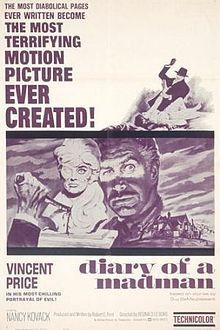
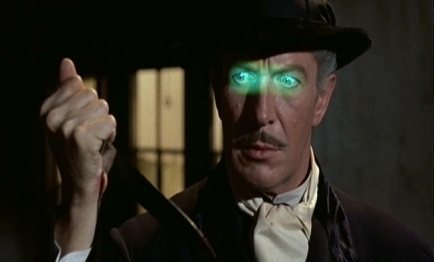
Diary of a Madman is a 1963 horror film directed by Reginald Le Borg and starring Vincent Price, Nancy Kovack, and Chris Warfield. From IMDB:
Simon Cordier is a well-respected magistrate who visits a condemned prisoner, Louis Girot, just before the man's execution. Girot again pleads his innocence insisting that he has been taken over by a spirit that forced him to commit his crimes. Cordier doesn't believe him and the man suddenly dies. Cordier does however note a rapid change in his personality during their short interview. In the following days, Cordier must face a number of strange occurrences in his home. He begins to wonder if he is sleepwalking but is soon hearing voices and begins to wonder about his sanity. It's recommended to him that he take up sculpting, something he once had an interest in. He develops a relationship with Odette, a gold digger married to a struggling artist, but the evil, invisible spirit soon drives him to murder.
- Written by garykmcd


That Maupassant wrote this is the biggest shock to the system. It is a seriously surprising, sinister story. (SSSS)
Profile Image for Stephanie C.
404 reviews93 followers
December 1, 2025
A renowned magistrate who is known for his justice against murderers is dead at 82, and amongst his effects is his diary where he recounts his shocking revelation that he himself is a murderer.

Yet his reasoning, his justification is what is shocking, for he looks deep into the human soul in that we are ALL murderers at heart - but, we just disguise it in the forms of wars and watching executions. We celebrate our bloodlust by elevating the status of generals who destroyed countries. We watch the public hangings as a sense of retribution. In modern society, we create horror movies. The most popular series on streaming media are those recounting the lives and crimes of serial killers.

And so, this magistrate embraces this want for taking a life, for seeing the lifeblood spill out, and thus becomes the true self that is denied as "unacceptable" in its raw form, but transforms into acceptable by social norms.

Is he mad, then? Or is he merely voicing and acting upon the evil desires of our hearts that we refuse to acknowledge?

Oh my. I loved this story because it holds up the mirror into our souls and makes us really THINK about our human nature. We cannot deny the existence of evil in our hearts, and perhaps he is only mad because he voices the truth of our existence.

Freud, as an aside, would have a blast at psychoanalyzing this story. We all have that "id" - that hedonistic pleasure principle that drives us to fulfill even the worst part of ourselves. But that "superego" - the norms of society - keep us in check because the laws prevent us from doing anything and everything we want. The result - our "ego" is what results from this conflict, and this is who we are and how we fit into our culture. I'm not a Freudian by any stretch, but there is definitely something to say about having these undesirable wishes that push to be fulfilled.

So, are we killers at our most base selves? Or is he just insane? Hmmm......
Profile Image for Richard Dominguez.
958 reviews124 followers
October 20, 2020
An excellent short story, well written for its small size. Is he insane, has he been possessed? Is it possible that we are all just teetering on the edge of sanity.
A quick read that does not disappoint.
Profile Image for Alba.
42 reviews50 followers
August 19, 2017
A human being--what is a human being? Through thought it is a reflection of all that is; through memory and science it is an abridged edition of the universe whose history it represents, a mirror of things and of nations, each human being becomes a microcosm in the macrocosm.
Profile Image for Cleo.
158 reviews251 followers
January 29, 2025
Read January 28, 2025

I must admit that I wanted to give this story one star. It is really disgusting. However, Maupassant does raise some pertinent questions. Does evil enter your soul depending on what you allow yourself to be exposed to? Why is it so much easier to choose evil over good? Does becoming a highly respected man with an important position put one in danger of getting a God-complex whereupon anything done by oneself is permissible? Does lack of a family also come with a lack of balance and support and therefore allow one more propensity to become skewed or deranged?

So many questions, but just, ugh! Unlike some reviewers, I didn't ponder the question of the magistrate in the story being the "everyman". Perhaps I'm just naive but I could never see myself choosing this road of pure evil.
Profile Image for Kyaw Zayar Lwin.
122 reviews12 followers
September 19, 2017
Alienist physicians to whom the awful story has been submitted declare that there are in the world many undiscovered madmen as adroit and as much to be feared as this monstrous lunatic.
Profile Image for Odie.
20 reviews57 followers
January 25, 2014
one of the most disturbing literary pieces i have read. this takes me back to the memories and lessons we had during our psychiatric nursing in college. reminds me somehow of antisocial personality disorder and its associated signs and symptoms. this is not for the faint of heart. you have been warned.
Profile Image for K. Anna Kraft.
1,178 reviews38 followers
November 13, 2015
I have arranged my thoughts into a haiku:

"Without a conscience,
Fascination begets lust.
Self-sureness, evil."
Profile Image for Vladimir (mecha_yota)  Altukhov.
187 reviews1 follower
September 15, 2025
The Diary of a Madman by Guy de Maupassant

This one was eh. Read with the short story book club.

Of all four Madman stories we've read in our club, I find this to be the weakest. It's not the proper Diary of a Madman to begin with because in French the story is simply titled Madman. I guess, the Diary part was added by a translator, since the contents are indeed presented in a form of diary entries.

I find the local setup to be a vessel of many great ideas. A man who sentences others to death experiences a desire to kill for real, to feel what's it like to be the one whom he executes. It could be an interesting social commentary on how a judicial system practicing death sentences can break the cogs it's made of. Or, it could be a deep psychological work with steady build-up, chilling execution, and emotional consequences. A soil rich with potential literary treasures.

Sadly, even though the story does have bits of those elements, it doesn't develop them to the full extent. It's too short to have any proper character development and too madmaney to include strong social commentary the way its brothers did. The local madman doesn't feel like a guy who knows the actual truth but is labeled as crazy by society who can not accept it. No, he's an actual batshit psychopath who did what he wanted to do and, apparently, never performed another murder. That, or he never documented them after. The ending of "there were other notes, too, but not worthy of examining" is too abrupt and ruins what could be a good climax of a man going through the consequences of what he'd done. It could be a nice link to his eventual death we have not much info about. Maybe he couldn't bear his actions and killed himself from guilt. Or maybe his idea of murder elevated from kill a random person to kill yourself. We'll never know.
Profile Image for ~~Poulomi Sylphrena Tonk$~~.
175 reviews97 followers
December 13, 2014
4 dark, disturbing stars.

Frequently one meets with people to whom the destruction of life is a pleasure. Yes, yes, it should be a pleasure, the greatest of all, perhaps, for is not killing the next thing to creating? To make and to destroy! These two words contain the history of the universe, all the history of the worlds, all that is, all! Why is it not intoxicating to kill?

In my personal opinion, I think people like Maupassant belong to a different Homo Sapiens subspecies. They are the masters, the crowned rulers of a different world. They entice you, lure you into their world, and then throw you into a whirlpool of unpredictable, unknown emotions. That's why its so hard to express views on Maupassant's works for me, because he leaves me dumbstruck and wide-eyed at the sequence of events in his wrtings.

The madman here is a high tribunal. Yes, a high tribunal associated with courts of law! You won't believe how adroitly he kills and devours, without leaving even a meagre trace of doubt.

A 4-star read for me.
Profile Image for Sohail.
473 reviews14 followers
February 23, 2018
What a horrifying and disturbing short story.

The story acts at two levels. First, the literal one, and second, the figurative one, that asserts it is the society that defines a killer, and by the blessing of the society, all kinds of heinous crimes may go unpunished, and even rewarded.

Both layers are equally scary.

I cannot say that I liked it or not. This short story moved me alright—a testament to the author's outstanding skill—but the effect was so profound that I feel sick.
2 reviews
March 1, 2018
I recommend this story mostly because of its unique perspective and its vivid and attention-grabbing descriptions. This book has a unique perspective because most people rarely get a glimpse into the fascinating and disturbing inner workings of an insane person’s mind. It challenges the prevailing worldview among “normal” people that violence is always wrong and against human nature. The author also points out types of “normal” human behavior that includes violence, such as warfare and the death penalty, and questions how different these types of actions really are from outright murder. The other main reason I would recommend this book is its detailed descriptions of the killer’s inner thoughts. The author presents the worldview of the madman in a way that is interesting and that makes the audience want to keep reading. Although this is a good story, I feel that not everyone would enjoy it. Fans of horror, dystopian fiction, or gothic novels would love this story because of the dark motifs of death and evil present in the story. However, people who are fans of more positive literature would probably not enjoy this story as much. In conclusion, I feel that this story would be a fascinating read for anyone, but especially for those who enjoy gothic or dystopian fiction.
Profile Image for Asma Ghrairi.
107 reviews92 followers
January 29, 2019
This is a shocking and yet, a realistic story. It opens our eyes to the dark sides of the human being. How the same person can lead a life defending some principles and then contradict himself completely when no one is watching over him. This short story is about an honorable judge who served mankind and defended the weak. He died at an old age leaving behind him a diary that reveals his evil deeds and devilish nature.
Profile Image for Sneh Pradhan.
414 reviews74 followers
June 4, 2014
The most disturbing story from Maupassant's oeuvre whose work I are usually light-hearted and romantic ....
Profile Image for Lynsey Walker.
325 reviews12 followers
August 12, 2021
I aspire to be this level of batshit crazy.

Utterly bonkers, and fabulous for it.
Profile Image for Izzati.
601 reviews7 followers
February 13, 2020
Even though the story was super short and was basically the content of a diary, it was packed with the diarist's insane thoughts. It was a reminiscence of Dr. Jekyll and Mr. Hyde in a way. I love how this story could be something that actually happened in real life. In fact, I'm pretty damn sure it did happen somewhere sometime with none of us the wiser.
Profile Image for Andy.
93 reviews28 followers
cuentos
December 10, 2022
Frequently one meets with people to whom the destruction of life is a pleasure. Yes, yes, it should be a pleasure, the greatest of all, perhaps, for is not killing the next thing to creating? To make and to destroy! These two words contain the history of the universe, all the history of worlds, all that is, all! Why is it not intoxicating to kill?

Excellent story.
Profile Image for Rebecca Nolan.
Author 13 books100 followers
October 1, 2019
This short story was my introduction to Guy de Maupassant; I found it incredible. I chose this story for horror month, and was impressed by the dark emotion the author conveys via his protagonist. It was a twisted look into the mind of a killer. I’m looking forward to reading more.
Profile Image for Classic reverie.
1,868 reviews
February 6, 2023
Guy de Maupassant's "The Diary of a Madman" is an extremely disturbing short story on many levels. Though a work of fiction, did Maupassant have anyone in mind? I am sure there was and even now there are "madmen" or psychopaths who have high positions and desire for destruction. The torture and persecution of innocents is truly evil, especially when it is hidden in disguise.

Story in short- A diary of an "irreproachable" judge who is respected and mourned is discovered.


➖➖➖➖➖➖➖➖➖➖➖➖➖➖➖➖➖➖➖➖➖➖➖➖➖➖➖➖➖➖➖➖➖➖➖
Highlight (Yellow) | Location 21974
He was dead — the head of a high tribunal, the upright magistrate whose irreproachable life was a proverb in all the courts of France. Advocates, young counsellors, judges had greeted him at sight of his large, thin, pale face lighted up by two sparkling deep-set eyes, bowing low in token of respect.
Highlight (Yellow) | Location 21976
He had passed his life in pursuing crime and in protecting the weak. Swindlers and murderers had no more redoubtable enemy, for he seemed to read the most secret thoughts of their minds. He was dead, now, at the age of eighty-two, honored by the homage and followed by the regrets of a whole people. Soldiers in red trousers had escorted him to the tomb and men in white cravats had spoken words and shed tears that seemed to be sincere beside his grave.
❌❌❌❌❌❌❌❌❌❌❌❌❌❌❌❌❌❌❌❌❌❌❌❌❌❌❌❌❌❌❌❌❌❌❌❌❌❌❌❌❌spoiler alert


The evil judge killed and was thrilled with seeing blood. Was this made up by him? But even that, it shows a sick delight and one has to wonder about his judicial rulings.

Highlight (Yellow) | Location 21980
But here is the strange paper found by the dismayed notary in the desk where he had kept the records of great criminals! It was entitled: WHY? 20th June, 1851. I have just left court. I have condemned Blondel to death! Now, why did this man kill his five children? Frequently one meets with people to whom the destruction of life is a pleasure. Yes, yes, it should be a pleasure, the greatest of all, perhaps, for is not killing the next thing to creating? To make and to destroy! These two
Highlight (Yellow) | Location 21983
words contain the history of the universe, all the history of worlds, all that is, all! Why is it not intoxicating to kill? 25th June. To think that a being is there who lives, who walks, who runs. A being? What is a being? That animated thing, that bears in it the principle of motion and a will ruling that motion. It is attached to nothing, this thing. Its feet do not belong to the ground. It is a grain of life that moves on the earth, and this grain of life, coming I know not whence, one can destroy at one’s

Highlight (Yellow) | Location 21987
will. Then nothing — nothing more. It perishes, it is finished. 26th June. Why then is it a crime to kill? Yes, why? On the contrary, it is the law of nature. The mission of every being is to kill; he kills to live, and he kills to kill. The beast kills without ceasing, all day, every instant of his existence. Man kills without ceasing, to nourish himself; but since he needs, besides, to kill for pleasure, he has invented hunting! The child kills the insects he finds, the little birds, all the little animals that come in his way. But
Highlight (Yellow) | Location 21991
this does not suffice for the irresistible need to massacre that is in us. It is not enough to kill beasts; we must kill man too. Long ago this need was satisfied by human sacrifices. Now the requirements of social life have made murder a crime. We condemn and punish the assassin! But as we cannot live without yielding to this natural and imperious instinct of death, we relieve ourselves, from time to time, by wars. Then a whole nation slaughters another nation. It is a feast of blood, a feast that maddens armies and that intoxicates civilians, women and children, who read, by lamplight at night, the feverish story of massacre. One might suppose that those destined to accomplish these butcheries of men would be despised! No, they are loaded with honors. They are clad in gold and in resplendent garments; they wear plumes on their heads and ornaments on their breasts, and they are given crosses, rewards, titles of every kind. They are proud, respected, loved by women, cheered by the crowd, solely because their mission
Highlight (Yellow) | Location 21998
is to shed human blood; They drag through the streets their instruments of death, that the passer-by, clad in black, looks on with envy. For to kill is the great law set by nature in the heart of existence! There is nothing more beautiful and honorable than killing! 30th June. To kill is the law, because nature loves eternal youth. She seems to cry in all her unconscious acts: “Quick! quick! quick!” The more she destroys, the more she renews herself.
Highlight (Yellow) | Location 22002
2d July. A human being — what is a human being? Through thought it is a reflection of all that is; through memory and science it is an abridged edition of the universe whose history it represents, a mirror of things and of nations, each human being becomes a microcosm in the macrocosm. 3d July. It must be a pleasure, unique and full of zest, to kill; to have there before one the living, thinking being; to make therein a little hole, nothing but a little hole, to see that red thing flow which is
Highlight (Yellow) | Location 22005
the blood, which makes life; and to have before one only a heap of limp flesh, cold, inert, void of thought! 5th August. I, who have passed my life in judging, condemning, killing by the spoken word, killing by the guillotine those who had killed by the knife, I, I, if I should do as all the assassins have done whom I have smitten, I — I — who would know it? 10th August. Who would ever know? Who would ever suspect me, me, me, especially if I should choose

Highlight (Yellow) | Location 22009
a being I had no interest in doing away with? 15th August. The temptation has come to me. It pervades my whole being; my hands tremble with the desire to kill. 22d August. I could resist no longer. I killed a little creature as an experiment, for a beginning. Jean, my servant, had a goldfinch in a cage hung in the office window. I sent him on an errand, and I took the little bird in my hand, in my hand where I felt its heart beat. It was warm. I went up to my room.
Highlight (Yellow) | Location 22013
From time to time I squeezed it tighter; its heart beat faster; this was atrocious and delicious. I was near choking it. But I could not see the blood. Then I took scissors, short-nail scissors, and I cut its throat with three slits, quite gently. It opened its bill, it struggled to escape me, but I held it, oh! I held it — I could have held a mad dog — and I saw the blood trickle. And then I did as assassins do — real ones. I washed the scissors, I washed my hands. I sprinkled water
Highlight (Yellow) | Location 22017
and took the body, the corpse, to the garden to hide it. I buried it under a strawberry-plant. It will never be found. Every day I shall eat a strawberry from that plant. How one can enjoy life when one knows how! My servant cried; he thought his bird flown. How could he suspect me? Ah! ah! 25th August. I must kill a man! I must — 30th August. It is done. But what a little thing! I had gone for a walk in the forest of Vernes. I was thinking of nothing, literally nothing. A child
Highlight (Yellow) | Location 22021
was in the road, a little child eating a slice of bread and butter. He stops to see me pass and says, “Good-day, Mr. President.” And the thought enters my head, “Shall I kill him?” I answer: “You are alone, my boy?” “Yes, sir.” “All alone in the wood?” “Yes, sir.” The wish to kill him intoxicated me like wine. I approached him quite softly, persuaded that he was going to run away. And, suddenly, I seized him by the throat. He looked
Highlight (Yellow) | Location 22026
at me with terror in his eyes — such eyes! He held my wrists in his little hands and his body writhed like a feather over the fire. Then he moved no more. I threw the body in the ditch, and some weeds on top of it. I returned home, and dined well. What a little thing it was! In the evening I was very gay, light, rejuvenated; I passed the evening at the Prefect’s. They found me witty. But I have not seen blood! I am tranquil. 31st August. The body has been discovered. They are hunting for the assassin. Ah! ah!
Highlight (Yellow) | Location 22030
1st September. Two tramps have been arrested. Proofs are lacking. 2d September. The parents have been to see me. They wept! Ah! ah! 6th October. Nothing has been discovered. Some strolling vagabond must have done the deed. Ah! ah! If I had seen the blood flow, it seems to me I should be tranquil now! The desire to kill is in my

blood; it is like the passion of youth at twenty. 20th October. Yet another. I was walking by the river, after breakfast. And I saw, under a willow, a fisherman asleep. It was noon. A spade was standing in a potato-field near by, as if expressly, for me. I took it. I returned; I raised it like a club, and with one blow of the edge I cleft the fisherman’s head. Oh! he bled, this one! Rose-colored blood. It flowed into the water, quite gently. And I went away with a grave step. If I had been seen! Ah! ah! I should have made an excellent assassin. 25th October. The affair of the fisherman makes a great stir. His
Highlight (Yellow) | Location 22038
nephew, who fished with him, is charged with the murder. 26th October. The examining magistrate affirms that the nephew is guilty. Everybody in town believes it. Ah! ah! 27th October. The nephew makes a very poor witness. He had gone to the village to buy bread and cheese, he declared. He swore that his uncle had been killed in his absence! Who would believe him? 28th October. The nephew has all but confessed, they have badgered him so. Ah! ah! justice!
Highlight (Yellow) | Location 22043
15th November. There are overwhelming proofs against the nephew, who was his uncle’s heir. I shall preside at the sessions. 25th January. To death! to death! to death! I have had him condemned to death! Ah! ah! The advocate-general spoke like an angel! Ah! ah! Yet another! I shall go to see him executed! 10th March. It is done. They guillotined him this morning. He died very well! very well! That gave me pleasure! How fine it is to see a man’s head cut off!
Highlight (Yellow) | Location 22047
Now, I shall wait, I can wait. It would take such a little thing to let myself be caught. The manuscript contained yet other pages, but without relating any new crime. Alienist physicians to whom the awful story has been submitted declare that there are in the world many undiscovered madmen as adroit and as much to be feared as this monstrous lunatic.
Profile Image for Steph.
154 reviews6 followers
April 15, 2021
I have read The Necklace by Guy de Maupassant for school, but I am certain that I have never read this one before. The Diary of a Madman is disturbing, true to style and dare I say, not too difficult to imagine? I wouldn't be surprised if we had undiscovered madmen lurking in the places we frequent.
Profile Image for Preetam Chatterjee.
7,468 reviews439 followers
September 3, 2025
#Binge Reviewing my previous Reads #Horror Short Stories #Anthologies

Guy de Maupassant’s The Diary of a Madman is one of those deceptively short pieces of fiction that manages to stretch its shadows far beyond its few pages. At first glance, it appears to be a straightforward story about a seemingly respectable judge.

But as the diary entries unfold, the thin line between sanity and madness collapses, revealing the darkness that lurks behind polished civility. To appreciate Maupassant’s work fully, it helps to hold it up against its literary cousins—works by Dostoevsky, Poe, and even Kafka—each of whom probes madness from different angles.

The story begins with a shocking revelation: a judge, revered by his peers, is secretly a sadistic murderer who kills for the sheer thrill of it. Unlike Dostoevsky’s Raskolnikov in Crime and Punishment, who murders the burden of philosophical justification, Maupassant’s judge does not wrestle with guilt, nor does he try to rationalize his impulses. He delights in the act. This stark absence of remorse makes the judge’s madness even more chilling. Where Dostoevsky dissects the psychology of crime with a scalpel, Maupassant presents a grotesque portrait with blunt strokes, almost daring us to confront human cruelty in its rawest form.

The diary format recalls the confessional tone of Poe’s The Tell-Tale Heart. Both texts offer a direct plunge into the mind of the narrator, bypassing the buffer of third-person objectivity. Yet there is a crucial difference. Poe’s narrator insists on his sanity while his words betray his unraveling mind, the beating of the heart thundering in the background.

Maupassant’s judge, by contrast, openly embraces his madness. He is not a man tormented by guilt but one intoxicated by power. This difference alters the reader’s experience: Poe evokes terror by showing us how guilt corrodes the psyche, while Maupassant horrifies by stripping guilt away altogether, leaving us alone with a predator who has the face of respectability.

If we compare Maupassant’s work to Kafka’s explorations of alienation and absurdity, the judge stands out as a figure who weaponizes authority. Kafka’s characters—think of Josef K. in The Trial—are crushed by opaque systems of power. Maupassant flips the perspective, presenting us with the insider, the man who benefits from those very systems. Here, madness is not the result of oppression but the abuse of privilege. The judge’s crimes remain undiscovered precisely because society trusts him; his robes and position serve as the perfect disguise. This is where Maupassant becomes brutally modern: the horror is not only in the man but in the structures that allow him to exist unchecked.

Stylistically, Maupassant’s story shares the brevity and impact of a fable, though one stripped of moral resolution. Unlike the sprawling psychological novels of the nineteenth century, The Diary of a Madman condenses terror into a tight space. This compactness is part of its power. In just a few pages, Maupassant destabilizes the reader, reminding us that evil often hides in plain sight. The story ends not with justice or catharsis, but with the diary simply closing—a gesture that underscores how such horrors often remain buried, never exposed.

What makes the tale especially unsettling is Maupassant’s own biography. His later years were marked by mental illness, paranoia, and suicide attempts. One cannot help but sense a haunting self-projection here, though inverted: the judge is not a victim of madness but a man thriving in it. The story thus anticipates the creeping modernist suspicion that the most terrifying monsters are not those outside the social order but those seated comfortably within it.

In comparison to its literary peers, The Diary of a Madman may lack the philosophical weight of Dostoevsky or the gothic lyricism of Poe. Still, it offers something uniquely corrosive—a recognition that madness and cruelty are not exceptions but possibilities within the very fabric of normalcy. It is a tale that continues to resonate, particularly in times when authority figures betray public trust.

By fusing horror with social critique, Maupassant leaves us not with a cautionary tale but with a disturbing mirror. The judge’s diary is closed, but its echoes remain, asking us whether we can ever really distinguish the madman from the man in power.
Profile Image for Lannie.
467 reviews11 followers
September 13, 2025
From all the stories in my book club's project to read all the Diary of a Madman-es, this particular variation might be the most straightforward.

Although there are definitely some questions about society that might pop up naturally by reading a story like this, it, among the Madmans, might be the only one that does not attempt to have subversive social commentary. Like, when Lu Xun's madman sees cannibalism everywhere, his "madness" is that he sees the horror of the current society. We're supposed to understand that perhaps Lu Xun's madman is not mad at all, but actually the only sane one.

I don't think that's the case here.

Maupassant's madman is murderous on purpose. His madness is more individualistic. And even though we can take the idea that his madness comes to him from having too much power (he's a magistrate), or as a spectator to the other evils he witnesses (he has to condemn a lot of criminals, and that's what sets of his curiosity and passion for the act of murder), I don't think we are meant to see him as the "actually sane" person in a mad, mad world.

This is a fun, cleanly executed story about a dude succumbing to primordial urges and getting away with it. It feels less like a commentary and more like Maupassant was just having fun crafting a short story—like Dahl or Poe. Pretty cool.

Last thing is that a lot of the stuff I've seen about this story frames it as a rough draft of The Horla. Maybe that's true, but I don't see it. These stories are totally different except, perhaps, that the main character can be considered insane. But their lives, plots, and the particulars of their insanity are totally different. If you skipped over this one because you thought The Horla would be the "true and complete" version of this, don't worry, it's not. This is its own thing and its a pretty breezy read.
Displaying 1 - 30 of 68 reviews

Can't find what you're looking for?

Get help and learn more about the design.