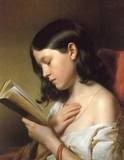
The first book in Philippa Carr’s celebrated Daughters of Englandseries is at once a love story, a mystery, and an epic historical saga set during the tumultuous reign of Henry VIII
Damask Farland, named after a rose, is captivated by the mysterious orphan Bruno. Discovered upon the abbey altar on Christmas morning, then raised by monks, Bruno becomes the great man whom Damask grows to love—only to be shattered by his cruel betrayal. This dramatic coming-of-age novel is set in sixteenth-century England, during the chaotic years when Henry VIII stunned the royal court by setting his sights on Anne Boleyn. It’s also the tale of a man whom many believed to be a holy prophet . . . until a shocking truth is unearthed in the shadows of a centuries-old abbey.
Eleanor Alice Burford, Mrs. George Percival Hibbert was a British author of about 200 historical novels, most of them under the pen name Jean Plaidy which had sold 14 million copies by the time of her death. She chose to use various names because of the differences in subject matter between her books; the best-known, apart from Plaidy, are Victoria Holt (56 million) and Philippa Carr (3 million). Lesser known were the novels Hibbert published under her maiden name Eleanor Burford, or the pseudonyms of Elbur Ford, Kathleen Kellow, Anna Percival and Ellalice Tate. Many of her readers under one penname never suspected her other identities. -Wikipedia
Vor vielen Jahren habe ich sämtliche Bücher, die ich von Philippa Carr/Victoria Holt/Jean Plaidy bekommen konnte, mit Begeisterung gelesen. Das war damals die Zeit, in der ich mich ein wenig von den Kinder- und Jugendbüchern verabschiedet habe. Jetzt möchte ich ihre "Die Töchter Englands"-Reihe gerne noch einmal lesen und war besonders auf diesen ersten Band sehr gespannt, da er zur Zeit König Heinrichs VIII spielt. Diese Zeit interessiert mich besonders. Die Autorin hat viele geschichtliche Ereignisse gekonnt mit einer fiktiven Geschichte verwoben. Der Schreibstil kam mir jetzt relativ einfach vor, so dass sich das Buch recht flüssig und schnell hat lesen lassen. Erzählt wird die Geschichte aus Sicht der Hauptprotagonistin, die wir einige Jahre begleiten. Seltsamerweise ist sie mir allerdings, obwohl wir alles aus ihrer Sicht erfahren, nicht wirklich nahe gekommen. Sie schildert alles relativ emotionslos. Dennoch hat mich das Buch sehr gut unterhalten und es war interessant, die geschichtlichen Abläufe rund um König Heinrichs VIII (Ehe-)Leben mitzuverfolgen!
The narrator for this book is Damask Farland, daughter of a prosperous attorney during the reign of Henry VIII. Damask has grown up around the legend of the Miracle of St. Bruno's abbey, that of a lost child found in a crib on Christmas Eve. The child was named Bruno after the abbey and brought prosperity and wealth to the abbey - that is until King Henry starts hankering for Anne Boleyn. During the destruction of the abbey Bruno's real parentage is revealed, and since it's one he can't accept he high tails it out of town for a few years, but when he does return his fortunes have significantly improved, although no one knows the source of his great wealth.
Anywho, there's a marriage and a few deep dark secrets, but it takes years and years of endless exposition from Damask to get the reader to the big reveal on the last few pages and by then I was so darned weary of it all I really didn't care much. Part of the problem is that today's readers are fairly up to snuff with Henry VIII and his six wives, and the last thing one needs is another recital of it all, particularly from a character who is stuck in the countryside raising children and gets it all second hand. I suspect this might appeal better to younger teens or die-hard fans of Carr who also wrote at Jean Plaidy and Victoria Holt, but for anyone else I'd suggest giving this a miss.
This is the first of the series "Daughters of England" and since I do enjoy Victoria Holt, I wanted to try this series written under her other pseudonym. I enjoyed this story though it was a little long. As a fan of historical fiction I particularly enjoyed the refresher course on Henry VIII and his six wives. I may continue in the series since I have several of them, but I believe I prefer her work as Victoria Holt.
This was a reread for me, and it was just as good the second time around. I loved how Carr weaved the story of her fictional people with the historical facts of the courts in Tudor England. I kept wondering how the book was 451 pages since I didn't remember a whole lot happening after a certain point. I flipped the page to 300 and boom it was finished. The remaining 151 pages were the second book in the series. Now I cannot wait to dive into the rest of the series! I inherited the actual books in this series from my grandmother so it always reminds me of her when I read Philippa Carr.
One of the oft quoted phrases in the book was, "The tragedy of one was the tragedy of us all." This was true then, and it is true now. So much of what happens in history affected more than the main players. This book shows the reverberations of ruler's whims and how it impacts those of even the common folk of England. I was never much a Henry VIII fan, but this definitely showed him in a different light. How much turmoil did he cause the country because of his selfish desires? I recently finished Ender's Game by Orson Scott Card, and this book brought home again how much one man (or woman) can impact civilization.
And so although Queen Mary had placed herself firmly on the throne and strong men and factions surrounded her with the purpose and intention of keeping her there, there were uneasy moments. And the thoughts and hopes of many men and women were turned to the daughter of Anne Boleyn.
In The Miracle at St Bruno’s, which is set during the turbulent reign of Henry VIII, Damask Farland is the cosseted daughter, protected and cherished by her parents. She grows up in a loving environment, slightly removed from the machinations of court life. Running alongside the story of domestic life in the mid-1500’s, is the story of Bruno, an abandoned child brought up in the cloistered environs of St Bruno’s Abbey, whose interwoven history will have repercussions, not just on those who live in the Abbey as Henry VIII sets out to destroy the Abbey’s wealth, but also on the Farland family.
I first read this book shortly after its first publication in 1974, I was then in my mid teens and devouring romantic historical fiction almost as fast as the books were published. Philippa Carr, Victoria Holt, aka as Jean Plaidy were amongst my favourite historical authors, so it was with this in mind, I picked up a copy of this reissued first book in the Daughter of England series, in the hope that their appeal would be everlasting.
Maybe my perception of historical romance has altered with the passage of time, as sadly for me the appeal seems to have been lost. Overall, I found the story rather laboured, with little really happening for the first third of the story. However, there is no denying that the book has been well researched, and to some extent manages to capture the heady and challenging days of Tudor England, with some unexpected twists and turns in the story, which add interest.
A nice enough story if you haven’t read the series before.
I like the concept of setting this novel during the reigns of three Tudor monarchs, ending it at the start of a fourth, but somehow it doesn’t fulfil its potential. The main plot revolves around a group of people who are affected by the changes in England’s monarchy and how one person in charge of the country can cause prosperity or ruin to the people who serve him/her.
One problem I have with this tale is the number of references to Anne Boleyn – in some cases the exact same reference is revived of seeing her on a boat – that often don’t seem relevant to the story. At times I understand the reason for comparisons but often they seem out of place.
In general this rule applies to Henry VIII’s other wives, plus the king himself and his children who succeed him. The Tudor dynasty is at times treated as a subplot. I think had this been scaled down the novel would’ve had a smoother feel to it, as the main focus would be on the principle characters of the piece. Of those main characters, most are likeable, but none stand out prominently in any way.
Another matter that lets this book down, which I’ve noticed other reviewers have picked up on, is that many outcomes are predictable. I won’t give any examples that may be deemed as spoilers, but will mention that I knew immediately from which source the character Bruno was using to give him such wealth. With this and other aspects being obvious, or at least seeming most likely, there wasn’t much suspense.
This isn’t to say the book proved a complete let down though. At times it was engaging, even absorbing, but these positive aspects were not consistent enough. In short, I found this worth reading, but wouldn’t return to it for a second time.
With "The Miracle of St. Bruno's," Eleanor Hibbert inaugurated a long-running series with a new pen name, Philippa Carr. The first novel in the series sets the standard for what follows: a first-person account of family drama, set against major historical events. Here, the narrator is Damask Farland, who guides the reader through the struggles over religion in the reigns of Henry VIII, Edward VI, and Mary Tudor. The action centers on the triangle among Damask, her cousin Kate, and Bruno, a mysterious boy who was a foundling left at the abbey next door to Damask's father's estate. As the three grow from childhood to maturity, their personal lives become intertwined with the changes sweeping England, often mirroring them. All of the author's trademarks are there: bantering dialogue, atmospheric writing, and the requisite spills and thrills. Unlike her Victoria Holt persona, here the author allows herself some adult themes. It is all deftly done with her trademark smooth as silk prose.
"El milagro de San Bruno" Philippa Carr En una región de Inglaterra el día de Navidad en la Abadía de San Bruno un niño recién nacido aparece en el pesebre. Así nace la leyenda del milagro en San Bruno. Las tierras de la abadía colindan con la mansión de los padres de Damask así que ven de cerca todo lo que sucede en la abadía después de los cambios que vienen con el nuevo reinado. Kate y Rupert son dos niños que se quedan sin padres y se van a vivir con la familia de Damask. Así crecen Rupert, Kate, Damask y el niño del milagro Bruno. Ya siendo casi adultos los problemas políticos sociales y religiosos los obligarán a tomar ciertas decisiones donde se verán involucrados en un secreto.
Jean Plaidy is responsible for my introduction to Tudor fiction. A long time ago someone suggested I read Queen of This Realm: The Tudor Queens and shortly after I started collecting Jean Plaidy books from various local used bookstores. I find Plaidy's works to be perfect for those times when I'm just looking for a quick read and they don't seem to play as fast and loose with history as other authors of Tudor fiction. I won't name said authors but anyone who knows me, knows exactly who I'm pointing fingers at. Since Philippa Carr is Jean Plaidy (and Victoria Holt), I figured this novel should be along the same lines as the others I have read. Unfortunately, this didn't really appear to be the case.
Three stars is misleading. This book was really more of a two and a half star novel. The real mystery surrounding Bruno, the "miracle child", wasn't all that mysterious. I had that mystery solved almost as soon as it presented itself. I give Carr credit for creating a character like Bruno. He really was a troll. However, Damask, the novel's protagonist fell flat. Every time some new twist presented itself to Damask I found myself quoting one Tony Kornheiser, "I believe I had that". Everything just became so predictible. I quickly found myself scanning until I came to the end just for the satisfaction of knowing I was right. I am not sure if I will continue with Carr's Daughters of England novels. I find myself much more entertained by The Morland Series by Cynthia Harrod-Eagles if I'm looking for a series that spans one family's heritage across English history.
Light historical reads like this are my mind candy; I especially like to read them when I'm not feeling very well. It's easy to scorn books like this because they are predictable and fluffy, but reading lots of them can eventually contribute to a genuine interest in history. By reading books like this one, I got a decent grasp of English history from the conquest of 1066 through the beginning of the reign of King James I (and VI), something which is definitely not taught in the American schools I attended. After reading a good deal of this sort of thing, I dived into actual scholarly history, as well as much more literary historical fiction--books like Wolf Hall.
In this somewhat Gothic story, A young woman comes of age during the time of Henry VIII, A time when matters of faith and conscience are life and death. Throughout her youth she is tossed about by the loyalties of the men in her life.
Another book about the Tudor era. I can't get enough of ole' Henry the 8th. This one describes how the lives of ordinary people (not peasants) are affected by the changing political and religious tides of Henry, Mary and Elizabeth's reigns. When Henry is in power, everybody is in danger; when Mary is in power the protestants are in danger, etc., etc.
I would have given this four stars except for a quirky annoyance caused by reading the e-version of the book using the Overdrive app on my Nook. This app will tell you how far into a book you are and how many pages are left to the chapter you are reading.
There was a 188 page preview of the next book in the series included in the download which made it look like there was still 1/3 of the book to go when suddenly it ended! I was completely thrown off; it was like I fell off a literary cliff. Very disconcerting.
This book follows the story of Damask, a young woman born during the Tudor reign of Henry VIII. It details her life throughout Henry's rule as well as his son and daughter Mary. It packs a bunch of English history into a small amount of space and does it well without getting too bogged down in historical details. However, the characters seem wooden and one-dimensional. If the whole book had been like the last twenty pages (which moved a fairly fast clip and actually had some action to them) it would have been a better book. I didn't really care about any of these people. Perhaps the fault is mine in that I am reading this book at the wrong stage of my life. It would be a good young adult novel and would teach a bunch of history to those not knowing too much about the Tudor time period. I just found it tedious.
Tudor-era historical fiction? Normally, that's my cup of tea. The Miracle at St. Bruno's, however, fell a bit flat for me.
I'm typically a fan of Jean Plaidy, but I did not recognize this book as being by her (under a different pen name) - the writing did not live up to what I've come to expect from her. This particular book had a rather bland main character, and the action was all very predictable. It wasn't bad... but it wasn't all that good, either. I'm not sure that I'll try another by Philippa Carr...
The version that I downloaded of this novella is titled The Daughters of England Book 1, and it contains The Miracle at St. Bruno's and part of Book Two, The Lion Triumphant. Or at least I think it was part of Book Two, because it ended quite abruptly.
The book tells a good story and keeps one's interest. It is set in the time of Henry VIII and chronicles two families who are deeply impacted by the religious struggles of the time. It would be a good beach or vacation read.
Interesting enough story but FFS is the writing tedious and overly repetitive. Like, for example, if this review were written in the style of this author I would use this sentence to let you know that I found the writing tedious and overly repetitive. I have the next two books in the series but don't know if I should bother. Carr's style is definitely tedious and overly repetitive.
The first in the series, which takes place during the days of Henry VIII and Anne Boleyn. It's full of history, drama, secrets and Gothic intrigue. I really enjoyed this one, although Damask is not the strongest character in the series.
Credo di aver raramente gioito alla morte di un personaggio tanto quanto in questo libro. Una morte pure abbastanza scema, e forse proprio per questo perfetta.
Una storia familiare intrecciata fortemente a quella dell'Inghilterra di Enrico VIII. All'inizio temevo fosse solo una storia d'amore, con la "cugina-barra-sorella acquisita" a fare da terzo incomodo e a tramare nell'ombra. Invece ad ogni mio sospetto di cliché e banalità, ha preso una piega meno prevedibile e più umana. Damask, che già dal nome faceva temere una Mary Sue, è passata da bambina gentile, intelligente e pronta a vedere il buono in tutto e tutti, a donna sveglia e capace di carattere pur mantenendo la sua bontà d'animo e un tatto che, a volte, ho trovato esasperante. Ha dovuto imparare a scendere a compromessi, ed io l'ho apprezzata sempre un po' di più. Non avessi deciso per le challenge, avrei letto tutti e 19 i libri seguenti di fila.
First person narration of a very easily guessed plot. The heroine, Damask, had a too modern view of religious differences; not many in that era could think in such a "live and let live" way about doctrine. Carr creates a fictional family that almost mimics Thomas More's: the father and daughter are very close and she is almost like Margaret More Roper in classical knowledge--even visiting her father in the Tower of London like Margaret visited More. The change in one character from being such a cold-hearted, manipulative woman into a thoughtful and even loving person didn't make sense. It's really a Gothic novel: a ruined, rebuilt monastery, a mysterious source of wealth, a witch in a forest, and characters who are driven by passions of pride and revenge. Carr gets some of the chronology wrong: Mary I was not called "Bloody Mary" during her reign; that came later!
Wow, so boring. I DNF this one, not enough time left in my life to continue with a book that drags like this one. I remembered liking something by this author years ago and so gave this a try. It has a very interesting premise, but even with knowing all the true historical facts interwoven with the fictional characters here, it just couldn't keep my interest.
I probably would've picked this series up a lot sooner if I'd been told from the get-go that this first one was set in the Tudor period. This had a really interesting angle, which I enjoyed a lot.
The Miracle at St. Bruno’s by Philippa Carr is the first novel in the Daughters of England series. It opens during the time of ‘the king’s secret matter’—King Henry VIII’s attempt to put away his first wife, Katherine of Aragon, to marry Anne Boleyn—and moves through the reigns of his successors, concluding shortly after the coronation of Elizabeth I. It is the coming of age story of Damask Farland, the daughter in a privileged household with mysterious ties to neighboring St. Bruno’s Abbey. The tale revolves around the relationship between Damask, her vibrant cousin Kate, and Bruno, the miracle child from next door. Damask finds herself caught up in the middle of the intrigue as the romantic idealizations of her youth deteriorate into a loveless union with a man desperately attempting to maintain his reputation of divine origin.
Painting a vivid picture rich with historical detail, The Miracle at St. Bruno’s gives an enlightening perspective of life in continual upheaval due to the fluctuation of the religious beliefs of those who sit on the throne. The focus is placed more on the setting and political implications of the day and their bearing on the general populace than on the characters themselves with the protagonist’s story being secondary. For me, the tale was too gloomy to hold any real romantic quality, and in my opinion, this book tends more toward straight historical fiction.
As an avid fan of Eleanor Hibbert, I had expected to love The Miracle at St. Bruno’s as much as her others but was disappointed by the slow moving and somewhat predictable plot, lukewarm characters, and uninspired relationships. There were moments of promise at which I began to anticipate an exciting new twist that never developed into any fulfilling conclusion. The edition I received had a preview of the second novel in the series, The Lion Triumphant, and within the first few pages it promised much more romance than book one. Only then did I realize that the first was written as a foundation for succeeding volumes. I would recommend this book to hardcore Hibbert fans, readers who plan to take on the entire series, and those who find pleasure in historical fiction that does not depend upon a romantic relationship to drive it.
"I was born in the September of 1523, nine months after the monks had discovered the child in the crib on that Christmas morning. My birth was, my father used to say, another miracle: He was not young at the time being forty years of age ... My mother, whose great pleasure was tending her gardens, called me Damask, after the rose which Dr. Linacre, the King's physician, had brought into England that year."
So begins the story narrated by Damask Farland, the daughter of an affluent lawyer whose considerable acreage adjoins the property of St. Bruno's Abbey. It is the story of a life inextricably enmeshed with that of Bruno - the mysterious child found in the abbey's creche on Christmas morning of 1522. So it was that Bruno came to be raised by the monks - becoming a man at once handsome and saintly, but also brooding and ominous, plagued by the secrets of his birth - secrets which slowly begin to encroach on the sanctuary of the majestic abbey that Bruno increasingly comes to dominate.
This is also the story of an engaging family, the Farlands, living during the reign of King Henry VIII. This is the story of a father wise enough to understand that his own happiness - as well as the happiness of his family - remained at the King's pleasure; a wife, twenty years his junior, and a daughter whose intelligence is constantly in conflict with the mesmerizing influence Bruno has over her and her destiny.
While The Miracle at St. Bruno's is very much the story of Damask and Bruno, it is also the story of sixteenth-century England - an era of vicious corruption and deep tenderness, when periods of violent brutality follow a time of deep contentment, presided over by one of England's most fascinating monarchs, Henry VIII.
I must say that I enjoyed reading this book - as I do so many of Philippa Carr's books. I have always been interested in anything to do with Henry VIII, and found that Philippa Carr's writing was historically accurate. While I found the story to be a tad simplistic at times, I still enjoyed it very much. In my opinion, The Miracle at St. Bruno's by Philippa Carr definitely deserves an A!
Picked up this book randomly during an ebook sale since it was a historical fiction set in one of my favorite time periods (Tudor/Henry 8th British Era) and it was an enjoyable, although not amazing, read.
The story takes place during Henry VIII's reign (The book spans from when Henry is still married to Katherine of Aragon, his first wife, all the way to Elizabeth ascending the throne) and follows a fictional character by the name of Damask, the daughter of a well off lawyer. Philippa Carr did an excellent job of weaving real, historical events into her fictional story. Throughout the story, Damask's life is extremely altered due to the events surrounding the political/religious change and turmoil during Henry's reign. Philippas attention to detail and writing made me feel as if this was truly how life was for many people across England during that time; A constant sense of loss and fear for one's life, where one slip of the tongue could end ones life.
The story itself was nothing amazing. Most of the book focuses on Damask as she grows from a child into womanhood with the story being told from her perspective. I found Damask to be a likable and strong-willed female protagonist. I detested her cousin Kate and Bruno though, and I believe Philippa set these characters to be understood but unliked by readers (in my opinion). There was nothing really new or fresh introduced in this book, but then again historical fiction is not really a good median for that.
Overall, the book was an enjoyable read, although I feel like it will not be one that I come to remember. If you like coming of age-esque and historical fiction novels, its worth a read. I am interested in reading the rest of Philippas Daughters of England series.
This is a historical fiction book that starts when King Henry VIII was ruler of England and goes through the subsequent Queens ending with Queen Elizabeth I. It starts out with the "Miracle at St. Bruno's"and follows the life of one family, and the niece and nephew whose parents are killed and come to live with them, through the tumultuous times during the religious upheaval in England. The back and forth between Protestantism and Catholicism and the effect it has on the family and Abbey that is next door. This book is filled with so much history, which I love. However I felt the story line was a little slow, at first. Once I got past that, it was a very interesting and likeable book. This is a series of books and at the end we also get to read a good portion of the next book in the series, The Lion Triumphant. It actually starts out much better and so I think once the author got going, the story gets even better. I will definitely be buying The Lion Triumphant and the subsequent books after it. If you enjoy books with great historical facts, you can not go wrong with this series of books. I actually felt I was learning from the facts in the book. How can you go wrong?
I was gifted these books by my mother. They are masterful historic romance novels. They are 'go to' favorites that both my mother and I go to regularly. The character development is great, the life situations are true, and there isn't always the happy ending that you are rooting for. That would be the only slight negative for me. The books are so life like in their creation that the unhappy characters make you wish you could slap the 'bad guy' around a bit ;-)
As a Christian, some of the story themes can be challenging to enjoy, but life isn't all roses and sunshine, especially during England's sordid history. This entire series is well written, weaves excellent history throughout, and does offer justice to the wronged.
A deep look at what life may have been like for those living under the reign of England's Henry VIII and his immediate successors. People live in moral fear of Henry's displeasure, and then of never being sure of the "right" religion or whether they have innocently said or done something that might possibly be construed as treason or heresy.
The writing is compelling and moving, giving us all the right parts of the story. Carr has instilled a real sense of fear and one believes the characters' sense of chaos in the political and religious climate of the time. The characters at times appear stereotypical, and at others complex and deeply relational. One only wonders what happens after the story ends.