

What do you think?

An Essay on Man
The present edition is based on the 1751 large octavo edition of Pope's works edited by William Warburton. Spelling forms not recognized by Webster's Seventh New Collegiate Dictionary have been modernized. Prose has been normalized throughout.
80 pages, Paperback
First published January 24, 1734
About the author
Alexander Pope
2,336 books703 followersPeople best remember
The Rape of the Lock
(1712) and
The Dunciad
(1728), satirical mock-epic poems of English writer Alexander Pope.
Ariel, a sylph, guards the heroine of The Rape of the Lock of Alexander Pope.
People generally regard Pope as the greatest of the 18th century and know his verse and his translation of Homer. After William Shakespeare and Alfred Tennyson, he ranks as third most frequently quoted in the language. Pope mastered the heroic couplet.
https://en.wikipedia.org/wiki/Alexand...
Ariel, a sylph, guards the heroine of The Rape of the Lock of Alexander Pope.
People generally regard Pope as the greatest of the 18th century and know his verse and his translation of Homer. After William Shakespeare and Alfred Tennyson, he ranks as third most frequently quoted in the language. Pope mastered the heroic couplet.
https://en.wikipedia.org/wiki/Alexand...
Ratings & Reviews
Friends & Following
Create a free account to discover what your friends think of this book!
Community Reviews
Displaying 1 - 30 of 129 reviews

Read
July 14, 2015
Portrait of Alexander Pope (1688 – 1744) by Jonathan Richardson, ca. 1736
Know then thyself, presume not God to scan;
The proper study of Mankind is Man.
While reading Arthur O. Lovejoy's very interesting Essays in the History of Ideas I finally understood the intellectual context of Alexander Pope's famous philosophical poem, An Essay On Man. Perhaps best known as an author of satirical verses and a most engaging translation of the Iliad,(*) Pope also produced an edition of Shakespeare and ventured into philosophical waters, as did so many writers in the 18th century.
The various components of An Essay On Man appeared scattered through the years 1732-1734. Together, they constituted only the first part of a much larger project, one which Pope's lifelong poor health did not permit to be realized. Their purpose was, in Pope's words, to "vindicate the ways of God to Man," a clear play on Milton's purpose in Paradise Lost to "justify the ways of God to Man," though I think that Pope rather more explained the ways of Man to Man. And he did it in heroic couplets!
As those of you who follow my reviews surely have deduced, I am convinced that one cannot fully understand a work of art (or any other fabrication of Man) without grasping its historical and intellectual context. Not that I believe that the work can be reduced to its context, or is an epiphenomenon of that context (or of the Weltgeist and the like), any more than I think that it can be reduced to the author's life experience or, even less, his psychological constitution. These are all just components of the circumstances that led to the creation of the work, which itself is yet both more and less than these.
In the late 17th century and through at least the first half of the 18th century a particular complex of ideas permeated many of the cognoscenti of the time. Two foundational aspects of this complex are the idea that human nature is independent of time and place and that the only matters of real importance are those that are understood (or at least are understandable) in exactly the same way by everyone. This latter point bears some emphasis, since it directly contradicts the prevailing attitude here at the beginning of the 21st century: anything that requires recondite theory, anything that is not universally accessible to all human beings is either error or essentially irrelevant to anything of significance. To grasp the Truth requires no special abilities, knowledge or revelation; it just requires an unprejudiced use of the gifts common to all human beings.(**) Both of these notions (and more) are subsumed in the then current meanings of the words "Nature" and "Natural Law" and are directly reflected in Pope's poem.
In this representative passage "instinct" stands in for the gifts common to all; one also sees along the way a consequence of the application of this complex of ideas to religion:(***)
Say, where full Instinct is th'unerring guide,
What Pope or Council can they need beside?
Reason, however able, cool at best,
Cares not for service, or but serves when pressed,
Stays 'till we call, and then not often near;
But honest Instinct comes a volunteer,
Sure never to o’er-shoot, but just to hit;
While still too wide or short is human Wit;
Sure by quick Nature happiness to gain,
Which heavier Reason labours at in vain,
This too serves always, Reason never long;
One must go right, the other may go wrong.
See then the acting and comparing pow'rs
One in their nature, which are two in ours;
And Reason raise o’er Instinct as you can,
In this ’tis God directs, in that ’tis Man.
There are further elements of the then contemporary intellectual atmosphere, such as the Great Chain of Being, which play important roles in this striking text, but my review is already long and I want Pope to come to word again in this passage on the peculiar position of Mankind in the order of things.
Know then thyself, presume not God to scan;
The proper study of Mankind is Man.
Plac'd on this isthmus of a middle state,
A being darkly wise, and rudely great:
With too much knowledge for the Sceptic side,
With too much weakness for the Stoic’s pride,
He hangs between; in doubt to act, or rest;
In doubt to deem himself a God, or Beast;
In doubt his Mind or Body to prefer;
Born but to die, and reas'ning but to err;
Alike in ignorance, his reason such,
Whether he thinks too little, or too much:
Chaos of Thought and Passion, all confus'd;
Still by himself abus'd, or disabus'd;
Created half to rise, and half to fall;
Great lord of all things, yet a prey to all;
Sole judge of Truth, in endless Error hurl'd:
The glory, jest, and riddle of the world!
I'd say he nailed it.
Let me end, though, on a note of optimism with Pope's version of a wisdom which truly seems to be (nearly) universal and which we can all hope is therefore true:
All Nature is but Art, unknown to thee;
All Chance, Direction, which thou canst not see;
All Discord, Harmony not understood;
All partial Evil, universal Good:
And, spite of Pride, in erring Reason’s spite,
One truth is clear, whatever is, is RIGHT.
(*) He translated only half of a subsequent version of the Odyssey that appeared under his name.
(**) This complex of ideas was proselytized by Voltaire, among many others besides Pope. On a side note, the business with "understood in exactly the same way by everyone" was theory; in practice it could become "understood in exactly the same way by me and my kind." Consider, for example, this passage from Voltaire's Poème sur la Loi naturelle:
Est-ce le peuple altier conquérant de Byzance,
Le tranquille Chinois, le Tartare indompté,
Qui connaît son essence, et suit sa volonté?
Différents dans leurs moeurs ainsi qu'en leur hommage,
Ils lui font tenir tous un différent langage:
Tous se sont donc trompés. Mais détournons les yeux
De cet impur amas d'imposteurs odieux
The "son" and "sa" refer to the Supreme Being; the "donc" is very telling. In a note Voltaire did deign to exclude Confucius from this impur amas d'imposteurs odieux, since he s’en est tenu à la religion naturelle. Elsewhere, Voltaire writes quite positively about Chinese culture (like many European free thinkers from the 16th through the 18th centuries such as Gottfried Wilhelm Leibniz and Christian Wolff, he valued Chinese government and ethics above their European counterparts).
(***) For other authors of the age, "reason" refers to this universal set of gifts.

December 31, 2018
Another English Lit class find.
This was wasn't exciting and I remember nothing from it.
This was wasn't exciting and I remember nothing from it.

June 30, 2016
Overall, I agree with Samuel Johnson’s view on Pope’s An Essay on Man:
“The Essay on Man was a work of great labour and long consideration, but certainly not the happiest of Pope's performances. The subject is perhaps not very proper for poetry, and the poet was not sufficiently master of his subject; metaphysical morality was to him a new study, he was proud of his acquisitions, and, supposing himself master of great secrets, was in haste to teach what he had not learned.” (The Life of Pope, 1781).
“Whatever is, is right” is Pope’s theme as he aims to “vindicate the ways of God to Man.” According to Pope, we are to accept our place in life. Any suffering we experience is from our wanting more - material or immaterial -- than is allotted us in our role/place. We should just be happy with who we are – whether we are a fat prince chasing peasant girls for a lark, or hungry in the streets without a home. We can all be happy if we just accept our place!
Buck up you crippled, sick, hungry, mentally ill and homeless people! Believe me: kings and lords don’t really have it any better then you – they can be quite sad at times!
Rather than “vindicate the ways of God to Man,” Pope simply tries to excuse/whitewash the ways of God to Man through tautologies and wise-sounding contradictions. His logical incongruities are many. If man’s knowledge of the world is imperfect and incomplete, how does he know the world is complete and infinitely wise? He says the world is beyond our understanding (a la Job), yet he contends to understand our proper role.
Furthermore, we are to accept that there is a god, that god is good and there is an afterlife/heaven. For someone who thinks the proper focus of man is mankind, he’s throwing in a lot of external variables that can’t be determined through observation or deduction.
Added to the illogical statements is the form – heroic couplets. The rhymed couplets make what are already worn out sentiments into trite commonplaces. In places it sounds like a book of banal aphorisms. And these mostly consist of contradictory statements that are meant to be wise but really tell you nothing; like statements such as “Man is less than an angel, but more than worm.” Brilliant – I’m glad that’s resolved.
Tom Jones’ new edition provides an ample introduction and notes. His primary focus, however, is on placing Pope’s thought system in the philosophical discussions of his time. That makes for some dry reading of mostly obscure writers. And while he does explain historical figures mentioned in the poem, he makes very little effort to explain difficult-to-understand lines – and there are quite a few of these.
I’ve never read Pope, and I think I started with the wrong book. I’d only recommend this to people with a fervid interest in 17th and 18th century European philosophy. (Or those who like trite aphorisms that haven’t really been thought through.)
“The Essay on Man was a work of great labour and long consideration, but certainly not the happiest of Pope's performances. The subject is perhaps not very proper for poetry, and the poet was not sufficiently master of his subject; metaphysical morality was to him a new study, he was proud of his acquisitions, and, supposing himself master of great secrets, was in haste to teach what he had not learned.” (The Life of Pope, 1781).
“Whatever is, is right” is Pope’s theme as he aims to “vindicate the ways of God to Man.” According to Pope, we are to accept our place in life. Any suffering we experience is from our wanting more - material or immaterial -- than is allotted us in our role/place. We should just be happy with who we are – whether we are a fat prince chasing peasant girls for a lark, or hungry in the streets without a home. We can all be happy if we just accept our place!
Buck up you crippled, sick, hungry, mentally ill and homeless people! Believe me: kings and lords don’t really have it any better then you – they can be quite sad at times!
Rather than “vindicate the ways of God to Man,” Pope simply tries to excuse/whitewash the ways of God to Man through tautologies and wise-sounding contradictions. His logical incongruities are many. If man’s knowledge of the world is imperfect and incomplete, how does he know the world is complete and infinitely wise? He says the world is beyond our understanding (a la Job), yet he contends to understand our proper role.
Furthermore, we are to accept that there is a god, that god is good and there is an afterlife/heaven. For someone who thinks the proper focus of man is mankind, he’s throwing in a lot of external variables that can’t be determined through observation or deduction.
Added to the illogical statements is the form – heroic couplets. The rhymed couplets make what are already worn out sentiments into trite commonplaces. In places it sounds like a book of banal aphorisms. And these mostly consist of contradictory statements that are meant to be wise but really tell you nothing; like statements such as “Man is less than an angel, but more than worm.” Brilliant – I’m glad that’s resolved.
Tom Jones’ new edition provides an ample introduction and notes. His primary focus, however, is on placing Pope’s thought system in the philosophical discussions of his time. That makes for some dry reading of mostly obscure writers. And while he does explain historical figures mentioned in the poem, he makes very little effort to explain difficult-to-understand lines – and there are quite a few of these.
I’ve never read Pope, and I think I started with the wrong book. I’d only recommend this to people with a fervid interest in 17th and 18th century European philosophy. (Or those who like trite aphorisms that haven’t really been thought through.)

February 4, 2021
I took my time savoring Pope's words, tone, and skill and enjoyed the experience all the more.
Let us (since life can little more supply
Than just to look about us and to die)
Expatiate free o'er all this scene of man;
A mighty maze! but not without a plan...
Let us (since life can little more supply
Than just to look about us and to die)
Expatiate free o'er all this scene of man;
A mighty maze! but not without a plan...

September 28, 2014
Pope’s Essay on Man, ironically enough, is not exactly an essay, and it’s not exactly on Man; It’s rather in verse, which might be considered as an attempt to reduce the considerable amount of yawning which happens during reading it, an attempt doomed to failure-at least by universal consensus. Also, Mr. Pope is not exactly laconic when it comes to matters concerning everything but man: from Universe to Society to Happiness to God. The latter, I guess, makes sense considering the special form of humanism which was pervasive in Pope’s time: the kind of humanism which regarded the man in the middle of a great chain, called the Great Chain of Being, and inspected the relationship of man to everything around him. That’s precisely what Pope does in his essay, with the initial premise of trying to “vindicate the ways of God to men” which is an exact echo of John Milton in his Paradise Lost. This, again, is understandable considering the neoclassical obsession with imitating their predecessors- although Pope had probably had older predecessors in mind, namely the classics; most prominent of all would be Horace. Just like Horace, Pope passionately warns his readers to “Know then thy place”, the place which is located at the middle, between the lowest forms of living and the highest, God. In his case, however, this claim seems especially contradictory for a man who himself is trying to do the most ambitious of all jobs: Justifying the ways of God to Man, and write an essay on the universal conception of Man. All of this being said, I personally enjoyed the heroic couplet a great deal, and was amazed by his perception of love (love of Man and love of God, resulting in creation of Government and Religion, respectively) and despised the confidence with which he stated his own opinions as the absolute and universal truths.

April 9, 2015
such a shapeshifting work of literature, at times I think, god Pope is just an idealistic show off and I;m really bored, but then he slips in a line or two that I really like, but I felt nothing reading this, probably because he wanted so hard to be such a witty guy that he put no actual humanity in it, almost like he dehumanized himself to talk about humanity, I dont think it worked.

May 30, 2021
Yes, we're back with another, slightly different edition. This one doesn't include his anti-pretentious landscaping poem, but instead has an iconic one called "An Essay On Criticism."
Some gems:
Look at this. This man has been harshly reviewed by somebody and is SO SALTY he wrote an entire multi-page poem about it. I freaking love Pope. What a legend. (Also, apparently the saying "to err is human, to forgive divine" is from this poem??)
Some gems:
• "Tis hard to say, if greater want of skill / Appear in writing or in judging ill"
• "Some neither can for wits nor critics pass / As heavy mules are neither horse nor ass"
• "Whoever thinks a faultless piece to see / Thinks what ne'er was, nor is, nor e'er shall be / In every work regard the writer's end / Since none can compass more than they intend; / And if the means be just, the conduct true / Applause, in spite of trivial faults, is due"
• "'Tis not enough your counsel still be true; / Blunt truths more mischief than nice falsehoods do / Men must be taught as if you taught them not / And things unknown proposed as things forgot"
• "Others for Language all their care express / And value books, as women men, for dress" (L O L)
Look at this. This man has been harshly reviewed by somebody and is SO SALTY he wrote an entire multi-page poem about it. I freaking love Pope. What a legend. (Also, apparently the saying "to err is human, to forgive divine" is from this poem??)

May 27, 2018
I have to thank Andrew Marr for pointing me to Pope, who, for no other reason than that I was a silly teenager, at school I had always assumed to be dull. Not a bit of it. Andrew Marr, in “We British - The Poetry of a People” had called Pope a genius; I thought it was about time I became acquainted with him.
“Know then thyself ; presume not God to scan;
The proper study of mankind is man.” (An Essay on Man).
I liked this very much. It suits my present age, as it must have suited Pope’s, who wrote poetry when he was young (as one does), followed by translation in his middle age and finally, his great works of morality and satire. As I read, I came across a few well-known expressions I hadn’t known were Pope’s.
There was so much in this I liked – even though most of the classical and contemporary references passed me by, and the occasional Latin phrase used as a preface to a new section proved too much for my self-taught Latin of a half a century ago. With all this to contend with, my finding Pope so accessible – so witty and challenging, so ordinary and down-to-earth in so many respects – is a tribute to the strength of his writing.
He chose to write in rhyming couplets (I wasn’t really expecting that from a book described as, “An Essay”! He makes clear that he felt poetry was so much stronger and more easily retained, and also that he found its brevity the best way of expressing what he wanted to say: “. . . much of the force as well of grace of arguments or instructions depends on their conciseness”.
In an introductory paragraph to each “epistle” of the essay (whose full structure was not realised before his death) he explains the argument, and then goes on to knock us for six. He had me fooled for a couple of minutes by a few pleasant lines containing the following:
“Call, if you will, bad rhyming a disease,
It gives men happiness, or gives them ease.”
No, ‘fraid not. Here we go:
“Walk sober off; before a sprightlier age
Comes tittering on, and shoves you from the stage;
Leave such to trifle with more grace and ease,
Where folly pleases, and whose follies please.”
He is happy to use (modified) Milton’s famous intention, “To justify the ways of God to man” but, although Pope expresses his intention as “to vindicate the ways of God to man”, he is writing in a later age and dealing, as Milton did not, with the questions of whether God exists at all and what, then, is man? I’ve decided to include the whole excerpt from which the “proper study of mankind” comes, at the end of this review (from the magnificent “Epistle II” of the essay).
There is a seriousness about these epistles that allows us (well, me anyway) to accept that Pope is telling it straight, for instance, when he asserts in Epistle IV,
“Know, then, this truth (enough for man to know)
‘virtue alone is happiness below.”
But there is a distinct shift from this in the “Moral Essays” to a focus on witty observance. Much of his perception seems very modern, although probably embedded in his consciousness from several sources in the philosophical age he lived in; for instance, this, from “Of the Knowledge and Characters of Men”:
“. . . the difference is as great between
The optics seeing, as the object seen.
All manners take a tincture from our own;
Or come discoloured through our passions shown.
Or fancy’s beam enlarges, multiplies,
Contracts, inverts, and gives ten thousand dyes.”
And so on, to the characters of women (here he uses a word beginning with ‘wh’ a lot, which was asterisked out in my version. I decided it made for an easy rhyme!
He writes in the two remaining moral essays of money and riches, building in his “principles, maxims or precepts”. When I came to the “Satires” I was bowled over by his descriptions of statesmen and courtiers – bitingly relevant today, especially when reform of the social security system has caused widespread misery and has been only slightly modified when the government has been forced to a conciliatory measure. Thus Pope describes the wielders of political power:
“There, where no passion, pride or shame transport,
Lulled with the sweet nepenthe of a court;
There, where no father’s, brother’s, friend’s disgrace
Once break their rest, or stir them from their place:
But past the sense of human miseries,
All tears are wiped for ever from all eyes;
No cheek is known to blush, no heart to throb,
Save when they lose a question, or a job.”
I’ll stop there because I could go on quoting Pope ‘ad infinitum’ (see how my Latin’s already coming back!) I just want to say that he does not hold back when it comes to replying to criticisms that have been made of his writing. Much that he writes in response could not have been written today! But he was obviously hurt by what must have been very personal attacks. He finds some consolation in this lovely precept from Horace:
“In moderation placing all my glory” (Satire on the first Book of Horace).
I’ll go on to read Pope’s earlier poetry (principally “The Rape of the Lock”) in another book of his works that I bought following the comment in Andrew Marr, but I have other books to read first. I’ll savour “The Essay on Man” as a fine dish, not to be scoffed on an everyday basis, and look forward to my next encounter with this razor-sharp mind and quill!
Quote:
“Know then thyself ; presume not God to scan;
The proper study of mankind is man.
Placed on this isthmus of a middle state,
A being darkly wise, and rudely great;
With too much knowledge for the sceptic side,
With too much weakness for the stoic’s side,
He hangs between; in doubt to act, or rest;
In doubt to deem himself a god, or beast;
In doubt his mind or body to prefer;
Born but to die, and reasoning but to err;
Alike in ignorance, his reason such,
Whether he thinks too little, or too much:
Chaos of thought and passion, all confused;
Still by himself abused, or disabused;
Created half to rise, and half to fall;
Great lord of all things, yet a prey to all;
Sole judge of truth, in endless error hurled:
The glory, jest and riddle of the world!”
“Know then thyself ; presume not God to scan;
The proper study of mankind is man.” (An Essay on Man).
I liked this very much. It suits my present age, as it must have suited Pope’s, who wrote poetry when he was young (as one does), followed by translation in his middle age and finally, his great works of morality and satire. As I read, I came across a few well-known expressions I hadn’t known were Pope’s.
There was so much in this I liked – even though most of the classical and contemporary references passed me by, and the occasional Latin phrase used as a preface to a new section proved too much for my self-taught Latin of a half a century ago. With all this to contend with, my finding Pope so accessible – so witty and challenging, so ordinary and down-to-earth in so many respects – is a tribute to the strength of his writing.
He chose to write in rhyming couplets (I wasn’t really expecting that from a book described as, “An Essay”! He makes clear that he felt poetry was so much stronger and more easily retained, and also that he found its brevity the best way of expressing what he wanted to say: “. . . much of the force as well of grace of arguments or instructions depends on their conciseness”.
In an introductory paragraph to each “epistle” of the essay (whose full structure was not realised before his death) he explains the argument, and then goes on to knock us for six. He had me fooled for a couple of minutes by a few pleasant lines containing the following:
“Call, if you will, bad rhyming a disease,
It gives men happiness, or gives them ease.”
No, ‘fraid not. Here we go:
“Walk sober off; before a sprightlier age
Comes tittering on, and shoves you from the stage;
Leave such to trifle with more grace and ease,
Where folly pleases, and whose follies please.”
He is happy to use (modified) Milton’s famous intention, “To justify the ways of God to man” but, although Pope expresses his intention as “to vindicate the ways of God to man”, he is writing in a later age and dealing, as Milton did not, with the questions of whether God exists at all and what, then, is man? I’ve decided to include the whole excerpt from which the “proper study of mankind” comes, at the end of this review (from the magnificent “Epistle II” of the essay).
There is a seriousness about these epistles that allows us (well, me anyway) to accept that Pope is telling it straight, for instance, when he asserts in Epistle IV,
“Know, then, this truth (enough for man to know)
‘virtue alone is happiness below.”
But there is a distinct shift from this in the “Moral Essays” to a focus on witty observance. Much of his perception seems very modern, although probably embedded in his consciousness from several sources in the philosophical age he lived in; for instance, this, from “Of the Knowledge and Characters of Men”:
“. . . the difference is as great between
The optics seeing, as the object seen.
All manners take a tincture from our own;
Or come discoloured through our passions shown.
Or fancy’s beam enlarges, multiplies,
Contracts, inverts, and gives ten thousand dyes.”
And so on, to the characters of women (here he uses a word beginning with ‘wh’ a lot, which was asterisked out in my version. I decided it made for an easy rhyme!
He writes in the two remaining moral essays of money and riches, building in his “principles, maxims or precepts”. When I came to the “Satires” I was bowled over by his descriptions of statesmen and courtiers – bitingly relevant today, especially when reform of the social security system has caused widespread misery and has been only slightly modified when the government has been forced to a conciliatory measure. Thus Pope describes the wielders of political power:
“There, where no passion, pride or shame transport,
Lulled with the sweet nepenthe of a court;
There, where no father’s, brother’s, friend’s disgrace
Once break their rest, or stir them from their place:
But past the sense of human miseries,
All tears are wiped for ever from all eyes;
No cheek is known to blush, no heart to throb,
Save when they lose a question, or a job.”
I’ll stop there because I could go on quoting Pope ‘ad infinitum’ (see how my Latin’s already coming back!) I just want to say that he does not hold back when it comes to replying to criticisms that have been made of his writing. Much that he writes in response could not have been written today! But he was obviously hurt by what must have been very personal attacks. He finds some consolation in this lovely precept from Horace:
“In moderation placing all my glory” (Satire on the first Book of Horace).
I’ll go on to read Pope’s earlier poetry (principally “The Rape of the Lock”) in another book of his works that I bought following the comment in Andrew Marr, but I have other books to read first. I’ll savour “The Essay on Man” as a fine dish, not to be scoffed on an everyday basis, and look forward to my next encounter with this razor-sharp mind and quill!
Quote:
“Know then thyself ; presume not God to scan;
The proper study of mankind is man.
Placed on this isthmus of a middle state,
A being darkly wise, and rudely great;
With too much knowledge for the sceptic side,
With too much weakness for the stoic’s side,
He hangs between; in doubt to act, or rest;
In doubt to deem himself a god, or beast;
In doubt his mind or body to prefer;
Born but to die, and reasoning but to err;
Alike in ignorance, his reason such,
Whether he thinks too little, or too much:
Chaos of thought and passion, all confused;
Still by himself abused, or disabused;
Created half to rise, and half to fall;
Great lord of all things, yet a prey to all;
Sole judge of truth, in endless error hurled:
The glory, jest and riddle of the world!”

January 24, 2024
Reading up on the classics; some excerpts;
"I am here only opening the fountains, and clearing the passage. To deduce the rivers, to follow them in their course, and to observe their effects, may be a task more agreeable."
"And, spite of pride in erring reason’s spite, One truth is clear, whatever is, is right."
"Know, then, thyself, presume not God to scan; The proper study of mankind is man."
"Born but to die, and reasoning but to err; Alike in ignorance, his reason such, Whether he thinks too little, or too much: Chaos of thought and passion, all confused; Still by himself abused, or disabused; Created half to rise, and half to fall; Great lord of all things, yet a prey to all; Sole judge of truth, in endless error hurled: The glory, jest, and riddle of the world!"
"What’s fame? a fancied life in others’ breath,"
"Who shall decide, when doctors disagree, And soundest casuists doubt, like you and me?"
"I am here only opening the fountains, and clearing the passage. To deduce the rivers, to follow them in their course, and to observe their effects, may be a task more agreeable."
"And, spite of pride in erring reason’s spite, One truth is clear, whatever is, is right."
"Know, then, thyself, presume not God to scan; The proper study of mankind is man."
"Born but to die, and reasoning but to err; Alike in ignorance, his reason such, Whether he thinks too little, or too much: Chaos of thought and passion, all confused; Still by himself abused, or disabused; Created half to rise, and half to fall; Great lord of all things, yet a prey to all; Sole judge of truth, in endless error hurled: The glory, jest, and riddle of the world!"
"What’s fame? a fancied life in others’ breath,"
"Who shall decide, when doctors disagree, And soundest casuists doubt, like you and me?"

September 13, 2026
remarkable how homely banalities in lieu of theodicy go down when versified. and though the poem was itself a pleasure to read, and speckled with something like those fantastic moments one has reading kant, i found the long introductory essay about as rewarding

January 21, 2026
Way better and it’s because he made his thoughts on thoughts into a poem. A lil jaunt if you will.
Enjoyed listening to this white man way more because he got jiggy with it.
Enjoyed listening to this white man way more because he got jiggy with it.

September 17, 2026
Every couple hundred years some guy decides to write a super long poem that could have been prose instead, and he always cooks. Alexander Pope your poem is a breath of fresh air amid all the relativism of your time, thumbs up from me

September 1, 2026
I was not ready for this.
So so good, definitely will be reread throughout life and so many quotes to pull! Pope provides one of the best perspectives on reason in the midst of the enlightenment. So edifying and so much just rings true.
So so good, definitely will be reread throughout life and so many quotes to pull! Pope provides one of the best perspectives on reason in the midst of the enlightenment. So edifying and so much just rings true.

September 1, 2014
Before I began reading these poems, I thought these would be just typical satires of the monarchy and filled with aristocratic 'wit'. But far beyond my expectations, these poems took me by surprise. His, "Essay on Man" is a deep meditation of big questions and because it is told through verse, it makes reading it not only profound, but entertaining. I was particularly in love with his poem, "Rape of the Lock". At times it was silly but it was also filled with beautiful descriptions and metaphors. All in all, I am inspired to go out read the rest of his poems.

April 5, 2010
It is quite difficult to find a better description of man as a species than the one Pope gives in the Epistle II of his Essay on man. He nailed spot on forever. Regardless of how much we learn, how confident we are, how much we claim to trust science, we are never certain, there is always that nagging feeling in the back of our mind and Pope puts it magnificently

September 16, 2008
I'm still boweled over that the man could present a fairly cohesive philosphy on man and a theodicy in rhymed couplets. I don't know why I bothered to highlight, since I turned pretty much the whole thing yellow.

April 19, 2010
Mr. Pope is the Dr. Seuss of philosophy.

December 13, 2017
Background: Pope began working on the poem in 1729 and finished it by 1731. The first three epistles were published in 1733; the fourth, in 1734, the year he died.
Epistle 1 – Man’s place in the universe. Man’s limited perspective on God and the structure of reality. Man as part of a larger, orderly pattern he can never fully comprehend.
Epistle 2 – Man’s nature. The two opposing forces of his being: reason and self-love.
Epistle 3 – Man’s place in Society. Offers a survey of the rise of culture, politics, religion, and society, and shows how mankind came to become the reciprocal and counterbalancing community that it is.
Epistle 4 – Man’s happiness. Virtue as the only source of genuine human happiness; fame and wealth are false scale by which to judge our happiness.
Pope’s “Design” Pope describes his Essay on Man as an introduction to a series of pieces on “Human Life and Manners,” a series of pieces he died before he could complete. Pope writes that, in the Essay, he will show man in his proper place, as it necessary for him to do this before he can go on to his task of writing on human life and manners. So the goal of the poem, it appears, is to situate man in his context. Pope claims that his essay offers a consistent system of ethics, (a system in which, as will later be expressed, the goodness or badness of an action depends on its degree of conformity to or deviation from Nature respectively). Pope acknowledges that he might have written his philosophical essay in prose, but chose verse because it is more concise and memorable. What follows, Pope tells us, is merely “a General Map of Man.” It’s in the subsequent pieces he planned but never had time to write that the particulars were to be fleshed out. The Essay on Man is a necessary preliminary to what Pope thinks will be the more pleasing task of writing his other planned poems on human nature.
Epistle 1 – Intro. The poet addresses H. St. John Lord of Bolingbroke, his dedicatee, and outlines his poetic goal: to “vindicate the ways of god to man.” The speaker asserts that he will survey the “scene of man,” which is topographically specific. Looking at the labyrinthine scene with its hidden order, we will laugh, mock, and reflect when appropriate.
Epistle 1 – 1 Speaker acknowledges the limitations of the human perspective. We can only see a tiny fraction of reality and must deduce larger things from our circumscribed point of view. God can see how everything is connected—how “system into system runs”—but we cannot. All of the bodies in the universe are poised in a mutually dependent balance that we cannot discern.
Epistle 1 – 2 Asking why we’re so puny in the grand scheme of things is as ridiculous as asking why aren’t we less puny? Behind the structure of reality is an “infinite wisdom,” who has judiciously put everything in its proper place. Perhaps we’re a mere secondary effect to some more primary divine motive. Just as the horse will never understand the mind of the man who orders him around, man will never understand the mind of God.
Epistle 1 – 3 We can only see a page in the book of Fate. God sees all, from tiny atoms and bubbles to massive systems and worlds. We will never be fully satisfied in life; that’s what heaven’s for. The speaker urges us to hope for the afterlife. A humble Indian, finding God in a cloud or a wind, knows just as much or more about god than “proud” scientists who peer into telescopes to investigate distant galaxies.
Epistle 1 – 4 The ridiculousness of man’s daring to comment on what’s right and wrong with the order of things, and of thinking that he is at the center of God’s plan. What causes such presumption is human pride, which makes people aspire above their station.
Epistle 1 – 5 The speaker mocks the inconsistent reasoning of proud men who thinks the world is made for them. When all’s well, they think it’s going well for them; when all goes badly, they think catastrophes happen for general reasons. The truth is, the world does not center around us, and the only thing to do is to “submit” to this fact.
Epistle 1 – 6 Man ill-advisedly envies the attributes of other animals without realizing that they would be superfluous and even detrimental. Man fails to realize that his nature is just as it ought to be.
Epistle 1 – 7 The speaker discusses the range of sensual and mental sensitivity in different animals, which are all subjected to one another in a hierarchy at which rational man, the “imperial race,” is at the top.
Epistle 1 – 8 We are just one link in an unimaginably vast “chain of being,” in which each and every connection is essential. Remove one, and the “scale’s destroyed.”
Epistle 1 – 9 Speaker offers an anatomical metaphor to illustrate the absurdity of trying to overstep one’s bounds or trying to be something you’re not. Every organ in our body serves its proper function. There would be chaos if the hand aspired to be the head, for instance. “All are but parts of “one stupendous whole.”
Epistle 1 – 10 Speaker urges us to submit to our middling place in the grand scheme of things. No matter how chaotic appears, nature is actually orderly; it’s god’s art. “All nature is but art, unknown to thee.”
Epistle 2 – 1 The speaker urges us to “know thyself.” We exist in a middling state, “darkly wise” and “rudely great,” between god and beast. The speaker mocks those who, following Science, proudly think all the secrets of the universe can be uncovered. Even Newton is laughably petty when compared to God. It’s okay to cultivate scientific principles, but only if scientific inquiry is checked by “modesty” and stripped of pretention and affectation.
Epistle 2 – 2 The two principles governing men’s lives are self-love and reason, the former inspires action; while the latter, curbs it. Both reason and self-love seek to increase pleasure and reduce pain.
Epistle 2 – 3 Both reason and self-love are essential to achieving virtue, as you need some self-love in order to be bold enough to act in the world. Reason’s job is to keep you in line while you aspire toward ambitious goals. “Reason the card, but passion is the gale.” What we need is balance between these forces. We all have passion, but this passion can be turned to good or bad, depending on whether or not its guided by reason: it can produce a tyrant or a benevolent ruler, say, depending on how its expressed.
Epistle 2 – 4 We are driven by competing forces of light and darkness, and often our best deeds are motivated by the darkest impulses. It is difficult to discern where a virtue ends and a vice begins sometimes. Everybody has a combination of both. Almost no one is purely one or the other. We are mixed creatures. Every virtue has its flipside.
Epistle 2 – 5 The speaker then launches into a discussion of vice, in which he notes that none of us are wholly evil.
Epistle 2 – 6 All of us have a combination of virtue and vice. Vices might initially seem to be negative, and they are to the individual who bears them, but they serve an important role in creating overall balance in the world. One person’s weakness creates an opportunity for another to display his strength, and so vices and virtues work reciprocally within a society to create an overall sense of balance. Amazingly, every vice is attended by a complimentary comfort or boon: “In folly’s cup still laughs the bubble, Joy” and “mean self-love becomes, by force divine” by giving us a “scale to measure others’ wants.”
Epistle 3 – 1 The narrator asserts that “all served, all serving nothing stands along.” Everything is part of a reciprocal network of give and take. He describes how even on the microscopic level of individual atoms, particles depend on one another to form matterNature has a system of checks and balances, so to speak, to maintain harmony and order. It’s ridiculous to think everything is here for us. We may have control over animals, but higher powers have control over us.
Epistle 3 – 2 Reason and instinct cooperate in man’s behavior, though instinct is a stronger compulsion in us than reason.
Epistle 3 – 3 This section focuses on reproduction and progeny: the fusing and dissolving bonds between species when they mate and their offspring. Humans are tied to their children by more permanent bonds. Man feels indebted and connected to preceding and future generations, too.
Epistle 3 – 4 Speaker recalls an idealized primitive man, who did not live by plunder and murdering other animals. This eventually came to an end, when men become more savage. The speaker invokes a scene where Nature instructed man to model his art, society, agriculture, medicine, and government off of her creatures. For example, “learn of the mole to plough, the worm to weave.”
Epistle 3 – 5 Man obeys nature and societies gradually developed. At first there is no King, and gradually monarchy develops.
Epistle 3 – 6 The speaker offers a history of mankind, in which men initially worship their king as a god until they grow disillusioned and look at him as a man; tyrants oppress men and turn subjects into slaves; superstition surfaces; social contracts emerge and self-love and fear of having one’s rights revoked are redirected for the greater good; and a “well-mixed” state is finally arrived at. More important that the particular government or religion of a nation is the spirit of charity toward one another. Self love is transformed into social love, because in trying to improve our own lives we must necessarily improve the lives of others. Our importance depends on how useful we are the large numbers of people. So once again, society is a place were individuals depend on one another and contribute to a whole of which they are only a small part.
Epistle 4 – 1 The speaker asks where happiness is to be found, and invalidates the idea that happiness is linked with any particular state or condition. Neither the rich nor the learned necessarily know the way to happiness.
Epistle 4 – 2 Happiness, we learn, follows from knowing your proper place in the grand scheme of things and not trying to overstep your bounds; this means realizing that you, as an individual, are intimately bound up with the lives of other individuals. We can only be truly happy when linked, in some way, to other people. “The Universal Cause acts by partial not by general laws.” God gave us different gifts and natures so that we can balance each other out.
Epistle 4 – 3 Happiness lies with peace, health, and happiness.
Epistle 4 – 4 Historical calamities happened for a reason. The ridiculousness of thinking God will alter the principles that govern reality for particular individual.
Epistle 4 – 5 It is not for us to say who is good or bad, but whoever the good are, they are the only people who are truly happy.
Epistle 4 – 6 Riches can only make the virtuous happy. Differences of circumstance are negligible compared to the only meaningful difference between different men: the difference between virtue and vice. Having a noble lineage is worthless if you yourself are not noble in character. The only noble thing to do is pursue noble goals through noble means, even if it means death. The speaker cites Marcus Aurelius and Socrates as examples of genuine wisdom. Then the reader goes on to diminish the importance of fame, which is inconsequential and is usually totally unrelated to virtue. Being rich or famous comes with as much distress and being poor and obscure, unless you have virtue. Obtaining fame often involves compromising yourself, and “What’s fame? A fancied life in others’ breath? … A wit’s a father, and a chief a rod; / An honest man’s the noblest work of God.” Wisdom consists in knowing your proper place, and the wise are especially lonely: they are isolated, unaided, and misunderstood.
Epistle 4 – 7 Happiness exists in virtue alone and following God and nature. Any measure but virtue is a “false scale” of happiness and fulfillment. What is, is right, and all we have the capacity to understand is ourselves.
Epistle 1 – Man’s place in the universe. Man’s limited perspective on God and the structure of reality. Man as part of a larger, orderly pattern he can never fully comprehend.
Epistle 2 – Man’s nature. The two opposing forces of his being: reason and self-love.
Epistle 3 – Man’s place in Society. Offers a survey of the rise of culture, politics, religion, and society, and shows how mankind came to become the reciprocal and counterbalancing community that it is.
Epistle 4 – Man’s happiness. Virtue as the only source of genuine human happiness; fame and wealth are false scale by which to judge our happiness.
Pope’s “Design” Pope describes his Essay on Man as an introduction to a series of pieces on “Human Life and Manners,” a series of pieces he died before he could complete. Pope writes that, in the Essay, he will show man in his proper place, as it necessary for him to do this before he can go on to his task of writing on human life and manners. So the goal of the poem, it appears, is to situate man in his context. Pope claims that his essay offers a consistent system of ethics, (a system in which, as will later be expressed, the goodness or badness of an action depends on its degree of conformity to or deviation from Nature respectively). Pope acknowledges that he might have written his philosophical essay in prose, but chose verse because it is more concise and memorable. What follows, Pope tells us, is merely “a General Map of Man.” It’s in the subsequent pieces he planned but never had time to write that the particulars were to be fleshed out. The Essay on Man is a necessary preliminary to what Pope thinks will be the more pleasing task of writing his other planned poems on human nature.
Epistle 1 – Intro. The poet addresses H. St. John Lord of Bolingbroke, his dedicatee, and outlines his poetic goal: to “vindicate the ways of god to man.” The speaker asserts that he will survey the “scene of man,” which is topographically specific. Looking at the labyrinthine scene with its hidden order, we will laugh, mock, and reflect when appropriate.
Epistle 1 – 1 Speaker acknowledges the limitations of the human perspective. We can only see a tiny fraction of reality and must deduce larger things from our circumscribed point of view. God can see how everything is connected—how “system into system runs”—but we cannot. All of the bodies in the universe are poised in a mutually dependent balance that we cannot discern.
Epistle 1 – 2 Asking why we’re so puny in the grand scheme of things is as ridiculous as asking why aren’t we less puny? Behind the structure of reality is an “infinite wisdom,” who has judiciously put everything in its proper place. Perhaps we’re a mere secondary effect to some more primary divine motive. Just as the horse will never understand the mind of the man who orders him around, man will never understand the mind of God.
Epistle 1 – 3 We can only see a page in the book of Fate. God sees all, from tiny atoms and bubbles to massive systems and worlds. We will never be fully satisfied in life; that’s what heaven’s for. The speaker urges us to hope for the afterlife. A humble Indian, finding God in a cloud or a wind, knows just as much or more about god than “proud” scientists who peer into telescopes to investigate distant galaxies.
Epistle 1 – 4 The ridiculousness of man’s daring to comment on what’s right and wrong with the order of things, and of thinking that he is at the center of God’s plan. What causes such presumption is human pride, which makes people aspire above their station.
Epistle 1 – 5 The speaker mocks the inconsistent reasoning of proud men who thinks the world is made for them. When all’s well, they think it’s going well for them; when all goes badly, they think catastrophes happen for general reasons. The truth is, the world does not center around us, and the only thing to do is to “submit” to this fact.
Epistle 1 – 6 Man ill-advisedly envies the attributes of other animals without realizing that they would be superfluous and even detrimental. Man fails to realize that his nature is just as it ought to be.
Epistle 1 – 7 The speaker discusses the range of sensual and mental sensitivity in different animals, which are all subjected to one another in a hierarchy at which rational man, the “imperial race,” is at the top.
Epistle 1 – 8 We are just one link in an unimaginably vast “chain of being,” in which each and every connection is essential. Remove one, and the “scale’s destroyed.”
Epistle 1 – 9 Speaker offers an anatomical metaphor to illustrate the absurdity of trying to overstep one’s bounds or trying to be something you’re not. Every organ in our body serves its proper function. There would be chaos if the hand aspired to be the head, for instance. “All are but parts of “one stupendous whole.”
Epistle 1 – 10 Speaker urges us to submit to our middling place in the grand scheme of things. No matter how chaotic appears, nature is actually orderly; it’s god’s art. “All nature is but art, unknown to thee.”
Epistle 2 – 1 The speaker urges us to “know thyself.” We exist in a middling state, “darkly wise” and “rudely great,” between god and beast. The speaker mocks those who, following Science, proudly think all the secrets of the universe can be uncovered. Even Newton is laughably petty when compared to God. It’s okay to cultivate scientific principles, but only if scientific inquiry is checked by “modesty” and stripped of pretention and affectation.
Epistle 2 – 2 The two principles governing men’s lives are self-love and reason, the former inspires action; while the latter, curbs it. Both reason and self-love seek to increase pleasure and reduce pain.
Epistle 2 – 3 Both reason and self-love are essential to achieving virtue, as you need some self-love in order to be bold enough to act in the world. Reason’s job is to keep you in line while you aspire toward ambitious goals. “Reason the card, but passion is the gale.” What we need is balance between these forces. We all have passion, but this passion can be turned to good or bad, depending on whether or not its guided by reason: it can produce a tyrant or a benevolent ruler, say, depending on how its expressed.
Epistle 2 – 4 We are driven by competing forces of light and darkness, and often our best deeds are motivated by the darkest impulses. It is difficult to discern where a virtue ends and a vice begins sometimes. Everybody has a combination of both. Almost no one is purely one or the other. We are mixed creatures. Every virtue has its flipside.
Epistle 2 – 5 The speaker then launches into a discussion of vice, in which he notes that none of us are wholly evil.
Epistle 2 – 6 All of us have a combination of virtue and vice. Vices might initially seem to be negative, and they are to the individual who bears them, but they serve an important role in creating overall balance in the world. One person’s weakness creates an opportunity for another to display his strength, and so vices and virtues work reciprocally within a society to create an overall sense of balance. Amazingly, every vice is attended by a complimentary comfort or boon: “In folly’s cup still laughs the bubble, Joy” and “mean self-love becomes, by force divine” by giving us a “scale to measure others’ wants.”
Epistle 3 – 1 The narrator asserts that “all served, all serving nothing stands along.” Everything is part of a reciprocal network of give and take. He describes how even on the microscopic level of individual atoms, particles depend on one another to form matterNature has a system of checks and balances, so to speak, to maintain harmony and order. It’s ridiculous to think everything is here for us. We may have control over animals, but higher powers have control over us.
Epistle 3 – 2 Reason and instinct cooperate in man’s behavior, though instinct is a stronger compulsion in us than reason.
Epistle 3 – 3 This section focuses on reproduction and progeny: the fusing and dissolving bonds between species when they mate and their offspring. Humans are tied to their children by more permanent bonds. Man feels indebted and connected to preceding and future generations, too.
Epistle 3 – 4 Speaker recalls an idealized primitive man, who did not live by plunder and murdering other animals. This eventually came to an end, when men become more savage. The speaker invokes a scene where Nature instructed man to model his art, society, agriculture, medicine, and government off of her creatures. For example, “learn of the mole to plough, the worm to weave.”
Epistle 3 – 5 Man obeys nature and societies gradually developed. At first there is no King, and gradually monarchy develops.
Epistle 3 – 6 The speaker offers a history of mankind, in which men initially worship their king as a god until they grow disillusioned and look at him as a man; tyrants oppress men and turn subjects into slaves; superstition surfaces; social contracts emerge and self-love and fear of having one’s rights revoked are redirected for the greater good; and a “well-mixed” state is finally arrived at. More important that the particular government or religion of a nation is the spirit of charity toward one another. Self love is transformed into social love, because in trying to improve our own lives we must necessarily improve the lives of others. Our importance depends on how useful we are the large numbers of people. So once again, society is a place were individuals depend on one another and contribute to a whole of which they are only a small part.
Epistle 4 – 1 The speaker asks where happiness is to be found, and invalidates the idea that happiness is linked with any particular state or condition. Neither the rich nor the learned necessarily know the way to happiness.
Epistle 4 – 2 Happiness, we learn, follows from knowing your proper place in the grand scheme of things and not trying to overstep your bounds; this means realizing that you, as an individual, are intimately bound up with the lives of other individuals. We can only be truly happy when linked, in some way, to other people. “The Universal Cause acts by partial not by general laws.” God gave us different gifts and natures so that we can balance each other out.
Epistle 4 – 3 Happiness lies with peace, health, and happiness.
Epistle 4 – 4 Historical calamities happened for a reason. The ridiculousness of thinking God will alter the principles that govern reality for particular individual.
Epistle 4 – 5 It is not for us to say who is good or bad, but whoever the good are, they are the only people who are truly happy.
Epistle 4 – 6 Riches can only make the virtuous happy. Differences of circumstance are negligible compared to the only meaningful difference between different men: the difference between virtue and vice. Having a noble lineage is worthless if you yourself are not noble in character. The only noble thing to do is pursue noble goals through noble means, even if it means death. The speaker cites Marcus Aurelius and Socrates as examples of genuine wisdom. Then the reader goes on to diminish the importance of fame, which is inconsequential and is usually totally unrelated to virtue. Being rich or famous comes with as much distress and being poor and obscure, unless you have virtue. Obtaining fame often involves compromising yourself, and “What’s fame? A fancied life in others’ breath? … A wit’s a father, and a chief a rod; / An honest man’s the noblest work of God.” Wisdom consists in knowing your proper place, and the wise are especially lonely: they are isolated, unaided, and misunderstood.
Epistle 4 – 7 Happiness exists in virtue alone and following God and nature. Any measure but virtue is a “false scale” of happiness and fulfillment. What is, is right, and all we have the capacity to understand is ourselves.
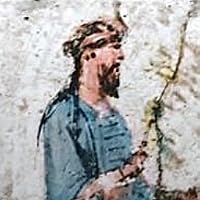
August 11, 2024
Look round our World; behold the chain of Love
Combining all below and all above.
See plastic Nature working to this end,
The single atoms each to other tend,
Attract, attracted to, the next in place
Form’d and impell’d its neighbour to embrace.
See Matter next, with various life endu’d,
Press to one center still, the gen’ral Good.
See dying vegetables life sustain,
See life dissolving vegetate again:
All forms that perish other forms supply,
(By turns we catch the vital breath, and die)
Like bubbles on the sea of Matter born,
They rise, they break, and to that sea return.
Nothing is foreign: Parts relate to whole;
One all-extending, all-preserving Soul
Connects each being, greatest with the least;
Made Beast in aid of Man, and Man of Beast;
All serv’d, all serving! nothing stands alone;
The chain holds on, and where it ends, unknown.
III.7-26
Pope wrote this didactic poem to “vindicate the ways of God to man”; not by referring, as Milton did, to Christian legend, but rather by using abstract philosophical reasoning and the best scientific knowledge of his time to situate mankind within the great chain of being. The Essay convincingly lifts us out of our habitual anthropocentrism and individualism, disarming our “erring pride” by contextualizing our essential (but not central) role within Nature and Society, as well as that of the plural but mutually-regulating forces of self-love, reason, passion, fear, and hope within each person.
Pope’s cosmos is a single organism, an integrated whole “whose body Nature is, and God the soul.” Our virtue and happiness consist in submitting ourselves to the role assigned us by Nature without entertaining desires above or below our station; and our downfall—as a species, as a body politic, and as individuals—consists in succumbing to the prideful conceit that all of creation is made solely for our own benefit: that in each system—Nature, Society, and the individual person, in diminishing concentric circles—the whole is meant to serve the part rather than vice versa. Nature is a great republic in which each member fulfills its purpose by serving the common weal, and to arrogate private authority over the whole—Man over Nature, a despot or faction over the state, a single faculty over the person—is to exercise an ill-fated and self-subverting tyranny. This tyranny is born of a kind of superstition, the introduction of which into the mind of man gives rise to an idolatrous worship of both human tyrants and tyrannical conceptions of divinity.
Who first taught souls enslav’d, and realms undone,
Th’enormous faith of many made for one;
That proud exception to all Nature’s laws,
T’invert the world, and counter-work its Cause?
Force first made Conquest, and that conquest, Law;
‘Till Superstition taught the Tyrant awe,
Then shar’d the Tyranny, then lent it aid,
And Gods of Conqu’rors, Slaves of Subjects made:
She, ‘midst the light’ning’s blaze, and thunder’s sound,
When rock’d the mountains, and when groan’d the ground,
She taught the weak to bend, the proud to pray,
To Pow’r unseen, and mightier far than they:
She, from the rending earth and bursting skies,
Saw Gods descend, and fiends infernal rise:
Here fix’d the dreadful, there the blest abodes;
Fear made her Devils, and weak Hope her Gods;
Gods partial, changeful, passionate, unjust,
Whose attributes were Rage, Revenge, or Lust;
Such as the souls of cowards might conceive,
And, form’d like tyrants, tyrants would believe.
Zeal then, not charity, became the guide,
And hell was built on spite, and heav’n on pride.
III.241-262
The only significance of tragedy in Pope’s worldview lies in the very conception of such: in the human propensity to imagine that the reality we inhabit could be anything other than what it is. The Fall of Man consists precisely in the belief that man is fallen. Rather than finding fault with our circumstances and dreaming of what could be, our lot in life is merely to submit to the role that Nature and Society have assigned for us, and to accept that we live in the best of all possible worlds.
Cease then, nor ORDER Imperfection name:
Our proper bliss depends on what we blame.
Know thy own point: This kind, this due degree
Of blindness, weakness, Heav’n bestows on thee.
Submit. — In this, or any other sphere,
Secure to be as blest as thou canst bear:
Safe in the hand of one disposing Pow’r,
Or in the natal, or the mortal hour.
All Nature is but Art, unknown to thee;
All Chance, Direction, which thou canst not see;
All Discord, Harmony, not understood;
All partial Evil, universal Good:
And, in spite of Pride, in erring Reason’s spite,
One truth is clear, “Whatever IS, is RIGHT.”
I.281-294
This passage states concisely the perspective that Voltaire satirizes so effectively in Candide: a smiling fatalism that papers over the tragic condition of life in this world. While there is undoubtedly a certain appeal in thinking of ourselves as one part of an ordered system neatly arranged for the greatest possible good of all, and a genuine nobility in laying down the anxiety and grief that stem ultimately from our egotism, finding true gratification in charity, gratitude, and self-sacrifice, to say categorically that “Whatever IS, is RIGHT” numbs us to our own existential freedom and moral responsibility, and it leads to odious conclusions about the reality in which we live. Everything that happens becomes self-justifying; even the greatest evils of history—the Atlantic slave trade, the Holocaust, not to mention the ongoing slaughter in Gaza—become necessary components of the great design, to which it is simply irrational—indeed prideful—to object.
In fidelity to Pope’s cosmic republic and its laws of universal love and charity, I retain the prophetic lament, the tragedian’s pathos, the yearning of creation for release from bondage to futility, suffering, cruelty, ignorance, and death—from the manifest fallenness that renders it opaque and obscures its essential beauty. That the world is not yet redeemed—not the supposition that it can or should be—is the tyranny that interrupts the bonds of love’s communion. The task remains for God and Man as one spirit to restore them.

September 27, 2026
although there are some good lines in it, i found this to be quite repugnant frankly. pope seeks to "vindicate the ways of God to man" arguing that "all partial evil, universal good" & that "whatever is, is right". to the problem of evil, you just simply wouldn't get it; everything has its place, one should accept all as it is & not bother with the struggle over values ("for forms of government let fools contend/that which is best administered is best"), & the evils of the world will be justified in the end. all of this is supported by a collection of truisms & specious reasoning, & in the words of samuel johnson, "metaphysical morality was to him a new study, he was proud of his acquisitions, and, supposing himself master of great secrets, was in haste to teach what he had not learned". its Optimism ends up being a cosmic pessimism about the supposed pride of humans in wanting to change things, & so i also think of voltaires objection to this worldviews callousness in his poem on the lisbon earthquake & john adam's ridicule that "Pope flattered tyrants too much"

June 27, 2023
"True wit is Nature to advantage dress'd;
What oft was thought, but ne'er so well express'd;
Something, whose truth convinced at sight we find,
That gives us back the image of our mind."
- On Criticism
"What nothing earthly gives, or can destroy,
The soul's calm sunshine, and the heartfelt joy,
Is virtue's prize: a better would you fix?
Then give humility a coach and six,
Justice a conqueror's sword, or truth a gown,
Or public spirit its great cure, a crown.
Weak, foolish man! will Heaven reward us there
With the same trash mad mortals wish for here?"
- On Man
What oft was thought, but ne'er so well express'd;
Something, whose truth convinced at sight we find,
That gives us back the image of our mind."
- On Criticism
"What nothing earthly gives, or can destroy,
The soul's calm sunshine, and the heartfelt joy,
Is virtue's prize: a better would you fix?
Then give humility a coach and six,
Justice a conqueror's sword, or truth a gown,
Or public spirit its great cure, a crown.
Weak, foolish man! will Heaven reward us there
With the same trash mad mortals wish for here?"
- On Man

December 24, 2023
Great Christian essay in form of a poem. Took me quite some time as I had to give extreme concentration. I could not find a modern translation of the poem but Chat GPT actually spit out a pretty good translation for various sections.
The poem apparently was cherished by Voltaire and Kant amongst others. Voltaire, later in life, through his book Candide, satirically excoriated the naivete of this poem that essentially posits "that which IS Is Right". I would recommend reading this poem first and then reading Voltaire.
The poem apparently was cherished by Voltaire and Kant amongst others. Voltaire, later in life, through his book Candide, satirically excoriated the naivete of this poem that essentially posits "that which IS Is Right". I would recommend reading this poem first and then reading Voltaire.
March 27, 2018
This rating is just for Essay On Man, which I love. My kindle edition includes some other works from Pope, including his Horace satires, a poem to a lady (which concludes that "men some to business, some to pleasure take / but every woman is at heart a rake"), and what seems to be a poem about his dissatisfaction with the pretentious landscaping conventions of his day.

October 27, 2021
I really liked the "One truth is clear, whatever is, is right" quote and after chewing on that for some months I felt it was time I read more Alexander Pope. Being 300 year old poetic prose it took me some time to get use to it. picking it up, scratching my head, putting it down, repeat. But by the end I couldn't put it down.
March 1, 2023
Studied it in a class. Tiring yet understandable. It would've been much easier if we didn't analyze it with iambic parameter etc. I liked the idea of 'Neoclassicism.' Pope just wants to ultimately raise the level of English language poetics to that of classical poetics.

March 31, 2022
"Virtue alone is happiness below."
This poem on human nature has some interesting takes, including revolving around the one just mentioned, where Pope writes about the virtue of virtue. Likewise, he writes about how true self-love, as all humans possess, will in society rise up to become social love (in a sort of Hobbesian way) A nice short poem. On virtue:
Who wickedly is wise, or madly brave,
Is but the more a fool, the more a knave.
Who noble ends by noble means obtains,
Or failing, smiles in exile or in chains,
Like good Aurelius let him reign, or bleed
Like Socrates, that man is great indeed.
And finally:
God loves from whole to parts: but human soul
Must rise from individual to the whole.
This poem on human nature has some interesting takes, including revolving around the one just mentioned, where Pope writes about the virtue of virtue. Likewise, he writes about how true self-love, as all humans possess, will in society rise up to become social love (in a sort of Hobbesian way) A nice short poem. On virtue:
Who wickedly is wise, or madly brave,
Is but the more a fool, the more a knave.
Who noble ends by noble means obtains,
Or failing, smiles in exile or in chains,
Like good Aurelius let him reign, or bleed
Like Socrates, that man is great indeed.
And finally:
God loves from whole to parts: but human soul
Must rise from individual to the whole.

January 31, 2024
Did not understand or enjoy. What the heck pope this was not a fun read
September 1, 2026
Legitimately one of the best things I have ever read. An endless string of profound one liners ordered by rhythm and rhyme that resound with the reason and rule of all things for all people in all places.

Read
April 26, 2020"Whatever is, is right." That's the only thing I remember from this poem, Im not good at reading poems.

June 20, 2023
I believe humans evolved over hundreds of thousands of years just to get to 1734 and express what Pope does here. In a way, the story of evolution is Man’s consistently answering the same way to the questions put forth in the immortal “Know then thyself” stanza in Epistle II. (Pope’s verse epistles are in the Horatian tradition in that they address moral or philosophical themes). We deemed ourselves gods, not beasts. We preferred mind over body. Etc.
Hailed by Voltaire, who called Essay on Man “the most beautiful, the most useful, the most sublime didactic poem ever written in any language,” it embodies the “Whatever is, is right" optimistic philosophy attacked so ruthlessly by… Voltaire.
Pope’s disquisition on self-love vs reason seemed to me like a more graceful version of Freud’s id vs superego. The whole poem is really beautiful. (It has some rough stretches where the couplets are hard to parse, particularly in the second half, but I guess that’s one more reason to reread.) It made me aware of some stubborn notions I had about Pope—the acerbic wit, the cool pattern-maker par excellence, and so on. Perhaps the reputation stems mainly from The Dunciad. But now I think the poor cripple may have been extremely sweet and loving.
Hailed by Voltaire, who called Essay on Man “the most beautiful, the most useful, the most sublime didactic poem ever written in any language,” it embodies the “Whatever is, is right" optimistic philosophy attacked so ruthlessly by… Voltaire.
Pope’s disquisition on self-love vs reason seemed to me like a more graceful version of Freud’s id vs superego. The whole poem is really beautiful. (It has some rough stretches where the couplets are hard to parse, particularly in the second half, but I guess that’s one more reason to reread.) It made me aware of some stubborn notions I had about Pope—the acerbic wit, the cool pattern-maker par excellence, and so on. Perhaps the reputation stems mainly from The Dunciad. But now I think the poor cripple may have been extremely sweet and loving.
Displaying 1 - 30 of 129 reviews