Jump to ratings and reviews
Rate this book

The Image: A Guide to Pseudo-Events in America

Rate this book
First published in 1962, this wonderfully provocative book introduced the notion of “pseudo-events”—events such as press conferences and presidential debates, which are manufactured solely in order to be reported—and the contemporary definition of celebrity as “a person who is known for his well-knownness.” Since then Daniel J. Boorstin’s prophetic vision of an America inundated by its own illusions has become an essential resource for any reader who wants to distinguish the manifold deceptions of our culture from its few enduring truths.

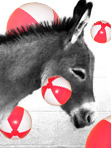
Cover design by Matt Dorfman.

336 pages, Paperback

First published January 1, 1961

288 people are currently reading
8410 people want to read

About the author

Daniel J. Boorstin

196 books379 followers
Daniel Joseph Boorstin was a historian, professor, attorney, and writer. He was appointed twelfth Librarian of the United States Congress from 1975 until 1987.

He graduated from Tulsa's Central High School in Tulsa, Oklahoma, at the age of 15. He graduated with highest honors from Harvard, studied at Balliol College, Oxford as a Rhodes Scholar and earned his PhD at Yale University. He was a lawyer and a university professor at the University of Chicago for 25 years. He also served as director of the National Museum of History and Technology of the Smithsonian Institution.

His The Americans The Democratic Experience received the 1974 Pulitzer Prize in history.

Within the discipline of social theory, Boorstin’s 1961 book The Image A Guide to Pseudo-events in America is an early description of aspects of American life that were later termed hyperreality and postmodernity. In The Image, Boorstin describes shifts in American culture—mainly due to advertising—where the reproduction or simulation of an event becomes more important or "real" than the event itself. He goes on to coin the term pseudo-event which describes events or activities that serve little to no purpose other than to be reproduced through advertisements or other forms of publicity. The idea of pseudo-events closely mirrors work later done by Jean Baudrillard and Guy Debord. The work is still often used as a text in American sociology courses.

When President Gerald Ford nominated Boorstin to be Librarian of Congress, the nomination was supported by the Authors League of America but opposed by the American Library Association because Boorstin "was not a library administrator." The Senate confirmed the nomination without debate.

Boorstin died in 2004 in Washington, D.C.

Ratings & Reviews

What do you think?
Rate this book

Friends & Following

Create a free account to discover what your friends think of this book!

Community Reviews

5 stars
548 (38%)
4 stars
523 (37%)
3 stars
257 (18%)
2 stars
67 (4%)
1 star
16 (1%)
Displaying 1 - 30 of 225 reviews
Profile Image for Jon Boorstin.
Author 11 books65 followers
March 6, 2014
My dad wrote this book. I remember stamping the pages with a rubber number-stamper on our dining room table. He'd spent ten years on his latest volume of The Americans; this he wrote in three months. This endures.
Profile Image for Ryan Holiday.
Author 86 books17.9k followers
July 6, 2012
The central point of the book is so incisive that it not only survived the major technological and cultural shifts of the last 50 years but is made stronger by them: Most ofe take as important or news is image and artifice. Think aboutpress conferences to announce press conferences, awards, articles about how much money celebrities make, news leaks, news breaks, annual "Best of" list, press releases, "no comment", et al. None of it is real. As in, if it hadn't been known in advance that they'd generate press they wouldn't have occurred.

A nice example is foreign policy. A president might say he wants to increase our "prestige" abroad. What does that even mean? As far as I can tell it means nothing, except perhaps a naive desire to receive credit for something you're not taking any action to produce. The rest of the book is on what he calls "unreality", a place similar to the dream would where many bloggers live. It remains in line with the central premise, that the prevalence of news and newspapers has given us the belief that we can change reality by altering what reporters tell us.

There is the sense from the title that it was going to be about the media or PR but it is much deeper and more personal than that. This book is critical to understanding Western culture and its direction.
Profile Image for Eric_W.
1,952 reviews428 followers
February 29, 2012
5+ stars This book should be mandatory reading.

Boorstin, Librarian of Congress emeritus, is an outstanding social historian who defines pseudo-events as events created to promote. Generally, these events have no intrinsic newsworthiness. They are not spontaneous, they are usually arranged for the convenience of the media, their relationship to reality is ambiguous and they are intended to be self-fulfilling.

The news media hungers for anything to put in its pages. We are besieged with radio, TV, 24-hour news, magazines, newspapers, books, each requiring "information."
Events are now planned to occur at the best time for news broadcasts. It has become terribly important that something always be happening. Pseudo-events help fill the vacuum.

Boorstin is like the little boy who shouts, "the emperor has no clothes." He helps us to peel away the veneer, the false fronts.
McCarthy was an expert at creating reportable events that had "an ambiguous relationship to the underlying reality." He invented the morning news conference that announced an afternoon press conference. At the afternoon conference he would proclaim that a witness was not ready or could not be found. The headlines would trumpet, "Mystery witness sought!" Reporters loved him for supplying so much material. Even those who hated him became his best allies.

News has become a dramatic presentation. The president speaking "off-the-cuff" is now more newsworthy than the original prepared speech. It has become difficult to distinguish between the actual and the pseudo event. Organizations manipulate the media to create events all the while castigating the press for opinions on the editorial page.
Boorstin argues we now confuse fame with greatness. It is very easy to become famous. By confusing heroes with celebrities "we deny ourselves the role-models of heroes, truly great individuals."
The way we travel has also changed. It used to be people traveled to experience a different culture or way of life or language. Rarely did it not affect a person's view of the world. Now more and more people travel, yet are influenced less. We seek to re-create an environment similar to the one we left.

Boorstin cites digests as an example of how forms have dissolved, "the shadow has become the substance." Originally conceived to lead the reader to the original, they now exist as an end product; another step away from the actual experience. Reader's Digest has perfected the form to the point where articles are "planted" in magazines so they can be digested in its publication. By 1943, 60% of all its articles were abridgements of full-length articles commissioned for original publication elsewhere by Reader's Digest. The demand for digested articles was so great it had forced the creation of articles to meet the demand: a literary pseudo-event.

We are now engaged in a competition to create more credible images. The images have become more real than reality. We can persuade ourselves of our image. But we have lost sight of the need to create ideals.

This book was originally published in 1961. Ah, the more things change.…

Profile Image for Clif.
467 reviews185 followers
May 16, 2021
Good thing Daniel Boorstin is deceased. Facebook would send him into despair - but it would not surprise him, as it is a logical extension of what this book is all about.

The root of the problem he addresses is we demand and expect far more than real life can give, thanks to the illusions that the Graphic Revolution presents to us. The Graphic Revolution is the coming of media (print, sound, video) that allow the creation of the pseudo-world, the artificial world that implies that all things are possible. In our desire, we have come to prefer illusion to reality because reality can't possibly come up to our expectations.

This book was written in 1961 and, though the celebrities mentioned are from the 1920's to the 1950's, Boorstin's thesis holds true today.

We live in a self-referential world of images, of pseudo-news (packaged "news" instead of spontaneous events), of celebrities that are known for being known, of "adventure" vacations that are packaged so that nothing unexpected will happen.

Never bored, and never resentful of the illusions that make up our world, we are instead fascinated even by the process that creates them. We love to watch how a movie is made, we are eager to hear about the ad campaigns that are designed to beguile us. Reality TV is as far from reality as can be, but we watch.

We are pleased and entertained yet uncomfortable and never more than temporarily satisfied by living with illusion rather than reality. The image that things and people convey has become what we deal with rather than the actual things and people themselves. Boorstin is dead on when he speaks of businesses redesigning logos and ad campaigns in order to appear in a different way to the public - while the actual nuts and bolts company and product changes not at all. Think of BP as "Beyond Petroleum" with pleasing flowery green and yellow colors at the gas stations.

Here is something right from the newspaper today in a story about South Africa - "During the past month, this country has shown its best side to the world. Leaders from both government and business have declared that South Africa has successfully "rebranded" itself, recasting an image tarnished by AIDS, poverty and corruption, into one of geniality, prosperity and competence."

Boorstin would ask - to the South African on the street what has "rebranding" meant? Nothing.

And so it goes with everything. Go to Africa and stay in places that could just as well be the United States. Take a "safari" in total safety with no unexpected encounters.

In short, we do not live lives of real experience. We are removed from the real and constantly exposed to reflections of our own expectations. Taking pictures of the Grand Canyon with a new electronic gadget can more than equal the thrill of seeing the Grand Canyon itself. The big picture window that allows others to see us in our living room has replaced the porch where we could talk with our neighbors. Need I mention the common "chandelier window" on so many recently built houses that serves no purpose but image building? Following others on Facebook has replaced seeing people in the flesh. Things of no consequence on Twitter are considered news worth following.

Boorstin had the whole thing pegged 50 years ago.

The author is of the generation that revered the spoken and written word (he was Librarian of Congress) so he could see how things were going from a vantage point that hardly remains in the 21st century.

I give only 4 stars because I think early chapters in the book give too many examples. The pervasiveness of what he is trying to illustrate is so familiar now that the examples are unnecessary for today's reader to the point of tedium, though they are interestingly quaint. Skip to chapter five and the freight train of his idea rolls in at full speed.

One leaves the book wondering - how does one escape the world of illusion? Boorstin's suggestions for doing so are hardly encouraging.
Profile Image for Owen.
11 reviews8 followers
December 26, 2007
"Always the play; never the thing"

A superbly titled and entirely prescient book, this one. As America's Graphic Revolution was spiraling with television, movies, and other 'images' created for easy consumption, Boorstin wrote about how there is simultaneously much more and much less to everything we see. This book was written in 1961, so many of the examples he uses seem so innocuous and quaint compared to what we're accustomed to today. Boorstin died in 2004, so how did he not go crazy through the Lewinsky scandal, Paris Hilton, 'reality' television, the Colbert Report, the 24-hour news cycle, and internet news aggregates / blogs?

I suppose each of the chapters presented in this book has spawned entire genres of 'image' studies: behind the scenes of the media, celebrity worship, digestible movie adaptations, etc. Overall I recommend this book as a skimmer, as the scholastic, academic approach to the topic was a bit much. Of course, my preference for an easier read only reinforces Boorstin's point, right?
Profile Image for Mehrsa.
2,245 reviews3,583 followers
March 23, 2020
This book was written a while ago and it still feels relevant and explanatory. Everything in American culture is about "the brand" and the celebrity for celebrity's sake. When he talks about people being famous just for being famous, it's hard to believe that he wasn't talking about the Kardashians and other reality TV stars.
Profile Image for Cheryl.
12.8k reviews483 followers
October 13, 2018
Skimmed thoroughly. Would love to have an excuse, such as a book club discussion, to read carefully as it's well-written and still relevant. However, much info. is that which I've already encountered elsewhere, or figured out for myself, and given that I'm on a time crunch, I chose not to read every word. Recommended to anyone interested in sociology, advertising, popular media, politics.
Profile Image for Todd Martin.
Author 4 books83 followers
October 22, 2015
Today in entertainment Nicki Minaj tweeted that Taylor Swift parked in a handicapped spot and laughed while a 87 year old woman had to push her walker 3 blocks to her chemotherapy appointment. Swift quickly accused Minaj of bathing in the tears of infants upon whom she extinguishes her lit cigarettes.

In case you haven’t noticed, much of what passes for ‘news’ these days is anything but. It’s a mish-mash of public relations, opinion, trial balloons, 2nd hand stories, press conferences, spin, advertising, ginned up controversy and filler material intended to satisfy the round-the-clock news cycle. Daniel Boorstin calls these occurrences “pseudo-events” and roughly defines them as “events that are manufactured solely in order to be reported”.

Lester Holt, opening the nightly news: “You know, absolutely nothing of importance happened today, so we’ll be back another day when we actually have something newsworthy to report. Maybe tomorrow, maybe next week … we’ll play it by ear. Ha ha! Just kidding, check out this YouTube video of a dog fetching a beer from the refrigerator.”

At the heart of the trend is an unspoken collaboration between news agencies who have pages of newsprint or hours of airtime to fill (as well as limited budgets and staff) and those who manipulate the news to serve their own ends. The ‘video news release’ provides a good illustration of one use of the technique. Let’s say you’re a bleach company and want to promote your new disinfectant wipe. You hire a lab to wipe down dirty surfaces and measure the bacterial count before and after their use. You then produce a video news release with the look and feel of a nightly news story featuring a nerd in a lab coat announcing that disinfectant wipes significantly reduce surface germs and include images featuring prominent product placement and smiling healthy children who, unbeknownst to them, have narrowly escaped death by plague. They distribute the video to news agencies who, desperate for filler, run it as if it were real news despite the fact that its sole function is advertising. It happens all the time. PR Watch has numerous examples of the technique at: http://www.prwatch.org/fakenews/findi...

In an off-the-record conversation today a top security official revealed that citizens can circumvent NSA spying through the use of a thin aluminum barrier, formed into a three-dimensional geometric shape tapering smoothly from a circular flat base to a point and placed over the cerebrum. NSA officials were unavailable for comment.

The Image: A Guide to Pseudo-Events in America describes the art of the non-event and the symbiotic relationship between the purveyors of pseudo-news and the media. The book was first published in 1962 and it’s safe to say that fake news has been proliferating exponentially ever since. While this activity is sometimes malicious it is most often benign in terms of its effect. Even so, Boostin seems to disapprove mainly because it serves to provide an inaccurate or distorted portrayal of reality.

Boorstin then goes on to decry the absence of heroes in modern life claiming that they’ve been replaced instead by ‘celebrities’ whose primary characteristic is being “known for their well-knownness”. Unfortunately Boorstin largely gets it wrong. The reality is that true heroes can only exist in the past. By necessity they must die, be mythologized and their human frailties forgotten in order to become heroic. To bemoan that there are no modern heroes is akin to bemoaning the fact that there are no modern fossils.

Breaking News: We interrupt our regularly scheduled program to bring you this exclusive report … Donald Trump eating a hotdog.

There are several other essays in which Boorstin bemoans a lack of authenticity in such activities as travel (Boorstin claims that Americans going to remote parts of the world have been transformed from travelers into tourists) and cheap reproductions of artwork, books, movies and music (which he feels cheapens the original versions). But Boorstin has largely run out of steam by this point in the text and the essays take on the fuddy-duddy tone of an old man politely asking neighborhood kids to kindly remove themselves from his manicured greensward.

I had heard positive things about the book, yet I couldn’t help thinking the entire time I was reading that Boorstin’s primary talent is comprised of a keen eye for the blatantly obvious. Do people really need to be told that most of what passes for news is crap? That the Mexico World Showcase at Epcot Center isn’t the same thing as being in Mexico? That the characters people play on TV and in the movies are different from the actors themselves? I can’t imagine that this would come as an astounding revelation to anyone. Yet to Boorstin these things are symptomatic of the phoniness he sees everywhere around him.

In my mind the book amounts to so much ‘intellectual wankery’. In this case the wankery takes the form of post hoc, superficially ‘reasoned’ arguments for stuff Boorstin never liked in the first place. And there’s a lot he doesn’t like … the kids these days with their recorded music and paperback books and packaged vacations and movie stars and Reader’s Digests and TV news and airplanes and best-sellers and public relations and picture cameras and Muzak and museums and publicists and art reproductions and screenplays and hi-fi stereos and corporate logos and anything that’s considered popular and everything else that a self-proclaimed authenticity expert like Boorstin deems to be fakery and while you’re at it get off my damn lawn!

Today in science news researchers report that experiments conducted at the CERN particle physics laboratory have conclusively demonstrated that the universe was formed as a result of a minor fluctuation in the quantum vacuum energy of empty space, that life arose spontaneously as a result of a random collision of organic chemicals, that the meaning of life is what each individual makes of it, and that consciousness is permanently extinguished at the time of death so we should make this life as pleasant for one another as we possibly can. Now over to Cindy for the weather.
Profile Image for David Rice.
Author 12 books124 followers
February 14, 2022
A justified classic -- extremely useful for framing American image culture, and how it grows out of the American mindset more generally.
Profile Image for Izzy.
59 reviews
February 21, 2025
Daniel Boorstin’s The Image (2012) analyzes the relationship between the media, culture, and public perception. Boorstin argues that people have extravagant expectations for themselves and for the world. Unable to realistically fulfill these expectations, society creates “pseudo” events, humans, and images to satiate their desires. The press maintains these falsities by creating stories and public figures out of seemingly nothing. The press counters authenticity and blurs the line between reality and illusion. As a result, society loses substantive meaning and individuals become dependent on the pseudo-events that they create. Boorstin argues that if people continue to ignore reality and to rely on their pseudo ideals, then meaningful public discourse, critical thinking, and truth will suffer.

😀
162 reviews
January 1, 2024
"There was a time when the reader of an unexciting newspaper would remark, 'How dull is the world today!' Nowadays he says, 'What a dull newspaper!' " Daniel Boorstin's in "The Image: A Guide to Pseudo-Events in America". This book is Boorstin's diatribe against the promotion of "image" over reality. Even with his refusal to see the other side of the argument, and even 50 years after it was published, this is a must-read for the questions is raises, even if though it does not attempt any answers.

In 2014 a Malaysian airliner disappeared with almost no trace. When little is known, people want to know more: someone will pretend to provide. Someone will take arbitrary speculation and make it "newsworthy": if we assume this is true, what would it mean; and if not true, what would that mean? "Experts" jump up to discuss pros and cons. At one stage a CNN anchor even asked if a black hole could have caused the disappearance; and, what about the supernatural, can we really rule it out?

In Boorstin's terminology, so little was known about the event that so much time was spent analyzing "pseudo-events". When there's not enough to report, reporters entertain.When Jim Cramer literally blows a horn and prances during his investment-advice program, the line between entertainment and reality is blurred.Entertainment is great, comedy shows are fine, excitement is fun. It is the blurring that causes a problem, because instead of the emotion that might flow from the facts, we have the hyped up emotion from the entertainment "buy! buy! buy!", he shouts. Yet, at least Cramer is blatantly over-the-top.

When news-anchors adopt an urgent tone, the message is more insidious: under all the excitement about the employment report coming in 0.2% above the "consensus estimate" they ignore that it is an extremely rough estimate: +/- 0.3%. That way, if it reverts to the mean, it will excuse excitement in the opposite direction! At the end of this path of non-objectivity, we end up in a world where ignorant people get their news from Jon Stewart: insidiousness on steroids.

However, there is a second theme in this book: a curmudgeonly Luddite broadside against various aspects of modern life: Boorstin criticizes what might be termed "faux experiences". For instance, the American who travels to a third-world country, but stays in a luxury hotel, commutes in air-conditioned taxis, and steps out occasionally to get taste of local life. I mostly disagree with this theme, but I'm fine to have him perch on my shoulders as conscience, asking me to think twice about modernity. Amused, I wonder how much more appalled he would be in a world of Tweets and snapchat. In an ultimate irony, I ought to condense his book into a Tweet.

I recommend this book as a "must-read" even if you have to plow through the negatives. Boorstin's denunciation of image over reality, is even more relevant today, 50 years after it was published.

Profile Image for Larry.
Author 5 books2 followers
May 2, 2018
The Image is a modern classic of sociology first published in 1961. Anyone reading it today will probably be struck by how Boorstin identifies trends that are so prevalent today -especially the way society is fixated on images rather than the underlying reality.

Some might call Boorstin prescient but it's more accurate to say that he was an astute observer of what was already happening in the mid-20th century as the era of television was making sweeping changes in society. The paperback copy I picked up is a 25th-anniversary edition, with an introduction from the author and an afterword by conservative cultural critic George Will, written in 1987. So reading this today is like a time machine with multiple stops. For in the 1980s, the internet was still a decade in the future but the MTV era was well underway.

This is one of two influential books from the 1960s that deals with a similar topic, the other being Society of the Spectacle, by Guy Debord. The latter is still on my reading list and from browsing through it in used bookstores I expect it to be the more challenging of the two, as European philosophers can be rather abstract. By contrast, Daniel Boorstin writes in the straightforward manner of an American traditionalist.

The subtitle of this book tells a great deal of the story: "A guide to pseudo-events in America." Boorstin is obsessed with the phrase "pseudo-event" and it's used throughout the book. A pseudo-event is something that's contrived, such as a press conference or publicity shoot as opposed to a happening that occurs spontaneously. Boorstin's main point is that society is increasingly made up of pseudo-events. When you think that he wrote this some half century before the advent of reality TV and social media, it's quite amazing.

The Image recounts trends that are so familiar now that we barely notice them but that was just getting underway in the mid-20th century, such as the staged quality of presidential campaigns and debates and celebrity product endorsements.

Speaking of celebrities, Boorstin may have been one of the first to thoroughly examine and critique the whole idea. Celebrities, he notes, have largely supplanted heroes. While heroes are known for their character and great feats, celebrities are famous for being famous. As Boorstin puts it, "a celebrity is a person who is known for his well-knowness." This is something that people started to note with the rise of the celebrities such as Paris Hilton and the Kardashians in the early 21st century. Apparently, however, it dates back quite a bit before that. Boorstin explores the case of Charles Lindbergh at length, seeing his story as one of the first truly modern celebrities. Lindbergh was initially a hero in the traditional sense after making the first nonstop solo flight from New York to Paris. However, he quickly turned into a mere celebrity whose every movement was reported. When his baby was kidnapped, speculations and rumors filled the media for many months.

One of the most interesting chapters is "From Traveler to Tourist: the Lost Art of Travel," which describes the emergence of another major trend as modern mass tourism supplanted the age of leisurely travel. Boorstin and other cultural critics look on with horror as cruise ships, commercial airlines, hotel chains, and the emerging American highway system do away with differences and bring about the modern, increasingly homogenized world. Boorstin explains how tourism has created a whole new category of pseudo-events, such as museums and other attractions set up solely to entertain tourists and native dances and rituals performed outside of their original context and reimagined as entertainment.

Of course, a lot of what Boorstin is analyzing here, especially in the chapter about travel but also throughout the book, is about a world that's increasingly populated, educated, and democratic. He explicitly mentions that prior to the 20th century, long-distance travel was mostly limited to the wealthy.

He similarly complains about the phenomenon of bestsellers, which are books that are considered great because they sell well. As with travel, however, there's also the underlying issue of more people reading and buying books than ever before. The mass appeal of books began when mass printing became possible and literacy rates increased.

In all fields, there tends to be a trade-off between quality and mass participation. As more people than ever before read, travel, vote and participate in politics, watch TV and movies, and otherwise partake of culture, and at the same time technology accelerates, more events and items take on a mass-produced quality.

As Boorstin also laments, works of art were once all unique. Now, anyone can buy a poster, postcard or other reproduction of any painting. This is yet another example of where we have the advantage of widespread access versus the decline in quality and, perhaps, appreciation. while it's nice to be able to get a refrigerator magnet featuring Van Gogh's Starry Night, the very ease of acquiring such things necessarily takes away some of their magic).

According to the bio at the conclusion of the book (which was obviously added post-1987), Boorstin died in 2004, just at the cusp of the next development of the image in culture. For as Facebook, YouTube, and Instagram have taken off, images have quickly come to dominate the internet. Although Boorstin may never have seen a selfie, I doubt if he'd be surprised as it's the next logical step in everything he was describing.

The Image is a kind of reactionary critique and rant on a single topic, albeit an important one. Like many thinkers trying to prove a very broad point, Boorstin may take his argument too far in some cases. He tries to draw sharp divisions between hero and celebrity, real events and pseudo-events and images and ideals. I'm not sure it's quite so straightforward. Plato's Socratic dialogues, written more than 2000 years ago, largely dealt with the difference between appearance and reality. In fact, it's almost surprising that Boorstin doesn't mention Plato's Allegory of the Cave, which has enjoyed a resurgence of popularity recently. Plato discusses how shadows, or images, are mistaken as reality by the ignorant masses. Perhaps Boorstin doesn't reference this classic because it would have undercut his thesis, namely that The Image is a relatively modern phenomenon.

While the forces Boorstin identifies in The Image may not be as starkly new as he supposes, they certainly accelerated greatly in his time and even more so in our current time. I often find it instructive to read sociological viewpoints from earlier decades to see how modern trends got started. In the case of The Image, we're dealing with one of the central issues of our time. For even if images were an issue as far back as Plato's time, they certainly didn't dominate the everyday consciousness of people as they do now.

This is a complex issue and, as much as I enjoyed reading The Image, I don't think it really does much good to simply rail against cultural trends. Today we have a host of anti-internet critics who are telling us how current technology is dumbing everyone down. While they have a point, there are other ways to look at it as well.

Images are only getting more central to our existence. Does this mean we're sinking further into the realm of Plato's cave dwellers, the Maya of Buddhism or perhaps the complacent citizens of Aldous Huxley's Brave New World? Perhaps. However, there are always multiple ways to look at everything. There can be truth and beauty in images as well.

Whatever your opinion, The Image is well worth reading for its insights and historical perspective.
Profile Image for Missy.
93 reviews11 followers
November 12, 2013
I loved reading it and have been enjoying talking about it. For a book that was published in the 60s, it was pretty compelling how relevant it is today. It puts under the magnifying glass themes such as hero vs. celebrity and how we allow daily, hourly, minute-to-minute information into our lives and try to paint it as meaningful. Over-saturation makes one common. Boorstin deconstructs how we travel these days - how often we seek to find, if not expect, the comfortable and familiar in places that theoretically should be unfamiliar. I can't say how it's 100% a bad thing, per se, but I see his point. "The more strenuously and self-consciously we work at enlarging our experience, the more pervasive the tautology becomes."

Self-consciousness destroys the experience. I get that; it can be a challenge to read and watch stuff that is self-conscious. But it's inherent in so much of what we do. I suppose that detachment, that ability to reflect what one sees without tainting it with too much of an agenda makes the great creators great.

This book also made me think about all the images I am bombarded with in daily life. Facebook posts, restaurant signs, Instagram photos, television programming… It's up to me to buy into them, shut them out, or, perhaps observe from a safe distance.

Profile Image for Graham.
86 reviews21 followers
December 10, 2007
This is a curious book. Everyone reads this book when they take Media Studies classes in college. When in college, the student reading the book is usually on the good side of history. The problem is after graduation. In college, this book can help make a person a better anti-capitalist, but soon after graduation this book gets dusted off and packed away into the suitcase that the former idealist takes to countless job interviews at marketing firms.

This book is a lot like art school: it sounds like a good idea in theory, but you better be careful or you'll just end up working in advertising.
Profile Image for Scott Milton.
43 reviews
September 7, 2023
Great detail, but little depth to Boorstin's analysis. I read this after Debord's The Society of the Spectacle, hoping perhaps for a more accessible (that is, a less Marxism-riddled) discussion. There is much to savour in his detailed histories of American newspapers, book printing, filmmaking, advertising, and so on, but the judgement arrived at the end of each chapter advanced little (if at all) on that made in the preceding. I feel much more sceptical now about reading Lasch and Hedges whose books treat a similar issue in contemporary life.
Profile Image for Tom Quinn.
649 reviews238 followers
July 30, 2016
A Sobering Scrutiny of Synthesized Sensationalism.

This book is integral to fostering present-day critical thinking, especially with regard to media analysis. The thesis is important but the presentation, though not dry, is a little scattered. It's a must-read for American citizens, as well as consumers and audiences everywhere.

3 stars out of 5.
Profile Image for Megan.
491 reviews73 followers
February 26, 2017
As we Americans obsess over fake news and alternative facts in the wake of Trump's presidential election, Daniel Boorstin's 55 year-old reflection on the proliferation of "pseudo-events" in American life reminds us that "fake" is a spectrum, and we're very nearly blind to all but the most extreme end. Here, Boorstin awakens us to the artifice of press conferences, debates, opinion polls, leaks, etc. etc. which we now generally accept as "real" news.

If this book were written today, it would almost surely fall to our contemporary pressure to present solutions with any societal critique. Boorstin refuses, and in fact insists that any attempt to expose pseudo-events only results in reinforcing them. "One of our grand illusions is our belief in a 'cure.' There is no cure," he states with depressing fatalism. By the end of the book, that fatalism feels well founded. 55 years later, the societal patterns he recognizes are all the more entrenched.

The afterword by Douglass Rushkoff is more optimistic:
What he [Boorstin] may not have realized, however, is the extent to which the emergence of peer-to-peer networking technologies may eventually challenge the preeminence of the image factory from which he recoiled.
If Rushkoff were writing this in the 90s, when the internet was still heavily text, I might forgive him his naïveté. But he wrote this in 2012, more than five years after LonelyGirl15, psuedo-event par excellence. Now, five years later, the image factory has produced President Macho Camacho Trump.

Still, there is room to critique Boorstin's critique. When he derides artificial modern tourism compared to the lost art of travel, he quickly dismisses the advantage of increased access, since the form of travel he praises can only (practically-speaking) be available to the fantastically wealthy. I would be more willing to follow along if he were more willing to admit he is extolling the virtues of aristocracy over democracy. I actually tend to agree with him that we often praise "progress" without admitting what we've left behind, but I think this book falls into the opposite pattern: lamenting all we've left behind without acknowledging the disadvantages we've overcome.

Boorstin also presents a critique of "celebrity" compared to "hero," which is all well and good, except he fails to explain why the "hero" is such a valuable social concept. It's not just that Boorstin believes pure-celebrities (like Zsa Zsa Gabor in his time and Paris Hilton in ours) are less worthy of attention than truly heroic types. He also criticizes the fact that we now want to humanize our heroes and recognize their flaws. I have trouble understanding why we would want idealized heroes rather than human ones. Isn't it recognition of human complexity a good thing? I suspect that my point of view here is a product of my times and that Boorstin would have an interesting answer. Sadly, he doesn't even try to justify the value of idealized heroes over human ones. It's as though he thinks the answer is so obvious it need not be explained.

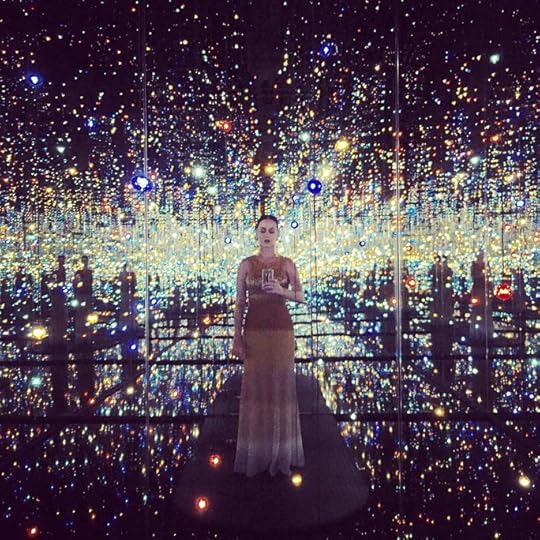
Boorstin writes towards the end, "...we mark the boundaries of our world with a wall of mirrors," and I cannot help but interpret it literally:


Infinity psuedo-events reflected in Infinity Mirrors.
87 reviews
August 24, 2020
An incredible, prophetic piece of social criticism. So much of Boorstin's critiques of media, celebrity, advertising, consumerism, tourism, and politics have only proven more insightful with the passing of time. We really seem to be living out the logical extreme of the contrived, plastic, image-obsessed world Boostin describes. Even when I disagreed with his analysis, I found it compelling and readable. I'm not quite sure why this is overlooked while Debord and Baudrillard get all the glory, but I assume it has something to do with confirmation bias and the ideologies of both academia and the aforementioned authors. Anyways, definitely worth a read.

"One of the deepest and least remarked features of the Age of Contrivance is what I would call the mirror effect. Nearly everything we do to enlarge our world, to make life more interesting, more varied, more exciting, more vivid, more “fabulous,” more promising, in the long run has an opposite effect. In the extravagance of our expectations and in our ever increasing power, we transform elusive dreams into graspable images within which each of us can fit. By doing so we mark the boundaries of our world with a wall of mirrors. Our strenuous and elaborate efforts to enlarge experience have the unintended result of narrowing it. In frenetic quest for the unexpected, we end by finding only the unexpectedness we have planned for ourselves. We meet ourselves coming back."
Profile Image for Glen.
592 reviews13 followers
July 12, 2025
The Image was written in 1962 and reads like an oracle on the effects of technology in society. Boorstin was so perceptive in describing the impact of graphics, publicity and the rise of the "pseudo culture" - a society where we prefer the image over the item it represents.

His writing is rich, evocative and intense. He walks through the effects of a culture that buys books just because they are "national bestsellers", that prefers pictures of places instead of visiting the actual places, that reads book summaries instead of the books themselves, and a culture that is overly concerned with image as opposed to the concrete realities they represent. The fact that he wrote this before the internet and based it on America's rising PR culture is an intellectual phenomenon. His insights may need some modification but most of his basic premises are still descriptive of our cultural sensibilities.

I will need to walk through this book again. It is that deep and that impressive. It is a book for thinkers who desire to understand how medium impacts culture, how what we value is an indicator of who we are becoming. I was left with more questions than settled clarity, but I like books that stretch me in such ways. Great read.
Profile Image for Ivan Kreimer.
126 reviews41 followers
November 3, 2024
When I learned about the idea of pseudo-events, I felt like I had to learn more about this topic. I rarely do this, but I immediately bought the book and started reading.

The book started great, with the author explaining the concept of pseudo-events. Sadly, after the first chapter, the author lost track of his main point and started talking about random things from his time (the early 60s). Since I couldn't relate to his examples and I couldn't figure out what they had to do with his main thesis, I just lost track of what I was reading about. It seemed like he simply felt like complaining about life or what not. By the end, I was a bit confused with his writing style and structure.

I only found the first and fifth chapters interesting, while the rest I just skipped. Still, it's an interesting read for anyone in the world of marketing, advertising, and political science, but just be aware that the book may lose its appeal quickly.
Profile Image for columbo.
57 reviews
September 8, 2025
A lot of interesting ideas posed here. It gets too philosophical towards the end (without being grounded in actual philosophical reasoning) to be convincing, and ultimately the idea of the "image" is vague--we are given many examples but as for a true definition, only the author's personal insistence that it is bad, and a yucky feeling that he's simply refusing to apply it to the things he likes. The faceless individual receives the blame for all this rather than those who engineer images for profit. Class, race, and gender have been surgically removed for the sake of the argument.

However, I do think Boorstin is really onto something with the whole we create what we want so we consume what we want so we are just reflecting back at ourselves and will eventually consume ourselves thing. He really would have lost his mind over algorithms and AI.
Profile Image for Harper Daisy.
78 reviews
February 27, 2025
The Image was quite good. I read it for a class which is incredibly topical yet near entirely taught through old material. For the most part, I am with this decision, I loved reading Arendt and Boorstin, but at times I wished to have some updated takes as the world has shifted since the 1960s when this was written. Shifted, even, since the anniversary edition of the book has com out.

Anyway, The Image is a very well written, and rather scathing, take on the tendency of American culture towards the derivative, the surface level. Existing shallowly above all the experiences that make up a life are the Americanized Pseudo Event versions of a life. He had a chapter about world travel and reading the book recently following my study abroad I had some thoughts about that. I think that while in many cases he is on the nose, when it comes to travel and some of his other points he gets trapped in that philosopher’s dilemma of romanticizing a past world at the expense of truly criticizing the current one.

I would definitely recommend the book tho, especially as it’s an early take on superficiality that plagues our country now, and you might find that interesting. Also, very digestible and enjoyable to read.
Profile Image for Daniel Goodman.
30 reviews8 followers
Read
February 18, 2021
This is one of the rare books of cultural commentary that increases in potency as it ages. Boorstin's preceptive eye recognizes the proliferation of what he calls "pseudo-events" in American culture. These events are manufactured, artificial, repeatable, profitable, popular, mediocre, and enticing. Everything from political news to celebrity culture is under Boorstin's scrutiny. It is remarkable how timely Boorstin's criticism despite the fact he wrote this in the 1960. One can easily imagine how appalled he would be at the now common-place discussions around fakenews, advertisements, social media addiction, conspiracy theories, and political theater. His prophetic voice regarding these concepts remain ever-green and he offers piercing analysis of these unconscious cultural forces. The book is shockingly modern. And extremely convicting.

However, unlike a prophet, Boorstin offers no real solution or way-out. His 6 chapters stand as 6 powerful and truthful condemnations of culture but you get the sense he wishes America could just get back to the theoretical "glory days" before the Graphic Revolution (i.e. age of mass media). Unfortunately, that is not the reality in which we live. This is our new world now and nothing can be done to change it. There is no turning back. Condemning culture is easy. But envisioning a path forward in light of our new realities--a truly difficult and patient task--necessitates articulating ideal(s) which can withstand the ebb-and-flow of cultural change. Boorstin's attempt at unmasking the illusory power of images proved remarkably successful but he offered no compelling idea in its place.
Profile Image for Josh Ryan.
59 reviews
February 17, 2024
This book is an epitome of Orwell's quote: Every generation imagines itself to be more intelligent than the one that went before it, and wiser than the one that comes after it.

Boorstin thankfully defines his foundational thought early, the idea of a pseudo-event. From here he constructs a conspiracy-like worldview in which nearly every sphere we inhabit is being overrun with pseudo-events carefully planned and executed by their shadowy cabals.

His definitions are interesting, and useful even. The rest (90%) of the book is needless dribble.
Profile Image for Ryan Berger.
397 reviews95 followers
January 25, 2025
The knife tip of incredulity dragged across a curtain veiling the world from the truth. Boorstin carried in him not only a deep a deep-laden skepticism solid as bone, but a gift for atomizing and isolating the distinct component parts that make up the world, and how these assumptions have been manipulated into the single most defining invention of the 20th century (and even earlier)-- the pseudo-event and image manufacturing.

Boorstin recognized this artificiality was not only pervasive within society, but it had come to replace much of life whole cloth. Even aspects of living we don't normally associate with things manipulated by advertisers (like award ceremonies and the entire concept of vacationing) are in fact the product of self-replicating shadows imitating real events.

One of the most helpful paradigms he illustrates is the idea that in our postmodern, interconnected and confusing world, we have allowed "plausibility" as a substitute for "truth". While this seems like sensible consolation in a reality where objectivity is close to pure fantasy-- it has been exploited by advertisers and con artists alike, the ambiguity of life now fully weaponized against us, enlisted in our enslavement (perhaps dramatic, but the scope of the problem illustrated from cover-to-cover is more persuasive than this review based on the sheer weight of examples used). A particularly gratifying example he used was the way rhetoric has become a game of pawn sacrifices, where consolations are made to unimportant and sometimes even fabricated details in order to strengthen an argument-- a kind of intellectual False-Flag attack. It sounds specific, but once you see it laid out before you it becomes impossible not to notice, and even harder not to become more of a skeptic of just about everything. The entire exercise of discourse and persuasion becomes suspect.

However, a dynamic like this does not exist based on sheer propaganda and manipulation by advertisers. This dynamic would not hold if we did not broadly come to love our manipulation. We have grown accustomed to the cage and are all-too happy to defend the fantasies sold to us as ways of life, of expressions of identity. It can be extremely uncomfortable to bore into the self and audit what aspects of ourselves feel authentic and original to us and what is simply a trick of a society built of pseudo-events, and Boorstin, an admittedly conservative thinker, is probably less likely to afford things the title of harmless fun ("anything that is not pure is insidious and planted there by people who want to exploit you" is not an unfair view to hold, but it is extreme and probably too blunt to capture nuances), but it's also difficult to view many of our creature comforts and longheld beliefs about life in the modern world the same way after revealing that the artificiality of the world stems from places other than the boardroom. Remember the Allegory of the Cave: The men chained and trained to watch shadows disbelieve anyone who has seen through the mirage. The shadows are a comfort and real enough for many.

An essential read that transcends any interest in media studies or rhetoric. It is a valuable compass for navigating a pseudo-world. Not at all prescriptive about how to defeat the machine, as Boorstin does not likely have an answer. This can come off as a lamentation as he lays it on thick. But what else is there to do than to just call it as Boorstin sees it? His ability to see through the fog and establish patterns of falsehoods makes this audit of the unreal a triumph.
Profile Image for Robert Terrell.
131 reviews10 followers
August 8, 2018
Reads like it was written in the last year rather than the 60s. Boorstin was prophetic in his description of American culture.
Profile Image for Christopher McQuain.
270 reviews19 followers
February 11, 2024
A pre-Sontag Cold War time capsule hiding some prescient observations and still-relevant thoughts beneath its prim, stuffy surface.
Profile Image for Natalie Sears.
28 reviews1 follower
September 25, 2024
I skimmed…

“The American public have generally come to regard the proceedings of Congress as a sort of variety performance, where nothing is supposed to be real except the pay.”
Displaying 1 - 30 of 225 reviews

Can't find what you're looking for?

Get help and learn more about the design.