

What do you think?

American Nerd: The Story of My People
A social exploration of the concept of the intellectual misfit presents a tour of nerd subcultures while tracing the personality's evolution in the media, literature, and society, in a report that reveals lesser-known common traits and interests among various subcultures. 40,000 first printing.
240 pages, Hardcover
First published May 13, 2007
Ratings & Reviews
Friends & Following
Create a free account to discover what your friends think of this book!
Community Reviews
Displaying 1 - 30 of 328 reviews

August 5, 2008
This book should really be titled Male American Nerd. Female nerds (or geeks or dorks or what have you—but let’s stick with Nugent’s terminology) are glossed over when they’re mentioned at all. Aside from a little bit about Saturday Night Live’s Lisa Loopner and four paragraphs—count ’em, four!—about yaoi, nerdy women are only really referenced in the context of “there were a couple of women there, but it was mostly all men.” The far more present female figures are some of Nugent’s childhood friends’ horrible, abusive mothers.
I simply don’t believe that there are as few examples of female nerdiness as Nugent depicts. He focuses a lot on gaming—Halo and D&D—which may be a limiting factor; it’s possible that most female nerds gravitate to things like TV and movie and book fandoms (although I do know plenty of female gamers). More likely, I think, he just isn’t that interested in female nerds—no one seems to be. We’re invisible. Like ninjas.
Anyway, even aside from this complaint, I just wasn’t particularly enchanted by this book. There were some interesting, well-researched sections—the chapter on how perceptions of race relate to perceptions of nerdiness was thought-provoking—but I was never sure what Nugent’s thesis actually was. Furthermore, the scope seemed needlessly narrow (Star Wars and Star Trek are barely mentioned—instead we’re treated to the umpteenth chapter on D&D; the internet’s barely a factor, either, aside from an acknowledgement that Halo can be played via it) and the tone throughout was dour. “I will take a serious approach to a subject usually treated lightly, which is a nerdy thing to do,” Nugent says early on—and that’s actually one of the funniest lines in the book. But I don’t think a book about nerdiness can really be complete without some discussion of or reference to nerdy joy—we’re not all in this just for the social ostracism and atomic wedgies, after all. Nugent, however, seems for the most part only interested in nerdy sorrow, coupled with a heaping helping of ex-nerdy guilt.
I’m still waiting for a well-rounded book on this subject. This wasn’t it.
I simply don’t believe that there are as few examples of female nerdiness as Nugent depicts. He focuses a lot on gaming—Halo and D&D—which may be a limiting factor; it’s possible that most female nerds gravitate to things like TV and movie and book fandoms (although I do know plenty of female gamers). More likely, I think, he just isn’t that interested in female nerds—no one seems to be. We’re invisible. Like ninjas.
Anyway, even aside from this complaint, I just wasn’t particularly enchanted by this book. There were some interesting, well-researched sections—the chapter on how perceptions of race relate to perceptions of nerdiness was thought-provoking—but I was never sure what Nugent’s thesis actually was. Furthermore, the scope seemed needlessly narrow (Star Wars and Star Trek are barely mentioned—instead we’re treated to the umpteenth chapter on D&D; the internet’s barely a factor, either, aside from an acknowledgement that Halo can be played via it) and the tone throughout was dour. “I will take a serious approach to a subject usually treated lightly, which is a nerdy thing to do,” Nugent says early on—and that’s actually one of the funniest lines in the book. But I don’t think a book about nerdiness can really be complete without some discussion of or reference to nerdy joy—we’re not all in this just for the social ostracism and atomic wedgies, after all. Nugent, however, seems for the most part only interested in nerdy sorrow, coupled with a heaping helping of ex-nerdy guilt.
I’m still waiting for a well-rounded book on this subject. This wasn’t it.

November 30, 2023
"People often use labels for [nerds], like 'total f***ing loser,' and they bounce right off. Who are they to find us so contemptible? . . . In my heart, I believe life will eventually favor those of us in this field.". -- page 14
Not quite the engaging read that I thought it might be, American Nerd distractingly pinballs between the sociological / historical segments (the origin of the phrase, the common stereotypes, the cultural depictions in print and/or media) and some sizable chunks of memoir-ish material regarding the author's teenage years over the course of twenty brief chapters. Although both of these directions are fairly well-written I think it would've been a better decision to choose one or the other as the sole focus for his narrative. (There are a few moments that are also a bit dated now, such as the eventual long-running sitcom The Big Bang Theory mentioned as a forthcoming project . . . although the author seems to be under the impression that the now semi-forgotten reality show Beauty and the Geek will be more memorable series. Whoops.) Still, there were a couple of chapters centered on his 90's-era high school friends Darren and Kenneth - both of them experiencing some difficult or hellish moments during their adolescence, courtesy of their screwed-up parents - that were very involving because their lives could have easily gone in the wrong direction, but thankfully did not.
Not quite the engaging read that I thought it might be, American Nerd distractingly pinballs between the sociological / historical segments (the origin of the phrase, the common stereotypes, the cultural depictions in print and/or media) and some sizable chunks of memoir-ish material regarding the author's teenage years over the course of twenty brief chapters. Although both of these directions are fairly well-written I think it would've been a better decision to choose one or the other as the sole focus for his narrative. (There are a few moments that are also a bit dated now, such as the eventual long-running sitcom The Big Bang Theory mentioned as a forthcoming project . . . although the author seems to be under the impression that the now semi-forgotten reality show Beauty and the Geek will be more memorable series. Whoops.) Still, there were a couple of chapters centered on his 90's-era high school friends Darren and Kenneth - both of them experiencing some difficult or hellish moments during their adolescence, courtesy of their screwed-up parents - that were very involving because their lives could have easily gone in the wrong direction, but thankfully did not.

August 5, 2008
In American Nerd: The Story of My People author Benjamin Nugent starts off with a great premise. He aims to trace the origin of the nerd stereotype, see how it developed, examine how it's depicted in popular culture, and see how it's entangled with our thinking about masculinity, technology, intelligence, and outsiders. It is a great premise, one in which I no doubt have somewhat of a vested interest. But unfortunately after some early successes Nugent seems to run out of material and just starts to kind of wander. And I'll let you in on a little secret: he's not really a nerd.
As I said, American Nerd starts off strong. Nugent traces the history of the nerd stereotype back all the way to the days of Jane Austin novels and little geeky guys who like to play with lizards. And the author even approaches some real insights when discussing the phenomenon of "Christian masculinity" that swept through America during the early part of the 20th century and provided a flipside to contrast the nascent nerdegalian. We're given examples of what kinds of people nerds were through the decades and how the distinction rose alongside the rising crest of technology and national emphasis on science and math during the early days of the Cold War. We even get into the etymology of the word "nerd" itself, seeing how it grew out of terms like "greaser" or "nurd" until it settled into the national vernacular. This is fascinating stuff!
Unfortunately, about halfway through the book, Nugent seems to just run out of things like this to talk about, and he starts ticking off chapters dedicated to traditionally nerdy topics: Dungeons & Dragons, video games, the Society for Creative Anachronisms (think people who live in a perpetual Renaissance fair), high school debate teams, science fiction conventions, computers, and the like. Some desultory attempts are made at linking these various topics by examining what they have in common and searching for a deeper understanding of their appeal to nerds, but it never really coalesces. They're sometimes interesting as little vignettes, but not much beyond that.
It's about this point that one begins to realize that Benjamin Nugent's credentials are suspect and he isn't a nerd. At best he's a former nerd, someone who played a little D&D and maybe a little Nintendo as a latch key kid, and he has a perplexing habit of conflating nerdiness with having a lousy home life as a kid. His perspective on all the aforementioned nerdy topics seems very much to be as an outside researcher looking in, having to interview people and try really hard to understand why they're so into science fiction or video games. A real nerd would, so to speak, grok such things inherantly and sharpen the narrative through his own experiences. But there's very little of that. It's more like listening to your friend try to explain the local customs of a place they passed through on vacation once rather than someone who lived there for years.
As a result of all this, the early parts of the book that rely on pure research are the best, but the later parts and the overriding intent of understanding the nerd pathos and subculture falls short by quite a ways.
As I said, American Nerd starts off strong. Nugent traces the history of the nerd stereotype back all the way to the days of Jane Austin novels and little geeky guys who like to play with lizards. And the author even approaches some real insights when discussing the phenomenon of "Christian masculinity" that swept through America during the early part of the 20th century and provided a flipside to contrast the nascent nerdegalian. We're given examples of what kinds of people nerds were through the decades and how the distinction rose alongside the rising crest of technology and national emphasis on science and math during the early days of the Cold War. We even get into the etymology of the word "nerd" itself, seeing how it grew out of terms like "greaser" or "nurd" until it settled into the national vernacular. This is fascinating stuff!
Unfortunately, about halfway through the book, Nugent seems to just run out of things like this to talk about, and he starts ticking off chapters dedicated to traditionally nerdy topics: Dungeons & Dragons, video games, the Society for Creative Anachronisms (think people who live in a perpetual Renaissance fair), high school debate teams, science fiction conventions, computers, and the like. Some desultory attempts are made at linking these various topics by examining what they have in common and searching for a deeper understanding of their appeal to nerds, but it never really coalesces. They're sometimes interesting as little vignettes, but not much beyond that.
It's about this point that one begins to realize that Benjamin Nugent's credentials are suspect and he isn't a nerd. At best he's a former nerd, someone who played a little D&D and maybe a little Nintendo as a latch key kid, and he has a perplexing habit of conflating nerdiness with having a lousy home life as a kid. His perspective on all the aforementioned nerdy topics seems very much to be as an outside researcher looking in, having to interview people and try really hard to understand why they're so into science fiction or video games. A real nerd would, so to speak, grok such things inherantly and sharpen the narrative through his own experiences. But there's very little of that. It's more like listening to your friend try to explain the local customs of a place they passed through on vacation once rather than someone who lived there for years.
As a result of all this, the early parts of the book that rely on pure research are the best, but the later parts and the overriding intent of understanding the nerd pathos and subculture falls short by quite a ways.

May 27, 2022
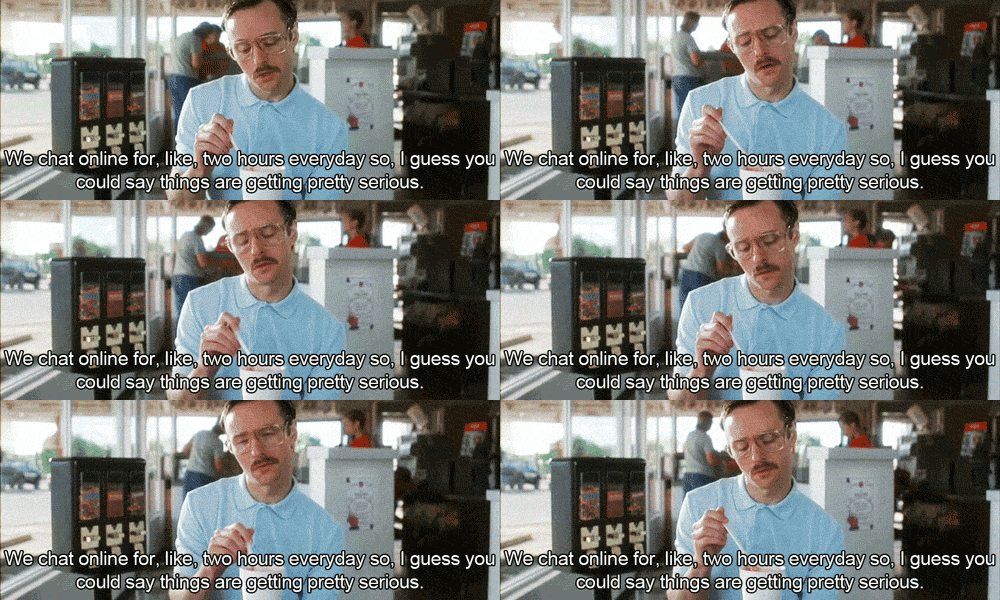
I'm not really sure what the point of this book was, but upon reflection, I have three takeaways
1. Nerds have feelings, too.
2. They also probably have trauma.
3. I still don't understand how Nugent defines nerds but, contrary to the title, I am skeptical that they are his people.
Perhaps if this book had been solely memoir, it would have worked better. After kicking off with a peppy, "Meet the American nerd!" introduction and then highlighting early stereotypes in Western culture, Nugent begins focusing more on his own story and that of the traumatized preteen boys he played Dungeon and Dragons with in middle school. While there are some poignant moments, it is mostly melancholic reflections about how he betrayed those he should have stuck closest to when he decided to become a hipster.
When not filling in with his own backstory (including a comparison of the Mormon church to Macintosh's World Builder games, which was awkward and kind of insensitive), he zings over to a random collection of "nerdy" activities he drops in on in the name of research (like a coronation.) But even this random collection comes across as incredibly narrow and still fairly limited to the world of his middle school boy self. (There are some other really great reviews of this book that describe the complete absence of women from his analysis of nerdom.)
I have to say, I had higher expectations. But I did feel like this book helped me understand my roommate's obsession with DnD. And I did really like this quote about how our society values those who prefer logic:
“People have come to believe that feeling and thinking are discrete activities. Since the Romantic era, we have been in an age in which machines have the capacity for some minimal semblance of rational thought, performing tasks that once would have been the exclusive domain of humans. Reason is no longer quintessentially human; spontaneity is. People more inclined towards logical deliberation than spontaneous expression have started to become somehow less than totally human, falling into a state of alienation from the rest of humanity, dragged into the orbit of the machine and the rational, unable to convince the rest of us to consider their emotional lives seriously.”
But because the focus of the book overall is so narrow, it misses out on so much of the fun of being a nerd. (Again, stealing this thought from another review.) Nerd culture isn't just building fantasy worlds with clearly defined rules so that even if your real life is in chaos, you have a safe place to retreat. But that's what this book focuses on. And while I walked away feeling like Nugent exorcised a few of his own demons, I didn't feel like I got a particularly appreciative look at nerd culture. Just a depressed one.

May 6, 2008
I really tried to love this book. The name was so clever, and the premise so intriguing, that I was so excited to jump right in. It took me more than a month, however, to get through it, and I still don't feel like the chapters were ever tied into a whole unifying thought. This will be labeled as one of those books that COULD'VE have been so good.
There were a few good points. Given my involvement in Cub Scouts right now, I enjoyed reading about how the Boy Scout program is focused on developing the wild, animal side of boys and showing how physical prowess is an integral part of boyhood. I was also interested in the whole premise that sports were developed by dumb people in an effort to make sure that their physical skills didn't become irrelevant in a society of smart, rich people. The chapter on gaming was also very helpful in understanding my husband's ongoing hobby.
But, it was a lot of pages to wade through to get to those few points. Nugent's writing style is abstract and rambling, and he assumes the reader understands how his story about a nerd's broken childhood fits right in to the origin of the word "nerd" in college campus newspapers. A few extra sentences here and there, a THESIS, could have helped out a lot. Instead, most of the examples came off as EVERYTHING he ever found out about nerds, applying his own spotty research as an impartial, complete picture of the history of the nerd. This was nailed into my brain in one of the last chapters, when his representation completely MUTILATED the facts of the Mormon faith, using apocryphal anecdotes as church doctrine. It was truly offensive and, for me, called into question all other facts he included in his book. I had given him a pass for being non PC and controversial because his facts seemed to back him up, but now I think he has a pretty stilted interpretation of how things are.
Add to that a lot of bad language and risque content that seems to have been added just to show how "cool" he is now, and this book turned out to be a very sub-par read. I am officially unnominating it from next year's book club selections.
There were a few good points. Given my involvement in Cub Scouts right now, I enjoyed reading about how the Boy Scout program is focused on developing the wild, animal side of boys and showing how physical prowess is an integral part of boyhood. I was also interested in the whole premise that sports were developed by dumb people in an effort to make sure that their physical skills didn't become irrelevant in a society of smart, rich people. The chapter on gaming was also very helpful in understanding my husband's ongoing hobby.
But, it was a lot of pages to wade through to get to those few points. Nugent's writing style is abstract and rambling, and he assumes the reader understands how his story about a nerd's broken childhood fits right in to the origin of the word "nerd" in college campus newspapers. A few extra sentences here and there, a THESIS, could have helped out a lot. Instead, most of the examples came off as EVERYTHING he ever found out about nerds, applying his own spotty research as an impartial, complete picture of the history of the nerd. This was nailed into my brain in one of the last chapters, when his representation completely MUTILATED the facts of the Mormon faith, using apocryphal anecdotes as church doctrine. It was truly offensive and, for me, called into question all other facts he included in his book. I had given him a pass for being non PC and controversial because his facts seemed to back him up, but now I think he has a pretty stilted interpretation of how things are.
Add to that a lot of bad language and risque content that seems to have been added just to show how "cool" he is now, and this book turned out to be a very sub-par read. I am officially unnominating it from next year's book club selections.

May 19, 2008
An enjoyable and insightful look at nerd culture. A lot of ideas get dropped before they're fully explored, though, and I wish it had been just a bit more scholarly and a bit less anecdotal. Reading this was sort of like reading a very long Slate article -- you feel like you're listening to a friend explore a topic and reach a pretty good but not entirely satisfying conclusion. You want to tell him, "Yeah, great job," at the end, anyway.
May 15, 2008
Saw it at the store and immediately knew I had to buy and read it - the topic has always fascinated me and seems an important one, and the tone - "pretty much serious, but" - seemed exactly right.
Nugent's natural mode is somewhere in between magazine color writing and sheer bloggy speculation, all of which I find entirely sympathetic, but it prevents him from really driving home any of his conclusions. He's generally content just to suggest connections and offer ideas that have occurred to him. The effect is like having a pleasantly thought-provoking conversation. But I've had pleasantly thought-provoking conversations on this topic before and so was hoping for something slightly more rigorous, which should have been possible even within the bounds of "pretty much serious, but." A lot of promising stuff gets brought up but then seems to slip away prematurely before the discussion gets to really bloom. It's not always clear why he's letting it go.
But oh well. The historical perspective he offers is certainly intriguing, and the analyses he offers are sensible and thoughtful. I was continually delighted to find myself reading these things in, you know, a real book that someone put out there in the world. The issues that he brings to the table are exactly the ones I would want in a book about nerds. The chapter analyzing and dismissing nerd chic (or, as he has it, "fake nerds") was particularly invigorating. So were the excellently remembered personal stories. Most of all, his willingness to write in a "pretty much serious" way about intangible cultural standards (i.e. his spectrum of racism extending from animal-like to machine-like) is extremely satisfying. Yes, I wanted more and deeper. But the book was, as it stands, a pleasure.
On the cover are frames containing various nerd artifacts - pocket protector, inhaler, etc. On the back is "calculator." Seeing that the very tiny display of the calculator was on and glowing in the photo, I told my girlfriend, "it really ought to say BOOBLESS." We then looked closer and realized that it was just barely possible to make out the digits - and that they DO in fact say "BOOBLESS." I cannot tell you how happy that makes me. Thank you, cover artist!
In a sense I am here bragging. This is nerdy of me.
Not to mention dropping the fact that I have a girlfriend. I so totally have a girlfriend.
Nugent's natural mode is somewhere in between magazine color writing and sheer bloggy speculation, all of which I find entirely sympathetic, but it prevents him from really driving home any of his conclusions. He's generally content just to suggest connections and offer ideas that have occurred to him. The effect is like having a pleasantly thought-provoking conversation. But I've had pleasantly thought-provoking conversations on this topic before and so was hoping for something slightly more rigorous, which should have been possible even within the bounds of "pretty much serious, but." A lot of promising stuff gets brought up but then seems to slip away prematurely before the discussion gets to really bloom. It's not always clear why he's letting it go.
But oh well. The historical perspective he offers is certainly intriguing, and the analyses he offers are sensible and thoughtful. I was continually delighted to find myself reading these things in, you know, a real book that someone put out there in the world. The issues that he brings to the table are exactly the ones I would want in a book about nerds. The chapter analyzing and dismissing nerd chic (or, as he has it, "fake nerds") was particularly invigorating. So were the excellently remembered personal stories. Most of all, his willingness to write in a "pretty much serious" way about intangible cultural standards (i.e. his spectrum of racism extending from animal-like to machine-like) is extremely satisfying. Yes, I wanted more and deeper. But the book was, as it stands, a pleasure.
On the cover are frames containing various nerd artifacts - pocket protector, inhaler, etc. On the back is "calculator." Seeing that the very tiny display of the calculator was on and glowing in the photo, I told my girlfriend, "it really ought to say BOOBLESS." We then looked closer and realized that it was just barely possible to make out the digits - and that they DO in fact say "BOOBLESS." I cannot tell you how happy that makes me. Thank you, cover artist!
In a sense I am here bragging. This is nerdy of me.
Not to mention dropping the fact that I have a girlfriend. I so totally have a girlfriend.

March 21, 2011
Una grossissima delusione.
Dalla descrizione che ne era stata data, pensavo di trovare magari accenni alla vita di icone come magari Jobs, Gates, Zuckenberg, Spielberg, Gygax… invece siamo di fronte a tutt altro.
Ci sono diverse reminiscenze personali di Nugent, che racconta di quanto fosse complessato e problematico da piccolo, di come tutto ciò fosse sfociato nel nerdismo, e di come poi avesse deciso invece di diventare cool e avesse mandato a quel paese gli amici nerd.
Ma andiamo per ordine, o rischio di scordarmi diverse cose.
La prima parte, dopo un tentativo abbastanza ridicolo di etichettare i nerd -cavolo, un saggio sui nerd che cade sul tentativo di limitarli a un archetipo… suvvia…-, mostra un’interessante digressione storica che ci porta ad analizzare certi comportamenti di Mary Bennet, Victor Frankenstein e altri personaggi protonerd della letteratura.
Ci accompagna durante la nascita dell’educazione fisica e del culto della fisicità, contrapposto al culto della ragione dei classici secchioni e dei mingherlini, quasi chiunque non fosse fisicamente prestante fosse nerd, ma lasciamo perdere queste sottigliezze.
Infine, c’è la storia della nascita del termine nerd, e dell’immagine classicamente accompagnata a questa parola. E’ storia, quindi poco da dire in proposito.
Ci sarebbe più da dire sul mare di stereotipi presentati tra la prefazione e la parte dedicata all’educazione fisica.
Vero, io stesso da piccolo non ero certo la prima scelta quando si facevano le squadre, ma a seconda dello sport me la cavavo bene. Ho fatto atletica per anni, basket per divertimento anche quello per anni. Non sono certo stato un campione, ma quelli sono pochi e non penso che il mondo si divida tra nerd e jock, altrimenti avremmo una parte di popolazione globale praticamente ariana, contrapposta a una sfilza di scienziati ingobbiti, chini su ampolle polverose.
La seconda cerca di mostrare più da vicino i nerd.
E lo fa con esempi quantomeno opinabili.
Si ritorna all’esperienza personale dell’autore. Dopo la sua traumatica infanzia, ecco l’amico di colore con una sotira enormemente problematica alle spalle, che si rifugiava nel mondo fantastico dei nerd e che poi crescendo è diventato religioso.
Ecco le debating society americane, mostrate come tentativo di far passare normali dei nerd disadattati -uno dei ragazzi presentati sembrava una sorta di L ribelle.
C’è una parte interessante anche qui, e riguarda quello che si potrebbe definire nerd chic o nerd cool. Cioè la moda del nerd, lo sdoganamento del termine nerd, il suo diventare quasi un motivo di orgoglio. Lo stile nerd, copiato e imitato con nonchalance per darsi una finta aria da finto nerd. Plausibile, realistico.
Ma poi si precipita nel capitolo che mi ha fatto venire voglia di chiudere il libro.
L’essere nerd è praticamente affiancato all’autismo. Fuga dalla realtà, rifiuto di crescere, necessità di scappare da un mondo brutto e grigio al quale si preferisce un roseo mondo inventato da noi stessi.
Fantasia uguale malattia e infantilismo e disturbo mentale, in pratica.
Realtà uguale sudore, fatica, giusta visione delle cose.
Mi sono cascate le braccia.
Questo Nugent magari sarà rimasto ancorato al suo gruppo di bambini traumatici e traumatizzati, in un quartiere problematico. Individui solitari e spaventati.
Conosco nerd di tutti i tipi.
Nerd solari e amici di tutti, nerd bravissimi nelle materie scientifiche e nerd letterari che con un computer non hanno niente a che spartire. Nerd fanatici di fumetti o di manga, nerd fanatici di libri, nerd fanatici di action figure e di Giappone, nerd fanatici di informatica, nerd fanatici di cinema.
E tutti hanno anche altri interessi, una vita oltre il nerdismo.
E no, non sono finti nerd.
Cioè, io sono asociale e isolazionista, ma questo è perché io sono io, e bramerei una vita da stilita o da possidente terriero su un’isola deserta a prova di tsunami. Ma dotato di connessione internet e di una biblioteca ben fornita.
Ma ho amici nerd che invece sono capacissimi di avere una vita sociale, sono pieni di amici, praticano sport.
Già il ridurre il nerd a “sgobbone socialmente inetto, mingherlino, evitato da tutti, sfigato, bravo nelle materie scientifiche e schiavo della ragione” era ridicolo, il paragone con l’autismo è una stronzata mostruosa.
Ma del resto dice anche che lo spettro umano si può dividere tra “giapponese” e “africano”, dove il giapponese è visto come la macchina priva di sentimenti che ragiona per procedure e direttive mentre l’africano è passionalità, spirito selvatico, ritmo, impulsività. E che il nerd è vicinissimo al giapponese, razionale e privo di selvaticità, di capacità di esprimere sentimenti.
Inutile dire che questo non ha niente a che fare con le persone che conosco. C’è chi è così, certo, ma non è necessariamente un nerd.
Nella terza parte, finalmente Benjamin racconta la sua storia.
Non è la storia di un nerd, o almeno, non solo.
E’ anche la storia di un ragazzo con molti problemi. Moltissimi. Un ragazzino che ha fatto giochi d’immaginazione con gli amici squattrinati (allora anche i miei nonni erano nerd, visto che giocavano senza avere granché sottomano?), ha giocato da bambino a D&D, ha giocato con l’Atari. E questo basterebbe a definirlo nerd?
Questo lo rende un possibile nerd, ci dovrebbero essere altre cose. Non ho scorto impulsi, passioni irresistibili per qualcosa. Fosse anche i videogiochi che tanto disprezza, per i quali si organizzano tornei che reputa inutili e ridicoli.
Mi dispiace per lui, ma gli fornisco un’informazione che probabilmente lo sorprenderà.
Il mondo non è popolato da persone disturbate e costrette ad andare fin da piccole da psicologi, non tutti hanno infanzie problematiche o critiche.
E non tutti quelli in queste condizioni diventano nerd.
Essere nerd è qualcosa che uno ha dentro -e no, non è autismo-.
E’ la capacità di emozionarsi per cose non tangibili. La capacità di sognare quando il mondo cerca di distruggere i sogni o di ridurli a meri obbiettivi concreti.
La capacità di immaginare mondi diversi, situazioni differenti, altre realtà.
La capacità di andare contro il modo comune di vedere e di comportarsi, di leggere quando non vogliono che tu legga, di pensare quando ti vogliono un automa.
Fumetti, libri, manga, film, anime, fantasy, fantascienza, musica, pittura…
Certo, ci sono anche i momenti di fervide discussioni su inezie relative a un’opera di fantasia, ma è anche questo il bello. Che mondo sarebbe senza qualche flame?
Nugent nel libro dimostra di aver perso la bussola, e di non capirci più niente di questo argomento.
O quantomeno di aver fallito miseramente, nel suo tentativo di mostrarsi super partes, eccedendo troppo nello schierarsi dalla parte dei bigotti e dei conformisti.
Francamente, venti euro buttati via.
Dalla descrizione che ne era stata data, pensavo di trovare magari accenni alla vita di icone come magari Jobs, Gates, Zuckenberg, Spielberg, Gygax… invece siamo di fronte a tutt altro.
Ci sono diverse reminiscenze personali di Nugent, che racconta di quanto fosse complessato e problematico da piccolo, di come tutto ciò fosse sfociato nel nerdismo, e di come poi avesse deciso invece di diventare cool e avesse mandato a quel paese gli amici nerd.
Ma andiamo per ordine, o rischio di scordarmi diverse cose.
La prima parte, dopo un tentativo abbastanza ridicolo di etichettare i nerd -cavolo, un saggio sui nerd che cade sul tentativo di limitarli a un archetipo… suvvia…-, mostra un’interessante digressione storica che ci porta ad analizzare certi comportamenti di Mary Bennet, Victor Frankenstein e altri personaggi protonerd della letteratura.
Ci accompagna durante la nascita dell’educazione fisica e del culto della fisicità, contrapposto al culto della ragione dei classici secchioni e dei mingherlini, quasi chiunque non fosse fisicamente prestante fosse nerd, ma lasciamo perdere queste sottigliezze.
Infine, c’è la storia della nascita del termine nerd, e dell’immagine classicamente accompagnata a questa parola. E’ storia, quindi poco da dire in proposito.
Ci sarebbe più da dire sul mare di stereotipi presentati tra la prefazione e la parte dedicata all’educazione fisica.
Vero, io stesso da piccolo non ero certo la prima scelta quando si facevano le squadre, ma a seconda dello sport me la cavavo bene. Ho fatto atletica per anni, basket per divertimento anche quello per anni. Non sono certo stato un campione, ma quelli sono pochi e non penso che il mondo si divida tra nerd e jock, altrimenti avremmo una parte di popolazione globale praticamente ariana, contrapposta a una sfilza di scienziati ingobbiti, chini su ampolle polverose.
La seconda cerca di mostrare più da vicino i nerd.
E lo fa con esempi quantomeno opinabili.
Si ritorna all’esperienza personale dell’autore. Dopo la sua traumatica infanzia, ecco l’amico di colore con una sotira enormemente problematica alle spalle, che si rifugiava nel mondo fantastico dei nerd e che poi crescendo è diventato religioso.
Ecco le debating society americane, mostrate come tentativo di far passare normali dei nerd disadattati -uno dei ragazzi presentati sembrava una sorta di L ribelle.
C’è una parte interessante anche qui, e riguarda quello che si potrebbe definire nerd chic o nerd cool. Cioè la moda del nerd, lo sdoganamento del termine nerd, il suo diventare quasi un motivo di orgoglio. Lo stile nerd, copiato e imitato con nonchalance per darsi una finta aria da finto nerd. Plausibile, realistico.
Ma poi si precipita nel capitolo che mi ha fatto venire voglia di chiudere il libro.
L’essere nerd è praticamente affiancato all’autismo. Fuga dalla realtà, rifiuto di crescere, necessità di scappare da un mondo brutto e grigio al quale si preferisce un roseo mondo inventato da noi stessi.
Fantasia uguale malattia e infantilismo e disturbo mentale, in pratica.
Realtà uguale sudore, fatica, giusta visione delle cose.
Mi sono cascate le braccia.
Questo Nugent magari sarà rimasto ancorato al suo gruppo di bambini traumatici e traumatizzati, in un quartiere problematico. Individui solitari e spaventati.
Conosco nerd di tutti i tipi.
Nerd solari e amici di tutti, nerd bravissimi nelle materie scientifiche e nerd letterari che con un computer non hanno niente a che spartire. Nerd fanatici di fumetti o di manga, nerd fanatici di libri, nerd fanatici di action figure e di Giappone, nerd fanatici di informatica, nerd fanatici di cinema.
E tutti hanno anche altri interessi, una vita oltre il nerdismo.
E no, non sono finti nerd.
Cioè, io sono asociale e isolazionista, ma questo è perché io sono io, e bramerei una vita da stilita o da possidente terriero su un’isola deserta a prova di tsunami. Ma dotato di connessione internet e di una biblioteca ben fornita.
Ma ho amici nerd che invece sono capacissimi di avere una vita sociale, sono pieni di amici, praticano sport.
Già il ridurre il nerd a “sgobbone socialmente inetto, mingherlino, evitato da tutti, sfigato, bravo nelle materie scientifiche e schiavo della ragione” era ridicolo, il paragone con l’autismo è una stronzata mostruosa.
Ma del resto dice anche che lo spettro umano si può dividere tra “giapponese” e “africano”, dove il giapponese è visto come la macchina priva di sentimenti che ragiona per procedure e direttive mentre l’africano è passionalità, spirito selvatico, ritmo, impulsività. E che il nerd è vicinissimo al giapponese, razionale e privo di selvaticità, di capacità di esprimere sentimenti.
Inutile dire che questo non ha niente a che fare con le persone che conosco. C’è chi è così, certo, ma non è necessariamente un nerd.
Nella terza parte, finalmente Benjamin racconta la sua storia.
Non è la storia di un nerd, o almeno, non solo.
E’ anche la storia di un ragazzo con molti problemi. Moltissimi. Un ragazzino che ha fatto giochi d’immaginazione con gli amici squattrinati (allora anche i miei nonni erano nerd, visto che giocavano senza avere granché sottomano?), ha giocato da bambino a D&D, ha giocato con l’Atari. E questo basterebbe a definirlo nerd?
Questo lo rende un possibile nerd, ci dovrebbero essere altre cose. Non ho scorto impulsi, passioni irresistibili per qualcosa. Fosse anche i videogiochi che tanto disprezza, per i quali si organizzano tornei che reputa inutili e ridicoli.
Mi dispiace per lui, ma gli fornisco un’informazione che probabilmente lo sorprenderà.
Il mondo non è popolato da persone disturbate e costrette ad andare fin da piccole da psicologi, non tutti hanno infanzie problematiche o critiche.
E non tutti quelli in queste condizioni diventano nerd.
Essere nerd è qualcosa che uno ha dentro -e no, non è autismo-.
E’ la capacità di emozionarsi per cose non tangibili. La capacità di sognare quando il mondo cerca di distruggere i sogni o di ridurli a meri obbiettivi concreti.
La capacità di immaginare mondi diversi, situazioni differenti, altre realtà.
La capacità di andare contro il modo comune di vedere e di comportarsi, di leggere quando non vogliono che tu legga, di pensare quando ti vogliono un automa.
Fumetti, libri, manga, film, anime, fantasy, fantascienza, musica, pittura…
Certo, ci sono anche i momenti di fervide discussioni su inezie relative a un’opera di fantasia, ma è anche questo il bello. Che mondo sarebbe senza qualche flame?
Nugent nel libro dimostra di aver perso la bussola, e di non capirci più niente di questo argomento.
O quantomeno di aver fallito miseramente, nel suo tentativo di mostrarsi super partes, eccedendo troppo nello schierarsi dalla parte dei bigotti e dei conformisti.
Francamente, venti euro buttati via.

June 30, 2008
I'm still forming my opinion about American Nerd....
Full disclosure: I am a nerd.
Nugent (Ben, not Ted) presents a bleak picture (for the most part) of American nerddom. While I certainly found some things in there to identify with, Nugent's suggestion that most nerds have seriously messed up home lives that drive them to nerdity is over the top.
It was slow going through the first few chapters, then the book became more intriguing. The last few chapters were the bleakest, as Nugent waxes morose about his own attempts to conceal/escape his nerdiness. The book becomes part memoir at this point, which didn't really seem to fit in with the rest of the book. The middle chapters were the best, including (naturally, for a self-professed nerd) a sprinkling of footnotes and some interesting research data (not original).
I dunno... I expected American Nerd to be either funny or insightful or both. Instead, it just came across as disjointed and not especially well edited.
Maybe I'll feel differently about it in a few months.
Full disclosure: I am a nerd.
Nugent (Ben, not Ted) presents a bleak picture (for the most part) of American nerddom. While I certainly found some things in there to identify with, Nugent's suggestion that most nerds have seriously messed up home lives that drive them to nerdity is over the top.
It was slow going through the first few chapters, then the book became more intriguing. The last few chapters were the bleakest, as Nugent waxes morose about his own attempts to conceal/escape his nerdiness. The book becomes part memoir at this point, which didn't really seem to fit in with the rest of the book. The middle chapters were the best, including (naturally, for a self-professed nerd) a sprinkling of footnotes and some interesting research data (not original).
I dunno... I expected American Nerd to be either funny or insightful or both. Instead, it just came across as disjointed and not especially well edited.
Maybe I'll feel differently about it in a few months.

March 15, 2012
A surprisingly dull and badly-written book about a potentially fascinating subject. Throwing together a few anecdotes, some pithy quotes, and lots of banal memories of one's own adolescence is hardly cultural anthropology. At best, "American Nerd" reads like a masters' thesis badly in need of revision. At worst, it reads like a random collection of paragraphs pasted between two covers.

February 24, 2015
Ecco un libro che avrebbe potuto essere ben diverso (e meglio) da quel che poi si è dimostrato.
L'idea di un saggio sulla categoria dei nerd mi piaceva parecchio e speravo, onestamente, di accostarmi a un libro sicuramente informato ma anche leggero e ironico, con uno sguardo di benevolenza e divertimento verso la categoria.
Purtroppo, si sarà capito, non è così.
Questo non è un libro sui nerd, sulla loro evoluzione, sul loro ruolo.
Questo è un libro che l'autore ha scritto per esorcizzare il suo passato e il suo presente, cercando di razionalizzarlo, di spiegarselo e di, in qualche modo, fare una sorta di autoterapia.
Scopi legittimi, certo, basta che non mi si spacci il libro per quello che non è.
Ci sono spunti molto interessanti, questo è innegabile, ma spesso l'autore parte per una tangente che non è ben chiaro dove vada a parare.
Da paragoni tra i nerd e le macchine, tra il "razzismo" verso i nerd e quello verso le razze orientali per arrivare a "dimostrazioni" che di scientifico non hanno niente se non la volontà dell'autore di trarre deduzioni a lui comode.
Per capirci: l'autore ha avuto seri problemi nel suo relazionarsi con la sua parte (più o meno preponderante) nerd, ma questo non significa che tutti i nerd siano al limite dell'autismo o peggio.
Quel che viene spacciata per un'evoluzione naturale di certe situazioni psicologiche, in realtà non è altro che una somma di coincidenze e di semi che, uniti, portano a un certo tipo di soggetto.
Molti nerd sono asociali e hanno problemi di relazione? Assolutamente sì. Il fatto è che è pericoloso scambiare causa ed effetto solo per autoanalizzarsi.
Ci sono persone che hanno passioni che li distinguono dalla massa. Il fatto che queste passioni non permetta loro di amalgamarsi può generare grossi problemi interrelazionali.
L'autore, invece, si è convinto del contrario: che siano i problemi di queste persone nel relazionarsi a scatenare un certo tipo di passioni, scordandosi quanto siano varie le forme di nerdismo esistenti.
Il fatto che il libro sia una vera e propria forma di mea culpa è dimostrato dall'ultima parte, in cui Nugent racconta della propria infanzia e adolescenza (e, mi scuserete, ma onestamente non potrebbe fregarmene di meno) per terminare con un racconto (letteralmente, un racconto inteso come storia breve di narrativa) che non è ben chiaro a cosa serva nell'ambito del libro.
Un peccato, perché Nugent scrive bene, ha fonti interessanti, è in gamba e avrebbe potuto deliziare ben diversamente.
Si legge bene, scorre veloce, ma non aspettatevi ciò che il titolo promette.
L'idea di un saggio sulla categoria dei nerd mi piaceva parecchio e speravo, onestamente, di accostarmi a un libro sicuramente informato ma anche leggero e ironico, con uno sguardo di benevolenza e divertimento verso la categoria.
Purtroppo, si sarà capito, non è così.
Questo non è un libro sui nerd, sulla loro evoluzione, sul loro ruolo.
Questo è un libro che l'autore ha scritto per esorcizzare il suo passato e il suo presente, cercando di razionalizzarlo, di spiegarselo e di, in qualche modo, fare una sorta di autoterapia.
Scopi legittimi, certo, basta che non mi si spacci il libro per quello che non è.
Ci sono spunti molto interessanti, questo è innegabile, ma spesso l'autore parte per una tangente che non è ben chiaro dove vada a parare.
Da paragoni tra i nerd e le macchine, tra il "razzismo" verso i nerd e quello verso le razze orientali per arrivare a "dimostrazioni" che di scientifico non hanno niente se non la volontà dell'autore di trarre deduzioni a lui comode.
Per capirci: l'autore ha avuto seri problemi nel suo relazionarsi con la sua parte (più o meno preponderante) nerd, ma questo non significa che tutti i nerd siano al limite dell'autismo o peggio.
Quel che viene spacciata per un'evoluzione naturale di certe situazioni psicologiche, in realtà non è altro che una somma di coincidenze e di semi che, uniti, portano a un certo tipo di soggetto.
Molti nerd sono asociali e hanno problemi di relazione? Assolutamente sì. Il fatto è che è pericoloso scambiare causa ed effetto solo per autoanalizzarsi.
Ci sono persone che hanno passioni che li distinguono dalla massa. Il fatto che queste passioni non permetta loro di amalgamarsi può generare grossi problemi interrelazionali.
L'autore, invece, si è convinto del contrario: che siano i problemi di queste persone nel relazionarsi a scatenare un certo tipo di passioni, scordandosi quanto siano varie le forme di nerdismo esistenti.
Il fatto che il libro sia una vera e propria forma di mea culpa è dimostrato dall'ultima parte, in cui Nugent racconta della propria infanzia e adolescenza (e, mi scuserete, ma onestamente non potrebbe fregarmene di meno) per terminare con un racconto (letteralmente, un racconto inteso come storia breve di narrativa) che non è ben chiaro a cosa serva nell'ambito del libro.
Un peccato, perché Nugent scrive bene, ha fonti interessanti, è in gamba e avrebbe potuto deliziare ben diversamente.
Si legge bene, scorre veloce, ma non aspettatevi ciò che il titolo promette.

February 10, 2009
Most of the people I know who are nerdy embrace their way of life. This is the story of somebody who fought strongly against it, and on some level regrets it. If you know that going in and find the idea interesting, you might like this book more than I did.
When Nugent subtitles this "the story of my people," he's not kidding. It's mostly about the people he has encountered (including himself before high school) who are nerdy. I expected something more encompassing, and instead got a sort of memoir, with some sociology and science mixed in. Actually, I think it would have worked better as a kind of memoir, his confession of guilt about the nerds he turned his back on. It's when he tries to get analytical that Nugent's ideas get sketchy.
Nugent seems to equate most of nerdiness with computer-like thinking. That describes some of the nerdy people I know, but doesn't fit others of us who embrace a geeky lifestyle. He even goes so far as to draw strong connections between nerds and Asperger's syndrome, which to me seems like a broad characterization. OK, we're not as athletic as some, we like computers and other hobbies, but does that mean we want to think like computers? That we don't have the normal quota of emotions and passions? I don't really think so. He also seems to imply that most people turn to nerddom because of unhappy home lives, and the analysis there seems especially weak.
Maybe I'm misreading him, but to me, the tone here is so mournful, and nerdiness is treated like some kind of tragic psychological or mental condition when in reality I see it as an understandable and often happy way of being. There isn't enough about here about the intelligence, the wit of nerds, and their reasons for avoiding "normal" culture, which is odd, because Nugent himself is funny, was mistreated by "normal" kids, and has grown up into the highly functional adults that many nerds become. Even as he provides examples of happy people who enjoy role playing games, or participate in SCA, or debate in high school, he's still focused on all these negative conclusions.
I enjoy my nerdiness. I like the nerdy people I know, and the nerdy side of the less obviously nerdy normal folk who I know. Nerds are funny, caring, and nonjudgmental people. Nugent's book just doesn't capture enough of that side of nerdiness for my tastes.
When Nugent subtitles this "the story of my people," he's not kidding. It's mostly about the people he has encountered (including himself before high school) who are nerdy. I expected something more encompassing, and instead got a sort of memoir, with some sociology and science mixed in. Actually, I think it would have worked better as a kind of memoir, his confession of guilt about the nerds he turned his back on. It's when he tries to get analytical that Nugent's ideas get sketchy.
Nugent seems to equate most of nerdiness with computer-like thinking. That describes some of the nerdy people I know, but doesn't fit others of us who embrace a geeky lifestyle. He even goes so far as to draw strong connections between nerds and Asperger's syndrome, which to me seems like a broad characterization. OK, we're not as athletic as some, we like computers and other hobbies, but does that mean we want to think like computers? That we don't have the normal quota of emotions and passions? I don't really think so. He also seems to imply that most people turn to nerddom because of unhappy home lives, and the analysis there seems especially weak.
Maybe I'm misreading him, but to me, the tone here is so mournful, and nerdiness is treated like some kind of tragic psychological or mental condition when in reality I see it as an understandable and often happy way of being. There isn't enough about here about the intelligence, the wit of nerds, and their reasons for avoiding "normal" culture, which is odd, because Nugent himself is funny, was mistreated by "normal" kids, and has grown up into the highly functional adults that many nerds become. Even as he provides examples of happy people who enjoy role playing games, or participate in SCA, or debate in high school, he's still focused on all these negative conclusions.
I enjoy my nerdiness. I like the nerdy people I know, and the nerdy side of the less obviously nerdy normal folk who I know. Nerds are funny, caring, and nonjudgmental people. Nugent's book just doesn't capture enough of that side of nerdiness for my tastes.

May 14, 2008
I found this book haphazardly, wandering through the aisles of Borders on one fine afternoon. Knowing full well that I needed a light read after finishing The Book Thief, I thought that American Nerd would fit the bill quite nicely. What I came to realize was that American Nerd was not the lighthearted book I thought it was, but instead a refreshing and quasi-academic approach to a lighthearted subject.
I could go on to describe the book further, but I'd rather list a few of my favorite quotes instead:
I could go on to describe the book further, but I'd rather list a few of my favorite quotes instead:
<>"I will take a serious approach to a subject that is usually treated lightly, which is a nerdy thing to do"
<>"Asperger's syndrome occurs more often in regions where there are large numbers of computer programmers."
<>"At some point in the legendary gangsta past, the baggy look alluded to the concealment of contraband, but now it's an attempt to hide the body. It's the adolescent equivalent of a comb-over, a look that's designed to cover a structural problem but worsens to the whole package because it's clearly obfuscatory."

I greatly enjoyed reading the book, and although it does border on controversial like the book jacket says, it's a great read for anyone looking for some nerdy conjecture.

July 30, 2008
I wanted to like this book more than I actually did. Parts of it were interesting and well-written, and other parts (entire chapters, even) read like a research paper and started to lose me. I have a short attention span for over-intellectualizing, unless I'm really into the subject matter. I found myself skimming through some of this...never a good sign.
Also, I have a major bone to pick with the author. He manages to go on for 200+ pages and barely mentions women at all. Girls can be nerds too, and I know plenty of them! I'm actually shocked that this managed to get past an editor without some sort of adjustment to the patricentric (yeah, I went there...suck it!) nature of the writing. I mean, whatever. Writing a book about male nerds is fine, but if you're gonna do that you should identify it as such.
I know I shouldn't be this offended, but I am. I'm being really nice with my 3-star rating, and for that I think I should get to punch Benjamin Nugent in the face. Just an idea.
Also, I have a major bone to pick with the author. He manages to go on for 200+ pages and barely mentions women at all. Girls can be nerds too, and I know plenty of them! I'm actually shocked that this managed to get past an editor without some sort of adjustment to the patricentric (yeah, I went there...suck it!) nature of the writing. I mean, whatever. Writing a book about male nerds is fine, but if you're gonna do that you should identify it as such.
I know I shouldn't be this offended, but I am. I'm being really nice with my 3-star rating, and for that I think I should get to punch Benjamin Nugent in the face. Just an idea.


November 8, 2009
Before I launch into a discussion of what a nerd is and where the idea of nerds comes from, I’d like to disclose that when I was eleven, I had a rich fantasy life in which I carried a glowing staff.
Thus opens Nugent’s American Nerd: The Story of My People.
Personally, I imagined I had the energy bow that Hank the Ranger ran around with in the Dungeons and Dragons cartoon. Nevertheless, I recognized the call of a similar soul and immediately put down my other reading to plow through Nugent’s attempt at nerd ethnography.
What started well quickly fell into a haphazard amalgam of biography, etymology, anecdote and objective observation. His research regarding nerd history seemed as if it was compiled after a weekend of internet searches. Possibly that’s all there is. I can’t imagine there are too many scholarly tomes tucked away in library basements on the evolution of the “nurd”.
Additionally, Nugent seems to draw universal parallels to the anecdotes expressed in the book. It’s an interesting analysis of ostracism and kids’ response, but his writing seems more fitting as a freelance magazine article rather than a serious attempt at anthropological history. And perhaps that is what is most disconcerting about the book. It takes a topic that could be handled seriously, yet with a little self-deprecating humor, and turns it into a serious topic with a little self-loathing. His biographical bits take on the character of a therapist’s homework assignment.
Nugent still has some rather astute observations on the rise and eventual fall of nerd-chic. One of his more scathing, but undeniably perceptive views about the formula for the nerd-cool:
Being a fake nerd leaves you less of a nerd. You can both acknowledge your past (obeying the teenage principle of don’t-reinvent-yourself-or-we’ll-call-you-a-poser) and distance yourself from it (I am so undisputedly un-nerdy I can wear accessories and even pants that are nerdy and not be a nerd). This is why when you go to a party full of young music studio engineers, or arts journalists, or book editors, you look around and see a fake nerd uniform (bulky glasses, floppy hair, sweaters, low-top canvas sneakers useless for athletic activity).Despite other flaws, one can respect Nugent’s attempt to tackle a subject that seems to strike home with sincerity. His ability to separate quirk from individuality is a seemingly rare quality and one that substantially adds merit to his assessment of nerd culture.
You hear fake nerd conversation. It follows a model. You bring up an “obsession” or “total fascination” with a purportedly unfashionable subject. “I am such a dork about old Hawaiian slide guitar. I actually have every King Benny record. I’ve so got a problem.” “Dude, you want to hit In-N-Out burger? I basically live on their Protein Burgers when I’m in LA.”
This is a way of whipping out cultural capital, but not in the same way as leaving guests in the living room to retrieve a hollow-body guitar or a first edition of To The Lighthouse. The Gretsch and the Woolf say, “I am creative and educated, so I have an understanding of the blues and the Bloomsbury Group.” The Hawaiian slide recordings and the In-N-Out Burger, which are both low-end consumer products, say, “I love the things I love because I am guided by some untamed voice within me that cause me to have random obsessions. I will follow my individualized obsessions, not trends, and be transparent about those obsessions, even when those obsessions tell me to like things widely considered ugly and cheap.” It’s the cultural capital of quirk. pg. 123-124.

July 19, 2008
Before I get into the review, I just want to acknowledge my own validation. This year, at SXSW, I asked at every session that talked about the web and site/software development from a non-white male perspective (so girls & games, black tech bloggers, etc.) this one question: Is not having group X participating in the creation of Y a problem?
Ron Eglash, an associate professer at RPI, tells Nugent:
"Voice Recognition software works better on men's voices because a bunch of engineers are sitting around in the lab and they say: 'Charlie, come over here, I want to try your voice,'...Over time they build that social environment into the software. Camera film was created by these chemists and when they wanted to try it out, they said, 'Hey Charlie, come over here,' and Charlie's a white guy, and so in the end the cameras work better on white people because you have all these white people trying it out and fine-tuning it. Not because these guys are racists but because of the social environment in which it's getting created."
And while, I didn't go into SXSW asking a kind of begging question, this was my hypothesis. So, you know, this is why race, gender, age, etc. matters in what we do and how we create what happens online and on our computers. I'm not sure of the solution but I do know more of us need to consider this.
Moving on. Now, to be clear, I'm not a nerd. I have nerdish tendencies to be sure - I dislike small talk. I'm comfortable, perhaps more comfortable, being alone. I prefer reason over emotion. I like straightforward communication. I read comic books. I spend all damn day in front of a computer and then come home at night and do it some more. That said, I'm far from socially awkward and while the current state of my gut might suggest otherwise, when I'm physically active, I usually excel at the activity. Nugent's book focuses heavily on traditional/historical concept of a nerd - the intellectually and socially machinelike folks and those who are nerds by virtue of their social status.
Nugent spends a lot of time discussing how the concept of "nerd" came into being and spends a lot of time in California writing about lots of different nerd groups - the ren faire folks, the cosplay types, the sci-fi nerds (in fact, he spends a lot of time with a sci-fi society that meets just down the street from me in a building I pass every time I go to Miss Martini's place) - and all of them are fascinating. As Nugent notes, he isn't apologizing for or celebrating nerd-dom. He's just trying to understand why. I found the "why" to be one of the most compelling and fresh reads in a while.
The conceit of Nugent's book, however, is this - he was once a nerd. Up until a fateful trip abroad in high school, he was this Dungeons & Dragons playing, computer loving socially awkward kid with friends of equal lack of stature. The true story is really Nugent's trip back down memory lane as he finds his old friends and talks to them about their lives then and now. His candid struggles with the guilt of leaving those whom he once considered his best friends behind for the allure of acceptance is heartfelt and real and worth it.
Ron Eglash, an associate professer at RPI, tells Nugent:
"Voice Recognition software works better on men's voices because a bunch of engineers are sitting around in the lab and they say: 'Charlie, come over here, I want to try your voice,'...Over time they build that social environment into the software. Camera film was created by these chemists and when they wanted to try it out, they said, 'Hey Charlie, come over here,' and Charlie's a white guy, and so in the end the cameras work better on white people because you have all these white people trying it out and fine-tuning it. Not because these guys are racists but because of the social environment in which it's getting created."
And while, I didn't go into SXSW asking a kind of begging question, this was my hypothesis. So, you know, this is why race, gender, age, etc. matters in what we do and how we create what happens online and on our computers. I'm not sure of the solution but I do know more of us need to consider this.
Moving on. Now, to be clear, I'm not a nerd. I have nerdish tendencies to be sure - I dislike small talk. I'm comfortable, perhaps more comfortable, being alone. I prefer reason over emotion. I like straightforward communication. I read comic books. I spend all damn day in front of a computer and then come home at night and do it some more. That said, I'm far from socially awkward and while the current state of my gut might suggest otherwise, when I'm physically active, I usually excel at the activity. Nugent's book focuses heavily on traditional/historical concept of a nerd - the intellectually and socially machinelike folks and those who are nerds by virtue of their social status.
Nugent spends a lot of time discussing how the concept of "nerd" came into being and spends a lot of time in California writing about lots of different nerd groups - the ren faire folks, the cosplay types, the sci-fi nerds (in fact, he spends a lot of time with a sci-fi society that meets just down the street from me in a building I pass every time I go to Miss Martini's place) - and all of them are fascinating. As Nugent notes, he isn't apologizing for or celebrating nerd-dom. He's just trying to understand why. I found the "why" to be one of the most compelling and fresh reads in a while.
The conceit of Nugent's book, however, is this - he was once a nerd. Up until a fateful trip abroad in high school, he was this Dungeons & Dragons playing, computer loving socially awkward kid with friends of equal lack of stature. The true story is really Nugent's trip back down memory lane as he finds his old friends and talks to them about their lives then and now. His candid struggles with the guilt of leaving those whom he once considered his best friends behind for the allure of acceptance is heartfelt and real and worth it.

August 10, 2008
I wish this book was around when I was in high school. I realize looking back that I shied away from fully embracing my nerdiness the way most of my friends did either because there was no other choice or it never even occurred to them to be otherwise. Sure I flaunted my individualism by quoting the likes of Emerson - "whoso would be a man (or woman in my case) must be a non-conformist" or "a foolish consistency is the hobgoblin of small minds." I confess: I was a dilettante or is that nerdilettante? (Right there proof of my nerdiness.) Apparently I wasn't alone in my unwillingness or inability to identify with the group, Benjamin Nugent recounts his own experiences denying his best friend and disengaging himself from the nerd pack in American Nerd: The Story of My People.
The first part of the book traces the origin of the word nerd and its evolution. It was a bit slow going for me. Part 2 focuses on providing examples of its current expression in our culture starting with two guys who are debate partners (yeah, I was a debater too).
In my favorite chapter Nugent deconstructs nerd chic and explains some of the advantages to pretending to be a nerd - primarily as a way of downplaying class and gender differences. He also discusses the advantages of being a nerd in the workplace - a tangent I found particularly illuminating considering I live and work in the San Francisco Bay Area. I leave you with my favorite quote:
"The fake nerd...is a way of dealing with constant threat. the threat, in this case, is a lot milder than that of nuclear war, but it's the single largest threat that hangs over the lives of creative professionals in major cities: losing momentum in your career, losing the aura of an up-and-comer, acquiring the odor of failure. The nature of work in the media, broadly defined, is that it's insecure and transient. Survival depends on maintaining a register of acquaintances who think you're good at what you do, think you're cool, want to hire you, have the power to do so, and haven't been rejected by you sexually. There's often a careerist hustle in the depths of friendships, even when the surface is calm...there is a new version of Richard Yate's immortal couple in Revolutionary Road, the Wheelers. They live in Park Slope, or Silver Lake, or Wicker Park. "God," they sometimes think, 'in a way, wouldn't it be kind of nice to be an engineer in the fifties? Not really with all that sexism and conformity and general attitude of fascism, you know? And the discomfort about sexuality? But just not trying to be someone you're not?'"
The first part of the book traces the origin of the word nerd and its evolution. It was a bit slow going for me. Part 2 focuses on providing examples of its current expression in our culture starting with two guys who are debate partners (yeah, I was a debater too).
In my favorite chapter Nugent deconstructs nerd chic and explains some of the advantages to pretending to be a nerd - primarily as a way of downplaying class and gender differences. He also discusses the advantages of being a nerd in the workplace - a tangent I found particularly illuminating considering I live and work in the San Francisco Bay Area. I leave you with my favorite quote:
"The fake nerd...is a way of dealing with constant threat. the threat, in this case, is a lot milder than that of nuclear war, but it's the single largest threat that hangs over the lives of creative professionals in major cities: losing momentum in your career, losing the aura of an up-and-comer, acquiring the odor of failure. The nature of work in the media, broadly defined, is that it's insecure and transient. Survival depends on maintaining a register of acquaintances who think you're good at what you do, think you're cool, want to hire you, have the power to do so, and haven't been rejected by you sexually. There's often a careerist hustle in the depths of friendships, even when the surface is calm...there is a new version of Richard Yate's immortal couple in Revolutionary Road, the Wheelers. They live in Park Slope, or Silver Lake, or Wicker Park. "God," they sometimes think, 'in a way, wouldn't it be kind of nice to be an engineer in the fifties? Not really with all that sexism and conformity and general attitude of fascism, you know? And the discomfort about sexuality? But just not trying to be someone you're not?'"

September 11, 2008
First of all, I enjoyed American Nerd. Ben Nugent's writing style is readable, almost conversational, and it was a quick read for me. But shame on Ben Nugent for his messy analysis of the intersections of race and gender with nerdiness!
The first section of this book is the strongest. You could put it down, not knowing about the author's nerd credentials, anecdotal nerd friends, and D&D gatherings, and you would have a satisfying experience. But not me, I have to read the whole book. The first section focuses on the development of the archetypal nerd, moving from classic literature into the etymology of "nerd" shows research, dedication, focus, and a cohesive story. Nugent explores the anti-nerd, the jock, and his rise in popular american culture. This section is a useful history of nerds and jocks, like a telescope into tortured childhoods and adolescence.
Then, scattered through interviews and personal experiences, rises up Nugent's Nerd Theories. Nerds love rules, clear hierarchies, and logic. Sometimes these loves are related to a difficult home life, or bullying at school. I felt like the Aspergers (Aspies) chapter was interesting, thoughtful, empathetic, and insightful.
The crux of my complaint with this book is that Nugent touches on girl-nerds, asian nerd stereotypes, black nerds, and jew-nerd associations/stereotypes. I mean, he acknowledges how much of "nerd" is white, christian, male from a "certain background" and then, he tries in vain to explore the intersections of these identities and experiences. The "nerd from the ghetto" chapter left a metallic taste in my mouth - maybe blood from biting my tongue so hard? The girl-nerd chapter was patronizing at best. It seemed to be written by someone who had never actually interacted with a girl nerd. The asian-american nerdy stereotypes were brushed over, mixed up, confused and confusing. Being a nerd is an outsider status - the intersection of that (chosen?) outsider status with another (racial/gender/economic) outsider status should be a ripe, fertile ground for sowing some great ideas. Bummer, this book totally fell short where it could have gotten awesome.
The first section of this book is the strongest. You could put it down, not knowing about the author's nerd credentials, anecdotal nerd friends, and D&D gatherings, and you would have a satisfying experience. But not me, I have to read the whole book. The first section focuses on the development of the archetypal nerd, moving from classic literature into the etymology of "nerd" shows research, dedication, focus, and a cohesive story. Nugent explores the anti-nerd, the jock, and his rise in popular american culture. This section is a useful history of nerds and jocks, like a telescope into tortured childhoods and adolescence.
Then, scattered through interviews and personal experiences, rises up Nugent's Nerd Theories. Nerds love rules, clear hierarchies, and logic. Sometimes these loves are related to a difficult home life, or bullying at school. I felt like the Aspergers (Aspies) chapter was interesting, thoughtful, empathetic, and insightful.
The crux of my complaint with this book is that Nugent touches on girl-nerds, asian nerd stereotypes, black nerds, and jew-nerd associations/stereotypes. I mean, he acknowledges how much of "nerd" is white, christian, male from a "certain background" and then, he tries in vain to explore the intersections of these identities and experiences. The "nerd from the ghetto" chapter left a metallic taste in my mouth - maybe blood from biting my tongue so hard? The girl-nerd chapter was patronizing at best. It seemed to be written by someone who had never actually interacted with a girl nerd. The asian-american nerdy stereotypes were brushed over, mixed up, confused and confusing. Being a nerd is an outsider status - the intersection of that (chosen?) outsider status with another (racial/gender/economic) outsider status should be a ripe, fertile ground for sowing some great ideas. Bummer, this book totally fell short where it could have gotten awesome.

February 13, 2017
I notice that the ratings for this book are rather poor, and that doesn't reflect my reading experience at all. I think there are several reasons for this. First, this book isn't a history exactly. It's discursive and highly selective. Not all subgroups of nerd-dom receive equal time. That's fine, in my opinion, but I get why X or Y or Z nerds aren't happy when they don't see themselves reflected in the material. I also think that modern identity politics feeds into this, at least a little bit.
Second, the author has a literary bent and non-nerdy sensibilities. If you come to the book expecting stories about the NES and you spend the first few chapters reading about John Donne, Mary Shelley, and E.M. Forster, you may wonder what it is that you've picked up.
Third, the author's nerd credentials are a little suspect. Not bogus, but suspect -- he was a nerd for a time, but anyone who writes a book like this isn't a nerd, and that's borne out by his bio chapter. He left the Church of Nerd some time ago and he's writing this book as an outsider, a kind of anthropologist-cum-journalist -- for example, there's nothing nerdy and a lot that's creative writing major about a phrase like "If he's an elf, he's likely to speak and act with Beowulfian self-determination and noblesse oblige."
The book is slim, which helps explain why it isn't everything to every nerd, but it's wide-ranging. It discusses: SCA, debate teams, D&D, competitive gaming (Halo and Super Smash Bros. are discussed), boffing, autism spectrum disorder, race and gender stereotypes, etc. It spends a significant amount of time tracing the development of the nerd-type over the last 200 years or so, which I found particularly enlightening. Any of these discussions could have been blown out into a full book, though I didn't feel as though any of them were treated like fluff.
The chapter about his friend who grew up in a dysfunctional Mormon household was particularly poignant if anecdotal -- but, hey, it's part memoir.
Smart and nicely written. Recommended.
Second, the author has a literary bent and non-nerdy sensibilities. If you come to the book expecting stories about the NES and you spend the first few chapters reading about John Donne, Mary Shelley, and E.M. Forster, you may wonder what it is that you've picked up.
Third, the author's nerd credentials are a little suspect. Not bogus, but suspect -- he was a nerd for a time, but anyone who writes a book like this isn't a nerd, and that's borne out by his bio chapter. He left the Church of Nerd some time ago and he's writing this book as an outsider, a kind of anthropologist-cum-journalist -- for example, there's nothing nerdy and a lot that's creative writing major about a phrase like "If he's an elf, he's likely to speak and act with Beowulfian self-determination and noblesse oblige."
The book is slim, which helps explain why it isn't everything to every nerd, but it's wide-ranging. It discusses: SCA, debate teams, D&D, competitive gaming (Halo and Super Smash Bros. are discussed), boffing, autism spectrum disorder, race and gender stereotypes, etc. It spends a significant amount of time tracing the development of the nerd-type over the last 200 years or so, which I found particularly enlightening. Any of these discussions could have been blown out into a full book, though I didn't feel as though any of them were treated like fluff.
The chapter about his friend who grew up in a dysfunctional Mormon household was particularly poignant if anecdotal -- but, hey, it's part memoir.
Smart and nicely written. Recommended.
September 24, 2008
I picked this up from the new non-fiction shelf at the library on the strength of the title and the charmingly self-deprecating and funny preface. Who knew those were the two best things about this book. First of all, although the author is apparently launched into his career, it reads suspiciously like an expansion of an earnest senior thesis. Second, I would quibble with his definition of nerd. By nerd, he means what I would call a geek--somebody with a single-minded focus, usually on an escapist fantasy such as Dungeons and Dragons, MMORPGs like Halo and World of Warcraft, the Society for Creative Anachronism, etc. In my parlance, a nerd is someone who excels in academia and actually likes to learn. By which I mean, me. As evidenced by the fact that I would read a scholarly treatise on the nerd. This book is not about me. Which is fine and all, but it's not so interesting because I don't identify with the single-minded, escapist geek (and I truly mean nothing disrespectful by that statement).
The book looks at the historical idea of the nerd, traces the etymology of the term, considers pop culture, and throws in some personal anecdotes. Nugent delves a little bit into race and race theory and has some provocative opinions on the subject, perhaps deliberately provocative. He also talks quite about gender (as opposed to sex) and gender-coding of racial groups. These are interesting, but don't break any new ground. The personal anecdotes were interesting, but I would really have liked to have heard about making contact with friends severed a decade or more previously, and their responses to the project.
I wouldn't have finished this book if it had taken more than four or five hours. But it was sitting there on the counter and I didn't have any other books out so I went through it. I don't really recommend you do the same.
The book looks at the historical idea of the nerd, traces the etymology of the term, considers pop culture, and throws in some personal anecdotes. Nugent delves a little bit into race and race theory and has some provocative opinions on the subject, perhaps deliberately provocative. He also talks quite about gender (as opposed to sex) and gender-coding of racial groups. These are interesting, but don't break any new ground. The personal anecdotes were interesting, but I would really have liked to have heard about making contact with friends severed a decade or more previously, and their responses to the project.
I wouldn't have finished this book if it had taken more than four or five hours. But it was sitting there on the counter and I didn't have any other books out so I went through it. I don't really recommend you do the same.

February 23, 2010
I can't remember the last time I was so disappointed with a book. I think it's because there was so much potential and the author squandered it. The book is partially a memoir, partially lightly-researched history. The author grew up in a not-so-ideal household and turned to escapism fantasy, as kids often do. He doesn't say much that convinces me that he is/was an actual nerd.
The conclusions he draws are strange. All the kids in forensics had some sort of behavioral problem, so all kids interested in debating have some sort of behavioral problem. I gave up in the chapter on autism. According to him, either all nerds have some form of autism or autistics are more likely to be nerds. Most of the autistics I've known have ranged from the high-functioning Aspergers to the near-OCD have one thing in common: they do everything to not draw attention to their autism. They try to figure out social cues and small talk. Most of the nerds/geeks I've met that claim to have Aspergers claim it because they want an excuse to be creepy and ignore body language and social cues. Quite frankly, the chapter was offensive.
I wasn't expecting a lot regarding women and nerds, so I was pleasantly surprised when he talking about Mary from Pride & Prejudice and quoted a woman anthropologist. However, that was just about it for women in this book. I was disappointed that Marie Curie or George Eliot or James Tiptree, Jr. or Suzanne Valadon (okay, I would have been really surprised if she had been mentioned) weren't mentioned at all and they definitely could be called nerd by his definition.
To throw women a bone, however, he includes a very short chapter. On yaoi. Nevermind that a lot of women don't like yaoi or even involve themselves in fandom. The only other time women are mentioned are as dating prospects in the chapter on debate.
The conclusions he draws are strange. All the kids in forensics had some sort of behavioral problem, so all kids interested in debating have some sort of behavioral problem. I gave up in the chapter on autism. According to him, either all nerds have some form of autism or autistics are more likely to be nerds. Most of the autistics I've known have ranged from the high-functioning Aspergers to the near-OCD have one thing in common: they do everything to not draw attention to their autism. They try to figure out social cues and small talk. Most of the nerds/geeks I've met that claim to have Aspergers claim it because they want an excuse to be creepy and ignore body language and social cues. Quite frankly, the chapter was offensive.
I wasn't expecting a lot regarding women and nerds, so I was pleasantly surprised when he talking about Mary from Pride & Prejudice and quoted a woman anthropologist. However, that was just about it for women in this book. I was disappointed that Marie Curie or George Eliot or James Tiptree, Jr. or Suzanne Valadon (okay, I would have been really surprised if she had been mentioned) weren't mentioned at all and they definitely could be called nerd by his definition.
To throw women a bone, however, he includes a very short chapter. On yaoi. Nevermind that a lot of women don't like yaoi or even involve themselves in fandom. The only other time women are mentioned are as dating prospects in the chapter on debate.
This entire review has been hidden because of spoilers.

July 1, 2009
This book had so much potential, particularly with its very original thesis. However, Nugent provides nothing more than a mishmash of unconnected stories about the stereotype of a nerd with mixes of his own boring autobiography. For those who were not born from the years 1970-1980, you will not pick up or care about the references to movies like Revenge of the Nerds (which he mentioned probably a dozen times in the first 100 pages), D&D and Atari 2600.
This book should have expanded on the paradox of the nerd's needed place in society (i.e., the creator and administrator of all of the complex computer systems) in contrast to the nerd's despised nature as a sub-masculine machine. There is no telling chapter in the book than Nugent's brilliant analysis of Asberger's Syndrome and the autistic spectrum. As lack of empathy is seen as a trait we wish to extinguish from the human condition, Nugent points out very well that we are destined to lose some of our greatest minds and thinkers.
I will give Nugent credit for not being PC. His writing and ideas are provocative, even if organizationally they lack coherence.
This book should have expanded on the paradox of the nerd's needed place in society (i.e., the creator and administrator of all of the complex computer systems) in contrast to the nerd's despised nature as a sub-masculine machine. There is no telling chapter in the book than Nugent's brilliant analysis of Asberger's Syndrome and the autistic spectrum. As lack of empathy is seen as a trait we wish to extinguish from the human condition, Nugent points out very well that we are destined to lose some of our greatest minds and thinkers.
I will give Nugent credit for not being PC. His writing and ideas are provocative, even if organizationally they lack coherence.
January 19, 2009
Oh, this is very good. He takes on the sociology of geekdom with a mixed biographical and academic take. He's extremely critical, and makes me want to argue back regularly, but the critique is not nasty, and is clearly made from a fairly respectful and sympathetic stance. Somehow he doesn't pull any punches -- hitting the relationship of geekdom to race, to gender, to hipsterism, to autism -- all the touchy ones. The structure is a little wack, but for the most part it's a loose set of academic arguments (or at least the beginnings of such -- some were begging to be filled out) wrapped around a set of related personal reminiscences. It's just terrifically nice to have someone talking about geek culture who seems to know what they're talking about both in terms of geek culture and in terms of the larger culture. And he starts off with E. M. Forster! It's pretty awesome. I certainly don't agree with everything he argues, but it's refreshing to have someone make serious arguments about geeks with a little knowledge and flair.

January 19, 2014
I thought that the first half of this book was very interesting, giving a historical aspect of the nerd.
Unfortunately, it steadily got worse, and it got so bad at the ending that the only reason I kept reading was because I was so close to the end of the book.
Benjamin Nugent starts going on about how being a nerd is equivalent to not having very much sex in high school. That's why many parents don't want their kids to be nerds because they want their kids to have a bunch of high school sex. Then he states certain opinions and uses very racist quotes to back them up. Then he says that Nerds become all the smart Democrats while Jocks all become Republicans. And then at the end he starts talking about Mormons with an obviously misguided understanding of them. He talked about how it was a good thing for his friend when the Apostate Father came back into the teenager's life with a stack of Playboys to draw him away from the church.
I will never read anything by this author again.
Unfortunately, it steadily got worse, and it got so bad at the ending that the only reason I kept reading was because I was so close to the end of the book.
Benjamin Nugent starts going on about how being a nerd is equivalent to not having very much sex in high school. That's why many parents don't want their kids to be nerds because they want their kids to have a bunch of high school sex. Then he states certain opinions and uses very racist quotes to back them up. Then he says that Nerds become all the smart Democrats while Jocks all become Republicans. And then at the end he starts talking about Mormons with an obviously misguided understanding of them. He talked about how it was a good thing for his friend when the Apostate Father came back into the teenager's life with a stack of Playboys to draw him away from the church.
I will never read anything by this author again.

June 8, 2022
This book claims to provide an analysis of what a nerd is and does this by looking at the history of the nerd, a section on nerdy activities (debating, fans of anime etc.) while providing plenty of vignettes from the author's own nerdy past (including taking part in a activity called boffing where people hit each other harmlessly with home made swords).
However, as a cultural history, this is rather shallow. He does contrast the nerd with the other common archetype the jock, and provides cultural references (Revenge of the Nerd, Geeks and Freaks) but it all seems rather piecemeal.
Sadly, the attempts to provide a wider theory of the nerd, can't really hold together. Some might enjoy his easy, readable, jocular style but I would have liked a book with more bite and depth.
However, as a cultural history, this is rather shallow. He does contrast the nerd with the other common archetype the jock, and provides cultural references (Revenge of the Nerd, Geeks and Freaks) but it all seems rather piecemeal.
Sadly, the attempts to provide a wider theory of the nerd, can't really hold together. Some might enjoy his easy, readable, jocular style but I would have liked a book with more bite and depth.

January 1, 2009
Read this in one gulp. Was worth reading, but I suppose I was looking for something a little more both more in depth and less technical (I was reminded a lot of my undergrad college research papers by the style)...more celebratory. Gave pretty short shrift to those of the female persuasion as well. Did have some autobiographical details sprinkled throughout, but I think if this type of thing were to be included that it would have been better to also include some anecdotes/interviews from other types of nerds that the author did not grow up with to provide some balance and roundness to the narrative.

June 23, 2009
An insightful look at prejudice in America. The chapters about the treatment of nerds and racism were particularly interesting
It definitely sparked a discussion about where I fit in the nerd spectrum. I think most people assume I am a nerd because of my love of machine and general dislike of people and social situations. However, a certain degree of athleticism and my utter refusal to participate in SCA would say otherwise.
It definitely sparked a discussion about where I fit in the nerd spectrum. I think most people assume I am a nerd because of my love of machine and general dislike of people and social situations. However, a certain degree of athleticism and my utter refusal to participate in SCA would say otherwise.

July 7, 2014
This was really good - a cross between non-fiction and autobiography.At one point in the book, he shows the similarities between Asperger's syndrome and nerdiness.I am simplifying what the author has written (his mother is a psychologist- her specialty is Asperger's syndrome).At 224 pages, a slim book, but if your personality leans towards nerd , I would recommend trying this book out.

March 30, 2008
SO good. You know how writers like to mine their geeky childhoods for comedy, but it always comes off kind of defensive, like "ha ha see I'm not a geek anymore"? American Nerd is the opposite of that -- honest and revealing and surprisingly moving.
Displaying 1 - 30 of 328 reviews