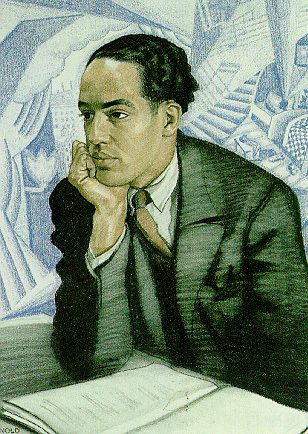
A collection of vibrant and incisive short stories depicting the sometimes humorous, but more often tragic interactions between Black people and white people in America in the 1920s and ‘30s.
One of the most important writers to emerge from the Harlem Renaissance, Langston Hughes may be best known as a poet, but these stories showcase his talent as a lively storyteller. His work blends elements of blues and jazz, speech and song, into a triumphant and wholly original idiom.
Stories included in this collection: "Cora Unashamed" "Slave on the Block" "Home" "Passing" "A Good Job Gone" "Rejuvenation Through Joy" "The Blues I'm Playing" "Red-Headed Baby" "Poor Little Black Fellow" "Little Dog" "Berry" "Mother and Child" "One Christmas Eve" "Father and Son"
Through poetry, prose, and drama, American writer James Langston Hughes made important contributions to the Harlem renaissance; his best-known works include Weary Blues (1926) and The Ways of White Folks (1934).
People best know this social activist, novelist, playwright, and columnist James Mercer Langston Hughes, one of the earliest innovators of the then-new literary art form jazz poetry, for his famous written work about the period, when "Harlem was in vogue."
THEY WERE PEOPLE who went in for Negroes—Michael and Anne—the Carraways. But not in the social-service, philanthropic sort of way, no. They saw no use in helping a race that was already too charming and naive and lovely for words. Leave them unspoiled and just enjoy them, Michael and Anne felt. The Ways of White Folks ~~` Langston Hughes
It is time Langston Hughes’ reputation be salvaged. Too often, he is thought of as the queer, black poet from Harlem. What Hughes is, is a hugely talented writer, period.
My previous encounters with Langston Hughes had been with his poetry, of which I’m a fan. His stories were a revelation to me. By the time I finished the last page, I was emotionally shattered by these stories. That's how powerful a writer Hughes is.
This collection of short stories is a perfect introduction to Hughes’ work. These stories are heart wrenching, painful, and occasionally humorous. The plots are surprising, and the characters very unusual. If you truly want to understand the objectification of Blacks, read this book. It was very eye opening. What saddens me is that over 80 years later this objectification still takes place in the United States.
Of the 14 stories here my favorites are: • "Cora Unashamed" • "Slave on the Block" • "The Blues I'm Playing" • "Poor Little Black Fellow" • "Berry" • "One Christmas Eve" • "Father and Son"
There is not a weak story in this entire collection. I've read that Hughes was greatly influenced by D. H. Lawrence and his passionate, socialist beliefs when he wrote these stories. While these things may have influenced Hughes' writing in the 1920's, these stories come out of the painful experiences Hughes and blacks in general experienced in America at that time and all too sadly, today.
Every one of these 14 short stories is filled with a terrible tension – however nice and lovely and polite the white people are, and however smilingly subservient the black people are, you know nothing is going to end well, and it doesn’t, ever. Two of these stories end with ultimate violent strange-fruit horror but most of the others are filled with the poison of the condescending disdainful patronising sweetness of white people to their black servants, the cooks, the maids, the janitors, the musical prodigies taken up and toyed with, the mixed race bastards, the nameless members of that other race the white people know by definition they can boss around and not have to be near if they don’t want to. These stories are doorways into the endless nameless insulting and sneering and belittling and casual truncating of lives of the black people who we might remind ourselves didn’t volunteer to go to America to be insulted and manhandled and raped and thrown out and shortchanged. I wish I’d read this book years ago, it came out in 1934, so I really have no excuse.
This reads very fast because Langston Hughes stands aside and lets his stories tell themselves, he has no need for rhetorical flights or thunderous denunciations of racism, not at all, the most he permits himself is a bitter smile.
A rich white family called the Pembertons have a catastrophe happen in 1919. They had two perfect Negro servants who did everything. And the man was killed in the war, and his wife then up and died of something or other. And they were left with their servants’ young boy on their hands.
”Poor little black fellow,” said Grace Pemberton to her husband and her sister. “In memory of Arnold and Amanda , I think it is our Christian duty to keep it, and raise it up in the way it should go.” Somehow for a long time she called Arnie “it”.
The word gets round about this adoption.
One would think that nobody in the town need ever again do a good deed: that this acceptance of a black boy was quite enough
And
All the grown-up white people made their children be very nice to him, always very nice.
Watch out for my frenzied jazz fingers and my ferocious, flapping tail, ‘cause I’m all worked up, folks. Worked up into a fine lather here.
My main man Langston (who I never thought of as Black, but I always thought of as Poet) has defied the odds here and has offered me up exactly 14 short stories, published in 1933, and has managed to keep them IN PRINT. Hot damn, Mr. Hughes, I hope you’re laughing in your grave.
Poet? Yes, I know it. He was the first poet whose verse I painstakingly copied into my poetry journals, starting from the young age of seven. Langston Hughes, Carl Sandburg and EE Cummings are the three poets whose influence has run the longest in my life and my passion for their work has never left me. I love their work MORE, not less, as I have aged. I can claim that I read at least one of their poems every week.
But, Mr. Hughes as a writer of prose? I never went there before, and that mistake ENDS HERE.
I will plunk this powerful prose right next to my two other favorite short story collections, J.D. Salinger's Nine Stories and Ray Carver’s Short Cuts.
These are brilliant, truly. Wowza, man!
Spring that year was all too sudden and full of implications. The very earth seemed to moan with excess of joy. Life was just too much to bear alone. It needed to be shared, its beauty given to others, taken in return. Its eternal newness united.
Hughes lives up to the hype!! I absolutely loved this book. A relativistic time capsule showcasing what it meant to be black in America in a world of whiteness in the 1930s. Hughes has compiled a set of stories that echo the sentiments that we see now. While I would not call this book prescient, I would say that it has tremendous historical value. We see the seeds of behaviors and attitudes in the now, that were the norm back in Hughes time. A history book which demonstrates that yes, we actually have made some racial progress in the last 90 years by comparison. That is to say, things are better than they were. That is not to say that the work is done. There is still so much progress yet to be made on the subject of race and of white supremacy. Also, the book though more historical than modern, does not seem at all dated. A veritable study in cultural relativism. Cultural relativism is the view that all beliefs, customs, and ethics are relative to the individual within his own social context. The book showcases the behaviors, norms and traditions within the white culture on treatment of blacks. The perspective of the book is from black culture. The title says it all.
Langston Hughes continues to support my burgeoning theory that poets make superb writers. His writing is immersive. I found myself captivated by this book published in the year my father was born and to be honest, I saw a lot of my father in the characterizations and the language (could be nostalgia. I miss my dad and there were snippets of his world here). There is a smoothness in the writing that was reminiscent. As I mentioned, the stories focus on the way black people characterize white people, so in this collection, "White folks gonna white folk". Hughes treats the black folks in his stories differently. His assessments are not as harsh for their actions. He lets the white folks do the judging here and the reader gets to judge their judgment. This is a fantastic classic that stands up to the test of time!! There is much more Hughes in my future!!
This book made me ache inside. Hughes is an excellent writer and his stories are like razor blades that draw fine little lines in your heart. You don't even realize you're bleeding until it's done.
This book is a collection of short stories of interactions of every day encounters of black people and white people. From small towns to big cities and overseas, we get a glimpse of how each side thinks of the other. The stories are humorous, sad, truthful, and at times you want to scream. Langston Hughes writing style puts you the reader in the mist of the story. When he writes about Cora, the name sounds simple. But, he magnifies the persona.
The tale of the lonely white woman in the company of black waiters she counts as one of her only friends. A story of the bi-racial son of a planation owner. A yard-nigger who wants his respect. The lyric writing of Langston Hughes will make you holler for more. A Good Read.
Quote: But, Arnie thought he wouldn't mind being poor in a land where it didn't matter what color you were. "Yes, you would mind." Vivi said.
O, if I could holler
sang the blues,
Like a mountain jack, I'd go up on de mountain
sang the blues,
And call my back,
"And I," said Mrs. Ellsworth rising from her chair, "would stand looking at the stars."
Thank you to my friend, Monica .... Between her exceptional review... and the 528 -five star reviews on Amazon ... I knew I would be missing something special if I didn’t read this book.
Langston Hughes was the real deal!!! His stories were gripping, page turning engrossing.... portraying vivid understanding of the human condition-painful realities for African Americans in the 1930’s, before the civil rights movement.
The first story knocked-it-out-of-the-park’...with its emotionally felt story..... “Cora Jenkins was what the people referred to when they wanted to be polite, as a Negress, and when they wanted to be rude, as a nigger— sometimes adding the word ‘wrench’ for no good reason”.
Cora work as a maid—washing, ironing, cooking, scrubbing, taking care of kids, nursing old folks, making fires, carrying water. “Cora was like a tree—once rooted, she stood in spite of storms and strife, wind, and rocks, and the earth”.
All the stories are marvelous... painful, incorrigible, comical, and enthralling....
The reader gets a great look at the interracial relationship between blacks and whites ... racism, humanity, and empathy, .... through these brilliantly engrossing varied stories: .., painful, incorrigible, moralistic, brutal, humorous, maddening, and enthralling!!!
African American writing doesn’t get much better than these stories!!!
What an incredible writer Langston Hughes was!!! Outlandishly and artfully felt.
If, like me, school put you off stories that began with long descriptions of trees, more trees, and a hill, then these short stories are for you. Urban in setting, they cut to the chase the same as people in big cities do. No slow starts. Just sharp insights into people.
Hughes was a poet whose precision with that shorter form shows in his fiction as well. Shape, to poets is all. And that comes across in my favorite story in this collection. "Passing" is in the form of a letter. Try reading it and not getting a lump in your throat as if you were its intended recipient. It does me in every time.
After I taught this once at a Japanese university, a student confided in me in private that she was passing like the black man in this story. She let me know she wasn't Japanese but Korean. Her trust in me came from reading this story. She knew her secret was safe with me. Writing doesn't get more powerful than that.
Here are fourteen short stories that throw light on that ominous intersection of Black and White. Langston Hughes wrote with amazing clarity and purpose. His absorbing fiction reveals the abhorrent realities of the Jim Crow South and reanimates a shameful era of history that none of us should ever, ever forget.
Langston Hughes spent a concentrated period in 1933 constructing this collection of 14 stories - inspired either by his own experiences or by those of others he knew - which then appeared in book form in 1934. (Some were published separately in publications like 'Scribner's Magazine' and 'Esquire'.)
I've yet to read what he's most known for - his poetry - but, along with this collection, I've read a novel and a memoir. So far, everything I've read has had considerable impact.
Though the tales in this collection share themes of racism and class, what's most noticeable is the wide range in the storytelling. There may be a few broad similarities but no two stories here are particularly alike.
All are seemingly designed to pack a punch - and they do so to varying degrees.
This begins with the sit-up-and-take-notice aspect of 'Cora Unashamed', in which the titular character, in the face of brutal hypocrisy, ultimately gives stoicism the heave-ho.
That's followed impressively by 'Slave on the Block', a sharp look at fetishization - as illustrated by a white couple adhering to a 'precious' view of black culture that blinds them to their total apathy re: blacks as people.
If, overall, the first half of the book feels stronger, that could be because the earlier stories feel more complete as stories. In the latter half, several stories feel 'dropped-off' before their conclusions... though it could be argued that that's due to their points already being made.
Some stories cover the prevalence of biracial birth and the issue of 'passing'. As well, some sequences are shattering.
Perhaps the most unique reporting comes with 'Rejuvenation Through Joy', a con-artist narrative describing an elaborate scheme to hoodwink the jaded elite into fully embracing a jazz-themed series of 'spiritual' workshops "rooted in the deepest source of life... springing from the dark rhythm of the primitive." There's a sort of hilarity involved in the sham, before it's undone.
Whether black or white, the characters weaving their ways through here are all recognizably, often painfully, human. Hughes presents them with shrewd sensitivity and his fairness in a seeming lack of interest in taking sides.
Must read-required reading in my opinion. The 14 short stories written by Langston Hughes tell a story of black and white intersections and their blatant and not-so-blatant biases. The casual way in which today's society calls 'micro-aggressions' was front and center in this novel.
Reading The Ways of White Folks was a recharge, a shock to my system, a strong reminder of where we were, how far we think we've come, and how we still remain fully planted in our biases and prejudice.
One story chronicles a man "passing" as white and how hard he tried and pushed himself into the world that "accepted" him rather than make him an 'other.'
I never knew they made a practice of saying such terrible things about us until I started passing and heard their conversations and live...
The story of a man working for his white owners...
Just because they pay you, they always think they own you. No white man's gonna own me. I laugh with em' and they I like 'em. Hell I'm from Arkansas where the crackers lynch the ni**ers in the streets. How could I like 'em
The honesty with which Hughes writes leaves the reader broken. It felt like going into the hearts and the minds of the protagonist of each story, feeling their struggle, their depth, their pain.
A story of a woman forced to give birth to a master's baby, only for the baby to die and then try to raise his "real" baby as her own--after all the love of raising that child to be told to back off.
The lights that would turn off and on, never dimmed in the struggle for freedom, was a gut punch, leaving a sour but real taste of sadness in my mouth. This was the world. It felt distant but truly a doorstep away.
Cora was like a tree—once rooted, she stood, in spite of storms and strife, wind, and rocks, in the earth
This is not a book to overlook. It's a book to read, think, and discuss. Langston Hughes writes with raw honesty that needs to be treasured. A landscape of a world veiled and shrouded my prejudice.
Bow down and pray in fear and trembling, go way back in the dark afraid; or work harder and harder; or stumble and learn, or raise up your fist and strike-but once the idea comes into your head, you’ll never be the same again. Oh, test tube of life! Crucible of the South, find the right powder and you’ll never be the same again-the cotton will blaze and the cabins will burn and the chains will be broken and men, all of a sudden, will shakes hands, black men and white men, like steel meeting steel
After reading this brilliant African-American fiction composed of numerous short stories, I was compelled to reflect on a piece of American history that was not honorable, in regards to the morale of a society. I appreciated the blunt honesty that Langston portrayed within his work in the series of short stories. He presented stories that contained content that has been echoed within Black families for decades. I am grateful for the major progress in this country and hope that we continue to make strides toward a more unified and peaceful nation.
In 1934, the African American poet Langston Hughes (1902 -- 1967) published his first collection of short stories, "The Ways of White Folks", all of which have as a theme the strong force of racial prejudice. The stories show how even the behavior toward black Americans of well-meaning, liberal white Americans in the 1930s had a racist and patronizing tone. The stories are told with a mixture of irony,humor, and sarcasm. They are written with a brisk style, with the attention to rhythm, precise speech, and the telling detail that mark Hughes as a poet. The stories show the difficulties that Hughes believed stood in the way of racial relationships of equality. Yet Hughes qualifies the title of his collection in the motto for the book, to mean "some" white folks. Hughes quotes from his character Berry in one of the stories of the collection. Aware that he is being patronized, exploited and underpaid in his work at a home for disabled children, Berry says:
"the ways of white folks, I mean some white folks, is too much for me. I reckon they must be a few good ones, but most of 'em aint' good -- leastwise they don't treat me good. And Lawd knows, I aint' never done nothin' to 'em, nothin' a-tall."
The fourteen stories in this collection are set in varying parts of the United States, Midwest, East, and South, and involve individuals of varying economic and educational levels. Many of the stories involve themes of sexuality or of music. The most famous and probably the best of the stories is the first one in the book, "Cora Unashamed". This story is set in a small town in South Dakota. The title character is a member of the only black family in town and she has worked for years as a maid for a white family, the Studevants, who treat her with indifference. Cora has a strong sense of pride in herself and in her sexuality. As a young woman she had a child out of wedlock with a white man, the only lover she ever had. The child died as an infant. Cora remembers the man, the affair and the child with love and pride. When the young Studevant daughter finds herself pregnant by a young foreign-born man in town whom she loves, Cora comforts and supports her and bluntly breaks the news to her parents. The Studevants want nothing of the baby and take the girl to have an abortion which proves fatal. At the funeral, Cora rises to speak: "They killed you! And for nothin'... They killed your child. ... They took you away from here in the Springtime of your life, and now you'se gone, gone, gone!" Cora lives the rest of her life alone, with her family on the outskirts of the town.
Two of the stories in the collection, "Home" and "The Blues I'm Playing" center upon black Americans with a deep involvement in both classical music and in jazz and blues. These stories show Hughes' love for all forms of music and his understanding of the classics, as well as of the blues. Music works in these stories as a figure to show what black and white Americans share and also what deeply divides them. Both the stories are rewarding, but I will discuss only the first of them, called "Home".
In "Home" a young man, Roy, returns to his small midwestern town in Missouri after several years spent in Europe. He has been playing his violin at cabarets during the evening to support his study of classical violin with the finest teachers during the day. Upon his return, with his Europeanized dress and manners and his musical gift the white people of the town mock Roy. Both white and black people, however, are moved by a concert of classical music he gives at a local church -- for most of them it marked their first exposure to classical music. An elderly white music teacher at the local high school recognizes Roy's talent and has him play his violin for the students at the all-white school. One evening, when Roy and the teacher meet by chance downtown n late in the evening and exchange some words about music, the passersby assume a rape is about to take place and brutally assault and lynch him. The story concludes "And when the white folks left his brown body, stark naked, strung from a tree at the edge of town, it hung there all night, like a violin for the wind to play."
Other stories in the collection that I thought particularly good are "Passing" in which a young man on his way up refuses to acknowledge his African American mother, "Red-Headed Baby" which discusses an experience between a young white sailor and a woman in in a brothel, "Berry", which I mentioned earlier, and "One Christmas Eve", a story about an African American domestic and the ill treatment meted out to her and her young son.
The message of these stories remains important to contemporary American life. Hughes' writing raises these stories to the level of literature.
This book is a definite must-read. I picked it up because I thought it had a funny name, and the leaps and bounds it took beyond my expectations have made me wonder how it has not won awards and how we are not all expected to read this book in school.
I admit that my common conclusion upon reading a famous author's short stories is: "genius." F. Scott Fitzgerald, Kurt Vonnegut - in many ways their short stories impressed me more than their full-length novels. I don't think I've ever read other Langston Hughes, but this compilation astounded me.
How rare that everyone reading can relate to every story in a collection? How rare that every story teaches you, enthralls you, encaptures your imagination in the first three paragraphs, convincing you that you have known these characters all your life, that you ARE these characters or your friends are these characters - and the stories all take place in Jim Crow area no less.
Who are you? Who do you know? Who do you see in the faces of your family, your neighbors, the people you cross on the street and see in the supermarket and read about in the newspaper? Do you know the white family who "adopts" an African-American child out of love, but out of pity, and raises a child who can't fit it in any world? Are you the other or the backbone of the story? Do you see the impact of the white man conceiving multiple children, who he later disowns for their race with his black servant? My entire paragraph sounds unbelievably cliche, but Hughes' stories melt into the reality that is America.
I read these stories as being judgmental towards "white folks," but maybe I'm biased. I'm pretty sure it just shows the truth of how things were in a different time, and how that time has affected this time.
While this book is gripping for its historical significance in relaying the way things were, every single story is enchanting for the way it is told and how gripping the characters are.
Wow, this book was better than I had expected it would be, given that I'm not big on short stories. I knew that Hughes was a stellar poet, but can't remember if I've read any of his short stories in the past (it's not impossible since at least one seemed familiar.)
The title comes from this quote of something said by one of the characters in the book (this is on its own page prior to the stories, which is what drew my attention to it) The ways of white folks I mean some white folks.
There wasn't a white personality type in there I haven't met or known second hand of in my life, even if it what they didn't wasn't directed at blacks in particular (where I grew up most of my life there were none until I was older, but that didn't mean there weren't people like this or that I grew up in an all white community.) Yes, those type of people still exist. So even though the stories are very American in many ways, they still have a universal application.
However, I'd like to correct a misconception about the lack of racism in France even if there were never Jim Crow laws and, like in the book, blacks could date and marry white women. Not only did I read about European racism in My Lord, What a Morning by Marian Anderson, but a recent French survey shows that 91 percent of blacks in France experience racism on a daily basis. https://www.rfi.fr/en/france/20230216... (the article is from earlier in the month when I am writing this review.)
I found this golden nugget in my neighbors attic library and HAD to ask if I could borrow it! Upon seeing the excitement in my eyes, she smiled and said to use it as long at I'd like. I started this evening saying I'd only read a bit, and now I'm nearly half done!
"No," said Oceola simply. "This is mine. . . . Listen! . . . How sad and gay it is. Blue and happy -- laughing and crying. . . . How white like you and black like me. . . . How much like a man. . . . And how much like a woman. . . . Warm as Pete's mouth. . . . These are the blues. . . . I'm playing."
I love that line. What a beautifully written, powerful and sad book. I think I shall remember it for a long time.
Langston Hughes' The Ways of White Folks is – or should be – a disquieting book for those of us who are White. Hughes presents a series of caricatures of White in a series of short stories. His white folk sometimes do good things and are sometimes well-intentioned toward Blacks, but more often they objectify, condescend, and pity. They shift blame for problems, often problems of their own making, onto Blacks. White families would prefer their daughters have an ultimately fatal abortion than that she raise a black child. Even their good acts are often tainted by poor intentions.
“Besides,” Milberry said to himself, “the ways of white folks, I mean some white folks, is too much for me. I reckon they must be a few good ones, but most of ’em ain’t good—leastwise they don’t treat me good. And Lawd knows, I ain’t never done nothin’ to ’em, nothin’ a-tall” (p. 181).
And nothing Blacks do is ever good enough. In Father and Son, for example, Hughes focuses on three men: The white Colonel and his two sons by his black mistress, one olive-skinned and the other dark. Willie and the Colonel got along fine, because Willie was docile and good-natured and nigger-like, bowing and scraping and treating white folks like they expected to be treated (p. 226). Bowing and scraping or uppity, they both met ill ends.
His characters, as in Poor Little Black Fellow, despite being given many advantages, wouldn’t mind being poor in a land where it didn’t matter what color you were (p. 153). Arnie was really happy when for the first time in his life somebody had offered him something without charity, without condescension, without prayer, without distance, and without being nice (p. 146).
I want to believe that these are caricatures, as I didn't easily find myself or my friends in the characters in this book. (Would the white characters have described themselves in the ways that Hughes did?) As I paid attention to my attempts to dismiss Hughes's stories, stories where Blacks are 90% good and Whites are 90% bad, however, I thought about food deserts, the population in prisons and on death row, the relative investments in inner-city and suburban schools, the treatment of young black men at traffic stops – the list can go on – and I'm not so sure that we can be so sanctimonious. The racism that Hughes described has just gone underground.
I do not recommend finishing this book while sitting on the bus at the end of a work day, particularly while the cutest little black boy sits laughing on his father's lap in a seat across from you.
This book took me longer than I expected to finish. Often, after a story, I would have to put it down and leave it for a few days. It just isn't possible to move into the next tragic tale, like the nightly news. Happy endings were few. Thank you for this book, Langston Hughes, and fuck you all who made these stories too real.
This book just ripped me open and remade me. Hughes is a genius, sees straight through to the souls of us all. It’s a gripping, incredibly insightful book that manages to be applicable decades and decades later.
It's hard not to love every bit of Langston Hughes's contribution to American letters. Although best know as a poet, I greatly admire his prose too. Two other prose works of his to check out are two of my favorite works of American memoir: "The Big Sea" and "I Wonder as I Wander."
Fourteen stories with the common theme of white racism against blacks in the early 1900’s. From the physical violence, the unapologetic abuse to the infantilization of the black race by whites who see themselves as kind and who “know what is good for you”. Powerful stories. Every bookstore I’ve been to recently has a table with a selection of “Black Voices”. I have yet to see this book among them. It should be.
This collection of stories explores themes of race and race relations in the early twentieth century. The issues addressed in the collection will ring familiar to people schooled in the racial history of the United States prior to the Civil Rights Era. Consequently, the character types, plots, and outcomes are fairly predictable. Nonetheless, many of the stories are powerful. Undoubtedly, they were even more so when originally published in the 1920s and 1930s. The themes addressed in the stories include segregation (de facto and de jure), vigilantism and social control, primitivism, passing, and sexual taboos and transgressions. Hughes shows how the constructions of race in the period adversely affected both black and white people. In a few of the stories, he artfully contrasts the racial dynamics in the United States with Europe to show that the absence of a color line helped foster healthier personal and familial relationships. Several of the selections would work very well in history, literature, and American Studies courses. Some of the best stories in the collection are: “Father and Son,” “Berry,” and “Slave on the Block.”
Many things became very clear to me, as I read these stories, but I only want to strongly emphasize two things. First and foremost, Hughes is a master storyteller. He gets his point across with an unmistakable clarity whether you are ready for it or not. The honesty of his words smacked me in my face and to tell the truth some of those smacks hurt, yeah, they hurt a lot. The second strong emphasis I want to make is that things have not changed much since Hughes’ magnificently written stories of days gone by up to today. The major differences between the stories in this book, and the reality of today is that names, faces, and places have been changed to protect the guilty.
There are other minor acknowledgements that I could expand on like the resilience of black folks, the determination, courage and strength of a race of people that have been beaten down since they were dragged here against their will, but this book is not about the black folks. It is about the white folks. If you are not careful, you may get hurt a little bit, so read it at your own risk.
After finishing Langston Hughes' collection of stories, "The Ways of White Folks," I'm now convinced that Hughes is one of the most under-recognized fiction-talents of the 20th century. Whatever the establishment hangups are for digging deeper into Hughes' fiction writing, it is time to recognize the timeless poignancy of Langston's non-poetry work.
His striking, nuanced depictions of racial tensions in communities all around the United States approach the dexterity and efficiency of Flannery O'Connor's, short stories. With the resurgence of racial tensions in the early twenty-first century, Hughes' fiction is sure to be an influence on a new generation of novelists and short story writers.
"Little Dog" is one of the most perfect short stories I've ever read.
"Home" and "Father and Son" read like a precursor to Richard Wright's short story collection,Uncle Tom's Children. Both will probably stick with you. Like a splinter.
"Rejuvenation Through Joy" connects to conversations about both white uses of black culture and the perennial dangers of wealthy white ennui. While expressed in the trends of its time, the themes and basic action of this story are still very recognizable and contemporary.