Join Usagi Yojimbo in his hare-raising adventures of life and death. Watch as he faces assassins, medicine peddlers, bat ninjas, and more! This is a story of honor and adventure. It's a masterful adaptation of samurai legend to sequential art. Dark Horse is proud to present this epic story of good versus evil. Sakai's unique blend of storytelling and Japanese legend has made a unique niche for itself.
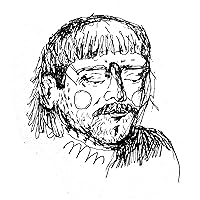
Stan Sakai (Japanese: 坂井 スタンSakai Sutan; born May 25, 1953) is an artist who became known as an Eisner Award-winning comic book originator.
Born in Kyoto, Sakai grew up in Hawaii and studied fine arts at the University of Hawaii. He later attended the Art Center College of Design in Pasadena, California. He and his wife, Sharon, presently reside and work in Pasadena.
He began his career by lettering comic books (notably Groo the Wanderer by Sergio Aragonés and Mark Evanier) and became famous with the production of Usagi Yojimbo, the epic saga of Miyamoto Usagi, a samurai rabbit living in late-sixteenth and early-seventeenth-century Japan. First published in 1984, the comic continues to this day, with Sakai as the lone author and nearly-sole artist (Tom Luth serves as the main colorist on the series, and Sergio Aragonés has made two small contributions to the series: the story "Broken Ritual" is based on an idea by Aragonés, and he served as a guest inker for the black and white version of the story "Return to Adachi Plain" that is featured in the Volume 11 trade paper-back edition of Usagi Yojimbo). He also made a futuristic spin-off series Space Usagi. His favorite movie is Satomi Hakkenden (1959).
There's some interesting stuff here as Usagi battles evil magistrates, supernatural creatures and assassins. You wouldn't think a comic about a rabbit samurai would be good, but you'd be wrong.
Has some of the best stories in the series thus far. I will say some of the side-characters do start to blend together. There's always another corrupt official, amoral outlaw, and badass female assassin for Usagi to meet.
Kaiso seaweed conspiracy that Usagi solves. Noodles, a mute street merchant framed for robbery by a corrupt official. The Chrysanthemum Pass - Usagi helps prevent an assassination while following around a man posing as a medicine man. Lightning Strikes Twice - Usagi hears the origin story of the assassin Inazuma.
The Brink of Life and Death (Dark Horse, 1998) -albumissa samuraijäniksemme jatkaa matkaansa mitä maukkaimmissa seikkailuissa. Usagi kohtaa niin vanhoja tuttavia (suosikkini Kitsune) kuin uusia kasvojakin (tappava Inazuma), ja joutuu tekemisiin niin lepakko- ja myyräninjojen kuin kammottavan nuen kanssa. Merkittävistä sivuhahmoista Jei saa epätavallisen seuralaisen. Sarjakuvan yksi synkeimmistä hetkistä koetaan Noodles-tarinassa ja huumori on ehkä muutenkin tiukemmassa.
Ei voi kuin ihailla Stan Sakaita. Usagi Yojimbo on ehdottomasti yksi suosikkisarjakuvistani.
(4,3 z 5 za to, co jde Stanovi nejlépe - řetěz krátkých příběhů) Usagi mě baví a je to taková moje komiksová celoživotní láska. A to tak velká, že Stanovi odpustím i tu bojovou choreografii, která více vyobrazuje důsledek střetu, než to jak byl proveden a rozhodně ani zdaleka neodpovídá možné realitě. A právě v této knize je toho bojování mnoho. Usagi se přimotá kde čemu a i vedlejší postavy, co mají svou dějovou linku, máchají zbraní jak o život. A to hned první příběh evokuje opak - kromě vzdělávací lekce o tom, jak vniká nori, jde spíš o důvtip než hrubou sílu (ač té se stejně nevyhneme). Celkově jde ale o fajn akční "díl" a za každým z příběhů ve mě hlásek volal "další, další!".
It is genuine joy to watch Sakai grow as a storyteller and artist. Having now read the first 10 volumes of Usagi Yojimbo, as the title went from Fantagraphics to Mirage to its current home at Dark Horse, I've seen Usagi stories shift from unconnected one-offs to an ever-expanding, highly consistent world. I really love the way the stories have begun developing, particularly in this volume.
This is the first book that truly begins to feel like a serial. As I mentioned in my review of Book 9, it's nice to see the consequences of previous stories carry over into the current ones. But in this volume, Sakai starts doing something else. He's throwing in Easter eggs, building tension with hints of what's to come, giving weight to the actions of each and every character. Usagi Yojimbo no longer feels like just a peak into feudal Japan. It's taken on its own life, and become its own thing.
Also important is Sakai's emotional storytelling growth. Parts of this volume are absolutely gut-wrenching. He's reached a point where he knows the stakes have to be raised if the world is going to continue to expand, and in this volume he raises them considerably. In the past, the only people who ever seemed to die were the faceless hordes of bandits and ninja Usagi comes across. But not anymore. Now characters I NEVER would have predicted Sakai would kill off are on the chopping block. It's delivered a heretofore unseen intensity to this series, and I'm really interested to see how much better it continues to get.
Usagi Yojimbo, on the surface is a simple concept. Anthropomorphic animals in 16th century Edo Japan - with the narrative centering around a "Long Eared Samurai", a Rabbit - the eponymous Usagi of the title. Usagi,literally means Rabbit in Japanese and Yojimbo refers to "Bodyguard". Rabbit Bodyguard. It mixes several references to the Samurai films of Kurosawa with a deliberate homage to the great samurai swordsman Miyamoto Musashi while treading its own unique path. There really isn't another comic like it on the stands and Sakai has been writing, plotting and drawing this gem for the past twenty five years or more - sticking to what must seem like a cutthroat monthly schedule. He makes it all look so easy which just proves - it probably isn't.
Usagi is a Ronin - a masterless Samurai. He wanders the land on a Warriors Pilgrimage, honing his mind and his sword. A near master swordsman, Usagi practices a unique fighting style. His gentle demeanor, humble bearing and diminutive frame often leads his adversaries to underestimate him - to their detriment.
The Kill Bill films of Tarantino center around the bloodshed unleashed by Samurai swords in the hands of a skilled wielder. The aesthetization of violence is a common theme with Tarantino and he repeatedly uses Japanese samurai motifs over the course of the two Kill Bill films. I enjoyed those films but they led me to expect the same within the pages of Usagi Yojimbo. The animal characters are mostly cute. I expected decapitated bunny heads and chopped feline limbs. Stories of the seamier side of human nature and war. Sakai delivers none of this; at-least, not in the way you would expect. The violence in Usagi Yojimbo is always tinged with regret. Usagi takes no pleasure in it, tries to avoid killing and maiming as much as possible and always resorts to defense. However, once you see the click of the sword, with the picture of Usagi flicking the blade from the scabbard it is almost certain that blood will be shed.
The fight sequences are brilliant. Sakai takes his time, worrying less about space and more about the deliberate choreography of death. People are stabbed, decapitated and killed. Most of it is left up to your imagination with almost no blood. The graphics of the death continue to toe the line between humor and morbidity - the dead lie with their tongues lolling out and creative skulls paraphrasing the end of their appearance in the comic. It makes for excellent reading - the violence isn't cool, it isn't desirable and it almost always ends in tragedy for some character. This is age appropriate violence!
A centerpiece to the entire saga and one of the major plot motivators is Bushido - the unrelenting and unbending code of the Samurai. It is a harsh discipline, focusing more on the tenets laid down by it than any sense of morality. There are several instances in the story where a common question asked is if a samurai retainer who serves an evil/corrupt lord is justified in rebelling against him. The answer is invariably no. No matter how evil/corrupt and insane your lord may be, no matter what criminal activities he may indulge in, no matter how depraved his tastes it is the duty of the retainer to follow him and remain Honorable. The concept of good and evil and self righteousness is almost done away with. Usagi is our hero just because he has the good fortune to have served under Lord Mifune, a great man just prior to his death in the Battle of Adachigahara. He seems to recognize this fact and I think this influences his approach to almost all his antagonists. Those who serve an evil lord win more respect from him than the evil lords themselves.
Sakai, through his focus on the laws of Bushido manages to evoke an atmosphere of rigidity and sacrifice that makes the book quite unique at times. When Usagi's sweetheart is married off to someone else he fails to put an end to the wedding due to his loyalty to his lord - his duty forbids him from going away. The duty of a Samurai's wife is to her husband, this prevents his love Mariko from ever being with him. Honour and duty are cages within which our characters live their life. It is a harsh law that seems to hurt much more than helps but it is his adherence to this discipline that sees Usagi through his many encounters. He is unable to avoid direct challenges to a duel as a result - he must kill, albeit with regret, if he is to regain his honor. Usagi isn't a rebel. He doesn't seek to reform or buck the system. When a peasant begs to hold on to the swords of her lover, a samurai he is quite categorical about the right thing to do - the sword is the soul of a Samurai and doesn't belong with a peasant. In another episode he tells a peasant's son that there is no hope for him to ever become a Samurai. Any historical novel seeks to impose the character of a man of our times on someone dead years ago. Stan Sakai eschews this approach by depicting a man (rabbit??!) of his time in Usagi and making him a truly sympathetic character.
This focus on honour and Bushido is not the only layer to this comic. There are several more. History lessens on the culture of Japan are interwoven into the narrative - be it pot making, kite making or the fashioning of a Samurai blade. An entire episode dedicated to seaweed farming was a highlight of the series and the Grasscutter arc elaborates on the major dieties of Japanese culture. This is a meticulously researched comic that isnt heavy handed with the historical details. It mixes humor, history, culture and pathos to make a wonderfully enjoyable comic.
Rather than speaking about the artwork in the peripheral fashion I have employed so far I think I ought to come out and say it - the artwork is fascinating. It uses simple lines and expression to convey the message. At first glance it seems simplistic but as I trace my eyes over the artwork a wealth of detail leaps out. The grass bends gently with the breeze. The folds of Usagi's kimono float lazily around him as he jumps into the air. The Sword strokes are clear, easy to follow with the use of masterfully placed after images. Sakai is a master of the quiet panel. Several pages hold only movement, expression and silence, lending a wonderful quietude to the comic until a brutal explosion of action breaks the silence. Quiet panels fused with a silhouette are even more melancholy - it forms a space in which the contemplation of the character within the panel tends to wash over the reader himself. The artwork isn't simple. A lifetime of garish coloring and the bright but shallow palette of superhero comics seems to have robbed me of what little sense I possess. The black and white lines in Usagi are pieces of art I want to revisit forever.
Like most successful comics, Usagi Yojimbo doesn't succeed through the strengths of the main character alone. Usagi has a wealth of peripheral friends and enemies who recur throughout the various stories. These plot points keep diverging and melding together seamlessly over the course of the volumes I have read. I am still about halfway through the entire run but so far the side characters are vibrant, well sketched and interesting. Gen, the bounty hunter, the crime solving Inspecter Ishida, the ex samurai turned priest Sanshobo. The women in Usagi's life are a fun bunch - his lost loves Mariko and Kinuko, his comrade in arms Tomoe and his antagonist/friend Chizu. Add to this his lion sensei - Katsuichi, his frenemy Kenichi and a pet lizard Spot, not to mention the blind swordspig Zato Ino, Sakai has amassed a wealth of characters who ought to see him drawing Usagi comics well into hist nineties.
Usagi Yojimbo is to superhero comics what a glass of single malt is to spurious liquor. It is the very pinnacle of comic book art. I agree with an another reviewer who states that in the twenty five years he has been following Usagi, Sakai has yet to draw a single bad issue. I am not yet through the entire run and I must agree - the first issues are great though Sakai is still finding is feet. Seven issues in and you will be hooked till the end. This is an excellent comic, worth reading and proof that in the right hands the comic book has a significant advantage over the prose form. It should probably be the introduction to the world of comics - and I hope that those of you who havent yet started reading comics will avoid wading through a lot of garbage like i had to and start with Usagi Yojimbo.
This volume had a lot going for it and makes me appreciate Sakai even more. I'm really liking the bits of Japanese culture and history that are embedded into the story and detailed a little bit more in the Afterwards.
The treatment of the lower classes is really shocking. The idea of duty has long been mined for stories about the culture, but the idea of prisoners being expected to return of their jail was on fire is really fascinating. Seaweed farming was interesting as well.
The "Noodles" story was really heart-wrenching. Usagi and the princess is a classic Romeo and Juliet type story. Loved the whole arc about Usagi going after his stolen swords.
This is a cumulative review of the 35 volumes of collected Usagi Yojimbo stories that have been published to date. They span a 37-year history, from the first published Usagi story in Albedo Anthropomorphic #2, across the first seven volumes published by Fantagraphics, across the next 24 volumes published by Dark Horse, and finally across the most recent three volumes published by IDW, bringing us to Usagi Yojimbo v35: Homecoming, published in 2021. This review does not include the volumes Space Usagi, Usagi Yojimbo: Yokai, Usagi Yojimbo: Senso, Usagi Yojimbo/Teenage Mutant Ninja Turtles: The Complete Collection, or Chibi Usagi: Attack of the Heebie Chibis.
In a land very much like Japan, in a time very much like the early days of the Tokugawa Shogunate, when legions of samurai suddenly found themselves out of work in a war-torn land trying to get back to normal, a masterless samurai - a ronin - named Usagi Yojimbo walks the path of a student-warrior. He goes wherever fate takes him, living by his honor, his swordsmanship and by the grace of the friends he makes along the way. On his endless adventures, Usagi confronts wicked bandits, cruel tyrants, sinister assassins, and dire supernatural fiends. He often encounters humble folk plying their trade in an often cruel and harsh world (and along the way, learns a bit about their work, like brewing sake or weaving tatami mats).
Along his way, he builds a vast cast of friends, allies and rivals, including the bounty hunger Gen, fellow samurai )and love interest) Tomoe, the ninja Chizu, the third Kitsune, the noble lord Noriyuki, the stalwart Inspector Ishida, and of course, Usagi’s own son (and chip off the old block), Jotaro. And just as well, he builds no small list of enemies, including the dire Lord Hikiji (the power-hungry lord who is the very reason why Usagi no longer has a master), the Neko and Komori ninja clans, the Koroshi league of assassins, and the demonic ronin Jei. Amid all this, Usagi strives to uphold the warrior ideals of bushido and find a sense of enlightenment on his journey.
The stories are often funny, exciting, smart, sharp, tight, and occasionally touched with tragedy. They offer an informed look at medieval Japan, and pay no small number of homages to all kinds of cultural references both ancient and modern, as a reflect of Sakai’s own journey to connect with his personal heritage and honor it with his stories. They are simultaneously suitable for adults and kids alike - despite all of the carnage, Sakai never descends into gruesome detail, and yet, the many scenes of battle never seem so sanitized that they lost their gravity.
The artwork is distinct and excellent. Sakai’s is a master of sharp lifework (as well as lettering), and since he writes, pencils, inks and letters every issue solo, there is a uniformity and consistency to Usagi Yojimbo that you just don’t find in many other comics or cartoons. Until the last few volumes, it is all B&W, but Sakai’s sense of depth as well as his supremely skilled panel composition, pulls you in so deeply that you forget if it’s in color or not. You are under Usagi’s spell from the first page, and along for the ride, however long it goes.
To get an idea of the length, breadth and depth of how beloved an impactful Stan Sakai’s Usagi Yojimbo series has been, look no further than the introductions to each of the collected volumes published to date. There you will find a dazzling array of some of the finest talents in modern cartooning, who have a seemingly endless variety of ways to say how much they love Usagi Yojimbo, how impactful it has been on their own careers, and how great Stan Sakai has been himself as a goodwill ambassador for both cartooning as well as of the Japanese culture he so masterfully serves throughout his stories.
For those who have not yet enjoyed these stories for the first time, a wonderful journey awaits you. Usagi Yojimbo was created during those days in the 80s when anthropomorphic martial arts characters were all the rage. And yet, Usagi Yojimbo stood apart almost immediately. He might have been a rabbit ronin in a world of talking, walking animals, but he never seemed to be drafting the Teenage Mutant Ninja Turtles or trying to comment on the martial-art zoo comic trend. From the beginning, Usagi Yojimbo, like its titular character, was determined to walk its own path, to be the best it could be, and to celebrate the things in life that are worth celebrating: devotion to one’s craft, honoring one’s family, upholding one’s obligations, serving one’s highest aspirations, accepting one’s limitations, and acknowledging one’s flaws.
The stories are largely episodic varying in length from just a few pages, to an entire collection. They often are self-contained, but just as often reference slowly building meta plots, or serve an entire, novel-length story on their own. Everything is delicately interconnected, and yet, without such a heavy continuity that one can not simply pick up any of these volumes and begin reading without skipping a beat. Such is this series, endlessly accessible and friendly to beginners, and endlessly rewarding to long-time fans for whom earned narrative developments deliver terrific dividends.
As with any series of this length, some moments in it won’t land as well with the reader as others. But there just are not that many lows with this - if you appreciate what Sakai is doing here, you’re likely to enjoy pretty much all of it. There are some volumes that really stand out, largely because they tell the biggest and most epic stories (v04: The Dragon Bellows Conspiracy, v12: Grasscutter, v15: Grasscutter II - Journey to Astuta Shrine, v17: Duel at Kitanoji, v19: Fathers and Sons, v28: Red Scorpion, v32: The Hidden, and v35:Homecoming all come to mind), but really, the entire catalog of worth enjoying on equal terms. It’s saying something indeed that the most recent volume of Usagi Yojimbo tells one of the most compelling and moving stories of the entire series. Some edges dull over time, but as a storyteller, Stan Sakai’s edge never does.
Usagi Yojimbo has been hailed as one of the greatest independent comics ever. And it is. But it is more than that. It is one of the greatest comics, period. Read every volume. You will be glad that you did.
This volume was a joy to read. It's been a few months since I picked up an Usagi Yojimbo trade, but as I read through this one I kept thinking to myself "Has it always been THIS great?".
Although I've thoroughly enjoyed every preceding story, Sakai just seems to keep getting better. The art (particularly the landscapes) are even more beautifully and clearly drawn than usual. The cast of interesting recurring characters keeps growing. I'm beginning to get a sense of the scale of the world that Sakai is building, and it's truly impressive.
I will say that I hope that the Hikiji subplot eventually builds to something rather than simply lying there for 20+ more volumes in this series.
That being said, even if it doesn't...I'm probably too invested to stop. Now to hunt down the next volume!
My favorite Usagi Yojimbo volume thus far. There's a je ne sais quoi improvement in the tightness of the art and especially the plot—Usagi is always moving forward, there's always an outgoing impetus at the end of every vignette, a quality that felt absent before. Ten volumes in, Sakai seems to have mastered his craft. The 'How It's Made' aside about seaweed farming is worth mentioning for how much I love that sort of thing, and the Noodles story was remarkably affecting.
Absolutely wonderful. The Noodles storyline did something none of the others had yet, I not only was interested enough to be entertained, I was moved by the events of the story. Comics are often entertaining, sometimes they're clever enough, and cool enough to be really great, but rarely are they truly emotionally moving. I think Noodles is one of the best arcs I've read in any comic in quite a long time.
There's some good stuff in here. Noodles is by far the best, most emotionally engrossing story of this collection, the Inazuma stories introduce us to a new, formidable frenemy for Usagi, and the Black Soul story reminds us that [SPOILERS] is still out there. I'm 10 volumes into Stan Sakai's 30 year run on Usagi Yojimbo and I'm no longer baffled by how consistently good all of these stories are.
Another great collection. A bit slower and low key from previous volumes, but still a joy to read. I hope I have an excuse to reread these books all over again someday.
The consistent quality of this series just blows my mind. There's always something new and unexpected happening, but the tone and voice of the book remain level.
More stories of the anthropomorphic wandering warrior, Usagi Yojimbo, through feudal Japan!
Origin Tale--This is a very brief overview of Usagi's origin as a ronin (wandering, lordless samurai), reviewing his main allies and enemies. It reads like a "Previously on..." segment that TV shows use to update viewers on important bits from recent episodes.
Kaiso--Usagi's wanderings bring him to a seaside town where he runs into a local farmer...a farmer of kaiso (seaweed)!The farmer has had trouble with a neighbor to the north. He thinks the neighbor has been poaching seaweed late at night. Usagi learns a bit about the process of making nori (the seaweed sheets used for sushi) and helps resolve the dispute with the neighbor. The story is nicely plotted and tells enough about the seaweed business to be interesting.
A Meeting of Strangers--Usagi is having a meal in a tavern when another ronin comes in. She orders a drink but can't pay for it. She puts on a tough act; Usagi gives the coin needed to pay for her drink. Once she leaves, she's attacked by mercenaries who want a bounty on her. She has no trouble dealing with them. Usagi leaves separately and becomes the target of other assassins. In the way of the samurai, she repays her debt to Usagi. The story is simple and makes a nice introduction for Inazuma. Maybe she'll show up again later?
Black Soul--In a very creepy story, three thugs show up at a farmer's house demanding food and valuables. The farmer is a grandfather with his only granddaughter. The thugs get violent, drawing the evil Jei, who slaughters them and burns the house. The granddaughter, with nothing left (her parents died long ago), follows after Jei, probably the creepiest part of the story. The story goes quickly and seems like a set-up for future adventures. No Usagi in the story, though.
Noodles--Usagi runs into an old friend, Kitsune. She's a street entertainer with a penchant for petty theft because "a girl has to do what she can to get by." Her latest scheme involves a partner--the mute soba seller she calls "Noodles." She robs a house then hides in his portable soba stand. The only problem is the local town has a much larger crime wave going on. The local cop is a bit corrupt and needs to make an arrest or lose his job. He decides to pin the blame on Noodles, with tragic consequences. This is a fairly mature and intense story that is highly satisfying.
The Wrath of the Tangled Skein--Usagi finds shelter at an inn that has trouble. The daughter of the innkeeper traveled through a haunted woods called The Tangled Skein and is now sick. Suspecting demonic possession, a Bonze (Buddhist priest) is called for an exorcism. Usagi patrols outside with the hired guards (who aren't very useful) while the Bonze works inside. The story gives a little mythology and a lot of action.
The Bonze's Story--The tragic backstory of the Bonze is told here. He previously served with a lord, protecting his lord's son and his own son on a pilgrimage. Just before the destination, tragedy struck. Circumstances, or maybe karma, gave the unhappy ending to the tale.
Bats, The Cat, and The Rabbit--Usagi has a run in with the Komori Ninja, a tribe of bats who are always looking to cause harm. They are on the trail of Chizu, a ninja in her own right with a secret document. Usagi runs across her at a temple and they are forced to fight the Komori together. Usagi behaves honorably (as usual) among the thieves. The ending is a bit of a surprise in a very satisfying way.
The Chrysanthemum Pass--Usagi meets a wandering merchant who sells medicine along his route. Usagi's path overlaps the merchant, so they travel together. Meanwhile, a lord is traveling to a meeting with the other lords. Assassins have been hired to take the lord down. Usagi doesn't know this but the medicine guy is aware since he is part of the murderous conspiracy.The set up makes for a nicely dramatic tale.
Lightning Strikes Twice--Inazuma shows up again as she is pursued by assassins. Usagi discovers her telling her life story to a small group in a wayside shed. Her father wanted her to marry an older man (even older than her father!) but she loved a poor, young samurai. She ran away with the younger man but life was hard since times were peaceful. She trained as a samurai so she could perform as a novelty act on the streets. He gambled away their earnings, eventually getting in trouble with a corrupt dealer. She avenged her husband's death. The family of the dealer is still trying to kill her. It's a familiar tale but still told with aplomb and explains why she is on the run.
The book ends with some commentary by Sakai on the stories, explaining the background details concerning Japanese traditions, myths, and folklore. There's also a gallery of covers Sakai made for various publications of these stories. The short biography of him features a picture of him riding a Segway!
Highly recommended--Sakai is a great storyteller and his art works well with the stories.
Reviewed as part of my Throwback Thursday series, where I republish old reviews, review books I have read before or review older books I have only just had a chance to read.
Another week, another Throwback Thursday review of an early volume of one of my all-time favourite comic book series, Usagi Yojimbo, by legendary author and artist Stan Sakai. This week I will look at the epic 10th volume in the series, The Brink of Life and Death, which proved to be another amazing and exciting five-star read.
The Brink of Life and Death continues the adventures of the rabbit ronin, Miyamoto Usagi, as he travels throughout the lands encountering all manner people and dangers. This 10th volume is a fantastic addition to the series, featuring a great mixture of stories, from the tragic to the supernatural, and utilising some iconic recurring characters. This volume is the third that has been collected by Dark Horse Books, and it features a mixture of issues from two separate publishers. This includes the final issues of the Mirage Comics run on the Usagi Yojimbo series, with Issues #15 and 16, as well a story taken from Issue #13 (the rest of Issue #13 was used in the last volume, Daisho). It also contains the first six issues of the Dark Horse Books publication run of Usagi Yojimbo and serves as the starting point to Dark Horse’s lengthy connection to the series. As a result, the volume starts off with a quick recap of the series (titled Origin Tale), containing some very broad strokes and ensuring that new readers could start on this volume if they wanted (although Sakai does make most of his comics fairly accessible to unfamiliar readers). This volume also contains Dark Horse’s trademark story notes at the end of the volume, which proved to be a particularly intriguing companion to the excellent stories contained within The Brink of Life and Death.
The highlight of Volume 10 is all of its B.A. women. Inazuma, Kitsune, and one of my new favorites, Chizu, are three really cool characters that cross Usagi's path along his musha shugyo (warrior's pilgrimage). It's also finally starting to feel like a cohesive story that is being built in parts rather than a collection of several one-offs. Now, the stakes feel higher than ever before as the UCU (Usagi Comic Universe, of course) continues to expand.
A few of the stories really stood out to me in this collection. Kaiso is another one of Sakai's teaching stories where he takes time to share with his readers a piece of Japanese culture or history. These stories are always done so beautifully and it's always a welcomed change of pace. I also loved Noodles for completely different reasons. This story is one of the darker ones we've had in the series. Mature themes and an intense plot leads to a satisfying conclusion.
I'm starting to notice a trend here. I end up immediately starting a new volume upon completing the previous one, read a few stories, then go away for a couple of months, before returning to devour the remaining ones. While I don't love this practice, I'm not going to fight it. These are chunky collections. And while Sakai is telling a connected story, I should be content reading them how they were originally distributed. In relatively compact comics that would release overtime. So while I intend to begin Usagi Yojimbo, Vol. 11: Seasons straightaway. I probably won't be finishing it for many months. And you know what? That's okay with me.
"The Brink of Life and Death" collects the remaining stories in the Mirage era of Usagi Yojimbo, along with the first six issues of the Dark Horse Comics run. Not included are the Tom Stazer "Lionheart" backups found in the last couple issues of the Mirage run, nor any of the colors by Tom Luth in the Mirage issues.
This volume opens with "Black Soul", a direct follow up to "Nature of the Viper" found in Volume 9. Jei makes his bloody return in a gruesome tale of alehouse slaughter, presenting to the readers a return of Usagi's most deadly foe. "Kaiso" is a story featuring two rival seaweed farmers who are having challenges with yield due to some unfair competitive practices. "A Meeting of Strangers" is the first appearance of the enigmatic warrior, Inazuma, who later gives a bit of her backstory in "Lightning Strikes Twice".
"Noodles" serves as one of the main story arcs in this volume, and it features the return of the streetwise grifter Kitsune. She has a new companion in tow, a giant but gently mute she calls "Noodles". The story is probably one of the sadder Usagi yarns, and Sakai really does not hold back on how deadly life on the streets can be.
"The Wrath of the Tangled Skein" and "The Bonze's Story" involves demons yet again, and Usagi is much more prepared for it after his showdown with one on a bridge from the Fantagraphics run. "Bats, the Cat, and the Rabbit" feature returns of both the Komori ninja and Chizu, the latter of whom is trying to escape the former. Usagi's complicated relationship with Chizu has always been an engaging subplot, and his tentative alliance with her was fun. "The Crysanthemum Pass" is a fun story involving an assassination plot on Lord Miyagi which has some nice twists along the way.
Overall, this was a solid volume. Not every story is entirely memorable, but "Noodles" remains one of my personal favorites.
This is another strong volume, with Noodles, as often mentioned, being a particular standout, where Sakai uses a previous character to bring significant investment into a new one, to powerful effect. As always, the stories seem to roll from the pages, building off each other while also being strong enough to stand alone in most cases. I never thought much about Seaweed farming, but this volume makes it interesting, even as it is only in passing to the actual plot of the story. The way Sakai weaves the real with the fantasy world he has created makes this series educational as well as entertaining, and is much appreciated.
Still more than solid. Some problems persist (especially the tendency of the baddies to overwhelm the heroes with massive numbers and THEN lose is a bit detrimental for the story, especially if all these fights have goons saying "THEY CANT EVER WIN, WE ARE TOO MANY"), but the atmosphere, stories and even honestly interesting factoids from that period of Japan (how to make kaiso/ nori) are so good that I still kept reading. Was not too excited for the Inazuma story, loved Kaiso and travelling monks story.
Usagi Yojimbo is one of the best series in comics. It is so consistently good that very few titles can compete with it. This was another great volume.!
My only complaint is that I had seen a few of these stories before. I was a bit haphazard in my consumption of the series and had read some collections that were character focused rather than part of the chronology.
It is always nice to see returning characters especially minor ones like Kitsune as the story Noodles was pretty well done as it features story about corruption that ultimatley cost the life a good character. And I do like we are getting more stories about Usagi helping to get rid of corruption be it from government officials or merchants.
Número trepidante como el rayo. Aparece la samurai Inazuma con su talento portenso para la espada. Todos los elementos estan predispuestos para su colisión en Segadora. Un número de múltiples historias cortas, poco enlazadas entre si, pero con la calidad narrativa acostumbrada.
A really good and consistent book throughout, there were some solid stories in here. The Noodles arc has always stood out to me, but the arc that features the omi introduced one of my favorite characters in priest Sanshobo.
This volume in particular had some great stories. Some supernatural enemies for Usagi to fight, some great ninja plots, some assassination attempts, and even a bit of education on seaweed farming! I love it when Usagi Yojimbo teaches me a little about a trade or custom.
Although this one opened with a great story concerning seaweed farmers, the rest of the stories were much darker than others, so only 3 stars for this particular collection.
Un ensemble d'histoire courte pas forcément homogène. On y retrouve par exemple Kitsuné dans une histoire clairement ignoble (avec le nauvre Noodles qui se fait crucifier), ou les ninjas chauve-souris à la recherche d'un secret qui pourrait leur coûter cher. Une ou deux histoires se détachent pour moi. D'abord la première mettant en scène les pêcheurs d'algues, qui est à nouveau l'occasion pour Sakai de nous expliquer la vie dans la Japon médiéval. Et ensuite celle d'Inazuma, qui traverse ce recueil comme la foudre pour finalement nous expliquer pourquoi elle tue sans cesse des hordes de tueurs. D'ailleurs, en parlant de ça, entre les ronins, les duellistes, la mafia japonnaise, j'ai clairement l'impression qu'on ne faisait pas de vieux os dans ce japon.