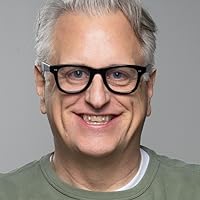
As a novelist and writer for Wired and other publications, Po Bronson has earned a reputation as the most exciting and authentic literary voice to emerge from Silicon Valley. In his national bestseller The Nudist on the Late Shift he tells the true story of the mostly under-thirty entrepreneurs and tech wizards, immigrants and investors, dreamers and visionaries, who see the Valley as their Mecca. Taking us inside the world of these newcomers, brainiacs, salespeople, headhunters, utopians, plutocrats, and innovators as they transform our culture, The Nudist on the Late Shift is a defining portrait of a new generation in the whirl of an information revolution and an international gold rush.
Po Bronson is the author of two novels and one book of nonfiction. Bombardiers , a dark satire of high finance, was an international bestseller that was translated into twelve languages. The First $20 Million Is Always the Hardest , soon to be a feature film from 20th Century Fox, is a comedy of Silicon Valley. His third bestseller, The Nudist on the Late Shift and Other True Tales of Silicon Valley , demonstrates that Bronson's wit and imagination apply as well to nonfiction as to fiction.
Po Bronson has built a career both as a successful novelist and as a prominent writer of narrative nonfiction. He has published five books, and he has written for television, magazines, and newspapers, including Time, The New York Times and The Wall Street Journal, and for National Public Radio's Morning Edition. Currently he is writing regularly for New York magazine in the United States and for The Guardian newspaper in the United Kingdom.
Po Bronson's book of social documentary, What Should I Do With My Life?, was a #1 New York Times bestseller and remained in the Top 10 for nine months. He has been on Oprah, on every national morning show, and on the cover of five magazines, including Wired and Fast Company. His first novel, Bombardiers, was a #1 bestseller in the United Kingdom. His books have been translated into 18 languages. Po speaks regularly at colleges and community "town hall" events. He is a founder of The San Francisco Writer's Grotto, a cooperative workspace for about 40 writers and filmmakers. From 1992 to 2006 he was on the Board of Directors of Consortium Book Sales & Distribution. He lives in San Francisco with his family.
Sample passage (p.248): "I had a Realtor down in Santa Clara show me a three-bedroom ranch home ‘priced to move’ at half a million’ ‘Who can afford to buy a house now?’ I exclaimed. Then she told me how housing prices had gone up $1,000 a week this past year, with no end in sight. She said, ‘At that rate, who can afford not to buy a house now?’”
Reading journalism about the near past always seems help me put the present media into better perspective; and so, in 2008, I reread this portrait of Silicon Valley when it was at the height of the Internet bubble in 1999.
I think Po Bronson is one of the best contemporary ‘new journalists’ at capturing the timeless human element of business stories. But, Po Bronson is at his worst when he starts pontificating about ‘what it all means.’ (For example, in the introduction he makes the blanket statement that “every generation that came before us had to make a choice in life between pursuing a steady career and pursuing wild adventures.” Really? The employees of the East India Company, or the space program, or thousands of other endeavors since the dawn of time might feel differently.) While there is plenty of ‘here’s how the rules have changed’ bluster in this same vein, the benefit of hindsight makes it easier to just grin and move past these pronouncements and onto the next part of the story.
The fact that this book still makes for a worthwhile read even when so much of the ‘irrational exuberance’ has now been tempered by reality is a testament to Mr. Bronson’s contagious fascination with people who follow their passions.
In the mid-late '90s, I lived in Austin ("Silicon Hills"), during what felt like the roaring '20s of tech. I guess it was just the current wave in a series of tech booms. Anyhow, we feature writers were obsessed with finding and reporting and brilliantly writing the story that would sort of bring tech a little bit out of the Wired magazine realm and into the minds of everyday newspaper readers who were still dialing-up once in a while to their AOL accounts. This book was kind of a guiding light for how to do that, for a while; I'm not sure how it holds up. Probably it's a nice time capsule of a certain era in tech.
re-read some of the chapters. Still a great read. Anyone who is a 'true entrepreneur' will enjoy this. I read it when it first came out, when real strains in the dot-com bubble were appearing. Far too many people were coming to the valley with the 'get rich scheme' mentality rather than as true entrepreneurs - who simply want to make something better and maybe change the world in the process. great to read again now, as it seems we're entering another bubble... this isn't a 'how-to' book, more of a 'day-in-the-life-of' book
I remember being interested in this book when it first came out in 1999, but...so many books, so little time, right? But I heard it mentioned recently on the NYT Book Review podcast, and looked for it at the library. When I started, I thought it might be a bit dated, as it was published before the Dot Com Bubble burst shortly afterward, and it actually sounded a bit quaint to be reading about Silicon Valley before apps, and smart phones, and Google, etc.
But Bronson is a very good writer, and his wit and insight take his portrait of that moment in time to another level. It works on a more universal level, and as for the specifics, it took me back to that time and since I was living in the Bay Area then too, I recognized the accuracy of the picture, and I got the additional pleasure that those who read it when it came out couldn't have - seeing the events and people and thinking from the perspective of all that has followed. As with so many things, the place and the industry have changed, but...the more things change, the more they remain the same, to translate (roughly) the French saying.
I remember enjoying this book, rated it at 4 stars, but never wrote a review. The review to read here is by "Two Readers in Love" and it's a good one: "Reading journalism about the near past always seems help me put the present media into better perspective; and so, in 2008, I reread this portrait of Silicon Valley when it was at the height of the Internet bubble in 1999.
I think Po Bronson is one of the best contemporary ‘new journalists’ at capturing the timeless human element of business stories. But, Po Bronson is at his worst when he starts pontificating about ‘what it all means.’ "
This is a book about life in the Silicon Valey when the bubble economy was still booming. People were in frenzy investing, starting up a company, changing jobs to the highest offer, etc. Being an IT student at that time, I was a little discouraged. That is not the kind of life I want to lead. Despite the heroism, I think they just simply dont have a life.
Overall I thought this book was somewhat dull though there were nuggets of interesting information in the book.
Silicon Valley blurs the line b/w work and play so that work takes over once life. The problem with Silicon Valley at the turn of the century is that there was nothing present there. Because everything they do is guarded by intellectual property laws, they kept everything they have secret. Whereas the East Coast are populated by the movers and shakers, the West Coast is populated by people who want the opportunity to be a mover and shaker. "For young people, it is very important not to be able to see one's fate, very important to have the sense that one's life is not preordained." Bronson is interested in people's pursuit of an unusual life. I agree with the thinking that as long as people get there work done, there is no need for face time. It seems all Asian countries businesses are based on " relationships" or bribing the right people at the right time. It is hard being a first generation immigrant especially if you are the first from your country to come to the US. Just like Asia, for a company to get noticed they have t know the right people. People in Silicon Valley are optimistic that things will turn around for them when they fail.
Entrepreneurs are willing to defy convention in order to succeed. It is interesting how even leaders of companies freeze when they are in front of many people to pitch an idea. Whereas entrepreneurs have control of all aspects of their company, once they join the market they lose control to the whims of the market forces that may have nothing to do with the fundamentals that they have. People do not get rich on the IPO rather they get rich afterwards when they are with the company for awhile. Companies who make IPO are beholden to Walls Streets quarterly earning reports. So if they do not make target growth set by Wall Street though they have solid fundamentals, they become a liability and thus there stock sinks. Going public is the only path to liquidity for the VC and the owner though the company will have to suffer the arbitrariness of the market of saying the company is not growing in a clipped pace as it is suppose to grow. For the owners going public confers on them a certain amount of prestige that they would normally not have. Peer pressure causes entrepreneurs to take their companies public so they know what that they have made their companies public too. Stock options are free stock paid to the employees without them having to buy them. For West Coast people, it is the opportunities for success minus the risk since it is stock that was given to them. Since IPO's have become routine, the world of high finance and high tech have met in the middle and have seen the light.
Entrepreneurs are combination of people with ideas and the blind determination to see their ideas come into fruition. Although the founder of hotmail happened to be mathematically a genius, he also came to Silicon Valley that allowed him to pursue his dreams of making a company out of nothing. In his case, he wanted to make a huge company before a product was even in his radar. He had a vision and convinced other people to buy into it. Besides his networking abilities, he also enabled and harmonized the workers he was working with. He relishes the big risk and working toward his vision with a sense of mission.
For Silicon Valley entrepreneurs being cheap initially means being richer once they go for the IPO b/c they save on equity. For programmers, they are highly skilled employees who forgo the chance at millions for a salary and creating a schedule around their part-time careers. An interesting question to ask is if nothing lasts forever should people still form attachments. Max is an autistic programmer who does not know if something will make money or not that is the reason he wants cash up front instead of "worthless" options.
In tech world where products look similar, the sale usually goes to the sales person one likes. Salespeople are motivated by money. While salespeople are motivated by money, they have to have a product which they can sell. They do not necessarily have to believe in the product, they just have to believe they can sell it. Salespeople should listen more and talk less in order for the client to tell them exactly what he needs. If a tech company is a publicly traded company then they have to continue selling stuff per quarter. Each quarter should outgrow the previous quarter's quota in sales which target's are set by Wall Street analysts. Sales people only sell to companies who use their products. In technology, buyers decide the price. According to Bronson, the hardest part of sales is to abruptly say goodbye so the customer will not have time for buyers remorse.
Gilder was a guy who says sensational things to get media coverage so he would get his point across. He believes in supply-side economics and that today's problems will change by tomorrow's entrepreneurial engineering. He believes in the libertarian motive of how the Internet will disrupt Hollywood and the music industries. George was correct in his guess that the Internet would replace the baby bells with ISP and his theory that the Internet would make personal computers obsolete in favor of smart phones and tablets.
In the Information Age, whomever can manipulate information the fastest will lead the future of the world. CEO s love to debate because it is only through debating that they keep their thoughts sharp. He wants companies to think about the long term implications of what they do. Danny's history suggests that he trouble shoots in resource poor places in order to maximizes things that work.
Everyone in Silicon Valley is attempting to make things that have not existed before. Bronson believes that to create and risk failing is the essence of feeling alive. In Silicon Valley, having money is a sign of respect. But because there is a lot of money floating around, they do not care about where the money goes so they allow needless spending all over the place. In the era of Internet expansion, talent is the limiting factor for rapid expansion. People want to work for a company that will succeed not just some company that will make money but tank in a few years. Silicon Valley personnel believe in competition in order to motivate their workers to create value in society via libertarian point of view in motivating their workers toward self-interest the allocation of resources would be maximize which ultimately benefits society and workaholic viewpoint in that anything worth doing is hard. Although Silicon Valley financiers have inside knowledge on how things should run, their knowledge ideally should be kept open to all. So in a way, insider trading occurs in Silicon Valley circles more than traditional circles. Although there is no such thing as company loyalty in the US since the advent of multinational firms laying off people, the Silicon Valley industry people are generally loyal to the industry but not necessarily a specific company. Silicon Valley entrepreneurs tend to think in the short term instead of the long-term effects of their products or their creation of their companies. Silicon Valley employees are motivated by the chance to revolutionize the world via technology and stock options. The Silicon Valley entrepreneur culture is to spread ones interest to different companies so if one goes down then it is no big deal as well as spreading the risk. The companies are also look for VC buyout ASAP unless they believe that their company can revolutionize the world. People in the valley are motivated by totally changing the world through technology. He states that the key to success is to find away to make a difference and everything will follow from personal success to promotions to financial gain. He encourages complainers b/c it is only through complaints that objectives for progress are identified. The tech culture influences other valley non-tech businesses in that the thought process becomes one of not if we can do it but how we are to accomplish the " impossible". The success in Silicon Valley are not scalable b/c it runs on word of mouth of small subset of people who are in the know. (Networking)
Status in Silicon Valley has to do with scarcity so it has to do with what is done right now not what what is done down the line. Thus, status is given to a company that has done the most with the least amount of resources. The new economy rewards those entrepreneurs who listen to the untapped demand of its users. He has faith the Information Age will create added value into people's lives and inject income into the economy.
This entire review has been hidden because of spoilers.
I have had this book for years, since 2000 or so. Bought in the computer bookstore next to Togo's where John and I often went for lunch.
It's a discussion of what the Silicon Valley was from around 1996 - 1998. The young people coming to the Valley. How indistinct as a "place" - can't go to any one spot and stand there and say "this is the Silicon Valley".
Talks to founders, venture capitalist, companies about to go through IPO, different individuals who have impacted computers and trends.
Interesting as I've seen past there and where trends went as expected, where it didn't.
I read only the introduction. I tried reading this book in 2012, but it was published in 1999. This means that it's a product of the tech bubble, which exploded just two years afterwards. The book is too old and I couldn’t get into it. It celebrates David Filo (The Yahoo founder) as a billionaire, when Yahoo has now imploded. Bronson specifically cites people who say that it’s a bubble, and then says it’s not. I would have probably liked this book if I had read it when it was published.
I had so much fun reading about this Silicon Valley snapshot from 20 years ago. To give you an idea of the flavor, one of the first stories talks about the founder of Yahoo! wearing a t-shirt of their biggest competitor - a company you may not even remember called Excite.
Finally got around to reading this after finding it on the shelf ... after close to 20 years 😆 An interesting & fun retro look at the early days of the dot com boom. Wish I'd read it back when I bought it 😉
This is a difficult one to review. As I've mentioned before I'm not a pro reviewer, but I will post a brief review.
First of all the writing style of Po Bronson is easy to read, not overly academic or jargon heavy. It reminds me of something you would read in a newspaper supplement on a Sunday. That is a compliment, not an insult. To communicate ideas relating to business to a mass audience in an engaging way is difficult. It is more business than IT in my opinion.
This book was written around 20 years ago and a lot of the names mentioned and companies are not really big players anymore: AOL, Hotmail, Altavista. And obviously companies like Alphabet and products like Netflix didn't exist. It was an exciting time were the internet was something new and an addition to our daily lives rather than an essential component. I can also remember that "surfing the information superhighway" was considered sad at one point as was online dating; now it is mainstream and accepted.
There's some fascinating stories the opener about the nudist or the creation of Hotmail were my favourites; unfortunately I think it peaks and troughs. I think around the time this book was published (or was it a few years before?) there was a huge crash in online shares. A lot of companies much like GameStop now had been artificially inflated to drive prices up with many companies overvalued or taken over quickly to eliminate competition. As history has proven this was incredibly unhealthy with only a few companies making it through.
An interesting time capsule and despite Bronson's entertaining writing style it is more of a history lesson than a predictive text.
I thought this book would be more interesting than it was. It follows some unusual stories about techees in the corporate world. Who cares if a guy likes to work naked in a corporate office when no one is there. It may have been just me but I would have been more interested in it if there wasn't the presumption that techees don't do stupid things that normal people do. I also found the writing style to be more critical of its subject than I cared for. Almost like he was making fun of them and not in a nice way.
Reading this in 2016 makes it a bit of a period piece -- there's no mention, for instance, of Google (Eric Schmidt is mentioned, but as the CEO of Novell), which is a bit of a sign of the changes that have happened in the Valley since then. This book provides an interesting overview of the culture of Silicon Valley in 1998-2000, but I don't thing Bronson really got engineers or programmers (but the chapter on Danny Hillis was rather interesting), which kind of limits the understanding you can get of the culture from him.
Really captures the zeitgeist of the '99 bubble. Still interesting reading for Silicon Valley entrepreneurs today. Focuses a lot on the hustle aspect of building a startup, but I think that's often underestimated. Startups are tough and it's not easy being a founder. The book doesn't gloss over failure stories, and it's important to keep in mind that's (statistically speaking) how most startups end.
I loved the author's writing style; it reminds me of Stephen Ambrose. He tells other people's experiences and links them together to illustrate the boom and plunge of the .commer era of the 90s in Silicon Valley. This is not the typical book I would have read, but it furthered my theory that real life is more interesting than fiction.
This book was OK. It was surprisingly dated in it's spproach. That is, it seemed to be a snapshot of Silicon Valley between 1995-1997, and while that is partially interesting for the stories of Sabeer Bhatia, Jack Smith, and Ben Chiu it doesn't really speak to universals like masterpieces "Soul of a New Machine", "Cuckoo's Egg", and "Fire in the Valley".
Worth a weekend read however. -m
This entire review has been hidden because of spoilers.
Although this is a little bit dated, this collection of disparate stories has some very interesting and telling tales of the odd and confused life of people in venture capital fueled software development. The section on sales is one of the best descriptions of the motivations of high tech sales people I have ever read. Some may think these days are over; I can tell you there not.
I read that book in late 2000, right at the end of the dot.com boom. The book went into the culture and atmosphere of Silicon Valley, how weird it was, how exciting it was, how people came to find their fortunes, how money was thrown around like no tomorrow. It was fascinating, and around that time, my boss and I were working on a dot.com thing that never took off.
This book was WAY cooler in the mid-90's, when working in a tech firm was still the coolest thing you could be doing in America. Nevertheless, it's still an insightful read. Po Bronson has a good head on his shoulders, and his writing is as relevant in bust today as it was back then. I really need to find out what he's up to now.
Fascinating, though scattershot, collection of interviews from the dot com ground zero around the turn of this century. You get a real sense of the youth and energy and optimism of the people who came to Silicon Valley. Most seem sincere and almost idealistic. A few are self absorbed and callow but only. George Gilder comes across as a twat.
You might not learn a massive amount of business know-how, but it's got some good stories on just how manic life can get in start-ups, and how unique some of the people working in them can be...then be thankful of how stable Soupees actually are. Plus you can easily read a chapter, then leave it for however long and come back to it later.
a fascinating piece of journalism. starts off with the attempt at creating a visual anecdote or metaphor of the silicon valley and ends up brining in the human element and emotions to hardcore business.
Really, the name was the most clever thing about this book. The author would bring up an interesting subject - a dot.com billionaire that still sleeps under his desk! - and then blah the story down until it was stumbling and pedantic to read. Good hook, no backup.
"Many vignettes of Silicon Valley in the late 90s, totaling to an insightful portrait. Catches my motivations very well in the outset by describing how the Valley creates a place where you can have a real job and wild adventures at the same time."
Read this years ago on a recommendation from my editor. Seemed dated even then, but maybe that's because my dotcom experience took place in TX and MA, not Silicon Valley itself.
Overall though, I remember thinking that the book was all title and no point.