

What do you think?
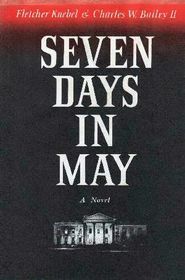
Seven Days in May
"Gentleman Jim" Scott was a brilliant magnetic general. Like a lot of people, he believed the President was ruining the country. Unlike anyone else, he had the power to do something about it, something unprecedented and terrifying. Colonel "Jiggs" Casey was the Marine who accidentally stumbled onto the plot. At first he refused to believe it; then he risked his life and career to inform the President. Jordan Lyman was President of the United States. By the time he was finally able to convince himself of the appalling truth, he had only seven days left to stop a brilliant, seemingly irresistible military plot to seize control of the government of the United States.
Seven Days in May is a political thriller novel written by Fletcher Knebel and Charles W. Bailey II and published in 1962. It was made into a motion picture in 1964, with a screenplay by Rod Serling, directed by John Frankenheimer, and starring Burt Lancaster and Kirk Douglas.
The story is said to have been influenced by the right-wing anti-Communist political activities of General Edwin A. Walker after he resigned from the military. The author, Knebel, got the idea for the book after interviewing then-Air Force Chief of Staff Curtis LeMay.
Seven Days in May is a political thriller novel written by Fletcher Knebel and Charles W. Bailey II and published in 1962. It was made into a motion picture in 1964, with a screenplay by Rod Serling, directed by John Frankenheimer, and starring Burt Lancaster and Kirk Douglas.
The story is said to have been influenced by the right-wing anti-Communist political activities of General Edwin A. Walker after he resigned from the military. The author, Knebel, got the idea for the book after interviewing then-Air Force Chief of Staff Curtis LeMay.
341 pages, Hardcover
First published January 1, 1962
About the author
Fletcher Knebel
60 books29 followersFletcher Knebel was an American author of several popular works of political fiction.
He graduated from high school in Yonkers, New York, spent a year studying at the Sorbonne and graduated from Miami University in Oxford, Ohio in 1934. Upon graduation, he received a job offer from the Coatesville Record, in Coatesville, Pennsylvania. He spent the next 20 years working in newspapers, eventually becoming the political columnist for Cowles Publications. From 1951 to 1964, he satirized national politics and government in a nationally published column called "Potomac Fever".
In 1960, he wrote a chapter on John F. Kennedy for the book Candidates 1960. This seemed to ignite a passion for writing books and he turned his hand to book-length works. He wrote fifteen books, most of them fiction, and all of them dealing with politics. His best-known novel is Seven Days in May (1962), (co-written with Charles W. Bailey), about an attempted military coup in the United States. The book was a huge success, staying at number one on the New York Times bestseller list for almost a year, and was made into a successful film also titled "Seven Days in May" in 1964.
Knebel was married four times from 1935 to 1985. He committed suicide after a long bout with cancer, by taking an overdose of sleeping pills in his home in Honolulu, Hawaii, in 1993. He is the source of the quote: "Smoking is one of the leading causes of statistics."
He graduated from high school in Yonkers, New York, spent a year studying at the Sorbonne and graduated from Miami University in Oxford, Ohio in 1934. Upon graduation, he received a job offer from the Coatesville Record, in Coatesville, Pennsylvania. He spent the next 20 years working in newspapers, eventually becoming the political columnist for Cowles Publications. From 1951 to 1964, he satirized national politics and government in a nationally published column called "Potomac Fever".
In 1960, he wrote a chapter on John F. Kennedy for the book Candidates 1960. This seemed to ignite a passion for writing books and he turned his hand to book-length works. He wrote fifteen books, most of them fiction, and all of them dealing with politics. His best-known novel is Seven Days in May (1962), (co-written with Charles W. Bailey), about an attempted military coup in the United States. The book was a huge success, staying at number one on the New York Times bestseller list for almost a year, and was made into a successful film also titled "Seven Days in May" in 1964.
Knebel was married four times from 1935 to 1985. He committed suicide after a long bout with cancer, by taking an overdose of sleeping pills in his home in Honolulu, Hawaii, in 1993. He is the source of the quote: "Smoking is one of the leading causes of statistics."
Ratings & Reviews
Friends & Following
Create a free account to discover what your friends think of this book!
Community Reviews
Displaying 1 - 30 of 162 reviews

June 19, 2012
He's not the enemy. Scott, the Joint Chiefs, even the very emotional, very illogical lunatic fringe: they're not the enemy. The enemy's an age - a nuclear age. It happens to have killed man's faith in his ability to influence what happens to him. And out of this comes a sickness, and out of sickness a frustration, a feeling of impotence, helplessness, weakness. And from this, this desperation, we look for a champion in red, white, and blue. Every now and then a man on a white horse rides by, and we appoint him to be our personal god for the duration. For some men it was a Senator McCarthy, for others it was a General Walker, and now it's a General Scott.
Democratic presidents have found themselves caught between the enemy abroad and the right wing elements at home.
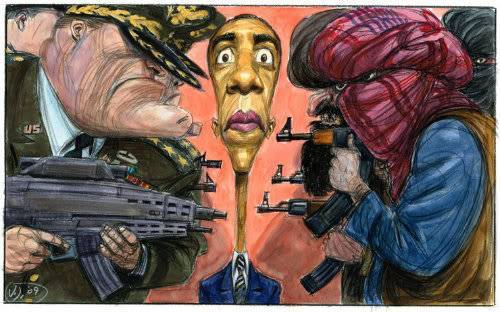
Most recently we saw General Stanley A. McChrystal be arrogantly critical of the current administration while he was commanding operations in Afghanistan. I understand in their world they become GODS. They are controlling the fates of thousands of men and millions of dollars of equipment. They feel like the fate of their nation is resting on their shoulders and their shoulders alone. It is not that big of a leap for them to feel that they know what is best for their nation and that the civilian commander, their boss, really isn't qualified to be making the big decisions to keep the nation safe.

Did I say something wrong?
President John F. Kennedy read this book and thought it was a real possibility that the scenario discussed in this book could happen. The book came out in 1962 and a year later Kennedy was shot and killed in Dallas. The poignant part of the book is the fact that the writers assumed that Kennedy would serve out two terms. They set the book in 1974 and LBJ is only referred to ONCE in the whole book.
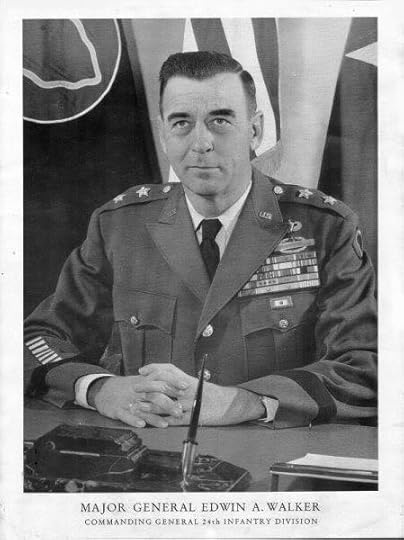
Kennedy had his own run in with a general when Edwin Walker was critical of Eleanor Roosevelt and President Truman in print. Walker was recalled to Washington and he was relieved of his command by the President. Walker was not finished with his place in history. In April of 1963 a bullet hit a casement window near where he was sitting in his house. Marina Oswald later testified that her husband, Lee Harvey Oswald, had targeted Walker for his outspoken conservative views and that he left a letter stating his intentions to her in case he was caught. I haven't researched that event enough to have an opinion on whether Oswald actually pulled the trigger that sent that bullet in Walker's direction.
Speaking of President Truman he had his own famous showdown with a very popular general. Douglas "I have returned." MacArthur disagreed publicly with Truman's policies regarding China and was relieved of his command.

General Douglas MacArthur
In the book Seven Days in May Democratic President Jordan Lyman has signed a treaty with the Soviets for nuclear disarmament that proves to be very unpopular with his constituency. His approval rating falls to a dismal 29%. The dissension from the military is contentious, but as in all command decisions once the decisions is made the military is supposed to put aside their personal feelings and follow the directives of their civilian commander in chief.
Colonel Martin "Jiggs" Casey, from his position in the Pentagon starts to unravel some inconsistencies in what he knows and what he should know. As he puts together the pieces of what has been hidden from him he discovers that the constitution is under threat and a potential cabal is in the wind for a military coup. His boss General James Scott, a dynamic powerful figure not only in the military, but also with the Republican party is at the center of the conspiracy. Jiggs Casey is in an impossible situation with information that requires him to go outside his command structure; and yet, he possess no solid proof to prove his claims.

Kirk Douglas plays Jiggs Casey and Burt Lancaster plays James Scott in the movie released in 1964
There are so many interesting scenes in the book, but as President Lyman becomes more and more convinced that Casey is correct in his assumptions of the facts, he mentally shuffles through his friends and allies and discovers how small a group of men he can actually trust in his own administration. He dispatches this ragtag batch of trustworthy friends around the world to find the proof he needs to head off this very real threat to his administration. The cat and mouse of the book is deftly handled by Knebel and Bailey. I felt the tension as missteps lead the administration to the brink of disaster.
This book is not only well written, but is an important commentary on the state of the nation in 1962. The Cuban Missile Crisis proved the metal of President Kennedy despite the detractors that felt he was soft on Russian excursions. The right wing seems to insist that Democratic presidents are weak on defense and yet President Wilson managed WW1, FDR was a powerful figure in the defense of the nation in WW2, and President Truman made the tough decision, right or wrong, to drop the bombs that ended WW2. I believe that the current president proved his ability to make tough decisions when he gave the order to shoot the Somalian pirates and when he made the decision for the excursion into Pakistan to get Osama Bin Laden. We are all vulnerable to extremists domestic and foreign. The president is elected by the people and any time any faction decides to circumvent the constitution for political reasons we are in danger of never regaining what so many have fought so hard to protect. Our national fears show up in our literature and are as important, in my opinion more important, to understanding our past as nonfiction historical books. Highly Recommended!! Thanks JIM for the recommendation.
If you wish to see more of my most recent book and movie reviews, visit http://www.jeffreykeeten.com
I also have a Facebook blogger page at: https://www.facebook.com/JeffreyKeeten
Democratic presidents have found themselves caught between the enemy abroad and the right wing elements at home.

Most recently we saw General Stanley A. McChrystal be arrogantly critical of the current administration while he was commanding operations in Afghanistan. I understand in their world they become GODS. They are controlling the fates of thousands of men and millions of dollars of equipment. They feel like the fate of their nation is resting on their shoulders and their shoulders alone. It is not that big of a leap for them to feel that they know what is best for their nation and that the civilian commander, their boss, really isn't qualified to be making the big decisions to keep the nation safe.

Did I say something wrong?
President John F. Kennedy read this book and thought it was a real possibility that the scenario discussed in this book could happen. The book came out in 1962 and a year later Kennedy was shot and killed in Dallas. The poignant part of the book is the fact that the writers assumed that Kennedy would serve out two terms. They set the book in 1974 and LBJ is only referred to ONCE in the whole book.
Kennedy had his own run in with a general when Edwin Walker was critical of Eleanor Roosevelt and President Truman in print. Walker was recalled to Washington and he was relieved of his command by the President. Walker was not finished with his place in history. In April of 1963 a bullet hit a casement window near where he was sitting in his house. Marina Oswald later testified that her husband, Lee Harvey Oswald, had targeted Walker for his outspoken conservative views and that he left a letter stating his intentions to her in case he was caught. I haven't researched that event enough to have an opinion on whether Oswald actually pulled the trigger that sent that bullet in Walker's direction.

Speaking of President Truman he had his own famous showdown with a very popular general. Douglas "I have returned." MacArthur disagreed publicly with Truman's policies regarding China and was relieved of his command.

General Douglas MacArthur
In the book Seven Days in May Democratic President Jordan Lyman has signed a treaty with the Soviets for nuclear disarmament that proves to be very unpopular with his constituency. His approval rating falls to a dismal 29%. The dissension from the military is contentious, but as in all command decisions once the decisions is made the military is supposed to put aside their personal feelings and follow the directives of their civilian commander in chief.
Colonel Martin "Jiggs" Casey, from his position in the Pentagon starts to unravel some inconsistencies in what he knows and what he should know. As he puts together the pieces of what has been hidden from him he discovers that the constitution is under threat and a potential cabal is in the wind for a military coup. His boss General James Scott, a dynamic powerful figure not only in the military, but also with the Republican party is at the center of the conspiracy. Jiggs Casey is in an impossible situation with information that requires him to go outside his command structure; and yet, he possess no solid proof to prove his claims.

Kirk Douglas plays Jiggs Casey and Burt Lancaster plays James Scott in the movie released in 1964
There are so many interesting scenes in the book, but as President Lyman becomes more and more convinced that Casey is correct in his assumptions of the facts, he mentally shuffles through his friends and allies and discovers how small a group of men he can actually trust in his own administration. He dispatches this ragtag batch of trustworthy friends around the world to find the proof he needs to head off this very real threat to his administration. The cat and mouse of the book is deftly handled by Knebel and Bailey. I felt the tension as missteps lead the administration to the brink of disaster.
This book is not only well written, but is an important commentary on the state of the nation in 1962. The Cuban Missile Crisis proved the metal of President Kennedy despite the detractors that felt he was soft on Russian excursions. The right wing seems to insist that Democratic presidents are weak on defense and yet President Wilson managed WW1, FDR was a powerful figure in the defense of the nation in WW2, and President Truman made the tough decision, right or wrong, to drop the bombs that ended WW2. I believe that the current president proved his ability to make tough decisions when he gave the order to shoot the Somalian pirates and when he made the decision for the excursion into Pakistan to get Osama Bin Laden. We are all vulnerable to extremists domestic and foreign. The president is elected by the people and any time any faction decides to circumvent the constitution for political reasons we are in danger of never regaining what so many have fought so hard to protect. Our national fears show up in our literature and are as important, in my opinion more important, to understanding our past as nonfiction historical books. Highly Recommended!! Thanks JIM for the recommendation.
If you wish to see more of my most recent book and movie reviews, visit http://www.jeffreykeeten.com
I also have a Facebook blogger page at: https://www.facebook.com/JeffreyKeeten

August 14, 2020
Military Coup d'Etat! But...
IN WASHINGTON???
You got it. We all know certain officers in the American Military were none too pleased with the presidency of JFK...
One has only to think of the Bay of Pigs, or worse, the Cuban Missile Crisis. If you were alive and thinking in the Fall of 1962, you well remember the nightmares and cold sweats you had for a week after the latter, and, if you're like me, long afterward!
But Kennedy, bless his valiant soul, carried it all off without blinking. His was a true contemporary Profile in Courage, to paraphrase the title of his own book of heroism.
But America, and the rest of the Free World, Quaked in their Boots long thereafter, throughout the Cold War!
Cold? The mind games that followed with the Soviet Bloc were downright glacial. As T.S. Eliot says - like "A Game of Chess" - but, back then, it seemed clearly to be more like a nerve-wracking Endgame.
Who still alive still remembers the mournful wail of air raid sirens - installed in big cities soon after - piercing your innocent heart like the Scream of an Undead Banshee, in Disney's contemporaneous flick Darby O'Gill and the Little People?
Plenty among us oldies.
I read Seven Days in 1963 - it had been an eager purchase by Mom for her library.
She knew what was hot and what was not...
Wow, did she know.
So, lucky little me (not) - I lived out that warm weather in an icy state of shock.
Could THAT really happen?
Well, at least we had been well prepped for the following Fall!
November 22, 1963:
Was that the catalyst for this current battle -
Or perhaps the Beginning itself of America's TUMULTUOUS COMING OF AGE?
We'll never know the truth.
That debate still continues to rage.
But as Paul reconciled the warring Greeks and Romans through the Truth of the Gospel...
So too in this current battle, we hope that the Almighty will heal the Wounds of Both Sides, with the Benison of Peace...
BEFORE it's too late.
IN WASHINGTON???
You got it. We all know certain officers in the American Military were none too pleased with the presidency of JFK...
One has only to think of the Bay of Pigs, or worse, the Cuban Missile Crisis. If you were alive and thinking in the Fall of 1962, you well remember the nightmares and cold sweats you had for a week after the latter, and, if you're like me, long afterward!
But Kennedy, bless his valiant soul, carried it all off without blinking. His was a true contemporary Profile in Courage, to paraphrase the title of his own book of heroism.
But America, and the rest of the Free World, Quaked in their Boots long thereafter, throughout the Cold War!
Cold? The mind games that followed with the Soviet Bloc were downright glacial. As T.S. Eliot says - like "A Game of Chess" - but, back then, it seemed clearly to be more like a nerve-wracking Endgame.
Who still alive still remembers the mournful wail of air raid sirens - installed in big cities soon after - piercing your innocent heart like the Scream of an Undead Banshee, in Disney's contemporaneous flick Darby O'Gill and the Little People?
Plenty among us oldies.
I read Seven Days in 1963 - it had been an eager purchase by Mom for her library.
She knew what was hot and what was not...
Wow, did she know.
So, lucky little me (not) - I lived out that warm weather in an icy state of shock.
Could THAT really happen?
Well, at least we had been well prepped for the following Fall!
November 22, 1963:
Was that the catalyst for this current battle -
Or perhaps the Beginning itself of America's TUMULTUOUS COMING OF AGE?
We'll never know the truth.
That debate still continues to rage.
But as Paul reconciled the warring Greeks and Romans through the Truth of the Gospel...
So too in this current battle, we hope that the Almighty will heal the Wounds of Both Sides, with the Benison of Peace...
BEFORE it's too late.

May 21, 2026
A seven-day constitutional crisis unfolds over the course of this suspenseful bestseller of yesteryear. Seven Days in May, the story of a coup attempt against a United States president by leading officers of the United States military, was originally published in 1962; the film adaptation was released in 1964, and the action of the book takes place in a fictive 1972. Yet the book may get at least some contemporary readers thinking back to January 6, 2021.
Fletcher Knebel came from Ohio, and served as a lieutenant in the U.S. Navy during the Second World War. After the war, he worked as a journalist for a number of Pennsylvania newspapers, and eventually started writing a nationally syndicated column of political satire titled “Potomac Fever.” His interest in matters political and military may well have stemmed from those experiences, and he began writing books that prefigure the political thrillers of the present day in their focus on situations that threaten the stability of American democracy. A number of those books – including, most notably, Seven Days in May – were co-written with Charles W. Bailey II, a Minneapolis-based journalist and newspaper editor.
Published in 1962 – the year of the Cuban Missile Crisis – Seven Days in May is set ten years later, in 1972. In the 1972 of this novel, the Cold War is, unsurprisingly, very much in progress. There has been an Iranian War that ended with Iran being partitioned, as Germany and Korea and Vietnam and Yemen were all partitioned during Cold War times. President Jordan Lyman has negotiated a missile disarmament treaty with the Soviet Union, but his poll numbers are slipping amidst a climate of growing distrust that the leaders of the U.S.S.R. can be counted upon to keep their word.
But what happens from Sunday, May 12, through Saturday, May 18, 1972, goes beyond the normal give-and-take of polls and politics. Marine Coionel Martin “Jiggs” Casey, the Pentagon-based director of the Joint Staff that serves the Joint Chiefs of Staff, accidentally comes upon documents indicating that a group of U.S. military officers, led by the highly decorated and wildly popular General James “Gentleman Jim” Scott, may be planning to strip President Lyman of power via a military coup!
A secret military base outside El Paso, Texas, houses the soldiers that would furnish the proverbial muscle. Air Force transport planes have been provided that could transport the soldiers to strategic points across the United States. And a rabble-rousing newspaper columnist, notorious for his virulent opposition to President Lyman’s treaty, seems ready to provide the propaganda cover for this seizure of power – all while Congress is on recess and the Vice President is on a good-will trip to Italy!
The President believes what Colonel Casey is telling him, and begins assembling a team of trusted advisers to seek out ways of preventing this coup attempt from coming to fruition. Yet both President Lyman and his allies are afflicted with self-doubt. The President reflects that “There can’t be a constitutional crisis unless the atmosphere is right, unless people are really worried deep down in their bellies. Are they?” (p. 103)
Colonel Casey meanwhile feels his own doubts – doubts that reflect his role as a serving officer in the United States Marine Corps. “What crazy impulse had sent him to the White House with that nightmare story? How could he have thought of implicating a man of Scott’s stature in a plot that had no basis except a frayed string of coincidences? And he had betrayed his own service. Marines don’t do that” (p. 105).
The efforts by Colonel Casey, President Lyman, and others to uncover solid evidence of the coup attempt run into one setback after another. An advisor who travelled to Gibraltar and obtained documentary evidence of the coup plotters’ schemes is killed in a plane crash outside Madrid. A U.S. Senator who travelled to Texas to investigate the rumours of a secret military base outside El Paso disappears without a trace. And President Lyman reflects disconsolately that what he and his allies have found so far is “Mildly interesting, perhaps, but worthless as evidence….He needed hard-rock evidence to smash this thing, but where was it?” (p. 205)
Yet a crucial, decisive piece of evidence does eventually emerge – evidence that is devastating in its implications. President Lyman, with the power to quash the coup attempt, wants to be sure of doing so in just the right way: “Nothing like this…has ever happened in this country. Needless to say, I don’t want it to happen, but just as important, I don’t want anyone ever to think that it might have happened” (p. 301). And Seven Days in May ends on a hopeful note. Key civilian and military leaders, at a number of crucial points in the novel, independently choose to act in defence of democracy, and the centre holds.
But Knebel and Bailey do not make the triumph of democracy seem assured or inevitable, and it is good that they do not. So many democracies around the world, throughout history, have spiralled down into tyranny, and there is no reason why, under the right circumstances, the same thing could not happen in the United States.
In an important set of reflections that President Lyman offers during the early stages of his and his allies’ plans for trying to prevent General Scott’s military coup, Knebel and Bailey set forth their sense that the advent of nuclear weapons has contributed to a new sense of helplessness and futility among people throughout the United States and around the world.
In this brave new world where “Civilization can go with a moan and a whisper overnight,” President Lyman asks, “how can an individual feel anything but helpless?” The president states that in a democracy, “Each of us has got to feel that we can influence events, no matter how slight the influence”, and then adds that “When people start believing they can’t, they get frustrated, and angry. They feel helpless, and they start going to extremes” (p. 129). As examples of that ready resort to extremism, President Lyman cites the period of Senator Joseph McCarthy’s ascendancy, as well as the power and influence of the John Birch Society.
President Lyman, who emerges from the book’s pages as a truly heroic defender of democracy, states that “democracy works only when a good majority of citizens are willing to give thought and time and effort to their government”, and expresses his concern that “People have seriously started looking for a superman.” Evoking the “Walker affair” of 1961, when President John F. Kennedy relieved General Edwin Walker from command after learning that Walker was seeking to indoctrinate U.S. Army troops with his far-right politics, President Lyman reminds his listeners that “Wise men – and I trust that includes everyone here – know there aren’t any supermen” (p. 130).
When I read these words from the fictional President Jordan Lyman of Seven Days in May, I could not help but think about the current political climate in the U.S.A. during the second Trump administration. The anxieties of our time seem different, in some ways, from those that characterized the Cold War era within which Seven Days in May was written and published. Nowadays, the chief sources of anxiety seem to relate to the rapid rate of technological change. But there are always those who feel that democracy is inadequate to address their most urgent concerns - it's "too slow," it "takes too long," it's not "decisive" enough. And there does seem to be an eagerness, among some Americans, for the rise of an Übermensch, a “superman” – the kind of person whose supporters might depict him as movie super-soldier John Rambo, or as Jesus of Nazareth.
Filmmaker John Frankenheimer’s excellent cinema adaptation of Seven Days in May, released in 1964, plays further upon that theme of the dangers of the would-be Übermensch, through scenes in which the film’s General Scott (played by Burt Lancaster) speaks at rallies while supporters scream his name rapturously, in a manner that might remind some viewers of the behaviour they have seen amongst Trump supporters at Trump rallies. The film’s cast is uniformly excellent (Kirk Douglas as Colonel Casey, and Fredric March as President Lyman, with Ava Gardner, Martin Balsam, and Edmond O’Brien in supporting roles), and the contemporary viewer may be surprised at how modern it all seems.
President Kennedy did not live to see the release of the film Seven Days in May, but – perhaps in part because of the “Walker affair” – he advocated for the making of a film version of the Knebel/Bailey book, believing that the book’s scenario of an attempted coup d’état against the American presidency was only too feasible. Subsequent history shows us, the people of the post-January 6th world, how right President Kennedy was to harbour such concerns.
Fletcher Knebel came from Ohio, and served as a lieutenant in the U.S. Navy during the Second World War. After the war, he worked as a journalist for a number of Pennsylvania newspapers, and eventually started writing a nationally syndicated column of political satire titled “Potomac Fever.” His interest in matters political and military may well have stemmed from those experiences, and he began writing books that prefigure the political thrillers of the present day in their focus on situations that threaten the stability of American democracy. A number of those books – including, most notably, Seven Days in May – were co-written with Charles W. Bailey II, a Minneapolis-based journalist and newspaper editor.
Published in 1962 – the year of the Cuban Missile Crisis – Seven Days in May is set ten years later, in 1972. In the 1972 of this novel, the Cold War is, unsurprisingly, very much in progress. There has been an Iranian War that ended with Iran being partitioned, as Germany and Korea and Vietnam and Yemen were all partitioned during Cold War times. President Jordan Lyman has negotiated a missile disarmament treaty with the Soviet Union, but his poll numbers are slipping amidst a climate of growing distrust that the leaders of the U.S.S.R. can be counted upon to keep their word.
But what happens from Sunday, May 12, through Saturday, May 18, 1972, goes beyond the normal give-and-take of polls and politics. Marine Coionel Martin “Jiggs” Casey, the Pentagon-based director of the Joint Staff that serves the Joint Chiefs of Staff, accidentally comes upon documents indicating that a group of U.S. military officers, led by the highly decorated and wildly popular General James “Gentleman Jim” Scott, may be planning to strip President Lyman of power via a military coup!
A secret military base outside El Paso, Texas, houses the soldiers that would furnish the proverbial muscle. Air Force transport planes have been provided that could transport the soldiers to strategic points across the United States. And a rabble-rousing newspaper columnist, notorious for his virulent opposition to President Lyman’s treaty, seems ready to provide the propaganda cover for this seizure of power – all while Congress is on recess and the Vice President is on a good-will trip to Italy!
The President believes what Colonel Casey is telling him, and begins assembling a team of trusted advisers to seek out ways of preventing this coup attempt from coming to fruition. Yet both President Lyman and his allies are afflicted with self-doubt. The President reflects that “There can’t be a constitutional crisis unless the atmosphere is right, unless people are really worried deep down in their bellies. Are they?” (p. 103)
Colonel Casey meanwhile feels his own doubts – doubts that reflect his role as a serving officer in the United States Marine Corps. “What crazy impulse had sent him to the White House with that nightmare story? How could he have thought of implicating a man of Scott’s stature in a plot that had no basis except a frayed string of coincidences? And he had betrayed his own service. Marines don’t do that” (p. 105).
The efforts by Colonel Casey, President Lyman, and others to uncover solid evidence of the coup attempt run into one setback after another. An advisor who travelled to Gibraltar and obtained documentary evidence of the coup plotters’ schemes is killed in a plane crash outside Madrid. A U.S. Senator who travelled to Texas to investigate the rumours of a secret military base outside El Paso disappears without a trace. And President Lyman reflects disconsolately that what he and his allies have found so far is “Mildly interesting, perhaps, but worthless as evidence….He needed hard-rock evidence to smash this thing, but where was it?” (p. 205)
Yet a crucial, decisive piece of evidence does eventually emerge – evidence that is devastating in its implications. President Lyman, with the power to quash the coup attempt, wants to be sure of doing so in just the right way: “Nothing like this…has ever happened in this country. Needless to say, I don’t want it to happen, but just as important, I don’t want anyone ever to think that it might have happened” (p. 301). And Seven Days in May ends on a hopeful note. Key civilian and military leaders, at a number of crucial points in the novel, independently choose to act in defence of democracy, and the centre holds.
But Knebel and Bailey do not make the triumph of democracy seem assured or inevitable, and it is good that they do not. So many democracies around the world, throughout history, have spiralled down into tyranny, and there is no reason why, under the right circumstances, the same thing could not happen in the United States.
In an important set of reflections that President Lyman offers during the early stages of his and his allies’ plans for trying to prevent General Scott’s military coup, Knebel and Bailey set forth their sense that the advent of nuclear weapons has contributed to a new sense of helplessness and futility among people throughout the United States and around the world.
In this brave new world where “Civilization can go with a moan and a whisper overnight,” President Lyman asks, “how can an individual feel anything but helpless?” The president states that in a democracy, “Each of us has got to feel that we can influence events, no matter how slight the influence”, and then adds that “When people start believing they can’t, they get frustrated, and angry. They feel helpless, and they start going to extremes” (p. 129). As examples of that ready resort to extremism, President Lyman cites the period of Senator Joseph McCarthy’s ascendancy, as well as the power and influence of the John Birch Society.
President Lyman, who emerges from the book’s pages as a truly heroic defender of democracy, states that “democracy works only when a good majority of citizens are willing to give thought and time and effort to their government”, and expresses his concern that “People have seriously started looking for a superman.” Evoking the “Walker affair” of 1961, when President John F. Kennedy relieved General Edwin Walker from command after learning that Walker was seeking to indoctrinate U.S. Army troops with his far-right politics, President Lyman reminds his listeners that “Wise men – and I trust that includes everyone here – know there aren’t any supermen” (p. 130).
When I read these words from the fictional President Jordan Lyman of Seven Days in May, I could not help but think about the current political climate in the U.S.A. during the second Trump administration. The anxieties of our time seem different, in some ways, from those that characterized the Cold War era within which Seven Days in May was written and published. Nowadays, the chief sources of anxiety seem to relate to the rapid rate of technological change. But there are always those who feel that democracy is inadequate to address their most urgent concerns - it's "too slow," it "takes too long," it's not "decisive" enough. And there does seem to be an eagerness, among some Americans, for the rise of an Übermensch, a “superman” – the kind of person whose supporters might depict him as movie super-soldier John Rambo, or as Jesus of Nazareth.
Filmmaker John Frankenheimer’s excellent cinema adaptation of Seven Days in May, released in 1964, plays further upon that theme of the dangers of the would-be Übermensch, through scenes in which the film’s General Scott (played by Burt Lancaster) speaks at rallies while supporters scream his name rapturously, in a manner that might remind some viewers of the behaviour they have seen amongst Trump supporters at Trump rallies. The film’s cast is uniformly excellent (Kirk Douglas as Colonel Casey, and Fredric March as President Lyman, with Ava Gardner, Martin Balsam, and Edmond O’Brien in supporting roles), and the contemporary viewer may be surprised at how modern it all seems.
President Kennedy did not live to see the release of the film Seven Days in May, but – perhaps in part because of the “Walker affair” – he advocated for the making of a film version of the Knebel/Bailey book, believing that the book’s scenario of an attempted coup d’état against the American presidency was only too feasible. Subsequent history shows us, the people of the post-January 6th world, how right President Kennedy was to harbour such concerns.

June 6, 2020
All literature is significantly affected by the socio-cultural and political context it's written in, and that's particularly true for fiction set in a political milieu, like this novel, published in 1962. The atom bomb had been unleashed on the world less than 20 years earlier; the Cold War was in full swing, with two nuclear-armed superpowers confronting each other like scorpions in a bottle. As a kid growing up in that time (I was born in 1952), the very real possibility of sudden nuclear annihilation was a genuine constant backdrop of anxiety in my mind, and most other people's. But while that probably played a big role in convincing me, and many other folks, that the whole idea of deploying WMDs for any reason is completely immoral, for many other people in that era, the Communist menace was seen as an existential threat to humanity qualitatively totally different from anything ever posed before, so that combatting it justified the complete jettisoning of any previous standard of ethics or prudence. Many of the same people regarded any Soviet statement as impossible to trust (an attitude fueled by the Soviet's own total lack of transparency and documented track record of frequent duplicity). As a response to this supposed unique existential threat, in less than 20 years, the traditional American unwillingness to maintain a huge standing military in peacetime had given way to practical universal acceptance of vast standing armed forces and a "military-industrial complex" (President Eisenhower's words) as the new normal. All of these trends form the backdrop that informed the imagining and writing of this novel.
Set mostly in and around Washington, DC (with a few side trips to other locales) the action unfolds in the authors' near future, May 1974. Democratic President Jordan Lyman was elected in 1972, following the U.S. defeat (under a Republican administration) in a conventional war with the Soviet Union, fought in and over Iran. Most of the American people had backed his firm vow, "we'll never yield another inch of free soil, any place, any time." (That would be inconceivable language from any contemporary Democratic officeholder, but in 1962 it would have had a believable Kennedy-esque ring to it.) Now, however, he's negotiated a treaty with the Soviets, Red China, and the other world nuclear powers for a phased and verified total dismantling of all nuclear arms, over a two-year period. The other signatories have all ratified it, and so has the U.S. Senate (by two votes). But it's VERY unpopular, both in the military and with the public as a whole. Now, with a scheduled military exercise approaching, an unguarded chance remark leads protagonist Marine Col. "Jiggs" Casey, a high-placed Pentagon officer, to suspect a plot by the Joint Chiefs of Staff to stage a military coup, replace Lyman with a military dictator, and abrogate the treaty.
The substance of the book revolves around the attempts by Casey, Lyman and their allies to verify the existence of the plot and its extent, and hopefully to counter and head it off; and they don't have much time in which to work (the titular "seven days" is pretty much the time frame here). At 372 pages in the mass-market paperback edition, the pace is fairly quick, and the prose journalistic --the Epilogue actually is the text of a press conference. (Both Knebel and Bailey were working journalists, big-city newspaper reporters.) With its high-stakes premise and fast unfolding action, it could be characterized as a "thriller;" but it's important to note that it's not a violent thriller in the manner of more recent authors like Clancy and Ludlum, who may mine similar territory. We don't have gun battles or martial-arts fights here; we're more in the realm of detection than action adventure. It's more plot-driven than character-driven, though some of the characters were vivid enough to stay with me after over 50 years, and some might say that the denouement is too tidy. Bad language wasn't significant enough to bother me, and there's no explicit sex, though the authors take too cavalier an attitude towards the protagonist's marital infidelity. (I'd make the same criticism of a novel Knebel later wrote by himself, Night of Camp David, though I've only read that one in a condensed version.)
Obviously, the unfolding events of nearly 60 years can give us a different perspective on the particular scenario of events that the authors create, and present as possible. In hindsight, we can see that they were too optimistic, in one sense. Nuclear arms are still with us in 2020, more proliferated than before, and no U.S. administration, Democratic or Republican, and no other major power even now, let alone in 1974, has ever proposed that they be completely dismantled. (Iranian President Ahmadinejad, though not renowned for his moderation on most points, actually proposed the idea during his administration in an interview by Time magazine --which I read-- but world news media in general ignored it.) On the other hand, the authors were too pessimistic in another sense. Subsequent U.S. administrations, of both establishment parties, went on to negotiate a whole series of limitations and eventually reductions of nuclear arms; and though some U.S. generals may have been very attached to their nukes, they learned to live with these treaties without resorting to a military coup. But that particular scenario, possibly, isn't ultimately the most important take-away from the book. Neither is it a real treatment of the moral questions that surround nuclear force; those are never actually directly confronted in the book. The really significant message here is about the idea of democratic government, the rule of law under our Constitution, and why that matters. In that respect, it's as valid a message today as it was in 1962.
Set mostly in and around Washington, DC (with a few side trips to other locales) the action unfolds in the authors' near future, May 1974. Democratic President Jordan Lyman was elected in 1972, following the U.S. defeat (under a Republican administration) in a conventional war with the Soviet Union, fought in and over Iran. Most of the American people had backed his firm vow, "we'll never yield another inch of free soil, any place, any time." (That would be inconceivable language from any contemporary Democratic officeholder, but in 1962 it would have had a believable Kennedy-esque ring to it.) Now, however, he's negotiated a treaty with the Soviets, Red China, and the other world nuclear powers for a phased and verified total dismantling of all nuclear arms, over a two-year period. The other signatories have all ratified it, and so has the U.S. Senate (by two votes). But it's VERY unpopular, both in the military and with the public as a whole. Now, with a scheduled military exercise approaching, an unguarded chance remark leads protagonist Marine Col. "Jiggs" Casey, a high-placed Pentagon officer, to suspect a plot by the Joint Chiefs of Staff to stage a military coup, replace Lyman with a military dictator, and abrogate the treaty.
The substance of the book revolves around the attempts by Casey, Lyman and their allies to verify the existence of the plot and its extent, and hopefully to counter and head it off; and they don't have much time in which to work (the titular "seven days" is pretty much the time frame here). At 372 pages in the mass-market paperback edition, the pace is fairly quick, and the prose journalistic --the Epilogue actually is the text of a press conference. (Both Knebel and Bailey were working journalists, big-city newspaper reporters.) With its high-stakes premise and fast unfolding action, it could be characterized as a "thriller;" but it's important to note that it's not a violent thriller in the manner of more recent authors like Clancy and Ludlum, who may mine similar territory. We don't have gun battles or martial-arts fights here; we're more in the realm of detection than action adventure. It's more plot-driven than character-driven, though some of the characters were vivid enough to stay with me after over 50 years, and some might say that the denouement is too tidy. Bad language wasn't significant enough to bother me, and there's no explicit sex, though the authors take too cavalier an attitude towards the protagonist's marital infidelity. (I'd make the same criticism of a novel Knebel later wrote by himself, Night of Camp David, though I've only read that one in a condensed version.)
Obviously, the unfolding events of nearly 60 years can give us a different perspective on the particular scenario of events that the authors create, and present as possible. In hindsight, we can see that they were too optimistic, in one sense. Nuclear arms are still with us in 2020, more proliferated than before, and no U.S. administration, Democratic or Republican, and no other major power even now, let alone in 1974, has ever proposed that they be completely dismantled. (Iranian President Ahmadinejad, though not renowned for his moderation on most points, actually proposed the idea during his administration in an interview by Time magazine --which I read-- but world news media in general ignored it.) On the other hand, the authors were too pessimistic in another sense. Subsequent U.S. administrations, of both establishment parties, went on to negotiate a whole series of limitations and eventually reductions of nuclear arms; and though some U.S. generals may have been very attached to their nukes, they learned to live with these treaties without resorting to a military coup. But that particular scenario, possibly, isn't ultimately the most important take-away from the book. Neither is it a real treatment of the moral questions that surround nuclear force; those are never actually directly confronted in the book. The really significant message here is about the idea of democratic government, the rule of law under our Constitution, and why that matters. In that respect, it's as valid a message today as it was in 1962.

September 10, 2018
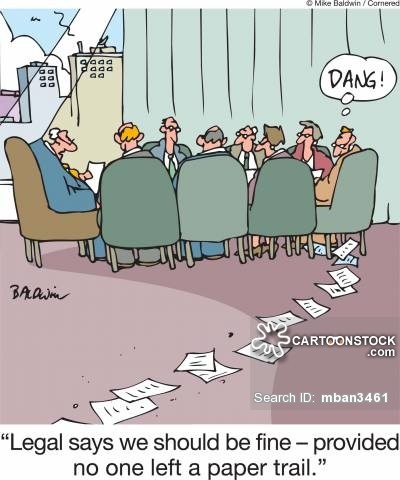
Well, you see, a certain charismatic narcissistic military general feels that he could make a better leader so he steals from a govt fund, and with this secret force tucked far into the desert, feels that he could mount a military coup.

I can see just why Rachel Maddow recommended this on her show last week, what with the shadow govt op-ed in NYT, and the archaic language and gothic terminology leading us to think* that it was penned by an elderly military sort with pseudo-evangelical ties, deeply goppered, and with no regrets for any of the foul things that have been achieved during the co-conspirator in chief's tenure so far.
*Or someone in the White House is trying to frame someone else. I do remember the house witch was bragging about how she can, and does, send trumpy tweets, even inserting spelling errors. She also intimated that she studies then mimics the style of others.
TRMS also recommended Night of Camp David by this same author.

December 29, 2010
I was giving a keynote at the Santa Barbara Writers Conference a few years back and brought this book and movie up. I asked how many people in the audience of 500 had read it or watched the movie.
Zero.
I was stunned.
If you don't think it could happen, think again.
This is a classic book and the movie was very well done. Burt Lancaster and Kirk Douglas. The way Douglas uncovers the plot from just a few clues, and then his heroism in going to the President is classic.
Zero.
I was stunned.
If you don't think it could happen, think again.
This is a classic book and the movie was very well done. Burt Lancaster and Kirk Douglas. The way Douglas uncovers the plot from just a few clues, and then his heroism in going to the President is classic.

September 19, 2009
Published in 1962, SEVEN DAYS IN MAY is a novel of its era. The dire threat of nuclear annihilation at the height of the Cold War permeates the story (I won't summarize the plot here). And yet SEVEN DAYS could also well be ripped from today's headlines. Moreover it gets bonus points for the shout out of my hometown: Warrenton, VA. The suspense is well-paced and not the overheated melodrama many thrillers now use. The U.S. President snagged in a frightening web of betrayal and conspiracy finds out how lonely it really is at the top. He's perhaps the most intriguing character. Sure, the patches of dialogue sound a bit corny, but the prose is robust. Everybody smoking (the president prefers a pipe) anywhere they please is amusing. A movie was made from the novel, and I believe I've seen parts. Definitely check out SEVEN DAYS if you liked WEST WING (I did) on TV.

December 6, 2017
Few Cold War thrillers from the ‘60s hold up especially well today, so the quality of Seven Days in May was a pleasant surprise. Fletcher Knebel and Charles Bailey, both political journalists, craft a chillingly plausible portrait of an incipient military coup, triggered by a President’s conciliatory attitude towards the USSR and a mad General’s overweening ambitions. First published when John F. Kennedy’s feud with the Joint Chiefs over nuclear negotiations and policy towards Cuba was headline news, the book seemed chillingly plausible in its time (more so after Kennedy’s assassination) and remains a potent read now. The character sketches are simple but sharp (especially General Scott, the swaggering villain modeled on Edwin Walker who views democracy as an impediment to the country’s survival), the drama tautly paced and the plot meticulously constructed in approved thriller fashion, with telling details and whispered conversations generating tension as the protagonists navigate General Scott’s tangled plots. Undoubtedly a product of its time (as evinced by the characters’ attitudes towards women and some comments about the “big Negro” in the President’s cabinet) but still highly enjoyable; it’s certainly disturbing to read in 2021, with a real (if nowhere near as well-orchestrated) coup d’etat in recent memory. John Frankenheimer’s film version, starring Kirk Douglas, Burt Lancaster and Frederic March, is well-made but adds an unnecessary romantic subplot and some liberal speechmaking that jar with the docudrama approach.

May 26, 2023
It can't happen here?
No one believes a coup could take place in the United States of America. It's simply not possible. This is America. That sort of thing cannot happen here.... Right?
President Jordan Lyman has brokered a deal with the Soviet Union for nuclear disarmament. It's the only way to ensure the world will not be destroyed. But military leadership in the U.S. does not agree. They do not believe the Russians will uphold their end of the deal, and they voice this before the senate.
When Colonel Casey, military aide to the Chairman of the Joint Chiefs of Staff, comes across startling information, he decides he must act, and brings what he learns to the attention of President Lyman. "Speak plainly," the president insists.
"What I'm trying to tell you, Mister President," Casey begins, "is that I believe there is a plot to overthrow the government by military coup, and it's going to happen in the next seven days."
And so, the President puts together a team to first determine if such a plot is in the works, and then decide on how to stop it. But really, can such a thing happen.... Here, in America?
I'm a fan of the movie with Burt Lancaster, Kirk Douglas, and many more of my favorite actors, but this is the first time I read the book. I bought it shortly after the GOP refused to accept the election results of November 2020, myself wondering what their course of action would be. Well, we got a taste of that action on January 6, 2021. The man pages in the story of 'Seven Days in May' standing out in my mind are, "If the political climate is just right, then yes, a coup could take place in America."
Unbelievable?
I highly recommend this book because it is well written and truly reflects of the divisions existing in our country today. I also believe this sort of thing will occur again because many of the perpetrators are still free (if you can believe that!). The book brings to light the cost we pay for doing nothing. But if a plot is in the works to replace our democracy with a dictatorship, exactly what 'can' we do about it?
No one believes a coup could take place in the United States of America. It's simply not possible. This is America. That sort of thing cannot happen here.... Right?
President Jordan Lyman has brokered a deal with the Soviet Union for nuclear disarmament. It's the only way to ensure the world will not be destroyed. But military leadership in the U.S. does not agree. They do not believe the Russians will uphold their end of the deal, and they voice this before the senate.
When Colonel Casey, military aide to the Chairman of the Joint Chiefs of Staff, comes across startling information, he decides he must act, and brings what he learns to the attention of President Lyman. "Speak plainly," the president insists.
"What I'm trying to tell you, Mister President," Casey begins, "is that I believe there is a plot to overthrow the government by military coup, and it's going to happen in the next seven days."
And so, the President puts together a team to first determine if such a plot is in the works, and then decide on how to stop it. But really, can such a thing happen.... Here, in America?
I'm a fan of the movie with Burt Lancaster, Kirk Douglas, and many more of my favorite actors, but this is the first time I read the book. I bought it shortly after the GOP refused to accept the election results of November 2020, myself wondering what their course of action would be. Well, we got a taste of that action on January 6, 2021. The man pages in the story of 'Seven Days in May' standing out in my mind are, "If the political climate is just right, then yes, a coup could take place in America."
Unbelievable?
I highly recommend this book because it is well written and truly reflects of the divisions existing in our country today. I also believe this sort of thing will occur again because many of the perpetrators are still free (if you can believe that!). The book brings to light the cost we pay for doing nothing. But if a plot is in the works to replace our democracy with a dictatorship, exactly what 'can' we do about it?

May 15, 2013
Reading this book, which was originally published in the 1960s, was interesting in the context of today's political landscape. It was written in a time when people treated the president with integrity and respect, instead of treating him and speaking to him like he's a vagabond on welfare.
The book was good and well-written but I had a selfish reaction to it. I was constantly comparing the world of the 1960s (the book is set in 1974, but that was the future at the time) to the world of today. People in the press were different, mostly because of the difference in the news cycle; people in the government were different and were shown to have respect for each other and their offices; and when one of the characters is found to be having an affair, there is actual debate over whether to destroy the man by publicizing it. That would certainly not happen today in our world of exotic mistresses and wide stances.
I did enjoy the book, even though it's not really my favorite genre. There's just so much to learn about our current lives by looking into the past couple of generations.
The book was good and well-written but I had a selfish reaction to it. I was constantly comparing the world of the 1960s (the book is set in 1974, but that was the future at the time) to the world of today. People in the press were different, mostly because of the difference in the news cycle; people in the government were different and were shown to have respect for each other and their offices; and when one of the characters is found to be having an affair, there is actual debate over whether to destroy the man by publicizing it. That would certainly not happen today in our world of exotic mistresses and wide stances.
I did enjoy the book, even though it's not really my favorite genre. There's just so much to learn about our current lives by looking into the past couple of generations.
April 9, 2022
"Where did you get the idea for the military coup in your novel?" Gore Vidal Once asked Fletcher Knebel. "From talking to the Joint Chiefs of Staff" he replied. They told me how easy it would be to get rid of President Kennedy." JFK, who had read this novel, agreed that the logistics of a military coup made in USA would not be all that difficult but that, "politically, it requires another Bay of Pigs like disaster combined with a revival of McCarthyism." Generals plotting the overthrow of the US government would probably not be able to hold their secret for very long, nor construct a base of operations where all the men kept quiet, and this part of the plot requires a suspension of disbelief. You also wonder how one patriotic officer could stop all this simply by informing the President. This chiller seems more timely than when it was published in the early Sixties.
January 19, 2017
Six word book review: You thought your week was stressful?

May 22, 2022
My “month in the title” book for May a rereading of a book I read 50 ish years ago. My first “count down” book, where the fate of the nation depends on a small group of high ranking men, including the president, stopping a coup by the US top generals in nearly all branches of the service. Cold War scenario, an unpopular US president thought to be gutless and weak on defense, diabolical Russians and a suspect nuclear disarmament treaty, hawkish US generals and a like-minded super popular media personality (gadzooks!) to get their point across. I enjoyed the book, it’s a bit of a civics lesson on how the government is supposed to work, definitely felt dated (written in 1962) But still a good read. I now want to see the movie, with Bert Lancaster, Kirk Douglas, Ava Gardner, gets 92% on rotten tomatoes.

July 24, 2017
A really propulsive page turner and a fine thriller. I couldn't resist reading this after just finishing "How to Stage a Military Coup." It was kismet! I must say, knowing what I know after reading that book: poor operational security really sabotaged the joint chiefs' coup d'etat here.
The word is that Kennedy read this book and encouraged his producer friends in Hollywood to make it into a movie because he was slightly paranoid that such a thing might actually come to pass. Of course in this book the intelligence agencies don't have anything to do with the putsch. There's the rub. No wonder JFK never saw that bullet in Dealey Plaza coming.
The word is that Kennedy read this book and encouraged his producer friends in Hollywood to make it into a movie because he was slightly paranoid that such a thing might actually come to pass. Of course in this book the intelligence agencies don't have anything to do with the putsch. There's the rub. No wonder JFK never saw that bullet in Dealey Plaza coming.

October 25, 2024
Is a military coup possible in today's United States? Recent comments by former officers about a candidate for office make Knebel's masterwork more relevant than ever.
What if Jordan Lyman was a criminal cult leader considered by the generals to be a threat to national security? What if the president was a stooge of a hostile foreign power? How might the generals react? With whom would the reader empathize?
Depending on events to come, a military coup in the United States might not only become thinkable but also inevitable.
What if Jordan Lyman was a criminal cult leader considered by the generals to be a threat to national security? What if the president was a stooge of a hostile foreign power? How might the generals react? With whom would the reader empathize?
Depending on events to come, a military coup in the United States might not only become thinkable but also inevitable.
April 10, 2015
The movie is a long-time favorite, but I had never read the book until now. The screenplay follows the book closely (Fletcher Knebel is listed as co-author of the script), and so the same tight, tense progression of events you see in the film is also there in the novel. One of the few books I truly found hard to put down!

September 15, 2018
2 1/2 stars. After the months I put into reading this, it was disappointing. No real twists, very middle-of-the-road politically, and I was let down by the treachery of the Russians (I guess that was a twist). The movie looks better—it’s the only part of Frankenheimer’s “paranoid trilogy” I have yet to see. I can’t wait. But the book was a letdown.
May 4, 2017
Just finished reading "Seven Days in May," a political thriller written in 1962 about an attempt to overthrow a President who many see as weak and mentally unstable and whose dealings with Russia threaten to push the US to the brink of nuclear war. Ya know, fiction.
November 28, 2017
I first read this book when I was in high school, and that was a long time ago! If you can find a copy of this 1962 novel about a military plot to overthrow the U.S. President, I would encourage everyone to read it. It's a real thriller, one that I had a hard time putting down.

November 10, 2022
3 starts for the audio book despite an all-star cast in the reading. The audiobook was released decades after the 1962 novel and subsequent film of 1964, a film of 4.5 stars in my humble opinion. I believe some of the confusion some may have in the differences of the novel and audiobook are simply from the structural changes of the government under the Goldwater Nichols Act and other legislation that significantly restructured and curtailed much of the autonomous authorities of the Joint Chiefs. The 1986 legislation significantly changed the organization and authorities of the military, in many ways ensuring a Seven Days in May scenario would be an unlikely eventuality.
Although not an academic piece, the film has been used in military colleges and some business leadership schools to illustrate changes in the military-civilian relationships as well as discussing hypothetical morality and decision making processes.
The original text is an A+ work as is the film.
Although not an academic piece, the film has been used in military colleges and some business leadership schools to illustrate changes in the military-civilian relationships as well as discussing hypothetical morality and decision making processes.
The original text is an A+ work as is the film.

December 24, 2020
Would there be any better than right now to enjoy a radio theater version of Seven Days in May? Like General James Scott, Donald Trump insists that the Constitutional is expendable when election outcomes aren’t to their liking. How inspiring it is to see democracy triumph over demagoguery!
I leave you with the words of President Lyman Johnson (as played by Edward Asner):
I leave you with the words of President Lyman Johnson (as played by Edward Asner):
Do not weep for your country. Do not listen to the whispers, for they are wrong. We remain strong and proud, peaceful and patient, ready to sacrifice, always willing to help others who seek their way out of the long tunnels of tyranny. God bless you all!

June 9, 2017
Look at the news...this book IS prophetic! This will happen. It's only a matter of...WHEN.

July 2, 2019
Very good read, keeps you guessing. I think something like this could happen, if we have a lame president, or one that has no respect for the office.

March 3, 2020
What an amazing fiction novel. Written in the era (1962) before Brad Thor and David Baldacci.

March 20, 2016
This was the #7 bestseller in 1962. I wasn't expecting much but it was great. A political thriller inspired by Cold War fears and possibly based on an actual incident.
For some reason I couldn't fathom, the authors (both news men in their day jobs) set the book in the early 1970s. That really dates it because the early 70s were not much like the way they were portrayed in the book.
The fictional President of the United States, fairly new in office, has managed to put together a disarmament agreement with the USSR intended to put an end to nuclear weapons. His popularity is at an all-time low in the polls. In contrast, that of the Chairman of the Joint Chiefs of Staff has soared. Even though the legislative branches have ratified the treaty, the American people and much of the military are afraid and doubtful that the Soviets will stick to the agreements, and expect WWIII will break out at any moment.
This Joint Chiefs of Staff Chairman is organizing a military coup! The President gets wind of it and has seven days to stop it. Imagine, just imagine, if our military were running the country; something that has happened many times the world over, including at different times in the Roman Empire.
Once all the characters were in place ( and I had done my study of what and who the Joint Chiefs of Staff are), the story took off and was exciting, full of tension, and quite convincing.
High points for me:
1. Understanding the conflicts between the military and the Federal government.
2. The power of a President who actually believes in the Constitution and has the overall welfare of the citizens he governs as his prime concern.
3. The absolute agreement to follow orders, no matter what, in the military mindset.
This novel is quite relevant to today's concerns. I think most US citizens, of any political party, would do well to read it. It is a complement to that other 1962 bestseller, Fail-Safe. It has been enlightening to read both of these novels and then Voices From Chernobyl within a few months of each other. The novels demonstrate how much nuclear weapons were feared in the 1960s. Voices From Chernobyl shows how much our fear of nuclear power has receded into the background.
There is a movie. I will be watching it.
For some reason I couldn't fathom, the authors (both news men in their day jobs) set the book in the early 1970s. That really dates it because the early 70s were not much like the way they were portrayed in the book.
The fictional President of the United States, fairly new in office, has managed to put together a disarmament agreement with the USSR intended to put an end to nuclear weapons. His popularity is at an all-time low in the polls. In contrast, that of the Chairman of the Joint Chiefs of Staff has soared. Even though the legislative branches have ratified the treaty, the American people and much of the military are afraid and doubtful that the Soviets will stick to the agreements, and expect WWIII will break out at any moment.
This Joint Chiefs of Staff Chairman is organizing a military coup! The President gets wind of it and has seven days to stop it. Imagine, just imagine, if our military were running the country; something that has happened many times the world over, including at different times in the Roman Empire.
Once all the characters were in place ( and I had done my study of what and who the Joint Chiefs of Staff are), the story took off and was exciting, full of tension, and quite convincing.
High points for me:
1. Understanding the conflicts between the military and the Federal government.
2. The power of a President who actually believes in the Constitution and has the overall welfare of the citizens he governs as his prime concern.
3. The absolute agreement to follow orders, no matter what, in the military mindset.
This novel is quite relevant to today's concerns. I think most US citizens, of any political party, would do well to read it. It is a complement to that other 1962 bestseller, Fail-Safe. It has been enlightening to read both of these novels and then Voices From Chernobyl within a few months of each other. The novels demonstrate how much nuclear weapons were feared in the 1960s. Voices From Chernobyl shows how much our fear of nuclear power has receded into the background.
There is a movie. I will be watching it.
Want to Read
March 3, 2019Synopsis: Jim Scott was a magnetic general. He has the power to get rid of the President who, he feels, is ruining the US. His plot is discovered.

June 29, 2018
I loved this book. It was written in 1962 but seems relevant in today's political landscape. A United States president becomes very unpopular and many millions say he is ruining the country. The only person who can do something to remove him is a general who is popular among the troops. A high ranking marine officer stumbles onto the plot to overthrow the president and risks his life to inform the president. The interesting part of the book is that it was set in 1974, which was the future because it had been written in '62. LBJ is referred to once and the threat of nuclear annihilation always exists in the background here. Despite not having come to pass by 1974, as the book predicted, I think it is prophetic. It is not a matter of if, but when.
July 5, 2017
An engaging thriller, and much more credible than the likes THE MANCHURIAN CANDIDATE. But I can't help being irked by the assumption (much more rife then) that it is the evilrightwingers under the bed we need to be afraid of.
Note: A scheduled ad for the movie version was to have the splash line "IMPEACH, HELL! THERE ARE BETTER WAYS TO GET RID OF HIM." The MPAA Advertising Code, then administered by my father, squelched this. Fortunately for the studio, as it was to be run on November 23rd, 1963
Note: A scheduled ad for the movie version was to have the splash line "IMPEACH, HELL! THERE ARE BETTER WAYS TO GET RID OF HIM." The MPAA Advertising Code, then administered by my father, squelched this. Fortunately for the studio, as it was to be run on November 23rd, 1963

April 12, 2022
Interesting read I love the idea the plot itself and the development is great, I'd give it five stars except the end is no good and the subtle praise of fdr/jfk and demonization of mccarthy/macarthur among others as well as the usual putting down the opposite side with the word fascist(an old alinsky trick.) If you can get past this you enjoy the story but at it's climax it seems boring and Lyman is weak in the story, ironic seeing alot of this would happen again and again in our history. Still better than the movie and glad I own a copy.

June 3, 2025
Fletcher Knebel and Charles W. Bailey II's 1962 Seven Days in May takes place in a world just a decade from its time of writing, not too long after the United States fought the Communist invaders to a draw in a then-contemporary Shah-type Iran. "[T]he partition of that country was the blackest mark in American diplomatic history," causing a "top-heavy majority" of angry voters to sink the reelection bid of "Republican President Edgar Frazier in the 1972 election" (1963 Bantam paperback, page 15).
The current President is Democrat Jordan Lyman, whose stirring speech promised, "We will talk till eternity, but we will never yield an inch of free soil, any place, any time" (page 15). The thing is, though, now Lyman is in hot water, with polls showing only 29% approval after he has "forced" a new disarmament treaty "through the Senate with only two votes to spare over the required two-thirds majority" (page 25). And this treaty is a doozy--high-minded and ambitious, yet fraught with peril.
In this once-near future, the superpowers' deterrent weapon is the "neutron bomb," which from the early year of writing I take to be a simply a new super-duper type of nuclear weapon, as opposed to the enhanced radiation bombs with much lower blast yields that became controversial in our real-life 1980s. In any event, on July 1st both the United States and the Soviet Union,
"under the eyes of Indian and Finnish inspectors, [are] to dismantle ten neutron bombs. Each month more bombs would be dismantled, not only by Russia and the United States, but also by the other Western and Communist nuclear powers. All of them, including Red China, had subsequently ratified the treaty. The process would continue until the nuclear lockers of both East and West were bare. The target date for completion was two years hence." (page 25-26)
Neat trick, huh?
Obviously, even in our own world of mature satellite reconnaissance 60-odd years later, such a treaty could not be monitored without on-site inspections, but...oh, well. At the Washington cocktail-party assertion that "if Russia reneges or cheats, we know it immediately and the deal is off" (page 26), I guess we just have to shrug here. Certainly other party guests do not, however, with an influential Senator grumbling that "[t]he last time" such logic was used, it "was supposed to settle the Iran business," and yet "[s]ix months later the country was flooded with Soviet guerrillas and now we're left with two Irans, one of them Communist" (page 26).
So the treaty has tanked Lyman's popularity, and the country is "in a sullen mood," "apprehensive over the treaty" and "wary" of being left open to a surprise attack, "angered" by a labor strike at the California missile plant that should be producing the new ballistic missile needed in case the treaty fails, and "worried about unemployment and inflation" (page 2). There also is discontent throughout the military at the way "pay and prestige" have been "whittled away" and "half the fringe benefits [are] gone" (page 19), not to mention distrust of a President who, as the pugnacious Senator asserts, "negotiated this treaty in defiance of the facts of life" (page 26).
The Joint Chiefs of Staff had argued strongly against the new disarmament treaty prior to ratification, believing it especially "too vague on the question of the inspection of new nuclear construction" (page 113). And although the Chair of the Joint Chiefs himself, General "Gentleman Jim" Scott of the Air Force, highly decorated and "by all odds the most popular figure in uniform and probably in the United States" (page 6), a man with "Eisenhower's warm personality and appealing grin, plus MacArthur's brilliant mind, tough patriotism and slightly histrionic flair for leadership," in public has always "kept his disagreement in proper bounds" (page 36), in private "[h]e thinks it's a terrible mistake..., a tragic one" (page 73).
In addition to his opposing "testimony on the Hill," Scott appears to have stretched a point and "leaked some stories to the newspapers" (page 73) as well, and upon questioning in executive session of the Armed Services Committee he warns, as if reluctantly, that "we are entering a period so dangerous that we may face some factors that are totally unexpected" (page 113). Even without the treaty, knowledgeable cocktail-party talk sees "reasonable odds that the Republicans nominate General Scott in '76. It's a natural. He's got the personality. If anything goes wrong with the treaty, he's solidly against it. And if it works, people will be worrying about Russia's conventional forces and will want a strong man like Scott" (page 27).
And yet... Well, what if the General believes that the "treaty was the act of a naive boy" and that since "[t]he public has no faith in" Lyman, "[u]nless the country is rallied by a voice of authority and discipline, it can be lost in a month"? After all, as he "snap[s]," "Some men act. Others talk" (page 328).
When Marine Corps Colonel "Jiggs" Casey, "director of the Joint Staff, the select group of two hundred officers that served as the research and planning agency for the Joint chiefs of Staff" (page 2), first hears from a fellow officer of the Pentagon "all-service code room" (page 5) about Scott's coded outgoing message "about some kind of betting pool on the Preakness," Jiggs first merely shrugs, "Well, General Scott knows his horses" (page 7). He dutifully admonishes the Navy man about having made a copy of the message (page 7), but then later, when he gently ribs Colonel Murdock, "Scott's personal aide" (page 10), about the wee peccadillo, Murdock's brush-off is faintly "frost[y]" (page 16).
This isn't any huge issue--in terms of "personal traffic," "the chairman traditionally has been granted some courtesies," explains Scott smoothly later (page 321)--nor is it particularly odd that the next secret "All Red alert" surprise-attack drill has been scheduled for the day of the horserace. In fact, Jiggs thinks the chosen date and the betting pool might be a "cute" way to make those about to be tested "relax an extra notch, surmising that Scott was sure to be up at Pimlico for the race" (page 11).
Now, it is a little interesting, perhaps, that the timing is being "so closely held," known only to the five Joint Chiefs, the President, Murdock, and Jiggs, but the previous "All Red, six weeks ago, had pleased no one," with "[b]its of snafu...leak[ing] into the press," and "Scott, who rarely lost his temper, [getting] mad" (page 10). Clearly, this time the demanding Scott wants a better showing, not one with "[t]two carrier attack forces caught in port" and two-thirds of SAC bombers still caught on their fields (page 10).
But then other little oddities come Casey's way, none of which is particular suspicious at all, yet when added up-- Well, Jiggs finds the "[b]its and pieces...swirl[ing] in [his] mind," and "[h]e struggle[s] to sort them out," feeling "uneasiness" and "anxiety" (page 62)...until finally he makes a very unusual out-of-channels telephone call (page 63).
I won't say any more about the plot, whether the clues Jiggs finds or the actions he and others take, because the reader's journey will be a tense and enjoyable one. Oh-- And I won't comment on any differences between the book and the 1964 film starring Burt Lancaster and Kirk Douglas and Frederic March, by the way, since I've never seen it, but of course the text gives a lot more backstory and supposition and whatnot than a movie ever could.
In short, Fletcher Knebel and Charles W. Bailey II's Seven Days in May is a taut and well-crafted thriller with the fate of the very constitutional structure of the nation itself hanging in the balance, a rich and ultimately provocative 5-star read.
The current President is Democrat Jordan Lyman, whose stirring speech promised, "We will talk till eternity, but we will never yield an inch of free soil, any place, any time" (page 15). The thing is, though, now Lyman is in hot water, with polls showing only 29% approval after he has "forced" a new disarmament treaty "through the Senate with only two votes to spare over the required two-thirds majority" (page 25). And this treaty is a doozy--high-minded and ambitious, yet fraught with peril.
In this once-near future, the superpowers' deterrent weapon is the "neutron bomb," which from the early year of writing I take to be a simply a new super-duper type of nuclear weapon, as opposed to the enhanced radiation bombs with much lower blast yields that became controversial in our real-life 1980s. In any event, on July 1st both the United States and the Soviet Union,
"under the eyes of Indian and Finnish inspectors, [are] to dismantle ten neutron bombs. Each month more bombs would be dismantled, not only by Russia and the United States, but also by the other Western and Communist nuclear powers. All of them, including Red China, had subsequently ratified the treaty. The process would continue until the nuclear lockers of both East and West were bare. The target date for completion was two years hence." (page 25-26)
Neat trick, huh?
Obviously, even in our own world of mature satellite reconnaissance 60-odd years later, such a treaty could not be monitored without on-site inspections, but...oh, well. At the Washington cocktail-party assertion that "if Russia reneges or cheats, we know it immediately and the deal is off" (page 26), I guess we just have to shrug here. Certainly other party guests do not, however, with an influential Senator grumbling that "[t]he last time" such logic was used, it "was supposed to settle the Iran business," and yet "[s]ix months later the country was flooded with Soviet guerrillas and now we're left with two Irans, one of them Communist" (page 26).
So the treaty has tanked Lyman's popularity, and the country is "in a sullen mood," "apprehensive over the treaty" and "wary" of being left open to a surprise attack, "angered" by a labor strike at the California missile plant that should be producing the new ballistic missile needed in case the treaty fails, and "worried about unemployment and inflation" (page 2). There also is discontent throughout the military at the way "pay and prestige" have been "whittled away" and "half the fringe benefits [are] gone" (page 19), not to mention distrust of a President who, as the pugnacious Senator asserts, "negotiated this treaty in defiance of the facts of life" (page 26).
The Joint Chiefs of Staff had argued strongly against the new disarmament treaty prior to ratification, believing it especially "too vague on the question of the inspection of new nuclear construction" (page 113). And although the Chair of the Joint Chiefs himself, General "Gentleman Jim" Scott of the Air Force, highly decorated and "by all odds the most popular figure in uniform and probably in the United States" (page 6), a man with "Eisenhower's warm personality and appealing grin, plus MacArthur's brilliant mind, tough patriotism and slightly histrionic flair for leadership," in public has always "kept his disagreement in proper bounds" (page 36), in private "[h]e thinks it's a terrible mistake..., a tragic one" (page 73).
In addition to his opposing "testimony on the Hill," Scott appears to have stretched a point and "leaked some stories to the newspapers" (page 73) as well, and upon questioning in executive session of the Armed Services Committee he warns, as if reluctantly, that "we are entering a period so dangerous that we may face some factors that are totally unexpected" (page 113). Even without the treaty, knowledgeable cocktail-party talk sees "reasonable odds that the Republicans nominate General Scott in '76. It's a natural. He's got the personality. If anything goes wrong with the treaty, he's solidly against it. And if it works, people will be worrying about Russia's conventional forces and will want a strong man like Scott" (page 27).
And yet... Well, what if the General believes that the "treaty was the act of a naive boy" and that since "[t]he public has no faith in" Lyman, "[u]nless the country is rallied by a voice of authority and discipline, it can be lost in a month"? After all, as he "snap[s]," "Some men act. Others talk" (page 328).
When Marine Corps Colonel "Jiggs" Casey, "director of the Joint Staff, the select group of two hundred officers that served as the research and planning agency for the Joint chiefs of Staff" (page 2), first hears from a fellow officer of the Pentagon "all-service code room" (page 5) about Scott's coded outgoing message "about some kind of betting pool on the Preakness," Jiggs first merely shrugs, "Well, General Scott knows his horses" (page 7). He dutifully admonishes the Navy man about having made a copy of the message (page 7), but then later, when he gently ribs Colonel Murdock, "Scott's personal aide" (page 10), about the wee peccadillo, Murdock's brush-off is faintly "frost[y]" (page 16).
This isn't any huge issue--in terms of "personal traffic," "the chairman traditionally has been granted some courtesies," explains Scott smoothly later (page 321)--nor is it particularly odd that the next secret "All Red alert" surprise-attack drill has been scheduled for the day of the horserace. In fact, Jiggs thinks the chosen date and the betting pool might be a "cute" way to make those about to be tested "relax an extra notch, surmising that Scott was sure to be up at Pimlico for the race" (page 11).
Now, it is a little interesting, perhaps, that the timing is being "so closely held," known only to the five Joint Chiefs, the President, Murdock, and Jiggs, but the previous "All Red, six weeks ago, had pleased no one," with "[b]its of snafu...leak[ing] into the press," and "Scott, who rarely lost his temper, [getting] mad" (page 10). Clearly, this time the demanding Scott wants a better showing, not one with "[t]two carrier attack forces caught in port" and two-thirds of SAC bombers still caught on their fields (page 10).
But then other little oddities come Casey's way, none of which is particular suspicious at all, yet when added up-- Well, Jiggs finds the "[b]its and pieces...swirl[ing] in [his] mind," and "[h]e struggle[s] to sort them out," feeling "uneasiness" and "anxiety" (page 62)...until finally he makes a very unusual out-of-channels telephone call (page 63).
I won't say any more about the plot, whether the clues Jiggs finds or the actions he and others take, because the reader's journey will be a tense and enjoyable one. Oh-- And I won't comment on any differences between the book and the 1964 film starring Burt Lancaster and Kirk Douglas and Frederic March, by the way, since I've never seen it, but of course the text gives a lot more backstory and supposition and whatnot than a movie ever could.
In short, Fletcher Knebel and Charles W. Bailey II's Seven Days in May is a taut and well-crafted thriller with the fate of the very constitutional structure of the nation itself hanging in the balance, a rich and ultimately provocative 5-star read.
Displaying 1 - 30 of 162 reviews