

What do you think?

The Man Who Ate Everything
Jeffrey Steingarten is to food writing what Bill Bryson is to travel writing. Whether he is hymning the joys of the perfect chip, discussing the taste of beef produced from Japanese cows which are massaged daily and fed on sake, or telling us the scientific reasons why salad is a 'silent killer', his humour and his love of good food never fail. The questions he asks (like 'Why aren't the French dropping like flies?') will challenge everything you assume you know about what you eat, yet his characteristic wit imparts masses of revelatory information in the most palatable of ways. A must for everyone who's ever enjoyed a meal - this book contains everything you ever wanted to know about food, but were too hungry to ask...
First published November 4, 1997
About the author
Jeffrey Steingarten
17 books77 followersJeffrey Steingarten is an American lawyer and culinary critic/columnist. He is a regular columnist for Vogue magazine. He has also written for Slate. His 1997 book of food-related essays, The Man Who Ate Everything, is a Julia Child Book Award winner and was also a James Beard Book Award finalist. In 2002, Steingarten published a second collection of essays entitled It Must've Been Something I Ate. Working with Ed Levine, he was host of the show, "New York Eats" which was broadcast from 1998-2000 on local area Metro TV (a local station that only broadcasts in the New York City area.) The show consisted of taste tests, restaurant reviews, and the cooking and eating of famous chefs' recipes. Steingarten frequently serves as a judge on the Food Network show Iron Chef America, and is known for his sharp confrontations with the other judges.
Ratings & Reviews
Friends & Following
Create a free account to discover what your friends think of this book!
Community Reviews
Displaying 1 - 30 of 623 reviews

July 6, 2011
wow, i have been "reading" this since july. i put it down a bunch and lost it once or twice, but still - it is shameful to have had this darkening my "currently reading" shelf for eight months. shades of Savage Girls and Wild Boys: A History of Feral Children. but today i finished it!!
and it is truly a wonderful book.
this man is the anti-foer. if i were ever to read that foer book - the one everyone says will turn me into a cowering meat-avoider, all i would have to do to recover is open this book and read his love letter to southern barbecue, or his swooning over french fries left to rest under chickens roasting suspended above, their succulent juices dripping over the crispy potatoes, or his descriptions of seafood - any seafood at all.
this book is such a lovingly recollected tale of his food-journeys and experiments. i completely envy him his job. if he wants to test out this newfangled microwave invention, he goes out and buys a couple, on vogue's dime, and experiments away. if he wants to explore local-food movements, he just jets out to the west coast and eats at the top ten or so restaurants and gorges. he gets to go to all the secret restaurants tucked away deep in the mountains in distant lands that only the truly initiated even know about...
and just the quantity of food! the chapter on the choucroute nearly gave me a sympathy stomachache with just how much food he and his wife were consuming. this man could give me a run for my money, appetite-wise. oh, the gluttony - all for his need to find the best food, the best way of preparing food, the best methods and ingredients and which food "facts" are actually fraudulent, for science.
when i eat an entire box of girl scout cookies, it is also for science.
he is my new favorite food-writer. he is funny and hungry and i am 100% using his stuffing recipe this year for thanksgiving, even though he poo-poohs turkey, which is ridiculous. he has never had my turkey, is all. oh, and i am also going to make this fruitcake recipe. i have never had fruitcake. is that weird? his sounds intense. and i must have it. expect fruitcakes in the mail come holiday time next year.
if you have any interest whatsoever in food, apart from using it as fuel to sustain your machine-like body, i suggest you take a look at this book, and prepare to drool
now i am going to get my hands on his follow-up and see how long that one takes me to get through!
 come to my blog!
and it is truly a wonderful book.
this man is the anti-foer. if i were ever to read that foer book - the one everyone says will turn me into a cowering meat-avoider, all i would have to do to recover is open this book and read his love letter to southern barbecue, or his swooning over french fries left to rest under chickens roasting suspended above, their succulent juices dripping over the crispy potatoes, or his descriptions of seafood - any seafood at all.
this book is such a lovingly recollected tale of his food-journeys and experiments. i completely envy him his job. if he wants to test out this newfangled microwave invention, he goes out and buys a couple, on vogue's dime, and experiments away. if he wants to explore local-food movements, he just jets out to the west coast and eats at the top ten or so restaurants and gorges. he gets to go to all the secret restaurants tucked away deep in the mountains in distant lands that only the truly initiated even know about...
and just the quantity of food! the chapter on the choucroute nearly gave me a sympathy stomachache with just how much food he and his wife were consuming. this man could give me a run for my money, appetite-wise. oh, the gluttony - all for his need to find the best food, the best way of preparing food, the best methods and ingredients and which food "facts" are actually fraudulent, for science.
when i eat an entire box of girl scout cookies, it is also for science.
he is my new favorite food-writer. he is funny and hungry and i am 100% using his stuffing recipe this year for thanksgiving, even though he poo-poohs turkey, which is ridiculous. he has never had my turkey, is all. oh, and i am also going to make this fruitcake recipe. i have never had fruitcake. is that weird? his sounds intense. and i must have it. expect fruitcakes in the mail come holiday time next year.
if you have any interest whatsoever in food, apart from using it as fuel to sustain your machine-like body, i suggest you take a look at this book, and prepare to drool
now i am going to get my hands on his follow-up and see how long that one takes me to get through!
come to my blog!
June 24, 2008
The entire time I was growing up, my feminist lawyer mother had a subscription to Vogue. I can't completely explain it myself, but woman does love her shoes. Anyway, I spent elementary school reading Steingarten articles for the mag, where he is still the food columnist. My conclusion for this book is that he is probably best in small doses. Like, monthly doses. But, if you've never read any of his stuff before, I'd check this out in one-essay-at-a-time stints. Steingarten is obviously brilliant (like, went to Harvard Law brilliant, got an order of French merit for his writing on French cuisine brilliant), and very funny (particularly when reporting on his wife's reactions to his crazy food experiments; when his quest for the perfect french fry left their NYC loft full of 100 pounds of potatoes and three deep-fryers, she muttered while walking past his mess, "Smile and the world smiles with you. Fry and you fry alone."). And I think he's at his best when he convincingly argues that pretty much every dietitian and nutritionist ever wants to suck all the fun out of eating (he is side-splitting when talking about the toxic potential of salads), and champions instead for everything in moderation and that pleasure in the preparation and consumption of food is a critical part of true health. I think it's just that over a 300-page span, each individual essay gets lost, and the cleverness, which is definitely there in each stand-alone essay, starts to seem twee from over-crowding. If I could do it again, I'd use the index to make this the funniest reference book I've ever read--or hope to read--about food.

November 29, 2007
Since I'm into cooking and, to a lesser extent, food writing, this book had been recommended to me several times over the last few years. I finally borrowed it from a friend at work and must say that it didn't really live up to my expectations. It's an interesting, engaging, often funny book, probably essential for the gourmand, but if you have a mere passing interest in gourmet and exotic food, you'd probably do well to skip it and read something by Mark Kurlansky instead.
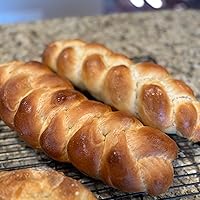
I suppose my biggest complaint about the book is that Steingarten often takes the most impossible or impractical route to cooking something. For instance, in search of the perfect water, he has Vogue pick up the check for his water tab and orders hundreds of varieties of bottled water before finally visiting the store where they are sold. Or when he bakes bread, he flies off to Paris to visit his friend for some pointers, then to another friend's place Stateside who owns a ridiculously expensive and rare oven. The humor is that of a high society Manhattanite with an unlimited budget, kind of irritating at times. I guess I'm just not the intended audience for this type of book.
I suppose my biggest complaint about the book is that Steingarten often takes the most impossible or impractical route to cooking something. For instance, in search of the perfect water, he has Vogue pick up the check for his water tab and orders hundreds of varieties of bottled water before finally visiting the store where they are sold. Or when he bakes bread, he flies off to Paris to visit his friend for some pointers, then to another friend's place Stateside who owns a ridiculously expensive and rare oven. The humor is that of a high society Manhattanite with an unlimited budget, kind of irritating at times. I guess I'm just not the intended audience for this type of book.
January 12, 2010
Steingarten's compilation of essays on a wide variety of food-related subjects written in the late 80s and 90s seems like it might be an interesting read for someone who likes food and cooking. HOWEVER, the man's ego (astronomical, of untold proportions, seriously it can be seen from three planets over) is a bit of a turn off. Its fun to read about someone experimenting with the many ways you can use a particular kitchen appliance or how best to prepare a particular cut of meat, but in all the book was a struggle to get through. Add to that the fact that some of the essays are dated, especially the ones about nutrition (do you know how much has changed in the debate about weight loss, chocolate, butter, and red wine since this was published in the mid 90s?) and it was a bit of a disappointment.

Did Not Finish
June 28, 2010Probably not going to finish this one. I am not going to make it to book club, and, frankly, I don't like the book, or the author. He can be witty and smart enough at times, and I liked it for a while, and maybe it's just the bar-study grumpiness talking, but I really resent that large chunks of this read like a "dieting" memoir, and that if it were written by a woman it would not be considered some kind of clever high-mindedness, but rather just some woman ranting about weighing herself four times a day. Why do I want to read about him weighing himself four times a day and buying multiple scales and whether the crazy diets work? I do not. Incidentally, it all feels incredibly dated, as conventional wisdom about nutrition has most certainly moved on from where it was when he was patting himself on the back for being sooooooo much smarter than those dumb professional nutritionists. I mean, they didn't even go to Harvard Law School, you know. Hmph.
Okay, maybe it is indeed the bar grumpiness. But also he apparently just wrote a somewhat skeevy and totally fawning article about Gwyneth Paltrow that contributes to my finding him pretty annoying. I don't even know.
http://gawker.com/5583552/gwyneth-pal...
Okay, maybe it is indeed the bar grumpiness. But also he apparently just wrote a somewhat skeevy and totally fawning article about Gwyneth Paltrow that contributes to my finding him pretty annoying. I don't even know.
http://gawker.com/5583552/gwyneth-pal...

September 16, 2008
He is an excellent writer with a sharp sense of humor and a great palette. My favorite part is when he forces himself to eat all the foods that he grew up hating to get over his aversions.
He comes across as much more like-able on paper than during his live appearances on Iron Chef.
Steingarten married a Utah girl from an LDS family and he delights is weaving Utah into his food articles for Vogue magazine. It made me smile to read the later chapters which salute the home cook and house wife and the wisdom of some cooking traditions over science and fads. (Usually science corroborates the traditional cooking methods once he digs deeper...but so many food fads have snuck into our brains that we treat them as fact)
He's a nut for research and experimentation. And I love nuts.
I'm hungry already.
- An
He comes across as much more like-able on paper than during his live appearances on Iron Chef.
Steingarten married a Utah girl from an LDS family and he delights is weaving Utah into his food articles for Vogue magazine. It made me smile to read the later chapters which salute the home cook and house wife and the wisdom of some cooking traditions over science and fads. (Usually science corroborates the traditional cooking methods once he digs deeper...but so many food fads have snuck into our brains that we treat them as fact)
He's a nut for research and experimentation. And I love nuts.
I'm hungry already.
- An
This entire review has been hidden because of spoilers.

August 12, 2019
This was fine? I think I was mostly jarred by the constant reminders that this book was first published in the early 90s.
Got a problem? It's ok - here's a number to call.
Memphis BBQ competitions are a white man's game...WHAT?
French food is just butter and cream! Uh, no.
SUSHI IS SO EXOTIC.
Maybe in like another 30 years this will be hilarious, but right now it's just weird.
Got a problem? It's ok - here's a number to call.
Memphis BBQ competitions are a white man's game...WHAT?
French food is just butter and cream! Uh, no.
SUSHI IS SO EXOTIC.
Maybe in like another 30 years this will be hilarious, but right now it's just weird.
July 9, 2024
Growing up, this book was always lying around the house—either on my dad's nightstand or in the kitchen. I now understand why it was never stowed away in our bookcase. The Man Who Ate Everything is a perfect book. In 500 pages, Jeffrey Steingarten turned from stranger to friend. His love for food, personal stories and wit were infectious and taught me so much about food science. It's a book I'll frequently return to, either for cooking or whenever I'm feeling nostalgic about our two-week friendship.

March 28, 2016
This book represents to me a lost way of life. It’s a life in which I would read books like this, slowly, with particular pleasure, laughing out loud at regular intervals. Afterwards, I would have time to write about them all, and share some of my pleasure. I almost did this today but that’s because I am on holiday.
The Man Who Ate Everything is a book of essays, and really each one should be savoured at length. No rushing. Gentle but steady progress is the thing. I am at an age where I no longer need to read the recipes (which shortens the book by about ten per cent) because I have no intention of attempting to make them. It’s enough to read about Jeffrey Steingarten’s noble culinary inventiveness, the people he meets, the morsels he tastes, the trips in taxis to find ingredients, the joyous errors, the fabulous achievements, the wonderful life of a professional food writer.
Good cookery books tend to make me salivate, which I imagine is a good sign. Sometimes I have to resort to a savoury snack because the whole business of FOOD starts to get too much for me. But here, if I resisted the early instinct to eat, I found there there was a counter-effect. By the end of most of the essays, I felt pretty full. In fact, once or twice, I felt slightly queasy as though I had eaten too much granita or one Piedmont truffle too many.
The best bit though is the style. He writes so well. It’s vivid, sensuous, and the humour is dry and cumulative. I thought it funny to start with but even by the very last chapter, I forced my partner to listen to me reading aloud an extract from ‘Big Bird’, which is about cooking turkey. It was the part about getting the perfect turkey skin, using in this case a "new electric Farberware Standard Smokeless Indoor Grill with Rotisserie".
My partner did not laugh, but I laughed all over again while reading it to him. I think my taste for humorous writing is better developed than his, though in brief quotation (or briefly reading aloud) one can’t recreate the way the serious description of product and process gradually builds towards a high point. Here is the sample he resisted:
"The Faberware booklet envisions cooking a turkey weighing up to seventeen pounds, and that is the size I tried, with the bird unstuffed and tightly trussed and a roasting time of five hours. Less than one of the five hours had passed when the turkey’s wing slipped from under the string and caught on the electric coil, preventing the bird from turning further. Thus fixed, the turkey began to brown rapidly and then to blacken along a stripe from neck to tail; the string holding the legs against the body burned through, and both legs plunged into the glowing coils. It was the stench of charring flesh and the billows of smoke that attracted my attention and drew me back into the kitchen, where for the next hour I struggled with seventeen pounds of hot, greasy flesh and protruding bones as I retied and rebalanced the bird, and plugged the Farberware back into the wall socket. When I returned half an hour later, very little progress was visible because I had, in actual fact, plugged in the blender, whose cord eerily resembled that of the Farberware."
I don’t want to give the impression that the book is one big laugh. Lots of it is in the tradition of the best cookery writers – recreating atmosphere, character, ingredients and the search for regional food. I grew up on Elizabeth David and MFK Fisher. I predict that this book, though it has taken me nearly twenty years to read, and some of the references to food research are probably now out of date, will wear well. And I love the way the author’s wife walks in and out of the pages. Wives are extremely useful when you want to be amusing. So much so that I almost wish I had one, instead of the male partner who didn’t even find this funny, though I continue to believe you would. (Said partner is still waiting for dinner to appear, while the dinner-maker has been reading a food book instead.)
But I’m going to leave you with the author’s wife’s last word. Jeffrey Steingarten has just spent the best part of fourteen pages exploring how to make the perfect potato fries (or as we in the UK call them, chips). On page 345, yet another possibility occurs:
"I have just learned that Alain Dutournier, the excellent Parisian chef from southwest France, cooks his French fries in goose fat. He uses an unusual combination of temperatures: after a first low-temperature frying, you wait two hours, start the second frying at 280 degrees Fahrenheit, and slowly increase the temperature to 392 degrees. The idea is intriguing, and I would like to try it immediately. But my wife has just passed through the kitchen and slipped into bed, leaving me alone, surrounded by four white bubbling-hot electric deep fryers and piles of unpeeled Idaho potatoes. ‘Smile and the world smiles with you,’ she said as she disappeared. ‘Fry and you fry alone.’ "
The Man Who Ate Everything is a book of essays, and really each one should be savoured at length. No rushing. Gentle but steady progress is the thing. I am at an age where I no longer need to read the recipes (which shortens the book by about ten per cent) because I have no intention of attempting to make them. It’s enough to read about Jeffrey Steingarten’s noble culinary inventiveness, the people he meets, the morsels he tastes, the trips in taxis to find ingredients, the joyous errors, the fabulous achievements, the wonderful life of a professional food writer.
Good cookery books tend to make me salivate, which I imagine is a good sign. Sometimes I have to resort to a savoury snack because the whole business of FOOD starts to get too much for me. But here, if I resisted the early instinct to eat, I found there there was a counter-effect. By the end of most of the essays, I felt pretty full. In fact, once or twice, I felt slightly queasy as though I had eaten too much granita or one Piedmont truffle too many.
The best bit though is the style. He writes so well. It’s vivid, sensuous, and the humour is dry and cumulative. I thought it funny to start with but even by the very last chapter, I forced my partner to listen to me reading aloud an extract from ‘Big Bird’, which is about cooking turkey. It was the part about getting the perfect turkey skin, using in this case a "new electric Farberware Standard Smokeless Indoor Grill with Rotisserie".
My partner did not laugh, but I laughed all over again while reading it to him. I think my taste for humorous writing is better developed than his, though in brief quotation (or briefly reading aloud) one can’t recreate the way the serious description of product and process gradually builds towards a high point. Here is the sample he resisted:
"The Faberware booklet envisions cooking a turkey weighing up to seventeen pounds, and that is the size I tried, with the bird unstuffed and tightly trussed and a roasting time of five hours. Less than one of the five hours had passed when the turkey’s wing slipped from under the string and caught on the electric coil, preventing the bird from turning further. Thus fixed, the turkey began to brown rapidly and then to blacken along a stripe from neck to tail; the string holding the legs against the body burned through, and both legs plunged into the glowing coils. It was the stench of charring flesh and the billows of smoke that attracted my attention and drew me back into the kitchen, where for the next hour I struggled with seventeen pounds of hot, greasy flesh and protruding bones as I retied and rebalanced the bird, and plugged the Farberware back into the wall socket. When I returned half an hour later, very little progress was visible because I had, in actual fact, plugged in the blender, whose cord eerily resembled that of the Farberware."
I don’t want to give the impression that the book is one big laugh. Lots of it is in the tradition of the best cookery writers – recreating atmosphere, character, ingredients and the search for regional food. I grew up on Elizabeth David and MFK Fisher. I predict that this book, though it has taken me nearly twenty years to read, and some of the references to food research are probably now out of date, will wear well. And I love the way the author’s wife walks in and out of the pages. Wives are extremely useful when you want to be amusing. So much so that I almost wish I had one, instead of the male partner who didn’t even find this funny, though I continue to believe you would. (Said partner is still waiting for dinner to appear, while the dinner-maker has been reading a food book instead.)
But I’m going to leave you with the author’s wife’s last word. Jeffrey Steingarten has just spent the best part of fourteen pages exploring how to make the perfect potato fries (or as we in the UK call them, chips). On page 345, yet another possibility occurs:
"I have just learned that Alain Dutournier, the excellent Parisian chef from southwest France, cooks his French fries in goose fat. He uses an unusual combination of temperatures: after a first low-temperature frying, you wait two hours, start the second frying at 280 degrees Fahrenheit, and slowly increase the temperature to 392 degrees. The idea is intriguing, and I would like to try it immediately. But my wife has just passed through the kitchen and slipped into bed, leaving me alone, surrounded by four white bubbling-hot electric deep fryers and piles of unpeeled Idaho potatoes. ‘Smile and the world smiles with you,’ she said as she disappeared. ‘Fry and you fry alone.’ "

September 4, 2012
I don't understand this book. The premise seemed to be that the author had lots of different foods that he would not eat (kimchi, Greek food, etc.) and he decided he didn't want to live that way anymore. He didn't want to be someone whose eating phobias made it difficult for his dining companions, like vegans or those insufferable people who choose to go gluten free. So he basically gets over it. He says that it takes between 8 and 10 exposures to a new food for a child to embrace it, and that it took basically that same amount of exposure to the foods he hated for him to get over those phobias. All this in the introduction to the book. The rest of the book is a snooze fest. The first chapter is about making bread, and he does diary entries for the journey he took in trying to make his own delicious bread. This could have been interesting, but it was not. After that I skipped ahead to a random page and skimmed it to see if the book got better. The page was simply a bullet-point list of ketchup brands, their prices, and a single sentence of review of the product. I turned ahead a page, then two, and found that he literally was listing his personal reviews of 35 different ketchups. Is this a joke? I cannot tell you how little of a shit I give about ketchup brand reviews.
In sum, it seems that someone has forgotten to tell this author that books are supposed to be interesting. Avoid.
In sum, it seems that someone has forgotten to tell this author that books are supposed to be interesting. Avoid.
November 20, 2013
Steingarten is the MOST pompous wanna be I have ever read. He is one of the main reasons bacon is the fifth food group. By his own admission he rarely cooks, what food science he knows comes from others.
sorry, if this guy was MY lawyer (his former life), I'd plead guilty just to get away from him
sorry, if this guy was MY lawyer (his former life), I'd plead guilty just to get away from him

May 4, 2010
Unfortunately most of the essays in this book were from the early nineties. I did enjoy some of the travel pieces, but also nothing original there - how many times can one go truffle hunting in Italy?

February 15, 2016
Or nearly everything, since it seems unlikely that anybody who had ever had a good nolen gurer shondesh would so summarily dismiss all Indian desserts as being reminiscent of highly perfumed creams fit only for the boudoir. But yes, Jeffrey Steingarten, once the monthly food correspondent for Vogue, does seem to have pretty much eaten the best (and the worst) of most of the highly acclaimed cuisines, at least as far as the Western world is concerned.
In this interesting and very eclectic collection of essays on food, Steingarten discusses just about everything related to food, from the sad decline of French haute cuisine to the best way to make everything from French fries to American pies (specifically, fruit pies) to the perfect mashed potatoes. He takes his readers to far flung places, he shares interesting information (for example, did you know that saliva is salty? Or that zabaglione was invented as a result of a mistake in 17th century Turin, and was named for San Giovanni Baylon, the patron saint of pastry [I didn't even know pastry had a patron saint]? Or that in Sicily—home to the best granitas in the world—granitas are often eaten with cream and a brioche?)
He goes into the science of food. Of what makes the best pastry and why. Of how to pick the best fruit from the markets, and why some fruit tastes just as good if it’s been artificially ripened as it would if ripened on the plant, while others are awful if picked raw and ripened in transit or storage. He takes you, along with him, on journeys of culinary exploration, from Tunisia to Venice, from a pork barbecue competition in Memphis to the hunt for the finest tartufi bianchi d’Alba (white truffles from Alba) in Italy. He painstakingly describes a very refined kaiseki ryori meal, the finest of fine dining in Japan, and just as painstakingly goes about replicating dishes from recipes off the backs of cartons. He discusses the French Paradox (that the French, despite consuming the vast quantities of cream, butter and cheese they do, still come only behind the Japanese when it comes to cardiac health). He discusses fats and fads, diets and equipment, and—well, just about everything related to food.
The Man Who Ate Everything is informative, and in a chatty, easy-to-read way. Steingarten is funny, like when he talks self-deprecatingly about his attempts to make the perfect pie crust or the perfect pasta (with the eggs sliding happily into an open drawer of silverware…), and is an obviously dedicated foodie (“ Whenever I travel to France, I like to hit the ground eating”).
The bulk of this book consists of essays written before 1995, so you do get some sections that are outdated (for instance, very few food writers would think it necessary today to explain what umami means—and fewer would actually write that our taste buds can only sense sweet, sour, salty and bitter). There are also a few questionable assertions ("The sale of chickpeas is illegal in many states in India, where they would otherwise completely dominate the diet of the poor, who make chapati out of chickpea flour, which is ground from raw chickpeas."), and occasional sections which go on and on (the dictionary of Venetian seafood, for instance). And the long and detailed section on pheromones, while interesting, actually ends up having very little to do with food—or at least the way Steingarten explains it.
On the whole, though, a book well worth the read if you happen to find food interesting.
In this interesting and very eclectic collection of essays on food, Steingarten discusses just about everything related to food, from the sad decline of French haute cuisine to the best way to make everything from French fries to American pies (specifically, fruit pies) to the perfect mashed potatoes. He takes his readers to far flung places, he shares interesting information (for example, did you know that saliva is salty? Or that zabaglione was invented as a result of a mistake in 17th century Turin, and was named for San Giovanni Baylon, the patron saint of pastry [I didn't even know pastry had a patron saint]? Or that in Sicily—home to the best granitas in the world—granitas are often eaten with cream and a brioche?)
He goes into the science of food. Of what makes the best pastry and why. Of how to pick the best fruit from the markets, and why some fruit tastes just as good if it’s been artificially ripened as it would if ripened on the plant, while others are awful if picked raw and ripened in transit or storage. He takes you, along with him, on journeys of culinary exploration, from Tunisia to Venice, from a pork barbecue competition in Memphis to the hunt for the finest tartufi bianchi d’Alba (white truffles from Alba) in Italy. He painstakingly describes a very refined kaiseki ryori meal, the finest of fine dining in Japan, and just as painstakingly goes about replicating dishes from recipes off the backs of cartons. He discusses the French Paradox (that the French, despite consuming the vast quantities of cream, butter and cheese they do, still come only behind the Japanese when it comes to cardiac health). He discusses fats and fads, diets and equipment, and—well, just about everything related to food.
The Man Who Ate Everything is informative, and in a chatty, easy-to-read way. Steingarten is funny, like when he talks self-deprecatingly about his attempts to make the perfect pie crust or the perfect pasta (with the eggs sliding happily into an open drawer of silverware…), and is an obviously dedicated foodie (“ Whenever I travel to France, I like to hit the ground eating”).
The bulk of this book consists of essays written before 1995, so you do get some sections that are outdated (for instance, very few food writers would think it necessary today to explain what umami means—and fewer would actually write that our taste buds can only sense sweet, sour, salty and bitter). There are also a few questionable assertions ("The sale of chickpeas is illegal in many states in India, where they would otherwise completely dominate the diet of the poor, who make chapati out of chickpea flour, which is ground from raw chickpeas."), and occasional sections which go on and on (the dictionary of Venetian seafood, for instance). And the long and detailed section on pheromones, while interesting, actually ends up having very little to do with food—or at least the way Steingarten explains it.
On the whole, though, a book well worth the read if you happen to find food interesting.
September 7, 2012
I am not a foodie, I don’t watch cooking shows and only rarely read Vogue; I had no idea who Jeffrey Steingarten was when this book was loaned to me. The title and the recommendation from a friend were enough to convince me to give it a shot, though I had little idea what I was in for. Steingarten is many things: witty, clever, simultaneously pompous and self-deprecating, obsessive and thorough. Above all he is interested, which is what kept me interested. He’s curious about the way foods are made and how to make or find the very best of a certain thing, how and why we consume certain things and what that says about us. And he apparently has unlimited time and resources to carry out his impulsive research and experiments, which is both amusing and somewhat irritating. He writes about a French fad diet, his pursuit of the perfect fill-in-the-blank (bread, ketchup, pie crust), microwaving fish and trying to live on a welfare diet (one of my favorite essays). Some sections drag when he gets bogged down in the scientific details of a recipe or technique--although I suspect these may be fascinating to other readers --and by the time I got three quarters of the way through the book, I began to find him a bit tiresome. But overall, the essays are engaging and informative and often full of hilarious little gems, like his description of a Delta in-flight meal and his wife's reactions to the experiments he conducts in their apartment. I don’t recommend plowing through the book at once, cover-to-cover, but each essay is a fun and educational read on its own.

May 14, 2010
I was tempted to give this only one star, but it seemed a bit too negative for a book I didn't actually have to force myself to finish. 1.5 would probably have been fitting, because at times this book was really, really, REALLY boring... the mere fact that I've been reading it for more than 6 months should be proof of that!
The book blurb - as well as the title itself - led me to believe that it would be a collection of essays about Jeffrey Steingarten eating weird things. I thought that sounded interesting, so when the library didn't have the book, I went out and bought it, even though I'd thought his other essay collection only so-so. And it did start out exploring just that, and was really interesting! Mostly to see which of Jeffrey's "will never eat!" I agreed with, and which I loved.
Unfortunately this part of the book was over much too quickly - in fact, it was only the preface to the book. The rest was much the same as "It Must Have Been Something I Ate" - essays about assorted odds and ends about cooking and culinary oddities - but unfortunately not nearly as interesting.
So give this one a miss, and pick up "IMHBSIA" instead if you really want to read Jeffrey Steingarten.
The book blurb - as well as the title itself - led me to believe that it would be a collection of essays about Jeffrey Steingarten eating weird things. I thought that sounded interesting, so when the library didn't have the book, I went out and bought it, even though I'd thought his other essay collection only so-so. And it did start out exploring just that, and was really interesting! Mostly to see which of Jeffrey's "will never eat!" I agreed with, and which I loved.
Unfortunately this part of the book was over much too quickly - in fact, it was only the preface to the book. The rest was much the same as "It Must Have Been Something I Ate" - essays about assorted odds and ends about cooking and culinary oddities - but unfortunately not nearly as interesting.
So give this one a miss, and pick up "IMHBSIA" instead if you really want to read Jeffrey Steingarten.
June 20, 2018
Finally! My attention was more on tangents than content as I slogged through the first 250 pages, determined to finish this book (for whatever type-A reason) to find some gems towards the end of the book. Mr. Steingarten's humor does not easily translate via written word at times, so his months of attempts to make bread was a bit laborious to read although understandable. His travels to find the best of rarely made cultural foods in Europe grated with blatant overtones of privilege, money, and first-world problems (perhaps more obvious as I was in a rural part of a developing country while reading the first 350 pages). That being said, this book was published over 2 decades ago so perhaps I would have seen things in a different light at that time. I did appreciate the chapter on pie, though (the very last chapter)... Two stars for the <50% of the book I did enjoy.

January 30, 2019
Meh. This book was not what I thought it would be. I’ve had it on my TBR list for so long that even though I didn’t really like it I insisted on finishing it. Each chapter was an article written by the author about his food travel adventures in the late 80’s and early 90’s. While I was hoping my parents would pick up Pizza Hut once a week he was eating everything the world had to offer. I struggled with the different time and culture he was writing during. His writing was slightly humorous but mostly only meh to me.

June 9, 2022
I definitely had to read this over a long period of time because I needed to take breaks from the dated content and the superfluous language. Some things were interesting when taken as a glimpse into food writing “back in the day”, but a lot of the content is no longer relevant. A list of 35 ketchups with one sentence reviews and waxing poetically about French restaurants that no longer exist were frustrating to read. And I’m supposed to believe he doesn’t know what calamansi is?
June 30, 2022
Outdated. Short stories that seem to drag on. Recipes that don’t sound that great.

September 8, 2009
OK I gave up on this one without finishing it. Read quite a bit but . . It really wasn't what I expected. I thought it would be more about his life, but it's actually a collection of his columns about food. Some of them were interesting but he goes into a LOT of detail and . . I don't know, life is just too short! :D

June 18, 2018
I read about 12% and found myself unable to continue. The book reads like a text, and the anecdotes were anything but amusing. Steingarten pontificates on the written page as he does when judging a food competition. I couldn't read one more sentence on his pursuit of the perfect mashed potato!

August 8, 2009
I'm not sure what I was expecting (having never read Steingarten previously), but it certainly wasn't this witty, entertaining, or well-researched. Really enjoyable.

January 10, 2013
Some chapters were very interesting, others very dull to slog through. Many parts are extremely dated (they were written in the 90s) and just not relevant to today. Overall, a completely mixed bag.

October 10, 2022
Steingarten is a mildly eccentric man with a discerning palate, a sense of adventure, and a way with the pen. I'm not sure if I'd like him in the real world -- we'd either get along famously or I'd loathe him. On the pages of his book, he's your smart friend with the coolest job and the most airline miles of anyone you know.
This book is getting old at north of 25 years and it shows. To some, it'll be a turnoff. To others like me, that age is a selling point. Steingarten examines food trends that I remember vividly from my youth, like the low-fat/fat free craze, the microwave everything mania, and the endless parade of fad diets (he focuses on an obscure French diet promoted by the now deceased Michel Montignac). These dated elements allowed me to reflect on what's changed in the world of food and what hasn't, which is at least as enlightening as the essays themselves, which are usually witty and insightful. It's also just plain fun to shake your head every time Steingarten makes a phone call, consults a mail order catalog, visits a library, or hops on a plane where we would simply consult Google.
Oh, and if you don't know what Morton Thompson's turkey recipe is, you're either missing out or saving yourself hours at the holidays. I'm not sure which, but I really want to find out.
This book is getting old at north of 25 years and it shows. To some, it'll be a turnoff. To others like me, that age is a selling point. Steingarten examines food trends that I remember vividly from my youth, like the low-fat/fat free craze, the microwave everything mania, and the endless parade of fad diets (he focuses on an obscure French diet promoted by the now deceased Michel Montignac). These dated elements allowed me to reflect on what's changed in the world of food and what hasn't, which is at least as enlightening as the essays themselves, which are usually witty and insightful. It's also just plain fun to shake your head every time Steingarten makes a phone call, consults a mail order catalog, visits a library, or hops on a plane where we would simply consult Google.
Oh, and if you don't know what Morton Thompson's turkey recipe is, you're either missing out or saving yourself hours at the holidays. I'm not sure which, but I really want to find out.

November 17, 2025
Steingarten’s at his best when writing about delicious meals he enjoyed, and at his second-best when writing about recipes he experimented with. His essays about fad diets and food additives suffer from being about boring subjects and from Steingarten trying to present himself as the final word who can see through the contradictions of every single other study and anecdote. I don’t need Steingarten to tell me the truth about nutrition—I have Substack intellectuals for that!
My recommendation: start by reading “Primal Bread,” “Totally Mashed,” “Ripeness Is All,” and “Playing Ketchup” from Part One. Skip the rest of Part One, and avoid Parts Two and Three altogether. Then read Part Five in its entirety, and finish by going back and reading all of Part Four (best for last).
My recommendation: start by reading “Primal Bread,” “Totally Mashed,” “Ripeness Is All,” and “Playing Ketchup” from Part One. Skip the rest of Part One, and avoid Parts Two and Three altogether. Then read Part Five in its entirety, and finish by going back and reading all of Part Four (best for last).
May 2, 2018
I'd say that this deserves a 3.5 star rating, but I really like food writing. Some of these essays, particularly the introduction, were really fabulous. Rather more of them I wish I'd skipped (I read through the entire thing cover to cover, though I didn't cook any of the recipes). I picked it up looking for something that I could read on my morning train, so I enjoyed the format.

February 26, 2023
I learned more facts about food from this book, but it is quite out dated at this point. The information on diets and culture and race are not correct, and many of the restaurants he visits no longer exist. I did not finish the book for these reasons, but my favorite book is a Cook’s tour by Anthony Bourdain and this has a similar vibe, just less phenomenal.

May 27, 2025
never letting julien recommend a book to me ever again!
this book is the literary equivalent of when you’re trying to look up an easy recipe and instead fight through twenty pages of some person’s life before finally reaching it. at least the book doesn’t come with pop-up ads?
ok it was vaguely interesting but just not my genre 😓
this book is the literary equivalent of when you’re trying to look up an easy recipe and instead fight through twenty pages of some person’s life before finally reaching it. at least the book doesn’t come with pop-up ads?
ok it was vaguely interesting but just not my genre 😓

December 3, 2024
Fun and funny- as a food lover, I could relate to many of the anecdotes! Definitely dated but still enjoyable.
October 2, 2025
did not need to read this many pages of 90s diet culture food writing from a man. But I liked the chapters on bread and pie!
Displaying 1 - 30 of 623 reviews