

What do you think?

Notes from the Warsaw Ghetto
Notes from the Warsaw Ghetto is the moving account of the horror of the Warsaw Ghetto - written by the recognized archivist and historian of the area while he lived through it. Through anecdotes, stories, and notations - some as brief as "I was slapped today in Zlota Street" - there emerges the agonizing, eyewitness accounts of human beings caught in the furor of senseless, unrelenting brutality.
In the Journal, there is the whole of life in the Ghetto, from the erection of the Wall, in November 1940, for hygienic reasons, through the brief period of deceptive calm to the eventual mass murders. It is a portrait of man tested by crisis, stained at times by the meanness of avarice and self-preservation, illumined more often by moments of nobility.
Emmanual Ringelblum was 39 when he began his notes. When the Germans first invaded Poland, Ringelblum, who could have stayed abroad and escaped, returned to Warsaw from Switzerland knowing that his was an historical event of importance for his people and a moment in time that must be forever a part of written history. As the recognized archivist of the Ghetto he gathered around him a staff, and assigned each to cover a specific part of Ghetto life. From these reports and this notes, he assembled his Journal.
On March 7, 1944, Emmanual Ringelblum was executed among the ruins of Warsaw, together with his wife, his son, and thirt-eight others who shared his hiding place.
In the Journal, there is the whole of life in the Ghetto, from the erection of the Wall, in November 1940, for hygienic reasons, through the brief period of deceptive calm to the eventual mass murders. It is a portrait of man tested by crisis, stained at times by the meanness of avarice and self-preservation, illumined more often by moments of nobility.
Emmanual Ringelblum was 39 when he began his notes. When the Germans first invaded Poland, Ringelblum, who could have stayed abroad and escaped, returned to Warsaw from Switzerland knowing that his was an historical event of importance for his people and a moment in time that must be forever a part of written history. As the recognized archivist of the Ghetto he gathered around him a staff, and assigned each to cover a specific part of Ghetto life. From these reports and this notes, he assembled his Journal.
On March 7, 1944, Emmanual Ringelblum was executed among the ruins of Warsaw, together with his wife, his son, and thirt-eight others who shared his hiding place.
402 pages, Paperback
First published January 13, 1974
Ratings & Reviews
Friends & Following
Create a free account to discover what your friends think of this book!
Community Reviews
Displaying 1 - 30 of 37 reviews

Read
March 13, 2018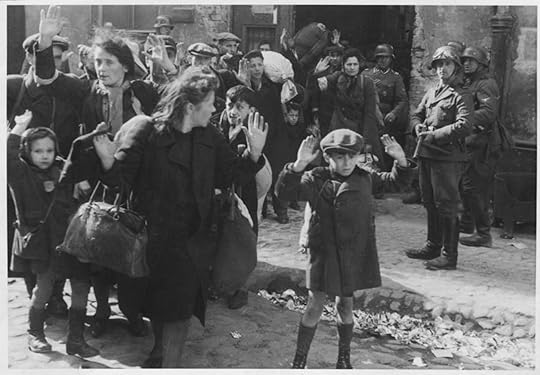
Sometimes a photo can be more eloquent of the incomprehensible insanity of what the Nazis did than all the words in the world. Every time I picked up this book to read I found myself wired up to the heartbreaking anguish on this young boy's face - he's on the cover of the version I read.
Emmanuel Ringelblum never got the chance to organise the notes he painstakingly compiled throughout the existence of the Warsaw Ghetto. Thus they very much are notes. An almost chaotic outpouring of detail, sometimes rumour, sometimes second-hand stories, sometimes personal observation, but from the swarming clutter of information a distinct narrative does emerge. The deeper one goes into the Holocaust the more appalled one becomes by the unfathomable depravities latent in human nature. My knowledge of the Warsaw Ghetto was pretty much limited to Polanski's film The Pianist. Reading these notes you'd have to say that was essentially (and understandably) a sanitised version of life in the ghetto. It very much simplified the dynamic. The Nazis were the bad guys; the Jews the good guys. Unfortunately we learn here that there were a lot of Jewish bad guys too. Principally many members of the Jewish police force and a host of extortionists, informers, smugglers and criminals. Basically very quickly the ghetto becomes a kind of oligarchy upheld by the corrupt Jewish police. The poor have no chance and they are the first to die, usually of starvation while the privileged elite are still eating in restaurants. There also seems to have been a kind of Jewish mafia working in league with the Gestapo. One of Ringelblum's aims is to name and shame as many Jewish collaborators as possible. Not surprisingly it's these individuals who disgust him almost more than the Nazis themselves. This certainly makes for uncomfortable reading, blurring as it does the line between oppressor and victim. One thing it does illuminate is how ingenious the Nazis were in turning people against each other, to the point of often getting their victims to do the nasty work for them. Reading this you often have to adjust Ringelblum's apportioning of blame because ultimately to criticise Jewish behaviour is to dilute the culpability of the Nazis and their insanity.
He does draw attention to the good work done by many - the soup kitchens for the poor, the orphanages, the colossal altruistic bravery of many individuals. We see human beings stripped down to the rudiments - some behave with astonishing generosity and courage, others with the bared teeth of a cornered animal. Eventually he will speak of the shame the survivors feel for their passivity and it's clearly out of this shame that the uprising takes place. Once it's obvious any fear of reprisals is ludicrous and everyone realises they have nothing to lose they finally join together as one unified force.
Emmanuel Ringelblum survived the uprising but was discovered by the Gestapo in a cellar along with thirty other Jews. They were all shot, including his wife and twelve year old son. Which brings us back to the photo on the cover.

October 29, 2011
It is always hard to rate books like this because of their standing as historical docuements.
If you have read anything about the Holocaust, you've probably heard about Emmanuel Ringelblum who kept the Warsaw ghetto diaries. This book isn't the complete archieves, those are massive, but these are Ringelblum's own notes. The notes are not a diary, they are jottings. Yet this makes them far more engrossing, more real. It is almost like reading an AP wire.
If you have read anything about the Holocaust, you've probably heard about Emmanuel Ringelblum who kept the Warsaw ghetto diaries. This book isn't the complete archieves, those are massive, but these are Ringelblum's own notes. The notes are not a diary, they are jottings. Yet this makes them far more engrossing, more real. It is almost like reading an AP wire.
January 7, 2010
It's dense, heavy Holocaust stuff. But if you're really interested, I'd recommend it. It took a long time for me to get through, I think it isn't organized in the best way.
About the book: It's a Jewish historian who, when WWII started, decided he wanted to record everything that happened to his people until he died. He talks about why they weren't uprising and why they decided to in the end. He also explains the day to day degradation that Jews endured just in ghetto and before it. It's crazy! One interesting thing, they had really high tech hiding places by the end of the Warsaw ghetto, but Jewish police found most of them in an effort to save themselves. He said the Nazis wouldnt' have been able to accomplish what they did in killing the Jews without the Jewish policemen's help. And sometimes the Jewish policement were more sadistic than the Nazis. It was all in an effort to save their own lives.
About the book: It's a Jewish historian who, when WWII started, decided he wanted to record everything that happened to his people until he died. He talks about why they weren't uprising and why they decided to in the end. He also explains the day to day degradation that Jews endured just in ghetto and before it. It's crazy! One interesting thing, they had really high tech hiding places by the end of the Warsaw ghetto, but Jewish police found most of them in an effort to save themselves. He said the Nazis wouldnt' have been able to accomplish what they did in killing the Jews without the Jewish policemen's help. And sometimes the Jewish policement were more sadistic than the Nazis. It was all in an effort to save their own lives.

November 25, 2016
Moving and chilling diary of a witness to a world as it is being murdered.
September 26, 2026
"Aquello que no pudimos decir a gritos al mundo, lo enterramos ahora. Que este tesoro llegue a buenas manos, que espere tiempos mejores, que sirva de advertencia de los extravíos del mundo en el siglo XX." David Graber.
"De esta forma el grupo Oneg Shabat ha visto cumplida su gran misión histórica: avisar al mundo sobre nuestro destino y quizá salvar a cientos de miles de judíos polacos del exterminio. Por supuesto, esto último está aún por ver. No sé quién sobrevivirá de nuestro grupo, quien tendrá la suerte de trabajar con los materiales reunidos. Pero una cosa está clara para todos nosotros: nuestro trabajo y nuestros esfuerzos, nuestra dedicación y el riesgo al que hemos expuesto nuestras vidas una y otra vez no han sido en vano." Emmanuel Ringelblum.
"De esta forma el grupo Oneg Shabat ha visto cumplida su gran misión histórica: avisar al mundo sobre nuestro destino y quizá salvar a cientos de miles de judíos polacos del exterminio. Por supuesto, esto último está aún por ver. No sé quién sobrevivirá de nuestro grupo, quien tendrá la suerte de trabajar con los materiales reunidos. Pero una cosa está clara para todos nosotros: nuestro trabajo y nuestros esfuerzos, nuestra dedicación y el riesgo al que hemos expuesto nuestras vidas una y otra vez no han sido en vano." Emmanuel Ringelblum.

February 25, 2010
Ringelblum had been a historian before the war, and when the war began he had a stroke of genius. He organised a team of people to go out and save all the material they could find about the life of the ghetto. They were anxious that the Nazi voice should not be the only voice to be heard. The importance of this collection is the good faith effort to collect material and provide for future generations a record of what was going on, on a daily basis, in the Jewish communities under siege. Read the full interview at http://thebrowser.com/books/interview...

May 20, 2011
you think YOU'VE got problems?
May 20, 2010
A difficult book. Historically essential but not meant to read as a cohesive "book". At times it seemed necessarily detached from the actual happenings, in order to document them, but with outbursts of rage. The entries are short, cryptic, succinct, leaving the reader to fill in the gaps and imagine the harsh reality.
It's amazing these records exist at all.
It's amazing these records exist at all.

November 25, 2020
"Aquello que no pudimos decir a gritos al mundo, lo enterramos ahora. Que este tesoro llegue a buenas manos, que espere tiempos mejores, que sirva de advertencia de los extravíos del mundo en el siglo XX ."
July 8, 2017
One of the greatest accounts of life during the Holocaust. A must read for all people.

October 14, 2025
Niekwestionowanie ważne źródło historyczne. Temat rzeka, dużo by wymieniać. Niestety. Dużo wymieniać bo informacji tu jest wbrod, za dużo, nawet dla osoby zainteresowanej tym okresem historii. Jedno powiem, czyta się ciężko. Ale były też to ciężkie czasy. Doceniam odwagę oneg szabat tyle mogę .
May 24, 2014
This was good, but a bit difficult to read for a couple of reasons. The material is obviously heartbreaking, but it's also just a bit choppy / pieced together. This makes sense though when you consider that these notes are a compilation of lots of individuals taking notes / making observations. I'm glad I read it.

May 18, 2011
Actual excerpts from Ringelblum's archive arranged chronological order give powerful glimpses into life in the Warsaw ghetto. Best if used as a supplement to other histories, as this is more concerning the ghetto experience, rather than a historical accounting of events.
April 22, 2009
“The Ghetto is much more painful now than it was in the Middle Ages, because we that were so high and mighty are now fallen so low” (85).
“only the poor go to the camp” (159
Currently Reading
June 30, 2010fricken' AWSOME!

June 8, 2012
A tragic account kept by an amazing man. His journal also had its own adventure and I for one am glad it survived underneath the ruins of Warsaw.

July 27, 2024
This is a document that was written with intention, that intention being to illustrate how the Nazis and their collaborators ever so slowly progressed in implementing the destruction of European Jewry.
If you are only just beginning to research and read about the Holocaust, please do not begin here. This is not a traditional novel; it is a notebook/journal/document of daily life and observations of Jews held prisoner in the Warsaw Ghetto in Poland 1940-1943. As such, it contains many, many references to people, places and things that would be misunderstood by those who do not have the knowledge or understanding of Holocaust history. For those of us who know, it will hit differently than other Holocaust literature as the authors take us on their inevitable journey through horror and murder. In loving memory of the authors and everyone affected.
If you are only just beginning to research and read about the Holocaust, please do not begin here. This is not a traditional novel; it is a notebook/journal/document of daily life and observations of Jews held prisoner in the Warsaw Ghetto in Poland 1940-1943. As such, it contains many, many references to people, places and things that would be misunderstood by those who do not have the knowledge or understanding of Holocaust history. For those of us who know, it will hit differently than other Holocaust literature as the authors take us on their inevitable journey through horror and murder. In loving memory of the authors and everyone affected.
May 22, 2018
Great for those wanting to know, in-depth, about the Warsaw ghetto, but reads too much like a textbook for my taste. It's well-written and informative, but it's not an easy read, by any means. It's not a "bad" book, but I was expecting more of a narrative, I guess, so it just wasn't what I was looking for.
September 20, 2022
Amazing to read how the people in the ghetto lived and survived. Very sad though what they went through. Surviving on the calories they did ? The mental pain they must have suffered. Living on edge day to day. Amazing that such evidence exists. Without it the world wouldn't know. Amazing book, would. Recommend
January 27, 2023
Story of the Warsaw Ghetto from the inside
A thorough lived History by a name that everyone ought to learn. Ringelblum chronicles the story of the Ghetto and its decline. It is a raw and emotional account
A thorough lived History by a name that everyone ought to learn. Ringelblum chronicles the story of the Ghetto and its decline. It is a raw and emotional account

February 17, 2025
Absolutely heart breaking to read true accounts of the horrors of the Holocaust. This took me a long time to read bc of my lack of knowledge regarding name and places, but it’s definitely worth the time to sober up, if you will. Truly scary, the evil in people.
March 28, 2025
Very haunting account of the Warsaw Ghetto. A time capsule. Sometimes it is difficult since it’s just random stories and descriptions, but this definitely makes it feel raw. You can sense the urgency in his records as the notes get closer to their end.

October 13, 2019
Important story, and contemporaneous diary.

December 29, 2019
Very important book. A must read.
October 16, 2022
An account of what was happening in the Warsaw ghetto as it happened.

April 30, 2024
I did not read enough to give a proper review; enjoy!
August 8, 2025
lest we forget
A must read book, so as not to repeat. Nazism rises in the absence of truth. It is always the same, the individual character changes.
A must read book, so as not to repeat. Nazism rises in the absence of truth. It is always the same, the individual character changes.

August 15, 2025
A book full of sad chapters and a lesson overall. Factual and thought provoking.

Read
September 17, 2026It doesn't feel right to rate this, because it's less of a book and more of a historical artifact. Definitely important.

July 3, 2019
This is for serious students of the Holocaust. It is detailed, difficult and amazing in the fact it exists at all. Painful, sometimes shocking, not an easy account to take in.
Displaying 1 - 30 of 37 reviews