

What do you think?
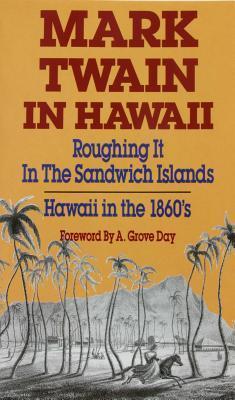
Mark Twain in Hawaii: Roughing It in the Sandwich Islands: Hawaii in the 1860s
The noted humorist's account of his 1866 trip to Hawaii at a time when the island were more for the native than the tourists.
110 pages, Mass Market Paperback
Published January 1, 1990
About the author
Mark Twain
9,732 books19.2k followersLibrarian Note: There is more than one author by this name in the Goodreads database.
Samuel Langhorne Clemens, known by the pen name Mark Twain, was an American writer, humorist and essayist. He was praised as the "greatest humorist the United States has produced," with William Faulkner calling him "the father of American literature." His novels include The Adventures of Tom Sawyer (1876) and its sequel, Adventures of Huckleberry Finn (1884), with the latter often called the "Great American Novel." Twain also wrote A Connecticut Yankee in King Arthur's Court (1889) and Pudd'nhead Wilson (1894), and co-wrote The Gilded Age: A Tale of Today (1873) with Charles Dudley Warner.
Samuel Langhorne Clemens, known by the pen name Mark Twain, was an American writer, humorist and essayist. He was praised as the "greatest humorist the United States has produced," with William Faulkner calling him "the father of American literature." His novels include The Adventures of Tom Sawyer (1876) and its sequel, Adventures of Huckleberry Finn (1884), with the latter often called the "Great American Novel." Twain also wrote A Connecticut Yankee in King Arthur's Court (1889) and Pudd'nhead Wilson (1894), and co-wrote The Gilded Age: A Tale of Today (1873) with Charles Dudley Warner.
Ratings & Reviews
Friends & Following
Create a free account to discover what your friends think of this book!
Community Reviews
Displaying 1 - 30 of 96 reviews

June 4, 2008
Entertaining to hear about Hawaii in the mid 1800's, with Twain's usual wit and humor. His description of a horseback journey off into the jungles was particularly fun. It was a little shocking, with our modern sensibilities, to hear the natives called "heathens" and the total lack of respect for their ancient custums, but not suprising given the time of the writing.

February 17, 2008
At 31 years old and in the employ if the Sacramento Union, Mark Twain took his first trip away from the North American continent onboard the steamer Ajax bound for a four month tour of the Sandwich Islands, On Sunday, March 18, 1866, he arrived in Honolulu and fell in love with the islands that were to form his image of paradise.
Of course, one man’s paradise is another’s hell and Twain doesn’t hold back. He sides with the H’awaiians (referred to as Kanakas) against the influences of the Europeans , Americans, and missionaries, especially the missionaries, for all the usual reasons: temperance, stuffy clothing, and crazy ideas about what makes a good life in a land that is so good to be in. He also rails against the local mosquito population and the fruits that are so sour that they can remove the enamel from your teeth.
At this time, the Sandwich Islands were an independent monarchy under King Kamehameha V pushing towards some kind of modernity. They had a legislature, of sorts, and a navy that consisted of two ships. And here, Twain begins to note the unintended consequences of the arrival of the white man in the need for cheap labor and the population decimation caused by disease.
He also notes the exported version of royalty that resides in a two-story wooden frame house a.k.a.the Royal Place, the excessive titles of the members of the legislature, and that the European idea of a noble being above the people is meaningless here when the King can walk around and be treated like a regular respectful guy and not be flanked by a fleet of hanger-ons.
Twain spends his time checking out the sites, notes the ubiquitous cat population, calls the Kanakas the most savvy horse negotiators in the world, and admires the sport of surfing, especially since most of the H’awaiians spend their time naked both in and out of the water.
Twain is pro-America in where the islands should lean and recommends that they become part of the US at some point. What is interesting is how many of the themes introduced here, such as a clash of civilizations and how little is needed to wow the locals, come full force in “A Connecticut Yankee in King Arthur’s Court” which was written after this working vacation. In fact, it has been said that "Connecticut Yankee" was supposed to be about the state of the Sandwich Islands until Twain got a hold of the legends of King Arthur and changed the setting accordingly.
Overall, it’s not his best book (it is a collection of articles published about his time there) but it is an interesting read. You get a rather unvarnished glimpse of H’awii in the 1860’s and, short of going to Bishop’s Museum or the Court Museum or the I’olani Palace in H’awii, this is a great introduction into the history of the H’awaiian islands.
This entire review has been hidden because of spoilers.

November 11, 2017
Since I loved the audiobook for Huckleberry Finn this year and loved our 2visits to Hawaii, I decided to read this little book--84 pages of writing and 20 pages of reading. Mark Twain and the print size fooled me--it is a dense little tale of Twain's visit to Hawaii in 1866. Twain writes a good travelogue!
Since these were supposed to be newspaper stories for the California paper, it a little surprising to read complicated sentences and vocabulary. If you have been to Maui or the Big island, I think you will enjoy the descriptions of places that today's tourists visit.
Since these were supposed to be newspaper stories for the California paper, it a little surprising to read complicated sentences and vocabulary. If you have been to Maui or the Big island, I think you will enjoy the descriptions of places that today's tourists visit.

April 1, 2008
I like Heather's posted quote about travel easing bigotry by Twain, partly because it's true, but also partly because one of the most interesting things about this book is Twain's rather un-PC ruminations on what an improvement the Christian missionaries have wrought for the "savages" of Hawaii, an enthusiastic colonial endorsement that would be pretty much verboten if given by any writer today.
I picked this book up at the "international" airport in Kona, Hawaii (it is a bunch of tiki-style huts on a runway. Seriously) and was pretty much delighted from beginning to end. Of course, Twain is hilarious (his exaggerated discussions of the various "ill-bred nags" he rides around the islands is particularly gut-busting), but he is also the pointed observer and helped me to see the islands with wider eyes when I was there. His descriptions of the lava flows beat my own petty imaginings by an overwhelming margin and hey, I have pictures!
Anyway, it's a short read, full of wit, and not a word wasted.
I picked this book up at the "international" airport in Kona, Hawaii (it is a bunch of tiki-style huts on a runway. Seriously) and was pretty much delighted from beginning to end. Of course, Twain is hilarious (his exaggerated discussions of the various "ill-bred nags" he rides around the islands is particularly gut-busting), but he is also the pointed observer and helped me to see the islands with wider eyes when I was there. His descriptions of the lava flows beat my own petty imaginings by an overwhelming margin and hey, I have pictures!
Anyway, it's a short read, full of wit, and not a word wasted.

May 17, 2019
Samuel Clemens went to the Sandwich Islands (Hawaii) at age 31, on assignment to write 25 articles for the Sacramento Union newspaper. Though he had recently taken the pen name "Mark Twain" he was not yet famous. Later he used these articles as part of his personal narrative "Roughing It." Those pertaining to Hawaii are collected in this book, and make for quintessential Mark Twain reading. His attitude toward native Hawaiians is surprising; he regarded them as essentially savages who benefited from the civilizing practices of missionaries and American businessmen--although these fine folks stole their land and tried to destroy their culture. Most enjoyable are Twain's colorful descriptions of the islands' natural wonders. He also lampoons various local characters and takes part in ceremonies with native nobility. The trips to Kilauea volcano ("the sublimest spectacle I ever witnessed") and the Honaunau refuge are especially vivid. Twain thought Hawaii should be called "The Rainbow Islands" and was deeply affected by their natural beauty, saying no other place in the world could "so longingly and so beseechingly haunt me, sleeping and waking, through half a lifetime . . ."

June 3, 2020
The beautifully-written and vivid descriptions of Hawaii brought picturesque scenes to mind from my visit last summer when I picked this up at the Puukohola Heiau visitor center on the Big Island. As another reviewer coined Mark Twain's 1860s "un-PC"-ness, his travelogues are quite insightful to the Hawaii of that time which was fascinating if at times quite morbid. The many laugh out loud moments kept me going.

February 28, 2021
I found this book on the shelf of an airbnb in Hawaii. Mark Twain's wit and humor shines in his letters describing his trip to the Hawaiian islands. Having just spent 3 months here in Hawaii across Oahu, Maui, the Big Island, and Kauai, I chuckled in familiarity at a lot of Twain's experiences. I also learned a lot of new things about Hawaii, though at times his perspective is perhaps problematic.
On the beauty of Hawaii: "No alien land in all the world has any deep strong charm for me but that one, no other land could so longingly and so beseechingly haunt me, sleeping and walking, through half a lifetime, as that one has done. Other things leave me, but it abides; other things change, but it remains the same. For me its balmy airs are always blowing, its summer seas flashing in the sun; the pulsing of its surfbeat is in my ear, I can see its garlanded crags, its leaping cascades, its plumy palms drowsing by the shore, its remote summits floating like islands above the cloud wrack; I can fell the spirit of its woodland solitudes, I can hear the splash of its brooks; in my nostrils still lives the breath of flowers that perished twenty years ago" (forward, xxxiii)
On his new horse Oahu. "I preferred a safe horse to a fast one - I would like to have an excessively gentle horse - a horse with no spirit whatever- a lame one, if he had such a thing. Inside of five minutes I was mounted, and perfectly satisfied with my outfit. I had no time to label him 'This is a horse,' and so if the public took him for a sheep I cannot help it" (7)
On trying to persuade his horse: "The first gate he came to he started in; I had neither whip nor spur, and so I simply argued the case with him. He resisted argument, but ultimately yielded to insult and abuse. He backed out of that gate and steered for another one on the other side of the street. I triumphed by my former process. Within the next six hundred yards he crossed the street fourteen times and attempted thirteen gates, and in the meantime the tropical sun was beating down and threatening to cave the top of my head in, and I was literally dripping with perspiration. He abandoned the gate business after that and went along peaceably enough, but absorbed in meditation. I noticed this latter circumstance, and it soon began to fill e with apprehension. I said to myself, this creature is planning some new outrage, some fresh deviltry or other - no horse ever thought over a subject so profoundly as this one is doing just for nothing. The more this thing preyed upon my mind the more uneasy I became, until the suspense became almost unbearable and I dismounted to see if there was anything wild in his eye - for I had heard that the eyef this noblest of our domestic animals is very expressive. I cannot describe what a load of anxiety was lifted from my mind when I found that he was only asleep" (8)
On riding in a saddle: "And now there can be no fitter occasion than the present to pronounce a left-handed blessing upon the man who invented the American saddle. There is no seat to speak of about it - one might as well sit in a shovel - and the stirrups are nothing but an ornamental nuisance. If I were to write down here all the abuse I expended on those stirrups, it would make a large book, even without pictures. Sometimes I got one foot so far through, that the stirrup partook of the nature of an anklet; sometimes both feet were through, and I was handcuffed by the legs; and sometimes my feet got clear out and left the stirrups wildly dangling about my shins. Even when I was in proper position and carefully balanced upon the balls of my feet, there was no comfort in it, on account of my nervous dread that they were going to slip one way or the other in a moment. But the subject is too exasperating to write about" (9)
On missionaries bringing Christianity: "long, long before the missionaries braved a thousand privations to come and make them permanently miserable by telling them how beautiful and how blissful a place heaven is, and how nearly impossible it is to get there" (10)
On eating poi: "I think there must be as much of a knack in handling poi as there is in eating with chopsticks. The forefinger is thrust into the mess and stirred quickly round several times and drawn as quickly out, thickly coated, just as if it were poulticed; the head is thrown back, the finger inserted in the mouth and the delicacy stripped off and swallowed- the eye closing gently, meanwhile, in a languid sort of ecstasy. Many a different finger goes into the same bowl and many a different kind of dirt and shade and quality of flavor is added to the virtues of its contents" (22)
On missionaries bringing "morals" to the native women: "All this ameliorating cultivation has at least built up in the native women a profound respect for chastity - in other people" (24)
On polygamy (not witty, but interesting to learn about): "Some native women of noble rank had as many as six husbands. A woman thus supplied did not reside with all her husbands at once, but lived several months with each in turn. An understood sign hung at her door during these months. When the sign was taken down, it meant 'NEXT'" (28)
On funerals: "A luxury which they enjoy more than anything else, is a large funeral. If a person wants to get rid of a troublesome native, it is only necessary to promise him a fine funeral and name the hour and he will be on hand to the minute - at least his remains will" (29)
On the abuse the queen was subject to after Kamehameha's death (not witty, but sad): "You have the contrast, now, and a strange one it is. This great Queen, Kaahumanu, who was 'subjected to abuse' during the frightful orgies that followed the King's death, in accordance with ancient custom, afterward became a devout Christian and a steadfast and powerful friend of the missionaries" (41)
On being at the peak of Mauna Loa (not witty, but something I personally experienced): "One could stand on that mountain (wrapped up in blankets and furs to keep warm), and while he nibbled a snowball or an icicle to quench his thirst he could look down the long sweep of its sides and see spots where plants are growing that grow only where the bitter cold of Winter prevails; lower down he could see sections devoted to productions that thrive in the temperate zone alone; ad at the bottom of the mountain he could see the home of the tufted cocoa-palms and other species of vegetation that grow only in the sultry atmosphere of eternal summer. He could see all the climes of the world at a single glance of the eye, and that glance would only pass over a distance of four or five miles as the bird flies!" (46)
On trying how to surf: "I tried surf-bathing once, subsequently, but made a failure of it. I got the board placed right, and at the right moment, too; but missed the connection myself. The board struck the shore in three quarters of a second, without any cargo, and I struck the bottom about the same time, with a couple barrels of water in me. None but natives ever master the art of surf-bathing thoroughly" (62)
On getting your hair combed by lava: "The roof is lava, of course, and is thickly studded with little lava-pointed icicles an inch long, which hardened as they dripped. They project as closely together as the iron teeth of a corn0sheller, mid if one will stand up straight and walk any distance there, he can get his hair combed free of charge" (66)
On adventuring into Kilauea crater: "Shortly the crater came into view. I have seen Vesuvius since, but it was a mere toy, a child's volcano, a soup kettle, compared to this" (67) "After a hearty supper we waited until it was thoroughly dark and then started to the crater. The first glance in that direction revealed a scene of wild beauty. There was a heavy fog over the crater and it was splendidly illuminated by the glare from the fires below. The illumination was two miles wide and a mile high, perhaps; and if you ever, on a dark night and at a distance beheld the light for thirty or forty blocks of distant buildings all on fire at once, reflected strongly against over-hanging clouds, you can form a fair idea of what this looked like" (68)
On his hike into the lava: "We skipped over the hot floor and over the red crevices with brisk dispatch and reahced the cold lava safe but with pretty warm feet." "By and by Marlette shouted 'Stop!' I never stopped quicker in my life. I asked what the matter was. He said we were out of the path. He said we must not try ot go on till we found it again, for we were surrounded with beds of rotten lava through which we could easily break and plunge down a thousand feet. I thought eight hundred would answer for me, and was about to say so when Marlette partly proved his statement by accidentally crushing through and disappearing to his arm-pits" (74)
On climbing Haleakala: "But the chief pride of Maui is her dead volcano of Haleakala - which means, translated, 'the house of the sun." We climbed a thousand feet up the side of this isolated colossus one afternoon; then camped, and the next day climbed the remaining nine thousand feet, and anchored on the summit, where we built a fire and froze and roasted by turns, all night" (82)
On the beauty of Hawaii: "No alien land in all the world has any deep strong charm for me but that one, no other land could so longingly and so beseechingly haunt me, sleeping and walking, through half a lifetime, as that one has done. Other things leave me, but it abides; other things change, but it remains the same. For me its balmy airs are always blowing, its summer seas flashing in the sun; the pulsing of its surfbeat is in my ear, I can see its garlanded crags, its leaping cascades, its plumy palms drowsing by the shore, its remote summits floating like islands above the cloud wrack; I can fell the spirit of its woodland solitudes, I can hear the splash of its brooks; in my nostrils still lives the breath of flowers that perished twenty years ago" (forward, xxxiii)
On his new horse Oahu. "I preferred a safe horse to a fast one - I would like to have an excessively gentle horse - a horse with no spirit whatever- a lame one, if he had such a thing. Inside of five minutes I was mounted, and perfectly satisfied with my outfit. I had no time to label him 'This is a horse,' and so if the public took him for a sheep I cannot help it" (7)
On trying to persuade his horse: "The first gate he came to he started in; I had neither whip nor spur, and so I simply argued the case with him. He resisted argument, but ultimately yielded to insult and abuse. He backed out of that gate and steered for another one on the other side of the street. I triumphed by my former process. Within the next six hundred yards he crossed the street fourteen times and attempted thirteen gates, and in the meantime the tropical sun was beating down and threatening to cave the top of my head in, and I was literally dripping with perspiration. He abandoned the gate business after that and went along peaceably enough, but absorbed in meditation. I noticed this latter circumstance, and it soon began to fill e with apprehension. I said to myself, this creature is planning some new outrage, some fresh deviltry or other - no horse ever thought over a subject so profoundly as this one is doing just for nothing. The more this thing preyed upon my mind the more uneasy I became, until the suspense became almost unbearable and I dismounted to see if there was anything wild in his eye - for I had heard that the eyef this noblest of our domestic animals is very expressive. I cannot describe what a load of anxiety was lifted from my mind when I found that he was only asleep" (8)
On riding in a saddle: "And now there can be no fitter occasion than the present to pronounce a left-handed blessing upon the man who invented the American saddle. There is no seat to speak of about it - one might as well sit in a shovel - and the stirrups are nothing but an ornamental nuisance. If I were to write down here all the abuse I expended on those stirrups, it would make a large book, even without pictures. Sometimes I got one foot so far through, that the stirrup partook of the nature of an anklet; sometimes both feet were through, and I was handcuffed by the legs; and sometimes my feet got clear out and left the stirrups wildly dangling about my shins. Even when I was in proper position and carefully balanced upon the balls of my feet, there was no comfort in it, on account of my nervous dread that they were going to slip one way or the other in a moment. But the subject is too exasperating to write about" (9)
On missionaries bringing Christianity: "long, long before the missionaries braved a thousand privations to come and make them permanently miserable by telling them how beautiful and how blissful a place heaven is, and how nearly impossible it is to get there" (10)
On eating poi: "I think there must be as much of a knack in handling poi as there is in eating with chopsticks. The forefinger is thrust into the mess and stirred quickly round several times and drawn as quickly out, thickly coated, just as if it were poulticed; the head is thrown back, the finger inserted in the mouth and the delicacy stripped off and swallowed- the eye closing gently, meanwhile, in a languid sort of ecstasy. Many a different finger goes into the same bowl and many a different kind of dirt and shade and quality of flavor is added to the virtues of its contents" (22)
On missionaries bringing "morals" to the native women: "All this ameliorating cultivation has at least built up in the native women a profound respect for chastity - in other people" (24)
On polygamy (not witty, but interesting to learn about): "Some native women of noble rank had as many as six husbands. A woman thus supplied did not reside with all her husbands at once, but lived several months with each in turn. An understood sign hung at her door during these months. When the sign was taken down, it meant 'NEXT'" (28)
On funerals: "A luxury which they enjoy more than anything else, is a large funeral. If a person wants to get rid of a troublesome native, it is only necessary to promise him a fine funeral and name the hour and he will be on hand to the minute - at least his remains will" (29)
On the abuse the queen was subject to after Kamehameha's death (not witty, but sad): "You have the contrast, now, and a strange one it is. This great Queen, Kaahumanu, who was 'subjected to abuse' during the frightful orgies that followed the King's death, in accordance with ancient custom, afterward became a devout Christian and a steadfast and powerful friend of the missionaries" (41)
On being at the peak of Mauna Loa (not witty, but something I personally experienced): "One could stand on that mountain (wrapped up in blankets and furs to keep warm), and while he nibbled a snowball or an icicle to quench his thirst he could look down the long sweep of its sides and see spots where plants are growing that grow only where the bitter cold of Winter prevails; lower down he could see sections devoted to productions that thrive in the temperate zone alone; ad at the bottom of the mountain he could see the home of the tufted cocoa-palms and other species of vegetation that grow only in the sultry atmosphere of eternal summer. He could see all the climes of the world at a single glance of the eye, and that glance would only pass over a distance of four or five miles as the bird flies!" (46)
On trying how to surf: "I tried surf-bathing once, subsequently, but made a failure of it. I got the board placed right, and at the right moment, too; but missed the connection myself. The board struck the shore in three quarters of a second, without any cargo, and I struck the bottom about the same time, with a couple barrels of water in me. None but natives ever master the art of surf-bathing thoroughly" (62)
On getting your hair combed by lava: "The roof is lava, of course, and is thickly studded with little lava-pointed icicles an inch long, which hardened as they dripped. They project as closely together as the iron teeth of a corn0sheller, mid if one will stand up straight and walk any distance there, he can get his hair combed free of charge" (66)
On adventuring into Kilauea crater: "Shortly the crater came into view. I have seen Vesuvius since, but it was a mere toy, a child's volcano, a soup kettle, compared to this" (67) "After a hearty supper we waited until it was thoroughly dark and then started to the crater. The first glance in that direction revealed a scene of wild beauty. There was a heavy fog over the crater and it was splendidly illuminated by the glare from the fires below. The illumination was two miles wide and a mile high, perhaps; and if you ever, on a dark night and at a distance beheld the light for thirty or forty blocks of distant buildings all on fire at once, reflected strongly against over-hanging clouds, you can form a fair idea of what this looked like" (68)
On his hike into the lava: "We skipped over the hot floor and over the red crevices with brisk dispatch and reahced the cold lava safe but with pretty warm feet." "By and by Marlette shouted 'Stop!' I never stopped quicker in my life. I asked what the matter was. He said we were out of the path. He said we must not try ot go on till we found it again, for we were surrounded with beds of rotten lava through which we could easily break and plunge down a thousand feet. I thought eight hundred would answer for me, and was about to say so when Marlette partly proved his statement by accidentally crushing through and disappearing to his arm-pits" (74)
On climbing Haleakala: "But the chief pride of Maui is her dead volcano of Haleakala - which means, translated, 'the house of the sun." We climbed a thousand feet up the side of this isolated colossus one afternoon; then camped, and the next day climbed the remaining nine thousand feet, and anchored on the summit, where we built a fire and froze and roasted by turns, all night" (82)

January 11, 2016
I was hesitant that I would enjoy this book, especially when I discovered that the foreward was about 1/4 the length of the entire volume. However, in retrospect, the foreward was helplful in setting the stage and understanding the context of Twain's compositions.
Mark Twain wrote these articles for a Sacramento newspaper for which he was working. The articles were later compiled into this publication. As to be expected, Twain's colorful insights and sense of humor pervade the writing. The book is especially enjoyable if you have visited some of the sites he describes (like the City of Refuge and Honolulu). His most vivid and engaging descriptions were those of the volcanoes. Twain had a gift of being a strong descriptive writer--he points out small details that add to the color and ambience of the piece. He also takes time to place events in the context of Hawaiian history and thus also reveals some of his feelings about colonialism, treatment of native peoples, and organized religion (particularly missionary religion).
In all, an enjoyable short book and worth the read.
Mark Twain wrote these articles for a Sacramento newspaper for which he was working. The articles were later compiled into this publication. As to be expected, Twain's colorful insights and sense of humor pervade the writing. The book is especially enjoyable if you have visited some of the sites he describes (like the City of Refuge and Honolulu). His most vivid and engaging descriptions were those of the volcanoes. Twain had a gift of being a strong descriptive writer--he points out small details that add to the color and ambience of the piece. He also takes time to place events in the context of Hawaiian history and thus also reveals some of his feelings about colonialism, treatment of native peoples, and organized religion (particularly missionary religion).
In all, an enjoyable short book and worth the read.

September 6, 2016
This book was shorter than I expected at 84 pages, with more padding after that consisting of many black and white pictures of Hawaii and important people mentioned in Twain's letters. Twain's writing still makes for an easy, witty read. His more racist observations made me wince yet they remain important within the context of his period.
Twain visited Hawaii at such an interesting time. The native population had been decimated--as he himself observes at one point, a population of 400,000 to 55,000 in 80 years, and more than enough cats for all--and foreign whites were coming in to trade. Sugarcane plantations were just being established. Most relevant to my research needs was his travel to the Big Island, where he offered blithe commentary on Captain Cook's fate and was suitably awed by Kilauea. The foreword by A. Grove Day points out that Twain padded some details--as there was no eruption of Twain's description otherwise chronicles during that time--but that was all part of Twain's storytelling verve.
Twain visited Hawaii at such an interesting time. The native population had been decimated--as he himself observes at one point, a population of 400,000 to 55,000 in 80 years, and more than enough cats for all--and foreign whites were coming in to trade. Sugarcane plantations were just being established. Most relevant to my research needs was his travel to the Big Island, where he offered blithe commentary on Captain Cook's fate and was suitably awed by Kilauea. The foreword by A. Grove Day points out that Twain padded some details--as there was no eruption of Twain's description otherwise chronicles during that time--but that was all part of Twain's storytelling verve.

August 26, 2019
A nice account of Mark Twain’s early travels in Hawaii, in a slim volume. You get a great picture of what The Hawaiian Islands were like circa 1860, with a little bit of history thrown in.
While Twain does touch on a lot of topics such as customs, culture, and the people, it’s more of a journalist’s travelogue and doesn’t go into too much in depth on any one thing. In any case, a fun read to compare it to the Hawaii of today. Throughout, there’s a lot of humor as well.
In addition to the writing itself, the foreword by A. Grove Day really adds a lot—it tells of how this Hawaii reportage really was a turning Mark Twain’s career and helped make him into the famous writer we know today.
While Twain does touch on a lot of topics such as customs, culture, and the people, it’s more of a journalist’s travelogue and doesn’t go into too much in depth on any one thing. In any case, a fun read to compare it to the Hawaii of today. Throughout, there’s a lot of humor as well.
In addition to the writing itself, the foreword by A. Grove Day really adds a lot—it tells of how this Hawaii reportage really was a turning Mark Twain’s career and helped make him into the famous writer we know today.
March 19, 2017
Mark Twain's account and journal of his 1866 trip to Hawaii. At times hilarious, at times eye opening, at times educational, always through the ever curious mind of one of America's greatest writers.
December 31, 2018
Uncomfortable. This is early Twain, before he found the voice we know today. His writing is rococo; his tone condescending but without the kindness he later developed. Worth reading as a contrast to his mature work, and perhaps as an exercise in learning to temper our judgment of the young.

June 9, 2020
Mark Twain traveled to the Hawaiian Islands in 1866 (then called the Sandwich Islands) and spent 4 months there as a correspondent for a prominent West Coast newspaper. He sent the newspaper 25 articles and used them later, along with his notes, to supplement the chapters in his book Roughing It. This volume is actually a republication of 13 chapters from Roughing It plus a section of photos and a 33 page introduction. I've never read Roughing It so this was new to me but I did wonder before I read it why I had never heard of Twain's travel to Hawaii.
The book was very enjoyable and covered Twain's observations about the islands along with the people that lived there. He also throws in some history of them prior to his visit including the death of Captain Cook and the Hawaiian religion and leaders prior to the coming of the white missionaries and their conversion of the natives. With Twain's usual humor, he describes the pests of the islands including mosquitoes, scorpions, centipedes, and cockroaches "as large as peach leaves--fellows with long, quivering antennae and fiery, malignant eyes...I had heard that these reptiles were in the habit of eating off sleeping sailors' toe nails to the quick." He also describes the native culinary treats like poi and various fruits like tamarind that were so sour they pursed up his lips and he "had to take sustenance through a quill for 24 hours."
He goes on to lampoon the government and thinks that the natives were basically savages before the missionaries came to convert them. He also talks about surfing and his failed attempt at it. But overall, he really seemed to enjoy his visit to the islands and vividly describes his trip to the big island and the Kilauea volcano including a trip into the crater at night with the glow and the bubbling of the lava below them. He says at one point that the islands should have been called the "Rainbow Islands" because of the frequent rainbows and color.
The introduction to this volume was also very informative. It says that Twain was at one point writing a novel about Hawaii but he later changed the venue for this and turned it into A Connecticut Yankee in King Arthur's Court. Overall, I thought this was well worth reading but now I need to read the rest of Roughing It as well as some of Twain's other travel narratives.
The book was very enjoyable and covered Twain's observations about the islands along with the people that lived there. He also throws in some history of them prior to his visit including the death of Captain Cook and the Hawaiian religion and leaders prior to the coming of the white missionaries and their conversion of the natives. With Twain's usual humor, he describes the pests of the islands including mosquitoes, scorpions, centipedes, and cockroaches "as large as peach leaves--fellows with long, quivering antennae and fiery, malignant eyes...I had heard that these reptiles were in the habit of eating off sleeping sailors' toe nails to the quick." He also describes the native culinary treats like poi and various fruits like tamarind that were so sour they pursed up his lips and he "had to take sustenance through a quill for 24 hours."
He goes on to lampoon the government and thinks that the natives were basically savages before the missionaries came to convert them. He also talks about surfing and his failed attempt at it. But overall, he really seemed to enjoy his visit to the islands and vividly describes his trip to the big island and the Kilauea volcano including a trip into the crater at night with the glow and the bubbling of the lava below them. He says at one point that the islands should have been called the "Rainbow Islands" because of the frequent rainbows and color.
The introduction to this volume was also very informative. It says that Twain was at one point writing a novel about Hawaii but he later changed the venue for this and turned it into A Connecticut Yankee in King Arthur's Court. Overall, I thought this was well worth reading but now I need to read the rest of Roughing It as well as some of Twain's other travel narratives.

December 1, 2023
This one was kind of hard to rate. Despite this diary confirming my firm stance on disliking Mark Twain, there were some funny bits, as well as a good amount of interesting history. I'm grudgingly settling on three because I feel I must take "the times" into consideration, to some degree; yet I more than once thought him to be an arrogant and hypocritical Colonial. I long ago took up offense toward him for his disparaging remarks on Jane Austen, but I do love a good travel diary and thought I'd give this short book a try. Despite my prejudice toward him, I'll admit there some humorous bits. He reminds me of my Dad a little with his sarcasm and plays on words. Unfortunately, he repeatedly ruins the mood by mocking and belittling the native people: making sweeping generalizations and crudely joking about their funeral practices or civil ceremonies.
I found some of his cultural notes to be interesting, though, as now they're a matter of the history of old Hawaii. For instance, he states the pronunciation of "Oahu" to be "O-waw-hee", which sounds very similar to "Hawaii". He never mentions these islands by the name "Hawaii", but I think it's interesting that we now pronounce it "O-Ah-Hoo" but use the similar sounding name for the islands as a collective. Another anecdote describes the people moving a sick person to a different room for meals as it was considered "pollution" to eat in the same room one slept in. Their carrying on of YHWH's provision for a City of Refuge was also fascinating --- further proof that His ways are eternal, even if they're being carried out in a culture that doesn't acknowledge Him. I also made some notes in my book updating the history of Kilauea --- the story of him and his friends jumping around out there was incredible.
As for this particular edition of this book, I do not recommend. It contains a quite unnecessary and spoiler-filled introduction, several spelling and grammar mistakes, and a random change to smaller font about half way through. To top it off, all applicable pictures are at the back of the story, rather than being inserted in places that would add to the reader's understanding.
I don't know if I'll be looking for more by Mark Twain in the future, but I'll definitely be looking for a different edition of this book for my travel diary collection.
I found some of his cultural notes to be interesting, though, as now they're a matter of the history of old Hawaii. For instance, he states the pronunciation of "Oahu" to be "O-waw-hee", which sounds very similar to "Hawaii". He never mentions these islands by the name "Hawaii", but I think it's interesting that we now pronounce it "O-Ah-Hoo" but use the similar sounding name for the islands as a collective. Another anecdote describes the people moving a sick person to a different room for meals as it was considered "pollution" to eat in the same room one slept in. Their carrying on of YHWH's provision for a City of Refuge was also fascinating --- further proof that His ways are eternal, even if they're being carried out in a culture that doesn't acknowledge Him. I also made some notes in my book updating the history of Kilauea --- the story of him and his friends jumping around out there was incredible.
As for this particular edition of this book, I do not recommend. It contains a quite unnecessary and spoiler-filled introduction, several spelling and grammar mistakes, and a random change to smaller font about half way through. To top it off, all applicable pictures are at the back of the story, rather than being inserted in places that would add to the reader's understanding.
I don't know if I'll be looking for more by Mark Twain in the future, but I'll definitely be looking for a different edition of this book for my travel diary collection.
August 15, 2026
A week or so ago I finished “Mark Twain in Hawaii: Roughing It In The Sandwich Islands/Hawaii in the 1860’s” by Mark Twain, with an extensive foreword by A. Grove Day. I picked this up in the airport on my way home from Hawaii. Since I had read Isabella Bird’s book on her adventures in Hawaii, variously called “Six Months in the Sandwich Islands” or “Six Months in Hawaii” or “The Hawaiian Archipelago” (among others) I was curious to see how the two books compared. Mark Twain was in Hawaii in the 1860s (arriving in 1866) while Isabella Bird was there in 1872-1873, so I doubt much had changed between their visits.
Twain’s book was a compilation of articles he wrote for various magazines and newspapers during his stay in Hawaii. As such, there wasn’t an overarching storyline. Some of these chapters were his retelling of stories that had been told to him by native Hawaiians, some were tales of his adventures. I found it hard to get into at first; he was only 31 years old and just beginning his writing career. After a bit he hit his stride, and that Twain humor and vivid description started to peek through.
It was interesting to see the different perspectives from Twain and Bird who went to many of the same spots. Isabella Bird was probably about 41 years old when she arrived in Hawaii, and had been traveling for a couple of decades. I have found in reading her books that she is very understanding of local ways of doing things, particularly for a British woman of the time, at least after her first travels. Twain states things much more baldly and is much more judgmental. Either people sheltered Bird’s sensibilities since she was a woman, or maybe she just wanted to portray things more sweetly, but there were more “unsavory” characters in the stories of Twain. He also complained more about his accommodations, particularly at sea. As always, when reading literature from an earlier era, it is important to read it with an historical perspective.
3-1/2 stars for an interesting read.
Twain’s book was a compilation of articles he wrote for various magazines and newspapers during his stay in Hawaii. As such, there wasn’t an overarching storyline. Some of these chapters were his retelling of stories that had been told to him by native Hawaiians, some were tales of his adventures. I found it hard to get into at first; he was only 31 years old and just beginning his writing career. After a bit he hit his stride, and that Twain humor and vivid description started to peek through.
It was interesting to see the different perspectives from Twain and Bird who went to many of the same spots. Isabella Bird was probably about 41 years old when she arrived in Hawaii, and had been traveling for a couple of decades. I have found in reading her books that she is very understanding of local ways of doing things, particularly for a British woman of the time, at least after her first travels. Twain states things much more baldly and is much more judgmental. Either people sheltered Bird’s sensibilities since she was a woman, or maybe she just wanted to portray things more sweetly, but there were more “unsavory” characters in the stories of Twain. He also complained more about his accommodations, particularly at sea. As always, when reading literature from an earlier era, it is important to read it with an historical perspective.
3-1/2 stars for an interesting read.

July 18, 2019
I thoroughly enjoyed this book. I laughed out loud every few pages i.e. The missionaries gave out European style clothing to the Hawaiians and begged them not to come to church naked. In compliance, one woman came to church with a stovepipe hat on her head, period.
The book is short and written for a newspaper so there isn't a lot of room for expounding on Hawaii, but it is interesting to read about the coral and shell roads, the grass huts, the beauty, the horseback transportation and comparisons of volcanoes.
I read some reviews (one claiming the book was written in 1700s - ??) that took issue with Twain's lack of respect for the native religion. No issue with how he viewed the Christian missionaries, however. Twain had no respect for any religion and to claim racism on account of his depiction of the Hawaiian religious practices - human sacrifice - is simply looking with a narrow view. Everything points to Twain viewing the Hawaiians as living a simple, relaxed life in the midst of beauty, not needing to wear clothing until the missionaries arrived and attempted to educate them on shame.
The book is short and written for a newspaper so there isn't a lot of room for expounding on Hawaii, but it is interesting to read about the coral and shell roads, the grass huts, the beauty, the horseback transportation and comparisons of volcanoes.
I read some reviews (one claiming the book was written in 1700s - ??) that took issue with Twain's lack of respect for the native religion. No issue with how he viewed the Christian missionaries, however. Twain had no respect for any religion and to claim racism on account of his depiction of the Hawaiian religious practices - human sacrifice - is simply looking with a narrow view. Everything points to Twain viewing the Hawaiians as living a simple, relaxed life in the midst of beauty, not needing to wear clothing until the missionaries arrived and attempted to educate them on shame.
April 5, 2020
Great book that reads easily and gives a modern reader very interesting insights into the Hawaiian Kingdom of the 1860s.
Explores aspects of life from Hawaii's royalty and the kingdom's office-holding elite, to the activities and clothes of local Hawaiians.
One of my favorite anecdotes that Twain mentions is finding a successful peach grower in tropical Hawaii! Perhaps a modern farmer or agriculturalist should try and look into the methods that Twain claims allowed the farmer to achieve such a feat.
His discussion of the numerous foreign-born officials and the pageantry associated with the royals is very interesting as well. In spite of the royalty's visual flair and titles, Twain did not seem convinced of the legitimacy of the state. Not on the basis of race, but over the minute size of the country and its fairly limited population and resources.
Worth a good, in-depth read.
Explores aspects of life from Hawaii's royalty and the kingdom's office-holding elite, to the activities and clothes of local Hawaiians.
One of my favorite anecdotes that Twain mentions is finding a successful peach grower in tropical Hawaii! Perhaps a modern farmer or agriculturalist should try and look into the methods that Twain claims allowed the farmer to achieve such a feat.
His discussion of the numerous foreign-born officials and the pageantry associated with the royals is very interesting as well. In spite of the royalty's visual flair and titles, Twain did not seem convinced of the legitimacy of the state. Not on the basis of race, but over the minute size of the country and its fairly limited population and resources.
Worth a good, in-depth read.

May 7, 2018
I love Mark Twain. I love him so much that I forgive him almost completely for occasionally being slightly boring in his books. It’s not very often, and it almost always passes quickly, and it’s more than made up for by the rest of his writing, which is exquisitely funny and perceptive.
This book is the story of his venture from the eastern U.S. to the West in Gold Rush days. He ends up in Virginia City for a while. Now I grew up in a Gold Rush town in California, and was thoroughly indoctrinated with Gold Rush history, and until I read this book I had no idea what life was actually like in a Gold Rush city. Now I feel like I was there when it was happening, because of Mark Twain. That’s how good he is.
This book also includes his visit to Hawaii, in more refined description than the letters from Hawaii I read a while ago. I can never read enough about Hawaii, or enough Mark Twain.
This book is the story of his venture from the eastern U.S. to the West in Gold Rush days. He ends up in Virginia City for a while. Now I grew up in a Gold Rush town in California, and was thoroughly indoctrinated with Gold Rush history, and until I read this book I had no idea what life was actually like in a Gold Rush city. Now I feel like I was there when it was happening, because of Mark Twain. That’s how good he is.
This book also includes his visit to Hawaii, in more refined description than the letters from Hawaii I read a while ago. I can never read enough about Hawaii, or enough Mark Twain.

June 28, 2019
"Mark Twain" travelled to Hawaii in 1866 and wrote a series of newspaper articles that comprise the contents of this book. It is ripe with his humor, wit and ability to capture the essence of a scene with the deft and clever use of the English language.
I've travelled to Hawaii on numerous occasions and fondly recalled the beauty of the various descriptions of places he visited on the islands.
At the time, Hawaii was known primarily as the Sandwich Islands, a subject Twain sums up, thusly:
"Moving among the stirring crowds, you come to the poi merchants, squatting in the shade on their hams, in true native fashion, and surrounded by purchasers (The Sandwich Islanders always squat on their hams, and who knows but they may be the old original "ham sandwiches?" The thought is pregnant with interest)."
Vintage Twain!
I've travelled to Hawaii on numerous occasions and fondly recalled the beauty of the various descriptions of places he visited on the islands.
At the time, Hawaii was known primarily as the Sandwich Islands, a subject Twain sums up, thusly:
"Moving among the stirring crowds, you come to the poi merchants, squatting in the shade on their hams, in true native fashion, and surrounded by purchasers (The Sandwich Islanders always squat on their hams, and who knows but they may be the old original "ham sandwiches?" The thought is pregnant with interest)."
Vintage Twain!

November 18, 2020
I’m never disappointed with Mark Twain. He is just a funny guy. He describes landscapes and scenery in vivid detail and people and animals with such humor. I laughed out loud so many times while reading this. Mark Twain is seriously funny and clever. He makes some hilarious observations of people, horses, and an annoying rooster.
His descriptive language and the particular way he phrases everyday activities are just so good. I definitely enjoy reading the way he sees and describes people and animals. It’s my favorite. I could have done with more descriptions of the natives and less of the scenery. I definitely enjoyed the first half of the book more than the second half. Chapter five, introducing the natives to clothing, may have been my absolute favorite in the entire book. The visuals are priceless.
His descriptive language and the particular way he phrases everyday activities are just so good. I definitely enjoy reading the way he sees and describes people and animals. It’s my favorite. I could have done with more descriptions of the natives and less of the scenery. I definitely enjoyed the first half of the book more than the second half. Chapter five, introducing the natives to clothing, may have been my absolute favorite in the entire book. The visuals are priceless.

July 16, 2024
In the 1880's, Mark Twain visited Hawai'i, then known as The Sandwich Islands as a newspaper reporter. Included in this slim volume are the reports he posted to give people a description of the island paradise most of them would never see in person.
While many things have changed, he talks about how great it was to introduce religion to the "heathens," and the hula was a forbidden dance, many things remain the same. He vividly describes the beauty of the Iao Valley and the flow of the lava a Kilauea so that you feel you're there with him. I agree with him that the Rainbow Islands is a better name than Sandwich.
If you love the islands, if you're planning a trip, or if you're a history buff, this is a great read.
While many things have changed, he talks about how great it was to introduce religion to the "heathens," and the hula was a forbidden dance, many things remain the same. He vividly describes the beauty of the Iao Valley and the flow of the lava a Kilauea so that you feel you're there with him. I agree with him that the Rainbow Islands is a better name than Sandwich.
If you love the islands, if you're planning a trip, or if you're a history buff, this is a great read.
October 21, 2024
Mark Twain spent 4 months in Hawaii as a newspaper correspondent. He fell in love with the islands, the people, their history, and the incredible natural beauty. Often tongue in cheek and sometimes stunningly poetic, Twain described his voyage with great pleasure and affection. He would have liked to return someday or even move there, but it was not to be. My favorite parts were the exquisite accounts of constant rainbows forming all over the sky, an other-worldly and dangerous trip through the Kilauea volcano, and his retelling of an unfortunate attempt to court a young lady with a horse and carriage ride. The horse had its own ideas of where it wished to go. The relationship did not work out well.

March 7, 2026
Twain is such an effortlessly engaging writer than it's impossible not to find pleasure in a volume like this. Taken as a roughly-true travelogue and insight into the mind of Twain more than a historically accurate account of the Hawaiian islands at the time, this is a great volume. If you're familiar with any of the places he traveled there's some fun in reading his descriptions. There's a somewhat lurid quality here, which isn't surprising given these were originally short dispatches for the mainland.
You can still go around the islands and find markers where Twain visited, so his presence is still felt in Hawaii. A good read for better understanding Hawaii as a cultural totem in the American mind.
You can still go around the islands and find markers where Twain visited, so his presence is still felt in Hawaii. A good read for better understanding Hawaii as a cultural totem in the American mind.

September 7, 2017
A strong start with a great sense of humor from Twain as he approaches a new culture and a new lifestyle for the first time, however, I started to lose concentration as he branched out to other islands to climb volcanoes and visit temples because my two seatmates on the plane started to bond very loudly about their travels, their shared astrological signs, their high school experiences, mutual interest in reality television and the best venues for drinking, eating ice cream, late night sandwiches or going to see a concert. It was just far more interesting than what Twain was giving me. Unfortunate.

February 18, 2020
This little book may seem short, but the Victorian language is rather slow going for the modern reader. However once settled in Twain's time and on his bumpy journey (both on sea and land), it becomes a thoroughly riotous voyage. Other reviewers have been surprised at Twain's characterizations of native Hawaiians as "heathens" much improved by the arrival of Christian missionaries some 40 years before, but having read Twain's other musings on Christianity and the Bible, I took these to be tongue-in-cheek as well. There are no clearly outrageous jumping frogs here, so the line between factual observations and Twain's irony might be muddy.
January 5, 2025
Fun but a bit of a task for a more modern leaning reader - I mean, to be expected considering he wrote this in 1867. At barely 30, Clemens leaves the continental US for the first time in his life, having only just invented Mark Twain, and embarks on the journey of a lifetime across Hawaii.
The book is only 85 pages. A. Grove Day’s foreword is an additional 25. But the foreword recounts so much of Twain’s 85 that by the time you’re reading Twain’s words (the ones that actually matter) much of the travelogue he’s written is withered and feels impotent. A literary atrocity on the part of the publisher, imho.
The book is only 85 pages. A. Grove Day’s foreword is an additional 25. But the foreword recounts so much of Twain’s 85 that by the time you’re reading Twain’s words (the ones that actually matter) much of the travelogue he’s written is withered and feels impotent. A literary atrocity on the part of the publisher, imho.

August 5, 2021
Having visited Hawaii many times, it was interesting to see it again through Mark Twain's descriptions. I found his account of his visit quite entertaining at times, but found his account of his exploration of the Halemaumau crater at Kilauea to be a quite unbelievable. Still, he visited before there were any official regulations or rules restraining him from putting himself in danger, so perhaps it wasn't invented. His reporting did tend to drag at times, but I still found this to be a worthy read.

May 10, 2018
Mark Twain’s humor continues to shine. He became rather like the Jon Stewart of his era as he aged. But in this book he is a younger man and susceptible to the beauty of these islands. So much so, the memories linger until his life was no more on this earth, providing him with a peace and calm as only cherished places can evoke. I read this while in Hawai’i and reading it potentiated my own experience here.

June 26, 2019
I purchased this book at a gift shop while on vacation in Hawaii because I like to read some about the history of the places I visit. It is a very quick read... only 80 pages of his actual writing. Twain uses his classic observational skills, mixed with humor and social criticism to make an enjoyable read. It isn't exactly groundbreaking in its history or writing skills, but it did give me some extra insight into the places I visited.

May 5, 2020
You know, it's Mark Twain, but it is not Huckleberry Finn. I plodded through a seemingly endless Foreword by Day S. Grove, and then read Twain describing the islands and the people as if he was writing an insurance policy; no humor, no color, no joy. Finally, when he got to the end of the book he opened up. His descriptions of the volcanoes and craters were vivid, even exciting. Those made the book worth reading, but the fact it's only 84 pages long helped.
Displaying 1 - 30 of 96 reviews