

What do you think?
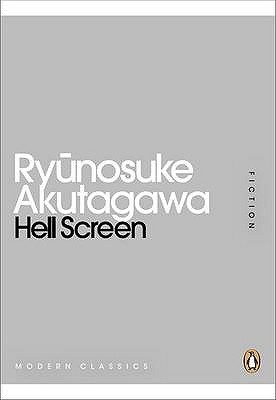
Hell Screen
"There can be no doubt that Akutagawa had more individuality than any other writer of his time and has left in Japanese literature a mass of artistic work, often grotesque and curious, that, while it undoubtedly angers the proletarian experimenters who now hold the stage and fight with lusty pens and a highly developed class consciousness against all that he stood for, will continue to live as long as men go on treasuring the fancies their fellows from time to time set down with care on paper."--Glen W. Shaw
58 pages, Paperback
First published January 1, 1918
About the author
Ryūnosuke Akutagawa
1,661 books2,253 followersAkutagawa Ryūnosuke (芥川 龍之介) was one of the first prewar Japanese writers to achieve a wide foreign readership, partly because of his technical virtuosity, partly because his work seemed to represent imaginative fiction as opposed to the mundane accounts of the I-novelists of the time, partly because of his brilliant joining of traditional material to a modern sensibility, and partly because of film director Kurosawa Akira's masterful adaptation of two of his short stories for the screen.
Akutagawa was born in the Kyōbashi district Tokyo as the eldest son of a dairy operator named Shinbara Toshizō and his wife Fuku. He was named "Ryūnosuke" ("Dragon Offshoot") because he was born in the Year of the Dragon, in the Month of the Dragon, on the Day of the Dragon, and at the Hour of the Dragon (8 a.m.). Seven months after Akutagawa's birth, his mother went insane and he was adopted by her older brother, taking the Akutagawa family name. Despite the shadow this experience cast over Akutagawa's life, he benefited from the traditional literary atmosphere of his uncle's home, located in what had been the "downtown" section of Edo.
At school Akutagawa was an outstanding student, excelling in the Chinese classics. He entered the First High School in 1910, striking up relationships with such classmates as Kikuchi Kan, Kume Masao, Yamamoto Yūzō, and Tsuchiya Bunmei. Immersing himself in Western literature, he increasingly came to look for meaning in art rather than in life. In 1913, he entered Tokyo Imperial University, majoring in English literature. The next year, Akutagawa and his former high school friends revived the journal Shinshichō (New Currents of Thought), publishing translations of William Butler Yeats and Anatole France along with original works of their own. Akutagawa published the story Rashōmon in the magazine Teikoku bungaku (Imperial Literature) in 1915. The story, which went largely unnoticed, grew out of the egoism Akutagawa confronted after experiencing disappointment in love. The same year, Akutagawa started going to the meetings held every Thursday at the house of Natsume Sōseki, and thereafter considered himself Sōseki's disciple.
The lapsed Shinshichō was revived yet again in 1916, and Sōseki lavished praise on Akutagawa's story Hana (The Nose) when it appeared in the first issue of that magazine. After graduating from Tokyo University, Akutagawa earned a reputation as a highly skilled stylist whose stories reinterpreted classical works and historical incidents from a distinctly modern standpoint. His overriding themes became the ugliness of human egoism and the value of art, themes that received expression in a number of brilliant, tightly organized short stories conventionally categorized as Edo-mono (stories set in the Edo period), ōchō-mono (stories set in the Heian period), Kirishitan-mono (stories dealing with premodern Christians in Japan), and kaika-mono (stories of the early Meiji period). The Edo-mono include Gesaku zanmai (A Life Devoted to Gesaku, 1917) and Kareno-shō (Gleanings from a Withered Field, 1918); the ōchō-mono are perhaps best represented by Jigoku hen (Hell Screen, 1918); the Kirishitan-mono include Hokōnin no shi (The Death of a Christian, 1918), and kaika-mono include Butōkai(The Ball, 1920).
Akutagawa married Tsukamoto Fumiko in 1918 and the following year left his post as English instructor at the naval academy in Yokosuka, becoming an employee of the Mainichi Shinbun. This period was a productive one, as has already been noted, and the success of stories like Mikan (Mandarin Oranges, 1919) and Aki (Autumn, 1920) prompted him to turn his attention increasingly to modern materials. This, along with the introspection occasioned by growing health and nervous problems, resulted in a series of autobiographically-based stories known as Yasukichi-mono, after the name of the main character. Works such as Daidōji Shinsuke no hansei(The Early Life of
Akutagawa was born in the Kyōbashi district Tokyo as the eldest son of a dairy operator named Shinbara Toshizō and his wife Fuku. He was named "Ryūnosuke" ("Dragon Offshoot") because he was born in the Year of the Dragon, in the Month of the Dragon, on the Day of the Dragon, and at the Hour of the Dragon (8 a.m.). Seven months after Akutagawa's birth, his mother went insane and he was adopted by her older brother, taking the Akutagawa family name. Despite the shadow this experience cast over Akutagawa's life, he benefited from the traditional literary atmosphere of his uncle's home, located in what had been the "downtown" section of Edo.
At school Akutagawa was an outstanding student, excelling in the Chinese classics. He entered the First High School in 1910, striking up relationships with such classmates as Kikuchi Kan, Kume Masao, Yamamoto Yūzō, and Tsuchiya Bunmei. Immersing himself in Western literature, he increasingly came to look for meaning in art rather than in life. In 1913, he entered Tokyo Imperial University, majoring in English literature. The next year, Akutagawa and his former high school friends revived the journal Shinshichō (New Currents of Thought), publishing translations of William Butler Yeats and Anatole France along with original works of their own. Akutagawa published the story Rashōmon in the magazine Teikoku bungaku (Imperial Literature) in 1915. The story, which went largely unnoticed, grew out of the egoism Akutagawa confronted after experiencing disappointment in love. The same year, Akutagawa started going to the meetings held every Thursday at the house of Natsume Sōseki, and thereafter considered himself Sōseki's disciple.
The lapsed Shinshichō was revived yet again in 1916, and Sōseki lavished praise on Akutagawa's story Hana (The Nose) when it appeared in the first issue of that magazine. After graduating from Tokyo University, Akutagawa earned a reputation as a highly skilled stylist whose stories reinterpreted classical works and historical incidents from a distinctly modern standpoint. His overriding themes became the ugliness of human egoism and the value of art, themes that received expression in a number of brilliant, tightly organized short stories conventionally categorized as Edo-mono (stories set in the Edo period), ōchō-mono (stories set in the Heian period), Kirishitan-mono (stories dealing with premodern Christians in Japan), and kaika-mono (stories of the early Meiji period). The Edo-mono include Gesaku zanmai (A Life Devoted to Gesaku, 1917) and Kareno-shō (Gleanings from a Withered Field, 1918); the ōchō-mono are perhaps best represented by Jigoku hen (Hell Screen, 1918); the Kirishitan-mono include Hokōnin no shi (The Death of a Christian, 1918), and kaika-mono include Butōkai(The Ball, 1920).
Akutagawa married Tsukamoto Fumiko in 1918 and the following year left his post as English instructor at the naval academy in Yokosuka, becoming an employee of the Mainichi Shinbun. This period was a productive one, as has already been noted, and the success of stories like Mikan (Mandarin Oranges, 1919) and Aki (Autumn, 1920) prompted him to turn his attention increasingly to modern materials. This, along with the introspection occasioned by growing health and nervous problems, resulted in a series of autobiographically-based stories known as Yasukichi-mono, after the name of the main character. Works such as Daidōji Shinsuke no hansei(The Early Life of
Ratings & Reviews
Friends & Following
Create a free account to discover what your friends think of this book!
Community Reviews
Displaying 1 - 2 of 2 reviews

February 25, 2022
Trong hơn 12 năm sáng tạo, Akutagawa đã cho thấy được sự quan sát tinh tế cũng như sức sáng tạo trong việc sử dụng những chất liệu cũ. Ở quãng đầu sự nghiệp sáng tác, có thể thấy ông đã dùng lại khá nhiều những điển tích, điển cố, truyện cổ, sự tích… khá đặc trưng của Nhật Bản. Tuy nhiên cũng như các nghiên cứu cho thấy, ông không giữ nguyên những gì nghe được, học được; mà có cách khoác lên chúng chiếc áo mới rất thú vị và nhiều đổi mới.
Cũng như người thầy Natsume Soseki của mình khai thác một cách triệt để cõi lòng của những tri thức trước ngưỡng cửa chuyển giao mới – cũ, Đông – Tây; Akutagawa tập trung khắc họa những giằng co giữa thiện – ác, đẹp đẽ - xấu xa cũng như những niềm vui giản dị và dục vọng thấp hèn trong mỗi con người. Được đánh giá là người dung hòa được những tinh hoa lý trí của chủ nghĩa tự nhiên và sắc màu lãng mạn phóng túng của chủ nghĩa duy mỹ; những “vùng tối” của con người mà ông mô tả vừa trần trụi nhưng cũng văn chương một cách không ngờ.
Qua đời do dùng quá liều thuốc ngủ ở tuổi 35, sự mất mát của Akutagawa để lại một mất mát lớn cho văn chương cận đại Nhật Bản nói riêng, cũng như thể loại truyện ngắn của thế giới nói chung. Với sự đa dạng thể loại từ việc sáng tạo các hình thức mới, sự mô tả tâm lý thần sầu cũng như cách thể hiện hiện thực vô cùng độc đáo; văn chương của Akutagawa là sự hòa trộn đặc biệt giữa hiện thực và huyền ảo, trong bút pháp hoa mỹ và súc tích.
Trong những tác phẩm cuối đời ông viết “Phù du ơi, chỉ sống ngoài mộ địa” như bao hàm trọn vẹn con người ông, một cánh bướm chao nghiêng giữa đêm trường tăm tối, rồi nằm mãi trên bãi tha ma của những linh hồn vật vờ. Nhưng là cánh bướm có sức nặng và tầm ảnh hưởng đến muôn đời sau.
Cũng như người thầy Natsume Soseki của mình khai thác một cách triệt để cõi lòng của những tri thức trước ngưỡng cửa chuyển giao mới – cũ, Đông – Tây; Akutagawa tập trung khắc họa những giằng co giữa thiện – ác, đẹp đẽ - xấu xa cũng như những niềm vui giản dị và dục vọng thấp hèn trong mỗi con người. Được đánh giá là người dung hòa được những tinh hoa lý trí của chủ nghĩa tự nhiên và sắc màu lãng mạn phóng túng của chủ nghĩa duy mỹ; những “vùng tối” của con người mà ông mô tả vừa trần trụi nhưng cũng văn chương một cách không ngờ.
Qua đời do dùng quá liều thuốc ngủ ở tuổi 35, sự mất mát của Akutagawa để lại một mất mát lớn cho văn chương cận đại Nhật Bản nói riêng, cũng như thể loại truyện ngắn của thế giới nói chung. Với sự đa dạng thể loại từ việc sáng tạo các hình thức mới, sự mô tả tâm lý thần sầu cũng như cách thể hiện hiện thực vô cùng độc đáo; văn chương của Akutagawa là sự hòa trộn đặc biệt giữa hiện thực và huyền ảo, trong bút pháp hoa mỹ và súc tích.
Trong những tác phẩm cuối đời ông viết “Phù du ơi, chỉ sống ngoài mộ địa” như bao hàm trọn vẹn con người ông, một cánh bướm chao nghiêng giữa đêm trường tăm tối, rồi nằm mãi trên bãi tha ma của những linh hồn vật vờ. Nhưng là cánh bướm có sức nặng và tầm ảnh hưởng đến muôn đời sau.

February 21, 2026
Quá sức thần diệu!
Displaying 1 - 2 of 2 reviews