

What do you think?
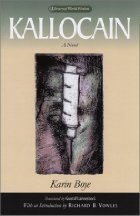
Kallocain
This is a novel of the future, profoundly sinister in its vision of a drab terror. Ironic and detached, the author shows us the totalitarian World-state through the eyes of a product of that state, scientist Leo Kall. Kall has invented a drug, kallocain, which denies the privacy of thought and is the final step towards the transmutation of the individual human being into a "happy, healthy cell in the state organism." For, says Leo, "from thoughts and feelings, words and actions are born. How then could these thoughts and feelings belong to the individual? Doesn't the whole fellow-soldier belong to the state? To whom should his thoughts and feelings belong then, if not to the state?"
As the first-person record of Leo Kall, scientist, fellow-soldier too late disillusioned to undo his previous actions, Kallocain achieves a chilling power and veracity that place it among the finest novels to emerge from the strife-torn Europe of the twentieth century.
As the first-person record of Leo Kall, scientist, fellow-soldier too late disillusioned to undo his previous actions, Kallocain achieves a chilling power and veracity that place it among the finest novels to emerge from the strife-torn Europe of the twentieth century.
193 pages, Paperback
First published January 1, 1940
About the author
Karin Boye
99 books274 followersKarin Boye was a Swedish poet and novelist.
She is perhaps most famous for her poems, of which the most well-known ought to be "Yes, of course it hurts" (Swedish: "Ja visst gör det ont") and "In motion" (Swedish: "I rörelse"). She also wrote a few novels including "Kallocain". Inspired by the rise of National Socialism in Germany, it was a portrayal of a dystopian society in the vein of Orwell's Nineteen Eighty-Four and Huxley's Brave New World (though written almost a decade before Nineteen Eighty-Four). In the novel, an idealistic scientist named Leo Kall invents Kallocain, a kind of truth serum.
Boye died in an apparent suicide when swallowing sleeping-pills after leaving home on April 23, 1941.
She is perhaps most famous for her poems, of which the most well-known ought to be "Yes, of course it hurts" (Swedish: "Ja visst gör det ont") and "In motion" (Swedish: "I rörelse"). She also wrote a few novels including "Kallocain". Inspired by the rise of National Socialism in Germany, it was a portrayal of a dystopian society in the vein of Orwell's Nineteen Eighty-Four and Huxley's Brave New World (though written almost a decade before Nineteen Eighty-Four). In the novel, an idealistic scientist named Leo Kall invents Kallocain, a kind of truth serum.
Boye died in an apparent suicide when swallowing sleeping-pills after leaving home on April 23, 1941.
Ratings & Reviews
Friends & Following
Create a free account to discover what your friends think of this book!
Community Reviews
Displaying 1 - 8 of 8 reviews

November 12, 2025
Dlaczego w zasadzie się o tym nie mówi? Nie wiem czy lepszy, niż Orwell, ale na pewno bardzo ciekawa perspektywa oprawcy, a nie ofiary (choć raczej każdy w tym świecie jest ofiarą)

April 5, 2025
siadło bardziej niż Orwell
"Wspomniała coś o pisemnych zbiorach, o których opowiadał jeden z aresztowanych. Grube papierowe zwoje zawierały znaki, które miały być zapisem dźwięków, jednak wcale nie były one podobne do naszych liter. Wydawało się, iż najbliżej im było do ptasich sylwetek na tle leżących w poprzek krat."
"Wspomniała coś o pisemnych zbiorach, o których opowiadał jeden z aresztowanych. Grube papierowe zwoje zawierały znaki, które miały być zapisem dźwięków, jednak wcale nie były one podobne do naszych liter. Wydawało się, iż najbliżej im było do ptasich sylwetek na tle leżących w poprzek krat."

Read
December 16, 2023Czy Orwell wiedział? A czy sama Boye przekartkowała Huxleya? Jak smutne są niektóre fakty z życia autorki…
September 11, 2026
Szkoda, że tak mało udało jej się napisać. Ale serce nie sługa.
Zakończenie niespodziewane, nie wiem co o nim sądzić.
Zakończenie niespodziewane, nie wiem co o nim sądzić.

July 20, 2025
3,5/5
nie wiem czy czytało mi się to trudno przez sposób wydania (bardzo małe marginesy = masa tekstu na stronie, + BIAŁE kartki) czy może przez to, że książka to same przemyślenia głównego bohatera??? a może jedno i drugie! dobra dystopia, chociaż nie wciągnęła mnie tak bardzo jak niektóre potrafią, ale to prawdopodobnie wina tego, że tu autorka skupia się na tym co się dzieje w głowie osób w systemie totalitarnym, a nie na opisywaniu świata itp.??
niestety nie wzbudzała we mnie dużo refleksji, bo NAPRAWDĘ trudno było mi się w to zaangażować 😭😭
nie wiem czy czytało mi się to trudno przez sposób wydania (bardzo małe marginesy = masa tekstu na stronie, + BIAŁE kartki) czy może przez to, że książka to same przemyślenia głównego bohatera??? a może jedno i drugie! dobra dystopia, chociaż nie wciągnęła mnie tak bardzo jak niektóre potrafią, ale to prawdopodobnie wina tego, że tu autorka skupia się na tym co się dzieje w głowie osób w systemie totalitarnym, a nie na opisywaniu świata itp.??
niestety nie wzbudzała we mnie dużo refleksji, bo NAPRAWDĘ trudno było mi się w to zaangażować 😭😭

October 30, 2022
czytanie tego po szwedzku było jeszcze przyjemniejsze niż po polsku polecam
May 26, 2023
Powieść kojarzyła mi się momentami z „Rokiem 1984” Orwella i „Nowym wspaniałym światem” Huxleya, ale chyba coś mi w niej umknęło, bo niektóre rzeczy mi się nie spinają.
August 17, 2025
Jestem w szoku że ta książka nie jest tak popularna, zwłaszcza że została wydana aż 9 lat przed Rokiem 1984 Orwella. Nie kliknęła ze mną w pełni, nie zmienia to faktu że jest to niedoceniona pozycja.
Displaying 1 - 8 of 8 reviews