

What do you think?
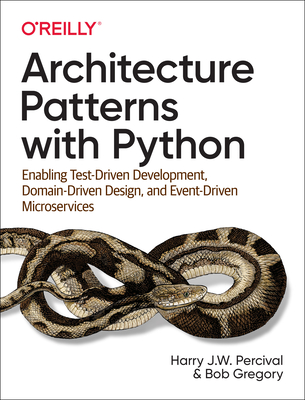
Architecture Patterns with Python: Enabling Test-Driven Development, Domain-Driven Design, and Event-Driven Microservices
As Python continues to grow in popularity, projects are becoming larger and more complex. Many Python developers are now taking an interest in high-level software architecture patterns such as hexagonal/clean architecture, event-driven architecture, and strategic patterns prescribed by domain-driven design (DDD). But translating those patterns into Python isn't always straightforward.
With this practical guide, Harry Percival and Bob Gregory from MADE.com introduce proven architectural design patterns to help Python developers manage application complexity. Each pattern is illustrated with concrete examples in idiomatic Python that explain how to avoid some of the unnecessary verbosity of Java and C# syntax. You'll learn how to implement each of these patterns in a Pythonic way.
Architectural design patterns include:
Dependency inversion, and its links to ports and adapters (hexagonal/clean architecture)
Domain-driven design's distinction between entities, value objects, and aggregates
Repository and Unit of Work patterns for persistent storage
Events, commands, and the message bus
Command Query Responsibility Segregation (CQRS)
Event-driven architecture and reactive microservices
With this practical guide, Harry Percival and Bob Gregory from MADE.com introduce proven architectural design patterns to help Python developers manage application complexity. Each pattern is illustrated with concrete examples in idiomatic Python that explain how to avoid some of the unnecessary verbosity of Java and C# syntax. You'll learn how to implement each of these patterns in a Pythonic way.
Architectural design patterns include:
Dependency inversion, and its links to ports and adapters (hexagonal/clean architecture)
Domain-driven design's distinction between entities, value objects, and aggregates
Repository and Unit of Work patterns for persistent storage
Events, commands, and the message bus
Command Query Responsibility Segregation (CQRS)
Event-driven architecture and reactive microservices
280 pages, Paperback
Published May 12, 2020
Ratings & Reviews
Friends & Following
Create a free account to discover what your friends think of this book!
Community Reviews
Displaying 1 - 1 of 1 review

October 16, 2023
Genialna książka. Można z niej nauczyć się bardzo interesujących i dobrze przemyślanych wzorców projektowych, które potem mogą nieraz uratować życie w pracy. Podejście umożliwiające pisanie unit testów, rozumienie się z biznesem i skalowalność kodu - z ukierunkowaniem na mikroserwisy, choć ich budowanie nie jest tu przedstawiane jako jedyna słuszna droga. Zdecydowanie nie żałuję, że przeczytałem tę pozycję od deski do deski. Niby książka techniczna, a jednak poradnik codziennej pracy. Gorąco polecam.
Displaying 1 - 1 of 1 review