

What do you think?
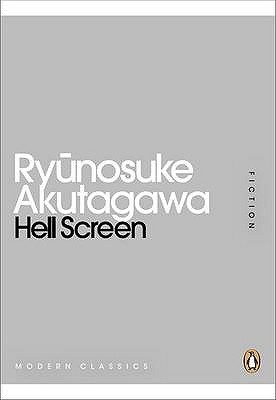
Hell Screen
"There can be no doubt that Akutagawa had more individuality than any other writer of his time and has left in Japanese literature a mass of artistic work, often grotesque and curious, that, while it undoubtedly angers the proletarian experimenters who now hold the stage and fight with lusty pens and a highly developed class consciousness against all that he stood for, will continue to live as long as men go on treasuring the fancies their fellows from time to time set down with care on paper."--Glen W. Shaw
58 pages, Paperback
First published January 1, 1918
About the author
Ryūnosuke Akutagawa
1,661 books2,253 followersAkutagawa Ryūnosuke (芥川 龍之介) was one of the first prewar Japanese writers to achieve a wide foreign readership, partly because of his technical virtuosity, partly because his work seemed to represent imaginative fiction as opposed to the mundane accounts of the I-novelists of the time, partly because of his brilliant joining of traditional material to a modern sensibility, and partly because of film director Kurosawa Akira's masterful adaptation of two of his short stories for the screen.
Akutagawa was born in the Kyōbashi district Tokyo as the eldest son of a dairy operator named Shinbara Toshizō and his wife Fuku. He was named "Ryūnosuke" ("Dragon Offshoot") because he was born in the Year of the Dragon, in the Month of the Dragon, on the Day of the Dragon, and at the Hour of the Dragon (8 a.m.). Seven months after Akutagawa's birth, his mother went insane and he was adopted by her older brother, taking the Akutagawa family name. Despite the shadow this experience cast over Akutagawa's life, he benefited from the traditional literary atmosphere of his uncle's home, located in what had been the "downtown" section of Edo.
At school Akutagawa was an outstanding student, excelling in the Chinese classics. He entered the First High School in 1910, striking up relationships with such classmates as Kikuchi Kan, Kume Masao, Yamamoto Yūzō, and Tsuchiya Bunmei. Immersing himself in Western literature, he increasingly came to look for meaning in art rather than in life. In 1913, he entered Tokyo Imperial University, majoring in English literature. The next year, Akutagawa and his former high school friends revived the journal Shinshichō (New Currents of Thought), publishing translations of William Butler Yeats and Anatole France along with original works of their own. Akutagawa published the story Rashōmon in the magazine Teikoku bungaku (Imperial Literature) in 1915. The story, which went largely unnoticed, grew out of the egoism Akutagawa confronted after experiencing disappointment in love. The same year, Akutagawa started going to the meetings held every Thursday at the house of Natsume Sōseki, and thereafter considered himself Sōseki's disciple.
The lapsed Shinshichō was revived yet again in 1916, and Sōseki lavished praise on Akutagawa's story Hana (The Nose) when it appeared in the first issue of that magazine. After graduating from Tokyo University, Akutagawa earned a reputation as a highly skilled stylist whose stories reinterpreted classical works and historical incidents from a distinctly modern standpoint. His overriding themes became the ugliness of human egoism and the value of art, themes that received expression in a number of brilliant, tightly organized short stories conventionally categorized as Edo-mono (stories set in the Edo period), ōchō-mono (stories set in the Heian period), Kirishitan-mono (stories dealing with premodern Christians in Japan), and kaika-mono (stories of the early Meiji period). The Edo-mono include Gesaku zanmai (A Life Devoted to Gesaku, 1917) and Kareno-shō (Gleanings from a Withered Field, 1918); the ōchō-mono are perhaps best represented by Jigoku hen (Hell Screen, 1918); the Kirishitan-mono include Hokōnin no shi (The Death of a Christian, 1918), and kaika-mono include Butōkai(The Ball, 1920).
Akutagawa married Tsukamoto Fumiko in 1918 and the following year left his post as English instructor at the naval academy in Yokosuka, becoming an employee of the Mainichi Shinbun. This period was a productive one, as has already been noted, and the success of stories like Mikan (Mandarin Oranges, 1919) and Aki (Autumn, 1920) prompted him to turn his attention increasingly to modern materials. This, along with the introspection occasioned by growing health and nervous problems, resulted in a series of autobiographically-based stories known as Yasukichi-mono, after the name of the main character. Works such as Daidōji Shinsuke no hansei(The Early Life of
Akutagawa was born in the Kyōbashi district Tokyo as the eldest son of a dairy operator named Shinbara Toshizō and his wife Fuku. He was named "Ryūnosuke" ("Dragon Offshoot") because he was born in the Year of the Dragon, in the Month of the Dragon, on the Day of the Dragon, and at the Hour of the Dragon (8 a.m.). Seven months after Akutagawa's birth, his mother went insane and he was adopted by her older brother, taking the Akutagawa family name. Despite the shadow this experience cast over Akutagawa's life, he benefited from the traditional literary atmosphere of his uncle's home, located in what had been the "downtown" section of Edo.
At school Akutagawa was an outstanding student, excelling in the Chinese classics. He entered the First High School in 1910, striking up relationships with such classmates as Kikuchi Kan, Kume Masao, Yamamoto Yūzō, and Tsuchiya Bunmei. Immersing himself in Western literature, he increasingly came to look for meaning in art rather than in life. In 1913, he entered Tokyo Imperial University, majoring in English literature. The next year, Akutagawa and his former high school friends revived the journal Shinshichō (New Currents of Thought), publishing translations of William Butler Yeats and Anatole France along with original works of their own. Akutagawa published the story Rashōmon in the magazine Teikoku bungaku (Imperial Literature) in 1915. The story, which went largely unnoticed, grew out of the egoism Akutagawa confronted after experiencing disappointment in love. The same year, Akutagawa started going to the meetings held every Thursday at the house of Natsume Sōseki, and thereafter considered himself Sōseki's disciple.
The lapsed Shinshichō was revived yet again in 1916, and Sōseki lavished praise on Akutagawa's story Hana (The Nose) when it appeared in the first issue of that magazine. After graduating from Tokyo University, Akutagawa earned a reputation as a highly skilled stylist whose stories reinterpreted classical works and historical incidents from a distinctly modern standpoint. His overriding themes became the ugliness of human egoism and the value of art, themes that received expression in a number of brilliant, tightly organized short stories conventionally categorized as Edo-mono (stories set in the Edo period), ōchō-mono (stories set in the Heian period), Kirishitan-mono (stories dealing with premodern Christians in Japan), and kaika-mono (stories of the early Meiji period). The Edo-mono include Gesaku zanmai (A Life Devoted to Gesaku, 1917) and Kareno-shō (Gleanings from a Withered Field, 1918); the ōchō-mono are perhaps best represented by Jigoku hen (Hell Screen, 1918); the Kirishitan-mono include Hokōnin no shi (The Death of a Christian, 1918), and kaika-mono include Butōkai(The Ball, 1920).
Akutagawa married Tsukamoto Fumiko in 1918 and the following year left his post as English instructor at the naval academy in Yokosuka, becoming an employee of the Mainichi Shinbun. This period was a productive one, as has already been noted, and the success of stories like Mikan (Mandarin Oranges, 1919) and Aki (Autumn, 1920) prompted him to turn his attention increasingly to modern materials. This, along with the introspection occasioned by growing health and nervous problems, resulted in a series of autobiographically-based stories known as Yasukichi-mono, after the name of the main character. Works such as Daidōji Shinsuke no hansei(The Early Life of
Ratings & Reviews
Friends & Following
Create a free account to discover what your friends think of this book!
Community Reviews
Displaying 1 - 4 of 4 reviews

August 4, 2011
"Jikoku Hen" è una manciata di pagine che racconta la potenza, il dramma, la lucida follia e il perfetto meccanismo che solo i racconti di Akutagawa sanno donare. E' una testimonianza di quanto questo scrittore non rappresenti solo una delle vette della letteratura giapponese moderna, ma non sfiguri di fianco ad esimi colleghi occidentali come Lovecraft e Poe.
Il racconto, meno osannato di "Rashomon", gli è forse superiore per la vivida scena infernale che dipinge davanti agli occhi del lettore, i cui meccanismi di costruzione e disvelamento sono meno percepibili dell'illustre predecessore.
Il racconto è tradotto in italiano nella raccolta "Rashōmon e altri racconti" della Tea, ma se avete una conoscenza discreta dell'inglese, consiglio questa versione, che con 3 sterline regala una traduzione che sembra finalmente all'altezza e uno spassoso e amarissimo raccontino finale, "The Spider Thread".
Il racconto, meno osannato di "Rashomon", gli è forse superiore per la vivida scena infernale che dipinge davanti agli occhi del lettore, i cui meccanismi di costruzione e disvelamento sono meno percepibili dell'illustre predecessore.
Il racconto è tradotto in italiano nella raccolta "Rashōmon e altri racconti" della Tea, ma se avete una conoscenza discreta dell'inglese, consiglio questa versione, che con 3 sterline regala una traduzione che sembra finalmente all'altezza e uno spassoso e amarissimo raccontino finale, "The Spider Thread".
June 26, 2026
La prosa mi ha letteralmente lasciato a bocca aperta dalla prima pagina ( 《 but such critics might be likened to the proverbial blind men who descrined the elephant according only to the parts they could feel. 》 ).
La storia cattura immediatamente l'attenzione, uno di quei racconti che si chiede fino a che punto può un artista spingersi per la sua arte e cosa è disposto a sacrificare per essa.
Molto bello non me lo aspettavo, di solito non leggo short stories ma sicuramente leggerò altro di Akutagawa
La storia cattura immediatamente l'attenzione, uno di quei racconti che si chiede fino a che punto può un artista spingersi per la sua arte e cosa è disposto a sacrificare per essa.
Molto bello non me lo aspettavo, di solito non leggo short stories ma sicuramente leggerò altro di Akutagawa
July 21, 2020
Pensavo che i racconti brevi non facessero per me, ma la verità è che non avevo ancora scoperto Akutagawa
July 3, 2025
Ho bisogno di una seduta psicoterapeutica
Displaying 1 - 4 of 4 reviews