

What do you think?
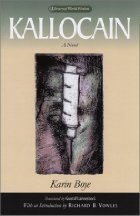
Kallocain
This is a novel of the future, profoundly sinister in its vision of a drab terror. Ironic and detached, the author shows us the totalitarian World-state through the eyes of a product of that state, scientist Leo Kall. Kall has invented a drug, kallocain, which denies the privacy of thought and is the final step towards the transmutation of the individual human being into a "happy, healthy cell in the state organism." For, says Leo, "from thoughts and feelings, words and actions are born. How then could these thoughts and feelings belong to the individual? Doesn't the whole fellow-soldier belong to the state? To whom should his thoughts and feelings belong then, if not to the state?"
As the first-person record of Leo Kall, scientist, fellow-soldier too late disillusioned to undo his previous actions, Kallocain achieves a chilling power and veracity that place it among the finest novels to emerge from the strife-torn Europe of the twentieth century.
As the first-person record of Leo Kall, scientist, fellow-soldier too late disillusioned to undo his previous actions, Kallocain achieves a chilling power and veracity that place it among the finest novels to emerge from the strife-torn Europe of the twentieth century.
193 pages, Paperback
First published January 1, 1940
About the author
Karin Boye
99 books271 followersKarin Boye was a Swedish poet and novelist.
She is perhaps most famous for her poems, of which the most well-known ought to be "Yes, of course it hurts" (Swedish: "Ja visst gör det ont") and "In motion" (Swedish: "I rörelse"). She also wrote a few novels including "Kallocain". Inspired by the rise of National Socialism in Germany, it was a portrayal of a dystopian society in the vein of Orwell's Nineteen Eighty-Four and Huxley's Brave New World (though written almost a decade before Nineteen Eighty-Four). In the novel, an idealistic scientist named Leo Kall invents Kallocain, a kind of truth serum.
Boye died in an apparent suicide when swallowing sleeping-pills after leaving home on April 23, 1941.
She is perhaps most famous for her poems, of which the most well-known ought to be "Yes, of course it hurts" (Swedish: "Ja visst gör det ont") and "In motion" (Swedish: "I rörelse"). She also wrote a few novels including "Kallocain". Inspired by the rise of National Socialism in Germany, it was a portrayal of a dystopian society in the vein of Orwell's Nineteen Eighty-Four and Huxley's Brave New World (though written almost a decade before Nineteen Eighty-Four). In the novel, an idealistic scientist named Leo Kall invents Kallocain, a kind of truth serum.
Boye died in an apparent suicide when swallowing sleeping-pills after leaving home on April 23, 1941.
Ratings & Reviews
Friends & Following
Create a free account to discover what your friends think of this book!
Community Reviews
Displaying 1 - 2 of 2 reviews
Read
October 24, 2022Seda raamatut lugesin nimelt selle pärast, et veedan päris palju aega Karin Boye nimelises raamatukogus. Nüüd on seal kohe palju uhkem olla! Ja kodusem ka - raamat saab ju lugedes natuke nagu sõbraks.

December 26, 2022
Ma ei suutnud seda raamatut lõpuni lugeda. Õigupoolest võtsin selle ette vaid sellepärast, et Karin Boye on ikkagi klassik ja midagi peaks olema temalt lugenud. Lisaks ütles mu lapselaps, kellel see raamat Rootsis just kohustusliku kirjandusena loetud sai, et talle väga meeldis (aga talle meeldivadki ulmekad). Nii et ma väga soovisin, et see oleks mulle meeldinud, aga kahjuks ei suutnud ma seda lõpuni lugeda, kuigi mulle üldse ei meeldi midagi pooleli jätta. Aga miks siis ei meeldinud? Esiteks ma pole üldse mingi ulmekate fänn, ükskõik kui realistlikult sellised lood ka ei mõjuks. Samal põhjusel ei sobi mulle ka Atwood, kellelt olen suutnud lugeda vaid ühe raamatu ja sellest mulle piisas, et aru saada, et ta lihtsalt pole minu kirjanik. Tundub, et Boyega on sama lugu.
Peamine põhjus siiski selles, et Kallocaini lugemine tekitab minus halva tunde - olustik raamatus on kõle ja külm ja südametu ja et see kõik mulle nii teravalt mõjus, võib-olla ongi tõestuseks Boye imeliselt heast kirjutamisoskusest, nii et ega autorile polegi midagi ette heita. See raamat pole lihtsalt minu raamat ja keerulisemat põhjust polegi. Toore jõuga ja süütundeid tundes rebisin end sellest raamatust lahti, lohutades end sellega, et elu on liiga lühike, et seda raisata millelegi, mis mulle ei meeldi. Kahju, aga nii on.
Peamine põhjus siiski selles, et Kallocaini lugemine tekitab minus halva tunde - olustik raamatus on kõle ja külm ja südametu ja et see kõik mulle nii teravalt mõjus, võib-olla ongi tõestuseks Boye imeliselt heast kirjutamisoskusest, nii et ega autorile polegi midagi ette heita. See raamat pole lihtsalt minu raamat ja keerulisemat põhjust polegi. Toore jõuga ja süütundeid tundes rebisin end sellest raamatust lahti, lohutades end sellega, et elu on liiga lühike, et seda raisata millelegi, mis mulle ei meeldi. Kahju, aga nii on.
Displaying 1 - 2 of 2 reviews