Jump to ratings and reviews
Rate this book

The Fruit Palace

Rate this book
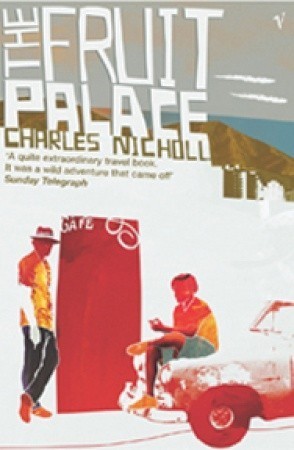
Charles Nicholl is on a quest for 'The Great Cocaine Story'. The time is the early eighties and the place - Colombia. The Fruit Palace is a little whitewashed caf that legally dispenses tropical fruit juices, has another purpose as the meeting place for a variety of black market activities and the place where Nicholl unwittingly begins his quest. Nicholl relates his story with irrepressible energy and vividness as he careens from shantytowns and waterfront barrios to steamy jungle villages and slaughterhouses. He survives fever, earthquake, and discovery by a dealer who threatens to 'check his oil' with a knife. And he emerges with a triumphant piece of travel writing which is also a comic extravaganza.

334 pages, Paperback

First published January 1, 1985

8 people are currently reading
600 people want to read

About the author

Charles Nicholl

23 books67 followers
Charles Nicholl is an English author specializing in works of history, biography, literary detection, and travel. His subjects have included Christopher Marlowe, Arthur Rimbaud, Leonardo da Vinci, Thomas Nashe and William Shakespeare. Besides his literary output, Nicholl has also presented documentary programs on television. In 1974 he was the winner of the Sunday Times Young Writer Award for his account of an LSD trip entitled 'The Ups and The Downs'.

Nicholl was educated at King's College, Cambridge, and is a fellow of the Royal Society of Literature and has lectured in Britain, Italy and the United States. He lives in Lucchesia in Italy with his wife and children. He also lectures on Martin Randall Travel tours.

Ratings & Reviews

What do you think?
Rate this book

Friends & Following

Create a free account to discover what your friends think of this book!

Community Reviews

5 stars
107 (29%)
4 stars
140 (38%)
3 stars
91 (25%)
2 stars
18 (5%)
1 star
4 (1%)
Displaying 1 - 30 of 34 reviews
Profile Image for Daren.
1,536 reviews4,548 followers
March 14, 2016
This book was a four and a half star read, rounded up to 5.

Other reviews suggest it is dated, and focussed on the cocaine and nothing else, and is therefore somehow flawed. There is also the glorifying, gonzo style of journalism - the author becoming the story. For me these were positives, not negatives.

Dated? Well, sure - it was written in 1985, about travel primarily in 1983 (there were some stories from earlier travels in Colombia), so of course 33 years later it will not be a current story - it will be snapshot of the situation of the time... how can that be a negative? It's not a Lonely Planet guide.

Focussed on the drug culture - again - yes, primarily it is. Again - it's not a Lonely Planet guide, and the book makes no claim to be other than the travelogue of an author seeking "The Great Cocaine story" for his publisher.

The authors high octane adventures, in which he manages to find himself in what can only be described in perilously dangerous situations, dealing with shady people willingly or unwillingly, make this book all the more compelling to read, and hard to put down.

Believability? Yeah, I think the door is open for some speculation into how much embellishment there has been here, but who can tell - Colombia mid '80s was surely a pretty loose place to be.
Advocating of drug use? The author is certainly not holding back, and takes full advantage of the circumstances of his research - and this book goes no way towards condemning the evils of drugs (quite the opposite really), but this is not the purpose of this book.

The authors involvement on the grass roots side of the cocaine trade - as the blurb says - the corner boys and street girls, the fixers and smugglers, the 'cooks' and the 'mules', as well as the meeting with the man who was possibly the mister big, but circumstantially may have been... are the highlights. There are other things going on, some light history, some science on the manufacture, some other adventures, but ultimately it comes back to the cocaine.

A great read, I only hope his other books are as compelling.
Profile Image for Mereke.
363 reviews
November 6, 2008
Perhaps it is just that this account is now very dated - Colombia in 1983 is quite different from Colombia today. But as a foreigner living in Bogota I found a good deal of this book marginally offensive and other bits of it just outright inaccurate and completely un-reflective of my own 4 year experience in the country. It's described as a travel logue of Colombia, but really it covers a very limited amount of this diverse nation - seeming to avoid almost any discussion of any Colombians who aren't either drugloards, crooks, addicts or otherwise removed from mainstream society and little of the rich and expansive cultural traditions in music, food, dancing, and naturalism come forth. I would certainly not read this book if you are thinking about a trip to Colombia and wondering what it's like or use it as any sort of informative report about what Colombia is like today. Colombia has a enough trouble correcting foreign reports and ideas about itself without books like this to weigh it down. Shame on the author.
Profile Image for Bart.
Author 1 book125 followers
April 13, 2015
This is an excellent read, in the tradition of most all travelogues written by Brits. As the Texas novelist and book collector Larry McMurtry so aptly put it: The English have always traveled everywhere and written well about it.

This book, written by Charles Nicholl about a Colombian excursion in 1983, uses cocaine to tell its story - in what occasionally feels like a willful attempt to make the pages sexier and more vibrant than perhaps its author's true interests actually were. Nicholl makes a point of snorting and smoking whatever is available, but he sees drugs much more like a tool in the belt than a reason for living. It is not quite Fear and Loathing in Baranquilla, as its publisher likely intended, but it is rollicking and fun in the same way Hunter S. Thompson is, though perhaps drier for being British.

That aridity is welcomed, though, when set against the wetness Thompson bequeathed to the American memoir - all wide eyes and amazing coincidences.

Here are some examples of Nicholl's words:

Somewhere behind it all you could see she had pretty once, and the sharpness still flashed in her eyes like a zoo animal's memory of the jungle. (p. 73)

and

Tio Juan settled the car at a comfortable speed, around forty, and held it there against all comers. We overtook the truck convoys at forty. We swerved onto the hard shoulder at forty. Later we would be lurching down the dirt roads into Boyacá at forty, with only an occasional, grudging deceleration for the sharpest and sheerest of the hairpin bends. (p. 102)

and

In a mountain town you feel exposed and dazzled. In a jungle town you are threatened, compressed, sandwiched between the laden air and the mounting silt. (p. 162)

and

This was pure Snow White, remember. Not a trace of cut, not a footstep in the snow. As I pushed back through the swing doors, I was 10 foot tall with a face made of ice. (p. 278)

Finally, Nicholl mistakes initially most of the persons he meets in his adventure, and he corrects these mistakes with more honest appraisals later. Or he doesn't. When compared to recent American entries in this genre, then, Nicholl's prose feels more honest at every turn.
Profile Image for Peter Hallahan.
7 reviews
July 3, 2019
Great book to read while travelling. Easy, light prose to keep you on the road.
Profile Image for thereadytraveller.
127 reviews31 followers
June 19, 2018
Part fiction, part non-fiction, Charles Nicholl's The Fruit Palace was a book begging to be written on the Great Cocaine Story from the 1980's. Setting out to report on the who, how and why of Colombian cocaine smuggling, Nicholl propels himself to the forefront of the story, in typical gonzo fashion. In the process he he samples plenty of product, deals with loads of shady characters and puts himself squarely in harms way in order to try and get the scoop.

The Fruit Palace initially began life as a much shorter piece written on a dodgy cocaine deal from the whitewashed cafe after which the book is named that is used for a range of nefarious deals. After the stories subsequent rejection from Rolling Stone, it is recast some 12 years later as the opening chapter of The Fruit Palace.

Written in the best tradition of Hunter S. Thompson, The Fruit Palace delves deep into its subject matter, the manufacturing and distributing of cocaine. The blow-by-blow account of how cocaine is manufactured in the jungle laboratories, illustrates the lengths to which Nicholl goes in his research. And Nicholl is there to capture it all line-by-line.

Surprisingly, there is also a lot of travel infused into the main story, and it is here that Nicholl is at his descriptive best, whether recalling the beauty of Colombia's jungles, its people or its crumbling architecture. Nicholl also manages to infuse a fair bit of humour between the pages. Not snort out loud funny, but entertaining in that typical English understated way, all the same.

Yes, The Fruit Palace is dated. The Colombia of today represents nothing like the Colombia that Nicholl travelled through, both literally and in his mind, in the 1980s. But The Fruit Palace still represents a genuinely original piece of gonzo journalism that effortlessly cuts fact with fiction and is a travel story that is not to be sniffed at.
Profile Image for David Schmalz.
1 review
March 26, 2013
Read this book while traveling through Colombia and enjoyed it thoroughly. It's not one to turn to for hard-hitting scoops, but Nicholl does a fine job putting the reader into his shoes, which—due to the book he was contracted to write—took him into dicey situations. There were a few slow sections but all in all Nicholl did a great job with the material at hand. What starts out seemingly an as expose becomes instead a narrative of an Englishman in way over his head, and his portrayal of his experience writing this book is noteworthy, and will live on healthily in the annals of gonzo journalism.
Profile Image for Babs.
605 reviews12 followers
September 21, 2015
I'm not really sure what to make of this book to be honest. It is very dated, and comes across so. Being so involved in the drug trade, this datedness seems all the more obvious.

Some of the characters were interesting, and there are certainly bits in the second-half of the book that keep you on the edge of your seat, but overall I felt this was a rather average read. The writing style didn't really sit with me all that well, and the author's continued use of Spanish just started to annoy me by the end of the book. I also felt the final journey into the Sierra Nevada didn't bring anything to the book at all.
Profile Image for Stephanie Brook.
19 reviews8 followers
June 19, 2009
What a story! And a true one at that... I bought this book before moving to Colombia. I thought it would give me a taste of the place I was going to be living. It did just that! I loved the descriptions of the jungle, villages, indigenous population, and the overall beauty of the land that he discovered on his quest for a good drug story. That he doesn't get killed is amazing, and I wonder if he exaggerates just a wee bit at times, but it is a very good book to read if you plan to come to Colombia!
Profile Image for Peter.
45 reviews
December 11, 2011
I recently went to Cartagena, Colombia and read this book during my trip. Really wish I would have read it beforehand as it offered an amazing insight into Colombia. I finished the book as I was preparing to head home and knew that I had missed a side of this beautiful country that Nichols describes. Roughly disguised as a foray into the Cocaine steeped underbelly of a hot and steamy latin country, Nichols ends up uncovering a wonderously rich and inviting place that offers endless escapes.
Profile Image for Wasen.
61 reviews1 follower
March 5, 2017
This book is a little pocket of the history of Colombia. It captures the life of the author and a country in a capsule in time. It gives you a short interesting and exhilarating account of the real lives surrounding the cocaine empire of Colombia. While it can give you an insight into that story, it is easy to forget when completely engrossed in the story that it's one sided and not a full history lesson. What I find most interesting is that it acts like a small travel guide for those wishing to visit and learn a little bit more.
Profile Image for David Koblos.
305 reviews9 followers
December 18, 2012
The Great Cocaine Story (of the 1980's). As narrow and sensationalistic it might seem, Charles Nicholl managed to put together an amazingly entertaining, exciting, incredible yet believable travel book, that addresses many ordinary, everyday things in Columbia other than cocaine.
Profile Image for Stefani.
365 reviews16 followers
August 4, 2022
I don't know whether it's the self-imposed isolation or the unrelenting wanderlust I've been forced to suppress this entire stupid pandemic, but I've been on a real travel kick these days. And if you're interpreting “travel kick” to mean that that I've actually left my house, well, then I'm sorry to have led you on. What I mean to say is that I've been chasing this dragon by binging on YouTube travel vlogs that feel really clickbaity (“See how I almost died”) but feature brazen influencers wandering Brazilian favelas with selfie sticks strapped to their head or some other reckless nonsense. But you can only watch so many of those videos, and that's where the '80's-era travel memoirs like Fruit Palace fill the void. Hot on the heels of reading about Bolivia, I was able to get my hands on this little number about cocaine cowboys in Colombia. Yee-haw. Not only did it whet my appetite for vicarious thrills, but the author's potent description of the country's many moods—its chaotic cities that go silent in mid-afternoon, the sultry tropical plains where the Indigenous population lives—were so vivid and richly descriptive, it allowed me to completely escape into his reality. Isn't that what all good travel memoirs should do? And while I can't agree that this book is exploitative as other reviewers have said—after all, he was there during the height of the cocaine craze, plus basuko is still a thing according to Vice—I do think there was a fair amount of embellishment in the details. For example, there's a plan that goes awry, and I can't say more without giving it away, but I think his portrayal of certain cocaine smugglers as understanding just doesn't hold up in court....Just sayin' Anyway, it's a highly entertaining read, if a bit long.

The town had the feel of a tropical smugglers' den. It was a rakish, seedy, avaricious little place but somehow exhilarating in the way it lived according to its own laws. The whole thing felt like a game.

Gus was one of those people who disappeared into South America, lost all notion of where he had come from and where he was going. They call this the continent of fugitives, the place where a man can lose his own shadow, and it is not just the Nazi war criminals and the Lucky Lucans who disappear from view in its nooks and crannies.
Profile Image for Jack Greenwood.
131 reviews19 followers
November 22, 2020
A tale that is almost too good to be true.

Haphazard, unpredictable and irreverent, the book captures the physical and social (gringo blinkered) landscape of South America well. Clearly this guy had a good time in Colombia, and I enjoyed reading about it.

He gets across the variety of experience well; sierra scaling to the Arhuacos, gliding the San Juan jungle rivers, basking in Barranquillan sunscapes.

There were even some gorgeous notes on nature:
The walled garden rambled down the slope, a quarter of an acre of unkempt fruit-trees, big-leaved avocados and slender guavas with polished, marmoreal, fudge-coloured bark. The bananas were still green, hanging in clusters off what is not so much a branch as a tendril, which droops down like a proboscis from the broad shiny leaves, and terminates in an odd, mauve, heart-shaped glans.
Chasing the cocaine supply line threw up some absurd encounters. Bombing around Bogota and Medellin, escaping from a meat packer, foisting a bulging briefcase of coke to a Swede in a toilet. These parts kept me hooked.

What I didn’t like was the prominent machismo, a weakness the author accused Colombians of literally midway through putting down women himself:
Her breasts jutted impressively under her T-shirt. Waldino rallied his battle-weary machismo. She gave a quick, nervy shrug that made her breasts shudder, and chewed even harder on her gum.
Of its time, Smov its time. There is no excuse for degrading people like that. He appears to think women are sexual objects first, other things later (although the other things are not always mentioned).

He also refers to South American men as ‘simian’ (relating to or affecting apes or monkeys) a concerning amount of times. Minus points for this.

Be wary of that. But also read it because reading is good.
Profile Image for Michael Norwitz.
Author 16 books12 followers
August 20, 2023
I was a bit unsure how to rate this.

Nicholl travels to Columbia to research the cocaine trade. While there, he also explores some areas off the beaten path. He's an engaging writer, some of the book is amusing, and the climax of the story - in which he gets involved personally in a drug trade which goes completely awry - is extremely memorable.

On the other hand 'white man explores foreign country and writes with a condescending air about the darker-skinned people he encounters' is a tired genre by now, and while an expose of the cocaine trade was likely cutting-edge when the book was written in the 1980s, it feels less so now.

I also lost a lot of respect for the author when he tries (unsuccessfully, fortunately) to have sex with a 15-year-old prostitute.
Profile Image for Julian Walker.
Author 3 books11 followers
January 9, 2021
Witty, intriguing and highly entertaining, this investigation into the world of Colombian cocaine is also part travelogue, as the author brilliantly describes the world around him, from back street slums and rainforest storms, to local village hospitality, river boat travel and much more besides.

A cracking read which both informs and disturbs - in just the right proportions - and cleverly unfolds like an adventure thriller, with a cast of genuine villains and a rogue's gallery of ne'er-do-wells and wannabe players.

Great stuff.
Profile Image for Anna Marsden.
85 reviews1 follower
May 2, 2025
SO GOOD. Slow going to begin with, it took me a while to really get into it but once I did, i couldn’t put it down. Interesting, funny, unique and brilliant, this is a book i’m sure anyone will enjoy. at its climax the story becomes a thriller, a smuggling tale that felt far from your usual travel story. it makes me sad reading travel books by men, they seem to fear nothing and have all these amazing experiences because they seem to be able to earn respect rather than be objectified. came to a great full circle at the end. brilliant.
Profile Image for Buddug.
81 reviews
May 27, 2019
Good story but very dated - it was clearly written in a different time but even so, some of the language and terms used are hard to ignore and there are a few cringey moments. For this reason it's sometimes hard to like the main character and I found myself wanting him to fail. But if you can look over that it's worth it for the story and graphic descriptions of 1980s Columbia, parts of which were really interesting.
Profile Image for Jeroen Van de Crommenacker.
740 reviews6 followers
February 9, 2018
This book has my all time favourite scene in it. The scene at the harbour with the cocaine literally had me in stitches. But the book is all-over hilarious and you even have the impression you learn something new. Brilliant!
34 reviews
January 16, 2025
Very good fun. Mixed genres really. Where the journalism bleeds into fiction is sometimes clear. especially at the end I think, but not always. Then it's a good travel book too. The combination of forms doesn't always sit comfortably.
Profile Image for Gordon.
231 reviews49 followers
December 20, 2010
Written in 1985, The Fruit Palace is the classic book about the early phase of the Columbian cocaine trade, or so the Lonely Planet guide to Columbia says. This era preceded the later phase of the industry when left-wing FARC revolutionaries, right-wing paramilitaries and large scale "narcotraficantes" all became locked in battle with each other, with the Columbian government, and with the long-arm of the US government. In turn, that phase came to an end under President Uribe, who came to power in 2002, and who over the next 8 years largely succeeded in crushing FARC, paramilitaries, and major traffickers alike.

But The Fruit Palace is only partly about the narcotics business. More importantly, it's a great book about the completely lunatic side of travel in strange places. The author, a journalist on assignment, takes his mission to ludicrous and potentially fatal extremes. His account of how he becomes involved in a smuggling a shipment of cocaine onto a Swedish freighter is both wildly comic and adrenalin-charged at the same time -- it is truly a classic tale of just how wrong the best-laid plans can go. At the same time, Nicholl is still able to write with a lot of perceptiveness, depth of historical perspective, and cultural awareness that you just don't find with most travel writers. Highly recommended, especially if you're planning to travel to that part of the world as I recently did.
Profile Image for Christina.
64 reviews6 followers
October 24, 2007
Turning the pages of this book there were times I felt transported to some seedy dive bar (a good thing) listening to the rambling life story of some fully marinated patron in the corner that turns out to be a fascinating dude. Or maybe that's just my little fantasy. The Fruit Palace is both the memoir of a journalist who goes down to Columbia in the 80s to chronicle the story of cocaine and the story he intended to write rolled into one. It was fun to read and I got wrapped up in all of the information around how cocaine is created and the cultural context of the industry. In my opinion, this is the movie they should have made instead of Blow.
Profile Image for Ariadna73.
1,726 reviews119 followers
February 23, 2014
I liked the beginning, the descriptions of Santa Marta and Bogotá. I also liked the depictions of the foreign people living in Colombia because there is where real cocaine is found. I liked the descriptions on how to extract the alcaloid from coca leaves. It is surprising how a person is willing to put such a plethora of bad chemicals in their bodies. I have to confess that when he started to spit cocaine-laced mucus on the streets of Bogotá my stomach was revolted and I stopped reading altogether.
17 reviews
May 31, 2010
I read this book in its French translation, Colombie Cocaine, which is perhaps a more accurate description of the theme of the story: Nicholl's trip to Colombia in the early 1980s to learn about the cocaine trade.
Having been to Colombia a few months ago, I found it interesting to see what it was like nearly 30 years ago, as well as being able to identify places I had been to.
Well written, although he seems to have done more than his fair share of sampling the product.
13 reviews6 followers
December 29, 2009
Really enjoyed this book, coming off a (very different kind of) trip from Colombia myself. Nicholl is fun to read and he manages to convey a high level of affection and respect for Colombia despite mostly writing about its drug trade--and breaking a few laws himself, for the sake of journalism (mostly). It seems an honest, often tense look at the cocaine industry of the early 80s.
90 reviews32 followers
June 15, 2007
Best travel account I've read.
Profile Image for Kathryn.
15 reviews3 followers
March 19, 2008
Hopefully people have stopped writing books like this about Colombia. It's occassionally exploitative in tone, but engaging and ultimately somewhat informative.
Profile Image for Ken Lumberg.
10 reviews2 followers
August 6, 2012
Cool book about the author's trip inside the world of cocaine smuggling in Colombia in the 1980's.
Profile Image for Lori.
9 reviews2 followers
October 18, 2012
My only complaint is that this man doesn't write more books.
Displaying 1 - 30 of 34 reviews

Can't find what you're looking for?

Get help and learn more about the design.