

What do you think?
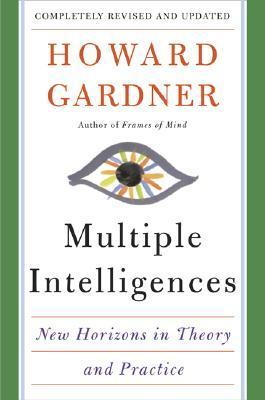
Multiple Intelligences: New Horizons
The most complete account of the theory and application of Multiple Intelligences available anywhere.
Howard Gardner's brilliant conception of individual competence, known as Multiple Intelligences theory, has changed the face of education. Tens of thousands of educators, parents, and researchers have explored the practical implications and applications of this powerful notion, that there is not one type of intelligence but several, ranging from musical intelligence to the intelligence involved in self-understanding.
Multiple Intelligences distills nearly three decades of research on Multiple Intelligences theory and practice, covering its central arguments and numerous developments since its introduction in 1983. Gardner includes discussions of global applications, Multiple Intelligences in the workplace, an assessment of Multiple Intelligences practice in the current conservative educational climate, new evidence about brain functioning, and much more.
Howard Gardner's brilliant conception of individual competence, known as Multiple Intelligences theory, has changed the face of education. Tens of thousands of educators, parents, and researchers have explored the practical implications and applications of this powerful notion, that there is not one type of intelligence but several, ranging from musical intelligence to the intelligence involved in self-understanding.
Multiple Intelligences distills nearly three decades of research on Multiple Intelligences theory and practice, covering its central arguments and numerous developments since its introduction in 1983. Gardner includes discussions of global applications, Multiple Intelligences in the workplace, an assessment of Multiple Intelligences practice in the current conservative educational climate, new evidence about brain functioning, and much more.
320 pages, Paperback
First published January 1, 1993
About the author
Howard Gardner
146 books688 followersHoward Gardner is the John H. and Elisabeth A. Hobbs Professor of Cognition and Education at the Harvard Graduate School of Education. He also holds positions as Adjunct Professor of Psychology at Harvard University and Senior Director of Harvard Project Zero. Among numerous honors, Gardner received a MacArthur Prize Fellowship in 1981. He has received honorary degrees from 26 colleges and universities, including institutions in Bulgaria, Chile, Greece, Ireland, Israel, Italy, and South Korea. In 2005 and again in 2008, he was selected by Foreign Policy and Prospect magazines as one of the 100 most influential public intellectuals in the world. The author of 25 books translated into 28 languages, and several hundred articles, Gardner is best known in educational circles for his theory of multiple intelligences, a critique of the notion that there exists but a single human intelligence that can be adequately assessed by standard psychometric instruments.
During the past two decades, Gardner and colleagues at Project Zero have been involved in the design of performance-based assessments; education for understanding; the use of multiple intelligences to achieve more personalized curriculum, instruction, and pedagogy; and the quality of interdisciplinary efforts in education. Since the middle 1990s, in collaboration with psychologist Mihaly Csikszentmihalyi and William Damon, Gardner has directed the GoodWork Project-- a study of work that is excellent, engaging, and ethical. More recently, with long time Project Zero colleagues Lynn Barendsen and Wendy Fischman, he has conducted reflection sessions designed to enhance the understanding and incidence of good work among young people. With Carrie James and other colleagues at Project Zero, he is also investigating the nature of trust in contemporary society and ethical dimensions entailed in the use of the new digital media. Among new research undertakings are a study of effective collaboration among non-profit institutions in education and a study of conceptions of quality, nationally and internationally, in the contemporary era. In 2008 he delivered a set of three lectures at New York's Museum of Modern Art on the topic "The True, The Beautiful, and The Good: econsiderations in a post-modern, digital era."
from http://www.howardgardner.com/bio/bio....
During the past two decades, Gardner and colleagues at Project Zero have been involved in the design of performance-based assessments; education for understanding; the use of multiple intelligences to achieve more personalized curriculum, instruction, and pedagogy; and the quality of interdisciplinary efforts in education. Since the middle 1990s, in collaboration with psychologist Mihaly Csikszentmihalyi and William Damon, Gardner has directed the GoodWork Project-- a study of work that is excellent, engaging, and ethical. More recently, with long time Project Zero colleagues Lynn Barendsen and Wendy Fischman, he has conducted reflection sessions designed to enhance the understanding and incidence of good work among young people. With Carrie James and other colleagues at Project Zero, he is also investigating the nature of trust in contemporary society and ethical dimensions entailed in the use of the new digital media. Among new research undertakings are a study of effective collaboration among non-profit institutions in education and a study of conceptions of quality, nationally and internationally, in the contemporary era. In 2008 he delivered a set of three lectures at New York's Museum of Modern Art on the topic "The True, The Beautiful, and The Good: econsiderations in a post-modern, digital era."
from http://www.howardgardner.com/bio/bio....
Ratings & Reviews
Friends & Following
Create a free account to discover what your friends think of this book!
Community Reviews
Displaying 1 - 1 of 1 review
June 2, 2021
Das Buch erklärt kurz die von Gardner vorgestellte Theorien der multiplen Intelligenzen und beschäftigt sich im weiteren Verlauf eher mit einer Implikation dieser Theorie in verschiedene Bildungseinrichtungen und den Arbeitsplatz. Sicher gut geeignet für Menschen, die im Bereich Bildung (Erwachsene oder Kinder) tätig sind. Mir persönlich kommt die Darstellung der Theorie etwas zu kurz.
Displaying 1 - 1 of 1 review