

What do you think?

La Comédie Humaine #62
The Chouans
This work has been selected by scholars as being culturally important, and is part of the knowledge base of civilization as we know it. This work was reproduced from the original artifact, and remains as true to the original work as possible. Therefore, you will see the original copyright references, library stamps (as most of these works have been housed in our most important libraries around the world), and other notations in the work.
This work is in the public domain in the United States of America, and possibly other nations. Within the United States, you may freely copy and distribute this work, as no entity (individual or corporate) has a copyright on the body of the work.
As a reproduction of a historical artifact, this work may contain missing or blurred pages, poor pictures, errant marks, etc. Scholars believe, and we concur, that this work is important enough to be preserved, reproduced, and made generally available to the public. We appreciate your support of the preservation process, and thank you for being an important part of keeping this knowledge alive and relevant.
This work is in the public domain in the United States of America, and possibly other nations. Within the United States, you may freely copy and distribute this work, as no entity (individual or corporate) has a copyright on the body of the work.
As a reproduction of a historical artifact, this work may contain missing or blurred pages, poor pictures, errant marks, etc. Scholars believe, and we concur, that this work is important enough to be preserved, reproduced, and made generally available to the public. We appreciate your support of the preservation process, and thank you for being an important part of keeping this knowledge alive and relevant.
238 pages, Paperback
First published January 1, 1829
About the author
Honoré de Balzac
10.2k books4,570 followersFrench writer Honoré de Balzac (born Honoré Balzac), a founder of the realist school of fiction, portrayed the panorama of society in a body of works, known collectively as
La comédie humaine
.
Honoré de Balzac authored 19th-century novels and plays. After the fall of Napoléon in 1815, his magnum opus, a sequence of almost a hundred novels and plays, entitled, presents life in the years.
Due to keen observation of fine detail and unfiltered representation, European literature regards Balzac. He features renowned multifaceted, even complex, morally ambiguous, full lesser characters. Character well imbues inanimate objects; the city of Paris, a backdrop, takes on many qualities. He influenced many famous authors, including the novelists Marcel Proust, Émile Zola, Charles John Huffam Dickens, Gustave Flaubert, Henry James, and Jack Kerouac as well as important philosophers, such as Friedrich Engels. Many works of Balzac, made into films, continue to inspire.
An enthusiastic reader and independent thinker as a child, Balzac adapted with trouble to the teaching style of his grammar. His willful nature caused trouble throughout his life and frustrated his ambitions to succeed in the world of business. Balzac finished, and people then apprenticed him as a legal clerk, but after wearying of banal routine, he turned his back on law. He attempted a publisher, printer, businessman, critic, and politician before and during his career. He failed in these efforts From his own experience, he reflects life difficulties and includes scenes.
Possibly due to his intense schedule and from health problems, Balzac suffered throughout his life. Financial and personal drama often strained his relationship with his family, and he lost more than one friend over critical reviews. In 1850, he married Ewelina Hańska, his longtime paramour; five months later, he passed away.
Honoré de Balzac authored 19th-century novels and plays. After the fall of Napoléon in 1815, his magnum opus, a sequence of almost a hundred novels and plays, entitled, presents life in the years.
Due to keen observation of fine detail and unfiltered representation, European literature regards Balzac. He features renowned multifaceted, even complex, morally ambiguous, full lesser characters. Character well imbues inanimate objects; the city of Paris, a backdrop, takes on many qualities. He influenced many famous authors, including the novelists Marcel Proust, Émile Zola, Charles John Huffam Dickens, Gustave Flaubert, Henry James, and Jack Kerouac as well as important philosophers, such as Friedrich Engels. Many works of Balzac, made into films, continue to inspire.
An enthusiastic reader and independent thinker as a child, Balzac adapted with trouble to the teaching style of his grammar. His willful nature caused trouble throughout his life and frustrated his ambitions to succeed in the world of business. Balzac finished, and people then apprenticed him as a legal clerk, but after wearying of banal routine, he turned his back on law. He attempted a publisher, printer, businessman, critic, and politician before and during his career. He failed in these efforts From his own experience, he reflects life difficulties and includes scenes.
Possibly due to his intense schedule and from health problems, Balzac suffered throughout his life. Financial and personal drama often strained his relationship with his family, and he lost more than one friend over critical reviews. In 1850, he married Ewelina Hańska, his longtime paramour; five months later, he passed away.
Ratings & Reviews
Friends & Following
Create a free account to discover what your friends think of this book!
Community Reviews
Displaying 1 - 2 of 2 reviews

April 21, 2022
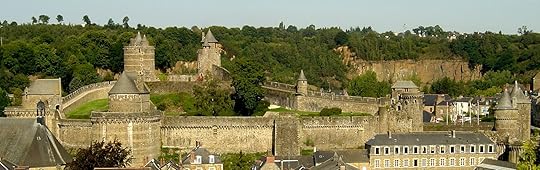
Dies war mein erster Roman von Honoré de Balzac. „Die Königstreuen“ – wörtlich übersetzt lautet der Titel „Der letzte Chouans oder Die Bretagne im Jahr 1800“– ist das chronologisch erste Werk der berühmten „Comédie humaine“. Das war aber nicht mein Grund, zu diesem Buch zu greifen. Es folgt der Lektüre von Hugos 1793. Beide beleuchten den Bürgerkrieg zwischen Anhängern der Revolution und des Ancien Régime in der Vendée und (Nieder)Bretagne, dem ländlichen Nordwesten Frankreichs. Während Hugos Roman zu Zeiten des Grande Terreur spielen, kämpfen „Die Königstreuen“ kurz nach dem Staatsstreich Napoleons am 18. Brumaire VIII (9. November 1799). Ihr Anführer, der „Gars“, ist der junge Marquis de Montaubon. Seine Gegenspieler sind der Militärkommandant Hulot, die vom republikanischen Geheimdienstchef Fouché ausgesandte bildhübsche Mademoiselle de Verneuil und der sie überwachende Agent Corentin. Fräulein de Verneuil soll den jungen Gars umgarnen und an die Republikaner ausliefern. Doch der Plan geht nicht auf, und es kommt zu einem Showdown in einer großen Schlacht zwischen den Aufständigen und den „Blauen“ in der Stadt Fougères.
Burg von Fougères
Dieser Historienroman auf hohem Niveau hat mir sehr gut gefallen. Wesentlich dazu beigetragen hat Balzacs auch in der Übersetzung bewahrter sprachlicher Reichtum. Selbst Landschaftsbeschreibungen sind beim ihm eine Lesefreude. Mit Ausnahme der für meinen Geschmack zu lang geratenen „Duette“ zwischen dem Fräulein und dem Marquis, hält Balzac den Spannungsbogen der Handlung bis zum Kulminationspunkt auf den letzten Seiten durch. Anders als der eher unparteiische Hugo, steht Balzac deutlich auf Seiten der Republik. Dies kommt in Passagen zu Tage wie Die Chouans sind ein denkwürdiges Beispiel dafür geblieben, wie gefährlich es ist die wenig zivilisierten Massen eines Landes aufzuwühlen - Wobei man dies auch von der revolutionären Pariser Canaille sagen kann. - Die Religion oder vielmehr der Fetischismus dieser unwissenden Geschöpfe entkleidete den Mord seiner Gewissensbisse. Auch die den Aufstand unterstützenden Adeligen bekommen ihr Fett weg. Anders als ihr idealistischer Anführer sind sie zuvorderst an Posten und Pfründen nach der Rückkehr des Königs interessiert.
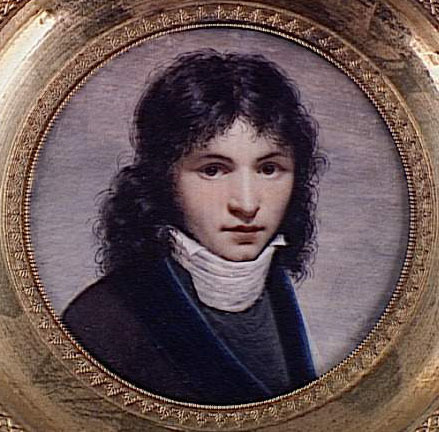
Aimé Picquet du Boisguy. Anführer der Royalisten in Fougères
Burg von Fougères
Dieser Historienroman auf hohem Niveau hat mir sehr gut gefallen. Wesentlich dazu beigetragen hat Balzacs auch in der Übersetzung bewahrter sprachlicher Reichtum. Selbst Landschaftsbeschreibungen sind beim ihm eine Lesefreude. Mit Ausnahme der für meinen Geschmack zu lang geratenen „Duette“ zwischen dem Fräulein und dem Marquis, hält Balzac den Spannungsbogen der Handlung bis zum Kulminationspunkt auf den letzten Seiten durch. Anders als der eher unparteiische Hugo, steht Balzac deutlich auf Seiten der Republik. Dies kommt in Passagen zu Tage wie Die Chouans sind ein denkwürdiges Beispiel dafür geblieben, wie gefährlich es ist die wenig zivilisierten Massen eines Landes aufzuwühlen - Wobei man dies auch von der revolutionären Pariser Canaille sagen kann. - Die Religion oder vielmehr der Fetischismus dieser unwissenden Geschöpfe entkleidete den Mord seiner Gewissensbisse. Auch die den Aufstand unterstützenden Adeligen bekommen ihr Fett weg. Anders als ihr idealistischer Anführer sind sie zuvorderst an Posten und Pfründen nach der Rückkehr des Königs interessiert.
Aimé Picquet du Boisguy. Anführer der Royalisten in Fougères

March 11, 2022
Unheimlich spannend und schrecklich anstrengend, aber absolut lohnenswert, obwohl ich zu dem Buch eine ähnliche Hassliebe unterhielt wie das Liebespaar aus feindlichen Lagern. Ausführliche Rezi später.
Displaying 1 - 2 of 2 reviews