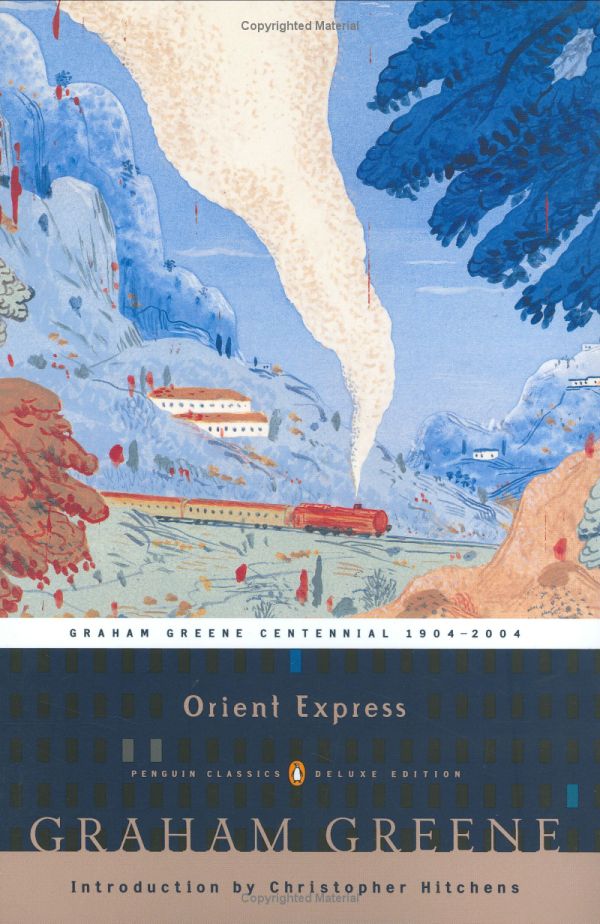
As the Orient Express hurtles across Europe on its three-day journey from Ostend to Constantinople, the driven lives of several of its passengers become bound together in a fateful interlock. The menagerie of characters include Coral Musker, a beautiful chorus girl; Carleton Myatt, a rich Jewish businessman; Richard John, a mysterious and kind doctor returning to his native Belgrade; the spiteful journalist Mabel Warren; and Josef Grunlich, a cunning, murderous burglar.
What happens to these strangers as they put on and take off their masks of identity and passion, all the while confessing, prevaricating, and reaching out to one another in the "veracious air" of the onrushing train, makes for one of Graham Greene's most exciting and suspenseful stories. Originally published in 1933, Orient Express was Greene's first major success. This Graham Greene Centennial Edition, originally titled "Stamboul Train," features a new introductory essay by Christopher Hitchens.
Henry Graham Greene was an English writer and journalist regarded by many as one of the leading novelists of the 20th century. Combining literary acclaim with widespread popularity, Greene acquired a reputation early in his lifetime as a major writer, both of serious Catholic novels, and of thrillers (or "entertainments" as he termed them). He was shortlisted for the Nobel Prize in Literature several times. Through 67 years of writing, which included over 25 novels, he explored the conflicting moral and political issues of the modern world. The Power and the Glory won the 1941 Hawthornden Prize and The Heart of the Matter won the 1948 James Tait Black Memorial Prize and was shortlisted for the Best of the James Tait Black. Greene was awarded the 1968 Shakespeare Prize and the 1981 Jerusalem Prize. Several of his stories have been filmed, some more than once, and he collaborated with filmmaker Carol Reed on The Fallen Idol (1948) and The Third Man (1949). He converted to Catholicism in 1926 after meeting his future wife, Vivienne Dayrell-Browning. Later in life he took to calling himself a "Catholic agnostic". He died in 1991, aged 86, of leukemia, and was buried in Corseaux cemetery in Switzerland. William Golding called Greene "the ultimate chronicler of twentieth-century man's consciousness and anxiety".