

What do you think?

Tom Jones
Tom, a foundling, is discovered one evening by the benevolent Squire Allworthy and his sister Bridget and brought up as a son in their household; when his sexual escapades and general misbehavior lead them to banish him, he sets out in search of both his fortune and his true identity. Amorous, high-spirited, and filled with what Fielding called “the glorious lust of doing good,” but with a tendency toward dissolution, Tom Jones is one of the first characters in English fiction whose human virtues and vices are realistically depicted. This edition is set from the text of the Wesleyan Edition of the Works of Henry Fielding.
982 pages, Paperback
First published February 28, 1749
About the author
Henry Fielding
2,546 books400 followersHenry Fielding (1707 - 1754) was an English dramatist, journalist and novelist. The son of an army lieutenant and a judge's daughter, he was educated at Eton School and the University of Leiden before returning to England where he wrote a series of farces, operas and light comedies.
Fielding formed his own company and was running the Little Theatre, Haymarket, when one of his satirical plays began to upset the government. The passing of the Theatrical Licensing Act in 1737 effectively ended Fielding's career as a playwright.
In 1739, Fielding turned to journalism and became editor of The Champion. He also began writing novels, including: The Adventures of Joseph Andrews (1742) and Jonathan Wild (1743).
Fielding was made a justice of the peace for Westminster and Middlesex in 1748. He campaigned against legal corruption and helped his half-brother, Sir John Fielding, establish the Bow Street Runners.
In 1749, Fielding's novel The History of Tom Jones was published to public acclaim. Critics agree that it is one of the greatest comic novels in the English language. He followed this success with another well received novel, Amelia, in 1751.
Fielding continued as a journalist and his satirical journal, Covent Garden, continued to upset those in power. Throughout his life, Fielding suffered from poor health. By 1752, he could not move without the help of crutches. In an attempt to overcome his health problems, Henry Fielding went to live in Portugal, but this was not successful, and he died in Lisbon in 1754.
Fielding formed his own company and was running the Little Theatre, Haymarket, when one of his satirical plays began to upset the government. The passing of the Theatrical Licensing Act in 1737 effectively ended Fielding's career as a playwright.
In 1739, Fielding turned to journalism and became editor of The Champion. He also began writing novels, including: The Adventures of Joseph Andrews (1742) and Jonathan Wild (1743).
Fielding was made a justice of the peace for Westminster and Middlesex in 1748. He campaigned against legal corruption and helped his half-brother, Sir John Fielding, establish the Bow Street Runners.
In 1749, Fielding's novel The History of Tom Jones was published to public acclaim. Critics agree that it is one of the greatest comic novels in the English language. He followed this success with another well received novel, Amelia, in 1751.
Fielding continued as a journalist and his satirical journal, Covent Garden, continued to upset those in power. Throughout his life, Fielding suffered from poor health. By 1752, he could not move without the help of crutches. In an attempt to overcome his health problems, Henry Fielding went to live in Portugal, but this was not successful, and he died in Lisbon in 1754.
Ratings & Reviews
Friends & Following
Create a free account to discover what your friends think of this book!
Community Reviews
Displaying 1 - 30 of 1,538 reviews

September 12, 2022
Somewhere in the beginning Henry Fielding sets the rule of writing great fiction…
And in full accordance with this immutable principle The History of Tom Jones, a Foundling is a fine human comedy, both high and low… And it is much more than just this – it is a picaresque tale of quality, to boot.
A newborn boy is found by a gentleman… And there is much ado about him… And while the infant innocently slumbers in his cradle the wife of his supposed father gives her husband a proper treatment…
Unnoticeably years elapsed… Tom Jones is a young man now… And he is in the power of his vernal desires… And he falls in love… The most romantically possible passion… Insurmountable obstructions are on all sides… Tyranny and despotism… Wickedness and fallacy… Folly and asininity…
Exile ensues… Fleeing and chasing… Loving and hating… Misadventures and misfortune… Trickery and treachery… Deception and self-deception… Vows… Pledges… Promises…
Our ideals are high but our own weak spots are the main obstacles on our way to achieve them.
…the Excellence of the mental Entertainment consists less in the Subject, than in the Author’s Skill in well dressing it up.
And in full accordance with this immutable principle The History of Tom Jones, a Foundling is a fine human comedy, both high and low… And it is much more than just this – it is a picaresque tale of quality, to boot.
A newborn boy is found by a gentleman… And there is much ado about him… And while the infant innocently slumbers in his cradle the wife of his supposed father gives her husband a proper treatment…
Mr. Partridge acted for some Time on the defensive only; indeed he attempted only to guard his Face with his Hands; but as he found that his Antagonist abated nothing of her Rage, he thought he might, at least, endeavour to disarm her, or rather to confine her Arms; in doing which, her Cap fell off in the Struggle, and her Hair being too short to reach her Shoulders, erected itself on her Head; her Stays likewise, which were laced through one single Hole at the Bottom, burst open; and her Breasts, which were much more redundant than her Hair, hung down below her Middle; her Face was likewise marked with the Blood of her Husband; her Teeth gnashed with Rage; and Fire, such as sparkles from a Smith’s Forge, darted from her Eyes.
Unnoticeably years elapsed… Tom Jones is a young man now… And he is in the power of his vernal desires… And he falls in love… The most romantically possible passion… Insurmountable obstructions are on all sides… Tyranny and despotism… Wickedness and fallacy… Folly and asininity…
Exile ensues… Fleeing and chasing… Loving and hating… Misadventures and misfortune… Trickery and treachery… Deception and self-deception… Vows… Pledges… Promises…
‘Dearest Sophia, whatever it costs me, I will renounce you; I will give you up: I will tear all such Hopes from my Heart, as are inconsistent with your real Good. My Love I will ever retain, but it shall be in Silence; it shall be at a Distance from you; it shall be in some foreign Land; from whence no Voice, no Sigh of my Despair, shall ever reach and disturb your Ears.’
Our ideals are high but our own weak spots are the main obstacles on our way to achieve them.

October 13, 2007
Who reads this and laughs not at all may be forgiven only as a simpleton, and does not comprehend.
Who reads this and laughs but a little is too dour and prideful to be of much use, and only laughs when he cannot help it.
Who reads this and laughs a score is the wretched false-wit, and only laughs when it suits his crowd.
Who reads and laughs but once a chapter has a mirthful soul, if no great love for words.
Who reads and laughs at every page shall be my boon companion, and a kiss for each grinning cheek.
Who reads and laughs at twice and thrice a page shall be my worthy better, and may they forgive my endless queries.
Who reads this and laughs but a little is too dour and prideful to be of much use, and only laughs when he cannot help it.
Who reads this and laughs a score is the wretched false-wit, and only laughs when it suits his crowd.
Who reads and laughs but once a chapter has a mirthful soul, if no great love for words.
Who reads and laughs at every page shall be my boon companion, and a kiss for each grinning cheek.
Who reads and laughs at twice and thrice a page shall be my worthy better, and may they forgive my endless queries.

Read
February 15, 2024I am not going to rate it because I listened to the abridged version and I do not think it would be relevant. The original novel is quite long and sinuous while the abridge version only has 7 hours or so. I read this novel because it was analyzed in The Long Form, a novel I have been reading. The abridged audiobook was the perfect way to cover all the main events, I could even have a taste of the humor and the way the author inserted himself and the reader into the story. It is a smart book but I’ve read that the big version is too meandering and tires the reader. So, if you like to get the main idea, I highly recommend this audiobook. The narrator is Maurice West and he won a competition organized by The Times and Naxos audio. The winner got to narrate an abridged version of a classic novel and Tom Jones was the chosen piece. Mr. West had a pleasant voice which complimented the story well.
As a baby, Tom Jones is left at the door of a rich estate. The owner, Mr. Allworthy, decides to raise him as his own child. When he grows up, Tom Jones falls deeply in love with Sophia Western, the beautiful daughter of the neighboring squire. However, he does not shy away from the charms of other girls. After some entanglements, Tom Jones is banished from the estate and soon after, Sofia runs away from home to escape an arranged marriage. Adventure follows them up to London. They lose and find each other. Jones, while still in love, “sins” with other women in his quest to get to Sofia. It is a comic novel full of adventures and mix-ups.
I enjoyed reading the short version, although, at some point there were too many characters, insufficiently developed. I do not know if I would have enjoyed listening to the whole 38 hours of this novel. I would have got bored probably so I am content with the bites I’ve been handed.
As a baby, Tom Jones is left at the door of a rich estate. The owner, Mr. Allworthy, decides to raise him as his own child. When he grows up, Tom Jones falls deeply in love with Sophia Western, the beautiful daughter of the neighboring squire. However, he does not shy away from the charms of other girls. After some entanglements, Tom Jones is banished from the estate and soon after, Sofia runs away from home to escape an arranged marriage. Adventure follows them up to London. They lose and find each other. Jones, while still in love, “sins” with other women in his quest to get to Sofia. It is a comic novel full of adventures and mix-ups.
I enjoyed reading the short version, although, at some point there were too many characters, insufficiently developed. I do not know if I would have enjoyed listening to the whole 38 hours of this novel. I would have got bored probably so I am content with the bites I’ve been handed.

November 18, 2019
EDUCAZIONE SENTIMENTALE DI UN SENZA NOME

Tom Jones è Albert Finney, Sophie Western è Susannah York.
Tom (Albert Finney) è figlio di NN: abbandonato, un trovatello (bastardo?), viene ora si direbbe preso in affido da un ricco possidente di campagna, Allworthy (George Devine), che lo alleva e istruisce.
Peccato che intorno al magnanimo benefattore, non proprio padre, non ancora se non altro, e quindi intorno a Tom ci sia un cospicuo numero di persone intriganti e farabutte, guidate dal nipote del padrone di casa, Blifil (David Warner), non la compagnia né la palestra migliore per il giovanissimo Jones, Tom Jones.
Il quale, forse non rendendosi conto esattamente delle sue origini e del suo lignaggio, s’innamora di Sophie Western (Susannah York), la figlia del ricco vicino (Hugh Griffith) che certo non vede di buon occhio questa possibile unione.
Blifil riesce a far cacciare di casa Tom, che a questo punto inanella una serie di avventure inciampi e peripezie che lo conducono dal Somerset a Londra, dove ferisce un tizio e finisce in galera
Tom Jones è di animo buono, buona indole e buona pasta, ma fatica a resistere alle tentazioni, cominciando da quelle della carne, con buona pace della sua amata Sophie rimasta in campagna.
Ma più che la sorte, ad accanirsi contro Tom sono loschi figuri, che vengono smascherati. E Tom può tornare a casa dove Allworthy lo accoglie a braccia aperte (figliol prodigo?), avendo nel frattempo scoperto che Tom è suo nipote (agnizione?), ed è quindi ben disposto a lasciargli tutto il patrimonio. Il che lo rende di colpo degno e all’altezza dell’amata Sophie, il cui padre è bravo nei conti.

Tom e Sophie.
La narrazione di Fielding si dipana con leggerezza e ironia in un procedere picaresco, a tratti quasi farsesco, senza tralasciare però il realismo di situazioni e ambienti. Il romanzo diviso in diciotto parti, o libri, inizia dal ritrovamento di Tom, salta a quando il piccolo ha un paio d’anni, e dopo un salto ben più lungo, ritroviamo Tom quattordicenne, per poi concentrarsi e dilungarsi sul passaggio dall’adolescenza alla giovinezza per un totale di circa vent’anni della vita di Tom Jones.

Le tentazioni del giovane Tom.
Lo dicono in molti, a me lo ha insegnato Arbasino: questo romanzo di Fielding oltre a essere magnifico (capolavoro?), è quello che potrebbe segnare la nascita del romanzo moderno, così come viene inteso nei quasi tre secoli seguenti (Tom Jones venne pubblicato nel 1749).
Anche se io ammiro la bella lotta che Fielding ha dovuto compiere con Swift e il suo Gulliver, Sterne e il suo Tristram Shandy, Defoe e la sua Roxana.
Immagino che lo si consideri spartiacque non solo perché coglie e racconta il farsi dell’economia, della società, della cultura nuova, quella borghese – non solo perché già da allora riesce a smascherarne ipocrisia falsità grettezza e cupidigia. Ma per la modernità della sua struttura con quel narratore che funge da ponte tra quello classico e quello moderno, terza persona illuminata che qui spesso interviene a farsi domande, e quindi non proprio così onnisciente, a commentare e giudicare e intessere un dialogo direttamente col lettore, pur senza mai perdere il filo o il ritmo nonostante la mole del libro (oltre 700 pagine).
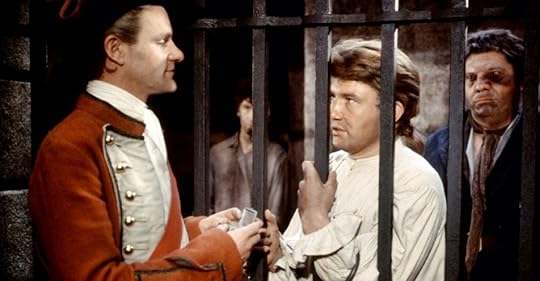
Le punizioni del giovane Tom.
Però per me ancora più del libro poté il film, questo sì capolavoro certo, esempio di quel cinema inglese sul finire degli anni Cinquanta e il farsi dei Sessanta che fu definito Free, e mai etichetta fu più azzeccata (contemporaneo di quell’altra meraviglia che fu la Nouvelle Vague francese).
E quale esempio migliore di Tom Jones, il film di Tony Richardson del 1963, sceneggiato dall’angry young man John Osborne, che si aggiudicò la bellezza di quattro Oscar (miglior film, miglior regia, miglior sceneggiatura d’adattamento, miglio colonna sonora). Il suo perfetto interprete, Albert Finney, innamorato della perfetta interprete Susannah York, entrambi vittime delle mire del perfido e perfetto David Warner. La sceneggiatura salta direttamente dal ritrovamento dell’infante abbandonato sul letto di Squire Allworthy a quando Tom è cresciuto e può essere interpretato dal Finney. Esempi di libertà (assoluta): il film alterna alle sequenze frammenti di cinema muto, e quindi a velocità aumentata e cartelli al posto del dialogo, immagini ferme (still, fotografie), sfondamento della quarta parete (i personaggi si rivolgono allo spettatore in modo diretto, o con sguardi e ammiccamenti). A un certo punto Tom copre perfino l’obiettivo della macchina da presa col suo berretto come a ritagliarsi intimità lontano dall’occhio dello spettatore. Un approccio modernissimo per raccontare una storia scritta e ambientata nella prima metà del Settecento. Un’orgia di libertà.
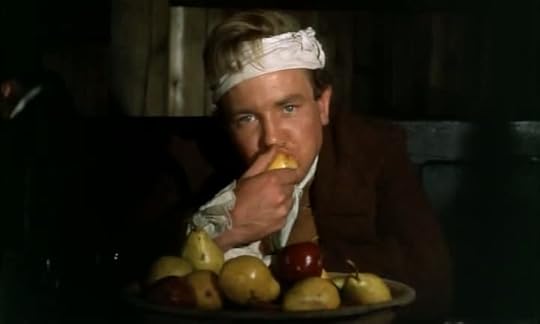
Tom Jones è Albert Finney, Sophie Western è Susannah York.
Tom (Albert Finney) è figlio di NN: abbandonato, un trovatello (bastardo?), viene ora si direbbe preso in affido da un ricco possidente di campagna, Allworthy (George Devine), che lo alleva e istruisce.
Peccato che intorno al magnanimo benefattore, non proprio padre, non ancora se non altro, e quindi intorno a Tom ci sia un cospicuo numero di persone intriganti e farabutte, guidate dal nipote del padrone di casa, Blifil (David Warner), non la compagnia né la palestra migliore per il giovanissimo Jones, Tom Jones.
Il quale, forse non rendendosi conto esattamente delle sue origini e del suo lignaggio, s’innamora di Sophie Western (Susannah York), la figlia del ricco vicino (Hugh Griffith) che certo non vede di buon occhio questa possibile unione.
Blifil riesce a far cacciare di casa Tom, che a questo punto inanella una serie di avventure inciampi e peripezie che lo conducono dal Somerset a Londra, dove ferisce un tizio e finisce in galera
Tom Jones è di animo buono, buona indole e buona pasta, ma fatica a resistere alle tentazioni, cominciando da quelle della carne, con buona pace della sua amata Sophie rimasta in campagna.
Ma più che la sorte, ad accanirsi contro Tom sono loschi figuri, che vengono smascherati. E Tom può tornare a casa dove Allworthy lo accoglie a braccia aperte (figliol prodigo?), avendo nel frattempo scoperto che Tom è suo nipote (agnizione?), ed è quindi ben disposto a lasciargli tutto il patrimonio. Il che lo rende di colpo degno e all’altezza dell’amata Sophie, il cui padre è bravo nei conti.
Tom e Sophie.
La narrazione di Fielding si dipana con leggerezza e ironia in un procedere picaresco, a tratti quasi farsesco, senza tralasciare però il realismo di situazioni e ambienti. Il romanzo diviso in diciotto parti, o libri, inizia dal ritrovamento di Tom, salta a quando il piccolo ha un paio d’anni, e dopo un salto ben più lungo, ritroviamo Tom quattordicenne, per poi concentrarsi e dilungarsi sul passaggio dall’adolescenza alla giovinezza per un totale di circa vent’anni della vita di Tom Jones.
Le tentazioni del giovane Tom.
Lo dicono in molti, a me lo ha insegnato Arbasino: questo romanzo di Fielding oltre a essere magnifico (capolavoro?), è quello che potrebbe segnare la nascita del romanzo moderno, così come viene inteso nei quasi tre secoli seguenti (Tom Jones venne pubblicato nel 1749).
Anche se io ammiro la bella lotta che Fielding ha dovuto compiere con Swift e il suo Gulliver, Sterne e il suo Tristram Shandy, Defoe e la sua Roxana.
Immagino che lo si consideri spartiacque non solo perché coglie e racconta il farsi dell’economia, della società, della cultura nuova, quella borghese – non solo perché già da allora riesce a smascherarne ipocrisia falsità grettezza e cupidigia. Ma per la modernità della sua struttura con quel narratore che funge da ponte tra quello classico e quello moderno, terza persona illuminata che qui spesso interviene a farsi domande, e quindi non proprio così onnisciente, a commentare e giudicare e intessere un dialogo direttamente col lettore, pur senza mai perdere il filo o il ritmo nonostante la mole del libro (oltre 700 pagine).
Le punizioni del giovane Tom.
Però per me ancora più del libro poté il film, questo sì capolavoro certo, esempio di quel cinema inglese sul finire degli anni Cinquanta e il farsi dei Sessanta che fu definito Free, e mai etichetta fu più azzeccata (contemporaneo di quell’altra meraviglia che fu la Nouvelle Vague francese).
E quale esempio migliore di Tom Jones, il film di Tony Richardson del 1963, sceneggiato dall’angry young man John Osborne, che si aggiudicò la bellezza di quattro Oscar (miglior film, miglior regia, miglior sceneggiatura d’adattamento, miglio colonna sonora). Il suo perfetto interprete, Albert Finney, innamorato della perfetta interprete Susannah York, entrambi vittime delle mire del perfido e perfetto David Warner. La sceneggiatura salta direttamente dal ritrovamento dell’infante abbandonato sul letto di Squire Allworthy a quando Tom è cresciuto e può essere interpretato dal Finney. Esempi di libertà (assoluta): il film alterna alle sequenze frammenti di cinema muto, e quindi a velocità aumentata e cartelli al posto del dialogo, immagini ferme (still, fotografie), sfondamento della quarta parete (i personaggi si rivolgono allo spettatore in modo diretto, o con sguardi e ammiccamenti). A un certo punto Tom copre perfino l’obiettivo della macchina da presa col suo berretto come a ritagliarsi intimità lontano dall’occhio dello spettatore. Un approccio modernissimo per raccontare una storia scritta e ambientata nella prima metà del Settecento. Un’orgia di libertà.

March 13, 2017
Here's another wonderful 18th century novel that blows up the easy breezy Shibboleth of "show, don't tell." Here the narrator tells and tells, and I laughed and laughed, and the plot moved like a fine engine through adventure after misadventure.

Read
October 10, 2023The word 'foundling' in the title of Henry Fielding's novel, The History of Tom Jones, a Foundling, is such an interesting concept when you think about it.
Aren't all main characters foundlings in some way or other—I mean, they may not appear one evening out of nowhere wrapped in a blanket and laid on somebody's bed as baby Tom did, but they are more or less brought into being without a back story so that the novel they are in can then provide one, since, unlike Tom, they are often already full-grown when they are born. But full-grown or not, the author still has to name them, offhandedly maybe, as in characters called Tom or Joe or Harry, or more purposefully as in the case of, say, Ernest Worthing, Lady Dedlock or Frodo Baggins.
Then again there are some characters who seem both offhandedly and purposely named such as Major Major in Catch 22.
Henry Fielding has some characters in that vein: the very virtuous Squire Allworthy, the very boring and logical Mr Square, the Reverend Thwackum, a tutor who likes to use the cane at every opportunity, Black George, who does some fairly despicable things.
I enjoy when authors like Heller and Fielding announce clearly via their characters' names that they are invented, yet still draw us in to the fiction they are creating by making believe it is fact. Fielding tells us that the Squire's sister, Miss Bridget (and note her very real-life name), is the actual person depicted in one of William Hogarth's real-life prints: I would attempt to draw her picture, but that is done already by a more able master, Mr. Hogarth himself, to whom she sat many years ago, and has been lately exhibited by that gentleman in his print of a winters morning, of which she was no improper emblem, and may be seen walking (for walk she doth in the print) to Covent-Garden church, with the starved foot-boy behind, carrying her prayer book.

So on the one hand, Fielding is saying this is all made up, and on the other, it's all real. He maintains that waltz between the real and the fictive all the way through the book. Take the chapter headings, for instance (all 208 of them spread across 18 'books' in this 6 volume novel), each one is like a tantalizing game the author plays with the reader.
Chapter vii —Containing such grave matter, that the reader cannot laugh once through the whole chapter, unless peradventure he should laugh at the author.
Or this one: —Containing what the reader may, perhaps, expect to find in it.
Or this —In which the author himself makes his appearance on the stage.
Or these two succeeding ones:
—A little chapter, in which is contained a little incident.
—A very long chapter, containing a very great incident.
Ok, just one more: —A most dreadful chapter indeed; and which few readers ought to venture upon in an evening, especially when alone.
That gives you a flavor of how funny and outright mischievous a writer Fielding is. The prologue, however, is awfully serious. He talks about how he wants to offer an example of true virtue, but the novel he then goes on to create seems to be aimed instead at examining and exposing all the hypocrisies in the society of his day: England in the 1730s and 40s.
He also seems intent on examining the very notion of what a novel should be. Each of the eighteen 'books' has a first chapter unrelated to the story. These 'essays' have titles such as:
—Of the SERIOUS in writing, and for what purpose it is introduced.
—Of those who lawfully may, and of those who may not, write such histories as this.
—Containing instructions very necessary to be perused by modern critics.
—An essay to prove that an author will write the better for having some knowledge of the subject on which he writes.
Inevitably, some of these essay titles are less serious sounding:
—Containing a portion of introductory writing.
—Containing five pages of paper.
—Containing little or nothing.
In one of these early essays, Fielding says My reader then is not to be surprized, if, in the course of this work, he shall find some chapters very short, and others altogether as long; some that contain only the time of a single day, and others that comprise years; in a word, if my history sometimes seems to stand still, and sometimes to fly. For all which I shall not look on myself as accountable to any court of critical jurisdiction whatever: for as I am, in reality, the founder of a new province of writing, so I am at liberty to make what laws I please therein. And these laws, my readers, whom I consider as my subjects, are bound to believe in and to obey; with which that they may readily and cheerfully comply, I do hereby assure them that I shall principally regard their ease and advantage...
I enjoyed all the introductory essays, and I was happy to find lots of thoughts on writing in other chapters as well. It seemed that Fielding couldn't help but constantly comment on the process of writing his story almost as if this were really the most important aspect for him. And I, in turn, began to be more interested in his opinions on writing and on devices in fiction than on the story they were embedded in. I believe Fielding intended that: since every book ought to be read with the same spirit and in the same manner as it is writ.
And when Fielding talks about looking out for the 'ease and advantage' of his readers (as in the long quote above), he follows through on the promise. He tells us, for example, that he's going to skip such and such a scene because we might find it boring, or that he has shortened some other passage so that we don't fall asleep, or he has realised that to relate the whole conversation of the ensuing scene is not within my power, unless I had forty pens, and could, at once, write with them all together, as the company now spoke. The reader must, therefore, content himself with the most remarkable incidents....
Notice how he implies here that, yes, this all happened and he was there, writing down what he could. It's all part of that wonderful waltz he does between the real and the fictional.
…………………………………………
This is a very old book and a very long book (in spite of Fielding's kindly editing), and you might wonder why I chose to read it instead of some contemporary novel which our current publishing world is pushing us to read. Well, Tom Jones fits into the three-volume novel project I started pursuing a few months ago when I read George Gissing's three-volume novel, New Grub Street, about the publishing world of its day—referred to by writers and publishers as Grub Street. Gissing's book lead me to read Tobias Smollett's three-volume Humphry Clinker from 1770, also featuring Grub Street. And Smollett lead me back a couple of decades to this three-part novel of Fielding's in which I was pleased to find a further mention of Grub Street. It occurs in one of the introductory essays, one entitled Invocation in which he calls on the genii of Grub Street and the goddess of memory to keep his name alive so that when the little parlour in which I sit at this instant shall be reduced to a worse furnished box, I shall be read with honour by those who never knew nor saw me, and whom I shall neither know nor see.
I think I read him with 'honour'.
…………………………………………… …
I must have unknowingly invoked some genii myself because while I was making my way through Fielding's tome, which is not easy to carry around in my bag, read in the bath, or even in bed, I fished a small pocket-sized Unidentified book out of my book pile for those very times. It turned out to be the perfect complementary reading: the author is focusing on the process of writing just as Fielding is, and just as humourously. And the Kate Briggs book I've got lined up to read when I finish Unidentified happens to be partly about Fielding too.
How grateful I am that the 'little parlour' in which I sit writing this review is well stocked with books for every occasion.
Aren't all main characters foundlings in some way or other—I mean, they may not appear one evening out of nowhere wrapped in a blanket and laid on somebody's bed as baby Tom did, but they are more or less brought into being without a back story so that the novel they are in can then provide one, since, unlike Tom, they are often already full-grown when they are born. But full-grown or not, the author still has to name them, offhandedly maybe, as in characters called Tom or Joe or Harry, or more purposefully as in the case of, say, Ernest Worthing, Lady Dedlock or Frodo Baggins.
Then again there are some characters who seem both offhandedly and purposely named such as Major Major in Catch 22.
Henry Fielding has some characters in that vein: the very virtuous Squire Allworthy, the very boring and logical Mr Square, the Reverend Thwackum, a tutor who likes to use the cane at every opportunity, Black George, who does some fairly despicable things.
I enjoy when authors like Heller and Fielding announce clearly via their characters' names that they are invented, yet still draw us in to the fiction they are creating by making believe it is fact. Fielding tells us that the Squire's sister, Miss Bridget (and note her very real-life name), is the actual person depicted in one of William Hogarth's real-life prints: I would attempt to draw her picture, but that is done already by a more able master, Mr. Hogarth himself, to whom she sat many years ago, and has been lately exhibited by that gentleman in his print of a winters morning, of which she was no improper emblem, and may be seen walking (for walk she doth in the print) to Covent-Garden church, with the starved foot-boy behind, carrying her prayer book.
So on the one hand, Fielding is saying this is all made up, and on the other, it's all real. He maintains that waltz between the real and the fictive all the way through the book. Take the chapter headings, for instance (all 208 of them spread across 18 'books' in this 6 volume novel), each one is like a tantalizing game the author plays with the reader.
Chapter vii —Containing such grave matter, that the reader cannot laugh once through the whole chapter, unless peradventure he should laugh at the author.
Or this one: —Containing what the reader may, perhaps, expect to find in it.
Or this —In which the author himself makes his appearance on the stage.
Or these two succeeding ones:
—A little chapter, in which is contained a little incident.
—A very long chapter, containing a very great incident.
Ok, just one more: —A most dreadful chapter indeed; and which few readers ought to venture upon in an evening, especially when alone.
That gives you a flavor of how funny and outright mischievous a writer Fielding is. The prologue, however, is awfully serious. He talks about how he wants to offer an example of true virtue, but the novel he then goes on to create seems to be aimed instead at examining and exposing all the hypocrisies in the society of his day: England in the 1730s and 40s.
He also seems intent on examining the very notion of what a novel should be. Each of the eighteen 'books' has a first chapter unrelated to the story. These 'essays' have titles such as:
—Of the SERIOUS in writing, and for what purpose it is introduced.
—Of those who lawfully may, and of those who may not, write such histories as this.
—Containing instructions very necessary to be perused by modern critics.
—An essay to prove that an author will write the better for having some knowledge of the subject on which he writes.
Inevitably, some of these essay titles are less serious sounding:
—Containing a portion of introductory writing.
—Containing five pages of paper.
—Containing little or nothing.
In one of these early essays, Fielding says My reader then is not to be surprized, if, in the course of this work, he shall find some chapters very short, and others altogether as long; some that contain only the time of a single day, and others that comprise years; in a word, if my history sometimes seems to stand still, and sometimes to fly. For all which I shall not look on myself as accountable to any court of critical jurisdiction whatever: for as I am, in reality, the founder of a new province of writing, so I am at liberty to make what laws I please therein. And these laws, my readers, whom I consider as my subjects, are bound to believe in and to obey; with which that they may readily and cheerfully comply, I do hereby assure them that I shall principally regard their ease and advantage...
I enjoyed all the introductory essays, and I was happy to find lots of thoughts on writing in other chapters as well. It seemed that Fielding couldn't help but constantly comment on the process of writing his story almost as if this were really the most important aspect for him. And I, in turn, began to be more interested in his opinions on writing and on devices in fiction than on the story they were embedded in. I believe Fielding intended that: since every book ought to be read with the same spirit and in the same manner as it is writ.
And when Fielding talks about looking out for the 'ease and advantage' of his readers (as in the long quote above), he follows through on the promise. He tells us, for example, that he's going to skip such and such a scene because we might find it boring, or that he has shortened some other passage so that we don't fall asleep, or he has realised that to relate the whole conversation of the ensuing scene is not within my power, unless I had forty pens, and could, at once, write with them all together, as the company now spoke. The reader must, therefore, content himself with the most remarkable incidents....
Notice how he implies here that, yes, this all happened and he was there, writing down what he could. It's all part of that wonderful waltz he does between the real and the fictional.
…………………………………………
This is a very old book and a very long book (in spite of Fielding's kindly editing), and you might wonder why I chose to read it instead of some contemporary novel which our current publishing world is pushing us to read. Well, Tom Jones fits into the three-volume novel project I started pursuing a few months ago when I read George Gissing's three-volume novel, New Grub Street, about the publishing world of its day—referred to by writers and publishers as Grub Street. Gissing's book lead me to read Tobias Smollett's three-volume Humphry Clinker from 1770, also featuring Grub Street. And Smollett lead me back a couple of decades to this three-part novel of Fielding's in which I was pleased to find a further mention of Grub Street. It occurs in one of the introductory essays, one entitled Invocation in which he calls on the genii of Grub Street and the goddess of memory to keep his name alive so that when the little parlour in which I sit at this instant shall be reduced to a worse furnished box, I shall be read with honour by those who never knew nor saw me, and whom I shall neither know nor see.
I think I read him with 'honour'.
…………………………………………… …
I must have unknowingly invoked some genii myself because while I was making my way through Fielding's tome, which is not easy to carry around in my bag, read in the bath, or even in bed, I fished a small pocket-sized Unidentified book out of my book pile for those very times. It turned out to be the perfect complementary reading: the author is focusing on the process of writing just as Fielding is, and just as humourously. And the Kate Briggs book I've got lined up to read when I finish Unidentified happens to be partly about Fielding too.
How grateful I am that the 'little parlour' in which I sit writing this review is well stocked with books for every occasion.

October 22, 2022
When Samuel Taylor Coleridge (finally) finished this book ( "and the road goes on forever!" ) he sputtered, with Aspie acumen, "Upon my word, the best book I've ever read."
Or not read entirely, if you're like me.
And our embarrassingly Aspie friend Fielding of course thought it marvellous too, as we all sorta guessed. You'd HAVE to put yourself on a pedestal in order to finish such an interminable riot of good and bad luck, loose-cannon fire, and disjointed ends sticking out every which way -
Which Coleridge assures us, are all connected and tied into a neat bow at the end.
I was thirteen when the great Albert Finney film, Tom Jones, appeared. Miss Fenton, our Grade Nine home room teacher, assured us kids with a nudge-is-as-good-as-a-wink restrained leer, that it was to die for.
I avoided it in my awkward backwardness. Until I turned eighteen.
THEN I picked up the Bantam thick-as-a-brick version and plowed my way thru. True to my ASD, though, I always lost the thread.
AND SO back again to Square One, beginning again at the beginning. Till I entered Uni. And so it sat on my shelf for sixty dusty years, with many vain attempts at rebeginning. All was vanity.
But vain as well - to the point of headless presumption - Fielding just soldiered on, writing of impossible messes and rabbit-in-his-hat denouements, nonstop.
Alas, I'm tired, Henry! Aren't you?
"Stuff and nonsense, laddie," Fielding abjured me, " just watch this... "
Well, I'm outta here, Mr Fielding.
And to paraphrase T.S. Eliot,
End of the endless
Journey to no end
Grace to the Mother
For the garden where (such interminable tales and) all loves end!
Or not read entirely, if you're like me.
And our embarrassingly Aspie friend Fielding of course thought it marvellous too, as we all sorta guessed. You'd HAVE to put yourself on a pedestal in order to finish such an interminable riot of good and bad luck, loose-cannon fire, and disjointed ends sticking out every which way -
Which Coleridge assures us, are all connected and tied into a neat bow at the end.
I was thirteen when the great Albert Finney film, Tom Jones, appeared. Miss Fenton, our Grade Nine home room teacher, assured us kids with a nudge-is-as-good-as-a-wink restrained leer, that it was to die for.
I avoided it in my awkward backwardness. Until I turned eighteen.
THEN I picked up the Bantam thick-as-a-brick version and plowed my way thru. True to my ASD, though, I always lost the thread.
AND SO back again to Square One, beginning again at the beginning. Till I entered Uni. And so it sat on my shelf for sixty dusty years, with many vain attempts at rebeginning. All was vanity.
But vain as well - to the point of headless presumption - Fielding just soldiered on, writing of impossible messes and rabbit-in-his-hat denouements, nonstop.
Alas, I'm tired, Henry! Aren't you?
"Stuff and nonsense, laddie," Fielding abjured me, " just watch this... "
Well, I'm outta here, Mr Fielding.
And to paraphrase T.S. Eliot,
End of the endless
Journey to no end
Grace to the Mother
For the garden where (such interminable tales and) all loves end!

January 21, 2019
2005 Penguin Classics edition
For at least twenty years before I read Tom Jones, misleading book covers gave me the wrong impression of the hero. I had heard once or twice that it's actually the ladies who throw themselves at Jones [cue GIF of the Welsh singer with knicker-flinging audience] but this idea never quite stuck. A few years ago, I watched the 1960s film adaptation, which I think showed this, but it was silly and flimsy - it was Carry on 18th Century - and I didn't take it seriously. As memory of it faded, my underlying feeling about the novel was again more strongly influenced by two and a half decades of UK book jackets, on which painted 18th-century rakes grab at women who look rather less keen than they do; in some cases the women are outright distressed. In current parlance, it all looks a bit rapey. In that lineage, the cover of this Penguin Classics edition showing Gillray's cartoon "Fashionable Contrasts" - an edition I otherwise recommend for its thorough notes and introduction - may also give an impression of a lady, er, imposed upon. (And over the last couple of years I've found the image more unpleasant than humorous due to Steve Bell's redrawing of it to feature Donald Trump and Theresa May.)
There's "don't judge a book by its cover", and then there's a consistent pattern of themed images over 25 years, whose repetitiveness feels meaningful. Yes, it's an 18th-century novel by a man: obviously there are some strongly patriarchal attitudes in the text, and there are some characters who condone sexual violence. But the combo of covers plus general reputation of the book once added up in my mind to the erroneous idea that it's about a "loveable" rapist. That is flat-out wrong, and I would not be surprised if these covers have put off more readers than are fully aware of it - or at the very least they make some potential readers, still interested in the novel, think they need to approach it wearing heavy psychological armour, in expectation of some *very* old-fashioned values.
Actually, Tom Jones is a genuinely nice, extrovert young lad with a puppyish enthusiasm for just about everything in life, and who wants to think the best of everyone - but he's also nearly incapable of turning down a woman who makes a move on him: most of his scrapes spiral from this. And like heroes of traditional romance or adventure stories, he has traffic-stopping good looks, charisma, a preternatural ability to master new fighting skills as needed, and is kind to children, animals and the poor. He is always (unlike those rakes on book covers) mindful of sexual consent, and although he is rescued fortuitously by his creator from one tricky moral dilemma with a girl early on, he otherwise stands out as being considerably more principled than his contemporaries. In contrast to certain bad-boy heroes of 19th century English literature, both Tom and his guardian Mr Allworthy - although they express a few patriarchal and snobbish attitudes - seem overall like decent men who would take on board contemporary attitudes of equality, and be able to practice them sincerely, if they found themselves living in a society where they were prevalent. The intersection of temperament and environment in creating people's attitudes was one of the things I thought about frequently while reading Tom Jones, imagining what various characters would be like if they were around today. Between this novel and a biography of Dickens I listened to in January, I concluded that this - a sense of how they might adapt - is more significant in the way I see people and characters from the past than the discrete yardstick of what they said at the time, in their environment. (Charles Dickens seemed like the type who would still throw his weight around in private, whilst presenting himself to an adoring public as a paragon of empathy and wisdom.)
I love it when a book is set in the same season when I'm reading it, so December turned out to be the perfect time to begin Tom Jones, although I hadn't consciously planned it. (I'd read a few chapters years ago, pre-Goodreads, so I probably remembered subconsciously.) But even if it was winter both in the book and in reality, I was not expecting this other chilly England also to be a place where the whole population is divided between two political factions, facing an increasingly imminent national crisis; a country where, when meeting someone, you can't be quite sure which side they're on, and where, for the sake of a quiet life, it's often easier not to disclose your allegiance to strangers - although by not declaring you may end up hearing some strange stuff! One side is disdained by its opponents as irrational, dangerous, and fuelled by silly romanticised ideas, the other as haughty establishment snobs who want to continue imposing a status quo which involves a close relationship with Germany. And both have their trademark jargon and insults. I loved the insight into how this factionalism existed with pre-Industrial Revolution communications, and it was also oddly refreshing, because for all the dozens of articles I've seen about historical parallels for Brexit, precisely none has mentioned the '45 and the enduring Jacobite-Hanoverian rivalry: the high politics are clearly different from the present, but the public mood is, perhaps, another matter.
That pre-Industrial Revolution setting was what I was craving when I started reading (and I still crave it - but self-imposed obligations to books previously started, and to group discussions, mean it has to go on hold for a while). And Tom Jones is replete with historical detail of a depth and atmosphere too rarely found in non-fiction history. Sometimes, nothing beats a voluminous primary source in which you incidentally hear dozens of little details of life: things like how it was to travel decades before trains, and when organised turnpikes were still quite new; the tribulations and sensations of riding unpaved roads on horses in winter; how things worked at a coaching inn; the mess of vice that a late-17th century university student might get into if he went off the rails (the Man of the Hill); or gradations of reputation among London society ladies. And cliché though this is, because it's a story, and from a world its writer lived in, it utterly brings this world to life. The typography in this Penguin edition adds to the sense of being transported to another time. (It uses the original capitalisation - of every Noun. I don't think I've been so aware of what was a noun in each sentence since I was at school.) The novelty of this, as a 20th-21st century reader used to capitals only at the start of a sentence, also increased my concentration - a definite bonus with a long book of this age, and something I will be looking for if I read other 18th century novels.
There are some passages where a concentration boost is indubitably helpful. The reflective and philosophical Chapter I's of each of the XVIII Books of Tom Jones, in which Fielding pontificates at the reader, grow repetitive as, after a few outings, Fielding's views on the literary scene, on various matters of human behaviour, and his unsurprising snobbery are perfectly evident, and further repetition hardly required - even if you do enjoy this absurdly self-aware style which is called post-modernism, but which existed long before literary modernism ever did. Details of the opinions of the two tutors, Square and Thwackum, on one level are very interesting as a snapshot of intellectual and religious history of the early Enlightenment, but are also, frankly, rather dry. But that is a small proportion of this huge book.
Over all it is often hugely entertaining: rollicking bawdy fun, with a confluence of depth, intelligence and silliness I associate with contemporary postmodernists (some, admirers of this book) like Thomas Pynchon. And it's the most hilarious pre-20th century book I've read. Its only competitor on that count is The Diary of a Nobody (1892). (Three Men in a Boat was a smiling rather than laughing sort of humour for me.) Grossmith perhaps would still win on density of funny scenes, due to his book being much shorter. But The History of Tom Jones was one of the best, most rewarding reading experiences I've ever had, with its virtuosic authorial control and construction, amply laced with metafictional commentary (control only diminishes towards the end, like an envelope addressed in exquisite handwriting which goes a bit squashed near the right-hand side so that everything fits), its immersive historical detail *and* farcical scenes which made me laugh spontaneously and uncontrollably.
Is there another character in literature quite like Squire Weston? This hilarious, and this terrifying? It would be a nightmare to be related to him, and his rages and controlling caprices. And it would be vexing even to deal with him as another man of his own rank (a task which Allworthy manages with great diplomacy and firmness). But he is also a one-man farce, and the main player in several of the scenes which made me snort and gasp with the sort of involuntary laughter many people think just doesn't happen when reading a 270 year-old book. (I'm writing this paragraph about two months after finishing the book, and they are still the funniest things I've read in fiction this year or last year, and I wish I could re-read them now.) I felt guilty about laughing so much given that Western was such a brute - treating his daughter as literal property in a society which gave her negligible legal protection. But I remembered, a little over ten years ago, a therapist bursting into unintentional laughter when I talked about an incident for which I was on the receiving end of adult rage as a child, and I found this a great epiphany. (The adult was being ridiculous, and what I'd done was funny and silly, not terrible.) Laughing at Western can be a way of disparaging his monstrous ego.
I thought GR reviews would have a lot to say about the female characters in Tom Jones, but few of the reviews go into detail about any aspect of the book. The novel is sometimes more progressive than I expected in its view of women, at others very much "of its time". Fielding, as narrator, is adamant that parents should allow their children to marry for love, and not force them into dynastically advantageous matches. (I wish I'd been able to get hold of a good biography of Fielding to find out whether his attempted abduction of heiress Sarah Andrews, when he was 18, was an attempted elopement, or an actual kidnapping. Whatever the story behind that was, this novel has the narrative voice of a man who has found that the road of excess led to the palace of wisdom - as he also shows in the bewitching episode about the reclusive Man on the Hill.) The majority of contemporary readers find the 'good girls' of 18th-19th century fiction - like Sophia Western - to be dull and inspid and not so much people as ciphers. Though I can't but see them as people who had cracked the social codes of their time and who had temperaments which adapted to them more easily than more wilful and louder individuals might. Sophia has a few hard limits which she defends with great willpower, and outside those she is engaged in learning the ways of her society. It is easier to imagine how Sophia becomes Sophia in the world of the 18th century gentry, than to see exactly how her Aunt Western became a proto-feminist, or how Lady Bellaston became a libertine - these paths took more active deviation from the prescribed social roles. Fielding's sympathy for early feminists is only partial: he agrees with the argument that forced marriage was a form of slavery, but his narrative undermines Aunt Western's stance by showing her mistakes in Classical learning (similar to those of the low-grade teacher Partridge). However unfortunate she may be as a symbol to contemporary eyes, I don't find her implausible: women had less access to education than their brothers, and just because one had the inclination and rare means to become an independent woman at the time, it does not follow that one was necessarily academic. There is also a highly intelligent woman in the novel, in the person of former maid Jenny Jones - and although she makes some progress on the social ladder, one can infer that her possibilities remained somewhat limited by her class. She is subject to little censure in the narrative, and her story is at least as picaresque as Tom's. (I think there would be a great fun tribute novel in Jenny Jones, if only someone would turn their hand from Austen pastiche to Fielding.) A critical appraisal might decry Fielding's lens on the female characters, but I found it exciting simply to hear about them in a narrative from the time (not non-fiction history) that was such a wonder to read in itself - as well as about intellectual landmarks like Astellian feminism - Mary Astell's Reflections upon Marriage, of 1706 - which are now obscure, but which were significant for pre-Wollestonecraft literate women. (My secret shame when studying history was that, however much I was fascinated by the pre-20th century past, I found too many of its primary written sources dull when read at length, so I am, still, frankly, overjoyed if I find something written in a captivating style that allows me to immerse myself in material of an earlier time, especially when it's pre-Industrial Revolution.) There is a glorious panorama of characters here, from fine ladies of all reputes, to innkeepers, to maids, all with their distinct personalities and histories - characters bigger than their confines and their author's opinions - and I love knowing this is how they seemed at the time. This feels far more real, and I treasure it more, than most historical novels. (Every time I returned to this review, which I've been writing in bits and pieces between late January and late March, I became desperate to read more 18th century classics instead of all the contemporary ephemera I've been concentrating on for a prize longlist project, but they will have to wait.)
Intellectual history is present in Tom Jones not only in proto-feminism, but in other areas too. It was a marvel, pretty much as close as I'll get to time travel, to witness the ferment of shifting belief described in the later part of classic history text Religion and the Decline of Magic. Characters' conversations show it, and for the most part naturally - not the clumsy exposition of the sort of historical fiction that has swallowed several shelves of a library undigested. Toleration of Catholics is emerging, as is Methodism. One may also be an atheist Enlightement type looking to the Classics rather than to the Christian God, as is Mr Square. And superstition lives, in people with a clear and present fear of ghosts and other supernatural goings on, including among those with some education, who might be termed the lower middle-class. People could believe a number of different things and fit in somewhere in this society, while 100 years earlier or later, some of those beliefs would be unacceptable or at least dismissed outside narrower social strata. An intoxicating time, and one I wish I'd studied more.
Even now (wrapping up this post in late March) I feel a little dizzied that I actually finished this book. A book I read a bit of in 2011 and thought I may never manage to go back to. A book 10-20 times longer than the novellas I mostly read these days. A book which, judging by Kindle counts, may be the second-longest I've ever read after War and Peace; I read all the introductions and notes and appendices, so those count too. They are integral to a big old text like this and you'd have to be an expert scholar to get as much out of the novel without them on a first-time read. The notes put me in awe of the scholarship of the late Fielding expert Martin Battestin, on whose work many of the notes are based - he has connected numerous obscure events and publications with references in the novel, as if he'd set about reading all extant works published in England in the first half of the 18th century, whilst holding every sentence of Fielding's work in memory. I would strongly recommend this Penguin edition if you want an immersive novel-as-time travel experience without skimping on academic background. The typography augments the feeling of being in the 18th century in a way the modernised Oxford does not. The introduction addresses the novel's and the author's relationship to the legal system of the time - this is analysis that originates from specialist academic work and which, unlike commentary on, e.g. class and gender, is outwith the toolkit of the average humanities graduate. And the notes are thorough and usually interesting in content (relatively few give nothing but the origin of a quotation). There was only a small handful of points which I thought lacked annotation; most of these related to fashion or domestic matters.
In 2018, I was motivated to read Tom Jones by one of the stranger reasons a British reader must have had for it. I've been belatedly exploring Polish literature, as part of my heritage; I wanted to read what has been described as the first Polish novel - and is at any rate the earliest translated to English, The Adventures of Nicholas Wisdom. But it's heavily influenced by Tom Jones and Tristram Shandy, and, as a native English speaker, I'd be doing things the wrong way round if I read it without having read them first. As it turned out, Tom Jones was such immense fun, it was absolutely worth reading it for its own sake, as if that wasn't already obvious enough from the overbrimming enthusiasm in this review. I could see why the young Dickens (who read Tom Jones as a preteen) was so enthralled by it - and having lately re-read A Christmas Carol and listened to the aforementioned audiobook biography, the degree of this novel's influence on Dickens was unmistakeable - and through Dickens' vast popularity, its influence on much of subsequent English literature and comedy as a whole. But yes, if you think that you might like this book, please don't put it off as long as I did, and give it a go when next you can - it is very much worth the time.
(read Dec 2018-Jan 2019; reviewed Jan-March 2019)
For at least twenty years before I read Tom Jones, misleading book covers gave me the wrong impression of the hero. I had heard once or twice that it's actually the ladies who throw themselves at Jones [cue GIF of the Welsh singer with knicker-flinging audience] but this idea never quite stuck. A few years ago, I watched the 1960s film adaptation, which I think showed this, but it was silly and flimsy - it was Carry on 18th Century - and I didn't take it seriously. As memory of it faded, my underlying feeling about the novel was again more strongly influenced by two and a half decades of UK book jackets, on which painted 18th-century rakes grab at women who look rather less keen than they do; in some cases the women are outright distressed. In current parlance, it all looks a bit rapey. In that lineage, the cover of this Penguin Classics edition showing Gillray's cartoon "Fashionable Contrasts" - an edition I otherwise recommend for its thorough notes and introduction - may also give an impression of a lady, er, imposed upon. (And over the last couple of years I've found the image more unpleasant than humorous due to Steve Bell's redrawing of it to feature Donald Trump and Theresa May.)
There's "don't judge a book by its cover", and then there's a consistent pattern of themed images over 25 years, whose repetitiveness feels meaningful. Yes, it's an 18th-century novel by a man: obviously there are some strongly patriarchal attitudes in the text, and there are some characters who condone sexual violence. But the combo of covers plus general reputation of the book once added up in my mind to the erroneous idea that it's about a "loveable" rapist. That is flat-out wrong, and I would not be surprised if these covers have put off more readers than are fully aware of it - or at the very least they make some potential readers, still interested in the novel, think they need to approach it wearing heavy psychological armour, in expectation of some *very* old-fashioned values.
Actually, Tom Jones is a genuinely nice, extrovert young lad with a puppyish enthusiasm for just about everything in life, and who wants to think the best of everyone - but he's also nearly incapable of turning down a woman who makes a move on him: most of his scrapes spiral from this. And like heroes of traditional romance or adventure stories, he has traffic-stopping good looks, charisma, a preternatural ability to master new fighting skills as needed, and is kind to children, animals and the poor. He is always (unlike those rakes on book covers) mindful of sexual consent, and although he is rescued fortuitously by his creator from one tricky moral dilemma with a girl early on, he otherwise stands out as being considerably more principled than his contemporaries. In contrast to certain bad-boy heroes of 19th century English literature, both Tom and his guardian Mr Allworthy - although they express a few patriarchal and snobbish attitudes - seem overall like decent men who would take on board contemporary attitudes of equality, and be able to practice them sincerely, if they found themselves living in a society where they were prevalent. The intersection of temperament and environment in creating people's attitudes was one of the things I thought about frequently while reading Tom Jones, imagining what various characters would be like if they were around today. Between this novel and a biography of Dickens I listened to in January, I concluded that this - a sense of how they might adapt - is more significant in the way I see people and characters from the past than the discrete yardstick of what they said at the time, in their environment. (Charles Dickens seemed like the type who would still throw his weight around in private, whilst presenting himself to an adoring public as a paragon of empathy and wisdom.)
I love it when a book is set in the same season when I'm reading it, so December turned out to be the perfect time to begin Tom Jones, although I hadn't consciously planned it. (I'd read a few chapters years ago, pre-Goodreads, so I probably remembered subconsciously.) But even if it was winter both in the book and in reality, I was not expecting this other chilly England also to be a place where the whole population is divided between two political factions, facing an increasingly imminent national crisis; a country where, when meeting someone, you can't be quite sure which side they're on, and where, for the sake of a quiet life, it's often easier not to disclose your allegiance to strangers - although by not declaring you may end up hearing some strange stuff! One side is disdained by its opponents as irrational, dangerous, and fuelled by silly romanticised ideas, the other as haughty establishment snobs who want to continue imposing a status quo which involves a close relationship with Germany. And both have their trademark jargon and insults. I loved the insight into how this factionalism existed with pre-Industrial Revolution communications, and it was also oddly refreshing, because for all the dozens of articles I've seen about historical parallels for Brexit, precisely none has mentioned the '45 and the enduring Jacobite-Hanoverian rivalry: the high politics are clearly different from the present, but the public mood is, perhaps, another matter.
That pre-Industrial Revolution setting was what I was craving when I started reading (and I still crave it - but self-imposed obligations to books previously started, and to group discussions, mean it has to go on hold for a while). And Tom Jones is replete with historical detail of a depth and atmosphere too rarely found in non-fiction history. Sometimes, nothing beats a voluminous primary source in which you incidentally hear dozens of little details of life: things like how it was to travel decades before trains, and when organised turnpikes were still quite new; the tribulations and sensations of riding unpaved roads on horses in winter; how things worked at a coaching inn; the mess of vice that a late-17th century university student might get into if he went off the rails (the Man of the Hill); or gradations of reputation among London society ladies. And cliché though this is, because it's a story, and from a world its writer lived in, it utterly brings this world to life. The typography in this Penguin edition adds to the sense of being transported to another time. (It uses the original capitalisation - of every Noun. I don't think I've been so aware of what was a noun in each sentence since I was at school.) The novelty of this, as a 20th-21st century reader used to capitals only at the start of a sentence, also increased my concentration - a definite bonus with a long book of this age, and something I will be looking for if I read other 18th century novels.
There are some passages where a concentration boost is indubitably helpful. The reflective and philosophical Chapter I's of each of the XVIII Books of Tom Jones, in which Fielding pontificates at the reader, grow repetitive as, after a few outings, Fielding's views on the literary scene, on various matters of human behaviour, and his unsurprising snobbery are perfectly evident, and further repetition hardly required - even if you do enjoy this absurdly self-aware style which is called post-modernism, but which existed long before literary modernism ever did. Details of the opinions of the two tutors, Square and Thwackum, on one level are very interesting as a snapshot of intellectual and religious history of the early Enlightenment, but are also, frankly, rather dry. But that is a small proportion of this huge book.
Over all it is often hugely entertaining: rollicking bawdy fun, with a confluence of depth, intelligence and silliness I associate with contemporary postmodernists (some, admirers of this book) like Thomas Pynchon. And it's the most hilarious pre-20th century book I've read. Its only competitor on that count is The Diary of a Nobody (1892). (Three Men in a Boat was a smiling rather than laughing sort of humour for me.) Grossmith perhaps would still win on density of funny scenes, due to his book being much shorter. But The History of Tom Jones was one of the best, most rewarding reading experiences I've ever had, with its virtuosic authorial control and construction, amply laced with metafictional commentary (control only diminishes towards the end, like an envelope addressed in exquisite handwriting which goes a bit squashed near the right-hand side so that everything fits), its immersive historical detail *and* farcical scenes which made me laugh spontaneously and uncontrollably.
Is there another character in literature quite like Squire Weston? This hilarious, and this terrifying? It would be a nightmare to be related to him, and his rages and controlling caprices. And it would be vexing even to deal with him as another man of his own rank (a task which Allworthy manages with great diplomacy and firmness). But he is also a one-man farce, and the main player in several of the scenes which made me snort and gasp with the sort of involuntary laughter many people think just doesn't happen when reading a 270 year-old book. (I'm writing this paragraph about two months after finishing the book, and they are still the funniest things I've read in fiction this year or last year, and I wish I could re-read them now.) I felt guilty about laughing so much given that Western was such a brute - treating his daughter as literal property in a society which gave her negligible legal protection. But I remembered, a little over ten years ago, a therapist bursting into unintentional laughter when I talked about an incident for which I was on the receiving end of adult rage as a child, and I found this a great epiphany. (The adult was being ridiculous, and what I'd done was funny and silly, not terrible.) Laughing at Western can be a way of disparaging his monstrous ego.
I thought GR reviews would have a lot to say about the female characters in Tom Jones, but few of the reviews go into detail about any aspect of the book. The novel is sometimes more progressive than I expected in its view of women, at others very much "of its time". Fielding, as narrator, is adamant that parents should allow their children to marry for love, and not force them into dynastically advantageous matches. (I wish I'd been able to get hold of a good biography of Fielding to find out whether his attempted abduction of heiress Sarah Andrews, when he was 18, was an attempted elopement, or an actual kidnapping. Whatever the story behind that was, this novel has the narrative voice of a man who has found that the road of excess led to the palace of wisdom - as he also shows in the bewitching episode about the reclusive Man on the Hill.) The majority of contemporary readers find the 'good girls' of 18th-19th century fiction - like Sophia Western - to be dull and inspid and not so much people as ciphers. Though I can't but see them as people who had cracked the social codes of their time and who had temperaments which adapted to them more easily than more wilful and louder individuals might. Sophia has a few hard limits which she defends with great willpower, and outside those she is engaged in learning the ways of her society. It is easier to imagine how Sophia becomes Sophia in the world of the 18th century gentry, than to see exactly how her Aunt Western became a proto-feminist, or how Lady Bellaston became a libertine - these paths took more active deviation from the prescribed social roles. Fielding's sympathy for early feminists is only partial: he agrees with the argument that forced marriage was a form of slavery, but his narrative undermines Aunt Western's stance by showing her mistakes in Classical learning (similar to those of the low-grade teacher Partridge). However unfortunate she may be as a symbol to contemporary eyes, I don't find her implausible: women had less access to education than their brothers, and just because one had the inclination and rare means to become an independent woman at the time, it does not follow that one was necessarily academic. There is also a highly intelligent woman in the novel, in the person of former maid Jenny Jones - and although she makes some progress on the social ladder, one can infer that her possibilities remained somewhat limited by her class. She is subject to little censure in the narrative, and her story is at least as picaresque as Tom's. (I think there would be a great fun tribute novel in Jenny Jones, if only someone would turn their hand from Austen pastiche to Fielding.) A critical appraisal might decry Fielding's lens on the female characters, but I found it exciting simply to hear about them in a narrative from the time (not non-fiction history) that was such a wonder to read in itself - as well as about intellectual landmarks like Astellian feminism - Mary Astell's Reflections upon Marriage, of 1706 - which are now obscure, but which were significant for pre-Wollestonecraft literate women. (My secret shame when studying history was that, however much I was fascinated by the pre-20th century past, I found too many of its primary written sources dull when read at length, so I am, still, frankly, overjoyed if I find something written in a captivating style that allows me to immerse myself in material of an earlier time, especially when it's pre-Industrial Revolution.) There is a glorious panorama of characters here, from fine ladies of all reputes, to innkeepers, to maids, all with their distinct personalities and histories - characters bigger than their confines and their author's opinions - and I love knowing this is how they seemed at the time. This feels far more real, and I treasure it more, than most historical novels. (Every time I returned to this review, which I've been writing in bits and pieces between late January and late March, I became desperate to read more 18th century classics instead of all the contemporary ephemera I've been concentrating on for a prize longlist project, but they will have to wait.)
Intellectual history is present in Tom Jones not only in proto-feminism, but in other areas too. It was a marvel, pretty much as close as I'll get to time travel, to witness the ferment of shifting belief described in the later part of classic history text Religion and the Decline of Magic. Characters' conversations show it, and for the most part naturally - not the clumsy exposition of the sort of historical fiction that has swallowed several shelves of a library undigested. Toleration of Catholics is emerging, as is Methodism. One may also be an atheist Enlightement type looking to the Classics rather than to the Christian God, as is Mr Square. And superstition lives, in people with a clear and present fear of ghosts and other supernatural goings on, including among those with some education, who might be termed the lower middle-class. People could believe a number of different things and fit in somewhere in this society, while 100 years earlier or later, some of those beliefs would be unacceptable or at least dismissed outside narrower social strata. An intoxicating time, and one I wish I'd studied more.
Even now (wrapping up this post in late March) I feel a little dizzied that I actually finished this book. A book I read a bit of in 2011 and thought I may never manage to go back to. A book 10-20 times longer than the novellas I mostly read these days. A book which, judging by Kindle counts, may be the second-longest I've ever read after War and Peace; I read all the introductions and notes and appendices, so those count too. They are integral to a big old text like this and you'd have to be an expert scholar to get as much out of the novel without them on a first-time read. The notes put me in awe of the scholarship of the late Fielding expert Martin Battestin, on whose work many of the notes are based - he has connected numerous obscure events and publications with references in the novel, as if he'd set about reading all extant works published in England in the first half of the 18th century, whilst holding every sentence of Fielding's work in memory. I would strongly recommend this Penguin edition if you want an immersive novel-as-time travel experience without skimping on academic background. The typography augments the feeling of being in the 18th century in a way the modernised Oxford does not. The introduction addresses the novel's and the author's relationship to the legal system of the time - this is analysis that originates from specialist academic work and which, unlike commentary on, e.g. class and gender, is outwith the toolkit of the average humanities graduate. And the notes are thorough and usually interesting in content (relatively few give nothing but the origin of a quotation). There was only a small handful of points which I thought lacked annotation; most of these related to fashion or domestic matters.
In 2018, I was motivated to read Tom Jones by one of the stranger reasons a British reader must have had for it. I've been belatedly exploring Polish literature, as part of my heritage; I wanted to read what has been described as the first Polish novel - and is at any rate the earliest translated to English, The Adventures of Nicholas Wisdom. But it's heavily influenced by Tom Jones and Tristram Shandy, and, as a native English speaker, I'd be doing things the wrong way round if I read it without having read them first. As it turned out, Tom Jones was such immense fun, it was absolutely worth reading it for its own sake, as if that wasn't already obvious enough from the overbrimming enthusiasm in this review. I could see why the young Dickens (who read Tom Jones as a preteen) was so enthralled by it - and having lately re-read A Christmas Carol and listened to the aforementioned audiobook biography, the degree of this novel's influence on Dickens was unmistakeable - and through Dickens' vast popularity, its influence on much of subsequent English literature and comedy as a whole. But yes, if you think that you might like this book, please don't put it off as long as I did, and give it a go when next you can - it is very much worth the time.
(read Dec 2018-Jan 2019; reviewed Jan-March 2019)

June 17, 2013
Fielding being mentioned, Johnson exclaimed, ‘he was a blockhead;’ and upon my expressing astonishment at so strange an assertion, he said ‘What I mean by his being a blockhead is that he was a barren rascal.’ BOSWELL. ‘Will you not allow, Sir, that he draws very natural pictures of human life?’ JOHNSON. ‘Why, Sir, it is of very low life.’
James Boswell, Life of Samuel Johnson
I have been Tom Jones (a child’s Tom Jones, a harmless creature) for a week altogether.
Charles Dickens, David Copperfield
Imagine you are at a dreadful party. (If you’re like me, this will not be a difficult task.) The conversation is stale, the beer is staler, and there isn’t even anyone to flirt with. You go to the bathroom out of boredom, and then wander aimlessly through the house for the same reason. In a back room, far removed from the other party guests, you find a man watching a movie. He’s laughing, laughing so hard he’s in tears, and hardly has the breath to say “hello” when he sees you.
“Oh, sorry,” he says when he catches his breath. “Excuse me, please. This movie, I love it. Would you care to join me?”
Not having anything else to do, you gratefully accept, despite his rascally and unkempt appearance. Indeed, the moment you get a closer look at him, you see that he’s dressed in a tattered jacket and wears a patchy beard. But he's smiling amiably, and in any case there’s no turning back now.
The fellow kindly consents to start the film from the beginning. But not five minutes go by before he pauses it with the remote. “Let me tell you about that man there,” he says confidentially, pointing to the man on the screen. “He is a man most delicate. When he’s on set—” He breaks off to stifle a giggle. “When he’s on set, he moisturizes his hands between every take, it’s true, and refuses to shoot unless they have his very special type of moisturizer."
This is amusing enough, so you forgive the interruption. But three minutes later, he does it again with another actor. And again, and again. Gradually it comes out that this man is the director of this very movie. He knows everybody’s secret foibles and peculiarities—the actors, make-up artists, and even the extras—and can’t resist spilling all to a willing ear. At first you are very annoyed at these interruptions, and begin to contrive an excuse to get away. But the man is full of such charm and good nature, he is so devoid of malice and peevishness of any kind, he is so earthy and kindly, so tolerant and worldly-wise, that you are soon won over.
After a short while, you don’t mind these interruptions at all; in fact you prefer them to the film (which, you admit to yourself, could be better). The man soon gets carried away, going on wild tangents during which he begins again to cry with laughter, and soon you’re in tears too. This man has really seen everything, done everything. He has met and lived among so many people, and in the process has developed a keen relish for human nature, with all its infelicities and weaknesses, in all its many varieties. Yes, this man is quite literally in love with humanity, passionately in love, and with the smile of a knowing paramour he describes every eccentricity of his fiery, flawed mistress.
You fall so completely under this man's spell that you forget everything. You don’t move once from your seat; you don’t check your watch. You laugh yourself silly, drinking up every observation and story and joke. Suddenly, the man gets up. “Well, I’m tired old boy, I think I’d better go.” You check your watch. Eight whole hours have gone by! Everyone else must be asleep by now. The man warmly shakes your hand, and, without more ado, walks straight out of the house. And as you stand there, gathering your thoughts and preparing to leave, you realize he’s not once told you his name.
This is the closest I can get to representing the experience of reading Tom Jones. I don’t think I need say anything more. This novel is an open book. It requires no preface, it keeps no secrets. The book demands nothing but time and good humor. Unless you are a studied misanthrope or a certain species of snob (as was Samuel Johnson), I can’t see why you wouldn’t enjoy it every bit as much as I did. Although long, it seldom drags. Although old, it hardly seems dated. To the contrary, I think this book has aged remarkably well. Fielding’s general attitude struck me as so modern and liberal minded, in fact, that parts of the book seemed like they were written by some contemporary wit, impersonating an 18th century English novelist.
I would also like to add an encomium to the narrator of my audiobook, Kenneth Danzinger. From what I can tell, this is the only book he has ever narrated. Who is he? I can’t find a thing about him from a Google search.* I am intrigued, because this is easily the best-narrated audiobook I have had the good fortune to listen to. The man is fantastic! I wish I could give him some sort of award; but sadly I can only give him my praise and thanks. So if you, like me, are intimidated by this novel’s length and age, do yourself a favor and listen to Danzinger’s version. Listening to it is as easy as drinking cool water on a summer's day.
*It appears that Kenneth's last name is misspelled on the Audible site. There is a voice actor by the name of Kenneth Danziger but none answering to Danzinger. But could nobody have caught that?

December 27, 2008
If a crazed literature professor ever holds a gun to your head and threatens to pull the trigger if you don’t read one of two interminable, gazillion-page satirical British novels (that would be Vanity Fair of the 19th Century or Tom Jones of the 18th Century), I recommend you choose Tom Jones. Tom Jones is more original (some say it’s the first modern novel), ‘way funnier than VF, and even has a few naughty bits to make you giggle—though tame by modern standards. To read Vanity Fair, you need to brush up your Napoleonic Wars. For Tom Jones, you need to brush up just a bit on your Jacobites, and that conflict isn’t quite so central to the story, so, in that way, Tom Jones is a bit less work. Vanity Fair really is about vanity. Tom Jones is about human nature, as Fielding reminds you again and again in his amusing “blowhard author” introductions to each of the books in the novel. If you think, reading these introductions, that they are ridiculous and irrelevant and you don’t want to read them, Fielding gives you a pass, saying in one of the early introductions that they are indeed ridiculous and superfluous to the story and you don’t have to read them if you don’t want to. He also has a passage of a physician opining unintelligibly about a patient that could be coming out of the mouth of a 21st century physician opining unintelligibly about a patient. One of the hallmarks of a classic is timelessness. This book is timeless, and, for the most part, hilarious.

December 1, 2019
به نام او
یادداشتی را که در ادامه ملاحظه میفرمایید، پارسال نوشتم و در این صفحه منتشر کردم، به بهانه تجدیدچاپ سرگذشت تام جونز کودک سرراهی مناسب دیدم که بازنشرش کنم.
در بخش ابتدایی یادداشتی که پارسال نوشته بودم (و الان آن را حذف کردهام) به این نکته اشاره کرده بودم که قطع و حروفچینی تام جونز در چامهای پیشین مناسب نبود. خوشبختانه چاپ جدید از این نظر بسیار خوب است و علاوه بر قطع مناسب و حروفچینی جدید کاغذ اعلایی دارد که سبب کمحجم شدن این کتاب پرصفحه نیز شده است، هرچند کاغذ مرغوب کمی قیمت کتاب را بالا برده که به نظر من ارزشش را دارد.
یکی از معیارهایِ مهم من برای مطالعۀ یک کتاب ظاهر آن است. وجه ظاهریِ یک کتاب ، قطع ، جنسِ جلد و کاغذ ، طرح جلد آن و همچنین صفحهآرایی، نوعِ نوشتار، اندازه نوشتار متن را دربرمیگیرد. و اگر تمام این موارد همراه با محتوایِ خوب و ویرایش و نمونهخوانی درست همراه بشود، یک کتابِ خوب و خواندنی را به دست میدهد. متاسفانه در ایران، کمتر انتشاراتی پیدا میشود که تمام این موارد را یکجا و به صورت کامل رعایت کند. مثلاً ما نشرِ کارنامه را یکی از خوش سلیقهترین نشرهایِ امروزِ بازار میدانیم ولی کتابهایِ همین نشر مشکلات زیادی را برای یک کتابخوانِ حرفهای به وجود میآورد، علاوه بر اینکه قیمتِ کتابهایِ این نشر بالاست و همین امر مهمترین نقد میتواند باشد، بسیاری از وجوه ظاهری کتابهایِ آن مناسب نیست، اغلبِ کتابهایِ این نشر (که ادعا دارد از بهترین مواد تهیه شده است)، سنگین است، برگههای کتاب ضخیم و از جنسی ست که آن را سنگین میکند و از طرفی بسیاری از کتابهای این نشر بیجهت دارای جلدِ ضخیم (گالینگور) است که این مورد هم مزید بر علت شدهاست. مشکل دیگر این کتابها پوشش رویِ جلد (کاور) آن است، فلسفه وجودیِ کاور این است که از جلد محافظت کند ولی کاورِ کتابهایِ این نشر خود نیاز به محافظت دارد و از جنسی انتخاب شده که با کمترین رطوبت دست تغییر شکل داده و کثیف میشود. به همین خاطر است که کتابهایِ نشر کارنامه با همه زیباییش و با همه دقت و سلیقهای که در گزینشِ آثار به کار میرود و همچنین ویرایش و نمونهخوانی آن، اصلاٌ خوشدست نیست و آن را به راحتی نمیتوان خواند.
اصولاً ناشر باید بداند که چه محتوایی را در چه قطع و با چه موادی تهیه کند، یک مثال دیگر بزنم و بعد به سراغ اصل ماجرا بروم، چند سالی میشود که کاغذ بالک (که نوع مرغوب کاغذ روزنامه در اروپا است) در تهیه کتاب نشرهای مختلف رایج شده است، و هر کتابی فارغ از حجم و محتوایش با کاغذ بالک تهیه میشود، فارغ از اینکه حجم این کاغذ تقریباً یک و نیم برابر کتاب عادیست، اصلاً برای تهیه کتابهای مرجع مناسب نیست، چرا که استحکام کاغذ سفید را ندارد و طی مدت مشخصی از بین میرود، این کاغذ معمولاً برایِ رمان و داستان است که تعداد دفعات خواندن آن در بیشتر مواقع، یکبار است نه اینکه به عنوان مثال انتشارات دایرهالمعارف اسلامی با آنهمه سابقه و همچنین ادعا، کتابهای مهمی چون «تاریخ جامع ایران» و «شاهنامه فردوسی تصحیح خالقی مطلق» را با کاغذ بالک تهیه کند، که ماندگاری کم و کیفیت نه چندان مطلوبی دارد. مورد دیگر، این کاغذ مناسب هر کتابی با هر حجمی نیست، به عنوانِ مثال نشر چشمه در چاپهایِ اخیر کتاب هزار و صد صفحهای ابله را با کاغذ بالک منتشر کرده، سوایِ اینکه این نشر از بدترین کاغذ بالک موجود در بازار استفاده میکند کتابی به دست داده است که به خاطر عطف ضخیمش اصلا مناسب خواندن نیست و از طرفی ظاهر زیبایی ندارد.
خلاصه این حدیث بدان آوردم که بگویم بسیاری از کتابها و داستانهای معروف را که اتفاقاً کتابهای خواندنی هستند، به خاطر مشکلات ظاهری نخواندهام. یکی از مهمترینِ این کتابها «سرگذشتِ تام جونز، کودکِ سرِراهی» نوشته هنری فیلدینگ با ترجمه بسیار خوبِ دکتر احمد کریمیحکاک بود که با همه خوبیش، مطالعه این رمان هشتصد صفحهای به علت قطع وزیری، (که برای رمان نامناسب است) و وزن بالا و از طرفی حروف ریز و فاصله خطوط کم، برای من امکان پذیر نبود. باری به هر لطایفالحیلی که بود کتاب را خواندم. و در ادامه آن را معرفی میکنم.
و امّا تام جونز
اول از همه باید بگویم اگر کلاسیکخوان نیستید به سراغ این کتابِ قطور نروید اگر از خواندن دردل کردنها، حاشیه رفتنها، شاخه و برگ دادنهایی که امروزه نالازم به نظر میرسد ملول میشوید به سراغ تام جونز (یا هر اثر کلاسیک دیگر) نروید. بیتعارف خواندن اثر کلاسیک از هر کتابخوانی برنمیآید، به عبارتی حوصله و سعه صدری که برای خواندن این آثار لازم است نتیجه تداوم در امر کتابخوانی و بلوغ یک کتابخوان است. پس اگر حوصلهتان از این آثار (چه منظوم و چه منثور! چه ایرانی و چه جهانی!) سرمیرود خودتان را سرزنش کنید نه آن بزرگی را که این آثار را خلق کرده است.
حالا در نوبتی کتاب بسیار خوب «چرا باید کلاسیکها را خواند» نوشته ایتالو کالوینو نویسنده شهیر معاصر را معرفی خواهم کرد.
باری «سرگذشتِ تام جونز؛ کودکِ سرراهی» نوشته هنری فیلدینگِ انگلستانی یکی از برجستهترین آثار کلاسیک ادبیات جهان است، که خوشبختانه ترجمه بسیار خوبی از آن در بازار کتاب موجود است، ترجمهای از دکتر احمد کریمیحکاک که انصافا تنها با همین اثر میتوان نام او را در کنار برترین مترجمان آثار داستانی قرار داد.
رمان از هجده بخش که با عنوانِ کتاب از آن یاد میشود تشکیل شده و هر کتاب از فصول متعددی. فیلدینگ در این رمان با محوریت قرار دادن زندگیِ کودکی سرراهی به نام تام جونز به ترسیم فضای انگلستان قرن هفدهم میپردازد و با طنزی تند و تیز و رندانه تمام وجوه و مناسبات آن را به ریشخند میگیرد از نظام ارباب-رعیتی و اشرافیت خانوادههای انگلیسی بگیر تا مناسبات مذهبی و اجتماعی انگلستان آن دوران. و خب باید عرض کنم که جناب فیلدینگ نویسنده بیپروایی ست که طنز او در برخی از موارد مرزهای اخلاقی موسوم را در هم میشکند و شاید بیادبانه به نظر بیاید ولی اگر از من بپرسید، بنده این هنجارشکنیها را نه تنها مخرب نمیدانم بلکه بسیار سازنده میدانم چرا که سر آخر همین زشتیهاست که مورد انتقاد صریح نویسنده قرار میگیرد. متهم کردن فیلدینگ به بیاخلاقی به این میماند که ما فیالمثل مولوی را به واسطه زبان بیپروا و بدون تعارفش ناقض اخلاقیات بدانیم، در صورتی که هدف این بزرگان از طرح این مسائل، رفع نقایص و زشتیهاست. خود فیلدینگ در اولین فصل آخرین کتابِ رمان به سنت فصول اول تمامی کتابها، فارغ از داستانِ اصلی رو در رو با مخاطب چنین میگوید:
«و اکنون رفیق، از این فرصت استفاده میکنم (زیرا فرصت دیگری دست نخواهد داد) و از صمیم قلب برایت آرزوی خوشی میکنم. اگر برایت همسفر سرگرم کنندهای بودهام، باور کن این همان چیزی است که آرزویش را داشتهام. اگر در موردی ترا از خود رنجاندهام، به راستی بدون قصد و غرض بوده است. شاید برخی نکتهها که در این اثر گفته آمد به تو و دوستانت برخورده باشد، ولی مؤمنانه سوگند میخورم که مقصودم آزردن تو یا ایشان نبوده است. حتماً در میان داستانهای بسیار دیگری که دربارۀ من میگویند، این را نیز به تو گفتهاندکه قرار است با مرد بسیار بددهنی همسفر شوی، ولی هر که این حرف را به تو زده باشد، در حق من ناروا روا داشته است. هیچکس به اندازۀ من ناسزاگویی و بددهنی را نکوهیده نمیشمارد و از آن روگردان نیست. دلیل این بیزاری هم آشکار است: هیچکس به اندازۀ من آماج ناسزاهای دیگران نبوده است. و بدتر از آن این سرنوشت نصیب من شده است که بعضی نوشتههای لبریز از ناسزای همان کسانی را به من نسبت دهند که خودشان در نوشتههای دیگرشان شخص مرا به زهرآگینترین شکل، آماجِ دشنام و ناسزا قرار دادهاند.»
باری به شما اطمینان میدهم که اگر کمی در مقابل زیاده گوییهای جناب فیلدینگ و همچنین برخی بیمبالاتیهای او حوصله به خرج دهید و با نثر مناسب و شوخطبعانهای که جناب کریمیحکاک برای ترجمه این اثر برگزیده است. (و به راستی ترجمه دنکیشوت، شاهکار مرحوم محمدقاضی را فرایاد میآورد) همراه شوید یکی از دلچسبترین تجربههای داستانخوانی را برای خودتان رقم زدهاید.
در آخر اینکه بخشی از کتاب را برایتان انتخاب کردهام، اینبار هم از یکی از فصلهای اول یکی از کتابها. واقعیت امراینکه، یکی از دلایلی که بیش از پیش من را ترغیب کرد که این کتاب را بخوانم این بود که در کتاب «چون بوی تلخ خوشِ کندر» (زندگینامه فرهاد مهراد) از قول همسر فرهاد خوانده بودم که او علاقه بسیار زیادی به این رمان داشته است و هرچند وقت یکبار به کتاب رجوع میکرده و یکی از فصلهای اول کتابهای این رمان را با صدای بلند برای بقیه میخوانده است و همراه با جمع به طنز ظریف و نکتهسنجانه فیلدینگ میخندیده.
و اما نظر جناب فیلدینگ درباره منتقدان:
«و امّا راستش را بخواهید، جهان بیش از حد به منتقد جماعت میدان
داده، و آنها را بیش از استحقاقشان تیزبین و ژرف اندیش پنداشته است. و این میدان دادن، منتقدان را گستاختر کرده است، به طوری که آنان قدرتی استبدادی به چنگ آوردهاند، و چندان در این کار توفیق یافتهاند که اکنون به صورت ارباب درآمده و با پرروئیِ تمام به وضع قوانین ادبی برای نویسندگان پرداختهاند، حال آنکه در ابتدا قوانین را نیاکانِ همین نویسندگان وضع میکردهاند.
منتقد، چون نیک بنگرید، کاتبی بیش نیست، و شغلش این است که قواعد و قوانینی را رونویسی و یادداشت کند که آن خبرگان و قانونگذارانِ بزرگی وضع کرده و میکنند که قدرت فراگیر نبوغشان آنان را در علوم عدیدهای که در آن سرآمد شدهاند به درجۀ قانونگذاری رسانده است. و همین منصب کتابت و دبیری بود که منتقدان باستان آرزو میکردند بر آن دست یابند. و هرگزشان آن گستاخی نبود تا حکمی صادر کنند، مگر آنکه در صدور آن به نظر قاضی جامعالشرایطی استناد نمایند که حکم را از او به وام ستاندهاند.
امّا در گذر زمان، و در دورانهای جهالت، کاتب، قدرتِ ولینعمتِ خود را غصب کرد و مقام او را از آن خود ساخت . قوانین نویسندگی دیگر نه پایۀ سرمشق نویسندگان که بر طبق احکام منتقدان گذارده آمد. کاتب، قانونگذار گردید. و آن کسان که در آغاز کارشان تنها ثبت قوانین بود گستاخانه به وضع قوانین پرداختند.
از اینجا خطائی آشکار و شاید ناگزیر سرچشمه گرفت، چرا که این منتقدان، چون مردانی با استعدادهایی اندک بودند، بس آسان شکل خالی را به خطا به جای محتوی انگاشتند. و کار قاضیانی را کردند که به نصّ بیجان قانون استناد میکنند و روح آن را نادیده میگیرند. موارد جنبی که شاید در کار نویسندهای بزرگ تنها جنبه فرعی داشت، توسط این منتقدان ویژگی عمدۀ آن نویسنده انگاشته شد، و به مثابۀ ضروریات لازمالاجرا به نسلهای بعدی نویسندگان منتقل گردید. گذشت زمان و جهل، این حامیان بزرگ ریاکاران، بر این تجاوزات کسوت مشروعیّت پوشاندند. و بدینسان قواعد بسیار برای درست نوشتن پدید آمد که کمترین ریشهای در حقیقت یا در طبیعت ندارد، و عموماً هیچ مقصد و مقصودی از آنها متصور نیست مگر مهار کردن و به محاق افکندن نبوغ، و این بدان میماند که گوئی استاد هنرمندی بخواهد به رقص درآید، حال آنکه رسالات عدیدۀ عالیه دربارۀ رقص چنین امر و مقرر فرموده باشند که قاعدۀ لازمالاتبّاع در رقصیدن آنست که هنرمند باید ابتدا خود را در زنجیر کند، پی آنگاه به رقص برخیزد.»
یادداشتی را که در ادامه ملاحظه میفرمایید، پارسال نوشتم و در این صفحه منتشر کردم، به بهانه تجدیدچاپ سرگذشت تام جونز کودک سرراهی مناسب دیدم که بازنشرش کنم.
در بخش ابتدایی یادداشتی که پارسال نوشته بودم (و الان آن را حذف کردهام) به این نکته اشاره کرده بودم که قطع و حروفچینی تام جونز در چامهای پیشین مناسب نبود. خوشبختانه چاپ جدید از این نظر بسیار خوب است و علاوه بر قطع مناسب و حروفچینی جدید کاغذ اعلایی دارد که سبب کمحجم شدن این کتاب پرصفحه نیز شده است، هرچند کاغذ مرغوب کمی قیمت کتاب را بالا برده که به نظر من ارزشش را دارد.
یکی از معیارهایِ مهم من برای مطالعۀ یک کتاب ظاهر آن است. وجه ظاهریِ یک کتاب ، قطع ، جنسِ جلد و کاغذ ، طرح جلد آن و همچنین صفحهآرایی، نوعِ نوشتار، اندازه نوشتار متن را دربرمیگیرد. و اگر تمام این موارد همراه با محتوایِ خوب و ویرایش و نمونهخوانی درست همراه بشود، یک کتابِ خوب و خواندنی را به دست میدهد. متاسفانه در ایران، کمتر انتشاراتی پیدا میشود که تمام این موارد را یکجا و به صورت کامل رعایت کند. مثلاً ما نشرِ کارنامه را یکی از خوش سلیقهترین نشرهایِ امروزِ بازار میدانیم ولی کتابهایِ همین نشر مشکلات زیادی را برای یک کتابخوانِ حرفهای به وجود میآورد، علاوه بر اینکه قیمتِ کتابهایِ این نشر بالاست و همین امر مهمترین نقد میتواند باشد، بسیاری از وجوه ظاهری کتابهایِ آن مناسب نیست، اغلبِ کتابهایِ این نشر (که ادعا دارد از بهترین مواد تهیه شده است)، سنگین است، برگههای کتاب ضخیم و از جنسی ست که آن را سنگین میکند و از طرفی بسیاری از کتابهای این نشر بیجهت دارای جلدِ ضخیم (گالینگور) است که این مورد هم مزید بر علت شدهاست. مشکل دیگر این کتابها پوشش رویِ جلد (کاور) آن است، فلسفه وجودیِ کاور این است که از جلد محافظت کند ولی کاورِ کتابهایِ این نشر خود نیاز به محافظت دارد و از جنسی انتخاب شده که با کمترین رطوبت دست تغییر شکل داده و کثیف میشود. به همین خاطر است که کتابهایِ نشر کارنامه با همه زیباییش و با همه دقت و سلیقهای که در گزینشِ آثار به کار میرود و همچنین ویرایش و نمونهخوانی آن، اصلاٌ خوشدست نیست و آن را به راحتی نمیتوان خواند.
اصولاً ناشر باید بداند که چه محتوایی را در چه قطع و با چه موادی تهیه کند، یک مثال دیگر بزنم و بعد به سراغ اصل ماجرا بروم، چند سالی میشود که کاغذ بالک (که نوع مرغوب کاغذ روزنامه در اروپا است) در تهیه کتاب نشرهای مختلف رایج شده است، و هر کتابی فارغ از حجم و محتوایش با کاغذ بالک تهیه میشود، فارغ از اینکه حجم این کاغذ تقریباً یک و نیم برابر کتاب عادیست، اصلاً برای تهیه کتابهای مرجع مناسب نیست، چرا که استحکام کاغذ سفید را ندارد و طی مدت مشخصی از بین میرود، این کاغذ معمولاً برایِ رمان و داستان است که تعداد دفعات خواندن آن در بیشتر مواقع، یکبار است نه اینکه به عنوان مثال انتشارات دایرهالمعارف اسلامی با آنهمه سابقه و همچنین ادعا، کتابهای مهمی چون «تاریخ جامع ایران» و «شاهنامه فردوسی تصحیح خالقی مطلق» را با کاغذ بالک تهیه کند، که ماندگاری کم و کیفیت نه چندان مطلوبی دارد. مورد دیگر، این کاغذ مناسب هر کتابی با هر حجمی نیست، به عنوانِ مثال نشر چشمه در چاپهایِ اخیر کتاب هزار و صد صفحهای ابله را با کاغذ بالک منتشر کرده، سوایِ اینکه این نشر از بدترین کاغذ بالک موجود در بازار استفاده میکند کتابی به دست داده است که به خاطر عطف ضخیمش اصلا مناسب خواندن نیست و از طرفی ظاهر زیبایی ندارد.
خلاصه این حدیث بدان آوردم که بگویم بسیاری از کتابها و داستانهای معروف را که اتفاقاً کتابهای خواندنی هستند، به خاطر مشکلات ظاهری نخواندهام. یکی از مهمترینِ این کتابها «سرگذشتِ تام جونز، کودکِ سرِراهی» نوشته هنری فیلدینگ با ترجمه بسیار خوبِ دکتر احمد کریمیحکاک بود که با همه خوبیش، مطالعه این رمان هشتصد صفحهای به علت قطع وزیری، (که برای رمان نامناسب است) و وزن بالا و از طرفی حروف ریز و فاصله خطوط کم، برای من امکان پذیر نبود. باری به هر لطایفالحیلی که بود کتاب را خواندم. و در ادامه آن را معرفی میکنم.
و امّا تام جونز
اول از همه باید بگویم اگر کلاسیکخوان نیستید به سراغ این کتابِ قطور نروید اگر از خواندن دردل کردنها، حاشیه رفتنها، شاخه و برگ دادنهایی که امروزه نالازم به نظر میرسد ملول میشوید به سراغ تام جونز (یا هر اثر کلاسیک دیگر) نروید. بیتعارف خواندن اثر کلاسیک از هر کتابخوانی برنمیآید، به عبارتی حوصله و سعه صدری که برای خواندن این آثار لازم است نتیجه تداوم در امر کتابخوانی و بلوغ یک کتابخوان است. پس اگر حوصلهتان از این آثار (چه منظوم و چه منثور! چه ایرانی و چه جهانی!) سرمیرود خودتان را سرزنش کنید نه آن بزرگی را که این آثار را خلق کرده است.
حالا در نوبتی کتاب بسیار خوب «چرا باید کلاسیکها را خواند» نوشته ایتالو کالوینو نویسنده شهیر معاصر را معرفی خواهم کرد.
باری «سرگذشتِ تام جونز؛ کودکِ سرراهی» نوشته هنری فیلدینگِ انگلستانی یکی از برجستهترین آثار کلاسیک ادبیات جهان است، که خوشبختانه ترجمه بسیار خوبی از آن در بازار کتاب موجود است، ترجمهای از دکتر احمد کریمیحکاک که انصافا تنها با همین اثر میتوان نام او را در کنار برترین مترجمان آثار داستانی قرار داد.
رمان از هجده بخش که با عنوانِ کتاب از آن یاد میشود تشکیل شده و هر کتاب از فصول متعددی. فیلدینگ در این رمان با محوریت قرار دادن زندگیِ کودکی سرراهی به نام تام جونز به ترسیم فضای انگلستان قرن هفدهم میپردازد و با طنزی تند و تیز و رندانه تمام وجوه و مناسبات آن را به ریشخند میگیرد از نظام ارباب-رعیتی و اشرافیت خانوادههای انگلیسی بگیر تا مناسبات مذهبی و اجتماعی انگلستان آن دوران. و خب باید عرض کنم که جناب فیلدینگ نویسنده بیپروایی ست که طنز او در برخی از موارد مرزهای اخلاقی موسوم را در هم میشکند و شاید بیادبانه به نظر بیاید ولی اگر از من بپرسید، بنده این هنجارشکنیها را نه تنها مخرب نمیدانم بلکه بسیار سازنده میدانم چرا که سر آخر همین زشتیهاست که مورد انتقاد صریح نویسنده قرار میگیرد. متهم کردن فیلدینگ به بیاخلاقی به این میماند که ما فیالمثل مولوی را به واسطه زبان بیپروا و بدون تعارفش ناقض اخلاقیات بدانیم، در صورتی که هدف این بزرگان از طرح این مسائل، رفع نقایص و زشتیهاست. خود فیلدینگ در اولین فصل آخرین کتابِ رمان به سنت فصول اول تمامی کتابها، فارغ از داستانِ اصلی رو در رو با مخاطب چنین میگوید:
«و اکنون رفیق، از این فرصت استفاده میکنم (زیرا فرصت دیگری دست نخواهد داد) و از صمیم قلب برایت آرزوی خوشی میکنم. اگر برایت همسفر سرگرم کنندهای بودهام، باور کن این همان چیزی است که آرزویش را داشتهام. اگر در موردی ترا از خود رنجاندهام، به راستی بدون قصد و غرض بوده است. شاید برخی نکتهها که در این اثر گفته آمد به تو و دوستانت برخورده باشد، ولی مؤمنانه سوگند میخورم که مقصودم آزردن تو یا ایشان نبوده است. حتماً در میان داستانهای بسیار دیگری که دربارۀ من میگویند، این را نیز به تو گفتهاندکه قرار است با مرد بسیار بددهنی همسفر شوی، ولی هر که این حرف را به تو زده باشد، در حق من ناروا روا داشته است. هیچکس به اندازۀ من ناسزاگویی و بددهنی را نکوهیده نمیشمارد و از آن روگردان نیست. دلیل این بیزاری هم آشکار است: هیچکس به اندازۀ من آماج ناسزاهای دیگران نبوده است. و بدتر از آن این سرنوشت نصیب من شده است که بعضی نوشتههای لبریز از ناسزای همان کسانی را به من نسبت دهند که خودشان در نوشتههای دیگرشان شخص مرا به زهرآگینترین شکل، آماجِ دشنام و ناسزا قرار دادهاند.»
باری به شما اطمینان میدهم که اگر کمی در مقابل زیاده گوییهای جناب فیلدینگ و همچنین برخی بیمبالاتیهای او حوصله به خرج دهید و با نثر مناسب و شوخطبعانهای که جناب کریمیحکاک برای ترجمه این اثر برگزیده است. (و به راستی ترجمه دنکیشوت، شاهکار مرحوم محمدقاضی را فرایاد میآورد) همراه شوید یکی از دلچسبترین تجربههای داستانخوانی را برای خودتان رقم زدهاید.
در آخر اینکه بخشی از کتاب را برایتان انتخاب کردهام، اینبار هم از یکی از فصلهای اول یکی از کتابها. واقعیت امراینکه، یکی از دلایلی که بیش از پیش من را ترغیب کرد که این کتاب را بخوانم این بود که در کتاب «چون بوی تلخ خوشِ کندر» (زندگینامه فرهاد مهراد) از قول همسر فرهاد خوانده بودم که او علاقه بسیار زیادی به این رمان داشته است و هرچند وقت یکبار به کتاب رجوع میکرده و یکی از فصلهای اول کتابهای این رمان را با صدای بلند برای بقیه میخوانده است و همراه با جمع به طنز ظریف و نکتهسنجانه فیلدینگ میخندیده.
و اما نظر جناب فیلدینگ درباره منتقدان:
«و امّا راستش را بخواهید، جهان بیش از حد به منتقد جماعت میدان
داده، و آنها را بیش از استحقاقشان تیزبین و ژرف اندیش پنداشته است. و این میدان دادن، منتقدان را گستاختر کرده است، به طوری که آنان قدرتی استبدادی به چنگ آوردهاند، و چندان در این کار توفیق یافتهاند که اکنون به صورت ارباب درآمده و با پرروئیِ تمام به وضع قوانین ادبی برای نویسندگان پرداختهاند، حال آنکه در ابتدا قوانین را نیاکانِ همین نویسندگان وضع میکردهاند.
منتقد، چون نیک بنگرید، کاتبی بیش نیست، و شغلش این است که قواعد و قوانینی را رونویسی و یادداشت کند که آن خبرگان و قانونگذارانِ بزرگی وضع کرده و میکنند که قدرت فراگیر نبوغشان آنان را در علوم عدیدهای که در آن سرآمد شدهاند به درجۀ قانونگذاری رسانده است. و همین منصب کتابت و دبیری بود که منتقدان باستان آرزو میکردند بر آن دست یابند. و هرگزشان آن گستاخی نبود تا حکمی صادر کنند، مگر آنکه در صدور آن به نظر قاضی جامعالشرایطی استناد نمایند که حکم را از او به وام ستاندهاند.
امّا در گذر زمان، و در دورانهای جهالت، کاتب، قدرتِ ولینعمتِ خود را غصب کرد و مقام او را از آن خود ساخت . قوانین نویسندگی دیگر نه پایۀ سرمشق نویسندگان که بر طبق احکام منتقدان گذارده آمد. کاتب، قانونگذار گردید. و آن کسان که در آغاز کارشان تنها ثبت قوانین بود گستاخانه به وضع قوانین پرداختند.
از اینجا خطائی آشکار و شاید ناگزیر سرچشمه گرفت، چرا که این منتقدان، چون مردانی با استعدادهایی اندک بودند، بس آسان شکل خالی را به خطا به جای محتوی انگاشتند. و کار قاضیانی را کردند که به نصّ بیجان قانون استناد میکنند و روح آن را نادیده میگیرند. موارد جنبی که شاید در کار نویسندهای بزرگ تنها جنبه فرعی داشت، توسط این منتقدان ویژگی عمدۀ آن نویسنده انگاشته شد، و به مثابۀ ضروریات لازمالاجرا به نسلهای بعدی نویسندگان منتقل گردید. گذشت زمان و جهل، این حامیان بزرگ ریاکاران، بر این تجاوزات کسوت مشروعیّت پوشاندند. و بدینسان قواعد بسیار برای درست نوشتن پدید آمد که کمترین ریشهای در حقیقت یا در طبیعت ندارد، و عموماً هیچ مقصد و مقصودی از آنها متصور نیست مگر مهار کردن و به محاق افکندن نبوغ، و این بدان میماند که گوئی استاد هنرمندی بخواهد به رقص درآید، حال آنکه رسالات عدیدۀ عالیه دربارۀ رقص چنین امر و مقرر فرموده باشند که قاعدۀ لازمالاتبّاع در رقصیدن آنست که هنرمند باید ابتدا خود را در زنجیر کند، پی آنگاه به رقص برخیزد.»
June 12, 2022
Comfort me by a solemn assurance, that when the little parlour in which I sit at this instant shall be reduced to a worse furnished box, I shall be read with honour by those who never knew nor saw me, and whom I shall neither know nor see.
You are and always will be, my friend!
So, I’ve finished this 1000 pages 18th century novel in under two weeks.
The History of Tom Jones, a Foundling as a masterclass on writing
The only supernatural agents which can in any manner be allowed to us moderns, are ghosts; but of these I would advise an author to be extremely sparing.
As a genius of the highest rank observes in his fifth chapter of the Bathos, “The great art of all poetry is to mix truth with fiction, in order to join the credible with the surprizing.”
To invent good stories, and to tell them well, are possibly very rare talents, and yet I have observed few persons who have scrupled to aim at both: and if we examine the romances and novels with which the world abounds, I think we may fairly conclude, that most of the authors would not have attempted to show their teeth (if the expression may be allowed me) in any other way of writing; nor could indeed have strung together a dozen sentences on any other subject whatever.
In fact, if there be enough of goodness in a character to engage the admiration and affection of a well-disposed mind, though there should appear some of those little blemishes quas humana parum cavit natura, they will raise our compassion rather than our abhorrence.
Tom Jones as a cautionary tale against arranged marriages against young people's wishes
These screams soon silenced the squire, and turned all his consideration towards his daughter, whom he loved so tenderly, that the least apprehension of any harm happening to her, threw him presently into agonies; for, except in that single instance in which the whole future happiness of her life was concerned, she was sovereign mistress of his inclinations.
Tom Jones as a cautionary tale against avarice, ambition and sacrificing love in a marriage
Our present women have been taught by their mothers to fix their thoughts only on ambition and vanity, and to despise the pleasures of love as unworthy their regard; and being afterwards, by the care of such mothers, married without having husbands, they seem pretty well confirmed in the justness of those sentiments; whence they content themselves, for the dull remainder of life, with the pursuit of more innocent, but I am afraid more childish amusements, the bare mention of which would ill suit with the dignity of this history.
Tom Jones as a philosophical novel
Now if an absolute monarch, with all these great and rare qualifications, should be allowed capable of conferring the greatest good on society; it must be surely granted, on the contrary, that absolute power, vested in the hands of one who is deficient in them all, is likely to be attended with no less a degree of evil.
In this case it will be much wiser to submit to a few inconveniencies arising from the dispassionate deafness of laws, than to remedy them by applying to the passionate open ears of a tyrant.
In fact, poor Jones was one of the best-natured fellows alive, and had all that weakness which is called compassion, and which distinguishes this imperfect character from that noble firmness of mind, which rolls a man, as it were, within himself, and like a polished bowl, enables him to run through the world without being once stopped by the calamities which happen to others.
To say the truth, it is often safer to abide by the consequences of the first blunder than to endeavour to rectify it; for by such endeavours we generally plunge deeper instead of extricating ourselves;
Tom Jones as a story celebrating life, love and having fun, sexuality, and being non-judgemental
Tom Jones as a social novel interested in humans of lower status like servants, that also pokes fun at the higher society
He had been bred, as they call it, a gentleman; that is, bred up to do nothing;
so he rambled about some time before he could even find his way to those happy mansions where fortune segregates from the vulgar those magnanimous heroes, the descendants of antient Britons, Saxons, or Danes, whose ancestors, being born in better days, by sundry kinds of merit, have entailed riches and honour on their posterity.
I will venture to say the highest life is much the dullest, and affords very little humour or entertainment. The various callings in lower spheres produce the great variety of humorous characters; whereas here, except among the few who are engaged in the pursuit of ambition, and the fewer still who have a relish for pleasure, all is vanity and servile imitation. Dressing and cards, eating and drinking, bowing and courtesying, make up the business of their lives.
Tom Jones as a mockery of prejudices including judging people on their appearances
For men of true learning, and almost universal knowledge, always compassionate the ignorance of others; but fellows who excel in some little, low, contemptible art, are always certain to despise those who are unacquainted with that art.
he generally left his hearers to understand more than he expressed; nay, he commonly gave them a hint that he knew much more than he thought proper to disclose. This last circumstance alone may, indeed, very well account for his character of wisdom; since men are strangely inclined to worship what they do not understand. A grand secret, upon which several imposers on mankind have totally relied for the success of their frauds.
Jones then fell a-laughing, and asked Partridge, “if he was not ashamed, with so much charity in his mouth, to have no charity in his heart. Your religion,” says he, “serves you only for an excuse for your faults, but is no incentive to your virtue.
Tom Jones as a funny, smart, witty, beautifully plotted comedy and impeccably crafted mystery
As Henry Fielding rightly says:
Again, though there may be some faults justly assigned in the work, yet, if those are not in the most essential parts, or if they are compensated by greater beauties, it will savour rather of the malice of a slanderer than of the judgment of a true critic to pass a severe sentence upon the whole, merely on account of some vicious part.
Cruel indeed would it be if such a work as this history, which hath employed some thousands of hours in the composing, should be liable to be condemned, because some particular chapter, or perhaps chapters, may be obnoxious to very just and sensible objections.
All right then, maestro, A+ to you, well done.

July 1, 2016

بالاخره این 809 صفحه هم تمام شد اما پایانش میارزید به تمام وقتی که سر این کتاب گذاشته ام , داستان به قدری نبض خوب و هیجان انگیزی داشت و به موقع اتفاقات و زندگی شخصیت ها بالا و پایین میرفت که دلم نمیامد به دلیل سنگینی زیاد خود کتاب ! و خستگی دست ها برای نگه داشتن این کتاب قطور ! و چشم ها برای خواندن سطر های طولانی اش , کلا بیخیالش شوم و در عوض تا انتهایش را با ولع زیادی خواندم و از آن واقعا لذت بردم و اینگونه یک ماه و نیم از تابستانم را سرش گذاشتم و پشیمان هم نیستم و جا دارد بگویم که ترجمه ی فوق العلاده خوبی هم داشت که شاید فقط از آقایای احمد کریمی حکاک برمیامد که اینقدر داستان را خودمانی و قابل لمس با توجه به اینکه کتاب در قرن 17 الی 18 نوشته شده است به فارسی ترجمه کند ...

March 16, 2009
[2016's entry for my "Big-Ass Summer Read" shelf.]
Some books stand before us like mountains, daring us to cast the first hooks and lines and pierce its imposing walls with ice ax and spiked boots and ascend. Though the challenge is certainly there on the lower slopes -- there are boulders and loose gravel to stump the overconfident -- things seem genial enough, the cracks and the outcroppings give us enough to work with and there's sufficient flat ground for respite.
But Henry Fielding's The History of Tom Jones, A Foundling is no easy climb -- to say the least -- among the 8,000-meter peaks of literature. Not only are there sheer walls of slick ice and sudden avalanches, but there are other seemingly endless obstacles and diversionary paths that make the ascent seem longer than it ought. And to make things more interesting, Fielding seems to have coated the ice with an additional layer of oil.
That's what his reader is up against, and what Fielding's protagonist, the bastard foundling Tom Jones, faces in his uphill and seemingly hopeless quest to be united with his lost love, Sophia Western, in a life journey that encompasses for most of its length a picaresque series of raucous episodes on the dusty, dangerous roads from Somersetshire to London and back again. As the story circles back on itself and resolves a slew of prolific and intricate complications, the reader must endure indulgent authorial digressions, endless plot tangents and seemingly insoluble conundrums, all laid out in the most florid clause-laden sentences.
This frequent impedance of progress is one of the aspects that makes ...Tom Jones one of the most polarizing of the great classics among readers. It is one of the most digressive books in literature, as well as one of the most convoluted in expression. Very few other books have raised the hackles or caused kanipshins among frustrated contemporary readers as this book has.
Yet, for all that, The History of Tom Jones, A Foundling remains one of the masterworks, and one of the great reading experiences of my life -- and also one of the toughest; a bear of a novel, that nonetheless remains one of the wisest and most observant ever penned about the nature of human motivations, how people think and act in the social polity, how motives can so easily become misconstrued, and how morality can be so misattributed and misunderstood, misinterpreted and misapplied.
The book pokes fun at just about every institution and social convention in England in the 18th century. Hardly a profession or class from the clergy to lawyers to politicians to artists and writers to doctors to nobles and commoners are left unscathed. The character of Tom Jones, the lusty rake, allows Fielding a template for an epic examination of the true nature of morality. Though Jones is a womanizer and a brawler, his situations and adventures seem more forced upon him by circumstance than not, and at the end of the day his journey in the human parade proves him to be the better man to those society (or they themselves) so righteously or self-righteously have more surely dubbed as good and proper and wholesome and moral. Hypocrisy is one of Fielding's bullseyes, and he hits it with the skill of a cosmic archer.
...Tom Jones is also a generous book toward the human race, for even as it skewers and lays bare its underlying hypocrisies it also posits that there is good or the potential for it in even the worst of us, and Fielding remained ever the optimist. Even as Fielding allows his protagonist Tom Jones an innate sense of true moral centeredness, it is Squire Allworthy, the adoptive father of the rollicking bastard foundling, who is the moral center of the novel. Allworthy is a charitable man, far more so than his neighbors, and even when he seems to do Jones an injustice, it is one we can understand. Bad intelligence and misinformation often inform misjudgment. Allworthy represents what Christianity should be, and what it frequently is not in the present age of Right-wing politics. Through Allworthy, Fielding examines the nature of balanced judgment, generosity, humility, patience, charity and forgiveness.
Although Allworthy is too often let down by his tendency to give the benefit of the doubt, Fielding sees this as clearly better than the snap judgments and petty revels in the misery of fellow humans that Allworthy's associates seem all too eager to exhibit. Fielding clearly understands the vices borne of hubris.
After Squire Allworthy's crude neighbor, Squire Western, commits yet another his petty acts, Fielding allows his good squire this lovely moment that beautifully encapsulates both his generosity and sad sense of resignation:
"His smiles at folly were indeed such as we may suppose the angels bestow on the absurdities of mankind."
One of the book's true surprises is its slight but very palpable sense of proto-feminism, certainly antiquated by today's standards but advanced and enlightened for the 18th century (it was the Age of Enlightenment) and probably just as shocking at the time as the book's social criticisms and frank sexuality.
Most of the women in the book, including the servants, seem more intelligent than most of the men, and that is certainly the case for Mrs. Western, easily the intellectual superior of her brother the squire. Although she operates within the confines of social expectation, she also possesses a defensive spirit of sisterhood. Her desire to obtain the best match for Squire Western's daughter and her niece, Sophia, may be in its own way misguided, but is motivated by sensitivity and a true desire for protectiveness.
Even within the confines of the stifling social patriarchy and its imperatives, Fielding does recognize a woman's right to keep her own counsel and have her own reasons, and to not have those thwarted or abused by men.
After Squire Western has locked up his daughter yet again to prevent her from running away from an arranged match, Mrs. Western says this: "How, brother, have I ever given you the least reason to imagine I should commend you for locking up your daughter? Have I not often told you that women in a free country are not to be treated with such arbitrary power? We are as free as the men, and I heartily wish that I could not say we deserve that freedom better."
Fielding laments the situation of women, especially beautiful ones such as the virginal Sophia, who, once they become known to the universe of potential suitors become, as he says, like hares to the hunters. (A not in-apt metaphor, since the squires all seem to fancy fox hunting). Sophia is under siege to a social order with a siege mentality, and Fielding's sensitivity to this condition of women is striking and even poignant.
Women, he says, can make up their minds, and it doesn't matter what their reasons are; they are their reasons. Stalking, he posits, is clearly not cool. Thus, the following:
"It is certainly a vulgar error, that aversion in a woman may be conquered by perseverance." (p.645, Allworthy to failed suitor Master Blifil)
When Lord Fellamar presses Sophie for reasons for his rejection, Sophia informs him that she has the right to her independent preference, and does not owe any explanation to him or any man.
Fielding also challenges the notion of the virtuous woman. Even though he extols Sophia as an exemplar of such, he also informs those readers who may be in the dark about the realities of the real passions that exist beneath the veneer of polite society. Lady Bellaston and several other women in the book in their lusty behaviors point to this. Thus:
"I remember the character of a young lady of quality, which was condemned on the stage for being unnatural, by the unanimous voice of a very large assembly of clerks and apprentices; though it had previous suffrages of many ladies of the first rank; one of whom, very eminent for her understanding, declared it was the picture of half the young people of her acquaintance." p. 277
That women frequently find themselves with child, and often abandoned, is the shame of men more than the women, Fielding avers, though it is almost always the women who bear the brunt of the slut shaming. Likewise, social intolerance for the children of unwed alliances, is attacked by Fielding. No child, he says, can be characterized or judged by the acts of the parents.
Along the way, Fielding takes laser-sharp aim at the tragedy of bad marriages, ones often the result of convenient arrangement that have nothing to do with love or the wills of the betrothed.
Fielding also examines friendships, those that are real and those with ulterior motives. Even the "real" ones can possess aspects of the latter. Fielding understands it's a complicated world. I especially enjoyed Jones' relationship with his unlikely Sancho Panza-like road-buddy sidekick, Mr. Partridge (a deeper relationship than can be revealed here), partly because of Partridge's alternation of pettiness and honest loyalty. (A Don Quixote comparison is not far-fetched, as Sophia almost represents Tom's unattainable windmill).
When I made my first stab at reading this 32 years ago, and abandoned it at page 465 due to the intercession of life (in the intervening years I had a professional career, a marriage, a family, a house, mortgage, two cars, pets, innumerable obligations, divorce, love affairs, and bankruptcy), I had placed dozens of slips of paper between the pages to bookmark that book's many nuggets of wisdom. My inexperienced twenty-something self, it seemed, honed in nicely on some of the best insights. I cannot possibly reproduce them all here, but rather offer a few of my favorites:
"A treacherous friend is the most dangerous enemy; and I will say boldly, that both religion and virtue have received more real discredit from hypocrites than the wittiest profligates or infidels could ever cast upon them."p.71
"[he] was as honest as men who love money better than any other thing in the universe generally are." p211
"... zeal can no more hurry a man to act in direct opposition to itself, than a rapid stream can carry a boat against its own current." p.276
"Nature having wisely contrived that some satiety and languor should be annexed to all our real enjoyments, lest we should be so taken up by them as to be stopped from further pursuits." p. 505
The book's main conceit, of course, is that love conquers all and is the supreme basis for marriage, and in that pursuit Fielding puts us through the ringer of placing the seemingly unreachable carrot before the horse. He is a cocktease of the first order, a rug-puller of almost cruel proportions. As I've stated before, the book is digressive to the max, with Fielding constantly interceding with long-winded authorial intrusions and an apparent aversion to getting to the point. But this is the way of this book; it is a conversation, or more accurately, an intimate sojourn between a storyteller and a guest. We are the guest(s).
Because of the book's leisurely quality and its antiquated mode of expression (as well as its sheer length), I can only recommend ...Tom Jones to advanced and patient adult readers. The idea that this book is still forced on kids in high school or in undergraduate college courses is actually a shame, because it's clearly too much to expect of them at a time when the inculcation of a love of reading should be education's main object. I feel this book is best taken as a no-pressure project, one best suited for adults who've lived a little and can appreciate its overarching life themes.
The first 100 pages are the toughest, I'll admit. The main plot moves (however fitfully) after that. This is a book that I committed to, and formed an intimate relationship with. It cannot be rushed, and if it is, you will get pissed.
The book possibly suffers from its reputation as a "sexy" book (because that raises certain expectations that are sure to be dashed in the reader), and those who emphasize the rollicking, raunchy episodes seem to me to miss the forest for the trees, since Tom's rolls in the hay and manly brawls are actually quite infrequent. This is mainly a book of conversations in drawing rooms and alehouses and in the course of slow travels along the byways.
Fielding is nothing if not a master of the tangential, the side trip, the delayed gratification, the plotter for whom the witty point and the moral exploration are the real nuggets to be found within his unwieldy and self-satisfied effusions. Fielding would rather explore all the trails of the forest in getting from points A to B, picking up the rocks looking for overlooked goodies, even if the trails more or less look all the same and have the same species of trees.
Long before Monty Python's Eric Idle, Henry Fielding was Britain's premier nudge-nudge, wink-and-nod bloke -- poking us in our ribs and verbally peppering us with his own self-satisfied japes and insinuations and asides, mercilessly and relentlessly.
Unlike Idle's sketch characterization, though, I don't find Fielding annoying. I find him a jolly fellow, a convivial companion for story telling by a stone-hearth fire while mutually sipping at generous goblets of aged sherry. He is in no hurry to get where he's going, and if you're willing to sink yourself deeply into a plush chair and intoxicate yourself on his generously offered brew, you will enjoy the slowly savored fruits and the lengthily pondered sights of the languid journey with him.
One can imagine his library containing a well-thumbed copy of Izaak Walton's The Compleat Angler and writing his own fish stories in the side margins, for this gent is not an inconsiderable braggart, taking on his critics before they've even spoken, tearing down the fourth wall between him, them and us. He is a rapper in a powered wig -- even to the point of dissing his authorial rivals -- and we're not entirely sure that what's in his snuff box ain't yeyo.
The History and Adventures of Tom Jones, A Foundling remains one of the most fun of the dusty classics. At the outset, Fielding compares his confection to a well-spiced meal, warning those readers about to come to his table that the spices therein might affront their timid tastes. This tapas meal is not one to rush through, but to savor. This is not a football and nachos experience. It doesn't pander to your impatience.
It is not merely the book's frank discussions of sexual mores that make it potent, though, but its underlying social criticism. He nails the smug hypocrisy of many self-proclaimed Christian moralists and an attendant mob conformist mentality -- the uncharitable and judgmental thoughts and acts that are counter to their professed religion -- while at the same time showing a complicated kind of respect of people who turn the other cheek and help their "lessers," even as he mocks them slightly for their naivete. Even the best people in Fielding have their bugaboos.
In the introduction of the final chapter when Fielding writes his literal, direct and simple "fare thee well" to the reader (to me, in essence) -- I was moved almost to tears, because I felt the sense of companionship with someone from 300 years ago, someone who could not have fathomed a stranger in 2016 sharing the moment across time.
Tonight when I have an ale, Mr. Fielding, I will raise a glass to you.
(KR@KY 2016)
-----
The official "Big-Ass Summer Read" shelf entry for 2016. (There is a chance that Infinite Jest might join it. Two big-ass summer reads of this magnitude would be unprecedented for me.)
Some books stand before us like mountains, daring us to cast the first hooks and lines and pierce its imposing walls with ice ax and spiked boots and ascend. Though the challenge is certainly there on the lower slopes -- there are boulders and loose gravel to stump the overconfident -- things seem genial enough, the cracks and the outcroppings give us enough to work with and there's sufficient flat ground for respite.
But Henry Fielding's The History of Tom Jones, A Foundling is no easy climb -- to say the least -- among the 8,000-meter peaks of literature. Not only are there sheer walls of slick ice and sudden avalanches, but there are other seemingly endless obstacles and diversionary paths that make the ascent seem longer than it ought. And to make things more interesting, Fielding seems to have coated the ice with an additional layer of oil.
That's what his reader is up against, and what Fielding's protagonist, the bastard foundling Tom Jones, faces in his uphill and seemingly hopeless quest to be united with his lost love, Sophia Western, in a life journey that encompasses for most of its length a picaresque series of raucous episodes on the dusty, dangerous roads from Somersetshire to London and back again. As the story circles back on itself and resolves a slew of prolific and intricate complications, the reader must endure indulgent authorial digressions, endless plot tangents and seemingly insoluble conundrums, all laid out in the most florid clause-laden sentences.
This frequent impedance of progress is one of the aspects that makes ...Tom Jones one of the most polarizing of the great classics among readers. It is one of the most digressive books in literature, as well as one of the most convoluted in expression. Very few other books have raised the hackles or caused kanipshins among frustrated contemporary readers as this book has.
Yet, for all that, The History of Tom Jones, A Foundling remains one of the masterworks, and one of the great reading experiences of my life -- and also one of the toughest; a bear of a novel, that nonetheless remains one of the wisest and most observant ever penned about the nature of human motivations, how people think and act in the social polity, how motives can so easily become misconstrued, and how morality can be so misattributed and misunderstood, misinterpreted and misapplied.
The book pokes fun at just about every institution and social convention in England in the 18th century. Hardly a profession or class from the clergy to lawyers to politicians to artists and writers to doctors to nobles and commoners are left unscathed. The character of Tom Jones, the lusty rake, allows Fielding a template for an epic examination of the true nature of morality. Though Jones is a womanizer and a brawler, his situations and adventures seem more forced upon him by circumstance than not, and at the end of the day his journey in the human parade proves him to be the better man to those society (or they themselves) so righteously or self-righteously have more surely dubbed as good and proper and wholesome and moral. Hypocrisy is one of Fielding's bullseyes, and he hits it with the skill of a cosmic archer.
...Tom Jones is also a generous book toward the human race, for even as it skewers and lays bare its underlying hypocrisies it also posits that there is good or the potential for it in even the worst of us, and Fielding remained ever the optimist. Even as Fielding allows his protagonist Tom Jones an innate sense of true moral centeredness, it is Squire Allworthy, the adoptive father of the rollicking bastard foundling, who is the moral center of the novel. Allworthy is a charitable man, far more so than his neighbors, and even when he seems to do Jones an injustice, it is one we can understand. Bad intelligence and misinformation often inform misjudgment. Allworthy represents what Christianity should be, and what it frequently is not in the present age of Right-wing politics. Through Allworthy, Fielding examines the nature of balanced judgment, generosity, humility, patience, charity and forgiveness.
Although Allworthy is too often let down by his tendency to give the benefit of the doubt, Fielding sees this as clearly better than the snap judgments and petty revels in the misery of fellow humans that Allworthy's associates seem all too eager to exhibit. Fielding clearly understands the vices borne of hubris.
After Squire Allworthy's crude neighbor, Squire Western, commits yet another his petty acts, Fielding allows his good squire this lovely moment that beautifully encapsulates both his generosity and sad sense of resignation:
"His smiles at folly were indeed such as we may suppose the angels bestow on the absurdities of mankind."
One of the book's true surprises is its slight but very palpable sense of proto-feminism, certainly antiquated by today's standards but advanced and enlightened for the 18th century (it was the Age of Enlightenment) and probably just as shocking at the time as the book's social criticisms and frank sexuality.
Most of the women in the book, including the servants, seem more intelligent than most of the men, and that is certainly the case for Mrs. Western, easily the intellectual superior of her brother the squire. Although she operates within the confines of social expectation, she also possesses a defensive spirit of sisterhood. Her desire to obtain the best match for Squire Western's daughter and her niece, Sophia, may be in its own way misguided, but is motivated by sensitivity and a true desire for protectiveness.
Even within the confines of the stifling social patriarchy and its imperatives, Fielding does recognize a woman's right to keep her own counsel and have her own reasons, and to not have those thwarted or abused by men.
After Squire Western has locked up his daughter yet again to prevent her from running away from an arranged match, Mrs. Western says this: "How, brother, have I ever given you the least reason to imagine I should commend you for locking up your daughter? Have I not often told you that women in a free country are not to be treated with such arbitrary power? We are as free as the men, and I heartily wish that I could not say we deserve that freedom better."
Fielding laments the situation of women, especially beautiful ones such as the virginal Sophia, who, once they become known to the universe of potential suitors become, as he says, like hares to the hunters. (A not in-apt metaphor, since the squires all seem to fancy fox hunting). Sophia is under siege to a social order with a siege mentality, and Fielding's sensitivity to this condition of women is striking and even poignant.
Women, he says, can make up their minds, and it doesn't matter what their reasons are; they are their reasons. Stalking, he posits, is clearly not cool. Thus, the following:
"It is certainly a vulgar error, that aversion in a woman may be conquered by perseverance." (p.645, Allworthy to failed suitor Master Blifil)
When Lord Fellamar presses Sophie for reasons for his rejection, Sophia informs him that she has the right to her independent preference, and does not owe any explanation to him or any man.
Fielding also challenges the notion of the virtuous woman. Even though he extols Sophia as an exemplar of such, he also informs those readers who may be in the dark about the realities of the real passions that exist beneath the veneer of polite society. Lady Bellaston and several other women in the book in their lusty behaviors point to this. Thus:
"I remember the character of a young lady of quality, which was condemned on the stage for being unnatural, by the unanimous voice of a very large assembly of clerks and apprentices; though it had previous suffrages of many ladies of the first rank; one of whom, very eminent for her understanding, declared it was the picture of half the young people of her acquaintance." p. 277
That women frequently find themselves with child, and often abandoned, is the shame of men more than the women, Fielding avers, though it is almost always the women who bear the brunt of the slut shaming. Likewise, social intolerance for the children of unwed alliances, is attacked by Fielding. No child, he says, can be characterized or judged by the acts of the parents.
Along the way, Fielding takes laser-sharp aim at the tragedy of bad marriages, ones often the result of convenient arrangement that have nothing to do with love or the wills of the betrothed.
Fielding also examines friendships, those that are real and those with ulterior motives. Even the "real" ones can possess aspects of the latter. Fielding understands it's a complicated world. I especially enjoyed Jones' relationship with his unlikely Sancho Panza-like road-buddy sidekick, Mr. Partridge (a deeper relationship than can be revealed here), partly because of Partridge's alternation of pettiness and honest loyalty. (A Don Quixote comparison is not far-fetched, as Sophia almost represents Tom's unattainable windmill).
When I made my first stab at reading this 32 years ago, and abandoned it at page 465 due to the intercession of life (in the intervening years I had a professional career, a marriage, a family, a house, mortgage, two cars, pets, innumerable obligations, divorce, love affairs, and bankruptcy), I had placed dozens of slips of paper between the pages to bookmark that book's many nuggets of wisdom. My inexperienced twenty-something self, it seemed, honed in nicely on some of the best insights. I cannot possibly reproduce them all here, but rather offer a few of my favorites:
"A treacherous friend is the most dangerous enemy; and I will say boldly, that both religion and virtue have received more real discredit from hypocrites than the wittiest profligates or infidels could ever cast upon them."p.71
"[he] was as honest as men who love money better than any other thing in the universe generally are." p211
"... zeal can no more hurry a man to act in direct opposition to itself, than a rapid stream can carry a boat against its own current." p.276
"Nature having wisely contrived that some satiety and languor should be annexed to all our real enjoyments, lest we should be so taken up by them as to be stopped from further pursuits." p. 505
The book's main conceit, of course, is that love conquers all and is the supreme basis for marriage, and in that pursuit Fielding puts us through the ringer of placing the seemingly unreachable carrot before the horse. He is a cocktease of the first order, a rug-puller of almost cruel proportions. As I've stated before, the book is digressive to the max, with Fielding constantly interceding with long-winded authorial intrusions and an apparent aversion to getting to the point. But this is the way of this book; it is a conversation, or more accurately, an intimate sojourn between a storyteller and a guest. We are the guest(s).
Because of the book's leisurely quality and its antiquated mode of expression (as well as its sheer length), I can only recommend ...Tom Jones to advanced and patient adult readers. The idea that this book is still forced on kids in high school or in undergraduate college courses is actually a shame, because it's clearly too much to expect of them at a time when the inculcation of a love of reading should be education's main object. I feel this book is best taken as a no-pressure project, one best suited for adults who've lived a little and can appreciate its overarching life themes.
The first 100 pages are the toughest, I'll admit. The main plot moves (however fitfully) after that. This is a book that I committed to, and formed an intimate relationship with. It cannot be rushed, and if it is, you will get pissed.
The book possibly suffers from its reputation as a "sexy" book (because that raises certain expectations that are sure to be dashed in the reader), and those who emphasize the rollicking, raunchy episodes seem to me to miss the forest for the trees, since Tom's rolls in the hay and manly brawls are actually quite infrequent. This is mainly a book of conversations in drawing rooms and alehouses and in the course of slow travels along the byways.
Fielding is nothing if not a master of the tangential, the side trip, the delayed gratification, the plotter for whom the witty point and the moral exploration are the real nuggets to be found within his unwieldy and self-satisfied effusions. Fielding would rather explore all the trails of the forest in getting from points A to B, picking up the rocks looking for overlooked goodies, even if the trails more or less look all the same and have the same species of trees.
Long before Monty Python's Eric Idle, Henry Fielding was Britain's premier nudge-nudge, wink-and-nod bloke -- poking us in our ribs and verbally peppering us with his own self-satisfied japes and insinuations and asides, mercilessly and relentlessly.
Unlike Idle's sketch characterization, though, I don't find Fielding annoying. I find him a jolly fellow, a convivial companion for story telling by a stone-hearth fire while mutually sipping at generous goblets of aged sherry. He is in no hurry to get where he's going, and if you're willing to sink yourself deeply into a plush chair and intoxicate yourself on his generously offered brew, you will enjoy the slowly savored fruits and the lengthily pondered sights of the languid journey with him.
One can imagine his library containing a well-thumbed copy of Izaak Walton's The Compleat Angler and writing his own fish stories in the side margins, for this gent is not an inconsiderable braggart, taking on his critics before they've even spoken, tearing down the fourth wall between him, them and us. He is a rapper in a powered wig -- even to the point of dissing his authorial rivals -- and we're not entirely sure that what's in his snuff box ain't yeyo.
The History and Adventures of Tom Jones, A Foundling remains one of the most fun of the dusty classics. At the outset, Fielding compares his confection to a well-spiced meal, warning those readers about to come to his table that the spices therein might affront their timid tastes. This tapas meal is not one to rush through, but to savor. This is not a football and nachos experience. It doesn't pander to your impatience.
It is not merely the book's frank discussions of sexual mores that make it potent, though, but its underlying social criticism. He nails the smug hypocrisy of many self-proclaimed Christian moralists and an attendant mob conformist mentality -- the uncharitable and judgmental thoughts and acts that are counter to their professed religion -- while at the same time showing a complicated kind of respect of people who turn the other cheek and help their "lessers," even as he mocks them slightly for their naivete. Even the best people in Fielding have their bugaboos.
In the introduction of the final chapter when Fielding writes his literal, direct and simple "fare thee well" to the reader (to me, in essence) -- I was moved almost to tears, because I felt the sense of companionship with someone from 300 years ago, someone who could not have fathomed a stranger in 2016 sharing the moment across time.
Tonight when I have an ale, Mr. Fielding, I will raise a glass to you.
(KR@KY 2016)
-----
The official "Big-Ass Summer Read" shelf entry for 2016. (There is a chance that Infinite Jest might join it. Two big-ass summer reads of this magnitude would be unprecedented for me.)
May 10, 2024
روزی کمی پس از درگذشت همسر ارباب آلورتی، کودکی در رختخواب او پیدا می شود. مهر این کودک سرراهی بی نام و نشان به دل ارباب آلورتی می افتد و تصمیم به بزرگ کردن کودک می گیرد و او را تام جونز می نامد. تام جونز در منزل آقای آلورتی و در کنار خواهر زاده او که بلایفل نام دارد رشد می کند. و عاشق سوفیا وسترن می شود، سوفیا دختر ارباب وسترن است که در همسایگی آقای آلورتی زندگی می کند. تام جونز جوانی پرانرژی، صادق، مهربان و البته سر به هواست که همین موضوع باعث می شود بلاهای زیادی بر سرش بیاید و بلایفل نیز در این بین سعی بر تخریب او نزد دایی خود دارد
واقعا از خوندن این کتاب لذت بردم هیچ وقت فکر نمیکردم اینقدر پرکشش و داستان خیلی جالبی داشته باشه.
از اونجا که خیلی کتاب پرحجیمی هست و البته کلاسیک انتظار نداشتم خیلی خوشم بیاد.
واقعا از خوندن این کتاب لذت بردم هیچ وقت فکر نمیکردم اینقدر پرکشش و داستان خیلی جالبی داشته باشه.
از اونجا که خیلی کتاب پرحجیمی هست و البته کلاسیک انتظار نداشتم خیلی خوشم بیاد.

January 19, 2018
دوستانِ گرانقدر، این رمانِ بلند، در اصل از چهار جلد و 18 بخشِ اصلی و طولانی، تشکیل شده است و میتوان گفت که داستانی بسیار خسته کننده است
شخصیت اصلی این داستان، جوانی به نامِ <تام جونز> است که پدر و مادرِ خویش را در کودکی گُم کرده و آنها را نمیشناسد.. زمانی که تام خردسال بوده است، مردی ثروتمند و مهربان به نامِ <آلوُرتی> سرپرستی وی را قبول کرده است و نسبت به او رفتارِ پدرانه داشته است و خرج زندگی و تحصیلاتش را فراهم نموده است و خواهرِ آلورتی که <برژیت> نام دارد، تام را بزرگ کرده است.... آقای آلورتی، خواهر زاده ای چندش آور به نامِ <بیلی فیل> (یا بلایفیل) دارد که پسرِ برژیت میباشد .. بیلی فیل موجودی پست نهاد است... از آنجایی که او نیز پدرش را از دست داده است، بنابراین او را میتوان تنها وارثِ آقای آلورتی دانست.. او زمانی که پی به محبوبیتِ تام جونز، نزدِ آقای آلورتی میبرد، احساس خطر کرده و برایِ تام جونز پاپوش درست کرده و سبب میشود که تا آقای آلورتی، تام را از خانه اش بیرون کند... تام عاشقِ دختری از طبقهٔ اشراف شده است که این عشق نافرجام است و تمامی این شکستها دست به دستِ هم داده و سبب میشود تا تام جونز از زندگی نامید شده و زندگی برایش جز سرگردانی و سردرگمی چیزی نداشته باشد....در این میان اتفاقی نجات بخش برای او روی میدهد و دختری مهربان به نامِ <سوفی> در زندگی او وارد میشود... سوفی عاشقانه تام جونز را دوست دارد و در همه حال پشتیبان و همراهِ تام جونز است و حتی بخاطرِ تام جونز، خانه و خانوادهٔ خویش را ترک میکند......... عزیزانم، بهتر است خودتان این داستان را خوانده و از سرانجامِ آن آگاه شوید.. آیا تام جونز میتواند بر بیلی فیل، پیروز شده و به حق و حقوقِ از دست رفته اش دست یابد؟؟ آیا تام میتواند سوفی را که جواهری ارزشمند و دختری مهربان است، برایِ خود نگاه دارد؟؟ با خواندنِ این داستان به پاسخِ این پرسش ها دست میابید
---------------------------------------------
امیدوارم این ریویو در جهتِ آشنایی با این کتاب، کافی و مفید بوده باشه
<پیروز باشید و ایرانی>
شخصیت اصلی این داستان، جوانی به نامِ <تام جونز> است که پدر و مادرِ خویش را در کودکی گُم کرده و آنها را نمیشناسد.. زمانی که تام خردسال بوده است، مردی ثروتمند و مهربان به نامِ <آلوُرتی> سرپرستی وی را قبول کرده است و نسبت به او رفتارِ پدرانه داشته است و خرج زندگی و تحصیلاتش را فراهم نموده است و خواهرِ آلورتی که <برژیت> نام دارد، تام را بزرگ کرده است.... آقای آلورتی، خواهر زاده ای چندش آور به نامِ <بیلی فیل> (یا بلایفیل) دارد که پسرِ برژیت میباشد .. بیلی فیل موجودی پست نهاد است... از آنجایی که او نیز پدرش را از دست داده است، بنابراین او را میتوان تنها وارثِ آقای آلورتی دانست.. او زمانی که پی به محبوبیتِ تام جونز، نزدِ آقای آلورتی میبرد، احساس خطر کرده و برایِ تام جونز پاپوش درست کرده و سبب میشود که تا آقای آلورتی، تام را از خانه اش بیرون کند... تام عاشقِ دختری از طبقهٔ اشراف شده است که این عشق نافرجام است و تمامی این شکستها دست به دستِ هم داده و سبب میشود تا تام جونز از زندگی نامید شده و زندگی برایش جز سرگردانی و سردرگمی چیزی نداشته باشد....در این میان اتفاقی نجات بخش برای او روی میدهد و دختری مهربان به نامِ <سوفی> در زندگی او وارد میشود... سوفی عاشقانه تام جونز را دوست دارد و در همه حال پشتیبان و همراهِ تام جونز است و حتی بخاطرِ تام جونز، خانه و خانوادهٔ خویش را ترک میکند......... عزیزانم، بهتر است خودتان این داستان را خوانده و از سرانجامِ آن آگاه شوید.. آیا تام جونز میتواند بر بیلی فیل، پیروز شده و به حق و حقوقِ از دست رفته اش دست یابد؟؟ آیا تام میتواند سوفی را که جواهری ارزشمند و دختری مهربان است، برایِ خود نگاه دارد؟؟ با خواندنِ این داستان به پاسخِ این پرسش ها دست میابید
---------------------------------------------
امیدوارم این ریویو در جهتِ آشنایی با این کتاب، کافی و مفید بوده باشه
<پیروز باشید و ایرانی>

November 9, 2018
The Pico de Neblina of picaresque novels, Fielding’s masterpiece laid the foundations for the entire canon of Thackeray and Dickens, who worshipped this novel like Dostoevsky worshipped Dead Souls. The practice of spreading a thin plot across a mouthwatering focaccia of digressive, hilarious, enlightening prose is felt in the pantheon of encyclopedic masterworks that followed in the wake of this tremendous romp, itself in thrall to Don Quixote. One of the most lovable antiheroes in literature (although the extent of Tom’s rascality is a loose libido), who could take Barry Lyndon in a bareknuckle brawl any Wednesday, although might find himself impaled on the épée of Miss Becky Sharp, or stomped under the formidable clodhoppers of Moll Flanders. Take heed, Eng Lit BA students, the rewards are here, if thou unplugs thine iphone long enough.

November 18, 2021
OK, Yikes! I am so tired of this story that I can hardly force myself to write the review. It just goes on forever. I kept thinking that Henry Fielding would have admired Henry James, because their two novels are the epitome of an inability to discipline your writing!
Sadly, I started this novel rather enjoying both Mr. Jones and the tale. I was even amused by Fielding’s essays on writing that began each book. The amusement had disappeared by Book Six, with Twelve more books ahead of me. As the story wore on, it deteriorated into a skirt-chase novel. Seems Mr. Jones was willing and able to service all comers, and the women of the period need only look at his handsome face and sculpted body to tumble into his bed. In fact, some of them forced his hand, instead of the other way around.
There is a scene in which a young lady (whose name I will omit for purposes of no spoilers) is setup by a relative to be raped by a Lord. I found this so repulsive I wanted to scream. Apparently, while Fielding and his audience would have thought this quite naughty, they would not have regarded it as quite the criminal imposition that we moderns would.
This novel was not exactly a slog for me. It has a readable style and some of the antics are interesting, and there is a plot twist/explanation of things at the end that was a total surprise for me and illustrated the skill with which Fielding wrote this tome. Still 1880 pages should yield more than a surprising mystery solution.
One of the reasons I wanted to read this was because of its influence on writers who came after Fielding, including Charles Dickens. References to this work are found repeatedly in books and movies, and all the references will be understood by me now in brilliant detail, although a vague idea already existed. I’m not sure how to rate this, since it is generally well-written and important for historical reasons. I’m not sorry to have read it, I’m just glad it is done!
Sadly, I started this novel rather enjoying both Mr. Jones and the tale. I was even amused by Fielding’s essays on writing that began each book. The amusement had disappeared by Book Six, with Twelve more books ahead of me. As the story wore on, it deteriorated into a skirt-chase novel. Seems Mr. Jones was willing and able to service all comers, and the women of the period need only look at his handsome face and sculpted body to tumble into his bed. In fact, some of them forced his hand, instead of the other way around.
There is a scene in which a young lady (whose name I will omit for purposes of no spoilers) is setup by a relative to be raped by a Lord. I found this so repulsive I wanted to scream. Apparently, while Fielding and his audience would have thought this quite naughty, they would not have regarded it as quite the criminal imposition that we moderns would.
This novel was not exactly a slog for me. It has a readable style and some of the antics are interesting, and there is a plot twist/explanation of things at the end that was a total surprise for me and illustrated the skill with which Fielding wrote this tome. Still 1880 pages should yield more than a surprising mystery solution.
One of the reasons I wanted to read this was because of its influence on writers who came after Fielding, including Charles Dickens. References to this work are found repeatedly in books and movies, and all the references will be understood by me now in brilliant detail, although a vague idea already existed. I’m not sure how to rate this, since it is generally well-written and important for historical reasons. I’m not sorry to have read it, I’m just glad it is done!

November 15, 2021
Ο Fielding μας προειδοποιεί από την αρχή του βιβλίου: η ιστορία δεν είναι πρωτότυπη, δεν μπορεί να είναι πρωτότυπη, γιατί όπως όλες οι σωστές ιστορίες αντλεί το θέμα της από τη μοναδική σωστή θεματολογία για τα έργα αυτού του είδους: την ανθρώπινη φύση. Επομένως, μην περιμένετε μια ιστορία που δεν έχετε ξαναδιαβάσει, προετοιμαστείτε όμως για μια εμπειρία που μάλλον δεν έχετε ξαναζήσει.
Η ιστορία του Τομ Τζόουνς είναι η ιστορία ενός μπάσταρδου που αφήνεται στα χέρια ενός επαρχιώτη ευγενή, ο οποίος τον μεγαλώνει σαν να ήταν παιδί του. Μια σειρά από παρεξηγήσεις και συμπτώσεις τον οδηγούν μακριά από το σπίτι του, διωγμένο και χωρίς την αγαπημένη του Σοφία. Όλες αυτές οι συμπτώσεις έχουν σημασία για την εξέλιξη της πλοκής και κινούν τα γρανάζια της ιστορίας (πραγματικά, όλοι όσοι εμφανίζονται στην ιστορία αποδεικνύεται ότι με κάποιον τρόπο συνδέονται με τον ήρωα μας, σα να μη διαδραματίζεται το έργο στην Αγγλία - και μάλιστα κατά μεγάλο μέρος στο Λονδίνο - αλλά στο Κολοκοτρωνίτσι).
Το βιβλίο είναι πάνω από χίλιες σελίδες, αλλά κατά τη γνώμη μου δεν περισσεύει ούτε πρόταση. Χωρίζεται σε βιβλία και κάθε βιβλίο σε κεφάλαια. Το πρώτο κεφάλαιο κάθε βιβλίου δε σχετίζεται άμεσα με την ιστορία, αλλά αποτελεί μια εισαγωγή στην οποία αναλύεται ένα θέμα (λογοτεχνικό, φιλοσοφικό, πολιτικό και πάει λέγοντας), το οποίο βεβαίως συνδέεται, σε κάποιο βαθμό, με την ιστορία που θα ακολουθήσει στο συγκεκριμένο βιβλίο. Ο συγγραφέας μας μιλάει σε πρώτο πρόσωπο σε όλο το έργο και βγαίνει συνέχεια μπροστά για να συνομιλήσει απευθείας με τον αναγνώστη, να τον παρακινήσει να σκεφτεί, να του υποβάλει μια υποψία, μια ιδέα, να του θυμίσει κάτι ή να τον συμπεριλάβει στο στοχασμό του, με λίγα λόγια να τον κάνει συνοδοιπόρο του στην αφήγηση. Πολύ ωραία τεχνική, που δημιουργεί αμεσότητα με το συγγραφέα και εντείνει το αποτέλεσμα που αυτός θέλει να πετύχει: την ψυχαγωγία αυτού που διαβάζει την ιστορία.
Ο Fielding έχει πολύ χιούμορ και σατιρίζει σε κάθε ευκαιρία κάθε θεσμό της αγγλικής κοινωνίας της εποχής του - τους νομοθέτες, τους δικαστές, την υποκριτική ευγένεια, το γάμο, την εκκλησία, τίποτα δε μένει εκτός. Και το κάνει την ίδια στιγμή που δηλώνει πολύ σοβαρά πόσο σέβεται αυτό που σατιρίζει (το οποίο φυσικά κάνει τη σάτιρα ακόμα πιο δυνατή). Είναι κωμικό, είναι διασκεδαστικό, είναι απολαυστικά καυστικό και πνευματώδες. Είναι ένα βιβλίο που θα έπρεπε να έχει γίνει περισσότερο γνωστό!
Η ιστορία του Τομ Τζόουνς είναι η ιστορία ενός μπάσταρδου που αφήνεται στα χέρια ενός επαρχιώτη ευγενή, ο οποίος τον μεγαλώνει σαν να ήταν παιδί του. Μια σειρά από παρεξηγήσεις και συμπτώσεις τον οδηγούν μακριά από το σπίτι του, διωγμένο και χωρίς την αγαπημένη του Σοφία. Όλες αυτές οι συμπτώσεις έχουν σημασία για την εξέλιξη της πλοκής και κινούν τα γρανάζια της ιστορίας (πραγματικά, όλοι όσοι εμφανίζονται στην ιστορία αποδεικνύεται ότι με κάποιον τρόπο συνδέονται με τον ήρωα μας, σα να μη διαδραματίζεται το έργο στην Αγγλία - και μάλιστα κατά μεγάλο μέρος στο Λονδίνο - αλλά στο Κολοκοτρωνίτσι).
Το βιβλίο είναι πάνω από χίλιες σελίδες, αλλά κατά τη γνώμη μου δεν περισσεύει ούτε πρόταση. Χωρίζεται σε βιβλία και κάθε βιβλίο σε κεφάλαια. Το πρώτο κεφάλαιο κάθε βιβλίου δε σχετίζεται άμεσα με την ιστορία, αλλά αποτελεί μια εισαγωγή στην οποία αναλύεται ένα θέμα (λογοτεχνικό, φιλοσοφικό, πολιτικό και πάει λέγοντας), το οποίο βεβαίως συνδέεται, σε κάποιο βαθμό, με την ιστορία που θα ακολουθήσει στο συγκεκριμένο βιβλίο. Ο συγγραφέας μας μιλάει σε πρώτο πρόσωπο σε όλο το έργο και βγαίνει συνέχεια μπροστά για να συνομιλήσει απευθείας με τον αναγνώστη, να τον παρακινήσει να σκεφτεί, να του υποβάλει μια υποψία, μια ιδέα, να του θυμίσει κάτι ή να τον συμπεριλάβει στο στοχασμό του, με λίγα λόγια να τον κάνει συνοδοιπόρο του στην αφήγηση. Πολύ ωραία τεχνική, που δημιουργεί αμεσότητα με το συγγραφέα και εντείνει το αποτέλεσμα που αυτός θέλει να πετύχει: την ψυχαγωγία αυτού που διαβάζει την ιστορία.
Ο Fielding έχει πολύ χιούμορ και σατιρίζει σε κάθε ευκαιρία κάθε θεσμό της αγγλικής κοινωνίας της εποχής του - τους νομοθέτες, τους δικαστές, την υποκριτική ευγένεια, το γάμο, την εκκλησία, τίποτα δε μένει εκτός. Και το κάνει την ίδια στιγμή που δηλώνει πολύ σοβαρά πόσο σέβεται αυτό που σατιρίζει (το οποίο φυσικά κάνει τη σάτιρα ακόμα πιο δυνατή). Είναι κωμικό, είναι διασκεδαστικό, είναι απολαυστικά καυστικό και πνευματώδες. Είναι ένα βιβλίο που θα έπρεπε να έχει γίνει περισσότερο γνωστό!

September 2, 2011
I've seen a lot of people telling writers to build a platform. I disagree. What they should be building is a personality.
Writing experts drone on about an author's voice. They're not wrong. But your voice is just a means to express your personality.
Misled by writers of genius like T.S. Eliot and Flaubert, some authorities stress revision. They force you to focus on smoothness of style. They want you to rewrite everything until your personality completely disappears.
That's okay if you have been writing 1,000 words a day every day for years and want to hone your technique. But first you have to discover what is in you. You have to learn how to be yourself, to cast off artifice and be completely natural.
That is very hard.
If you're not sure what a personality looks like when it's poured into a novel, you could read Tom Jones. Even if it doesn't make you a better writer, it will make you a better person.
Moral education should always be like this: ribald, riotous and fun. It's huge but it's masterly, it hits all the right spots, it teases, stimulates and satisfies. After you've reached the climax you'll want it all over again.
In case you hadn't guessed, I love it. Henry Fielding wasn't handsome but he had a big personality. This book is his platform and when you've finished reading it, it makes a good yoga brick.
Writing experts drone on about an author's voice. They're not wrong. But your voice is just a means to express your personality.
Misled by writers of genius like T.S. Eliot and Flaubert, some authorities stress revision. They force you to focus on smoothness of style. They want you to rewrite everything until your personality completely disappears.
That's okay if you have been writing 1,000 words a day every day for years and want to hone your technique. But first you have to discover what is in you. You have to learn how to be yourself, to cast off artifice and be completely natural.
That is very hard.
If you're not sure what a personality looks like when it's poured into a novel, you could read Tom Jones. Even if it doesn't make you a better writer, it will make you a better person.
Moral education should always be like this: ribald, riotous and fun. It's huge but it's masterly, it hits all the right spots, it teases, stimulates and satisfies. After you've reached the climax you'll want it all over again.
In case you hadn't guessed, I love it. Henry Fielding wasn't handsome but he had a big personality. This book is his platform and when you've finished reading it, it makes a good yoga brick.

March 29, 2018
BEST
OLD-SCHOOL CLASSIC
EVER!
Fielding throws the kitchen-sink at this one and everything comes off:
talking to the reader
preface chapters to each of the 18 books
dizzying array of characters (from servants to lords) whose lives criss-cross/intertwine and end up fitting together like a Swiss watch
meticulously written with never a single false note in 1000 pages
moving at times, and with underlying moral message
HILARIOUS on all levels - some of the characters are inherently funny, Fielding's affectionately observed descriptions, plus lashings of slap-stick/farce/situation comedy
took me 6 weeks to get through in electronic form, but when (not if) I read this again I will buy a big fat paperback and luxuriate in taking however long it takes (and regret when it eventually finishes).
edit: 2nd reading - did the "big fat paperback" re-read over 10 days short of 3 months (aaahhhh!) and it's still a 6-Starrer :oD
OLD-SCHOOL CLASSIC
EVER!
Fielding throws the kitchen-sink at this one and everything comes off:
talking to the reader
preface chapters to each of the 18 books
dizzying array of characters (from servants to lords) whose lives criss-cross/intertwine and end up fitting together like a Swiss watch
meticulously written with never a single false note in 1000 pages
moving at times, and with underlying moral message
HILARIOUS on all levels - some of the characters are inherently funny, Fielding's affectionately observed descriptions, plus lashings of slap-stick/farce/situation comedy
took me 6 weeks to get through in electronic form, but when (not if) I read this again I will buy a big fat paperback and luxuriate in taking however long it takes (and regret when it eventually finishes).
edit: 2nd reading - did the "big fat paperback" re-read over 10 days short of 3 months (aaahhhh!) and it's still a 6-Starrer :oD

February 17, 2020
The first thing to note about Tom Jones is that it is very, very long. Certainly, much longer than its simple love story and relatively few characters would seem to require. I admit that I was not consistently enraptured all the way along, throughout all the little diversions, asides, and layered intricacies of plot. And as much as I enjoyed the novel, there were many times I just wished the thing to be brought to a speedy resolution.
So why the high rating? In short, Fielding’s writing is spectacular. It brims with enthusiasm, never losing steam or simply “going through the motions”. It soars with clarity and wit on every page. The influence of Don Quixote is apparent, and it retains much of that Quixotic flavour. But Tom Jones is far more polished and cohesive than its predecessor. Its characters are more developed and realistic, and its narrative is tighter and more focused. It represents a significant step forward for the novel.
So why the high rating? In short, Fielding’s writing is spectacular. It brims with enthusiasm, never losing steam or simply “going through the motions”. It soars with clarity and wit on every page. The influence of Don Quixote is apparent, and it retains much of that Quixotic flavour. But Tom Jones is far more polished and cohesive than its predecessor. Its characters are more developed and realistic, and its narrative is tighter and more focused. It represents a significant step forward for the novel.
July 2, 2022
I might just have stockholm syndrome, but I didn't expect to be anywhere near as attached to these characters as I am now. This was a delightful read, written in a way that's so clever and so playful. At first, I thought Sophia was crafted in the tired, idealised mold of the prototypical Georgian female—a tame and passive character archetype that typically bores me to death, but I quickly discovered that wasn’t the case. Her scintillating vivacity, impulse towards generosity and kindness, and fierce determination to marry for love captured my heart. The romance between her and Tom is quiet, tender and patient; it’s disorderly, yet still strong, and I fell absolutely in love with the both of them. There’s so much to add, but I will say that Sophia Western might just be one of my favourite characters ever.
It all becomes more impressive yet when you consider just how early on this was written. I mean, 1749, people! I love history, and this was like being a fly on the wall from centuries past—it's replete with historical detail of a depth and atmosphere too rarely found in fiction. Austen alludes to the debauched lives of Wickham and Willoughby, but Fielding dives right into this Georgian underworld; in which a slice of eighteenth-century England has been perfectly preserved, in all its chaotic splendour. I found this interesting, too, because it's simultaneously very dated and very ahead of its time.
The story is superb, and I could never do it justice here. It’s full of endearing wit and quirky, memorable characters I just couldn't get enough of. Somebody get me a man written by Henry Fielding! (Tom walked so every other swoon-worthy bad boy could run.) However, this is a strong contender for the most challenging book I've ever read. The sheer page count is exhausting, and the prose, though well-crafted, can be very dense and inaccessible at times. The modern novel is just too early in its progression for this to flow nicely. Tom Jones clocks in at nearly 900 pages, but frankly, it would’ve worked so much better as a novel of five or six-hundred-pages. It's immersive, entertaining, and in many ways quite sly, but at the same time it can be rambly, overwritten, and terribly bloated. The historical context is fascinating, sure, but sometimes I just wanted Fielding to shut up and tell the story.
Nonetheless, I stayed for the characters—all of whom stole my heart despite their rather dated ideals.
It all becomes more impressive yet when you consider just how early on this was written. I mean, 1749, people! I love history, and this was like being a fly on the wall from centuries past—it's replete with historical detail of a depth and atmosphere too rarely found in fiction. Austen alludes to the debauched lives of Wickham and Willoughby, but Fielding dives right into this Georgian underworld; in which a slice of eighteenth-century England has been perfectly preserved, in all its chaotic splendour. I found this interesting, too, because it's simultaneously very dated and very ahead of its time.
The story is superb, and I could never do it justice here. It’s full of endearing wit and quirky, memorable characters I just couldn't get enough of. Somebody get me a man written by Henry Fielding! (Tom walked so every other swoon-worthy bad boy could run.) However, this is a strong contender for the most challenging book I've ever read. The sheer page count is exhausting, and the prose, though well-crafted, can be very dense and inaccessible at times. The modern novel is just too early in its progression for this to flow nicely. Tom Jones clocks in at nearly 900 pages, but frankly, it would’ve worked so much better as a novel of five or six-hundred-pages. It's immersive, entertaining, and in many ways quite sly, but at the same time it can be rambly, overwritten, and terribly bloated. The historical context is fascinating, sure, but sometimes I just wanted Fielding to shut up and tell the story.
Nonetheless, I stayed for the characters—all of whom stole my heart despite their rather dated ideals.

October 23, 2017
Around the world the trip begins with a kiss
"Roam," The B-52's, 1989
I enjoyed this 1749 comic novel follows the life and adventures of young Tom Jones in a picaresque panorama of 18th-century Britain.
Squire Allworthy found Tom in his bed as a newborn infant. The kind but gullible Allworthy raises Tom, who falls in love with the attractive neighbor Sophia Western. Unfortunately, Sophia's irascible, short-tempered dad has agreed, against Sophia's wishes, to give her hand in marriage to Squire Allworthy's repulsive and hateful nephew Blifil.
Blifil's contrivances combined with Tom's boyish excesses cause Allworthy to expel Tom from the Allworthy estate, which throws Tom into a series of adventures over and around a series of obstacles in order to learn the mystery of his birth, gain his fortune and win Sophia's hand.
Roam if you want to / without anything but the love we feel
"Roam," The B-52's, 1989
I enjoyed this 1749 comic novel follows the life and adventures of young Tom Jones in a picaresque panorama of 18th-century Britain.
Squire Allworthy found Tom in his bed as a newborn infant. The kind but gullible Allworthy raises Tom, who falls in love with the attractive neighbor Sophia Western. Unfortunately, Sophia's irascible, short-tempered dad has agreed, against Sophia's wishes, to give her hand in marriage to Squire Allworthy's repulsive and hateful nephew Blifil.
Blifil's contrivances combined with Tom's boyish excesses cause Allworthy to expel Tom from the Allworthy estate, which throws Tom into a series of adventures over and around a series of obstacles in order to learn the mystery of his birth, gain his fortune and win Sophia's hand.
Roam if you want to / without anything but the love we feel
July 19, 2016
This is a wonderful book. It'll make you laugh over and over and it is written like no other book I've read in that the narrator talks to the reader throughout, but not directly. It's a long book but it never gets boring. You'll fall in love with more than one character and it is just a book not to be missed. I can also highly recommend the audiobook on Audible. Can't recall the narrator's name now, but I'll edit it in later (ETA: Kenneth Danzinger - priceless!). Just wonderful. Thanks to Fiona for being a relentless book pusher, as I'd have never given this a real try without her insistence and to Heather for reading this with me, it was great fun.

Read
April 7, 2012Ford Maddox Ford on Tom Jones ; from The March of Literature.
“...only paralleled in nauseous prurience and hypocrisy by the introductions to chapters of Fielding’s Tom Jones.” (498)
“...has always seemed to the writer to be one of the most immoral books ever written...” (ibid)
“...if you are lousy, and I use the word on purpose, you will live like a louse and, if there is a hell, go to hell. And what other word could describe Tom Jones--the miserable parasite who was forever wreathed, whining about his benefactor’ knees, whose one idea of supporting himself was to borrow money simultaneously from his heart’s adored and two mistresses, and who was such a miserable hero of romance that in a dueling age he could not even handle a rapier?” (572)
“Some years ago this writer wrote a little history of the English novel in which in the course of a much milder scarification of Fielding than what is above written he had occasion to quote a late librarian of the House of Lords and great official Anglo-Saxon accepted critic as saying that Tom Jones came into the stuffy scene of ordinary life like the pure breath of a May morning! And for this, if you please, this writer was stigmatized as ‘vitriolic’--nothing less!--by (and that is what is extraordinary!) the chief Roman Catholic organ of the United States...” (572-3)
“Mr. Austin Dobson in one of his unbuttoned moments commits himself to the dictum that Tom Jones has been the model of all manly British fiction since his day. But it is difficult to think of any writers later than Thackeray who can have been much under the influence of Fielding.” (580)
“Tom Jones, on the other hand, makes in its Preface no claim at all to moralizing aims. On the contrary, the author announces that all his skill has been devoted in this book to delighting the reader--as if he had been at a banquet.” (581)
“But, to certain minds, writing like that of Tom Jones is teasing and worrying in the extreme.” (583)
“In fact, compared with the rather tinny note of heartlessness of Tom Jones, the note of Amelia is one of compassion and concern for poor humanity” (584)
“An author ought to be omniscient as far as his tale is concerned or he has no right to write his tale. And it is an untruth too because Fielding must have known in what parish his Mr. Booth was arrested.” (585) [in regard to Amelia, but too rich not to produce here]
“In the case of Tom Jones, the story is so negligible and the incidents are invented with such listlessness that we have to regard the tale as a mere string on which are threaded the pearls of Mr. Fielding’s--cousin to the Right Honorable the Earl of Denbigh--Mr. Fielding, the man about town’s, wit. As such, for people who like the sort of thing, Tom Jones may well pass as a masterpiece-=-perhaps only of the second rank, this being an order of criticism of which we have little the habit. It is then less ebullient than Rabelais, less obscenely divergent than Tristram Shandy, less lewd in cruelty than the Sentimental Journey, less humane than Don Quichote, less ferociously realist than the Satyrikon, which in its determination to ‘make you see’ gives you a night in the streets of Rome that once read can never fade from the memory...and it is less profuse in moralizations than Fielding’s own Amelia.” (586)
“For no author with a real passion for his coming projection will begin his novel with an exordium calling attention to the artificiality of his convention any more than any author with any passion for what he has projected will end up his novel with snufflingly calling attention to the fact that the tale is only a tale. Consider, in this respect, Thackeray; how, directly imitating Fielding, he ruins whole books of his......” (587)
“But the truth is that both Thackeray all his life and Fielding in Tom Jones were intent first of all on impressing on their readers that they were not real novelists... but gentlemen.” (ibid)
“It is curious to consider how the mind when thinking on Tom Jones considers it as a wilderness of interpolations. Yet actually it is a matter of a hundred and six closely printed pages before Fielding interrupts his story for the first time. And when he does so he indicates plainly enough that it is only through sheer incapacity to carry on his story as a story...or out of a fear that the moral of that story has not made itself plain.” (ibid)
“In the same way he had intended to make of Tom Jones a straight and spirited narration until he found that he could not swing it and, against his will, introduced himself into his own pages.” (588)
“And having satisfied himself that his self-introduction would give no offence, from that moment onwards Fielding gave himself carte blanche and pirouetted and winked across his pages whenever--and that was often enough--the mood occurred to him.” (ibid)
“And one would be curmudgeonly, indeed, if one grudged as much to the clever and full-blooded. It is merely that--as Mr. Stalin lately remarked of Mr. Trotsky--his practices were not in themselves wrong save in that they were untimely. In any other form but that of the novel this passage would make agreeable reading, but coming as it does at the very crisis of one of the only two at all excitingly rendered passages in the book it is per se simply disastrous.” (ibid)
“It must, in short, be apparent to the most unpracticed reader that this adventure of Mr. Jones made a lively scene and that, by cutting it up in the middle, Fielding effectually scotched it.” (589)
spoiler :: “Had Mr. Fielding done, as many of his successors had the skill to do--namely, put in a little picture of children and Newfoundland dogs tumbling together on a lawn he would have done much more to assure us that his Sophia really did achieve a measure of wedded bliss.” (590)
“Yet the prose of Tom Jones is rather good prose for the eighteenth century.” (592)
And knowing that FMF blamed Cervantes for single-handedly bringing to an end the only hope of humanity’s salvation, namely chivalry, you’ll see how wrong FMF is. Just simply wrong. But we can’t blame him. He did not live long enough to learn how to read the kind of novel Tom Jones is, nor those listed above from the same Grand Tradition (Ms Young’s phrase) ; that is, he did not live long enough to learn from John Barth and Raymond Federman about what a novel is and what a novel can do. Fielding is not a proto-postmodern fictionist ; he is an eighteenth century fictionist and postmodernists like Barth revisited his kind of fiction in order to breath life back into the novel, the life which had left it due to the overwhelmingly stultifying effect modernist impressionism of the FMF type had upon the novel’s own-most possibilities. The Novel is dead! Long live the Novel!
______________________
Compendiusly Nipping Pastiche. Clearseeing.
Tom Jones is hands down the dumbest book ever written. Just tedium punctuated with banalities. I have to draw the line somewhere, and I draw it at Henry Fielding's feet. When we were done covering it in high school, one kid threw it out the third story window. Recommends it for: anyone wishing to read it in English and NOT in French, for the translation is too bad and painful. I can't say I have ever been made read a piece of 'literature' that I found more stupid or unnecessary. Don't read if u can help it. Needless to say, I physically couldn't handle finishing this monstrosity of a tome. Bored out of my mind! The way the sarcastic and haughty narrator reify most of the characters of the novel spells the end of great english prose literature... Fielding constantly interrupts the narrative to talk to the reader. I just got annoyed and gave up. One of the worst examples I've had the misfortune to acquaint myself with of Victorians binding their own verbal diarrhea, ugh. Half way through this book I realized the author was trying to be funny. Check out my review (of sorts!!) Lord! Save me from this book! Page 85 and who is the main character already? Enough! The plot is good but the pontificating and entire chapters off the subject are just too much. I really wanted to like it, but I just could not get into it. Maybe another time. HATED every single minute of it. HATED the movie too. I-yai-yai! I remember now why I didn't like Fielding!, dear reader. Added to the list as another classic I didn't like... Teen sex romp with high literature trappings. Only read the first novel, it was horrible! I found this book extremely stupid. Just - meh. BOOO. Terrible!
“...only paralleled in nauseous prurience and hypocrisy by the introductions to chapters of Fielding’s Tom Jones.” (498)
“...has always seemed to the writer to be one of the most immoral books ever written...” (ibid)
“...if you are lousy, and I use the word on purpose, you will live like a louse and, if there is a hell, go to hell. And what other word could describe Tom Jones--the miserable parasite who was forever wreathed, whining about his benefactor’ knees, whose one idea of supporting himself was to borrow money simultaneously from his heart’s adored and two mistresses, and who was such a miserable hero of romance that in a dueling age he could not even handle a rapier?” (572)
“Some years ago this writer wrote a little history of the English novel in which in the course of a much milder scarification of Fielding than what is above written he had occasion to quote a late librarian of the House of Lords and great official Anglo-Saxon accepted critic as saying that Tom Jones came into the stuffy scene of ordinary life like the pure breath of a May morning! And for this, if you please, this writer was stigmatized as ‘vitriolic’--nothing less!--by (and that is what is extraordinary!) the chief Roman Catholic organ of the United States...” (572-3)
“Mr. Austin Dobson in one of his unbuttoned moments commits himself to the dictum that Tom Jones has been the model of all manly British fiction since his day. But it is difficult to think of any writers later than Thackeray who can have been much under the influence of Fielding.” (580)
“Tom Jones, on the other hand, makes in its Preface no claim at all to moralizing aims. On the contrary, the author announces that all his skill has been devoted in this book to delighting the reader--as if he had been at a banquet.” (581)
“But, to certain minds, writing like that of Tom Jones is teasing and worrying in the extreme.” (583)
“In fact, compared with the rather tinny note of heartlessness of Tom Jones, the note of Amelia is one of compassion and concern for poor humanity” (584)
“An author ought to be omniscient as far as his tale is concerned or he has no right to write his tale. And it is an untruth too because Fielding must have known in what parish his Mr. Booth was arrested.” (585) [in regard to Amelia, but too rich not to produce here]
“In the case of Tom Jones, the story is so negligible and the incidents are invented with such listlessness that we have to regard the tale as a mere string on which are threaded the pearls of Mr. Fielding’s--cousin to the Right Honorable the Earl of Denbigh--Mr. Fielding, the man about town’s, wit. As such, for people who like the sort of thing, Tom Jones may well pass as a masterpiece-=-perhaps only of the second rank, this being an order of criticism of which we have little the habit. It is then less ebullient than Rabelais, less obscenely divergent than Tristram Shandy, less lewd in cruelty than the Sentimental Journey, less humane than Don Quichote, less ferociously realist than the Satyrikon, which in its determination to ‘make you see’ gives you a night in the streets of Rome that once read can never fade from the memory...and it is less profuse in moralizations than Fielding’s own Amelia.” (586)
“For no author with a real passion for his coming projection will begin his novel with an exordium calling attention to the artificiality of his convention any more than any author with any passion for what he has projected will end up his novel with snufflingly calling attention to the fact that the tale is only a tale. Consider, in this respect, Thackeray; how, directly imitating Fielding, he ruins whole books of his......” (587)
“But the truth is that both Thackeray all his life and Fielding in Tom Jones were intent first of all on impressing on their readers that they were not real novelists... but gentlemen.” (ibid)
“It is curious to consider how the mind when thinking on Tom Jones considers it as a wilderness of interpolations. Yet actually it is a matter of a hundred and six closely printed pages before Fielding interrupts his story for the first time. And when he does so he indicates plainly enough that it is only through sheer incapacity to carry on his story as a story...or out of a fear that the moral of that story has not made itself plain.” (ibid)
“In the same way he had intended to make of Tom Jones a straight and spirited narration until he found that he could not swing it and, against his will, introduced himself into his own pages.” (588)
“And having satisfied himself that his self-introduction would give no offence, from that moment onwards Fielding gave himself carte blanche and pirouetted and winked across his pages whenever--and that was often enough--the mood occurred to him.” (ibid)
“And one would be curmudgeonly, indeed, if one grudged as much to the clever and full-blooded. It is merely that--as Mr. Stalin lately remarked of Mr. Trotsky--his practices were not in themselves wrong save in that they were untimely. In any other form but that of the novel this passage would make agreeable reading, but coming as it does at the very crisis of one of the only two at all excitingly rendered passages in the book it is per se simply disastrous.” (ibid)
“It must, in short, be apparent to the most unpracticed reader that this adventure of Mr. Jones made a lively scene and that, by cutting it up in the middle, Fielding effectually scotched it.” (589)
spoiler :: “Had Mr. Fielding done, as many of his successors had the skill to do--namely, put in a little picture of children and Newfoundland dogs tumbling together on a lawn he would have done much more to assure us that his Sophia really did achieve a measure of wedded bliss.” (590)
“Yet the prose of Tom Jones is rather good prose for the eighteenth century.” (592)
And knowing that FMF blamed Cervantes for single-handedly bringing to an end the only hope of humanity’s salvation, namely chivalry, you’ll see how wrong FMF is. Just simply wrong. But we can’t blame him. He did not live long enough to learn how to read the kind of novel Tom Jones is, nor those listed above from the same Grand Tradition (Ms Young’s phrase) ; that is, he did not live long enough to learn from John Barth and Raymond Federman about what a novel is and what a novel can do. Fielding is not a proto-postmodern fictionist ; he is an eighteenth century fictionist and postmodernists like Barth revisited his kind of fiction in order to breath life back into the novel, the life which had left it due to the overwhelmingly stultifying effect modernist impressionism of the FMF type had upon the novel’s own-most possibilities. The Novel is dead! Long live the Novel!
______________________
Compendiusly Nipping Pastiche. Clearseeing.
Tom Jones is hands down the dumbest book ever written. Just tedium punctuated with banalities. I have to draw the line somewhere, and I draw it at Henry Fielding's feet. When we were done covering it in high school, one kid threw it out the third story window. Recommends it for: anyone wishing to read it in English and NOT in French, for the translation is too bad and painful. I can't say I have ever been made read a piece of 'literature' that I found more stupid or unnecessary. Don't read if u can help it. Needless to say, I physically couldn't handle finishing this monstrosity of a tome. Bored out of my mind! The way the sarcastic and haughty narrator reify most of the characters of the novel spells the end of great english prose literature... Fielding constantly interrupts the narrative to talk to the reader. I just got annoyed and gave up. One of the worst examples I've had the misfortune to acquaint myself with of Victorians binding their own verbal diarrhea, ugh. Half way through this book I realized the author was trying to be funny. Check out my review (of sorts!!) Lord! Save me from this book! Page 85 and who is the main character already? Enough! The plot is good but the pontificating and entire chapters off the subject are just too much. I really wanted to like it, but I just could not get into it. Maybe another time. HATED every single minute of it. HATED the movie too. I-yai-yai! I remember now why I didn't like Fielding!, dear reader. Added to the list as another classic I didn't like... Teen sex romp with high literature trappings. Only read the first novel, it was horrible! I found this book extremely stupid. Just - meh. BOOO. Terrible!

May 24, 2018
Tom Jones foi abandonado pela mãe quando ainda bebê,e foi criado por um bondoso fidalgo, o senhor Allworthy. Quando jovem , Jones revelou ser um rapaz bondoso, belo e admirado pelas mulheres. Por isso foi muito invejado e foi vítima de várias tramas para o derrubar. Apesar de ser mulherengo e de ser cortejado por várias mulheres , tom Jones amou só uma : Sofia , a qual ele lutará com unhas e dentes para vencer a todos os empecilhos e então conseguir ficar com ela.

Read
August 29, 2024This was a STRUGGLE for me! In fact, all the 18th century novels I've read have been a struggle. (Except, oddly, The Mysteries of Udolpho! Funny because I'm not usually a lover of the gothic.) I think this may be because I'm the opposite of an early adopter, so the novel as a form needed to be around longer before I could "adopt" it as my favorite form. I'm also thinking that Jane Austen really revolutionized novel writing. All the 18th century novels I've read, including Udolpho, have such outsized emotions and situations. It's not to my taste in a novel. I much prefer the subtext, the understatement, the internal play of emotions that contribute to the external movement of the plot. (Jane's so good at making the reader pay attention.) Except that I like Dickens... But his outsized emotions and situations are tempered by realism and more subtlety in the plot and characterization. So back to my first theory that novel writing had to evolve and deepen and experiment into the 19th century before it became Elizabeth's Literary Happy Place.
There are some great characters in this: Tom Jones, Sophia Western, Mr. Allworthy, the Nightingales, and Mrs. Miller. There were characters I hated (Thwackum and Square--ugh, prosy bores!!). I like Tom's journey to wisdom over the course of the novel and his goodheartedness. The plot was very complex and it would take forever to write out step-by-step what happens in the novel. There are some funny scenes and lots of tedious ones (for me). I didn't see the final reveal of Tom's parentage, so that was fun to finally learn.
For now, though, I think I'll vault over the 18th century in my reading and continue inching into the Medieval period while also delighting in the Victorian era and 20th century where my favorite novels benefit from all that was tried before.
**I wanted to note that it was actually quite helpful for me to read Handel in London by Jane Glover as I was reading Tom Jones. Handel was involved in the same artistic scene as Henry Fielding in the early to mid-century 1700s London and so many of the plots of the operas Handel composed music for are just bizarre! Talk about outsize emotions/situations/characters, etc. It was clearly an era of experimentation.
There are some great characters in this: Tom Jones, Sophia Western, Mr. Allworthy, the Nightingales, and Mrs. Miller. There were characters I hated (Thwackum and Square--ugh, prosy bores!!). I like Tom's journey to wisdom over the course of the novel and his goodheartedness. The plot was very complex and it would take forever to write out step-by-step what happens in the novel. There are some funny scenes and lots of tedious ones (for me). I didn't see the final reveal of Tom's parentage, so that was fun to finally learn.
For now, though, I think I'll vault over the 18th century in my reading and continue inching into the Medieval period while also delighting in the Victorian era and 20th century where my favorite novels benefit from all that was tried before.
**I wanted to note that it was actually quite helpful for me to read Handel in London by Jane Glover as I was reading Tom Jones. Handel was involved in the same artistic scene as Henry Fielding in the early to mid-century 1700s London and so many of the plots of the operas Handel composed music for are just bizarre! Talk about outsize emotions/situations/characters, etc. It was clearly an era of experimentation.
November 29, 2010
So, I give this five stars, but, you know, not every five star book should be read by every person. If you have great patience, and are willing to admit that your tastes have been formed by the nineteenth century novel and then by certain aspects of modern literature; if you're willing to test your (my) assumption that novels are best when they're realistic or modernist; if you don't mind a bit of slap and tickle... then you should read this. If you want to judge a book based on whether its characters are 'round;' if you think the best book doesn't really have a narrator at all, let alone one who keeps talking at you; and, most importantly, if you're the sort of reader/critic Fielding spends about two pages out of every hundred mercilessly slagging off, then you should probably avoid this like the plague. If you're not sure what kind of person you are, read 'Joseph Andrews.' It's much shorter, and nowhere near as good, but a good litmus test. If you're the second kind of person listed here, don't worry, I'm not judging you for being completely bound by your historical moment. Much. But you are missing out on one of the greatest stories in English lit.

August 25, 2021
Jolly good fun. I was really steeped in that 18th century lingo. Loved the authorial comments and interventions. Although have to say that Laurence Sterne outdid him with Tristram Shandy
Displaying 1 - 30 of 1,538 reviews