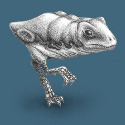
It's jang to be wild and sexy and reckless and teen-age. It's jang to do daredevil tricks and even get killed a few times...you could always come alive again. It's jang to change your body, to switch your sex, to do anything you want to keep up with the crowd. But there comes a time when you begin to think about serious things, to want to do something valid. And that's when you find out there are rules beyond the rules and that the world is something else than all they'd taught you.
Tanith Lee was a British writer of science fiction, horror, and fantasy. She was the author of 77 novels, 14 collections, and almost 300 short stories. She also wrote four radio plays broadcast by the BBC and two scripts for the UK, science fiction, cult television series "Blake's 7." Before becoming a full time writer, Lee worked as a file clerk, an assistant librarian, a shop assistant, and a waitress.
Her first short story, "Eustace," was published in 1968, and her first novel (for children) The Dragon Hoard was published in 1971.
Her career took off in 1975 with the acceptance by Daw Books USA of her adult fantasy epic The Birthgrave for publication as a mass-market paperback, and Lee has since maintained a prolific output in popular genre writing.
Lee twice won the World Fantasy Award: once in 1983 for best short fiction for “The Gorgon” and again in 1984 for best short fiction for “Elle Est Trois (La Mort).” She has been a Guest of Honour at numerous science fiction and fantasy conventions including the Boskone XVIII in Boston, USA in 1981, the 1984 World Fantasy Convention in Ottawa, Canada, and Orbital 2008 the British National Science Fiction convention (Eastercon) held in London, England in March 2008. In 2009 she was awarded the prestigious title of Grand Master of Horror.
Lee was the daughter of two ballroom dancers, Bernard and Hylda Lee. Despite a persistent rumour, she was not the daughter of the actor Bernard Lee who played "M" in the James Bond series of films of the 1960s.
Tanith Lee married author and artist John Kaiine in 1992.
OH, the concept. OH, the potential. OH....SHIT, another UGH inspiring BOREFEST with the potential to cause NARCOLEPTIC FUGUE. Oh, the uncompelling MEH-NESS and the HEAD SCRATCHABLY UNEXCITING ending. Oh......damn another book that is...
Seriously, great concept but a lackluster execution that left me very disappointed. As I read this I would find myself really liking an idea and then being frustrated and bored to death with how it was explored. It just isn't fair.
Before reading this, I had only read one other book by Tanith Lee, Night's Master, which I really, really enjoyed (and highly recommend). Like that book, this one is well written and has a superb concept behind it. Unlike the previous book, the execution of this story left me oh so maddeningly under-whelmed.
BACKSTORY/PLOT SUMMARY
The story takes place in a cool-daddy, far-out future, hedonistic “sextopia” where technology has allowed people virtual immortality since people can now transfer their consciousness into new bodies at will. Teenagers (called Jangs) spend the equivalent of 50 years or more engaged in every kind of lewd, defiling, hedonistic excess that you can imagine. Wild sex, ecstasy drugs, extreme sports...(you know, kind of like college).
In this environment, despite all of the supposed pleasures to be experienced, the biggest obstacle for the Jangs to overcome is boredom (which mirrored my own feelings as I was reading this). The Jangs continue to try and find new extremes to reach in order to find enjoyment. This even includes killing themselves in various ways to see what it feels like (kooky huh?) since they will immediately be placed in new bodies. All of this world-building was interesting and fairly well done.
HOWEVER, from there we are introduced to our protagonist, a young “girl” (in quotes because she is alternatively male and female in the story) who is your typical "I hate my societey" dissatisfied individual found ad nauseum in these anti utopian novels. She is not content with her surroundings, not happy with herself and goes around boo hooing her life as she desperately searches for a way out of the "happy" life she is being forced to live.
This is where I just lost most of my interest in the story. I lost interest not because I don’t like the theme of the outcast realizing their society is not what it appears to be or should be. It's just that the writing lacked any sence of evocative momentum and never pulled me in...it never even tugged. I never identified with the main character and so her/his struggle was a big fat bag of so what.
I mean the story is only a 170 pages long and I found it plodding. That is tough to do. When you take a short novel in a genre I like, with a theme I am receptive to and still have me anxious for the story to finish, I am left to conclude that something just ain't right here.
To bottom-line it, I was not enamored with the book. Despite some interesting world-building, there was no emotional connection with the main character and the plot seemed tired, listless and dull. 2.0 Stars...barely.
(Please note that I refer to the protagonist with they/them pronouns throughout this review. They only ever go by he/him when presenting as a boy or she/her when presenting as a girl. I have used they/them for merely simplicity and the fact that sex/gender has no bearing in their society)
This story takes place in a collection of domed cities. Beginning in the domed city of Four-BEE, we follow a nameless narrator, who is apart of a hedonistic population of teenagers called the Jang. These Jang are all beautiful, bisexual, and have slowed aging yet also throw themselves into the most dangerous situations just to have some fun. They often commit suicide in colorful ways to fulfill that fun and when they resurrect they can choose how their new bodies will look and what sex they will be. Most of all, everything is taken care of for them in their society by the robots who keep things running or by their parents (called makers here). They don't have a single worry.
Yet, our nameless protagonist feels something of that has been missing from their life. So, they go on a personal journey throughout the domed cities to try and fulfil that missing part of themselves. But nothing seems to satiate them in a world where everything is beautiful and without problems.
This was such an odd little book. It was different, obviously, to Tanith Lee's first work that I read Sabella. Like that book, Don't Bite the Sun is sci-fi, but if you're looking for an in-depth discussion on how all the technology, robots, resurrection, sex changing, and colorful and trippy looking architecture specifically works and functions, you won't get it. No, this is a character study, with the sci-fi elements buttressing the main character's journey.
After a somewhat aimless beginning--only somewhat--the main character's desire to feel genuine happiness that was not tied to all of their Jang activities was palpable. Something was haunting them, they wanted something. It took me a awhile to figure out how the title would come into play for the main character's search for happiness, but when it did, and I will get to it towards the end, a lightbulb came on.
The presentation of sex/gender is the most interesting part of this book. As I said, the Jang can change their sex, if they desire, upon resurrection. Their personalities and behaviors never change when they change sex, they are still the same person. At a few points, the main character says that certain characters act "mostly female" or "mostly male," and at first I was a bit confused as to what this meant. I thought they were saying that someone who is "mostly female" is someone who acts effeminate when they're a boy and is hyperfeminine when they're a girl and vice versa with those who act "mostly male", but apparently a short scene after this disproved me. What the main character means by this, and this more shown than told, is that they more prefer being in a specific sexed body and that they sometimes displayed the movements (for lack of better words) they typically displayed in those specific bodies. While most of the relationships featured are between boys and girls, same-sex relationships are also mentioned. In a previous experience as a girl, the main character made love to a friend in as a girl and at one point when one of their friends is a girl, they had both boy and girl admirers.
Another thing I appreciated about the gender in this futuristic society, is that there is no yin and yang, or duality, between boys and girls. There's no female/feminine brains and no male/masculine brains; they are the person's same brain not matter what sex. In fact, at one point the main character has a dream they construct through virtual reality, in that dream they are a woman (as they were at the time) and they are both a strong warrior and beautiful maiden who fights for themselves without folly or aid and still falls in love with a handsome warrior. It's so absolutely fantastic! Ya hear that, The Left Hand of Darkness! No dualism! (Yes, I'm still bitter about The Left Hand of Darkness. Sue me.)
The book's central message is not necessarily a new one, but it is a different perspective on the journey to find the purpose behind that message. In a society where everything is given to you and you have no worries, how can you still be unhappy? Well, apart of Lee's answer has to do with coming-of-age, as this story is very much one of those. We are told that the teenage Jang have different responsibilities and goals than those of the Older population, who are a more relaxed than the Jang. The main character clearly wants to grow up, but are they ready? They certainly think so, and for a long time I hoped they would get that goal. Surprise! Surprise! Both me and the main character were wrong.
Lee's message is two-fold: Even in a society with total beauty and without worries, we will still get melancholy, not because all humans are inherently cruel or vicious or selfish people, but because we are restless and and always hunger for something more. And that's natural! Lee does not diminish this natural drive nor does she disrespect it. The second half of the message is literally the title.
Don't bite the sun. Don't bite it because you'll burn yourself.
To the main character, the sun is the "Ordained Way." The way of life within the domed cities. It is okay to feel restless over it, but don't "bite it" because you will be "burned." Meaning, if you keep trying to tear at and muck up what will come naturally, you'll hurt yourself and possibly others in the process. Yes, it's okay to feel that happiness and to vent about it, it's completely justified! But the prideful thinking that you can take the reins and have complete control over everything--again, (and sorry for the repetition) biting the sun--in your life is just going to cause you more disappointment especially when something goes wrong.
The main character tries to prevent feeling this by constantly killing themselves, resurrecting, changing sex, making love, drugging up, and going on a journey through the domed cities with their feral pet. They try getting a job and are prevented from it. They try having a child and it results in a sorrowful but clarifying moment. They even try to dig up an ancient ruin and run through a briefly beautiful desert oasis only for it to result in heartache and loss.
It's a tough lesson to learn, and it's taught a weird way in this book; especially when so many other sci-fi writers like Robert Heinlein, Ursula K. Le Guin, Kurt Vonnegut, and Joanna Russ had written books about pushing against society's expectations and entrapping walls for better freedom (well, certain freedoms for Heinlein). But it's an honest message, an honest portrait of an unhappy young person in a happy utopia. Not everyone will like it, sure, but hey someone had to say it and it might as well be Lee.
Now, how about that ending? At the end of the book, the main character passes out from a drunken, drugged-up party with their friends, wallowing in their pain and sorrow that resulted in their fruitless journey. Before they pass out they say, "Oh, God." When they wake back up a friend of theirs says she was confused as to what that word meant and even looked it up. She wasn't able to get a definite answer and the main character has no idea either. At the very end, the main character is haunted by their utterance of this unknown "God" and still questions if they belong in Four-BEE.
What could this mean? Perhaps the utterance of "God," knocked down further walls in the main character's mind and awakened something deeper within. Who knows? Perhaps, Drinking Sapphire Wine has an answer.
Dearest Mary, please deliver us from comfort and convenience. Protect us from easy answers and mindless pleasures. Guide our hearts towards love and lead us to meaning. Amen.
A curious musical trend happened in the early-to-mid 1970s, primarily in England. A bevy of bands, inspired by the sexual revolution and the easing of public mores, began to stretch the boundaries of gender norms to the limit. Androgyny was the big new thing, and male rocks stars in particular took the opportunity to create stage personas that were designed to playfully shock and awe their fans and irritate the staid and conservative establishment. This musical and visual movement was to become known as “glam.” Ziggy Stardust and The Spiders From Mars, Mott The Hoople, Slade, The Sweet, Marc Bolan, and Roxy Music all became stars, and changed the look and sound of rock music forever, influencing countless bands across generations.
Okay, Mike, that’s nice. But what the HELL does it have to do with a book review of an obscure pulp science-fiction title like “Don’t Bite The Sun?” Well, lemme tell ya. Here is the basic fact: Tanith Lee’s first installment in the Four-BEE duology is THE literary embodiment of glam rock. It’s like watching David Bowie in his Ziggy Stardust guise, shimmering and shaking like some kind of alien being, come from above to teach us Earthers about the Cosmic Groove. It’s like seeing and hearing Roxy Music’s Brian Eno crank out the wildest synthesizer sounds ever synthesized, all the while dressed like some fallen angel, wings sprouting from his back while vocalist Bryan Ferry is swaggering and swaying and introducing us all to the New Rhythm.
First published in 1976 by DAW books, “Don’t Bite The Sun” introduces us to an unnamed, mostly female narrator who inhabits one of three huge, domed cities on a desert planet. The world itself is never named, though it could easily be a post-apocalyptic Earth set far into the future. I use the term “mostly female” because the populations of the domed cities can change sex at will, typically through suicide. Their “essences” are transferred to Limbo, where they can design a new body to inhabit until they get tired of it. Our main character spends most of the book in female guise, though she does take on a male body at one point in the story. The narrator is one of the “Jang,” the basic term used to describe the younger demographic of the cities. The expectation for the Jang is that they will act out all of their fantasies and rebellions, leading lives of sexual liberation and anarchy. Drug use is legal and encouraged, and there are no laws to speak of that can be broken. Our narrator is part of a Jang clique of friends who hang out together, having sex and popping pills and spending time in Dream Chambers which mimic immersive virtual reality video games. It’s quite the idyllic vision of teenage rebellion taken to its logical extreme, charted and approved of by the quasi-robotic overseers who seem to run the behemoth cities in conjunction with a massive artificial intelligence.
In point of fact, everything in Four-BEE is just a bit TOO idyllic for our unnamed narrator, who early on evidences a sort of tired and bored cynicism about the state of her current life. She tries various things to shake herself out of her doldrums, but nothing works. She steals a pet from outside the dome, something that resembles an orange-eyed dog with above-average intelligence. She tries to accelerate her social status to that of an “older person.” She looks for what passes for work in this strange and pampered society. She attempts to have a baby through artificial insemination. She travels to another one of the domed cities to look for a male who can provide the other half of her fertilization process for the baby. And I really don’t want to give any more away. Suffice to say this a coming of age novel in the middle of a glam rock concert, all noise and music and feathers and glitter flying about everywhere and getting into quite literally every available orifice. It would be tempting for me to say that “Don’t Bite The Sun” is a lot like reading Arthur C. Clarke’s “The City and the Stars” on acid, but that would be too easy. Lee’s domed cities owe a nod to Clarke’s visionary classic, but the similarities don’t stretch out too far.
Tanith Lee is a ridiculously talented writer. Her world-building here is first-class and exceptionally vivid. She employs a number of Jang slang terms that she helpfully defines at the start of the book, although it’s nothing as challenging as the “Droog” vocabulary that Anthony Burgess employed in “A Clockwork Orange.” I have seen a few comparisons to “A Clockwork Orange” in other reviews for this book, but to be honest there is no clear comparison between the two works. Burgess created a dystopian world full of menace and paranoia, peppered with a spot of the old ultra-violence. Lee’s vision is far more benevolent and much less oppressive, all of the drama of the plot being driven by the need of the main character to find meaning and individuality in a world where there seems to be no purpose to life other than to basically do whatever the hell you wish to do with no constraints. “Don’t Bite The Sun” is a science-fiction bildungsroman for the glam generation, full of sex and drugs and rock ‘n’ roll….and I like it.
There is also a clear vein of humor to be found within these pages. One can easily envision the comedic potential of the poor quasi-robotic administrator who has to continually deal with the latest schemes of our narrator as she attempts to change her fortunes and find her true self in this self-contained society where the idea of “self” has been subsumed to a communal ideal of expectations and pre-programmed “rebellion” and eventual submission to a life of bored leisure as a member of the “older class” of civilization. I found myself smiling often as I read through the novel.
I am tremendously impressed with Lee’s prescience where the science and technology of her world is concerned. The Jang recreational drug of choice is quite literally called “ecstasy,” and she foresees the immersive nature of multimedia games that can mimic self-directed dreams and experiences. It’s also quite obvious that the world outside the protective domes has experienced some sort of catastrophic climate change that has poisoned the atmosphere and left the landscape barren and inhospitable to (human?) life. Furthermore, Lee envisions a symbiosis between flesh and the artificial, her quasi-robots and even her people seeming to be some sort of a merging between the organic and the inorganic.
I am also impressed with the fact that Lee lets the reader play an active part in the world-building. She is descriptive without being overbearing about it, leaving the reader to fill in a lot of the blank spaces in the story. It is also quite ambiguous as to whether or not this story takes place on a future Earth, or if her planet and its denizens are truly alien creatures who just happen to have an anthropomorphic connection to the core psychologies that make us truly “human” in the broadest universal sense. Either way it’s clear that we are a looonnnng way from Kansas, Toto. Tanith Lee gifts us with a beautifully conceived story that rests within a crystalline shell, all shiny and fresh and brimming with new ideas even as it taps that age-old story of trying to figure out our place in the wider world. The search for that sense of place and belonging is truly one of the defining urges of the human condition, and Lee is up to the challenge here.
I’m lucky enough to have the first DAW books printing from 1976, with cover art from Michael Whelan. I’m always ready to give a shout-out to the quality and care that DAW took with its paperback offerings. This edition is 43 years old and it still looks good. I do, of course, advocate for the use of archival quality plastic bags to store your old paperbacks in, as this helps to keep oxygen and moisture off of them.
Finally, “Don’t Bite The Sun” is the first book in what was originally envisioned as a trilogy by Lee, though she quit this particular universe after only two installments. The sequel is titled “Drinking Sapphire Wine,” and I’ll review that separately when I get around to reading it. I highly recommend taking a bite out of this sun, especially if you enjoy science-fiction that’s a little bit off the beaten path. It reads as fresh and contemporary, even four decades past its original publication date. It’s even better when you set up a classic glam rock playlist to listen to in the background as you’re reading…..better yet, spin those songs on vinyl, the way they SHOULD be listened to. You’ll have time to thank me later.
This book is so timely that I was shocked as I read it. It’s underrated, underappreciated, and underread. Don’t Bite the Sun is one of the undiscovered New Wave masterworks of science fiction that has missed the radar of the masses.
Imagine, if you will, a perfect utopia. Death has been defeated. You can do whatever you want, too. You can steal, kill, and destroy all you want with no ramifications because autonomous robots will undo the damage and fix it like it never happened. This is a perfect world that humanity has dreamed of. Who could be unhappy here?
Perhaps you feel it. Something’s wrong, but you can’t put your finger on it. This is a world where nothing is done for yourself. The robots do everything, and humans trick themselves into having a sort of freewill.
Sure, you can work pressing buttons. But if you don’t press the button at the right time, a robot will do it for you. Art!? You can do art, but the robots will tell you what to do and even give suggestions.
This is a book about purpose and identity. The narrator wants to discover what she’s missing—what this society has stolen from her. And it’s this journey that we join her on, in this world so strange yet so familiar.
The question is: Why haven't I read anything by Tanith Lee before? A magnificent landscape of a post-scarcity society and some teenagers who are bored for no reason, wanting to change bodies or continually commit suicide. What can the youth do in this sumptuous society of the future? Many things, but it will be difficult to find their place in the world as much as it is for them today.
My first reaction to sitting down and writing this review was to check the publication dates of Don't Bite the Sun against The City and the Stars by Sir Arthur C. Clarke. They're actually published about twenty years apart, and certainly the way Tanith Lee is writing about society is very different, but I would seriously argue that much of the message is the same thing. It's the idea that if humanity can ever create a utopia where no one has to work, and people can live as long as they want, they'll create a soulless utopia that will erode creativity and spirit. (I'm also looking at you, Wall*E, that animated movie that was charming for the first while and then maddening as fuck for the rest.)
Note: The rest of this review has been withheld due to the changes in Goodreads policy and enforcement. You can read why I came to this decision here.
In the meantime, you can read the entire review at Smorgasbook
So much more fun than 'Brave New World'. So much more colorful than 'The Giver'. The dangers within Four-bee are more sly than those of the Maze Runner; the challenge more subtle than any Hunger Games. Strange; because Four-Bee is a nice place, and the robots just want what is best for everyone.
The power of the ending rivals that of any dystopian tale yet told. "Stranger, do not bite the sun, for it will burn your mouth".
That's the warning in the book. Ignore it. Go ahead and bite.
I first read "Drinking Sapphire Wine," the second part of this duology, about 30 years ago, when I was in high school and this book was about 10 years old. I loved it at the time, but I could never find a paperback copy of the first part of the story.
The wonders of the modern age are a book lover's best friend. And yes, I'm a huge Tanith Lee fan, so this review is hopelessly biased.
And this book is about the wonders of the modern age, an age set in the distant future for humans, who now live in series of technologically advanced cities, Four-BEE, BOO, and BAA. Practically every need and whim is provided for, there are caretaker robots buzzing about, and people can spend their days having sex, going to parties, changing their gender, designing fashionable bodies. It's all so derisann that it's sure to turn any young Jang droad in a vrek.
Our young unnamed narrator is completely bored with her endless existence. Once you can do anything you want, become anything you want, have anyone you want, things become a little . . . stale. And our young narrator wants to experience something more.
In tone and in setting, this story reminds me a lot of The Silver Metal Lover, another of Lee's books that I rate as excellent. I read an article at Tor.com by Jo Walton that this story counterpoises well with Arthur C. Clarke's Against the Fall of Night. I will need to read that next.
I first read and loved this in my teens. Tanith Lee writes so lyrically with such evocative prose of this loopy dystopic utopia in a far away post-apocalyptic future. And yes, this domed city of Four Bee is both. What do you do in a hedonistic world where everything can be and is done for you by android servants? You can even change bodies and genders. Eternal vacation--or eternal childhood. The (mostly) female protagonist of this first person coming of age narrative bumps into social walls in her search for a purpose to her life beyond the pursuit of pleasure. If that sounds ponderous, well the book isn't. This is told with a lot of wit and humor--Lee even creates her own slang. It's a blast to read and ultimately moving and thought-provoking. There's a sequel Drinking Sapphire Wine that picks up the narrative where this leaves off and recently a book combining both short novels was released as Biting the Sun.
One of the most lyrically beautiful books I've ever read. Hands clasped in friendship across space and time and myth: I love this character and her pet.
There is something peculiar about Tanith Lee's writing style that I dearly love, but that I can understand would be off-putting for some. She isn't afraid to crank up the fantastic in her fantasy and her science-fiction, with weird creatures, lush worlds, and sensual language. This book doesn't quite reach the heights of her best work (Tales Of The Flat Earth) but for someone who's already read a lot of her work, and is thirsting for a bit more, this quenches that thirst. Even though I don't quite buy that premise that people would get bored so quickly, the concept is a good hook to hang a story on, and the fumbling, scattershot approach that the main characters takes in attempting to break out of that boredom does make a strange kind of sense, given her/his essentially childlike state. The Jang slang is a bit goofy, and might have been a bit more interesting if each of the words had been a full concept that doesn't already exist as a single English word, but then it did fit with the style of the book. There are lots of nice little details that make the world vibrant, including descriptions of food and clothing.
This book made me sad because the main character drowned herself in a bubble because she killed her child in utero by attempting to conceive it with a male version of herself (you need two separate life sparks to create a child, not just one, obviously).
All of this happened in the middle of the book.
4/5.
This entire review has been hidden because of spoilers.
Don't Bite the Sun is a masterpiece of the New Wave, and a relatively forgotten one that deserves to stand alone the others in its lineage: the beautiful Dystopia. Many times when reading this I was reminded of Farenheit 451 (granted, I read that recently), but taken to fantastical extremes. Imagine a world where technology is so powerful, so taken for granted, that you're able to do essentially anything ever. Dial up a dream to your exact specifications, have anything delivered to you at any time, there's no need to work, to worry, to do anything other than to live in this listless party, one so numbing that the inhabitants take to ritual suicide just to feel....anything at all. They of course wake up moments later in a new body, looking exactly however they want.
Tanith Lee interrogates this dream fulfillment brilliantly, in the guise of this young adult who's becoming more and more disillusioned, but has no way to express themselves - even anarchy has been co-opted into this pretense of rebellion that the system actually controls. The writing is quick, punchy, and full of these brilliant images and imaginings of what a future that could do anything would be capable of. If there's any downside here, it's the very ham-fisted Jang slang language - everything is Froopy or Tosh or whatever and...I mean you get used to it but it's pretty dopey.
Still, the wit, intelligence, and terror Lee imbues into this scenario is not to be missed. Highly recommended.
I've read this a number of times over the years (it was published in 1976), and I love it just as much today as I did in previous readings. It's quite short (only 158 pages), but the world is very rich and engaging...more than some that are five times that size. The basic story addresses discontent in a society that offers every convenience and comfort. The protagonist and narrator is discontent in the superficiality of the pre-programmed world. It's thoughtful and sad.
There's a second book, "Drinking Sapphire Wine," that I've finally gotten a hold of, and I am hoping that it is good as this one...
I'd feel kind of tosky about finishing this book, but I don't think I'm jang enough. What an interesting world Lee created to explore the ideas of identity, relationships and living a meaningful life. When you are young in 4 BEE, you change bodies regularly--I laughed when she changed back to an old body because her pet didn't recognize her (but wouldn't have done it for another human).
I read this when I was a teenager and read it again recently (an inadmissable number of years on, since you ask). Sparky, original, poignant and adorable.
The writing is as strikingly gorgeous as the author herself was. Dreamlike descriptive passages abound but they are economical and potent, transporting this reader to the bizarre settings with a focus I've not experienced in a long time. Almost every word packs a punch and there are no wasted words. Nearly every paragraph harbors a zinger as enticing as the opening sentence: "My friend Hergal had killed himself again."
This is a Dystopian novel unlike others in that I'd really like to live in its world. Or maybe it's Utopian instead. It's hard to tell. When Goodreads asked to describe the book we are currently reading in three words, I responded, "Spoiled immortal ennui," but this isn't entirely accurate. I grew to love the nameless first person narrator and her weird pet, her (or his) circle of friends who change bodies and even species nearly as frequently as we change outfits, and the strange but gentle and sometimes mildly humorous adventures as we wander through surreal settings seeking meaning in life.
Wikipedia claims the novel explores eroticism and despair, but I'm afraid I didn't pick up on much of that. It is not clear to me what deeper meanings, if any, the novel is trying to reveal. Yet it must be far more than mere afternoon fluff reading. I have been thinking about the novel for several days. Does the character grow? Did I? What exactly is her outlook at the end? It's a strange little novel indeed.
Tanith Lee was taken from us too soon. Though I had only ever read Days of Grass prior to this, I'm sure she had a lot more to offer the world. I look forward to enjoying other volumes of her work.
This book poses the question of what creates happiness. Is it being able to do what you want? Is it taking drugs? Is it sex? This book suggests it is none of these but rather a life that has meaning and connection.
The narrator of this book (predominately female) lives in a world where there are no rules if you are "Jang" teenagers. You can change bodies, take drugs, steal what you want and have love (sex) with anyone you like. The whole purpose of your existence it to experience life and pleasure before you become an "older person". If you believe our material world, this should be enough to make you happy, but for our narrator, it just seems unfulfilling.
I liked the book and I thought it had a lot to say about the pursuit of happiness. The language does take a bit of getting used to, even with the glossary at the start. It is a short novel so I am looking forward to reading the next instalment.
Tanith Lee was a goddess, writing the weirdest tales ever to have been published. Her fantasy is all-compassing, strange but still understandable. Don't bite the sun is that sort of book you will reread just because it keeps calling out to you.
'Il mio amico Hergal si era ucciso di nuovo. Era la quarantesima volta che andava a sbattere con il suo uccelloplano contro il Monumento a Zeefahr, ed era necessario fargli un corpo nuovo. E quando lo andai a trovare al Limbo, girovagai per l’eternità, prima che un robot me lo rintracciasse. Questa volta aveva la carnagione scura, era più alto di una trentina di centimetri, con i capelli molto lunghi e i baffi, tutti di scintillanti fibre dorate, e quelle stupide ali che gli spuntavano dalle spalle e dalle caviglie. “Attlevey, Hergal”, dissi io..' Tanith Lee, la Divina maestra del fantasy, ha anche scritto una breve serie di romanzi fantascientifici ambientati nel mondo di 4 BEE: una Terra postatomica, forse, oppure una colonia marziana, a giudicare dai colori del paesaggio; in questo primo volume non viene specificato. È un’utopia; ma che utopia! La protagonista, logorroica ed egocentrica al punto che non sapremo nemmeno il suo nome, ci racconta la vita e i problemi di una Jang, una “gggiovane” direi, in questa società dove i giovani sono tenuti a divertirsi e a spassarsela in tutti i modi fino a età avanzata: non solo blande trasgressioni come rubare o devastare musei sono tollerate, ma si può cambiare corpo per provare a vivere nel senso opposto e/o perché ci si è ammazzati praticando uno sport estremo; il nuovo corpo potrà essere accuratamente e stilisticamente progettato prima, con pelle di qualunque colore e appendici quali antenne od ali (seppure estetiche e poco funzionali). Tra frenetici matrimoni che durano anche solo un giorno (condizione per amarsi) e Case dei Sogni dove si può vivere un sogno sceneggiato in precedenza, il problema è inevitabilmente la noia: non arriva mai il momento per diventare “creatori”, ovvero genitori, e tanto meno si può lavorare o fare qualcosa di utile; peraltro il lavoro degli adulti è anch’esso qualcosa di fittizio, che robot e quasi-robot potrebbero benissimo fare da soli. La nostra protagonista, dietro lo sfacciato e forzato edonismo, nasconde un rovello: trovare qualcosa di sensato da fare. Respinta dalla possibilità di lavorare, in estrema difficoltà ad avere, così “gggiovane”, l’autorizzazione per un figlio, visceralmente affezionata alla sua insopportabile bestiola aliena da compagnia, si aggregherà con entusiasmo a una spedizione archeologica nel deserto, che potrebbe svelare qualcosa del passato delle tre città (ci sono anche 4 BAA e 4 BOO); dove mostrerà più buon senso dell’archeologo-guru che la dirige. È l’occasione per uscire dal condizionamento urbano; la nostra protagonista, che è comunque più sensibile delle persone così “integrate” che la circondano, contempla senza stancarsi il deserto, e riuscirà addirittura a vivere un momento di comunione quasi mistica con la natura, risvegliata da un acquazzone. Tra le rovine scopriranno un coccio con l’iscrizione “Non mordere il sole, ti brucerai la bocca”, su cui mediterà a lungo; ma anche la spedizione archeologica si concluderà disastrosamente. Dopo un flebile sussulto religioso (qualcosa che è stato cancellato da tempo in quella società), si rassegnerà a fare la vita dei suoi amici. Anche se probabilmente non è l’opera più rappresentativa della Lee (non è un fantasy), è più che adeguata a mostrare un’autrice dallo stile sfolgorante, espressivo, colorito, ironico, su una base di asciutta ironia britannica: sembra di vivere dentro alla psichedelia di “Yellow submarine”, un po’ sulla scia di “Arancia meccanica” per il gergo giovanile e di “Programma finale” di Moorcock, ma senza nichilismo violento: la protagonista sembra più una agiata “Sloane ranger” che scorrazza per la “swinging London”. Il pedigree del romanzo si può far risalire a “Brave new world” di Huxley: anche qui abbiamo una società che sembra donare a tutti la possibilità di soddisfare ogni desiderio, ma è davvero un’utopia, se i nostri desideri sono stati sottilmente condizionati? Non sentiremo sempre il bisogno di qualcosa che vada oltre il capriccio del momento? È interessante notare che questa completa intercambiabilità di corpi e sessi viene vissuta edonisticamente, senza che abbia troppe conseguenze; nel romanzo le questione di genere non sono un tema, e del resto sembra che in quei primi anni ’70 tutti fossero troppo occupati a festeggiare e a godere della “rivoluzione sessuale” per porsi problemi terra terra come il trattamento sul lavoro, gli abusi..
I have a weird soft spot for Tanith Lee, probably because I first read her at a very impressionable age. I think her deeply inappropriate books were some of the first I got from the adult section of the library. Don’t Bite the Sun is…an experience. I don’t know how else to put it. It is vivid and weird and dreamy, and occasionally lurid. I love it for how loopy it is and how devoted it is to carrying the book’s concept to fruition. Also reading it in original 70’s paperback is a real treat, seeing as you get to tout that weird cover wherever you go (finished this pre-Covid-19 isolation, obvs). Watching the (mostly) heroine bump her head and hands futilely against the barriers that society has built around her is at times funny, sad, and infuriating. This book is like a lovely time capsule of a specific era, and I think I’ll always love it.
Questo testo di Tanith Lee - Non mordere il Sole - avrebbe potuto rappresentare una bella opera, trovo, se fosse stato scritto diversamente: lo stile c'era, la trama era interessante (ancora di più, se si considera l'anno di pubblicazione dell'opera), le strade di sviluppo della trama stessa avrebbero potuto essere molteplici e decisamente più "creative"; invece, l'opera di Lee mi è parsa, nonostante tutte le ottime premesse di cui era provvista, ripetitiva, largamente noiosa, senza un climax, senza punte di "stimolazione letteraria" (lasciatemela dire così) e ancorata al tempo in cui fu scritta (sì, so che è strano, dato che sto parlando di un'opera di fantascienza, ma quale periodo vi viene in mente se menziono fiori, libertà sessuale e "spensieratezza"? Sì, è proprio la decade alla quale state pensando quella in cui quest'opera fu pubblicata...). Insomma, quest'opera di Tanith Lee non mi ha convinto. Purtroppo...
A depressed teenager struggles to deal with the fact that any sense of purpose has been completely removed from her post-scarcity utopian society, from the soullessness of its fully automated art (written in 1976, talk about prescient) to the control of its juvenile population via sex, drugs, and simulated dreams.
Surprisingly, the entire story is told in a kind of gonzo, maximalist manner, causing the book to be not just thematically interesting but also just a lot of fun (unlike, say, Brave New World). It is also kind of... insane (what do you mean she tries to impregnate herself).The only slight negative I have is the dated made-up slang (there is a glossary; it all sounds ridiculous).
All in all, a super fun book with surprising depth. I really loved the sci-fi Holden Caulfield on speed protagonist, very relatable. Probably the book with the biggest gap between quality and popularity that I have ever read. I am not going to go on another rant about what gets published and what does not, but holy fuck man, get her books back in print, please!
From the shelves of my unread Sci-Fi library. Tanith Lee is an amazingly prolific British science fiction author who's been active since the 1970's. I'm not sure what led to this book getting on my shelves - it wasn't on any of that year's award lists, but was well received at the time and seems to have maintained a loyal following. The story imagines a post-apocalyptic future in which humans survive in domed cities on an unnamed desert/volcanic planet. Within the domes the humans every need is catered to, to a dystopian extent: there is no meaningful work, nothing ever changes, and every day is a day in a phantasmagoric wonderland. In this future society, made possible by quasi-robot machines (there's an interesting commentary here about the soul, referred to in the text as a "life spark:" robots, though intelligent, ain't got em'), and a futuristic power source that I'll get to in a moment, humans are expected to progress through a period of uninhibited adolescence - the "Jang" - before being put out to pasture as useless adult drones. The Jang are expected to live life to extremes indulging in drug use, promiscuity (though oddly only available in "marriages" meted out in units as short as a single afternoon), and state-sanctioned vandalism and risk taking. If one dies, no big deal: their "life spark" returns to to the Limbo tanks from which a new body is grown according to the deceased's specifications - thus individuals freely change bodies and genders while retaining memory and personality.
The creepy twist to paradise is that the economy and energy of the domes functions on the "emotional energy" paid by the Jang as they pass through their various experiences. Written as it was in 1976, I wonder about this book as a response to what I've only heard went on the 1960's. The unnamed protagonist finds the above arrangement unfulfilling and longs for something more - like authentic creativity, or an ill-defined "purpose" to life. The text critiques committed hedonism, which isn't very difficult to critique. I found the power source metaphor interesting: a vampiric state feeding off the emotional power of youth who are pressured into passing through ever more extreme experiences to fulfill what it means to be "Jang." Something prophetic might be ascribed here taking into account our current culture that increasingly devours its young, the sacrificial lambs of Hollywood and the music industry as cases in point. We fetishize youth and beauty whilst vast economies rely on inventing and selling the vacuousness of destructive youth culture.
The text's language is airy and light - a quick read. The themes above are important, though I don't feel that the text always delivered the punch that it might have. The author's trope hamstrung her to a degree - one can't long for something (home, family, faith) that doesn't exist within the world of the text. In this sense, the text is quite bleak - the crushing homeostasis of pleasure is so forcibly maintained, despite the protagonist's hapless struggles, there's not a lot of transcendence available. There are some interesting and even beautiful moments herein, but overall the parable becomes apparent early in the text, and doesn't evolve much further over the remainder. I was left waiting for a liberation that never came. A good book and an enjoyable read, but without the power of some of its 1950's predecessors like "Farenheit 451."
This is certainly a book that has an interestung and ambitious premise.
A world where you can change your apperance and gender as easily as buying new clothes,where young people are encouraged to be irresponsible and devote themselves to extreme pleasureseeking.
This is one of those books that hard to define properly.
I am used to reading books where you get to know the world through the main characters eyes but since its already familiar to the main character we dont quite get a clear understanding of the world wich in it takes place. Is it the future? Is it an alternative reality? I kept wondering.
There are certain moments when you really connect with the main character and understand her/him/its? feelings but it gets buried in the needlessly strange phrasing and the narrative is full of terms that we can only guess at what they mean.
There is a dictionary at the end(wich I didnt realize until I had finished)but unless you read it first you will be as confused as I was when I read it.
Its not a book I can say I love but it raises some interesting question about gender roles and how people are percieved by others based on their appearance and also explores the need humans have to struggle to really be content with their lives.