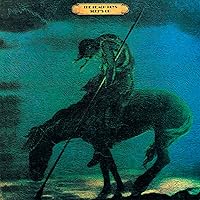
"The Pill Versus the Springhill Mine Disaster" is a poetry collection. Brautigan's style is often surreal, often tender, with touches of witty humor. The poems are written in a straightforward free verse. Here's an example of his style from "The Chinese Checker Players": "When I was six years old/I played Chinese checkers/with a woman/who was ninety-three years old." Recurrent themes in the book include love, sex, loss & loneliness. Incorporated is an intriguing mix of pop & high culture reference: Jefferson Airplane, Ophelia, the NY Yankees, John Donne etc. The book is often earthy. He writes about such topics as his own penis or a fart's smell. Memorable poems include: "All Watched Over by Machines of Loving Grace," sf vision of a "cybernetic meadow"; the open-ended "Karma Repair Kit: Items 1-4"; "Discovery," a joyful poem about sexual intimacy; the surreal "The Pumpkin Tide"; the funny, haiku-like "November 3" & "A Good-Talking Candle," which invites readers into altered states of perception. Although most of the poems are very short, there is one longer poem: the 9-part, 9-page "Galilee Hitchhiker," which chronicles the surreal adventures of Baudelaire (he opens an unconventional hamburger stand in SanFrancisco etc). If you only know Brautigan from his weirdly wonderful novels, read this remarkable collection. --Michael Mazza (edited)
Richard Brautigan was an American novelist, poet, and short-story writer. Born in Tacoma, Washington, he moved to San Francisco in the 1950s and began publishing poetry in 1957. He started writing novels in 1961 and is probably best known for his early work Trout Fishing in America. He died of a self-inflicted gunshot wound in 1984.
i was 17, i had dropped out of high school that day. i walked out of the cold dead building with a sense of complete freedom and sarcasm. i loved telling everyone there and my parents that this education would clearly not do, the beginning of a litany of bad decisions i would make over the course of the next several years. i was convinced there was something more moving and educational out there for me though i had no clue of where or how to go for such things. it was the first perfectly warm spring day which had everything to do with my final decision there was no way i could be locked in a box on a day like that. i got into my shitty car with a box of camel reds and drove directly to fern cliff with my friends ben and nick who had also made the decision. we got wonderfully high and stood in the waterfall in our underwear laughing at our cloudy rebellion and what we thought of as brilliance. i would spend many more days with those two in same places.later that day as i couldn't go home, i went to the longbranch coffee shop in carbondale sat in the window with my blank book and plotted out ignorantly my new plan. he came over and asked to sit with me, it was apparent that he was light years ahead of me in so many ways. i ended up back at his apartment in a lustful haze from his talking. we drank green tea out of tiny cups he read from this book as i laid on his bed. we rubbed our bodies together for hours, and i realized at that moment that i would leave that place for good and find somewhere much like his and start on my learning journey away from all of the cowards and authority around me. thank you even though i don't remember your name, you gave me a glimpse into something beautiful you made me thirsty. though soon after my life would take a more devastating but gorgeous turn i never lost that yellow thickness of his room and the music of him reading aloud to me as i doze in and out of confusion and contentment. i carried this book with me everywhere for four years and gave it to the next man that made me feel something quite similiar. i want the book back dammit
When I need a break and I need beauty, oddity, and clarity, I go to Brautigan. Now I know where to find that mix. These are some of my favourite poems from the collection:
- The First Winter Snow - Love Poem - I’ve Never Had It Done so Gently Before - The Galilee Hitch-Hiker - It’s Raining in Love - My Nose Is Growing Old - The Pill Versus the Springhill Mine Disaster
Brautigan’s seventh poetry book contains 98 selected poems from 1957-1968, 38 of which were new to the book with the other 60 coming from five prior books of poetry. These slice of life and whimsy snapshots do get me to smile or chuckle or both. One such is: A Good-Talking Candle
I had a good-talking candle last night in my bedroom.
I was very tired but I wanted somebody to be with me, so I lit a candle.
and listened to its comfortable voice of light until I was asleep.
Of the load of books I read on my 2-week vacation this summer, this is the one I enjoyed most. It's a collection of mostly short poems that are overall funny and endearing. Anyone who writes a poem called "Haiku Ambulance" has already scored points with me. I also like the "versus" poems - "The Pill versus the Springhill Mine Disaster," "General Custer versus the Titanic," etc. I like the "Galilee Hitch-Hiker" poems and also "The Wheel" and "I Lie Here in a Strange Girl's Apartment." My very favorite is "Your Catfish Friend."
Not all the poems go over well. Some were crippled by a bad joke or just seemed lame. "Flowers for Those You Love," for example, fell flat.
Butcher, baker, candlestick maker, anybody can get VD, including those you love.
Please see a doctor if you think you've got it.
You'll feel better afterwards and so will those you love. **
Some of the poems seemed dated, too, though it may be my own brain dating them.
In the interest of fairness, here's one of the poems I liked:
Your Departure verus the Hindenburg
Every time we say good-bye I see it as an extension of the Hindenburg: that great 1937 airship exploding in medieval flames like a burning castle above New Jersey. When you leave the house, the shadow of the Hindenburg enters to take your place.
Believe it or not it's my first go at a book by Brautigan, although I've read a lot ABOUT him and remember well when he committed suicide in the 80s because at the time I was majoring in English at college. I remember also that he was somewhat dismissed for not being able "to grow" as a writer, that his work continued to do the same tricks over and over. Then and now, I don't necessarily find that grounds for criticism.
Brautigan's words jump like a funky beat poet in ways I can support I loved TFiA and see seasons of potential on the table of this book, but many poems casually rolled onto the floor (for me)
I finally made the dive into Richard Brautigan’s works of poetry. There really doesn’t seem to be a better starting place than with The Pill Versus The Springhill Mine Disaster. This collection, first published in 1969, at the height of Brautigan’s fame, brings together many of his poems dating back to his early work in the late 1950s.
This work acts almost as a “greatest hits” of Brautigan’s poetry. I compare this to Bob Dylan’s 1967’s Greatest Hits record. Both released at the height of their cultural relevance, with what is mostly considered their most iconic work, but ultimately a very premature collection in terms of offering a scope of what their entire career would ultimately offer.
All this to be said, I really enjoyed this. As someone who is already a big fan of Brautigan’s style this may not be a surprise but I found this to be a refreshing angle to the unparalleled Brautigan style. Brautigan is known for his minimalism and that is taken to a whole new extreme here. Brautigan can say so much with so little, typically that is a page or two but here it is sometimes just a dozen words.
As Time is quoted on the back of my paperback edition “His poems are, by turns, brutally realistic or surrealistically witty”. This collection really goes back and forth either describing a surreal and completely imaginative scenario that you’ve never considered before or a strictly realistic and mundane situation that relates deeply to the human condition, sometimes in wording that makes you marvel at how Brautigan’s mind works.
There is so much variety here and these short bursts of emotion really capture so much of the spectrum of what it means to be human. From deeply beautiful and longing professions of love to the silly, nasty or sad aspects of life. I first read through the majority of this collection under the influence of a 20mg edible and I can say that diving into each of these poems really left me in awe. I have since gone back and reread through the whole collection in a sober mind state for any naysaying squares out there, and came to the same conclusion.
Having read through this collection twice, I could easily see myself rereading it for a third, fourth, and fifth time. I love how there are little references and callbacks to previous poems that make this work really feel cohesive. The mixed bag element of the themes, lengths, and tones of these poems is amazingly balanced with this feeling of oneness, something that adds to the zen quality of this style of poetry.
You feel like you are there in the late 1960s at the peak of the Haight Ashbury scene with this subject matter. As mentioned before, some of these poems date back at least ten years prior and it really shows how Brautigan was not a product of this scene but an inceptive and instrumental element in forming it. Some of these poems may feel like “hippie pastiche” but more often than not these poems still offer something that feels truly unique and revolutionary even over 50 years later.
Brautigan quickly became my favorite poet as soon as I read a few poems from this book. I know some people do not like the poems that seem "lazy" but those are the poems that make me love him even more. There are some that will really make you nod your head in contentment, and there are some that will make you cock your head to the side and stare. He proves that you can truly write a poem about anything. Everything is poetry as long as you think it is. Some are so simple, and the mere fact that he has turned something so matter of fact into a poem makes me sigh in amazement. I know poetry means creating a masterpiece. But sometimes poetry means seeing things for what they are. It doesn't always have to be complicated. It can be stating the facts. Making people laugh. Simple can be great. Anyway, I think if the people who say "Ugh poetry is so boring! I hate it! It's cheesy!" read this, their minds will change.
“The Beautiful Poem” is a top of the mountain of all his poetry.
Today I read A Confederate General From Big Sur and this and also Rommel Drives On Deep into Egypt ... the poems from 1958 when he was living in Big Sur and forming in his mind the material that would become A Confederate General from Big Sur are amazing, how they line up with that novel. Brautigan is brilliant, a really great poet, but I think he is truly amazing in his prose. What he brought to stories, storytelling, his odd sense of poetry in the paragraph
Pirmas sakinys: I like to think (and / the sooner the better!) / of a cybernetic meadow / where mammals and computers / live together in mutually / programming harmony / like pure water / touching clear sky. Man patinka galvoti (ir kuo greičiau / taip nutiks, tuo geriau!) / apie kibernetinę pievą, / kur žinduoliai ir kompiuteriai / gyventų kartu abipusėje / programuojamoje harmonijoje / kaip tyras vanduo, / liečiantis skaistų dangų.
50-60-ųjų amerikiečių poezijos klasika, kuri labai maloniai skaitosi ir dabar. Būtų netikslu vartoti žodį atpažįstama (dėl to, kad universali) – labiau papalaukusi, prie nieko neprisirišusi. Eilėraščiai patiko naivumu, lakoniškumu, humoru, ironija, netikėtais įvaizdžiais (derinami siurrealistiniai įvaizdžiai ir buitinės aplinkos aprašymai), autobiografiniais intarpais.
Iš knygos nugarėlės: "Eilėraščiuose svarbios meilės, sekso, netekties ir vienatvės temos, išradingi ryšiai tarp pop ir aukštosios kultūros: Jefferson Airplane, Ofelija, Niujorko jankiai, The Grateful Dead, Džonas Donas ir kt. Daug kas knygoje net labai žemiška! Nors dauguma eilėraščių trumpi, čia rasite ir ilgesnį 9 dalių ciklą "Keliautojas Galilėjoje", kurį skaitydami sužinosite apie siurrealistiškus Šarlio Bodlero nuotykius (kaip San Fransiske jis atidaro ypatingą mėsainių kioską)."
Eilėraščių rinktinė dvikalbė, o vertimas iš esmės pažodinis – puikus sprendimas, nes Richard‘o Brautigan‘o eilėraščius originalo kalba skaityti užteko mano angliškų kalbos žinių, kartais vieną akį užmetant į Dominyko Norkūno ir Juliaus Kelero vertimus (ačiū jiems!).
Horse Child Breakfast
Horse child breakfast what are you doing to me? with your long blonde legs? with your long blonde face? with your long blonde hair? with your perfect blonde ass?
I swear I'll never be the same again!
Horse child breakfast, what you're doing to me, I want done forever.
Ristūnė rytmečio skanuolė
Ristūne rytmečio skanuole, ką darai su manimi? savo ilgom šviesiom kojom? savo ilgu šviesiu veidu? savo ilgai šviesiais plaukais? savo tobulu šviesiu užpakaliu?
Jau niekada nebūsiu toks, koks buvau.
Ristūne rytmečio skanuole, tai, ką darai man, daryk amžinai.
San Francisco
This poem was found written on a paper bag by Richard Brautigan in a laundromat in San Francisco. The author is unknown.
By accident, you put Your money in my Machine (#4) By accident, I put My money in another Machine (#6) On purpose, I put Your clothes in the Empty machine full Of water and no Clothes
It was lonely.
San Fransiskas
Šį eilėraštį, parašytą ant popierinio maišelio, Richardas Brautiganas rado savitarnos skalbykloje San Fransiske. Autorius nežinomas.
Atsitiktinai įmeti Savo monetą į mano Skalbyklę (nr. 4) Atsitiktinai įmetu Savo monetą į kitą Skalbyklę (nr. 6) Tyčia sumetu Tavo drabužius Į tuščią skalbyklę pilną Vandens ir nesančių Rūbų
Buvo viʹeniša.
Discovery
The petals of the vagina unfold like Christopher Columbus taking off his shoes.
Is there anything more beautiful than the bow of a ship touching a new world?
Atradimas
Vaginos žiedlapiai išsiskleidžia tarsi Kristoforas Kolumbas nusiautų batus.
Ar yra kas įstabesnio nei laivo pirmagalis, lytintis naująjį pasaulį?
Widow‘s Lament
It's not quite cold enough to go borrow some firewood from the neighbors.
Našlės rauda
Dar ne taip atšalo, kad eičiau pas kaimynus skolintis malkų.
Love Poem
It's so nice to wake up in the morning all alone and not have to tell somebody you love them when you don't love them any more.
Meilės eilėraštis
Kaip puiku ryte nubusti vienam vienutėliam, kai niekam neprivalai sakyti, kad myli, nors jau visai nebemyli.
Haiku Ambulance
A piece of green pepper fell off the wooden salad bowl: so what?
Haiku greitoji
Žaliosios paprikos gabaliukas iškrito iš medinio dubens salotoms: na ir kas?
در سده ى بيستم زندگى ميكنم و تو كنار من دراز ميكشى. وقتى به خواب رفتى ناشاد بودى. كارى از دست من برنمي آمد صورتت آنقدر زيباست كه نميتوانم آن را وصف كنم. وقتى خوابى كارى از من براى شاد كردن تو برنمي آيد.
Nine of my favourite Richard Brautigan poems (god, how I love this collection)
THE PILL VERSUS THE SPRINGHILL MINE DISASTER
When you take your pill it's like a mine disaster. I think of all the people lost inside of you.
From THE GALILEE HITCHHIKER (Part 4: The Flowerburgers)
Baudelaire opened up a hamburger stand in San Fransisco, but he put flowers between the buns. People would come in and say, "Give me a hamburger with plenty of onions on it." Baudelaire would give them a flowerburger instead and the people would say, "What kind of a hamburger stand is this?"
CASTLE OF THE CORMORANTS (one of my to-death poems)
Hamlet with a cormorant under his arm married Ophelia. She was still wet from drowning. She looked like a white flower that had been left in the rain too long. I love you, said Ophelia, and I love that dark bird you hold in your arms.
Big Sur February 1958
MAP SHOWER (For Marcia)
I want your hair to cover me with maps of new places,
so everywhere I go will be as beautiful as your hair.
I'VE NEVER HAD IT DONE SO GENTLY BEFORE (For M)
The sweet juices of your mouth are like castles bathed in honey. I've never had it done so gently before. You have put a circle of castles around my penis and you swirl them like sunlight on the wings of birds.
I FEEL HORRIBLE. SHE DOESN'T
I feel horrible. She doesn't love me and I wander around the house like a sewing machine that's just finished sewing a turd to a garbage can lid.
IT'S RAINING IN LOVE
I don't know what it is, but I distrust myself when I start to like a girl a lot.
It makes me nervous. I don't say the right things or perhaps I start to examine, evaluate, compute what I am saying.
If I say, "Do you think it's going to rain?" and she says, "I don't know," I start thinking: Does she really like me?
In other words I get a little creepy.
A friend of mine once said, "It's twenty times better to be friends with someone than it is to be in love with them."
I think he's right and besides, it's raining somewhere, programming flowers and keeping snails happy. That's all taken care of.
BUT
if a girl likes me a lot and starts getting real nervous and suddenly begins asking me funny questions and looks sad if I give the wrong answers and she says things like, "Do you think it's going to rain?" and I say, "It beats me," and she says, "Oh," and looks a little sad at the clear blue California sky, I think: Thank God, it's you, baby, this time instead of me.
GEE, YOU'RE SO BEAUTIFUL THAT IT'S STARTING TO RAIN
Oh, Marcia, I want your long blonde beauty to be taught in high school, so kids will learn that God lives like music in the skin and sounds like a sunshine harpsichord. I want high school report cards to look like this:
Playing with Gentle Glass Things A
Computer Magic A
Writing Letters to Those You Love A
Finding out about Fish A
Marcia’s Long Blonde Beauty A+!
THE HORSE THAT HAD A FLAT TIRE
Once upon a valley there came down from some goldenblue mountains a handsome young prince who was riding a dawncolored horse named Lordsburg.
I love you You’re my breathing castle Gentle so gentle We’ll live forever
In the valley there was a beautiful maiden whom the prince drifted into love with like a New Mexico made from apple thunder and long glass beds.
I love you You’re my breathing castle Gentle so gentle We’ll live forever
The prince enchanted the maiden and they rode off on the dawncolored horse named Lordsburg toward the goldenblue mountains.
I love you You’re my breathing castle Gentle so gentle We’ll live forever
They would have lived happily ever after if the horse hadn’t had a flat tire in front of a dragon’s house.
A mostly superb and seminal collection by Brautigan.
Brautigan's poetic style is deceptively simple, singular and charming. At times it carries the simply dignity of a haiku, at others it's a small surrealistic or dadaist masterpiece.
The Pill Vs. The Springhill Mine Disaster is essentially a collection of the poems that Brautigan had written up until the late 60s and, indeed, showcases some of his strongest work.
I have heard that Loading Mercury with a Pitchfork contains even stronger work and is a largely overlooked masterpiece of Brautigan poetry so look forward to checking that one out around Xmas time.
I highly recommend this is as a generous and wide 'sampler' of Brautigan's witty but at times perplexing poetry. These poems run the full gamut from eroticism to hilarity to perplexing dead-end non sequiturs. But at the end of the day, Brautigan is quite simply incomparable and inimitable - one person who truly deserves the label 'unique'. Not even Haruki Murakami who was heavily influenced by Brautigan could capture that special ambience which is a perfect blend of the medieval and the modern that this great artist was able to conjure up with his economical sentences stripped down to a bare Hemingway-esque style.
'It's Raining in Love' is probably my all time favorite single poem at the moment as it is one of the most relatable things I have ever read (*cries socially awkward, shy, timid tears*). As for the rest of this collection, it remains quite consistently entertaining, humorous, and amusingly surreal throughout, which is not at all surprising considering these are all poems straight from the brilliant comic mind of Richard Brautigan, one of the strangest and funniest writers I have ever come across, and also one of the very best.
I only started reading Richard Brautigan four years ago. I became such an instant fan that I have read most of his books:- all the published prose works and much of his poetry. Needless to say, I plan to read all the poetry. I want to 'do' Brautigan complete!
This doesn't mean that I regard him as a perfect writer. Far from it! His poetry especially can be very uneven, and this fact is demonstrated very clearly in what is perhaps his single most important (and comprehensive) book of verse, The Pill Versus the Springhill Mine Disaster. When he is good, Brautigan is very good. When he is bad, he is pointless.
But the happy thing about this book is that there is enough of the good to outweigh the bad. In fact, the book begins with a poem that essentially encapsulates my entire bright-green back-to-nature future-friendly politics ('All Watched Over by Machines of Loving Grace') and had this been the only poem in the book that I liked, I still would regard the book as worthwhile... That's how highly I regard this poem and the vision it lyrically and succinctly presents to the reader.
There are many other excellent poems, poems that are frequently extremely brief. I remember reading an article that claimed Brautigan didn't really write poems but 'perfect' or 'clever' sentences that were merely arranged on the page in such a way as to resemble poems. This may well be true. It detracts not one jot from his achievement. Many of his insights are beautiful, his metaphors strange but compelling, his gnomic utterances soothing and humorous.
Yesterday I admitted I have a problem: I am a junkie for Brautigan's poetry. The high I get from opening one of his poetry books and reading the lines there---often laugh out loud funny, sometimes bitingly tragic, incredibly insightful, or erotically romantic; and then occasionally lazy, forgettable, or maddeningly pretentious---is better than any drug. This volume has a higher percentage of the positive than the negative as compared to the two, later volumes I've read, but I've already rated them 5 stars so I can't go any higher. These poems were clearly written at a time when he was taking being a poet seriously (though playfully, always), and there are way more fully developed ideas here than in later volumes. If you aren't looking to be a Brautigan Poetry Addict like myself, but just want a little taste, this is for sure the volume to get. In fact, this book bundled with Trout Fishing In America and In Watermelon Sugar is a perfect "best of", highly recommend.
A friend of mine had a glance at this book and said something that gave me an idea: if they had twitter back then, Brautigan's tweets would be like the poems you find in this book!
I usually don't read poetry. I started reading this book because it is a Brautigan book and found quite a few of its poems brilliant. As nothing is perfect, this book has plain and mediocre poems as well.
Always light and seemingly frivolous Brautigan's verse occasionally hits a profundity and catches you all unaware. It's all good, if often light, but once in a while it's astounding.
If Bukowski was a hippie, one could see similar threads of loneliness and despair for the maddening affection (and dissolution and dismay) when it comes to the opposite sex. Brautigan writes like a spectator confined by nature and desire - a surrealist Emerson who carries the absurd around like a knapsack full of 'what-ifs' and 'has-beens.' Being a loner is essential, but damn, it sure gets lonely when the bed is empty.
Two of my favorites:
AUTOMATIC ANTHOLE: "Driven by hunger, I had another forced bachelor dinner tonight, I had a lot of trouble making up my mind whether to eat Chinese food or have a hamburger. God, I hate eating dinner alone. It's like being dead."
IN A CAFE: "I watched a man in a cafe fold a slice of bread as if he were folding a birth certificate or looking at the photograph of a dead lover."
O beautiful was the werewolf in his evil forest. We took him to the carnival and he started crying when he saw the Ferris wheel. Electric green and red tears flowed down his furry cheeks He looked like a boat out on the dark water.
Richard Brautigan's The Pill vs. The Springhill Mining Disaster was the first book of poetry I ever truly loved — perhaps the first I ever truly *read* — introduced to me by my grade 9 English teacher, an early Gen X-er bitterly wrestling against lost time. So man, the speed with which I grabbed up this week [ed: this review was initially written in 2018] an insidiously underpriced $1 first edition copy of the book simply cannot be measured. I trembled with the feeling that I was getting away with some kind of elaborate con, stamping my Loonie before The Word's Adrian while hoping in my heart he wouldn't acknowledge what had to be — HAD to be! — a terrible mistake.
I'm glad to learn that my adolescent adoration for Brautigan was not misplaced, like my perhaps regrettable adolescent adoration for Bukowski (I blame Fawn Parker), as this book still righteously owns. If anything, it's gotten better. Although I love eBooks, nothing quite beats the sensation of reading a physical book of poetry, and this was my first physical read of Brautigan, which was one of the enhancements, I think. It was also interesting to see how the short, funny poems which initially endeared me to Brautigan as a teenager (such as "Xerox Candy Bar," or "The Fever Monument") are still f*cking hilarious, better than most stand-up; I still remember the first feeling of quietude a poem gave to me ("November 3rd"), and the complex pain I felt upon reading "Love Poem" still moves me to cry. These are all still very accessible poems that I think make this book a must-read for newcomers to the genre. But there are poems I remember not "getting" as a kid, such as "Death Is a Beautiful Car Parked Only," that I would now rank as some of the collection's strongest offerings. There are other moments, such as "The Beautiful Poem," however, which make me cringe just a little bit: in fact, most of his poems adressed explicitly to the blonde-haired Montreal muse "Marcia Pacaud" I could probably do without. If anything, they provide a sorta nice autobiographical context, I suppose, and maybe she's the guiding poetic saint who so fortuitously dropped me this wicked deal in her fair home city.
This is my first run in with Mr. Brautigan. I picked up this slim book from a free book cart at the public library. I read the poems a few at a time. There are great moments here. There are metaphors that are sometimes unexpected and poems that turn in surprising directions. Some of the short poems resonate in meaningful and insightful ways. Others left me wondering what the hell he was talking about. One sentiment I liked "If I were dead/ I couldn't attract / a female fly." One of my favorite poems, "Let's Voyage into the New American House," says " There are windows / that want to be / released from their / frames to run with / the deer through / back country meadows." I like that image. And overall, I like this book.
This is my favorite poetry book in the world. You would have to pry it from my DEAD hands. It is wholly ridiculous and yet it'll stop you in your tracks.
I think about Brautigan's poems practically all the time. I think there is always a relatable, relevant situation for a Brautigan poem and somehow I always end up in one, anyways. I want someone to feel as casually passionate about me as he did about Marcia for a time.
One of my favorite all-time poetry reads. Brautigan's poetic worldview is unique, uncluttered, and remarkably non-pretentious.... and sticks to your ribs all the more for it.
This is a book of poetry. Brautigan is a very interesting author and his poems are about anything and everything. Most of the poems here were less than a page long and their topics range from love to the smell of farts. Predictably hilarious enough to have me audibly laugh on the metra and disgusting enough to have me wondering why I like this author so much in the first place.
His love poems were sweet when not overly horned up or overly concerned with his obsession on hair. His nature poems were about being completely free like…. deer??? But I think his best poems in this showcase were anti-machine and anti-military.
Incel book. I hate-read this entire thing. Richard talked so much about his penis and made me want to kms. Even when he wasn’t talking about his penis he still managed to allude to it. Special mention to the poem about his “old nose” and how women wouldn’t like it bc it was old and droopy (it was not about his nose).
In Watermelon Sugar was ironically funny — this was just sad (derogatory)!!!!!! I am however giving this 2 stars bc it takes a fair amount of talent to write such horrible poetry.
The collection would be twice as good with half as many poems—if the right half were selected—but even so it’s easy to read, breezy, humorous, sometimes trite. The best have a sly humor, sharp imagery (occasionally reminiscent of Robert Bly’s), and/or deep humanity. Akin to the Beats, and the deep image poets, and probably Rod McKuen if I knew what he wrote like.