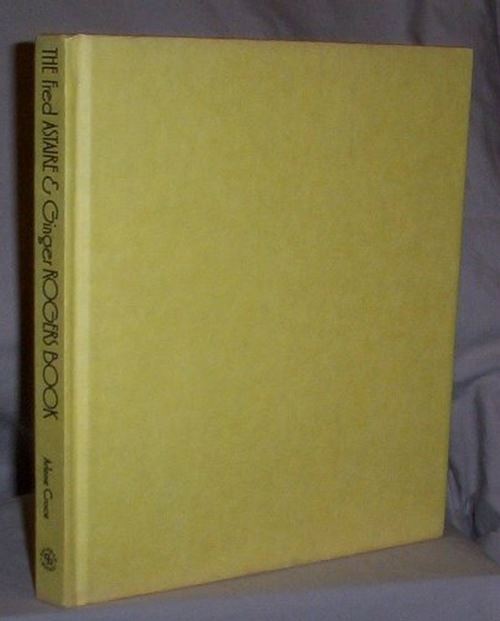
Fred and Ginger! Ginger and Fred! To delicious songs from America's greatest popular composers, they danced a chain of love duets across the Thirties that remain today the untouchable standard for American theatrical dancing. Apart, each was individual, brilliant. Together, they were ineffable; for the first and only time on the screen, a profound partnership was created by the act of dancing.
In The Fred Astaire & Ginger Rogers Book, Arlene Croce gathers together a thousand fascinating facts and production details about the nine (plus one) Astaire-Rogers movies and marries them to a dazzling, comprehensive analysis of all the Fred and Ginger numbers from those films. Lavishly keyed into the text at appropriate points are over 100 related photographs plus two unique flip sequences: the glorious "Waltz in Swing Time," the pounding "Let Yourself Go."
Here is the definitive book on a memorable alliance. Fred and Ginger are together again!
Arlene Louise Croce was an American dance critic. She founded Ballet Review magazine in 1965. From 1973 to 1996 she was a dance critic for The New Yorker magazine.
[These notes were made in 1990:]. 192 pp., paperback. This book has two real strengths. One: like any Fred Astaire book worth its salt, it's full of wonderful production photos. And because 9 of 10 F&G movies were black-and-white, the decision to stick with a black-and-white format was a wise one (kept the price within reach). Two: Croce's extensive research means the book is full of surprising little stories and tidbits of information. What surprised me, however, especially from a dance critic of Croce's stature, was the relative lack of discussion of the dancing itself. A few general comments on each of the numbers - and mostly about the mise-en-scène or the history - is all we are given. Perhaps Croce feels she has done the job elsewhere. Croce writes fluently and well about a subject she is obviously keen on (without being breathless). I like this little book very much.
Set in Hollywood. 194 pp. I’ve been wanting to read this forever! I found a PDF copy online at https://archive.org/details/fredastai.... Funny, as I read this, I realized that I used to own a copy of it. Of course I did! Lots of great info and pictures about the phenomenon that was Fed and Ginger.
Simpy the best book ever written about the Fred Astaire-Ginger Roges partnership. Arlen Croce, the dance critic for The New Yorker, explores each dance in each of their nine films. Well-written in an engaging style, the book relates how hard, how much blood, sweat, and tears it took to make each dance seem so effortless. Some of the information is shocking, such as that while filming the Never Gonna Dance number in Swingtime, Ginger Rogers' feet began to bleed.
This is probably the best analysis of the Astaire-Rogers filmography that I've read- the writing style is engaging, in-depth but not too academic, it includes some excellent behind-the-scenes information, the content is not just a synopsis of the films, and the author is generally much less likely to insert her opinions into the text unnecessarily, and, when she does, I tend to generally agree with her. (Unlike Astaire and Rogers, Edward Gallafent's book on the same subject, which is dense, academic, overly-opinionated synopsizing for the most part.)
HOWEVER, this book was published in 1972, so some of the information is outdated- for instance, this was written before Astaire's second marriage and his passing, so neither are mentioned. It also runs into the pitfall that many takes on the Astaire-Rogers partnership do, by proclaiming them the Absolute Greatest that nothing else can compare to, ignoring or minimizing the excellent dance work Astaire did with his many other collaborators (only Adele Astaire is given her rightful flowers, which is somewhat ironic, considering we have no film footage of the siblings dancing together).
The terminology can also be dated, and I really could've done without the bizarre couple of paragraphs rhapsodizing over the blackface number in Swing Time, proclaiming Astaire to be "beyond good and evil" and taking aim at the people saying that we don't do that kind of thing anymore because it's unacceptable... by saying that we didn't do blackface numbers like this back then either, because this is so much better it transcends caricature and race and if you "cared remotely about the art of dancing" you would see it as the dignifying homage it was meant to be?? I don't even know where to begin- she starts the paragraph talking about how unbearable it is to watch the blackface caricatures in old movies, but then goes on about how Astaire, through the art of dance, utterly transcends those depictions and performs an homage with "deep dignity", comparing it to his portrayal of Vernon Castle in The Story of Vernon and Irene Castle. (Portraying a British man despite not being British and deciding not to do a British accent is very different than playing a black man in blackface.)
I don't doubt that Astaire's intentions aligned with this interpretation (he did deeply admire and was influenced by Bill Robinson and John W. Bubbles, who are both referenced in various ways in this number, an ostensible homage to Robinson), but, in practice, particularly for most modern-day viewers who go in knowing none of this context, the number very much comes off as a caricature, and the references within the number to Al Jolson's notorious blackface performances don't help either. Astaire was coming from a place of wanting to honor performers who inspired him, but the only tools he employed to do so were those based in mockery of the very people he wished to honor.
Aside from these issues, I do have to give her props for otherwise doing a really good job with this book, and I'd like to note that she does call out how the film The Story of Vernon and Irene Castle deliberately whitewashes and excludes the many people of color in the Castles' circle that contributed to their rise to fame.
I found this completely by chance in one of our local Little Free Libraries. It’s a perfect companion to the complete Fred & Ginger DVD set which I started rewatching as I read this. Croce is well versed in dance, music, and film, weaves everything together beautifully, and has a knack for capturing exactly what about a performance makes it so wonderful. There are tons of photos, and I think it’s a fun touch that the upper corners of the pages have two flip-book dance scenes (one going each direction).
Charming and refreshingly opinionated. This book makes me want to go back and view all the Astaire-Rogers collaborations with new eyes, and what more can you ask of a book about 85 year old films than that?
I enjoyed reading this along with watching each of the movies that the book describes. I enjoy the movies anyway, but the book gave me additional things to look for in them.
Entertaining analysis of the Astaire-Rogers films (but you'd be better off with a copy of John Mueller's book). Croce, the dance reviewer for the New Yorker for many years, does a nice job. The best part are the freeze-frames of two dances in the upper margin of the book: you can fan through the book and make Fred & Ginger dance just for you!
I thought I was a big Astaire and Rodgers fan but this 1972 book is for the very serious fan. That the author goes into great detail about each dance routine, which prior to the advent of videotape, is very impressive. Apparently, she is doing much of the critiques from memory. It was a bit too snarky and opinioned for my tastes but a pleasant enough resource.
An absolute breeze to read, crammed full of facts and analysis and photos, so many wonderful photos. Fun while informative, with those fabulous flip book corners.