Jump to ratings and reviews
Rate this book

Tintin #5

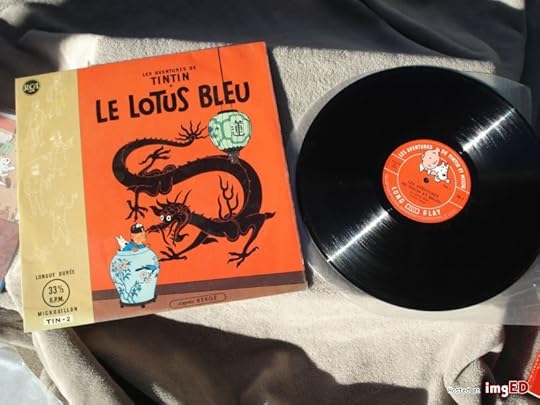
Le Lotus bleu

Rate this book
Alors qu'il est toujours l'hôte du Maharadjah, Tintin reçoit la visited'un chinois qui doit lui dire quelque chose de très important. Mais au moment de parler, le chinois est touché par une fléchette de poison qui rend fou. Avant de sombrer dans la démence, le malheureux à le temps de prononcer deux choses: "Shangaï" et "Mitsuhirato".

Tintin, désireux de faire la lumière sur ce nouveau mystère, décide donc de se rendre au Japon. Durant les premiers jours de son voyage, il manque plusieurs fois de se faire tuer, mais un jeune chinois semble veiller sur lui, et lui évites la mort. Tintin finit par rencontrer Mitsuhirato, qui lui certifie avoir envoyé un émissaire pour le prévenir de rester auprès du Maharadjah.

Mais Mitsuhirato n'est-il pas tout simplement un fieffé menteur? Tintin décide d'enquêter.

62 pages, Hardcover

First published October 17, 1935

92 people are currently reading
2540 people want to read

About the author

Hergé

1,027 books1,935 followers
Georges Prosper Remi (22 May 1907 – 3 March 1983), better known by the pen name Hergé, was a Belgian comics writer and artist.
His best known and most substantial work is The Adventures of Tintin comic book series, which he wrote and illustrated from 1929 until his death in 1983, leaving the twenty-fourth Tintin adventure Tintin and Alph-Art unfinished. His work remains a strong influence on comics, particularly in Europe.

"Hergé" is the pseudonym of George Remí, making a game with the initials of his name inverted. Throughout the evolution of his star character, Tintin, we can see the progress of this author: from the first titles marked by the ultraconservative doctrine of the director of the newspaper Le Petit Vingtième, to the breaking of conventions embodied from The Blue Lotus , as well as the evolution of the society of his time. The research carried out by Hergé to historically contextualize his Adventures, as well as his implicit social criticism, have made Tintin a masterpiece of the 20th century.

Series on Goodreads:
* The Adventures of Tintin
* Quick & Flupke
* The adventures of Jo, Zette and Jocko

Ratings & Reviews

What do you think?
Rate this book

Friends & Following

Create a free account to discover what your friends think of this book!

Community Reviews

5 stars
5,646 (37%)
4 stars
5,673 (37%)
3 stars
3,264 (21%)
2 stars
559 (3%)
1 star
91 (<1%)
Displaying 1 - 30 of 660 reviews
Profile Image for Luís.
2,370 reviews1,358 followers
September 10, 2025
Tintin and the Blue Lotus is my favorite comic strip. Why? Of course, I love the perfect graphic design of Hergé and the history that combines historical events (the war between Japan / China) with the socioeconomic problems of the time (the fight against opium, which was ravaging the world at the time). In this comic book, Tintin saves and meets his friend Chiang for the first time.
This comic, to be informative, is very funny. Several scenes are excellent, like the one where the son of the Chinese master goes crazy. I also laughed a lot when Dupont and Dupont wanted to blend in with the scene, but instead, they ridiculed themselves by disguising themselves in traditional Chinese dress.
Humor, history, and adventures are waiting for you!
Profile Image for Dream.M.
1,037 reviews647 followers
July 26, 2025
کاور اورجینال «نیلوفرهای آبی» (The Blue Lotus) یکی از شگفت‌انگیزترین و جذابترین بخش‌های تاریخ تن‌تن‌ه و داستانی شبیه یه افسانه داره.
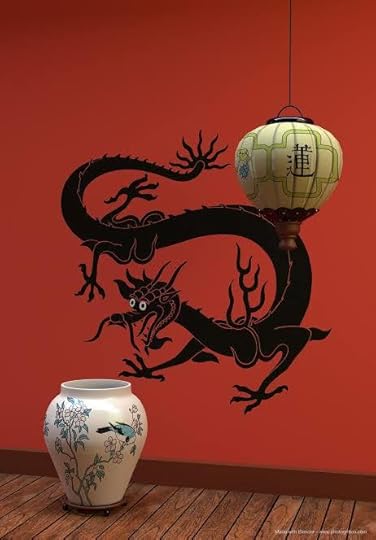
سال ۱۹۳۶، وقای هرژه می‌خواست برای چاپ اولین نسخه‌ رنگی «نیلوفرهای آبی»، جلد طراحی کنه، از یک اثر هنری اصیل از سلسله مینگ الهام گرفت که در موزه سلطنتی هنرهای شرقی بروکسل دیده بودش.
هرژه با الهام از اون گلدان، تن‌تن و میلو رو نشسته داخل یه گلدان بزرگ چینی کشید، در حالی که یک اژدهای چینی سرخ دورشو حلقه زده بود.
این طرح، پر از جزئیات دقیق چینی بود؛ از موتیف‌های سنتی گرفته تا دقت در حالت تن‌تن که احترام‌آمیز نشون داده شده بود.
هرژه این کاور رو با دست، روی مقوای مشکی و با تکنیک گواش و جوهر چینی کشید.
اما ناشر این طرح رو به خاطر پرهزینه بودن تایید نکرد و درنتيجه جلد نهایی با طراحی ساده‌تر در ۴ رنگ کشیده شد. اون تصویر اورجینال اولیه هم در گذر زمان مفقود شد.
تا اینکه در سال ۲۰۲۱، اون تصویر اصلی در یک حراجی پاریسی توسط خانه‌ حراج آرتکوریال به قیمت نهایی ۳.۲ میلیون یورو به فروش رفت؛ و تبدیل شد به یکی از گرون‌ترین آثار مرتبط با کمیک در تاریخ اروپا.
Profile Image for Alan.
718 reviews288 followers
August 25, 2022
This marks the first “grand” adventure of Tintin, being the sequel to Cigars of the Pharaoh. Tintin travels to China to follow up on a drug ring that he has repeatedly run into across Asia. Hergé had become very good friends with a Chinese student studying in Belgium at the time, Chang Chong-chen. His love for Chang not only immortalized Chang in the Tintin series, but also prompted Hergé to start going deeper into the cultures that he portrayed in his adventures, not merely relying on word of mouth and propaganda.

description

Chang was responsible for checking the story for Hergé and writing up billboards and advertisements using Chinese characters, giving the book an authentic feel. Perhaps the most outstanding sentiment in this book (published in 1935) was a willingness to speak out against the Japanese government at the time, something that was quite rare for Western media. I’ll quote Farr:

“But even more remarkable is The Blue Lotus’ political accuracy and forthrightness, its grasp of the complex current affairs of the time. The storm clouds of world war were beginning to mass in 1934 but few commentators saw the extent of the danger. In Europe, imperial Japan, an ally of France and Britain in the Great War and an old antagonist of politically suspect Russia, was viewed favourably and her belligerent behaviour in Asia largely ignored. In view of the chaotic political conditions prevailing in China, there were many in the West who thought the Japanese occupation of a great part of Manchuria might lend some stability to the region. The Western Press – when concerned with such distant affairs – was still broadly sympathetic to Japan.”
Profile Image for Kim.
444 reviews179 followers
May 14, 2012
After Tintin's travels in the Middle East and India he continues his investigation into the the mysterious drug-running organisation with the trial running into China. Set just prior to the Japanese invasion of Manchuria for the first time Hergé drops his European views and actually shows sympathy for the oppressed. Tintin teams up with the local Chinese to try and defeat the opium druglords and Japanese oppressors. He also dispels myths commonly held by Western society of the time which vilified the Chinese.

That's not to say this book is stereotype free. Most of the Japanese are stereotypically depicted with glasses and buck teeth but at least this time the villains actually were the villains. Onwards and upwards with more Tintin.
Profile Image for Fuchsia  Groan.
168 reviews238 followers
February 10, 2019
En la historia que forman Los cigarros del faraón y El loto azul encontramos al fin al Tintín que todos conocemos. En un crucero por Extremo Oriente, Tintín y Milú conocen al egiptólogo Filemón Ciclón, que busca la tumba del faraón Kih-Oskh. Al desembarcar en Egipto, se enfrentarán a una peligrosa trama de tráfico de drogas que extiende sus redes hasta la India y China.

Los cigarros del faraón comenzó a publicarse en Le petit Vingtiéme a finales de 1932, con el título Las aventuras de Tintín, reportero, en Oriente, y es la primera de las historias que no tiene intenciones propagandísticas, lo que permite desarrollar una verdadera aventura, entretenida y con un guión elaborado, a pesar de que todavía es algo caótico.
Aquí aparecen por primera vez algunos personajes que se harían habituales, como Hernández y Fernández (Dupont y Dupond, que en principio se llamaban X33 y X33bis).

En El loto azul la atención al detalle artístico y argumental es ya total. Hergé quería escribir sobre China, y el Padre Gosset, capellán en la Universidad de Lovaina, le aconsejó que se informase de verdad sobre su cultura, presentándole a un estudiante de arte, Tchang Tchong-Jen. El estudiante y Hergé se hicieron amigos, Tchang aparece como personaje en este álbum, y sus conversaciones ayudaron a desmontar la visión tópica que Hergé tenía sobre el país y su cultura.
Profile Image for Noella.
1,252 reviews77 followers
June 4, 2023
Kuifje moet naar China om een zaak van opiumsmokkel op te lossen. Hij wordt echter door verschillende personen en instanties tegengewerkt. En men deinst er niet voor terug om hem naar het leven te staan. Gelukkig kan hij hier en daar ook nog wat hulp vinden.

Goed verhaal, maar je moet er wel echt je aandacht bijhouden vind ik.
Profile Image for Schahin.
122 reviews
August 7, 2024
«لائوتسه گفته باید طریقت پیشه کرد، من پیشه کردم. کار سختی هم نبود.» این دیالوگ چند باری توسط یه نفر که با داروی «زهری که آدمو دیونه میکنه» دیونه شده به صورت طنز گفته میشه. چون اون آدم بعدش میخواد سر آدمها رو از تنشون جدا بکنه که به حقیقت برسن. این قسمت از تن تن نقطه عطف ماجراهاست. از نوع تصویرگری با قاب های بزرگ که مناظر چین و جمعیت‌ش رو نشون میده و قاب های خیلی کوچک تر که برای نشون دادن فعل های ربط بین قاب های دیگه‌س. توجه زیاد به جزئیات و خیلی کمتر شدن عناصر پالپ که توی قسمت های قبلی بیشتر دیده میشد.
تن تن توی چین کاملا تنهاست. حتی دوستانی که قبلا می‌شناخت هم تو این قسمت جز باند جنایتکارا دراومدن.
این قسمت از ماجراهای تن تن نشون میده هرژه دنبال یک مجموعه داستانی نبوده که توی هر قسمت ماجرای هیجان انگیز بیفته و به قسمت های دیگه ربطی نداشته باشه. حضور شخصیت های آشنا که توی قسمت های قبلی حضور داشتن نشون دهنده اینه که هرژه یک دنیای داستانی جدید می‌خواسته خلق بکنه که دشمن های قبلی برمیگردند و دوستان جدید مشخص میشه که دشمن‌ان.
خیلی متوجه نشدم که چرا ژاپنی‌ها آدم بدای این قسمت ان، اما برخورد هرژه با قوم ها و ملت های مختلف توی این کتاب خیلی محتاطانه و محترمانه تر بود ( به نسبت در کنگو و روسیه و آمریکا).
نیلوفر آبی مجموعه ای از اتفاقات هیجان انگیز منطقی و توالی داره که خواننده رو برای ادامه دادن ماجرا کنجکاو می‌کنه.
Profile Image for Medha .
116 reviews66 followers
October 26, 2021
3.5 stars.

The Blue Lotus is the fifth volume in "The Adventures of Tintin" series. This volume is certainly better than the older ones, there are new characters introduced who appear later in the coming volumes as well.

In this volume Tintin is needed in Shanghai to stop the rising tide of Opium dealers and put the one in charge behind bars but doing this is not so easy! There's a price on Tintin's head for crimes he didn't even commit and espionage, all done to get Tintin to leave Shanghai! But Tintin being Tintin finds a way to outsmart the treacherous villains! There's also the risk of getting shot with a poisoned dart, 'Rajaijah', The poison of madness! So Tintin has to take care of the drug dealers and find someone who can make an antidote to The poison of madness, who unfortunately has been kidnapped! Can Tintin accomplish all of this before it's too late?

I enjoyed my re-read!
Profile Image for Jon Nakapalau.
6,486 reviews1,021 followers
January 3, 2017
Truly a unique series; adventure based on historic events...I can not think of a better series to help 'unplug' the youth of today and encourage them to read a good book! The tension between Japan and China in the early 30's is presented in a realistic way: of particular interest is the portrayal of opium dens and their link to secret societies. Tintin books can help place the world in context - even today - which is the true measure of a well written book.
Profile Image for Kavita.
846 reviews459 followers
October 3, 2022
I love this comic, it's the first one on the series in which Hergé surpasses himself. This time, Tintin visits China and makes a short trip to India as well. The Blue Lotus refers to an opium den by the name. Tintin is called to Shanghai but when he starts sniffing out a drug trading ring, he is in danger. The book is also a strong indictment of the Japanese occupation of China. Hergé was highly influenced by one of his Chinese friends in the writing of this book.

The stereotypical Chinese is fully represented in the story. But the satire in The Blue Lotus is brilliant and can still be identified with. The funniest part of the book was a scene at a club where a bunch of white men discuss the benevolence and cultural supremacy of the West - all the while behaving badly and completely clueless of their hypocrisy. Hergé does not bother to hide his disdain for colonialism in this book - which would definitely be confusing for anyone who has read Tintin in Congo!

There are many funny moments in the book, especially when Thompson and Thomson show up. Unfortunately, my favourites, Bianca Castiafore and Captain Haddock do not make an appearance. Nevertheless, the story is delightful, the graphics are amazing, and Tintin solves the mystery in the end. Besides it's set in China, so how can I give it any less than five stars?
Profile Image for Sophie Crane.
5,206 reviews178 followers
July 1, 2019
Written in 1936 , The Blue Lotus is the sequel to the colourful Cigars of the Pharaoh. In the Cigars of the Pharaoh , Tintin has almost succeeded in smashing an international gang of drug traffickers , managing to capture all of them except the leader who mysteriously crashes over a ravine.
His further investigations lead him to China , then under threat from Japanese agression.
Tintin comes up against a madman infected with a dart that sends the recipient insane , enraged British colonists out for revenge after having been humiliated by Tintin and the Japanese army , with the chief villain of the piece being Japanese businessman Mitsuhirato.
This album drew protest form the Japanese government of the time , and was praised by Chiang Kai Shek , President of the Republic of China.
However, it was banned by China's Communist regime until 1984 , due to some of their own insane Maoist reasoning-and even then was still chopped up and heavily edited.
Other albums having been banned by the Communist dictatorship in China where Tintin in tibet (for recognizing tibetan culture) , Tintin in the Land of the Soviets (for exposing Communism)and Tintin in the Congo ('Colonialist').
Profile Image for Juho Pohjalainen.
Author 5 books348 followers
February 2, 2021
As a child, the previous album Cigars of the Pharaoh was my favourite - but this one I did not like nearly as much. All the funny drug shenanigans changed into political intrigue and plotting and propaganda that simply were too difficult for me to follow at the time.

But as an adult, the two albums are reversed. I not only understand what's going on now, I can appreciate the research and care that went into the story, the debunking of many national stereotypes and the promotion of equality and fairness all around. It's still a bit insensitive in the modern day, though.
Profile Image for Mohammed Arabey.
755 reviews6,646 followers
March 9, 2019
رحلة إلي الصين هذه المرة

قصة تان تان الافضل حتي الان..وليس فقط للنوستاليجا

تدور فور انتهاء القصة السابقة، سيجار الفرعون....حيث ينتقل تان تان من الهند إلي الصين ليكتشف سر عصابة تهريب الأفيون

القصة دون كلاشيهات او عنصرية ضد الصينيين هذه المرة بعكس القصص السابقة التي بها احكام مسبقة وعنصرية ضد الدول التي يذهبها تان تان
وتوضح أيضا الشكل السياسي بصراع اليابان مع الصين في الأجواء التي سبقت الحرب العالمية الثانية

القصة تحل اخيرا ايضا مشكلة سم الجنون التي بدات الجزء السابق...الرسوم ممتازة بالاخص تلك باللوتس الزرقاء، ذلك المكان الذي يتناول فيه الافيون

قصة ظريفة ورحلة من رحلات تان تان حول العالم...تلك القصص التي الهبت نخيلتي صغيرا بقصصها التي كانت في كل مكتبات المدارس...ومازالت حتي الآن بعد أكثر من 70 عاما


محمد العربي
في 8 مارس 2019
Profile Image for Ehsan'Shokraie'.
763 reviews221 followers
December 14, 2020
از مجلد سیگارهای فرعون و به دنبالش نیلوفر آبی,تن تن شخصیت واقعی خودش رو پیدا میکنه و ماجرا های تن تن به اوج هنر واقعیش نزدیک میشه.
Profile Image for Hákon Gunnarsson.
Author 29 books162 followers
May 25, 2022
Tintin was one of the comic book heroes of my childhood. I'm going to read my way through the series again as I listen to a radio program about him, and his creator, Hergé. This book and the book before it, Cigars of the Pharaoh, contain one single adventure where Tintin fights drug lords that are using a specialised drug to make their enemies crazy. At the beginning of The Blue Lotus, Tintin travels with his faithful Snowy to China to continue what he started in Cigars of the Pharaoh.

This is the first really good Tintin book. It wouldn't be fair to compare it to Tintin in the Land of the Soviets because that one was never redrawn, but if we compare it to Tintin in the Congo one can see how great the difference is. There are only two books between those two volumes, Tintin in America, and Cigars of the Pharaoh, but one can see how much Hergé has matured as a story teller in the time that passed between the two books.

One of the reasons why is that this is the first time he really took it upon himself to research the place he was writing about, the culture, the history and so on, and one can see it in the story. The depth is much greater in The Blue Lotus. Sure, there is still a lot of the silly cliffhanger stuff that one can see in the earlier book, and Tintin gets out of some scraps a little too easily, but the character has evolved, the story is stronger, and one can read it as an middle aged man and still see interesting things in the way he builds this up. I don't think I noticed the difference in depth as much when I read this as a kid as I do now for example.

Racism is one of the big problems with Tintin in the Congo, and there is still some racism in this book. If one looks at the Japanese characters, one realised quite quickly that they are all buck toothed and evil. The Chinese characters are drawn completely different, they are characters, while the Japanese are caricatures. This is quite simply racism, and it is the same racism that one can see in the World War 2 propaganda cartoons featuring Japanese people. Those have the exactly the same stereotypes, and the fact is that The Blue Lotus is written around the same time as Japan invaded China. Hergé's sympathy lay with China as he had by the time he wrote this book a Chinese friend by the name of Zhang Chongren, who is written into the book in a way.

So there is racism in this book, but Hergé writes into this story also an interesting discussion about racism between Tintin and his new found friend Zhang. Hergé hadn't done this kind of thing before in his work. As racial stereotypes of Chinese people where quite common at the time, in earlier Tintin volumes also, it is quite interesting that he would go against the grain here to show the other side. And this is not the only thing. He shows how complicated the impact of the international politics was on this conflict between China and Japan. It's not just the Japanese that are villainous. It is a complicated conflict.

It is also just a fun comic book. Thomson and Thompson continue their roles as the comic relief, and in fact they take pretty much over the role from Snowy who remains more or less silent through out this book. Even though Hergé takes the time to discuss racism, in this book it is never really didactic. It is there for those that want to look into it, but mostly it is a exciting adventure story, and it is pretty well built up. Among the better of the series.
151 reviews2 followers
July 12, 2015
This, the fifth entry in the Tintin series, is the first one with anti-racist content. Much of the essence of this story is Orientalist, and the presentation of both Chinese and Japanese characters is crude caricature. However, it is refreshing to see Tintin politely but firmly stand up to a racist British settler: "Your conduct is disgraceful, sir!" Likewise, Tintin and his new friend Chang have an exchange in which Tintin says that "different peoples don't know enough about each other," then shares some European stereotypes of Chinese people. Chang replies, "They must be crazy people in your country!!" It is good that Herge starts here to provide some correctives to the more backwards aspects of his work. Also helpful is the supplemental material provided by Little, Brown and Company. This supplement teaches us that this work marked the beginning of Herge's determination to base his stories on actual research about the countries and peoples depicted. It also shows that Herge's depiction of a false-flag incident used to justify Japanese invasion of China was based on the real-life Mukden Incident. Which is also to say that there is anti-imperialist content here. At this point, Herge's storytelling is getting more reality-based, complex and interesting, as well.
Profile Image for Settare.
273 reviews351 followers
July 28, 2020
I am a lifelong fan of Tintin and Hergé. Tintin was the earliest memory I have of being exposed to books and stories, my dad started to read Tintin to me when I was less than three years old and continued to do so until I learned to read on my own. I have loved these stories my whole life, and I know all of them by heart, in Persian, in English, and in French.
But, as a devout fan, I think it's time to do the hard but right thing: confess that these books are far from perfect. They are full of stereotypes, racist, whitewashed, colonialist, orientalist, you name it. Not to mention a complete lack of female characters (Bianca Castafiore is a mocking relic of the poor dear Maria Callas that Hergé hated, her maid Irma is present in approximately 20 frames, Alcazar's wife also, anyway, there aren't any significant female characters in these books).
In the past few years, I've struggled to decide how I feel about these books. Will I dismiss them? Consider "the time they were written in" and excuse them? Love them in secret? Start disliking them? I don't know. So far I haven't reached a fixed decision, but I will say this: I am aware that these books are problematic. I acknowledge them. I don't stand for the message of some of these books. At the same time, I won't dismiss or hide my love for them because they were an integral part of my growing up memories and fantasies and games, and I do, still, love captain Haddock very much, stupid and ridiculous as he is.

As for the blue Lotus itself: It's fun, it starts to show sympathy for the oppressed, there's an important local character in it (Chang), but still, the depiction of the Japanese and Chinese societies is stereotypical and the pivotal concept of "White Male Savior" (who is young and smart and outwits everyone) is very much present, like in all other books.
Profile Image for Yegane.
131 reviews292 followers
Read
June 1, 2020
برعکس جلدهای قبلی، هرژه نژاد پرستی رو کنار گذاشته بود و این بهترین قسمت این کتاب بود.
من اونقدر چانگ، دوستِ این قسمت تن‌تن رو دوست داشتم که وسط داستان آرزو می‌کردم تن‌تن این رفیق باحالشو تا آخرین جلد، همراه خودش اینور اونور ببره.
Profile Image for Oziel Bispo.
537 reviews85 followers
January 7, 2018
Tintin desta vez está na China... tentando desmantelar o tráfico internacional de ópio,com a ajuda de  uma sociedade secreta  chamada “Os filhos do dragão”.Tintin também tenta  descobrir um antídoto para um poderoso veneno que deixa as pessoas malucas.

O lótus azul é com certeza a mais famosa história de Hergé e tem um fundo histórico relacionado com o conflito entre Japão e China que ocorria na época.
Profile Image for for-much-deliberation  ....
2,689 reviews
August 11, 2014
Written around 1934 as a sequel to 'Cigars of the Pharaohs', in the 'Blue Lotus' Tintin's vacation in India is interrupted and he ends up in China during the time of Japanese occupation and in the midst of opium trafficking... Herge includes many real historical events of that time in this story...
Profile Image for Luisa Knight.
3,220 reviews1,205 followers
March 26, 2020
Tintin, with his dog, Snowy, travel the world fighting injustices and solving mysterious cases. A fun comic book, and might I add, one of the very very very few clean ones, for kids! I definitely see why this has become a classic the world over!

Ages: 8+

Cleanliness: phrases such as good gracious, golly, crikey, great snakes and the like are sprinkled in the books. Because Tintin is fighting crime, there are drug lords and references to opium, heroin, and misc. drugs - never portrayed in a positive light. Some characters drink alcohol. In this book, a man "reads" Tintin's palm telling him there is an enemy. There are some prejudiced comments made about Chinese men that Tintin opposes.

**Like my reviews? Then you should follow me! Because I have hundreds more just like this one. With each review, I provide a Cleanliness Report, mentioning any objectionable content I come across so that parents and/or conscientious readers (like me) can determine beforehand whether they want to read a book or not. Content surprises are super annoying, especially when you’re 100+ pages in, so here’s my attempt to help you avoid that!

So Follow or Friend me here on GoodReads! You’ll see my updates as I’m reading and know which books I’m liking and what I’m not finishing and why. You’ll also be able to utilize my library for looking up titles to see whether the book you’re thinking about reading next has any objectionable content or not. From swear words, to romance, to bad attitudes (in children’s books), I cover it all!
Profile Image for Ashley Capes.
Author 76 books576 followers
January 25, 2015
The Blue Lotus is a special one for a few reasons, it’s got a pretty fantastic cover and some wonderful large panels, especially when entering towns, and perhaps most important to the history of Tintin, the introduction of Chang – who becomes vital to a future adventure.

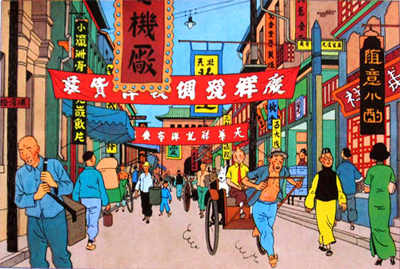
Another twisty tale with some great double-bluffs, perhaps the most impressive thing about this one is the changes Herge makes to his research. The setting is much more accurately rendered in terms of dress and backdrops, characters on banners etc and a more balance view on race – where Tintin even discusses cultural misconceptions with his new friend Chang.

Thomson & Thompson return with one of their best single panels – where they attempt to blend into the streets of Shanghai with predictable results. I also loved hearing Thompson (or Thomson?) using the word ‘botheration.’ Fantastic.

There’s also some more instances of Herge’s fondness for alliteration (‘seventy-seven suffering samurais’) and some great night panels which always remind me of the ‘day for night’ shooting used in the older films (such as Hitchcock’s To Catch a Thief.)

Another great adventure!
Profile Image for Piyangie.
625 reviews769 followers
June 12, 2020
This installment of the adventure of Tintin takes us to Shanghai, and into the heart of an opium den. The fight that began against the mysterious drug smuggling organization in the Cigars of the Pharaoh continues here. Tintin faces many perils here too but ultimately triumphs by catching those responsible including the ringleader. He is none other than Rastapopulous. Well, I knew that all along. :)

This was a fun read. The historic setting and Herge's own political and social perspectives added to the enjoyment of the story. The series is picking up from somewhat a lagging start. Looking forward to reading the next installments.
Profile Image for Έρση Λάβαρη.
Author 5 books124 followers
September 9, 2022
Αυτό που με εντυπωσίασε σ' αυτό το Τεντέν είναι ο τρόπος με τον οποίο ο Hergé απέδωσε και καυτηρίασε το «δυτικό σύνδρομο ανωτερότητας» της εποχής («εμείς οι εξελιγμένοι Δυτικοί οφείλουμε να εκπολιτίσουμε τους λαούς της Ανατολής, που έχουν καθηλωθεί σε ένα στάδιο εξέλιξης πρωιμότερο από το δικό μας και μονάχα η πεφωτισμένη μας παρέμβαση θα τους ωθήσει προς τα μπροστά», κλπ), και πώς σκιαγράφησε τις σύγχρονές του συστημικές συγκυρίες (ο πόλεμος του Οπίου στα πλαίσια των Σινοϊαπωνικών πολέμων). Πολύ καλό!
Profile Image for Gabi.
729 reviews163 followers
November 24, 2019
3.5 stars

Hergé shows sympathy for Chinese people which is a welcome departure from the underlying racism of the first books.
The story plot gets better. The graphics as well. The political topics are interesting.
It is exciting to see Hergé's development over time.
Profile Image for Zai Zai.
810 reviews17 followers
November 2, 2024
The real world historical context of how the background events of this book played out [japanese occupation of china] is quite sinister. This adventure had unexpected deep moments such as the exchange between tintin and a Chinese boy.... quite insightful tbh... overall i enjoyed this a bit less than the previous installments [this dragged]... anyways i also read this in a barbershop lobby while waiting for my turn.
Profile Image for Hossein Bayat.
171 reviews33 followers
December 16, 2023
جزو تن تن هایی که به نظرم کتابش از انیمیشش یک سر و گردن بالاتره.
Profile Image for Nicholas Whyte.
5,343 reviews209 followers
November 16, 2013
http://nwhyte.livejournal.com/2194952.html[return][return]The Blue Lotus really is the first proper Tintin book - a huge step up from Cigars of the Pharaoh. Herg� takes Tintin to the real 1931 Japanese invasion of China, and is firmly and passionately on the side of the Chinese, both versus the Japanese and the Europeans in the Shanghai concession (one of whom in real life would have bee a very young J.G. Ballard). Apparently this came about because a priest who worked with Chinese students at Leuven contacted Herg� out of concern that the promised adventure in China would be as stereotypical as the previous volumes; and through him, Herg� met Zhang Chongren, who was effectively Herg�'s co-artist for the Chinese parts of the book, and is also the basis for the character of Chang here and in Tintin in Tibet. Suddenly the political orientation of Tintin has veered very sharply to the left.[return][return]But there's also a step change in quality of plotting and of art. There's one rather silly scene where Tintin hospitalises three burly guards, and Thomson and Thompson provide some slapstick comic relief, but otherwise this is a book that takes story-telling seriously and uses the right tools to do it in the right way. It's unfortunate in a way that it ties up some dangling plot strands from Cigars of the Pharaoh, because it is so much better.[return][return]I think I actually had not read it before - none of the incidents rang any bells for me, and I see that it was not translated into English until 1983 precisely because it was thought to be too firmly rooted in events of 1931 which would be unknown to today's younger readers. But in fact the themes of military domination and corrupt occupation are, unfortunately, pretty timeless.
Profile Image for Huda Aweys.
Author 5 books1,454 followers
July 11, 2015
قريتها من زمااااان جدا و موش فاكرة حاجه محددة عشان اقدر اكتبهالكم عنها فى المراجعه .. لكن اللى فاكراه من ايامها انى كنت باعشق السلسلة دى عموما من ساعة ما اكتشفتها في مكتبة المدرسة وسط قصص قديمة للأطفال ، و كانت اكتشافي الثاني أيامها في هذه المكتبة بعد اكتشافي الأول لـ (المغامرون الخمسة)، و كنت باحبها أكتر من
(المغامرون ..)
:))
Profile Image for Preetam Chatterjee.
6,736 reviews355 followers
August 18, 2025
#Read 1992-1996

The Blue Lotus, primarily serialised in 1934/35, has been termed as Hergé's foremost proper masterwork. After the happenings of Cigars of the Pharaoh, Tintin journeys to Shanghai and consequently an escapade is set in motion, linking opium dens, spying, deception, and Chinese confrontation to the assault of Manchuria by the Imperial Japanese armed forces.

The second episode of Tintin’s exploits in the Orient is indeed a magnum opus. This is Hergé’s premium work, in the opinion of some.

Nobody would disagree that it symbolises a defining moment in his work. Qualities which were burgeoning in the earlier books, ruptured into blossom in The Blue Lotus. For the first time a quest had a circumspectly formulated configuration. It marked an end to the impromptu advance of a plot. Hergé no longer cobbled together the tale from week to week, disentangling Tintin from one great adventure only to land him into another until the adventure had run its full route.

The Blue Lotus is better designed; it is quickly paced without being chaotic and more resolutely rooted in reality. Hergé knew where he was going and how.

Perhaps the first adult graphic novel, Hergé's industrious study (thanks to Zhang Chongren) reaps loaded rewards.
Displaying 1 - 30 of 660 reviews

Can't find what you're looking for?

Get help and learn more about the design.