Jump to ratings and reviews
Rate this book

Titus Crow #1-3

Brian Lumley's Mythos Omnibus, Vol 1

Rate this book
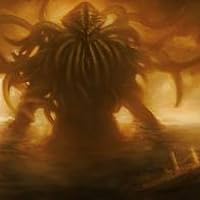
From the Creator of Necroscope- three landmark novels of the Cthulhu Mythos:

THE SAGA OF TITUS CROW!

THE BURROWERS BENEATH: In which Crow is alerted to a menace in the earth that gnaws at the very foundations of Man's domination of his home planet - and seeks to usurp him! Two men share a terrible secret and make their lonely stand against subterranean terror.

THE TRANSITIONS OF TITUS CROW: Fleeing from the Burrowers, Crow discovers the secrets of time and space and learns the lore of the Great Old Ones. But Lord Cthulhu seeks not only the domination of Earth but the destruction of the Elder Gods and the space-time continuum itself! De Marigny answers Crow's call from the depths of space to join him in the battle for universal sanity against all the forces of evil.

THE CLOCK OF DREAMS: From fathomless ocean depths, Cthulhu's dreams disturb the minds of men to reshape the waking world. Diverted from his search for the lost Elysia, de Marigny pilots his space-time machine into subconscious worlds of dream and nightmare in a bid to save the lives and very souls of Titus Crow and Tiania of Elysia.

655 pages, Paperback

First published January 1, 1997

6 people are currently reading
327 people want to read

About the author

Brian Lumley

444 books1,359 followers
Brian Lumley was born near Newcastle. In 22 years as a Military Policeman he served in many of the Cold War hotspots, including Berlin, as well as Cyprus in partition days. He reached the rank of Sergeant-Major before retiring to Devon to write full-time, and his work was first published in 1970. The vampire series, 'Necroscope', has been translated into ten languages and sold over a million copies worldwide.

He was awarded the World Fantasy Life Achievement Award in 2010.

Ratings & Reviews

What do you think?
Rate this book

Friends & Following

Create a free account to discover what your friends think of this book!

Community Reviews

5 stars
86 (42%)
4 stars
62 (30%)
3 stars
45 (22%)
2 stars
8 (3%)
1 star
3 (1%)
Displaying 1 - 11 of 11 reviews
Profile Image for 周婉蓮 차우 크리스티나 Cass .
29 reviews2 followers
September 24, 2019
I liked The Burrowers Beneath (I'd give that 3 or 4 stars), but was disappointed with The Transition of Titus Crow. Maybe Lumley lost me somewhere (or maybe he got lost himself). All I know is suddenly I was reading science fiction and fantasy instead of horror (not that I don't like sci-fi and fantasy, but I was expecting the book to lean towards more horror). While reading The Transition of Titus Crow, I kept waiting for the story to turn back to the CCD - it did so only vaguely. The elements of The Burrowers Beneath that I liked was the distinct Holmesian mood of it and was looking forward to more of that. Sadly, I was disappointed.

Suffice it to say, I didn't read The Clock of Dreams. Though, maybe curiosity will bring me back to this series at a later date.
Profile Image for Emma Ireland.
13 reviews
March 16, 2018
I can understand why the reviews are so mixed on this book. I have yet to read Lovecraft's stories (they're next on my list), so my expectations were totally different from everyone else's. If you're looking for Lovecraft standard horror then you're probably not likely to enjoy this book as much as I did. But if you start reading this knowing that there is very tame horror, then I think you'll enjoy it.

Full review to come later.
Profile Image for Kyle.
3 reviews2 followers
September 3, 2012
Tales from the Cthulhu Mythos with added serendipity, huzzah!

The main thing that drew me to Lovecraft's work was the futility of man's struggle against the Great Old Ones and the grinding powerlessness of the protagonists. Here was a level of misanthropy and pessimism that oozed from every page, the machinations of man frequently leading to nothing and I love it. Very few authors have such negative endings to their stories let alone with the frequency that H.P did.

So imagine my dismay when I read the collected tales of Titus Crow, part wizard, part scholar, part Ian McKellen that can batter Cthulhu and all his mates with his corner shop full of psychic doodads, magical geegaws and a wicked clock. Combined with his address book chock full of people who own everything ever written on the denizens of Ry'leh he is truly unstoppable. Which is missing the point entirely...

By the time the dust settles after the third installment, mankind has won. An unexpected twist for all the wrong reasons. It's a fundamental misreading of the mythos. It's like Darth Vader winning. It's like King Kong settling down in Brooklyn with an office job. It is to the universe created by Lovecraft what Indiana Jones 4 was, inexcusable.
Profile Image for Jay.
220 reviews3 followers
December 8, 2025
★★★★★ — 4.75/5

In a literary world where shadows loom long and old gods whisper in the dark, Brian Lumley’s Titus Crow series stands like a torch lit in obsidian halls — both homage and invention, both monster-tale and heroic adventure. I grew up on the salted currents of Cthulhu, on Lovecraft’s cosmic dread, and on my own teenage scribbles of dark gods and hidden realms. Titus Crow feels like that same electric pulse from my childhood revived by a writer from Hell (or at least someone who’s walked its corridors, taken its lessons, and come out writing with fire).

Lumley is one of the few authors who can channel the raw terror of Lovecraft, the weirdness, the monstrous, and still give you heroes who fight back. Not merely victims of forces so vast they shatter human minds, but people with grit, with weird powers, with companionship, with voices. In Titus Crow, that means Crow himself, Henri-Laurent de Marigny, Tiania, the Elder Gods of Elysia, and the subterranean spawn of Cthulhu’s minions. These are monsters and vast mythic powers, but they don’t paralyze the story — they fuel it.

The Titus Crow novels (and associated stories) are part horror, part adventure-fantasy, rooted deeply in the Cthulhu Mythos but with Lumley’s twist. The Burrowers Beneath pits Crow and de Marigny against subterranean, telepathic horrors: the Chthonians (spawn of Cthulhu), nesting beneath the Earth, creeping upward in malign conspiracy. Lumley gives us shocking horrors, underground nests, weird science, telepathy, hidden cults — the works. The Transition of Titus Crow takes the impedance further: there’s time travel, cosmic journeys, meetings with Elder Gods in Elysia (the realm beyond), and Crow is even turned into a synthetic human, allowing Lumley to stretch the boundaries of what a hero in this mythos can be. Later volumes — The Clock of Dreams, Spawn of the Winds, In the Moons of Borea, Elysia: The Coming of Cthulhu — raise the stakes higher. Dreamworlds, trapped souls, existential threats, time clocks, cosmic prison dreams. Crow and his allies are not merely running for their lives — they’re trying to wrest the initiative from things unimaginable. Crow himself is not Lovecraft’s passive observer. He investigates, questions, acts. De Marigny is faithful side-kick, often providing critical knowledge, resourcefulness, support. Tiania, Kthanid, the Elder Gods — these figures add depth to the mythic side, turning Lovecraftian shadows into engines of narrative, with relationships, betrayals, mysteries.

If I imagine Lovecraft peering through some dream-mirror, watching this series, I think he’d nod. Maybe shake his head at some liberties, but also marvel. Because Lumley doesn’t just mimic the dread: he builds upon it. Lovecraft’s great power was in the unimaginable — what is beyond human. Lumley takes that, shows us glimpses, then says: what if humans had a chance? What if they built machines of time, synthetic bodies, made bargains, fought back? In The Burrowers Beneath, the subterranean creatures become more than backdrop. Their fears (radiation, water) become weapons. Crow and de Marigny don’t merely flee; they strategize, resist. Lovecraft’s horror was often about the suffocation of human significance. Lumley acknowledges that, but he also gives us heroes with stubborn wills. That would give Lovecraft something to chew on. Additionally, Lumley’s imagination for world-building — Elysia, the Elder Gods, the Dreamlands, the Time-Clock, android Crow — these are mythic expansions. Lovecraft sometimes posited these elements; Lumley runs with them. If this were fan fiction, it’s fan fiction of grand ambition — but written by someone whose own voice is combusted in the fire of weird fiction, not imitation.

The strengths here are clear. Adventure and cosmic dread mix in a way that makes the books both terrifying and exhilarating. Pulp set pieces — tunnels, traps, cults, time machines — are paired with existential horror. The pacing is relentless: subterranean explorations, dreamworlds, Eldritch cults, cosmic machinery, androids, Elder Gods. The boldness of letting Crow be more than a victim — traveling through time, intervening, surviving transformations — shakes the mythos awake. Lumley’s imaginative expansions, like Tiania, the synthetic Crow, the Elder Gods as allies, show he’s not just reverent of Lovecraft, but restless with possibility. The hazards? Sometimes it’s pulpy to the point of camp. The prose can get purple, the horror over-explained. Android Crow, deus ex machina rescues, exposition dumps — all can take some of the cosmic dread away. Lovecraft’s power was in what you never see; Lumley often lets you see too much. But if the price of vision is losing a little mystery, I’ll pay it.

When I dove into Titus Crow, I felt again that fevered joy I had writing stories of monsters in notebooks, inventing names, drawing impossible beings in margins. Crow’s fights, de Marigny’s loyalties, dreamworlds where nightmares and gods intermingle — they echo those childish stories, but sharpened with craft, heat, horror. Lumley summons not just the monsters, but the longing behind them: the desire to be more than fearful, to name the nameless, to stand. I remember sketching a world where a creature lived under the Earth, half magic, half slime, half consciousness — The Burrowers Beneath gave me that, and more monsters. In Transition, when Crow becomes synthetic, when clock-time warps, when Elysia looks upon Earth, I felt that same cosmic scale I used to hope I could reach in my tales. Lumley doesn’t make Crow perfect. He makes him human (or nearly so), flawed, courageous, haunted — and through him, we readers are allowed to be those monster-makers again, daring to face what should unmake us.

If the lower planes issued certificates, Titus Crow would get “Monster-Constructor of the Year.” This series is essential for anyone who ever trembled at Lovecraft’s distant thunder and wanted to pick up a sword, a clock, or a dream-key and march toward it. It’s horror with backbone, mythos with muscle. Lovecraft might have raised an eyebrow at some light, some boldness, at Crow talking back to gods. But I believe he would’ve felt something like pride — that someone carried the torch forward. Lumley turns cosmic horror into something you can feel in your bones, something you can fight with, something you can read with a grin and a shiver. If you love cosmic dread, weirdness, monstrous gods, and heroes who don’t just faint, Titus Crow is a work of fire. It is a ride, wild and strange, that doesn’t just honor Lovecraft, it enlarges him. Brian Lumley is that writer from Hell, blazing with imagination — and Titus Crow is one of his finest lamps in the dark.
1,872 reviews23 followers
August 25, 2022
Aside from The Burrowers Beneath, which makes at least a token effort at cosmic horror, Brian Lumley's Titus Crow novels read like clumsy fan fiction, committing a range of errors more capable fanfic authors would balk at (over-perfect main character shows up in fiction setting, solves all the problems and kicks ass and gets a hot girlfriend, author doesn't respect the style or atmosphere or themes of the setting, etc.). These omnibus editions are the most cost-effective way of reading them, I suppose, but why would you ever subject yourself to that? https://fakegeekboy.wordpress.com/201...
Profile Image for Haz.
70 reviews8 followers
October 20, 2018
Too much like Lovecraft for me tried too hard to be like it and failed, wanted more and wanted it to be its own.
Profile Image for Scott Naber.
37 reviews1 follower
March 20, 2023
So many, many authors have written in the style of HP Lovecraft and borrowed heavily from his mythos. You might say, that Lovecraft was a clunky and ropey writer and better authors came along and made better use of his toys and monsters. Don't get me wrong. I love Lovecraft and all his dire pessimism and hopelessness. Oh the madness, the madness! However Mr Lumley doesn't write like that. Brian writes in a very British manner and Titus Crow and his Watsonian sidekick, Henri Laurent de Marigny, are very obviously from the same mold as Holmes and Watson. The heroes may be on the ropes for a little while, but then they come out with powerful friends, better and more advanced magicks and the monsters will get their comeuppances.

I mean, when you read Lovecraft did you not wish someone would rock up and throw a bomb on Dagon, Cthulhu and all those other brutes and blast them back to whence they came. Well, that's these stories. Horror has always been about the battle between good and evil. This is very British, very stiff upperlip, very derring-do. The Burrowers Beneath is very fun to read and the other stories are great too, but they stories get progressively worse though. I like my horror mucky and weird (first story). I am less keen on science-fiction and time travel (the latter two stories). In the end, Brian clearly had fun writing these and I enjoyed reading them. 4 stars.

At the end of the day, monsters gotta pay....
Profile Image for James Harrison.
27 reviews1 follower
August 9, 2011
This book of three novels was alright. The first story, The burrowers Beneath was the Lovecraft mythos I enjoy, unspeakable monsters, crazy cults coming after you. Great stuff.

The second book went on a weird turn with time travel in a old grandfather clock, where you step inside and its bigger on the inside then the outside. (Doctor who?), he uses a nice piece from whisperers in darkness to good use, but I wasn't too excited about what happens to Titus Crow in this book. Seemed to much like science fiction superhero stuff, instead of unspeakable horror and sights that drive a man insane.

The third book uses the mythos in a different way. Lumley uses the mythos here of the Dreamlands and a couple other locations that Lovecraft made up. A bit of a fast twist from the last book.

I look forward to reading the other Mythos Omnibus, but I hope the stories come back to the strange and scary, not flying cloaks and plastic men.
Profile Image for Jeffery Chatham.
96 reviews4 followers
February 24, 2014
I didn't have high hopes for this series but the books get a lot better as you progress. By the end of these three, I've rather fallen in love with the series. It's creative and expansive. I'd definitely recommend reading it.
Profile Image for Adrimember.
4 reviews
February 6, 2016
I have to say that I was looking forward to reading this material. I had already picked up an edition of Volume 1 and had enjoyed most of what I found there; I was destined to be very disappointed with the second round.
Profile Image for Neil Davies.
Author 91 books57 followers
June 26, 2016
It started so well, but by the end of the second book I feel it was drifting off. Still well worth reading, but not as good as it could have been.
Displaying 1 - 11 of 11 reviews

Can't find what you're looking for?

Get help and learn more about the design.