This is an odd book. Now that I have finished reading it, I'm not sure why I was so enamored of it. With so much discussion of spells and enchantment, I wouldn't be surprised if the book put a spell on me. Despite overall enjoying the book, there are still lots of things about it that irritated me. First, the author needed a better editor. I am finding more often that books surrounded by a certain amount of hype are not well-edited. I don't know if the editors think that every word the author writes is gold or if editors are timid, but in either case they aren't doing their job. Much of this book could have chopped out and the story tightened up. There are too many extraneous details that weigh down the plot (and what exactly the plot is is also a good question). I think the author, in order to differentiate her witch/vampire/supernatural book from all the other supernatural books on the shelves, threw in everything, including the kitchen sink, into her novel. It's exhausting stumbling around the pages trying to figure out what the plot is. I'm going to try not being too specific because even though nothing really happens in this novel (really, nothing does), there is information that shouldn't be divulged until you read the novel. Harkness has several plot lines going: the mysterious Ashmole 782 manuscript, the forbidden love affair between Diana the
reluctant witch and Matthew the 1,000 + years old vamp, the mysterious death of her parents, the possible extinction of the supernatural beings, the Congregation wanting to know the extent of Diana's power, tracing Diana's DNA, and the threat of a witch/vamp war. It's all a little crazy.
This book is some kind of pseudo-science, pseudo-historical novel what with all the science and history. The excessive alchemical details get annoying, as does the DNA discussions (and you'd better know what mtDNA is because I don't think the book does a good job explaining it. Luckily, I knew). However, unlike the alchemy stuff (which I didn't see the point of as it related to the storylines), at least the DNA information is related to the plot(s) of the book. The romance is fairly interesting and intense at first, but it quickly peters out into some of kind of tame, boring, lovey-dovey PG-rated sappy mess. It's not that I need pornographic details, but the author kept telling me how much they loved each other and how intense their passion was, but I never really felt it. Matthew, as a scary vampire, is a huge disappointment to me. I'm sorry, but you cannot have this vampire doing yoga and talking DNA with new-age geeky precision and then have me believe that he is all that scary. Nope, just doesn't work. Diana is also a disappointment. She's extremely annoying. She talks about how she wants to be a strong, independent woman, but in reality she is the wimpiest, most annoying witch ever. She won't use her witchy powers (which, to give the author some credit, I understand why she had this attitude), but when it comes time for her to protect herself, she wimps out, cowers, faints, and in rushes Matthew to save her AGAIN. Give me a break. The book is basically just a description of food, wine, her "stretchy black pants" and all the places Matthew took her to keep her hidden from the Congregation. (I don't like the term Congregation either. Makes me think of church and not a scary group of supernatural beings.) Apparently this book was compared to the Twilight series, which I think odd because I never saw the connection (I have read them all, to my shame). What I will compare this book to is the Charlaine Harris Sookie Stackhouse series. Those books are far superior to this book. Sookie is a poor little human with just her one skill (she can read minds) and yet she protects herself quite well, rarely needs her supernatural friends to come to her rescue, and has several times saved her vampire boyfriends. Plus, she does it all with a sense of humor. Diana, who apparently has every witchy power ever known, plus some that aren't, can barely twinkle her nose to make magical tea.
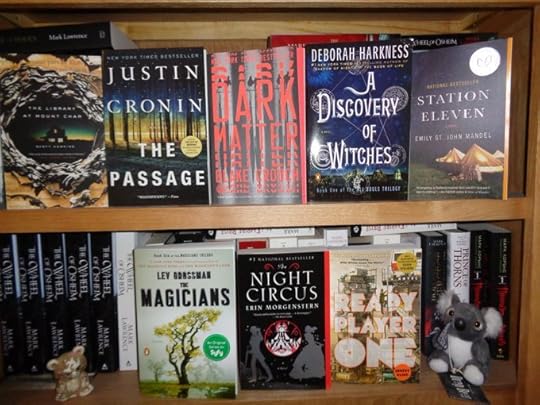
Another point of irritation with me are all the characters who need their backstories told. I don't really need to know or want to know everything about these characters. If they are going to stick around for awhile, tell me their stories later or create a glossary and stick them at the back of the book. The flow of the novel is stopped over and over again to tell me something not all that interesting about a minor character. My last point is about this ridiculous Knights of Lazarus organization. I find this organization absolutely unbelievable and incomprehensible. I'm not giving away any plot secrets by mentioning this because I still can't figure out what the author meant by creating this order of do-gooder vamps who have helped people in need over the centuries. It's so ridiculous. Whenever it was brought up, I tried to skim over it, hoping it would disappear. The haunted Bishop house, the house as a character, was entertaining. I did enjoy that detail. Overall though, now that I've written this review, I'm trying to figure out what exactly I DID like about the book. This book basically sets up the next two books in the trilogy. I will probably read the second book but I doubt I will buy it. I think Harkness, just as with Justin Cronin of The Passage, saw an opportunity to make some money on the current (and lasting way too long) vampire, witch, supernatural creatures popular literature fad. However, Harkness has taken vampires and turned them into wine-loving, gentle, kind creatures who wear business suits or lab coats, have tons of money, and are really kind of boring.