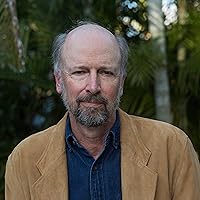
For so engaging a tale as this, of Dorothy Wordsworth's journey though Scotland in 1803, I have wanted to advance the point of view of the author, releasing her as much as possible from the 'sister of' status she too easily assumes into the role originator. Locating the 'I' in her story, however, meant searching beneath the 'we' she so persistently employed in her writing. The effort yields a distinct and inviolate voice.
Introduction, notes, and photographs by Carol Kyros Walker
Dorothy Mae Ann Wordsworth was an English poet and diarist. She was the sister of the Romantic poet William Wordsworth, and the two were close for all of their lives. Dorothy Wordsworth did not set out to be an author, and her writings comprise a series of letters, diary entries, and short stories.
She also edited much of William’s work. She was one of two people he attributed to the development of his intellect. Without her he would never have achieved such poetic heights.
It is written in a very old-fashioned way, but it was written a very long time ago, so that is a given : ) I enjoyed it very much. So interesting to see what a journal like this was like for that time. It seemed that it was expected to give minute detail so that the reader would know exactly what happened and be able to 'see' with the writer's eye. So, in that way, very similar to travel writing today. There was much mention of the dirt and although there were some instances of inhospitableness, more often they experienced incredible hospitality. These were poor people and they seemed to be expected to share whatever they had with any traveler who knocked upon their door. I'm not sure that we would cope well with that in our society! The thing I most enjoyed was looking up on the internet and on pinterest, every site mentioned. Although there were a few instances of some thing or place they visiting, not being around now, most of the places that were tourist sites then, are still fairly unchanged today. I'm very glad I read it. I have most often read contemporary travel books, so this was a fun read for comparison. Also fun to see the interaction between very famous writers. Coleridge traveled with the Wordsworths for much of this tour, and the Wordsworths visited Scott in his home. I don't tend to pay much attention to dates, so interesting to me to find that these were all contemporaries.
This is an extremely engaging account of a six-week journey undertaken by Dorothy Wordsworth and her poet-brother William through Scotland in the late summer of 1803. The prose is definitely “period”—leisurely and involuted—but it reflects a painterly eye that brings the varied landscape to life with almost cinematic exactness. Scotland at the time was most definitely “wild”—sparsely populated, poorly endowed with dependable roads, afforded only with lodgings that Dorothy almost invariable describes as “dirty,” and suspect throughout the Wordsworth’s travels of being the possible beachhead for a French invasion (the Napoleonic wars having just resumed.) In the midst of all of this, the Wordsworths soldier on, in quest of a sublime that can only exist in the absence of refined English culture, creature comforts, and any real feeling of control over what it is that one is experiencing.
Half of the time, Dorothy and William are disappointed that sights and locations said to be romantic don’t live up to expectations. Repeatedly, she suggests, say, that ruin A, if only moved to wilder location B, would be the soul of exotic beauty. Half of the time, though, they are treated to stirring visions of the natural sublime and, more excitingly, what Dorothy calls the “visionary” unity of the rugged yet simple Highlanders with their untamed and unspoiled setting. The Wordsworth’s is a pilgrimage to a shrine that is the whole north of Britain, attended by a clergy that, when they can rise above the hardships of their rustic lives, represent a life of mythic fulfillment that politics and progress have driven from the lower reaches of the island.
In some ways, Dorothy’s consistent aversion to Scottish dirt makes an ill fit with her extolling spiritual fulfillment that can only be found in rough surroundings. But the willingness she shares with her famous brother to walk for hours and hours in a driving mountain rain, or to spend a day looking for a boatman to ferry them across a stormy loch, or move on from an overfull hostel well past sunset to look for uncertain lodging ten miles down a wild glen is remarkable and inspiring. That spiritual awe for the natural world that the Romantic Mind was always searching for is not there on every page, often enough banished by a frightened horse or a wretched meal or incipient hypothermia. But it is there often enough to make one realize that the glories of William’s poems grew from, and also derived a crucial authenticity from, real travels and travails in a harsh but resourcefully lived-in landscape.
Un libro che non può non affascinare chi ha avuto un recente contatto con i paesaggi scozzesi. Seguire miss Wordsworth, il più celebre fratello William, Samuel Coleridge e infine Sir Walter Scott nelle loro peregrinazioni su un carretto tirato da un unico cavallo, vederli affrontare disagi, incidenti di viaggio, fatiche, può dare un'idea di cosa volesse dire 'fare turismo' più di due secoli fa. E ci fa capire di che tempra e spirito d'avventura potesse essere dotata una 'spinster' inglese degli anni della reggenza.