In The Art of Recklessness, Dean Young's sprawling and subversive first book of prose on poetry, imagination swerves into primitivism and surrealism and finally toward empathy. How can recklessness guide the poet, the artist, and the reader into art, and how can it excite in us a sort of wild receptivity, beyond craft? "Poetry is not a discipline," Young writes. "It is a hunger, a revolt, a drive, a mash note, a fright, a tantrum, a grief, a hoax, a debacle, an application, an affect . . ."
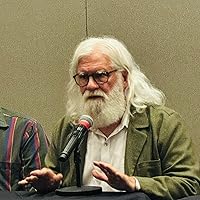
Dean Young is the author of many collections of poetry, including Shock by Shock, Bender: New and Selected Poems, and Elegy on a Toy Piano, a finalist for the Pulitzer Prize. He teaches at the University of Texas, Austin.
What? There's an ART to being RECKLESS? Seems I took no classes as a kid, as a teenager. I just had at it, the devil take the hindmost (because he seemed little interested in the foremost). The title, though, is chosen because it is par t of Graywolf Press's "Art of..." series. Dean Young (who else?) got the call for recklessness because, well, HIS recklessness (called "poetry" in some rhomboids) is quite artful. Came this close (holds fingers an inch apart) to winning the Pulitzer Prize for his collection, Elegy On Toy Piano.
What did I gain from this book? A lot of the what, a bit of the why, but not much of the how. Meaning: if you're looking for Dean to share secrets to how he concocts his controlled anarchy, keep looking. Instead, he shares a few opinions on the wild and the crazy, on the Dadas and the Surrealists. And though he claims John Ashbery to be our greatest modern poet, he mentions him but once, giving the lion's share of attention to poets we don't immediately consider when we think "reckless": John Keats (with his wild and crazy Odes), William Wordsworth (who never met a word he didn't consider worth writing down), and Walt Whitman (leaves and the grass electric).
"If the poet does not have the chutzpah to jeopardize habituated assumptions and practices, what will be produced will be sleep without the dream, a copy of a copy of a copy," The Dean of Recklessness tells us. He also is a great cheerleader. Any poet would love to have him as a teacher (U of Texas, Austin, methinks). "Our poems are what the gods couldn't make without going through us."
Dean Young may seem playful as hell in his poetry, but this book can be scholarly as all get-out at times, throwing around some big-boy words (the kind where I say, "Huh?"). He also quotes with abundance. Here's a Wallace Stevens, for instance: "It is necessary to any originality to have the courage to be an amateur." Oh, I love it. The Art of Being an Amateur I have nailed! Where do I begin collecting checks and raves?
And there's humor here: "Poetry, as everyone knows, is in competition with girls' volleyball for the crowd. It's all about numbers... And in regards to the common bellyache that the only audience for poetry is poets: but it's been noted by many that poetry is like a foreign language; you need to learn grammars and idioms to get it, so what's so terrible about people who know Portuguese being the people who are interested in listening to and reading Portuguese? Arcane specialization? Elitism? Surely no more than girls' volleyball. Poetry's greatest task is not to solidify groups or get the right people elected or moralize or broadcast; it is to foster a necessary privacy in which the imagination can flourish. Then we may have something to say to each other."
Dean also calls complacency the greatest enemy of art, with an aside about the hidden "me" in "poetry": "It is also worth entertaining the notion that the least important time in any workshop is when your own work is being talked about. It's called 'Poetry Workshop,' not 'Me Workshop,' after all. The imagination wants to say something you can hear and often what you say about someone else's poem is exactly what you need to hear about your own. The way in is to go out." Clearly Dean Young has trafficked with a few poets in his day. Self-promotion (while pretending not to self-promote) is the name of the game.
As for examples of reckless poems, they are few and far between, given the brevity of the book. It's more Young providing the Old history of imagination's resistance. All in all, equal parts cheerful and depressing. Cheerfully, you might wing it next workshop or on-line critique group, even though you know the mavens of tradition are waiting in the wings to nitpick your punctuation, your grammar, your syntax. On the other hand, he warns, sometimes reckless art is bad art.
Great. Just when I was beginning to take wing and feel the exultation of freedom, I get the overheating rays of the sun again, melting my wax. You can write bad poetry conventionally OR unconventionally, I'm afraid. The World of Art takes no prisoners, even in a minimum-security prison like Recklessness.
Recommended manifesto on primitivism, Navajo poems, Romanticism, Rimbaud, Duchamp, Dada, Surrealism, the radioactive core of inspired work, on and on. Covers too much ground to summarize. Formal swerve matches content (see also On Being Blue: A Philosophical Inquiry by William Gass). Wonderfully composed, inspiring, affirming of life and art, even if it sometimes seems intentionally excessively overecstatic/associative. Too many page corners turned down to count. More LOLs than expected for something so densely crafted (albeit consistently skeptical of the sterilizing codifications/commodifications of art into craft). Every page has 3+ epigrams: epigraphs waiting to happen. Eat this succulent choirpreach peach of literary enlightenment and revel in the glorious eros of errors.
I love Dean Young and have also found many volumes of this series on the craft on poetry quite helpful. The three stars here aren't for Young's IDEAS--they are fabulous and inspirational. But the book itself, how can I expect differently given the title, is repetitive, a little too self-indulgent and hyperbolic. By its end, you'll feel like writing a poem is the creation of a cosmos and the destruction of another one. And as a poet, on some level, I pray that this is the case. But after a while, one needs to dispense with the breathlessness and the non-stop graduate school love of Derrida, Bakhtin, and Barthes. Young's beliefs about the role of recklessness and surrealism can be found stated more succinctly and helpfully in Richard Hugo's "The Triggering Town." This won't stop me from delighting in Young's poetry and being inspired by his recklessness. The latter just doesn't make for amazing book length prose.
I’ve always sworn that the day I actually use the cliché designation ‘a tour de force’ is the day I should stop writing reviews, but I can honestly say that phrase, at its most genuine sentiment, is what needs to be bannered across the cover of this book, practically as a genre all its own.
I should admit some bias here--as a young poet directly in the middle of earning the degree everyone and their grandmother has an opinion on, the MFA, this book felt almost supernaturally conscious of me and many of my own convictions and concerns regarding poetry. Young’s accusations are nearly universally my own; his passionate beliefs are ones I myself share and his articulation of them not only offers the welcome comfort of knowing that I Am Not Alone In This Room, but also that they have been spelled out far more brilliantly than I could hope to.
The accusation here, to boil many down to one, is ‘simply’ that poetry has been relegated far too often (and far too easily) to the realm of craft, with all the neatness, perfection, and of course streamlined efficiency one might associate with that word. What has become neglected, Young asserts, is the primitive, the way that poetry might be seen to spring forth both out of and in response to our ‘first needs’, the so-called human pang, a kind of emotional and spiritual dialogue with everyone and no one, transcribed literally.
The ‘answer’, to use a somewhat reductive label, is what one might expect, which is to say the opposite of the above. A return to this primitive, a dismissal of what Young calls ‘The dry-ice fog of experimental poetry’, among other examples of what we might term gimmickry. Young’s convictions seem to be settled bravely into a renaissance of sincerity, the very beginning of which is an acceptance of its validity.
Many of those even tangentially aware of the landscape of contemporary poetry will probably be quite familiar with the two poles of current belief, envisioned in this book as ramparts of sorts. On one extreme we find, forgive the term, ‘old school’ poets that hold firm beliefs regarding tradition, convention, ideas about indoctrination (watch them cringe at the word while getting red-in-the-face at those who run wild of being pulled in), and...well you get the idea. On the other we have newer, often times (but not always) younger poets, experimental in nature (they’ll get red too, just refuse to call them avant-garde!) that denounce all forms for the previously mentioned.
In this book, Young’s brilliance is his honest and often nearly incandescent way of finding a middle ground that in no way assumes any kind of compromise; this is not a matter of grey area, it’s a matter of worrying about shades to begin with. Both ‘sides’ have got it wrong, and they got that way by thinking there were really sides at all and then worrying about where they wanted to stand--often more sincerely, where they wanted to be seen standing.
On the very first page, Young proclaims “I believe in the divinity of profligacy”, and this serves perfectly enough as a capstone on the book as a whole. The poet must allow for mess, total carnage and wreckage, must not be afraid to be stained. Forget the cleanly ritualized balance of free writing and revising; one should organically work into the other. One idea among many, but the heart of the book.
This book is not a manifesto. Young’s aim is not to shake anyone up through hyperbole and insult. In many ways I perceived this book to be a prose equivalent to the kind of poetic activity Young both admires and hungers to see more of; there are no agendas here, no gimmicks or jingles. Young isn’t trying to sell anyone anything in this book, he’s only trying to take his own advice and get back to a primitive drive, the drive for a ‘first need’ to see this kind of discussion about poetry going on, any way that it has to happen.
Young’s love and pride for poetry as well as art as a whole is really the sheen on this book. This book defies any accusation regarding its own sincerity, and the effect on at least this reader is proof positive of its prescription’s validity, and efficacy.
(This review copy was received through the Goodreads First Reads contest.)
This is not the kind of book you breeze through, despite it's diminutive size. I started and stopped it several times since receiving it in First Reads, and it has lived on the nightstand for months. Finally I just tossed it into my bag to read when time became available throughout the day.(Here is where the small size comes in handy.) I'm about to read it again with a highlighter handy and will be adding more detail to this review, but in the meantime I highly recommend it to anyone who loves poetry.
The Art of Recklessness is another one of Greywolf's "The Art of ..." series which I am working my way through, mostly with great pleasure.
The Art of Recklessness is a delight. It is a paean to poetry's evocative/disruptive power and to the power of the imagination to inform and reform our lives. Young (a wonderful poet himself) looks at poets as diverse as Shakespeare (Hamlet), Whitman, Keats, the surrealists, and the Dadaists (among others) to see how their rebellions, their very failures are sites of power. Although revision is a cold but necessary act, Young affirms the necessity of remaining true to the original spark, the why the poem is written, the passion at its core.
The book often left me breathless and frequently made me laugh. A poetry essay book that makes you laugh? Yes. Replete with knock-knock jokes (Young claims Hamlet begins with the greatest knock-knock joke of all time!). Underneath the humor, though, is a fiery passion for poetry and imagination and their power to change who we are, to create us anew. Despite its allegiance to the profane, that irreverence that knocks the wind out of pretension, there is a strong spiritual element to this work. A faith in the power of art, specifically poetry, to empower us to recreate the world, one poem at a time.
Written like the “cool dad” in a fun way. Learned a lot of good shit about surrealism. I think all “craft” books should read more like this, a loosely organized manifesto of one’s literary preferences
I'm not sure this is a full five stars, but everything after "STANZA BREAK" was brilliant and the whole thing is so in line with how I view poetry that I'm looking past the jumbled beginning.
I can't really blame people if they gave up on this. The lack of focus from the get-go could be hard to push through. Young's use of ALL CAPS FOR MINOR STATEMENTS comes off as shouting and his challenge to the reader on page 14 to close the book if you don't agree with him really annoys.
If you stick around, though, the erratic prose begins to, if not come together, at least cohere in a very Youngian stream-of-consciousness way, whereas the beginning felt like a warm-up to speaking in tongues, and it should have been edited out.
Young even sort of acknowledges his initial aggression and quotes Whitman's "I contain multitudes", saying that he couldn't possibly account for all poetic impulses and that he's very probably even wrong about a lot of what he's said. But that's a big part of his point. You've got to be willing to wander, to break from form, and to just be downright wrong. Still not sure about the taunting, but whatever.
I also liked that he referenced the Oulipians toward the end. I just read a history of them and in it, they positioned themselves in stark contrast to the Surrealists. I like both groups, but I found the Oulipians to be too sensitive to historical slights and Young seemed much more relaxed about the whole thing. I also agree with Young that while constraints can be useful motivators, you run the risk of writing in a mechanistic and clinical way. Book-length lipograms? Record breaking palindromes? To what effect? I much prefer the Bretons and Youngs of the world, writing as if "about to be devoured by ants"; who listen to their impulses, and who recognize happy accidents when they occur.
The Art of Recklessness by Dean Young is a breath of fresh air for any who read books about the art of poetry or the craft thereof. The portable book offers some wonderful advice to any writer. One I enjoyed: “At every moment the poet must be ready to abandon any prior intention in welcome expectation of what the poem is beginning to signal. More than intending, the poet ATTENDS!” (p 4) And later: “Meaningless results not from too little but too much meaning” (p 91).
One of the great things about this book, and its writer, is that Young makes it clear that the writer at many times in the process of writing must let go and enjoy the act of creation through writing, and not to get hung up on too many rules (although he asserts throughout that certain rules do indeed dictate the craft), but to allow the message to flow through unfiltered and for the writer not to wheedle the message or the art/craft too much that it becomes stale, boring, unoriginal. Originality is clearly one message the book promotes.
The other message is Surrealism and how it can be achieved and its usefulness, and necessity among the current art forms (or genres) of writing, and how surrealism (authentic surrealism) to often abandoned and disrespected far too quickly.
“If there is divinity in us,” writes Young, “it is in the process of allowing ourselves to unmake and remake ourselves” (p 125).
The reader will not be disappointed with this guide to recklessness, for all its sage and witty remarks make this an insightful and pleasurable read. A strong recommend for those who read craft workbooks.
A quick reread to check the areas I'd highlighted--still of importance to poets.
Young’s assertion that poetry “is no more a thing than fire is; rather it is a conversion that reveals itself in the instance of its occasion.” aligns with my own ideas. He uses many examples from art to illustrate how poetry evolves, suggests and rebels against its predecessors. He contradicts himself slightly in arguing that poetry is not craft, but later stating that it’s imperative for the poet to detach himself from the work “to see poems as things, material to be manipulated.” He acknowledges “that condition of estrangement is extraordinarily productive, it is craft after all; in fact, it sites itself upon production to near elimination of the personal, emotive, resistant, explosive, primitive, and blooded.” Yet again, caught between the two ideas, he says “When art strives for the decorum of craft, it withers to table manners during a famine. The job of poetry is to project emotions and thoughts, not eulogize them, not to inter them but to prove with ardent intensity what those feelings and thoughts aspire toward…” He stresses in all caps “THE HIGHEST ACCOMPLISHMENT OF HUMAN CONSCIOUSNESS IS THE IMAGINATION AND THE HIGHEST ACCOMPLISHMENT OF THE IMAGINATION IS EMPATHY and the ability to love.” Young advises poets to be artists, not careerists, to take risks, to be reckless. A fascinating book with many valid prescriptions. I’d differ with some of his beliefs—he thinks Ashbery is the greatest poet of his generation (I think Young is a better one). I found myself highlighting many passages, something I rarely do.
Not a quick or an easy read. Not a craft book — more of an anti-craft book. I've gotten lost more than once. Another reviewer said dense, passionate, and reckless. I concur. It's a book to go back to again and again, is maybe best taken in small doses. Read a little. Think. Then maybe, think again.
It's a lot about opening up, disrupting expectations, being a little crazy, goofy, unruly. It's about accessing the primitive, the primary ground. In Young's words, "Let us get better at not knowing what we’re doing."
This book is so packed full, I can't do it justice. Almost every sentence is something you want to stop and reread.
"I believe in the divinity of profligacy," he says.
"Poets are excellent students of blizzards and salt and broken statuary, but they are always somewhere else for the test."
Good advice to the Poetry Elite (I won't name names): "Poetry can’t be harmed by people trying to write it!"
"The emphasis on craft, on a series of procedures and techniques, is too much like the creation of perfectly safe nuclear reactors without acknowledging the necessity of radioactive matter for the core."
"When art strives for the decorums of craft, it withers to table manners during a famine."
"( I always tell my students not to worry about originality; just try to copy the manners and musics of the various, the more various the better, poetries you love; your originality will come from your inability to copy well: YOUR GENIUS IS YOUR ERROR.)"
Pages 156 & 157 “Poetry is not a discipline. It is a hunger, a revolt, a drive, a mash note, a fright, a tantrum, a grief, a hoax, a debacle, an application, an affect. It is a collaboration: the bad news may be that we are never entirely in control but the good news is we collaborate with genius—the language. We cannot make the gods come, all we can do is sweep the steps of the temple and thus we sit down to our desks. When art strives for the decorums of craft, it withers to table manners during a famine. The job of poetry is to project emotions and thoughts, not eulogize them, not to inter them but to prove with ardent intentions what those feelings and thoughts aspire toward, flee from, that ring true to the apparatus of sensation and the medium—emotions and inklings that everyone has but through the extremity and enacting of poetry seem to have never happened before. MORE WRECK! I am not interested in the page that seeks to impress me by the splatter marks of brow sweat. The anemic and the timid that masks itself in the veneer of prosodic perfection or in the dry ice fog of experimentation.”
These "art of" books in this series have been lovely. Usually they are very practical in addition to being good reads. This one is different. Even after spending good time with the book and enjoying most of it, I am not convinced that there is an art to recklessness; it is an attitude, one worth cultivating and cherishing, but not an art. Young himself recognized and celebrated this, and clearly wrote the book because the series editor (the brilliant Charles Baxter) asked him to contribute. He says himself before it's over -- "I was hoping that at some point I would figure out what this book is about." Nearer the end of the book, Young almost dismisses the whole premise behind the series -- "When art strives for the decorum of craft, it withers to table manners during a famine." He comes back several times to the whole idea that poetry should be a surprise, should have surprise in it, be based on surprise. This idea goes back at least as far as Apollinaire, and is one of the shaping idea of modernism. Young's surprise is that he doesn't acknowledge that poets have been trying to surprise him for over a century.
Dean Young’s poetry has some bright moments, but this book broke me. It is spaghetti thrown against the wall, with non-sequitors, unexplained references, and sentences like this thrown in: “Many great works of illusion contain aspects of the primacy of materials just as those that seem entirely taken up with process still throw representational shadows.” And “It is the overabundance of referential capacity that makes for the breakdown of any single referential stability, or at least conscribes it.” I made it to page 57, out of 167.
For the most part, I like Graywolf’s The Art of Series, especially James Longenbach’s contribution, The Art of the Poetic Line. But Young’s volume is mash. Someone could probably make a case for the opaqueness of this within the context of its title, The Art of Recklessness, but it lacks a cogent through line. Make me wonder what the editorial folks at Graywolf thought of the manuscript.
My favorite part of this was the overall vocabulary; a few words sent me in the right direction with a poem I felt stuck on. Even though the book was fairly short, it felt long and I wish it had been more edited. The stream-of-consciousness at times felt more performative than interesting.
Something I thought multiple times was that some of the prose could benefit from formatting. If not poetry, at least some bullets now and again. And honestly I think the ideal format for this material would be digital, where you click on the part that strikes you and it zooms you over to another related section. I hate Prezi, but that's the visual I had in mind.
This book was sold to me by my undergraduate Creative Writing professor as "a postgraduate degree in easy book form" and after shelling out way too much money for a postgraduate degree I can definitely say: this book is far better than your average (or even supposedly above average) master's degree in creative writing. Young creates a world to learn in, offers beautiful examples in a range of topics and tells perfectly timed and paced stories. While the emphasis is poetry, his writing style will help any writer regardless of genre or style. If I could write essays half as well as Dean Young and a story a third as captivating as his story of hiking past the maggots in the dead rodent, I would feel very accomplished.
Look, this book isn't for me. Or maybe it is. It's the only book I've ever thought, 'I should mark this stuff up.' All my English teachers tell me they write in their books and I have never once felt the urge, until now. But this isn't necessarily the positive revelation I'm making it seem. I feel urged notate, underline, highlight, and circle, because the nuggets of gold require deep wading through valleys of masturbatory philosophy on artful artiness, the he-art of art and why you should care and not care at the same time always and forever.
It's a dense read, powerful, and could make many fantastic bumper stickers. I'm not sure if Dean Young would appreciate that notion or not.
Dean Young is a hero of mine. He's an absurdist, a surrealist. You can't read his poetry without feeling the lovely zaniness of his mind at work. He's a poet who is entirely singular, and he really can't be imitated (I've tried).
This book is one of the most empowering for writers because he writes about breaking the rules, not following them. It's a manifesto on the creative spirit itself. I know I'll return to this time and time again.
It starts off really strong: “The highest accomplishment of human consciousness is the imagination and the highest accomplishment of the imagination is empathy.”
But after a while each paragraph seemed to be rambling, incoherent. I honestly heard the paragraphs in my mind screamed like Heimskr in Whiterun, yelling about Talos to anyone within earshot.
It’s possible I’m just not smart enough to understand this book.
Definitely not light reading, so this took me a little while to read, as I mainly read before bed and was sometimes too tired to do more than a few pages (this is not the book's fault, of course). Lots of good stuff to consider, write down. Made me want to read more of his poetry.
Pretty compactly written with a lot of humor and fun references. Very heady but a good read for anyone approaching any kind of creative/writing project, be it poetry, art, or whatever. Might've been a bit above my brain's pay grade in parts but definitely worth a read and probably even a re-read.
It's a wonderful, intelligent, imaginative romp through Dean Young's brain. Definitely worth reading again and definitely something that would be fun to read with other poets/poetry students.