Gifts is a beguiling tale of a Somali family, its strong matriarch, Duniya, and its past wounds that refuse to heal. As the story unfolds, Somalia is ravaged by war, drought, disease, and famine, prompting industrialized nations to offer monetary aid—"gifts" to the so-called Third World. Farah weaves these threads together into a tapestry of dreams, memories, family lore, folktales, and journalistic accounts.
Nuruddin Farah (Somali: Nuuradiin Faarax, Arabic: نور الدين فرح) is a prominent Somali novelist. Farah has garnered acclaim as one of the greatest contemporary writers in the world, his prose having earned him accolades including the Premio Cavour in Italy, the Kurt Tucholsky Prize in Sweden, the Lettre Ulysses Award in Berlin, and in 1998, the prestigious Neustadt International Prize for Literature. In the same year, the French edition of his novel Gifts won the St Malo Literature Festival's prize. In addition, Farah is a perennial nominee for the Nobel Prize in Literature.
الجزء التاني من ثلاثية دماء في الشمس للكاتب الصومالي نور الدين فرح ما زال يكتب عن الصومال من زوايا مختلفة ويحكي عن العادات والأساطير والمعتقدات, الموروثات والمفاهيم المغلوطة دنيا هي بطلة الرواية التي تدور حولها أحداث الرواية في مقديشو ومن خلال حياتها وعملها, علاقاتها وأولادها يعرض أحوال الصومال وطبيعة حياة المرأة في المجتمع بين مراحل عُمرية وفكرية متعددة يركز على مفهوم الهدايا وما وراءها من نوايا الهدايا الخاصة دائما ما تكون بين حرية القبول أو الرفض لكن الأمر يختلف مع العطايا والمنح العامة لدولة من الدول النامية فقد تُخفي وراءها حسابات وأغراض بحسب سياسات الدول المانحة وتبعا للأوضاع في الصومال وما مر بها من حروب أهلية وجفاف ومجاعات تظل المعونات الدولية والمساعدات الخارجية جزء من واقعها تؤثر على سياسة واقتصاد الدولة كغيرها من البلاد الافريقية سرد يمزج بمهارة بين الخاص والعام والترجمة ممتازة لخالد الجبيلي
وأخيراً .. سعيدة جداً لتمكني من القراءة لنور الدين فارح .. ومع أنني أعتبر كتابة مراجعة لكتاب ما عمل صعب بعض الشئ الى أنني عند قراءتي للرواية كانت فكرة كتابة مراجعة لها مسيطرة على فكري تماماً لأني فرحة بأني أقرأ لكاتب من بلدي ولأن أحداث الرواية تدور في مسقط رأسي وهي مدينة مقديشو وبدايتها تكون في مستشفى بنادير أو بَنَادِر وهو المستشفى الذي شهد خروجي لهذه الدنيا .
أستطيع أن أقول أنها رواية جيدة وأنها أعجبتني ولولا بعض السلبيات التي سأذكرها كنت سأمنحها النجوم الخمس .. من أهم الأشياء التي لاحظتها وأزعجتني كثيراً هو أن الكاتب نسب العديد من التصرفات الخاطئة ضد المرأة للإسلام وهذا تشويه وإساءة بالغة للدين الاسلامي ويؤسفني أن هذه الافتراءت ستصل للكثير من الذين يجهلون الاسلام وهم قراء الرواية بالنسخة الأصليه . بالإضافة الى أنني شعرت ببعض الملل في بعض أجزاء الرواية كما شعرت وهذا قليل ببعض النفس الغربي والأفريقي خصوصا عن تحدثه ببعض التفصيل عن العلاقات الحميمية بالإضافة الى أساطير الحيوانات والطيور التي ذكرت في أكثر من موضع ما عدا أسطورة البقرة والنبي خضر.
شعرت بصومالية الرواية وأعجبني هذا كثيراً منها ذكره للأمثال الصومالية مع أنها تبدو غريبة بعض الشئ عند ترجمتها وأعجبني أيضاً ذكره لبعض العادات مثل : قول الزائر لبيت ما "هودي .. هودي" عند تنبيه أهل البيت بأن هناك زائر ويرد أهل البيت "هودين" تعبيرا عن السماح له بالدخول.. بالإضافة الى الأسماء الصوماليه مع أن أغلب الاسماء المنتشرة عند الصوماليين هي اسماء عربية واسلامية كطارق وزبير وقاسم وفي بعض الأحيان بعض من هذه الأسماء تكون عربية لكن مع النطق تبدو وكأنها غير عربية مثل هذه الاسماء التي وردت في الرواية : ميسكي : مِسك ، هيبو : هبة ، أبشير : أبشِر ، يوسر : يُسر.. وأيضاً تكلم عن عادة جميلة منتشرة عند الصوماليين تسمى " قاران" وهي نوع من التكافل الاجتماعي وهي عبارة عن جمع تبرعات لشخص مريض أو أسرة مريضة أو فقيرة وحتى دية شخص مقتول فيقوم أقارب الشخص المحتاج بجمع التبرعات وعادة ما تكون محصورة بأسرته الكبيرة أو بالقبيلة التي ينتمي إليها وإن احتاجوا بعد ذلك من الممكن إشراك بقية الناس وهي شئ شبه متعارف عليه ومحترم جداً ... ولكنه بدأ مؤخرا يظهر بعض الاستهتار بطلب جمع تبرعات لناس ميسورين أو قادرين على العمل ولكن ما زالت موجود ومنتشرة أيضاً .
من المواضيع التي ناقشها الكاتب في الرواية المساعدات التي تقدمها الدول الغربية للدول الأفريقية ونواياها وراء تقديم هذه المساعدات .. أخبرني خالي وهو مزارع سابق في مقديشو وقال أن هذه المنظمات تحاول أن تكرس التبعيه الدائمة لها ويقول أنهم في بعض المواسم التي يكون الحظ فيها جميلا ويستطيعون فيه الزراعة عندئذ تقوم بعض هذه المنظمات بانتظار حلول موسم الحصاد ومن ثم تقوم بتوزيع مؤن المساعدات المعبئة في الغرب والتي زرعها مزارعون تلك الدول ويتسببون بالخسارة للمزارعين المحليين .
أتمنى أن أقرأ له ولغيره من الكتاب وأن تكون رواياته الأخرى أفضل .
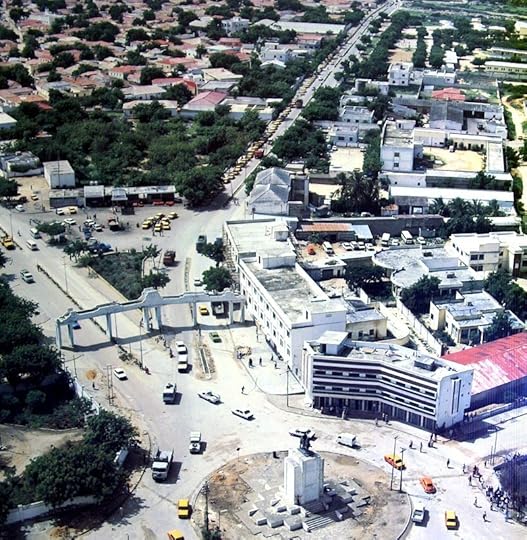
* الصورة لمدينة مقديشو قبل الحرب
aad baan ugu faraxsanahay in aa akhriyo kitaab uu qoray nin soomaali ah waxaan dhihi kara wa keetab iska feecan waana sheeeko ka halysaa hooyo caruur leh oo muqdisho dagan noloshooda iyo waxyba ku saabsan Lakin waxaan aad iyo aad u gaxumahay in uu dhaqamo xun xun oo dulmi ku jiro oo dumarka loola dhaqmo oo dadku caadeesteen in uu unisbeeyo deenta islaamka uu ka dhigo iny diintayno ina amartay sidaas.
الرواية الثانية في ثلاثية نور الدين فارح "دماء في الشمس"، والثالثة التي أقرأها منها، وثلاثية نور الدين فارح تُقرأ إن أردت دون الحاجة لترتيبها حسب صدورها، فلكل رواية شخوصها وحبكتها وأسلوبها الخاص، ولكنها جميعا تشترك بأنها وقعت على أرض الصومال في حقبة تاريخية محددة منه
والمكان في هدايا...مقديشو، المحرومة من أساسيات الحياة، فلا ماء ولا كهرباء ولا أمن ولا استقرار...مقديشو بأناسها الذين انتقلوا من حرب لأخرى ومن معاناة لمعاناة، طحنتهم الحروب، ودمرت أرواحهم، وأكملت المجاعة دورها في تهميش وجودهم، وقد آن الأوان لنهضة ينتقلون فيها لحياة مختلفة
الهدايا والهبات موضوع الرواية الرئيس، وهي كما يقول فارح أنواع، ولكن حياة الإنسان المرتبطة بأعطيات الآخرين ومنحهم ومعوناتهم تجعله مدينا لهم، مرتبطا بسياسات تفرض عليه تأتي مع كل طرد من الطعام أو أدوات للتنمية أو القروض الميسرة أو المعونات الطارئة، فلسفة قديمة يؤكدها فارح بأكثر من أسلوب جعلت بلادنا عرضة لسياسات وقرارات غربية فرضت علينا، وأتاحت لهم الفرصة للهيمنة علينا وإفسادنا، والحفاظ على سيادة حكام دكتاتوريين، عاثوا في الأرض فسادا، وزادوها شحا وحاجة وفقرا ومجاعة
فارح يتطرق لموضوع الهبات الغربية من خلال أكثر من أسلوب في روايته...فينثر بين فصولها تقارير وكالات الأنباء، ومقالات صحفية لأحد أبطالها...الصحفي "طارق"...والذي استطاع فارح على لسانه توضيح فلسفته ورؤيته لها
حتى هدايا الأقارب الميسورين تقع ضمن هذه الفلسفة برأي فارح، فكل هديّة وراءها حكاية وخلفها غاية...والحاصل واحد لما تكون مشروطة
ولكن أيضا لمحت في هدايا...نوعا مختلفا منها...الهدايا التي تجعل للحياة معنى وتهبها روحا...طفل لقيط عثرت عليه الأسرة ورجل محبٌ"يوساسو"...كانا كفيلين بقلب حياة أسرة، ونقلها من البؤس والتفكك إلى لم الشمل واستعادة الرغبة بالحياة
يتقن فارح كما في الجزئين السابقين، الدخول لعالم الأحلام، المليئة بالغرابة وبالطيور، وربطه بالواقع، فأغلب الفصول تبدأ بحلم، يحاول صاحبه تفسيره من خلال الأحداث التي يعيشها.
قلت في مراجعاتي لجزئي ثلاثيته أن المرأة تشكل حيزا كبيرا من تفكيره ومن رواياته، ليؤكد دائما على ما عاشته من ظلم في ظل النظام القبلي والأعراف القاسية، وعلى حاجتها لتغيير كل ذلك والقيام بدور أكبر في المجتمع، وهذا ما يظهر بوضوح أكبر في "هدايا"، فالمرأة استلمت زمام البطولة وزمام التغيير وامتلكت إرادتها رغم ما تعرضت له من قهر وحياة في ظل رجل.
فالممرضة "دنيا"...والتي اتسمت مسيرة حياتها بمحطات مختلفة، يمتلكها جميع الرجال، يسيّرونها ويهيمنون عليها، انتقلت من بيت أبيها إلى بيت الزبير، وهربت منه إلى شيري، ثم إلى طارق، ورغم وجود فترات فاصلة قصيرة تصبح فيها سيدة نفسها ومالكة زمام أمرها، لكنها لم تطل بسبب ظل أخيها الأكبر، الكلي الوجود الكلي العدم كما وصفته، والذي سقط على كل بناء متداع كانت قد شيدته، ليتابع كل خطواتها..."دنيا" تلتقي بعد طلاق وترمل بشاب متعلم وثري "يوساسو"، وتجمعهما قصة حب، "جعلتها تتبرعم مثل زهرة"، تجلب لها ولأسرتها تعويضا عن كل المعاناة التي مرت بها، رغم موقف "دنيا" الأوليّ منه ومن هداياه، ورفضها، لقناعتها بأنه يجب على من يأخذ أن يعطي
لفت انتباهي في الرواية ذاك الكم من الأمثال الصومالية على لسان شخوصها..."إن من يوزع الأضحية لا يتبقى له منها إلا القليل"، "إن أولادك ليسوا أبويك"، "من يجد شيئا لا يطالب به أحد يصبح ملكا له"...فكما يقول فارح "إن اللغة هي نتاج موقف الناس إزاء العالم الذي يجدون أنفسهم فيه"...والأمثال تعبر عن ردود فعل تجاه تلك المواقف...لتتخذ فيما بعد قيمة يحتفى بها في مثلها
نور الدين فارح، يثير الكثير من التساؤلات حول الصومال وشعبها، ويضمن رواياته العديد من الأساطير الإفريقية، ويخلط بين ثقافات متعددة وثنية وإسلامية وغربية، ويخترق عمق الإنسانية وأوجاعها، ويسطر للأحداث السياسية في بلده، ويؤكد رفضه لتبعيتها للآخرين تبعا لأعطياتهم وهداياهم المغلفة بالرحمة وفي باطنها العذاب
أعيب على الرواية كما في سابقتيها، تشويه القيم الإسلامية والتعدي عليها، خاصة في وجهة نظر الإسلام للمرأة ومكانتها، ونقل قصص من سير الأنبياء تحوي مخالفات واضحة لكل مسلم كما في "قصة بقرة"، فهو يمزج بين الأسطورة والدين وكأنها حقائق...والتفاصيل الزائدة التي لا فائدة منها فقد أفرد صفحات لتعلم "دنيا" السواقة والسباحة لم تكن ذات فائدة في المحتوى.
Interesante novela en la que, a mi modo de ver, el principal inconveniente es el punto de partida: toda la novela está construida alrededor de una tesis (la índole del acto de donar, en el límite entre el altruismo y el egoísmo, a diferentes niveles: personal, de particular a particular; interestatal, de países ricos a países pobres), lo cual a mí siempre me resulta un poco artificial, incluso incómodo. Sin embargo, se lee bien y la unión de diferentes textos (a la historia principal hay que sumarle artículos periodísticos, leyendas orales y sueños) le da un carácter polifónico interesante.
Gifts is the second book in Nuruddin Farah's Blood in the Sun trilogy. In Maps, the first book, Askar moves from the tribal culture of his troubled birth to the modern, urban setting of Mogadiscio. Askar's search for identity is a microcosm of Somalia's struggle to find its place in a rapidly changing world. Gifts is a continuation of the search for identity. The setting is once again Mogadiscio but the protagonist is Duniya, a single mother with teen-aged children trying to maintain stability in a culture that has only a minimum regard for the dignity of women. As in Maps, the protagonist's struggle is a reflection of the struggle of a strife-torn country as it attempts to emerge from a web of colonialism, civil war and deep-seated ethnic conflicts. The title embodies one of the central themes of the novel. Whether an individual or a nation those in a state of dependency rely on the gifts of others. But gift-giving is never simple. Questions arise. What are the motives of the givers? Will the gifts lead to independence? Or will they only reinforce a spiral of obligation and expectations that can so easily lead to resentment and hostility? How do gifts affect the beneficiary? Is there damage to esteem? Is gratitude a thin disguise of despair and hopelessness? I have a copy of Secrets the final book in the triogy. I look forward to reading it soon.
This story set in Somalia, revolves around Duniya who works as a midwife in a clinic and her relationship with her children, her ex husbands, her extended family and her current relationship with a successful man. It explores her role as a woman in her society and how she perceives herself.
The story explores the issue of gifts, the relationship between the giver and receiver. Within this society it is often assumed that a successful family member is expected to provide for poorer and less able family members. It also explores gender roles where women receive gifts and financial support from a lover or spouse. Duniya questions this attitude and feels it does not empower her as a woman.
The issue of gifts also explores the aid given by developed nations to African countries; the expectation by the leaders of these poorer nations, but also how it undermines the African psyche. The Africans as a people will forever be cast as incapable and subjugated to the whims of their benefactors.
Duniya strives to forge a path for herself and her children, and wants to be in a romantic relationship on her own terms.
A good book but not a great book. I rated it as a 4 but it is really in the 3.5 range. It follows a Somalian woman in her day to day activities and her family. She has an independent minded daughter who brings in a baby that she said was found at a landfill which adds a little drama to their daily life and there are also a few other conflicts that develops to add interest to the story but it otherwise has no central plot. The story takes place during some very troubling times in Somalia and is a good window into the country's culture and lifestyle which I enjoyed most about the book.
This was an interesting book about a Somalian family and their life in Somalia. I didn't know much about this country, so it was interesting to me to read what the daily life of an ordinary family would be like. The main character, Duniya, seems to rise above ordinariness, though, when she takes in a foundling baby, an act which changes the lives of the whole family.
This book is the second in a trilogy and I thought some of my confusion as I read had to do with not having started with the first book. Then I realized that the narrative was not like the linear European/American storytelling tradition but rather, included dreams, news reports, references to the Koran and to spirit animals that is more like the storytelling of Africa, specifically, Somalia, where this book takes place. It is mainly Duniya's story, a Somali woman who has been raised in the Islamic faith but who defies it, along with expectations placed on her as a woman by the Somali culture. She is a skilled nurse with three children who has struggled out of a forced marriage to an elderly friend of her father's when she herself was only a child, and then out of a second marriage to an alcoholic journalist. Determined to be independent, she has trouble accepting the unspoken conditions of gifts. There are many references to the gifts imposed upon Africa for the relief of famine in which the people of Africa are made to feel beholden to the West and Duniya's story intertwines with this national narrative.
Early in the story, Duniya accepts a ride to work from a cab driver whom she knows slightly, a risk that many women in Mogadishu must take daily since the government infrastructure is so badly in chaos that there is no safe public transportation. Women walking to work are followed, harassed, kidnapped and raped every day by men trolling the streets, looking for victims, and offering them rides in exchange for sex. She is very skeptical of this man at first but gradually comes to trust him. There is a wealth of detail about what Duniya's life is like in a place that routinely has power outages, food shortages, political upheaval, and what women's lives are like under the strict rules of Islam and the oppressive cultural traditions of female circumcision. Through all of this, Duniya's experiences along with her impulses for freedom and self determination seem to be very similar to the lives of single mothers in the West.
يستكمل نور الدين ثلاثيته بـ«هدايا» عام (1990م) ليسرد بقصته معاناة المرأة تحت وطأة الفقر والمجاعة والخوف، حكاية "دنيا"، ممرضة صومالية تقع في حب رجل ثري متعلم، فتستذكر حين كانت (هدية) أعطيت لرجل أعمى في سن أبيها، ليتركها أرملة شابة بتوأمين ثم لتتزوج مرة أخرى بصحافي يشرب الخمر، ليطلقها ويأخذ ابنتها التي أنجبتها. تحكي القصة فلسفة (الهدية)، وكيف أن كل (هدية) لها حكاية وغاية، وأن «من يأخذ يجب أن يعطي». تمتد الرواية لتناقش القبضة الاستعمارية التي خنقت عنق الصومال، بهداياها ومساعداتها المالية والتي أعاقت الوطن عن الإفاقة، وخدرته عن طرح تساؤلات الاستقلال تجاه دول الاستعمار.
اقتباسات: - بدأت أؤمن بأنه يجب أن يكون لدى البشر إيمان بالمجرد، وعلى هذا الأساس يجب أن نعيد بناء العالم كما نعرفه من الأساطير التي نؤمن بها، لكننا لا نعرفها. ثمة غذاء في اﻷسطورة، ذلك النوع الذي يغني. - ظنت دنيا انه توجد في وسط كل أسطورة أسطورة أخرة، عن الناس الذين خلقوها. فقد حول الجميع اللقيط إلى ما كانوا يظنون أنهم يريدون، او يفتقدون إليه. - الصدمات تأتي وتذهب مثل طبقات الجلد المتقشر. - العطاء غريزة انسانية... إننا نعطي بأمل ان تعبر هديتنا عن مودتنا وشفقتنا تجاه المتلقي. إننا نعطي كأفراد في مجموعة، لنثبت ولاءنا. إننا نعطي لنلبي متطلبات عقد، او لتنفيذ حقوق وإلتزامات لهم علينا. إننا نعطي وقد نعتبر أن هذا التصرف جزء من كفارتنا. إننا نعطي لنشعر بأننا متفوقون على الذين يضعون أيديهم المتلقية تحت أيدينا. إننا نعطي لنفسد. نعطي لنهيمن . هناك مليون سبب يجعلنا نعطي. - تخلق التبرعات الغذائية الأجنبية منطقة عازلة بين القيادات الفاسدة والجماهير الجائعة. كما تخرب التبرعات الغذائية الأجنبية قدرة الأفريقيين على العيش بكرامة. -على شاهدة قبري اريد أن يكتب عليها "هنا ترقد دنيا التي لم تكن تثق بالمانحين".
There is something captivating about Farah's narratives despite sometimes tepid plots. Most of the magic is in the characters and the glimpses into a culture often misunderstood in West. For most, Somalia is synonymous with war, anarchy, or famine. Farah's portraits of Somali culture through everyday characters and simple story lines are both illuminating and entertaining. He's a brilliant writer and the brother can get deep. This story crept along with little excitement, but the characters alone kept me engaged. I wanted to know these people! Just learned this is book 2 of a trilogy. Oops. Conflicted as to whether to go back or forward from here...But I'm going to keep reading. If you're interested in African literature or overall great world literature, Nuruddin Farah is a must-read. This particular book isn't though.
This is the second book in the "Blood in the Sun" trilogy. I had read the 1st book and third one many years ago. In this novel, Farah tells the story of Duniya, a quite independent Somali woman living in Mogadishu before the country broke apart. She works as a nurse and forms a relationship with Bosaaso, a man with an American Ph.D. As she raises her twin children alone and an orphan child, she ponders the role of gifts in the country's life and in her own personal life. This novel incorporates many Somali legends and news stories into the narrative and give it a more complicated feel, than some of his more recent novels.
From an old list: by Nuruddin Farah Gifts, the first novel in Nuruddin Farah's Blood in the Sun trilogy, which also includes Secrets and Maps, is the powerful tale of a Somali family and the struggles of its powerful matriarch to keep it whole. Here, Nuruddin Farah delves into the ways people -- families, communities, countries -- are bound together by what they are willing to give and what they choose to receive
The plotline is somewhat underdeveloped, only a couple of characters stand out in flesh and blood. Otherwise, much thought is put into all the affair of giving and receiving gifts. At times, I was thinking this could have been an excellent non-fiction book. Dreams, symbols, myths and the mundanity of city-dwelling in Mogadishu is holding up surprisingly well.
الجزء الثاني من ثلاثية: دمّ في الشمس. بعد الجزء الأول خرائط. مازالت الرواية تدور في دوّامة المجتمع الصومالي, كما الجزء الأول طبعًا. مع خلفية لغوية جميلة.
Gifts is part of Farah’s “Blood on the Sun” trilogy. The other two books are Secrets and Maps.
I also read his trilogy variations on the theme of an African dictatorship including Sweet and sour Melk(zoute melk zure melk); Sardines (Sardientjes Spelen) & Close Sesame (the Patriarch en de General).
From his last books, I only read Back to Mogadishu. I’m planning to read Knots.
1. Gifts is about the requirement of giving something back in return if you accept the giving. Farah considers gifts in individuals life’s but also in the relationship between countries and continents.
Farah shows how different characters define their duty and responsibility to others in daily life. Duniya is raising her three children alone. She resisted every form of domination like getting gifts from anyone. She mistrusted givers. She makes exception to her brother Abashir. Duniya doesn’t want to accept all that Bosaaso offers for fear of becoming dependent on him. She is unwilling to owe him more than she is willing to give. The giving of Duniya is also in how she dealt with the parentless infant.
The giving of Bosaaso is in his duty to the family of his wife. The other side is Waaberi social chantage of Bosassao. She asks Bosassao to pay their bills but she is well dressed. She is still keeping the borrowed jewellery of his wife Yussur. “The people who are poor but spend a lot of money on their appearance p.215”. The tendency to live above our standards p215. Another example is the ‘bad’ mentality of Shiriye.
Farah repeatedly raises the question of Somalia and Africa receiving huge gifts from the European countries and the United States. He views the one-way relationship that the foreign aid fosters as humiliating and destructive. Gifts used as instruments of domination like Arabs and European merchants who gave the Africans godheid as a gift. The same thing is happening today with development aid p.126.
2. The book is also the development of Duniya. She works as a midwife in a Mogadishu hospital. She been married twice. She falls in love with the financially successful Bosaaso, who has worked for the UN in New York. Bosaaso's motives are also genuine.
Duniya is becoming independent. She took driving lessons, swimming lessons, removes her headscarf. She chooses to go to bed with Bossaso without being married to him.
Duniya is similar to the other strong women Farah created. You can’t resist falling in love with her.
عنوان الرواية بالأنجليزية gift وتعني اكثر من معني بالعربية ، الهدايا ، العطايا، المنح، المساعدة، التبرع. من هنا نستطيع ان ندخل لمعني عميق يويد المؤلف ان نستخلصة من قصة عاديةلأمراة صومالية تزوجت مرتين بدون حب وانجبت من الزوجين ابناء ، زوجها الأول الذي هو في عمر أبيها توفي عنها وزوجها الثاني تطلقت منه لسكره، تفيق دنيا بطلة قصتنا علي عشقها لبوساسو فلأول مره يخفق قلبها بالحب الذي افتقدته في زيجتيها السابقتين. زوجها الأول تزوجها نتيجة هدية )gift) حصان اهداها ايه وهي لاذلت صبية فأعترفت بجميل الهدية فلما اوصي والدها علي وصيته ان تتزوج صديقة زبير( يبدو أنه ايضاً كان علي سبيل الهدية) لم تتردد حتي اخوها اهداه زبير عطايا فلم يناقش الموضوع، هكذت كان زواج دنيا كرد جميل للهدية او الهدايا. زواجها الثاني من طارق الذي كان يهتم بولديها من زوجها السابق ويلاعبهما ويدخل علي قلبيهماالسرور ويعد لهما الطعام في الشقة الني ارتضي ان تساكنه فيها دنيا ، يبدو ان هذه العطايا او المساعدات ( gifts ( رأت دنيا ان تكافيء طارق بيها بالزواج منه. الزواج الأخير من بوساسو كان عن حب حقيقي ولأول مره تشعر دنيا انها تتبادل الأخذ والعطاء عن حب وبعشق. قصة عادية جداً وبسيطة أما قيمتها الحقيقية فهي عن الخلفية السياسية المصاحبة لقصة دنيا والتي تركز علي مشاكل الصومال وغيره من البلاد الأفريقية والمعونات(gifts ) التي تمنحها الدول الغربية ، كما يقول الصحفي طارق زوج دنيا الثاني في احدي مقالاته الصحفية ان القمح يأتي من الدوله المانحة محملاً بطعم خاص ورائحة تخص الدوله التي جاء منها، فالقمح الأمريكي يأتي محملاً بالفخر والتيه الأمريكي الذي لايلقي وزناً لحسابات الأخره والجزاء من الله، والقمح الأوربي يأتي محملاً بأماني ان يستطيغ هؤلاء القوم ان يشتروه في المستقبل لتزيد صادرتهم، الأخطر من ذلك ان هذه المساعدات(gift ) تقضي علي أي امل ان يعتمد الناس علي ايديهم ليخرجوا من دائرة العوز طالما يأتيهم طعامهم من صنع وتعب غيرهم فلماذا يتعبون أنفسهم!؟ هنا يأتي مغزي الرواية لا تستقيم الحياة او الدنيا مع ناس يعطونك ليستغلوك ، كما لم تستقيم دنيا دنيا بطلة روايتنا ألا بعد ان خرجت من دائرة الأستغلال بالهدايا والمنح والgifts الي دائرة التبادل الحر للعواطف والمشاعر مع بوساسو
An odd book that lacked pacing or momentum and was somewhat of a slog to get through. The exploration of the dimensions of gift giving was nebulous and inchoate. Also, the notion that aid from Western countries is neocolonial and exploitative is old hat.
To view the entire book as an allegory for different methods of development, with Duniya the stand in for the poor modernizing country, would be to undervalue the text and the stories it contains. Her relations with Qasim and her former husbands were exploitative; her brother provides her reparations which are helpful; Bossaso provides her an equal partnership which is also helpful. This could be viewed as an allegory for helpful forms of development assistance. But, allegories aren’t great stories.
The most interesting parts of the book had to do with the folktales and on the ground portrayal of 1980s Somalia. I’ll likely try further books by this author to see if they are more enjoyable.
I picked this up some ten years ago while auditing a lecture but only — finally! — read it this year, motivated in part by what I’ll admit was a lazy armchair-traveler’s interest in Somalia in the ‘90s. Rewarding read.
What Farah does so well in this novel is to make one reexamine storytelling in and of itself; he incorporates various kinds of narratives, from gossip to folklore to news briefs, into the more traditional arc of the novel, which sticks with the character of Duniya as she navigates seismic shifts in her life near middle-age. What dazzled me most in this vein is the narrative turn made in the final pages, as if stepping through a fourth wall, as Duniya‘s story is resolved in marriage, and she as we have known her ceases to exist.
Second to this nuanced art of storytelling is perhaps the more obvious investigation of gift economies (Marcel Mauss, I think, is cited in the acknowledgments and is a clear guide for Farah in this book); from the inextricable intimacies woven through favors and gifts on a personal level, to the geopolitical scale of foreign aid, Farah gives the reader so much material to chew on for a necessarily complex contemplation of gifts and what they achieve.
This entire review has been hidden because of spoilers.
I genuinely enjoyed this novel, and I felt that it moved fairly quickly. I often find this type of narrative, which integrates dream sequences and journal articles alongside the main narrative, rather complicated and tough to navigate, but this was not the case with Gifts. Farah makes what could be a dull, plotless novel a close study of the life of one woman, Duniya, and the lives she touches. Also interesting is the interwoven commentary on gifts...and how gifts given freely are never truly free.
This was good-ish. There's definitely a cultural edge that I'm not getting, but it's not really my culture TO get. I liked the article about helping other nations and whether or not nations are required to help. The storyline was a little dull.
Gifts is one of those books that are absolutely devoid of plot, yet Farah manages to keep you engrossed.
The story takes you through the life of Duniya , who is the central character. A woman who has gone through endless trials and tribulations in a very patriarchal society, only to emerge stronger every time! Farah's portrayal of the Somali society is enthralling, the magic that he works into his characters can sometime overshadow the central theme of his narrative but doesn't annoy you as a reader.Somalia, for most of us is what we see in the media and have deemed it synonymous to war and civil unrest.In Gifts, Farah tackles the issue of receiving "aid" a very rampant practice in most Arican countries that has contributed to people being overdependent on foreign aid to sustain their lives.There are some very bold proclamations regarding the issue mentioned in the book:
"Last week the world ran and Africa starved. No, doubt, television is a personality creator, and donors have their smiling pictures taken, alternation with scenes of Ethiopian skeletons. For the first time Africa has been given prime time TV coverage, but alas, Africa is speechless, and hungry."
He goes on to say:
"And when the TV- watching public and video-producing crews turn and ask me to say something, I feel shy, I am tongue- tied. Like a child whom an adult has given a gift, who smiles timidly and takes it, and whose mother says, "Say thank you to Uncle," I too say, thank you one, thank you all, Uncles Sam, Sung, and Al- Mohammed too."
Whilst everyone receives "gifts" in a poverty stricken Somalia, Duniya strives to do the exact opposite.She refuses to accept any aid and works hard to raise her children. To quote what she says in the book after she receives a ride from an acquaintance:
"Because unasked-for generosity has a way of making one feel obliged,trapped in a labyrinth of dependence. You're more knowledgeable about these matters, but have we in the Third World lost our self-reliance and pride because of the so-called aid we unquestioningly receive from the so-called First World?"
Duniya's character is very striking, she's a strong woman with values and is in no way shy to voice out her opinion when the need arises.And to top it all off there's a riveting love- story between Duniya and a native Somali who has returned home from the West to render help to his people. There's a time when Duniya (despite her toughness) breaks down and tells herself :
" Loving him was divine. That was clear"
On that note I'll have to end this for fear of giving out way too much information and ruining it for you. Nuruddin Farah once said in an interview : And now that I am older, the only thing I can say is that I have tried my best to keep my country alive by writing about it, and the reason is because nothing good comes out of a country until the artists of that country turn to writing about it in a truthful way.
In Gifts, the lead character Duniya, ruminates on the role of women as the perennial recipients of gifts in patriarchal societies. To Duniya, gifts, especially those given by men are not mere tokens of affection but rather exploitative traps, harbingers of an unspoken obligation, and a debt that demands repayment in some form or another.
Duniya stands as a formidable advocate against the chains of dependency, particularly the kind that binds women to men. Her spirited exchange on the nature of gifts with a white lady crackles with intensity. With her, we delve into the pages of her former husband's lucid article on donors and gift-giving. The reader is left yearning, wishing the entire book could unfold as a single, sweeping article of such brilliance.
In characterization, some of the main characters are superficial caricatures, while few minor ones are overblown and all over the place. There is Muraayo an overblown character, who wants to take back her husband’s rent-free house where Duniya resides, because Duniya doesn’t want to part with something Muraayo wants, to give her back.
In the story, we encounter Waaberi, a symbolic character representing the African [beggar] leaders, adorned in opulent jewelry and luxurious attire that her benefactors couldn’t afford buying. She comes to Boosaaso, the former husband of her late sister, seeking the financial support he once provided. However, Boosaaso engages her in a fierce and confrontational dialogue, critiquing the act of gift-giving. He draws a parallel between Waaberi and African leaders who, while residing in limousines and expansive villas abroad, solicit aid from the US and European governments under the guise of their impoverished nations.
In short, the novel is about Gifts, Nuruddin being an enigmatic tabooist writer notwithstanding. It is a well-plotted novel adorned with remarkably odd metaphors. A topical novel that comes short of its lofty ambition. In the story, Nuruddin attempts to criticize taking and giving gifts but his critique woefully falters. Instead of channeling his thoughts in a novel he should have essayed a philosophical treatise on gifts which is more befitting.
This entire review has been hidden because of spoilers.
I liked Gifts so much more than Maps (although I still think my apathy toward Maps was a failing on my part, rather than Farah's). It's quite a traditional sort of book, in a lot of ways - it's about family and remarriage and working out your life - under different circumstances, it could be an Austen novel (Persuasion). I would say, if you were looking for a book somewhere between Austen and Morrison, then Gifts would be a good choice.
Duniya is bright, vibrant - but human, totally. Farah never slides her into an idealized Eternal Feminine or something. She is exceptional in some ways (her sense of self and of self-worth) and normal in others (her indecision, her loosening grasp on her family life, her temper).
If this wasn't quite a five star read it is because I don't know if the dream sequences really worked (do they ever? for someone who isn't David Lynch?) and they are, really, a significant portion of the novel. Also, some of the themes were treated a bit literally; mostly, I find the "gift" theme delightful, but sometimes it was just too on-the-nose.
I had a hard time with this book. First, the small notes at the beginning of each chapter drove me crazy. Why do I need a summary of the chapter before I read it? But that aside, I found the dream-sequences-into-reality very difficult to follow. It seems like you were supposed to get more out of the dreams then I could decipher. Also, the main character Duniya, seemed weak to me. Based on what the author said about the character I felt like he was trying to make her a strong and independent woman who made her own choices in life and didn't accept charity or gifts from anyone, but instead, by what he had the character do and say he made her this indecisive nitwit who arrived at these inexplicable decisions with no understanding of how she arrived there herself. It's the way I think some men assume women think - we just pull decisions out of the air based on dreams and gut feelings with no real logical thought process. There were some interesting comments about charity and the role of the developed nations to the "third world" but I never felt there were fully integrated into the story or developed into any meaningful conversation.
i learned from this that i can still complete reading books. nice.
other than that, the tone and subtle pov shifts are pleasant from a writerly stance, and i was impressed with how well farah pulls off an honest female perspective.
the critter imagery and dreams got a little tedious, but i did enjoy the perhaps heavy-handed comparison between the power relations between genders and countries (or continents). i hadn't read fiction that addresses modern african issues before, & enjoyed the complexity (perhaps based on novelty of the concepts) of it and the simplicity with which farah gets it out.
i guess what i mean to say is that there's a lovely, skilled, gentle interweaving of theme and issues within story. i wished i'd had this to recommend as an example when the kid i tutored a couple years ago said she simply could not comprehend that activist/feminist slogan "the personal is political".
i also found his chapter structure in part 1 charming, whereas it could have easily been cloying. it's a pleasure to read a writer who consciously makes his structure unique, but not flashy.