Spanning three centuries, the series recreates Celtic Britain at the time of the Roman invasion: a land of visions and dreams, bloodshed and brutal death.
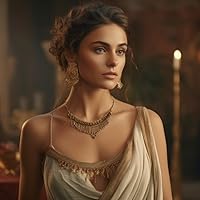
It is AD 79 and Agricola, the ruthless governor of Roman Britain, is turning his attentions to the last unconquered territory in Britain - Alba, Scotland. Rhiann is a courageous and beautiful Scottish princess and priestess scarred by her violent past. Of noble blood, she faces what for her is the ultimate sacrifice - a forced marriage - to protect the freedom of her people.
Eremon is an enigmatic Irish prince in exile, who must seek an alliance elsewhere to regain his throne. Will he prove himself to be the man who can unite the squabbling Celtic tribes against the more ominous threat of Rome?
With war and chaos looming for her people, Rhiann finds herself drawn into an unexpected journey of the spirit and heart, which will reveal the true purpose of her life.
Jules Watson was born in Australia to English parents. She came to fiction via archaeology and public relations, working most recently as a freelance writer in England. She and her Scottish husband divide their time between the United Kingdom and Australia.
It mostly sucked me in with the plot and then it let loose with the throbbing members and round white heaving bosoms. I stopped reading at the first hint of a pulsating penis, because if I wanted to read a romance novel, I would go read one. Not a romance novel masquerading as "historical fiction". And why can't they just say penis? Why is it always "member"?
I was reluctant to read it at first because some of the reviews mentioned "throbbing members" and "heaving breasts" and that was really off-putting as it reminded me of those really cheap novels.
But, after realizing this was an historical novel and the author was an archaeologist I decided to give it a go.
And I'm glad I did. The story drawed me from the first page and I was delighted with the descriptions about the Scottish Iron Age strong holds and about the roman formations. The romance is something solid, built, and not coming from nowhere, which is something I found really refreshing. And it does not happen despite the whole plot, but it is weaved with it and everything happens because of it. Because these are Human characters and not untouchable heroes.
As there is not much detailed information about the pre-Christian indigenous religion, the author based the religion in neo-pagan traditions, which made it feel a bit off from the context.
As for the "throbbing members" and "heaving breasts", I did not see any of these descriptions and all of the intimate scenes were very tasteful and relevant to the story.
I recommend this to anyone who likes good historical fiction with a dash of romance and really Human characters.
I love historical fiction with a magical twist. So when I found The White Mare I knew I had to read it, and I'm glad I did.
The story is set in Scotland during the time of the Roman conquest. Agricola, the governor of Roman Britain, wants to extend the border and conquer the lands of Alba. When the Irish price Eremon and his companions arrive on Alba's shores they meet the Epidii and form an allegiance with them to fight the Romans. To buttress this allegiance Eremon marries the former king's daughter Rhiann, who is not happy at all to be given to a man like that. Due to her traumatic and violent past the marriage doesn't start well. But the Roman threat is looming ...
I loved the writing style. Jules Watson's prose is beautiful and fits the story perfectly. Her descriptions of the culture of the Epidii, their religion and values paint a vivid picture of how life could have been back then. Of course, not everything is historically accurate, as a lot is still unknown. But that's the beauty of historical fiction - you can fill in the gaps. And Jules Watson does an amazing job.
The fantasy elements are a nice touch too. I love historical novels that treat the myths and religious believes of a people as true. The religious rituals in The White Mare add another interesting layer to the story.
I love the characters she created. Both Eremon and Rhiann (the main characters) are interesting, multi-faceted and have their own complex reasons for their actions. All their misunderstandings, betrayals and stubbornness made me want to tear my hair out at times. But in a good way, of course.
The story kept me glued to the pages and I couldn't put it down. I really wanted to know what would happen next.
Bonus points for the historical note at the end of the book. I'm always happy and grateful if authors include a short chapter on the history behind the story.
Overall, a wonderful story, and I'll definitely continue reading the trilogy. I highly recommend The White Mare to everybody who's interested in history, especially Roman and early British history.
I could not speak about her future--the blood, the man in the boat, the battle. My role was not to guide her course, but to build her courage and insight so that she could steer her own way through what would come. For while we are caught like threads in the Mother's loom, we still have choice. I loved her more than my life--and so I wanted her to choose her path. Perhaps I would have done differently if I had known how it would hurt. One thing only I clung to: although my sight hinted that many dark years were coming for the people of Alba, somehow, I knew she was a link to our freedom. History can turn on many things. On a word. On a sword blade. On a girl, running up a mountain path, amber hair flying in the wind.
~~Northern lights illuminate the sky above ancient stones in northern Scotland. It's easy to imagine how Celtics, in AD 79, would look at a sight such as this and believe in the power of their druids and priestesses.
Jules Watson transports us to the world of northern Scotland (Alba) in the first century AD. The land is rugged and forboding. The native population ekes out a living in their seperate clans, depending on the guidance of their druids and priestesses to survive each long winter. Rhiann is one such priestess, of the Epidii clan. She's not only the Ban Cre (head healer), but also the female who will birth the next king. As such, her marriage is important, and she has almost no say in the matter.
Times are changing rapidly though. The Romans are no longer content to rule the lowlands of Britain. They've now turned their eye to the mountains, and are strategizing a way to subjugate the entire island. The various clans have always handled their own affairs--they have an inherent distrust of each other. But now they face a foe unlike any they've ever seen.
Into this volitile time comes Eremon, exiled from his homeland of Ireland where he is the rightful heir. He was driven out by his traitorous uncle, and is accompanied by a few dozen surviving, faithful men. His path is set to collide with Rhiann's. Can they set aside their differences, and manage to save the Epidii? Read to find out.
My two cents: I enjoyed being transported to a time and place that I knew very little about. Watson has a background in archeology, and it shows in her attention to historical detail. She freely admits using fictional license with some aspects such as personal names, the names of Alban gods, and The Sisterhood. She explains her thought process in notes at the back of the novel. Watson writes prose with authority. The story itself dragged at times, but the battle scenes were well done. As with other reviewers, I feel that much of the plot tension could have been avoided with a little communication and a little (ok a lot) less obstinate stubbornness. For whatever reason, stubbornness is a frequent character trait of female protagonists in romance novels. Occasionally the balance is done right, but often the female heroine's stubbornness rises to a level of obstinate annoyance. Rhiann toes that line. To her credit, she does have a shattered past, and she does keep her healer's duties and her people's welfare foremost in her mind. Given a rating of 2.5 stars or "Above Average". Recommended if you want to explore the bronze age, and don't mind a healthy dose of romance mixed in with your historical novels.
Other favorite quotes: Bards--no matter their looks--were sacred. They were untouchable even on the battlefield. After all, they held a people's whole history in their heads--all the kinship lines, the battles, the marriages, the acts of kindness and outrage, the births and the feats of honor and glory. They could kill with words, b y bringing stinging satire and shame down on a man's head, hounding him to his death. And they brought beauty, on the long nights when the cold winds prowled around, and all within were aching to see the sun again.
~~"But don't you wish to be married under the sun, like other brides? With flowers and light..." "Rhiann." Caitlin's dreamy smile was back. "If he is by my side, I care nothing for flowers. He brings the sun; he is the light."
~~Eremon looked up to see that the grimness had lifted from the King's face. "My uncle, a great king, said something to me once that I have always remembered: Be true to yourself and your path will always lay straight as a new spear, no matter how twisted and beset by troubles it seems to others." Eremon smiled. "That is sound advice." "It is. And I have also learnt that as a king, you walk that path alone. It used to seem a harsh choice when I was young, but only alone can you hear the deep music of your heart, and then it will guide you more truly."
~~ There is a pattern in the cloth of Thisworld that we cannot glimpse. Each act is a thread in that pattern, even when it brings grief and pain. The Mother weaves for all her children, but we only see the nearest threads. One day, though, we will see it entire, and then we will weep tears of joy, not pain.
Sometimes a book sits on your bookshelf and you keep on saying to yourself that you will get round to reading it one day. My lovely book friend, Elaine, always insisted that Eremon would give Jamie Fraser from the Outlander series a good run in the macho male stakes, well, I always doubted that bit, but I have to admit that Eremon does have a certain male arrogance that is rather appealing.
The story is set in the distant past, when the Roman invasion of Britain is well under way. Agricola, the ruthless Roman governor, is intent on conquering the last unconquered territory, namely that of Alba, Scotland. Rhiann is the beautiful but remote Scottish priestess, who is the last remaining hope of the female blood line on which her royal heritage is based, and Eremon is a fugitive Irish prince who in order to gain strength by association, is persuaded to take the inscrutable lady Rhiann as his wife. However, whilst Rhiann and Eremon’s enforced marriage offers some protection to the Epidii people of the White Mare, there are others who seek to destroy this alliance. Whilst the echoes of primeval mysteries surround this ancient game of thrones, the storm clouds gather and as the distant warlords hear the rubble of the mighty Roman army, the observance of time honoured rituals offer no protection against impending danger.
This is the start of a trilogy of novels, which hover in the twilight world of myth and legend. The second book, The Dawn Stag, continues the story of Rhiann and Eremon, whilst the third book The Boar Stone concludes the story some three hundred years later.
Well worth a read if you like historical romance, mystery and ancient history combined with a rollicking good adventure.
More of a 4.5 for me. The storytelling was as good as it gets. Jules Watson is definitely on my top list of great authors who know what they're doing.
The White Mare had many things that I look for in a novel - well described setting, development in romance, and dialogue that touches the heart. There was a moment where I felt the story tug at my heart and that's a very rare occurrence. If such an occurrence happened in any book that I read, I would probably automatically place it in the 4-5 star range.
Rhiann is a stubborn young woman, but wise beyond her years. Eremon is courageous, smart, outgoing, and darn handsome! He's probably my favorite character in the novel. The development of characters by Watson is incredible and I loved going on this journey with them. It was a rocky journey, but it turned out well in the end, thank goodness.
The only thing that made it not a total 5 star was because of Rhiann's obstinacy. It occurred many times throughout the novel. Though it did add complexity to her character, it made me feel frustrated with what she was thinking and what made her think that way.
Overall, the novel is definitely a favorite. I would like to thank those who recommended The White Mare to me, especially Leea. She encouraged me to read it and I'm glad I read it sooner than later because this novel got me out of a reading slump. Now I'm back in action!
The White Mare is a work of historical fiction, with dabs of fantasy and a strong dash of romance. The setting: first-century Scotland, as the Romans move to conquer lands traditionally held by the peoples we know as the Picts. Irish exile Eremon arrives just in time to be appointed war leader by a local tribe; their princess and priestess, Rhiann, is pressured into marriage with him despite her wishes (and from there, the story goes exactly where you think it does). It should be noted that this is an odd sort of trilogy: the first two books are meant to be read together (this one ends on a bit of a cliffhanger) and then there's a 300-years-later sequel.
I'll admit that when I first started this book, I was not impressed. The writing style is merely passable, with a tendency toward melodrama. The characters are nothing original, and some tired tropes are dragged once again into the light: the family wiped out by raiders in the backstory; the character who always behaves "honorably," even against their own interests, without any compelling reason to do so. And yet, as I read on, the book began to have a certain charm for me.
From the beginning, the author does an excellent job in her depiction of everyday life in ancient Scotland. The backdrop here is vivid, with lots of visual imagery, and the author brought her tale to life by showing how people spent their time. The plot is fast-paced, with lots of short scenes--too short at times, but rest assured that the story does not bog down in description. I became so eager to know what happened next that I read the entire second half of the book in one day. And--this is probably why I finally warmed up to it--the romance was unexpectedly romantic and touching. My only issue was with its resolution--forced rather than arising naturally from the characters; it just felt wrong on so many levels.
On the historical accuracy: very little is known about the Picts, so Watson invents as she pleases. The Roman invasion really happened, but many elements--like the Goddess religion and its priestesses--have no basis in fact, which may bother historical purists. As is common in prehistoric fiction, the religion is "real" within the context of the story, with some supernatural occurrences blurring the line between historical fiction and historical fantasy.
Comparison with Juliet Marillier's Bridei Chronicles is inevitable, since both are historical fantasy-romance focusing on the Picts. Watson's books are faster-paced, with more of an emphasis on war and more vivid descriptions of daily life. Marillier's books are slower, more character-driven, and being set a few hundred years later, have perhaps a more medieval, rather than prehistoric, feel. Readers will have to decide for themselves which trilogy they prefer, but if you're looking for a light read with war and romance in a historical setting, you could do worse than The White Mare.
This is a book set in Scotland at the time Agricola and the Romans had been charged with making Scotland part of the Roman empire.
Rhian is a priestess and Eremon is an Irish prince in exile since his uncle took up arms against him and chased him out of Ireland. Reaching Scotland, Eremon's goal is to gain renown and make allies and return to Ireland to claim his kingdom.
There is no mention of a seannad ever having elected Eremon, which makes this plot point problematic. In Ireland, sons did not automatically inherit kingship from their fathers. A seannad, consisting of members of branches of the royal family, had to agree on who would rule next. A king could not rule without their consent. In Eremon's case, only his uncle turned on him, so what happened to all the other members of the seannad who had elected Eremon? There is no mention of them whatsoever.
However, the main problem I had with this story is that the plot was set up on a very flimsy conflict. Any conflict that can be resolved by two people sitting down and talking (but who won't do so) isn't a true conflict. It struck me that Jules Watson wanted the consummation of Eremon's and Rhian's marriage to take place during a Beltaine festival towards the end of the book and so needed to keep them apart until that time. Whenever an opportunity for them to reconcile their differences arose, Rhian backed out and Eremon didn't attempt to speak plainly.
Before that Beltaine festival, Eremon comes to realise that he loves Rhian, but how this development occurred, I'm not sure, unless it's simply that they live in close proximity to one another and he can't bear the fact that they haven't consummated their marriage yet!
Rhian also scorns Eremon at one point by stating his people do not have priestesses in Ireland any longer. As Rhian and her Sisterhood are set up according to the Wiccan belief system (which is not the ancient Celtic spiritual belief system), this irritated me. In Celtic Ireland (and elsewhere in the Celtic world) druids were both male and female. In The White Mare, only males are druids.
Having said this, Watson has created the world of this book very, very well, bringing it to life with small telltale details that cause the people to come alive on the page.
I enjoyed reading the acknowledgements at the beginning of the book, too. Watson thanks her husband for being her sounding block and helping her work out the plot "over many a pint in many a pub". Having the support of those nearest and dearest you when you set out to write is value beyond measure, and it was heartwarming to read about the people who supported her in her work.
I don't know how it is possible, but I didn't like this book - even though i love 1) the bronze age, 2) scotland and 3) priestess/ druid/ magic characters PASSIONATELY (and was also not afraid of a bit of brainless romance, which I was expecting). Well, I am giving up now after half of the book. Characters are entirely one-dimensional and our protagonists rarely have any agency. As the plot meanders on and on, too many members throb, rounded bossoms heave, manes of hair flow over pillows and the main female character watches her husband have sex with someone else for yet another time (involuntarily, but she just can't stop). One of the main premises of the plot is when the two main characters will finally get over their *increasingly annoying* stubborness and miscommunication and finally shag. All of that I could overlook, or even enjoy if written well! But the rich historical setting and plotline sadly lose themselves completely in a lack-luster, forced and snail-paced romance story of two protagonists I just can't seem to care for.
Llevaba un tiempo sin leer una novela histórica y esta me había llamado la atención desde hace unas semanas. Ambientada en la Inglaterra prerromana, narra la historia de los celtas, su organización en tribus y sus luchas internas y contra el avance del águila. Me ha sorprendido lo bien que esta escrita y lo evocadora que es. El personaje principal es un príncipe Erines que en el intento de recuperar su propio reino alcanzara la madurez luchando para otros pueblos. La novela tiene dos elementos clave: las aventuras y el amor, sobre todo el amor. Es una novela ligerita con poco aporte histórico pero con el añadido de que el mundo en el que esta ambientada es el celta. Una grata sorpresa pero que no logra acercarse ni de lejos a la vitrina de “los grandes”.
Slow burny, historical political romance set in ancient Scotland.
The idea of a society's bloodlines recognized thru the mother, vs the father, is a refreshing take but the way it's implemented is a bit disappointing. Rhiann is more a kept brooding mare than someone who leads her people (even though she her their queen, not her husband.) I was disappointed to see her play a subservient role to him and not directly participate in the political discussions and negotiations. But on the other hand, it was interesting to read a story that didn't rely on the "strong female character" trope - although her sister does play this role and I adore her for it. Rhiann plays a more backstage role, a healer and caretaker of her people.
Despite that, I think this is my preferred brand of romantic historical fiction, where the split between romance and history is 50/50 and not clearly built on tropes to get two people to fuck each other. The tropes are there but the romance shares the stage equally with well built story. The story would still stand on its own without the romance.
Content warning for rape, one one page and and off but repeatedly referred to.
If you like historical fiction set in early Scotland...then you will love this book. If you like books like The Mists of Avalon then you will like this book.
I could say this book did leave me with little frustrations...the relationship between the two main characters is aggravating. It just seemed like they would not talk to each other and find out what the heck was wrong with one another. There are too many secrets and too many lies. They eventually grow to love one another, even though I think there will be many more trails and tribulations for them along the way.
There was questions I had about the invading Romans, some of which I think I may have to research on my own. The author adds some well research notes at the end of the book.
Overall I liked this book, I would probably recommend to others to read.
Oh how I wanted to love this book. The comparisons with Juliet Marillier are understandable and yet laughable. Every part left me almost satisfied. The writing is part lyrical poetry, part soap opera bodice ripper. The plot sucks you in with its pain and drama and then spits you out with its never ending love affairs and multitudinous villains. I would have given this book 2 stars if not for the character development and internal dialogue of the MC, which was heartbreaking and kept me up all night hoping for resolution. My real issue with this novel though, Overall, can't decide if I will continue with this series or not. The overly graphic sexual content and convenient plot twists left me wishing the author had written a shorter, better story.
It started well and I thought I was onto a winner....as the cover said, it was an ambitious novel to write as a first. I allowed a little extra latitude for suspension of disbelief etc and ploughed on. Then somewhere around p200 I realised that the author had clearly read The Eagle and the Raven and lifted a main plot from it but with different characters. I also began to realise that the dialogue had become wooden and the characters were not developing.
It had promised so much (not least, to me, a further couple of fat books to make up a series) but around p400 I called it a day and left the characters to go around in circles for the last however many pages. Pity.
I was disappointed in this book. I had read several reviews and most complained about the sexual scenes. I wasn't even bothered by those. What bothered me was the lack of depth in the characters. Rhiann isn't endearing and Eremon seems like all he does is think about himself and his penis. I realized that I was over halfway done through the book and nothing really had happened. The characters are only developed surface level and the book includes plenty of fluffy filling. I will not be reading any more of this series.
I loved this book. The characters were well-developed, the atmosphere was convincing, and the story was compelling. A great read for fans of ancient history, early Celtic cultures, and all things Scottish. The romance was realistic and complemented the historical story line instead of overwhelming it. I read the successive two books; loved the second (it made me cry), liked the third (a good wrap-up to the political drama).
Quite interesting. Always difficult with such a book, as historically it has to be a lot of guesswork, but read quite convincingly. Always found it interesting that the Romans made it as far north as to set up the Antonine Wall, and that they retreated to Hadrian's Wall and gave up on the north - not their usual way. Liked the interplay between Eremon and Rhianna, although as another review says, you felt like skelping her at times. Interested to see how the author developes her story
Strong writing in this historical romance set in Roman Britain, and focused on the attempt to ally tribes of Erin (Ireland) and Alba (Scotland) to stop the advance of Roman rule. Good enough that I will read the sequel, The Dawn Stag.
This book is the first of a trilogy and is over 600 pages. Set in Roman/Celtic Britain, Alba and Scotland in AD 79 it is an absorbing story with Rhiann - a brave and beautiful princess and priestess and Eremon - an Irish prince as the central characters in a story of war, the quest for freedom of the heart, spirit and body and love too. Highly recommended.
If you have been following my reviews, you will have heard about my fascination with all things Dark Age Europe, although I prefer Dark Age England. (if that is not the term it is traditionally called, then I am sorry. I hope to start calling things by the right term as I progress through my history degree.) Anyway, I like anything that is set in the time-span of the official Roman withdrawal from the British Isles to the Norman Conquest, although I will read pretty much anything that is set in a historical time period (Historical fiction is my 3rd favorite genre so I read quite a lot of it, if you couldn’t tell from the amount of reviews that I write about books from that genre). On a recent journey through my library stacks, I found The White Mare by Jules Watson, and since it is set in a historical time period that I didn’t know much about (the failed Roman invasion of Alba/Scotland) and was written by an archaeologist (I like to read books by authors that have knowledge of the time period that they are writing in because it makes the story feel more authentic and accurate), I decided to take it home and try reading it.
This saga is set in Iron Age Alba or Scotland, and it chronicles the story of a whole cast of characters, but focuses on Eremon and Rhiann mostly. Eremon is an Eirish/Irish prince who had to flee his homeland after his uncle stole his recently deceased father’s throne out from under him, and Rhiann is a priestess of the Goddess (Scared Feminine, Mother Earth, the Moon) who because she is the niece of the late king of her people (in most Alban/Scottish cultures at this time, royalty was passed through the female line), the Epidii, is being forced to marry to produce a heir/the next king. Drawn together by unforeseen circumstances, these two individuals and the people involved with them have to fight to protect their country and their way of life from a myriad of outside forces.
The reason why this book got such a high rating from me is the history that was woven into the plot. As stated before, I prefer my historical books to be accurate and authentic so I try to read books by authors that have had some experience with the area that they are writing about, and in this case, the author was an archaeologist and included a historical note detailing the basics of the research that she collected so I knew going into this that I was going to love that part of the story. I have always been interested in history since I was a little girl, and I love reading books that are set in time periods that I don’t know a lot about or that interest me. However, there is one time period that gets me more excited than all the others combined, and that is the previously established time span from the Roman withdrawal from the British Isles to the beginning of the Norman Conquest. I find this time period so interesting because not much is known about it and the peoples that lived during it. It is a period steeped with mystery, and I want to figure out all of its secrets. Because of this, it is where I am focusing my history degree and I plan to write my dissertation on some aspect of it. All in all, who doesn’t love a good fiction story set in their favorite time period with a little bit of magic thrown in for good measure.
If you like historically accurate plots, detailed and complex characters, engaging and interwoven storylines, and romances you want to take up arms and fight for, then you will love this book. I came for the history, and it was great, but the characters and plot allowed me to stay and not get bored in the slightest (I don’t want to tell you much about either because it’s best if you discover them for yourselves). If you are a fan of authors like Juliet Marillier, then I think you should give this book a shot. 5 stars!
I always begin the year’s reading with light genre fiction, and I’d had this on my shelf for ages. It’s quite a chunky historical novel set during the Roman conquest of Alba (now Scotland). I had recently refreshed my taste for this period by watching the German series Barbarians on Netflix, which I really appreciated because the Romans’ dialogue was actually in Latin rather than posh English accents. Here, everyone can conveniently speak British (Brythonic? Pictish?), even the Irishmen from Dalriada.
This book faces the problem that any narratives set during this time do: most archival evidence of them comes from Roman and Greek sources, or much later sources, while archaeology can only tell us so much, so the author has to fill the gaps with their own imaginative leaps.
I found Watson’s creative decisions more plodding than Ilka Tampke’s thematically very similar Songwoman (which tells the story of the conquest of Albion further south, and also follows a female healer and priestess who undertakes a political marriage to a stranger who turns out to be her love interest, and is undermined by a gross Druid who hates women’s power).
Tampke does a much better job of conveying the characters’ ties to country, how it might feel to embody the complex spirit-world, and the joy and mystery of ritual and song.
She’s also a more skilled writer than Watson, whose prose leans on certain stock phrases that I’ve read a lot in fantasy and romance writing: Women always have “a mass of hair”; Objects are “hefted” in people’s hands; Sex happens “in the furs”; Good-looking people are “comely”; and there are so many “rutted cart tracks”. (Can’t these people smooth out their cart tracks? Well, I guess Rome ends up doing that…)
This is a very hefty book that follows the main characters for nearly two years, and it’s the first in a trilogy, so a lot of plot is left unresolved. The main storylines are “will the prince of Erin unite the tribes of Alba against the Roman invaders?” and “will the heroine recover from the trauma of her rape several years ago?”
I found it comforting to read but sometimes slow-paced. It never failed to annoy me that Watson conjugates sink/sank/sunk incorrectly (“Rhiann sunk to her knees”) and that she uses the American-style lay/laid instead of lie/lay.
The dialogue in the fight scenes was a bit cringeworthy and expository, and the characters often took ages to realise things that had been hinted at much earlier on, e.g. that certain characters they trust are actually in league with Rome. This made me impatient with their slow wits. How can they not even identify the fucken evil Druid as their enemy, even at the end? They’re like, “well he’s just being anti.”
Read a little over 20% before DNFing it. No plot, ridiculous characters, and I just kept thinking, "What's the point?"
It had a promising beginning of an epic historical fiction/fantasy and then devolved into the MC first threatening her new husband at knife-point to never, ever touch her (this part is fair) but then turning around and throwing a huge hissy fit of jealousy after watching him (literally standing there and watching to the end) with someone else a few weeks later despite being in love with another guy anyway. She had made it clear that she wanted nothing to do with him, ever, and thought him a man without honor, so the sheer hypocrisy of it all had me rolling my eyes. Typically if someone has an unwanted husband that they think is a horrible violent murderer, it logically follows that they don't bat an eye (and are even relieved) when said unwanted husband turns his unwanted affections elsewhere. If you care nothing for the man and plan to never interact with him, why would you throw a huge magical fit when he does what he asks and leaves you alone? (Obviously it'd be completely different if you had a relationship previously and were fighting or estranged, because the jealousy would be justified.) But here this girl is screaming because of her broken heart... to a guy she never wanted and believes is a murderer with no honor? And who isn't her love that she keeps going on about. And to be clear, the husband isn't much better considering he doesn't understand why she doesn't want him, given how "comely" and wealthy he is.
And the repeated emphasis on MC's "magical womb" definitely squicks me out a bit as well.
Anyway, this is my first true DNF of 2021 and will definitely make a point to avoid Jules Watson's books in the future.
I need to state my disappointment with this novel. The background story was a good idea and as I am always interested in Irish and Scottish history, and love the series of Avalon just as well, I was very curious about this book.
When I started reading it, it was interesting and seemed to have a plan. However, the further I went into the story the more I found that the style was getting worse. Partially, the details didn’t correspond to the former contents, and many times the story jumped without giving the reader any hint as to why the thoughts, feelings and ideas of the characters should have changed at all. I just didn’t believe the developments to be true and had no faith in it.
In the end, the admittance of the author that the historical details were consciously bend to her fictional idea and the information about some historical details was worth more to me than the whole story itself.
In the beginning of reading the novel, I noticed some ratings stating that many closed the book forever quite soon after starting and some recommended to push yourself through the story as it was promising to get great in the end. I cannot confirm the latter at all but can only recommend to avoid this lesson completely and pick another series covering the same era and genre and enjoy a more meaningful and conclusive story telling.
I picked this one up in a local bookstore, mostly because I was looking for something a little different than the usual romantic fiction books that I've been reading. Although there is sufficient romance in it (I doubt I'd ever pick up a book that was completely devoid of it) there was enough historical, mythical and even warfare aspects to it to shake things up. I loved the two main characters. Although they were extremely frustrating at one point, so much so that I kept checking how many pages were left in the book for them to sort their stuff out! But in the end I loved it when everything came together. I liked the male lead as well. I liked the fact that he was able to plunge into war without blinking and at the same time wasn't a brute in his personal life. I also appreciated the fact that the author didn't tie everything up in a neat little fictional bow at the end, proving that there can be a happily-ever-after type feeling without resolving every bit conflict. This could be because this book is part of a trilogy, but I stand by my point. Some of the other reviews on here were slightly off-putting (which I only read after buying) since it described certain scenes as being way more out-there than they actually were. I was glad I gave it a try and look forward to dive right into the next book!!
An interesting journey into the world of Old Britain; the Romans have subdued what is now England and are moving to take Scotland too. As so much knowledge of this time lost, the author does recognise the choices she has had to make and the story is no less for the uncertainty. I actually think this is the reason we are so fascinated with these undocumented times. In this world, women were able to conduct business and be seen by the law by more than just chattels. The spiritual thread is fascinating to me and very well imagined and the main thread of the novel, the development of the relationship between Eremon, Irish exiled prince, and Rhiann, Ban Cre of the tribe whose land Eremon arrives in, has been done many times before in different stories, but is not clichéd or overly obvious. There are some sex scenes but I felt they were tastefully done and relevant to the story. I got no whiff of bodice ripper here. An enjoyable and engrossing historical novel.
I came for the Celtic historical fiction and stayed for the beautiful slow-burn romance with an FMC who is a (TW, not adding spoiler tag because it's important for people to know) sexual assault survivor. As a survivor myself, I disagree with the reviewers who say that Rhiann is "too stubborn" - she's not digging her heels in for no reason like many romance heroines, she's TRAUMATIZED. Speaking from experience, it takes a long time to trust men after you've been assaulted. I found that her storyline was written with grace and care. As a bonus, the overall plot was just as rich and engaging, if not more so, as the romance. For those who usually dislike reading romance, I urge you to give this one a try because there is so much action and adventure. I really lost myself in this one.
This just wasn't the book for me. There's nothing intrinsically wrong with it, it's a romance with the background of roman Britain, but I just didn't enjoy it. I found the characters unlikable, especially the male lead, the romance was too obvious, and there was a lot of fluff with little depth. I felt let down by the historical nature of the book as well, from an author who obviously has researched in depth into the period, I wanted to know more about the reality of the lives at those times. I'm sure some people will find this a great read, but my own experience was that it swung between tedious and annoying.
This is a historical novel with a slow-burn romance woven into the plot, but the focus is more on the historical setting than the romance. The romance develops slowly and respectfully and, despite what one reviewer said, I agree with another reviewer here that I also don't recall any such explicit language in the story. It's one of the many historical novels from the ancient to Dark Ages eras I've read that has stood out in my mind. The author's treatment of the era is good and the plot and characterisations are well developed. I'm an archaeologist, too, so I'm interested that we both began writing historical novels because of our interest.