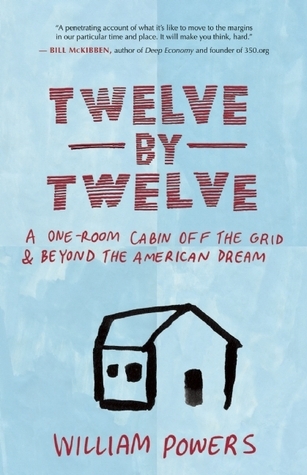
Why would a successful American physician choose to live in a twelve-foot-by-twelve-foot cabin without running water or electricity? To find out, writer and activist William Powers visited Dr. Jackie Benton in rural North Carolina. No Name Creek gurgled through Benton’s permaculture farm, and she stroked honeybees’ wings as she shared her wildcrafter philosophy of living on a planet in crisis. Powers, just back from a decade of international aid work, then accepted Benton’s offer to stay at the cabin for a season while she traveled. There, he befriended her eclectic neighbors — organic farmers, biofuel brewers, eco-developers — and discovered a sustainable but imperiled way of life.
In these pages, Powers not only explores this small patch of community but draws on his international experiences with other pockets of resistance. This engrossing tale of Powers’s struggle for a meaningful life with a smaller footprint proposes a paradigm shift to an elusive “Soft World” with clues to personal happiness and global healing.
William Powers has worked for two decades in development aid and conservation in Latin America, Africa, and North America. From 2002 to 2004 he managed the community components of a project in the Bolivian Amazon that won a 2003 prize for environmental innovation from Harvard’s John F. Kennedy School of Government. His essays and commentaries on global issues have appeared in the New York Times and the International Herald Tribune and on National Public Radio’s Fresh Air. Powers has worked at the World Bank and holds international relations degrees from Brown and Georgetown. A third-generation New Yorker, Powers has also spent two decades exploring the American culture of speed and its alternatives in some fifty countries around the world. He has covered the subject in his four books and written about it in the Washington Post and the Atlantic. Powers is a senior fellow at the World Policy Institute and an adjunct faculty member at New York University. His website is www.williampowersbooks.com.
Don't get confused. This book is not about how to live in a small house, or about the small house movement. It is a personal book that happens to touch many social things from our values and how we have chosen to live, to the impact we have in this world. For me, it was almost magical: almost at every chapter, I had something Powers woould say that I needed to check. The book was an invitation to re-think the way I live and the choices I made, as well as to read more books, blogs and start checking on what others were doing. I felt alive and back to my values and I am very thankful for that. It is not an easy book to read, as you may not like Powers journeys to his own search. He was obviously burned out and didn't like what he saw when coming back to US. And he had the lucky opportunity of living in the small house of a very special lady, a fighter herself. This book challenges your comfortable zone, your consumption, your beliefs, and makes you think and discover things you may have not been aware of, such the existence of an entire "other" world developing out there: the small house movement, the transition towns, the locavore movement and much more.
Should be titled Couscous for the Enviro-Conscious, Culturally Enlightened Liberal's Soul.
Meh. I wanted a book about what real twelve-by-twelve living is all about. This was not that book.
I don't want to cast unfair aspersions on the writing, but it reads like something that could have been manufactured by anyone using a formula designed to appeal to a certain reading demographic. Wise shaman this, Native American Wisdomkeeper that, Buddhism, blah, blah, blah.
This is one of those vague, "inspirational" books where the author offers up what sounds like a string of platitudes instead of any hard-won wisdom or insight. How about first telling us how somebody lives off-the-grid before telling us to "trade knowlege for bewilderment." What good is telling us to "think small," if we have no idea how to actually live small?
I'm not trying to denigrate spirituality, I just think one can't separate body and spirit. Getting your material situation under control is necessary in order to make one ready for any real, lasting spiritual change. Part of that process involves doing something, something more than talking in vague, spiritual-sounding terms. This book seems like it was written mainly for the purpose of spiritual tourism or spiritual entertainment. Something to be quickly consumed and then quickly forgotten effecting nothing.
If you want a feel-good book full of neo-hippieish sentiments, this is it. If you're looking for a more practical discussion about how to actually go about living smaller and more simply, a guide detailing the concrete realities of that path, keep looking.
The concept seemed interesting enough: live in a 12x12 structure for a prolonged period of time and tell the tale of it. The problem is that Powers only spends 40 days in the structure (not nearly long enough) and spends most of the pages rambling about his worldview and why it's so much better than yours.
The narrative portions of the book are interesting, and I considered giving this book two stars because of it, but three factors prevented me from doing that.
1: Powers compares those who don't share his view of how to take care of the environment to Nazis. He compared the killing of the environment to the murder of Jews under the Third Reich. He compared those who ought to know what happens in agro-business to those who lived near Buchenwald and ought to have known of the camp's horrors. Powers did not only mention this once, but alluded to it frequently throughout the book.
2: Powers thinks he knows what is best for everyone, even people he's never met. He thinks because he went on some worthwhile and productive mission trips to developing countries that he knows what is best for them. He thinks that people in the third world already have "enough." In other words, he calls the Western world overdeveloped and the rest of the world as simply developed. He felt that his "preaching" for better clinics and schools as well as more efficient agriculture to those who desperately need these things was too much; that they already had enough and were happy as they are now. Easy to say from New York City.
3: After reading about 200 pages of Powers' angst and how he is fighting the very society that is killing this earth a la Hitler (of which you are a part), he mentions that he has a daughter in Bolivia. It turns out that he and the mother never really intended to be together and Powers goes on to say how much he misses the daughter. I certainly do not doubt Powers' love for his child, but it's hard to sympathize after 200 pages of condescending prose and Nazi comparisons.
Unless you want to be angered by writing that seemingly sets out solely to stroke the author's ego, I would recommend skipping this book. Close to the end of the book, Powers writes: "Walking the aisles of the organic Adams Market, I looked around and saw what I might become: a holier-than-thou progressive, carving an identity niche out of being so darn responsible." Unfortunately, Powers' use of the future tense here is inappropriate.
I found this book far more annoying than edifying. The authorial voice drips with entitlement and inexpertly concealed superiority. I should be right smack in the center of the target audience for this book, as it's an extended meditation on values and stewardship of our precious resources.
However, Powers failed to engage me on a visceral level and lost me entirely when he revealed, after almost 200 pages, that he'd left his 2 year old daughter behind in Bolivia while he jetted around gazing into his navel and helping the downtrodden. I understand that there are all sorts of ways to make a family, and any number of models of same. But I can't take seriously some overprivileged sprat who natters on and on about the way love transforms his life while his only child is growing up without him, thousands of miles away. The fact that he moves back to be near the child at the end of the book made me feel a little better. Not that it's my business, but it sure colored my opinion.
The revelations that Powers has while living in a small space in the US strike me as pretty banal, especially in view of the fact that he's one of those flying-to-disadvantaged-areas do-gooders. It felt disingenuous that he got all these insights during the 40-day time frame he claimed. I also felt like he talked down to the reader throughout. And he didn't give Annie Dillard credit for being the author of a book he discusses at some length- which is a small quibble, but a valid one in my eyes.
Here's the bit that made me realize I didn't *not like* the book, but I actively *hated* it (italics mine):
"Beside [the woodpile] was the first all-terrain-vehicle, or ATV, I'd seen in Pine Bridge. He told me excitedly that it was the first of two ATVs their grandma was sending them from Florida. She'd traded a Bobcat- evidently another kind of machine- for the ATVs."
Seriously? Kid's worked in South America (or as he calls it, The Global South) and Africa for 15 years and has never seen or heard of a Bobcat? *snort*
Here's a book I'd recommend to about 95% of people who love to read. It's thought-provoking without being threatening. The prose is often beautiful and poetic. I also loved the — mostly Eastern — philosophical and spiritual undertones. It reminded me of the things I fell in love with over a decade ago, the things I studied in college, the dreams and ideals that sometimes get buried under world-weary woes and worries.
It made me think of Vonnegut (maybe because Powers drops the title of Vonnegut's A Man Without a Country a half dozen times, curiously without mentioning the work itself), Hesse's Siddhartha, my high school yearning for a more natural and slow-paced lifestyle and a lot of the Eastern thought I studied in college.
I didn't see Twelve by Twelve as a handbook or manual on sustainable living, being green or anything else, really. It's a chronicle, a journal of one person's inner and outer journey. The questions it asks are more important and interesting than the answers it gives.
Powers is very perceptive and thoughtful, and he often nails a lot of the philosophical and physical dichotomies we live with as industrialized societies, but also as humans. The rugged individualism that's so entrenched in our collective American unconscious versus the need to connect with community and be a part of something, help something/someone. But, this isn't just an issue for modern day Westerners; it's something that countless spiritual and philosophical people have struggled with for, potentially, time immemorial. And I like that Twelve by Twelve presents some stories of people who have come to merge individualism and community-ism, showing the two aren't mutually exclusive and that one doesn't have to be either an ascetic or a free-loving commune-dweller to enjoy life and make an impact. It's possible to be individualistic and also work toward a greater good. (Take that, Tea Baggers!)
This isn't to say I didn't have any problems with the book. It can get a little gushy at times and some of the personalities are less than rounded out, in ways that seem a bit like conscious glossing over and a bit like absence of true depth in experiences. And there are some practicalities and realities that Powers doesn't attend to — like the fact that if you refuse to pay your taxes, you're not only making a chink in the war coffers, but also in important social programs that benefit the very people those like Dr. Jackie Benton worked to help (the poor, the underserved, the unheard, etc.). And nowhere does the issue of health insurance and other necessary safety nets come up in regard to any of the 12 x 12 dwellers. Again, though, Powers can get away with this because Twelve by Twelve is a memoir, not an instruction manual.
The first third of Twelve By Twelve was enthralling. Your average progressive white male goes from being a South American aid worker to living in a 12" by 12" cabin with no electricity or running water. He remarks about the disconnect many of us feel with 21st century society, giving examples of corporate excesses such as how a local hospital closed their cafeteria and farmed out the catering to a Wendy's fast food joint.
The second and third parts of the book go into his interior struggle on what it's like to be a father thousands of miles from his half-Bolivian daughter, showing how massive factory farms push around small farmers, and how difficult it is for illegal immigrants to get by in the rural South.
The first excellent part of the book lives up to the hype on the dust jacket calling the book "the 21st century Walden" but the rest of the book falters. It's never boring or hard to get through, it just doesn't live up the potential of the first section.
My other critique is that the author doesn't spend enough time going to into the minutia of life in the cabin. Overall, it's a decent book, but don't go out of your way to read it.
When you read my review, you'll likely be tempted to ask, Why did you bother to finish this book? Simple answer: book club. I certainly wouldn't have otherwise.
It sounds like an intriguing concept: a guy goes to live in a 12' x 12' shack in the woods, to reduce his carbon footprint and live more simply. However, Mr. Powers just wasn't the right author. While I agree with his ideas and his reasons for performing this experiment, he was not a pleasant companion for the ride. Utterly convinced of the rightness of his ideas and the wrongness of all others, his sanctimoniousness made the book nearly unbearable. He proudly mentioned his other books so many times that I lost track, he doesn't really acknowledge that he's freeloading (if I could freeload off friends, I could live on a lot less too but that isn't very practical on a large scale, nor is it an admirable quality.) The woman he's sponging off of, Jackie, might have been a better subject for the book. She's a doctor who has built this shack - at this size it's not considered a "house" and therefore she doesn't have to pay property tax - and she has also had her salary reduced to $11,000 so she doesn't have to pay income tax, as a protest against the War Department (her shack is available for Mr. Powers because she is out West, protesting nukes.) However, property taxes don't go towards war, and as a fellow North Carolina resident I am pretty dismayed at her callous unwillingness to support our schools (among many other things state taxes pay for, but that's the biggest.)
Sure, I also could have a smaller footprint if I had my girlfriend drive me around and mooched off businesses' electricity for my computer, but he doesn't acknowledge that neither of those things actually reduces his footprint as the gas and the electricity are still consumed by him - they just reduce his need to pay for those commodities. Additionally, the constant digressions to esoteric philosophies, and unrealistic conversations had me perpetually exasperated. Who calls their girlfriend - having ridden a bike to a pay phone because cell phones of course are too gauche - to ask, "What is sin?" The fact that Leah likes him definitely proves the adage, there is a lid for every pot. And when he finally - more than 200 pages in! - revealed that he had a 2-year-old daughter in South America, his self-righteous denial of a cell phone (or land land) went from annoying to irresponsible. And I did not believe his protests about how much he missed her and how much he wanted to spend more time with her. He was choosing to live in a shack and do nothing - what was keeping him from his daughter exactly? And not mentioning her for over 200 pages also doesn't convince me of how much he misses her, no matter his protests that his complete lack of a mention of her is due to the great pain he feels upon even thinking about her.
I wanted to like this book. It has an interesting concept and politics I believe in (if not this extreme). However by the end of it, I wanted to turn on every light in my much-too-big condo, overpay my taxes, and microwave frozen food from a multi-national conglomerate, just counteract all his do-goodery. Naturally, I won't in fact do any of that (except perhaps the microwaved food, mmmm) but he was so self-righteous and prideful of his earth-saving that it completely turned me off. Only my common sense that this feeling will pass has kept me putting my recyclables in the proper bin. I wish Mr Powers well and he does good things in the world, but I was glad when this book was over.
William Powers took a break from his career as a globetrotting do-gooder to crash for a while in a 12′×12′ cabin in North Carolina. The cabin’s owner, a doctor and activist who is pseudonomized for the sake of her privacy in the book as “Dr. Jackie Benton,” is a war tax resister who chose the small-cabin, off-the-grid, radically simplified lifestyle as a way of both avoiding income taxes and living a life in solidarity with people worldwide who are less resource-depleting than the typical American.
The 12′×12′ size also falls under the line that defines the sort of habitable dwelling that, according to local laws, must pay property tax, have sewer and electricity hookups, and so forth.
Benton herself is off doing activist work around the Nevada nuclear test site, and her role in the book is mostly as a distant, inspirational guru figure — imagine a sort of ghostly Obi Wan Kenobi smiling and uttering some profound aphorism about The Force from his afterlife perch in the realm of the midichlorians.
The book is mostly about the things that William Powers thinks about as he’s living in the cabin, exploring the area, and meeting the other people in his neighborhood. He thinks about his place in the giant machine that is the global economy and what influence he has over its actions, he tries to learn how to just be in a culture that seems all about do and have, he pines for the daughter he left behind in Bolivia after one of his do-gooder jaunts, he worries, he wonders, he discovers astonishing things about human nature, he makes resolutions.
The book didn’t do much for me. It felt to me like a book too many in this genre, a sort of muzak version of Walden. It skips lightly over a broad swath of the contemporary simple living zeitgeist, pointing out the usual tourist attractions along the way, but never stops anywhere long enough to really dig in and teach us anything new. “Does our culture sometimes value production over life and alienate people to the point where mental illnesses deepen and going postal becomes routine?” You can’t just drop a question like this into a paragraph and then move on to the next thing. Either address it with the depth it deserves or admit that you’re just juggling progressive tropes and use the other end of the pencil for a while.
Maybe I’ve just read too many similar things for me to be able to see the best side of this book. If it were the first such thing I’d read, I might feel differently.
This would be a 2.5 star review if we had that option. I swung back and forth between loving the overall concept of simplicity taken to a 12x12 dwelling extreme (as lived by Dr. Jackie Benton, who this book REALLY should have been about) and hating the, as another Goodreader Eileen put it, "smug yet whiny pseudo-Buddhist ramblings of one of the most entitled writers I've ever read". The author is a white, middle class, privileged male who has been doing foreign aid work with NGOs in Liberia and Bolivia, who returns to the U.S. and meets a woman who has been living simply in a 12x12 foot home in rural North Carolina since her children grew up and moved on to lives of their own. This woman, called Dr. Jackie Benton in this book in order to protect the privacy that she requested, chooses to continue practicing medicine, but refuses any pay over $11,000 (depite her salary being much, much more) so that she does not have to pay taxes that would go to the military and other defense spending. Similiarly, her dwelling is 12x12 precisely because that is the threshold in her county for being able to escape the zoning laws that would require her to have electricity or running water, both of which she has chosen to live without for years. I WISH that this book was about her life, rather than privilege boy, who just moved into her life for 40 days while she was on an anti-war demonstration pilgrimage. Now THAT would have been a good book.
A surgeon declines a $300,000 per year salary, accepting only $11,000 to avoid the taxation that fills government war coffers. Her conscience further leads her to live in a shack whose total square feet are less than many American bathrooms, using natural resources that enable her to live entirely off-grid. What is her real motivation? How does she do it? Is the payoff worth it?
Accepting the good doctor’s offer to stay in her twelve-by-twelve while she is on sabbatical, acclaimed author and humanitarian William Powers wonders if happiness can be truly found in a single room, without electricity or cars or even indoor plumbing. Perhaps fullness of life is not found in things, he muses, but rather “in the still, the small, the radical present.” What he learned of contentment working in the global aid sector translated well to this experiment of living in a glorified shed, but did not fully prepare him for his surprising Thoreau-like awakening in the woods.
Unplugged from the relentless call of email, facebook and the news, he tunes his ear to hear the discordant symphony of burbling brook, humming bee, sibilant grass, and rediscovers the nuances of his own burdened heart for the world. Essentially, he has stepped out of American culture, with “the planet’s highest rates of divorce, child abuse, addiction, and suicide… a recent Emory University study showed that just 17 percent of Americans were ‘flourishing’ in mental health terms, while 26 were ‘languishing’ in depression (pg. 152)” caused by affluenza: more of everything: “the richer we get, the poorer we feel. To fill the void, we do. (pg. 145)” He concludes that our unsustainable lifestyle robs us of true living, and urges us to, as Jesus says, “Get away with me to a place by yourselves and get some rest.” Rather than filling every moment with activity or things, intersperse idle times throughout your day/week/year, simply “watching the breeze in the trees, idly chatting and joking.” Live well instead of living better.
This treasure will remind us that change does not necessarily begin in our outward environment, but rather from within. Your own Twelve by Twelve may not include a biodiesel car, your own canned produce, solar flashlights and a sun-heated shower stall; instead, it can be your garden, your bedroom prayer nook, a spot on the beach, or even just your “glorious inner acre.” Most assuredly, your personal twelve by twelve does not need to be purchased to reap its rich benefits. William Powers challenges us to dream big dreams of freedom that are smaller and simpler than anything presented in our usual American paradigm, and to release some of the plastic dreams, the “materialism called on like a million barnacles (pg. 153),” and embrace the imperfect realness that is your gracious existence.
I loathed this author; he came off as profoundly selfish, preachy and just plain obnoxious, and not someone I would ever want to meet or have a beer with. I find that this is the case with some author's who have an environmental focus, but there are so many great nature/environmental/natural history authors out there that I think I'm spoiled, and when I come across one like this I really get irritated.
To put it simply, this guy who is telling his own story from a 12 x 12 shed he is living in down in North Carolina, was an international aid worker. He impregnated a woman in Bolivia and left her and the child there in Bolivia (because he was sure they were so different they'd end up divorced.) And he does not mention this woman and child until page 172--which is well more than halfway through a book in which he pontificates that the poorest people in third world really do have "enough." I cannot tell you how much I can't stand it when some overpriviledged rich white guy from the United States starts blathering on about how people in the third world are really ok, and they have "enough" and their carbon footprint is so small that we should all aspire to their lifestyle.
WTF?
Really?
I think to myself "is this a$$hole serious?" But sadly, he is very serious. In fact part of the reason he left his child in Boliva (other than that her mother is there with her) is because she'll have a smaller carbon footprint living there--meanwhile he is up here in the US carrying on about this crap. Can you say "hypocrite?" UGH!!
Reread 2024: so here’s the thing: this book is super problematic and there are aspects of it I really appreciate. And that’s life: sometimes we like problematic things. This book really appealed to me back when tiny living hadn’t taken off as a cool trend. I liked the concept and still do. Powers’ reflective nature and writing leads me to pause and reflect. But he’s also terribly self-absorbed—and he knows it, and he’s wrestling with that—and he also doesn’t know it. So, yeah. I have more to say but that’s all you’re getting for now. Ultimately, it was worth the reread for me.
Full disclosure: I could not bring myself to pick this up again after the first few days of endless bullshit, so my review is based totally on the first third or so of the book.
I was expecting this book to be in the "reasonable thought about the author's experience/how to reduce one's footprint in the face of American cultural expectations" line. Instead, I found the smug yet whiny pseudo-Buddhist ramblings of one of the most entitled writers I've ever read. Powers had what sounds like an excellent career in third world nonprofits, with ten years of supplying crucially needed medical supplies under his belt. So when he comes back to the US in the grip of an early midlife crisis, does he use his knowledge and experience to continue working for the benefit of others? Does he perhaps expand his influence by getting involved in national nonprofits, lobbying in Washington, founding his own organization?
No. Instead, he befriends a pseudonymous doctor who lives in a 12x12 house, surrounded by plants. She invites him to live in her house while she travels. Slotting her neatly into the "wise teacher" role, he comes and lives in the house, ready to be enlightened. Ok. Maybe you need some time and space to deal with your situation and decide what to do next. Fine. However, you do not need to highlight your ignorance and shallowness of mind by gaping in astonishment at everything you discover. After so much time in third world countries, how could living in a small and nontechnological space possibly be surprising? How could anyone emerge from TEN YEARS of this experience and still speak in a wholly privileged American voice? But apparently this is exactly correct.
As Powers' friends and relatives come to visit him, he shows them being converted, one by one, from astounding thoughtless ignorance to open-mouthed, Rumi-quoting marvel at the wonder and simplicity of his life. If I were any of the people in question, I would be So Angry at this depiction. Gracious me, all Americans are certainly alike! We are incapable of discovering the problems with a media/product-driven way of life without the benefit of a wise teacher. No one is at all capable of changing their lives! OF COURSE NOT.
Really? What about the teacher herself? What about the small farmers depicted in the book? They slaughter their own chickens, and you're shocked and horrified! What about the guy who keeps bees on the roof of his apartment building in my old neighborhood in Brooklyn? What about my family--we live in California, and yet we are quite happy not to own a car. What about my father-in-law, who built a 6x6 foot compost pile and a backyard full of raised beds in suburban Michigan? What about the Homegrown Evolution dudes, who farm their entire Los Angeles yard and go around rescuing feral bee swarms? What about all the families using their food stamps to shop at the NYC farmers' markets? People ARE trying to change their lives. It's not easy to change, especially considering the predominant American cultural mindset, but the subculture is already here. The US is not one big brick of homogenous people, and it never has been. By treating your audience like thoughtless, useless beings, driving around in SUVs, unaware of environmental issues or international news, you thoroughly alienate us.
Personal accounts on living off the grid, starting a small farm or generally breaking away from first world consumptive go-go lifestyles are a dime a dozen these days (see Animal, Vegetable, Miracle; Farm City, The Dirty Life; Growing a Farmer; My Empire of Dirt; City Farmer; Radical Homemakers; etc. etc.). These are all great books and it’s truly heartening to see this genre blossom – I desperately want these ideas to go mainstream – but for a devoted reader one begins bumping up against the same philosophies, the same prescriptions in every book. It can get a bit repetitive.
One certainly bumps into the oft-told noble simplicity mantra in William Powers’ Twelve by Twelve, but I decided to crack open the book because of his unique perspective as a former aid worker. Having been steeped in debates about international development for the past five years, but also having a strong interest in domestic/local efforts in sustainable living, I’m drawn to any writer who attempts to marry these two domains. That’s because there’s something traditionally incongruous about development and sustainability. Powers puts it succinctly:
"When discussing relatively “poorer” countries, we need to make a clear, explicit distinction between people living in a state of material destitution and people living healthy subsistence lifestyles. Terms like poverty and Third World mask this distinction and give license for modern professionals – of whom I’ve long been one – to undervalue, denigrate, and interfere with sustainable ways of live… roughly one-fifth of humanity has too much and is overdeveloped; another fifth has too little and is underdeveloped. Neither of these groups experiences general well-being."
Powers, then, defines developed as those in the middle, not those with so much material wealth. This is an intriguing idea.
Another element Powers mixes in is a strain of Buddhist philosophy on mindfulness and acceptance in the face of environmental and societal tragedies. I’m always waiting for that moment when a professed Buddhist outlook begins tipping the scales into cheap New Agey feel-good tripe. Powers flirts with this gray area but on the whole I found his observations to be, shall I say, consoling. I identified greatly with his attempts to break through his own despair and found his conclusions helpful. The weight of the world’s problems, the anxiety for the future, is so overwhelming that often the best one can do is live fully and gratefully in the moment.
Finishing this book leaves me with a glow of peace and hope. It is an honest reflection of satisfaction with life; the northern developed life of stuff juxtaposed with the southern world of have nots, examining happiness, comfort and the effects of it on our environment. One appeal is the lack of preaching and condemnation. Another is accessibility of the writing. It is clear, personal, and deeply thoughtful. It surprised me to find it was not i had thought, a treatise on green living. Rather, it is more of a journal on mindfulness and humility. Can one book harbor the true essence of humanity and stewardship between the covers? Quite possibly.
Despite the overwhelming shortcomings, Twelve by Twelve offers brief glimpses of pure gold. Some are ironic, like when the characters absolutely refuse to remain upon the pedestals on which they were placed. Other gems are poetic. And the richest are both ironic and inspirational, as in the midst of the book's many harsh judgements Powers shares a simple and compassionate method for attempting to not judge other people. It's a good lesson that will require daily practice. Refraining from judging does, however, make reviewing books rather difficult.
I found this book very unique and took a lot from it. Made me stop to think about how I am living. William Powers writing is also so capitivating that I found I didn't want to put the book down. Love books like that!
Great, great read. The fact that Powers can make toilet composting and foraging turn-pagers speaks a lot to the writing. It's much more of a spiritual journey than an ecological one. I highly recommend it. Never preachy and definitely left me thinking.
I don't think I can review this book without coming across as extremely bitchy, so I'm just going to embrace that.
Powers is a straight white US-American man who has seen the light and is now disenchanted with capitalism. He's never had to struggle financially in any way and it seems his biggest personal problem is that he is so distressed about other people's difficulties. This book is about his personal pain, that he experiences so profoundly, about what other people have to go through. He's the ultimate white saviour, feeling deeply regretful about the irony of flying on a plane to Liberia so he can help the poor natives. He does "unobtrusive yoga" when he's on planes. He is so self-aware he once had a metaphorical light bulb turn on over his head while he was shopping at the local Whole Foods or whatever, about how he had become a "judgy enlightened progressive" and how he should move past that and let go of his ego. It's just so goddamn hard to do when he walks into the local library and the librarians want him to sign a copy of his book.
Thank goodness he was able to give up the car that his mother had gifted him and use only a bicycle to travel back and forth from the 12x12 hut that his friend had let him stay in for free. It's really very difficult to perform poverty in a way that lets you become a spiritual guide for other people and write books about it.
Now, let me be clear: this is preferable than being someone who simply doesn't care. But I was continuously put-off by his defeatist tone, the white guilt, and his endless whining about the state of the world. Like, buddy, I agree we live in a Society ™, but also please shut up forever.
William Powers met an extraordinary woman, and, with her permission, he was allowed to stay in a twelve by twelve foot cabin, a cabin without running water or electricity, for an extended period of time. Powers used that time to reflect upon his life, the problems of the world, and the ways he could work to help solve the problems.
Powers has lots of dreams and wishes and goals and hopes. He has, in the past, spent great amounts of time in other lands helping the poorest of the poor and working to combat the problems other lands face. Now he is trying to decide where he should go next, and his time in the tiny cabin gave him new focus.
Favorite quote from the book comes from a conversation between Powers and the wise woman, owner of the cabin: “You might say it all centers around a question,” she said as the sun was going down. “Where do you grab the dragon’s tail?”
Gave up on this after getting about one third of the way through. Nothing necessarily wrong with it, just felt that I'd already got the key points and was eager to get on to something different.
A perfectly fine read, with some interesting thoughts around the conflicts we face in modern life between our desire to do good and the tools we have to use to achieve them (air travel is the key one mentioned, but this could equally apply to e.g. mobile phones).
Would also say I found it a bit frustrating. We'd all love to be able to take months out of our lives to go and be at one with nature and ponder the deep questions, but it's not really achievable.
The book started really strong, I loved the premise and the authors musings, but it quickly turned into a bit of a know it all session from the author about the plights and problems with the south when he only lived there in the remote woods by himself without much interaction with actual southerners for a total of 40 days. The author comes off as pretty flakey and judgmental at times all in the name of “his path.” Okay read, but I wouldn’t suggest it if you want the nitty gritty of off grid living.
So at 260 pages and being less profound than all of these other authors' works, it can only work as an introduction to the subject. The problem with the book as an introduction to the McWorld layperson is that Powers´ writing style is incredibly off-putting: not only is he completely pretentious but he labors over a lot of repetitive spiritual mumbo-jumbo that taxed the patience of even somebody like me, who more or less believes that kind of stuff.
So if the book is not going to add anything significant to the present canon on the topic, and it won't succeed in serving as an entry-point to newcomers, a certain question is begged, namely: what does this even offer to the world? I can only suppose that the main answer is that it is supposed to represent a sort of novel take on the subject, based on a real-life concrete example of somebody living sustainably and conscientiously. The only problem with this is that in the very preface Powers makes it clear that he's only staying there for 40 days (during which time we are meant to believe that he undergoes some sort of radical and profound transformation akin to his overused cocoon metaphor), which means he is only a tourist in the sustainable world and has no real authority to lecture us on it whatsoever.
As for conscientiousness, I have serious reservations with taking advice on the subject from anybody who is an absentee father of a young child (and reveals this fact in a sort of shameless plot twist halfway through the book). To be sure, Powers has come up with a very convenient justification for why his absence is actually good for his daughter. But this is the problem with so many from the NewAge/Hippie/Liberal walk: a lot of times their "values" and "reasoning" are just convenient ways to excuse their living in the most self-absorbed manner possible.
So if it doesn't work as an addition to the canon, or an introduction to the canon, or a credible piece of novelty, what is left? I'll stop beating around the bush and state that it strikes me as a very opportunistic, masturbatory and convenient writing exercise. Powers appears to have stumbled onto a veritable goldmine: a topic intriguing to both casual and knowledgeable readers alike, and one that he has the perfect excuse to write on despite his lack of expertise on the subject.
This is because the real expert is a woman (the actual resident of the 12x12) who has no desire to write about it. Of course Powers is quick to point out in the beginning that he had no intention to write about it upon being invited to stay there, although he later reveals quite casually that he has taken his laptop to the cabin and is writing daily (really roughing it, I guess). Pardon me if I don't fully believe his claim.
All in all, it's not as pretentious as something by Daniel Pinchbeck, who has written two of the most obnoxious memoirs I've ever read. But it is still plenty obnoxious. I don't think I can recommend it to anyone, and this despite being from the area and proud of what is going on here in NC.
Exceptional - great writing, entertaining, informative, a book for dreaming and seeing the world. I felt many of the things the author shared helped expand my own thoughts and observations having traveled the world and seen changes with globalism and cultural uniformity. It gets at the real crux of affairs within America and the broken American dream.
Here are things that I marked as I was reading: p. 44 "Sociologists point out that American kids today can identify a thousand corporate logos but less than ten native plants and animals that live around their homes." p. 48 Jackie's approach to living in very simple terms: see, be, do p. 50 Use a warrior presence to be fully present in the moment. p. 56 He reflects on his work in the Global South feeling guilty that he had been punishing people for living sustainably & came to a realization that maybe the end result of that "help" was really trying to turn "them" into "us" who live beyond our means with too much. p. 60 "All material possessions are subject to habituation, a waning interest with repeated uses. So the cliche that "money doesn't buy happiness" is grounded in this phenomenon, habituation." Me: I thought of my car after reading this. I remember how wowed I was when I first got it & now I just don't give much thought to it anymore! p. 74 "For a moment, I was certain that the world would slip, inevitably, into a genetically altered, overheated place of lost uniqueness and forgotten joy." This was about how box stores have resulted in local business drying up. p. 144 "Growth in nature happens not in a linear manner but rather through a series of pulsations, it is gentle and reaches out tentatively into the new terrain. Rumi quote: "Your hand opens and closes, opens and closes. If it were always a fist or always stretched open, you would be paralyzed. Your deepest presence is in every small contracting and expanding, the two as beautifully balanced and coordinated as birds' wings." p. 151 "Most of the so-called impoverished beneficiaries of my programs were better off than me. That is to say, their cultures had come up with a way of living in the world that contributed more to happiness than my culture. In the Biswas-Diener survey, 96 percent of Columbians defined themselves as content with life (so darn happy) which is curious only when one equates higher material living higher levels of well-being. Most rich nations rank miles below." p. 152 He decided that the regions he was helping were in fact developed nations & that we are an unhealthily overdeveloped nation with unwanted environmental and psychological side effects. p. 157 Value time more than money p. 158 Live well instead of forever striving to live better p. 204 "We cast powerful votes for the kind of world we want to live in whenever we fish out a twenty or click BUY on the Web." p. 206 Slow Food USA p. 208 We exchange our life energy for money. "Do we want to spend our time and energy earning money and contributing to the market economy, or fostering creative pursuits, our relationships, and community, and contributing love?" p. 210 Safeway has cheap prices because the costs to the environment are not included p. 258 People should strive to live on less and closer to the earth, turning away from a life of excess
Powers is an activist getting a bit burned out from his profession of helping Joe Developing Nation when he accepts an invitation to house-sit a twelve-foot by twelve-foot off-the-grid cabin in the woods. The woman who designed and built it and its permaculture gardens used the cabin to live deliberately, with an income low enough to be untaxable so that her labor wouldn't support the defense industry. Despite the horror felt by his middle-class American parents at the prospect, Powers uses the experience to discover how little in material possessions he needs to have a fulfilling life.
The first half is soothing and life-affirming. In the second half he makes the mistake of beginning to bitch that most Americans don't have lifestyles that match the carbon footprint of the average Bangladeshi. In that, he is revealing his unexamined privilege. Powers is educated and can make a living as a free-lance journalist when he isn't jetting around the world trying to save it from opportunistic multi-national corporations and their captured non-democratic governments. I totally agree that even Americans don't need nearly as much stuff as we think we do; that we would be better off trading possessions for time to grow as people. However, there aren't enough little shacks in the woods for us all; nor are we all situationally or tempermentally suited to the task.
Could I happily live in a teeny little apartment with a community garden allotment and within walking distance of groceries, entertainment, my modest retail needs and a public library? Why, yes, I could; and I would love to see the story of someone who successfully engaged in radical simplicity while in an urban or suburban setting (without necessarily having to become a professional housesitter).
The author William Powers had spent ten years as an international aid worker in war zones and the farthest reaches of the South American jungle.
When he returned to the US for a recharge, Jackie Benton of North Carolina offered himthe use of her permaculture farm while she was traveling. It included a self-sustaining garden, orchard and a completely -off-the-grid twelve foot square cabin. Off the grid means there was no electricity, internet or even water. Instead there were candles, wood heat, a composting toilet and a solar heated shower using water from the nearby creek.
Powers came to appreciate the luxuries of a simple life, even completely giving up his car for a bike. He luxuriated in the time to write, and get acquainted with his neighbors who had also left the hustle of daily life for the more simple existence of the creek. He estimated that he reduced his carbon footprint to 5% of the American average- similar to what he had seen in the developing countries.
And he had much time to think and philosophize as the following two quotes show:
“What’s sin?’ I asked her (Leah). ‘For me,’ she finally replied, ‘sin is when I’m the center.” P 196
“We’d been talking about our inner flatness, how we were habituated to a central evil of our time what the late Susan Sontag called ‘an American-style consumer society that spreads itself across the globe, destroying the past, and enclosing all horizons within a selfish materialism”. P 196
I don’t think it’s a lifestyle that many Americans want to emulate - and indeed many of his neighbors had to give up or change their idealistic choices. But there are lessons here as we reexamine our places in a world that will look substantially different to the next generations.
My feelings toward this book fluctuated during the reading of it. I picked it up because it seemed to deal with topics I care about (environmental degradation, the evils of consumerism, sustainability, self-denial, hope, despair, confusion, simplicity, the big meanings concealed within small things), but I often found myself preoccupied with trying to decide whether I liked the author or not. He and I have a lot in common. We both read labels in the grocery store and think of urban sprawl as a menace. We both feel ambivalent about air travel (It's great to go places, but it sucks to use so much carbon to do it.) and would like to preserve the world's cultural as well as physical diversity. We probably even make fun of the nightly news and TV commercials in the exact same way. However, I think maybe the difference between me and William Powers is that I know I'm unbearable to watch TV with... I almost can't stand myself when the commercials come on. Yes, they're annoying and manipulative and cynical, but so's what comes out of my mouth when I watch them. Powers makes a lot of judgments in this book, and although he recognizes his tendency to judge and begins to struggle against it as a result of living at the 12 x 12, I found that his judgments distracted me from the larger "journey," the ideas, and the insights.
I'm so torn about this book's rating. There were parts that I loved. Power's experience living in a twelve by twelve "house" in rural North Carolina provided many thought-provoking insights that were often beautifully shared with the reader. Then just when I was dog-earring the book and thinking I would keep it forever, he'd go on some detailed tangent in another world and time. OK, so he lead some conservation initiatives in Africa and knows lots about world policies, but why couldn't he just stay in NC? He had plenty to say about radical simplicity, wildcrafting, and insights gained from Dr. Benton. I found some of his esoteric meanderings to be self serving. If this book had maintained a single focus, I think I would have loved it. Some of the nature scenes and descriptions of the community were just superb. These wonderful Zen quotes are two of my take aways: Whatever happens What is is is what I want. Only that.. But that.
When I was young, mountains were just mountains. As I matured, I realized they were so much more than mountains. And now that I'm older, I realize that they are just mountains.