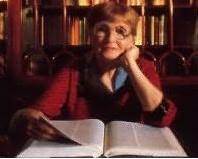
Having just read Kate Hannigan, Cookson's first novel based on her mother, it was a good time to follow with her memoir published nineteen years later. Our Kate emphasizes the author's relationship with her alcoholic mother that was tumultuous at best. It's not difficult to understand Kate's substance dependency having been undermined and beaten within her family, who were also dependent on her; nonetheless, her addiction took a serious toll on her daughter. Up until age 7, Catherine thought Kate was her sister, and her grandparents were her father and mother. Cookson includes some nice things to say about Kate; still, I got the impression she was a bit more generous in describing her mother than was actual.
Born in 1906, Cookson's childhood was spent in abject poverty living in Tyne Dock in North East England. The last name on her birth certificate was Davies, the name of her biological father who had disappeared, and she never knew. Oddly, she didn't use her mother's name, Fawcett, but instead was known as McMullen, her step grandfather's name. I suppose that implied legitimacy. She describes the arduous early family conditions she lived in and then in later years holding laborious jobs and persevering through two wartimes. She explains what led to becoming a writer up to publishing Kate Hannigan in 1950.
Suffice it to say Cookson's identity and desire to be a writer was influenced primarily by the stigma of her illegitimacy, intense guilt feelings associated with Catholicism, and the angst and shame of family alcoholism and abuse, common themes in her books. Ongoing fears and pressures led to her mental and physical breakdowns, most notably coping with Hemorrhagic Telangiectasia, an inherited vascular disease that plagued her all her life with dire effects and not diagnosed until late middle age. She surmised she inherited the condition from her biological father. That was later confirmed by a biographer who tracked him down in the records and interviewed his family relations in Scotland and elsewhere and discovered the disease had affected other members. It's curious that Catherine had evidently not followed through with researching this herself.
She also inherited high intelligence, imagination, multiple talents, and an intense work ethic (constant work and projects may have served as a distraction from her on-going problems?). It's surprising she achieved so many different things throughout her life while constantly dealing with ill health, bad luck, and depression yet she lived to age 91. Despite horrendous challenges and emotional anxieties, Cookson could also be positive with a cheerful sense of humor. Her stressful family was always problematic, but she seemed able to recognize and appreciate their good qualities as well as the bad, and also acknowledge she was an unusual and challenging kid. More amazing was her husband Tom, who so patiently supported his wife's ambitions and quirks throughout her physical and mental difficulties. It was a happy marriage until she died in 1998.
Cookson must have had a photographic memory since she tells her experiences in such vivid detail with objectivity and thoughtfulness. Her communication style was engaging, so no wonder Dame Catherine was so popular and captured imagination. Needless to say, her life story is an interesting one and reminds us to be grateful for how societal conditions have vastly improved in the last 100+ years. Recommended memoir.
Later note: I accessed some past articles that said there have been doubts about some things Cookson said about herself, and it's likely she did not reveal certain aspects. There was speculation "masculine." Nan and Catherine had been lovers, which may have continued even after she met and married Tom. Catherine said they loved each other as friends but denied they had a sexual relationship. She indicated Nan was jealous of her marriage and spread rumors about the author's supposed checkered past, which Cookson also denied. Some thought Nan's allegations (i.e., the letters) may have contained some truth in that Catherine did have an affair with a married man before and possibly several. I suppose a former lesbian relationship could explain Nan's vindictive behavior and Cookson's odd obligation toward her over the years. In addition, biographer Kathleen Jones (I've not read her book) evidently concludes Catherine was not physically abused by her step grandfather who loved her. However, when drunk , he sexually harass Kate after Rose died. Jack also harassed Kate and probably did have sex with her. He allegedly also approached Catherine on a couple of occasions, but she put him off. There are also speculations that Catherine was sexually abused by her mother. If so, it could explain why she hated her mother so much besides the drinking. If that were true, I would lose any sympathy I may have had for Kate and her problems. Cookson's goal was to be open and honest about herself, but these revelations would have been toxic. I expect those speculations were/are familiar in Britain about their famous author, and I wish I'd been aware of them before reading the various memoirs. There appears a certain logic to these theories, but could it have just been salacious stories to generate public interest and sell books after her death? It seems to be working on my curiosities even now. However, if any of this were true, it doesn't diminish the relevancy of the author's rags to riches achievements and put light on the conditions of the poor in the twentieth century. We are left with just Catherine Cookson's word as to how things really happened in her life.