Even as concern over climate change and energy security fuel a boom in solar technology, many still think of solar as a twentieth-century wonder. Few realize that the first photovoltaic array appeared on a New York City rooftop in 1884, or that brilliant engineers in France were using solar power in the 1860s to run steam engines, or that in 1901 an ostrich farmer in Southern California used a single solar engine to irrigate three hundred acres of citrus trees. Fewer still know that Leonardo da Vinci planned to make his fortune by building half-mile-long mirrors to heat water, or that the Bronze Age Chinese used hand-sized solar-concentrating mirrors to light fires the way we use matches and lighters today. With thirteen new chapters, Let It Shine is a fully revised and expanded edition of A Golden Thread, Perlin's classic history of solar technology, detailing the past forty years of technological developments driving today's solar renaissance. This unique and compelling compendium of humankind's solar ideas tells the fascinating story of how our predecessors throughout time, again and again, have applied the sun to better their lives--and how we can too.
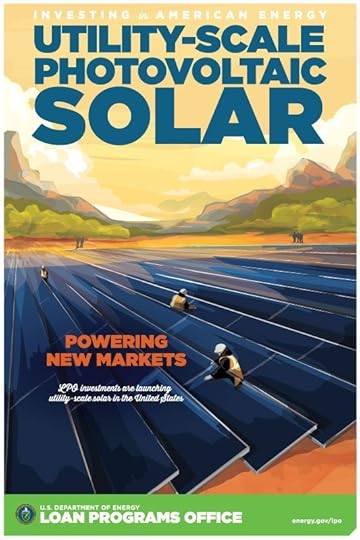
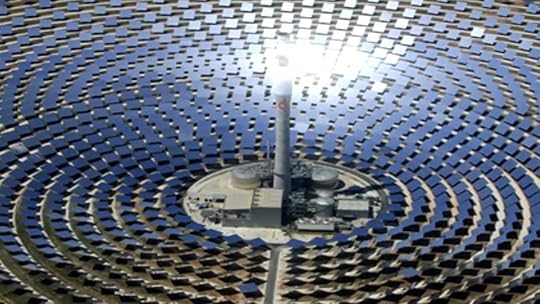
So when you hear the term solar power you probably think this:
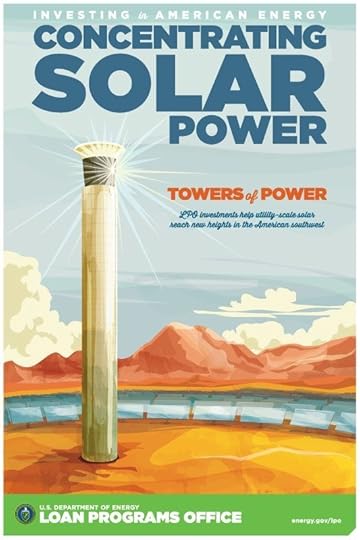
Or maybe this:
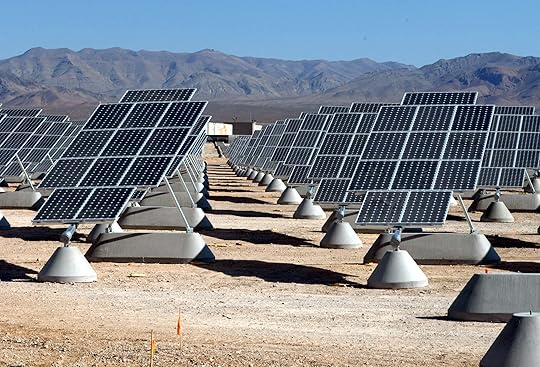
Or possibly even this:
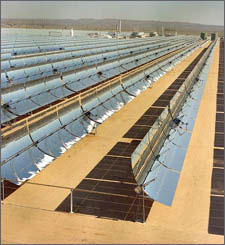
But the story of humanity's harnessing of the sun's power probably starts with this:
Doesn't look very impressive does it? Well, these babies (yang-suis) let Bronze Age Chinese start fires just by concentrating the beams of the sun onto flammable objects. Pretty handle when matches haven't been invented yet and, according to modern researchers who recreated these objects, they are highly effective fire starters. These are but the first taste that John Perlin offers up in "Let it Shine".
The book is a very good, if dry, survey of the history of humanity's use of solar energy. Solar energy can be classified into these areas:
-Solar Architecture: the building and positioning of structures to maximize the effectiveness of the sun. Typically this involves large southern exposures (in the northern hemisphere) coupled with an awning (to pick up a lot of the winter sun low on the horizon and shade against the high summer sun) and little east/west exposure (to avoid the higher summer sun). This technique has been in intermittent use (more on that later) since the ancient Chinese in the east and the Greeks and Romans in the west.
-Solar Water Heating: the use of passive solar energy to heat water over the course of the say and storing the resulting hot water for use throughout the day. Still highly utilized today, especially in countries like Israel and Barbados with little to no natural resources
-Solar engines: Short lived machines that converted solar energy into mechanical motion. These bad boys had huge dish solar collectors that expanded gases that would drive a turbine. They worked pretty well but were limited to daylight hours and were very susceptible to the elements.
-Solar electricity: The generation of electricity from solar energy, either from the photo-voltaic effect or by concentrating the sun's beams to heat a liquid that would drive a traditional turbine. Only recently has the terrestrial version of this power become competitive with more traditional power sources. It did, however, make the whole satellite thing we enjoy today actually possible, so it has that going for it.
While Perlin does a very commendable job documenting the history and personalities behind these inventions the book falls into a tragic cycle:
1: "Hey, it is really tough to get fuel out here to achieve positive result X." 2: "Hey, this solar device is quite nifty and allows us to achieve positive result X" 3: "Hmmm, the cost of fuel has dropped significantly and will never, ever, in a million years ever possibly get more expensive. Let's ditch this solar thingamajig for some sweet, sweet fossil fuel action to achieve positive result X"
Time after time solar technology is developed to solve a problem (typically a shortage of locally available fuel for heating or energy) only to quickly be supplanted by another, cheaper, dirtier source. First it was coal, then oil, then natural gas, then nuclear energy. It isn't Perlin's fault he repeats himself, that is just how history rolls.
My key takeaway is that humanity is incredibly shortsighted. We will abandon a sustainable, long-term beneficial practice or technology at the drop of a hat because we found something that, in the near term, is cheaper. We have lived high off the fossil fuel hog this past century, ignoring holistic approaches to such areas as housing, heating, and power supply that would greatly reduce society's reliance on fossil fuels and reduce the disruption to our economy that a fuel shortage would cause.
Some countries, such as Israel, realized when oil became cheap again in the 1980's (AFTER two oil crises) it wouldn't always be cheap. They instituted regulations that required the use of solar water heating in all building with more than four stories. As a result more than 90% of Israeli homes use solar energy instead of natural gas to heat their water. Barbados initiated set of pro-solar policies that saved their tiny island nation hundreds of millions of dollars in avoided fuel costs. When properly crafted "Big Government" policies can create positive economic and environmental outcomes for the citizens of a nation.
America, on the other hand, has a fixation on fossil fuels (in-spite of the aforementioned oil crises). It doesn't help that Reagan never met a renewable energy program he didn't cut to the bone and the modern Republican Party's energy policy is about as nuanced as "Drill, baby, drill". American energy policy heavily favors fossil fuel use and production over renewable sources through a variety of tax treatments and public policies. The result of these decades long policies has been an economic structure that is highly exposed to swings in fossil fuel prices and availability. Only now are we starting to expand our renewable energy base but so many decades have gone by without integrating passive solar benefits to our housing (resulting in higher fuel and electricity consumption for heating and cooling needs), without investing heavily in renewable technologies (but plenty of funds was made available for nuclear power), without seriously contemplating how to structure our economy for a fossil fuel scarce/expensive world.
Even now we are reaping the benefits of cheap shale gas for our industries and power generators. While this has the upside of forcing gigawatts worth of coal generation to retire (a power source that is very damaging to the environment), it continues to add CO2 to our atmosphere and heightens end-users’ to exposure to natural gas price volatility. Shale gas is a finite resource and we should have learned by now that, while the supplies may be bountiful, its cheap price in all likelihood is not. Now is not the time to abandon renewable energy for some cheap fossil fuel as we have foolishly done so many times in the past, but to move forward and make the 21st century a solar century.
Additional notes: -The book is a very quick read as Perlin's is quite liberal in his use of pictures and graphics. I found these helpful in diagramming how the different solar technologies actually operated as well as providing neat looks back on historic documents surrounding the new solar technologies. -There is a fair amount of technical description of how the different technologies work, so if that doesn't interest you give this book a pass. -If you care about renewable energy this book will probably make you made considering how frequently we have discovered and then lost several effective ways of harnessing solar power over the millennia. For instance, the use of large south facing opening and minimized east/west openings for houses was known back in the ancient Chinese and Greek periods. Heck, the Greeks even designed a city on this principle. But this knowledge was lost in the "Dark Ages" only to be somewhat rediscovered in the 19th century. It was then neglected again with the availability of cheap coal and gas fuels for heating. Even into the 20th century people were reinventing the proverbial wheel. Just goes to show you how important a centralized database of human knowledge is (aka: the internet). -For me what cost this book a star was that it was too descriptive, and not proscriptive enough. It did a fine job describing the various solar technologies and the circumstances of their invention/use as well as the personalities behind them, but I would have liked Perlin to have spent more time on policy suggestions.
Solar power has existed for way longer solar cells... Good background information and ancient history, and some interesting case studies on failed solar powered projects of the last century. Not so much on modern day projects. Pretty much ends after the 80s.
I read the paper back edition of Let it shine. One of the things I liked about the book was all the pictures.
I learned a lot about solar energy I never new before. For instance when I thought about solar energy I always thought photovoltaic cells. I never thought about solar water heaters. I am surprised that solar water heaters are very popular in some countries. The whole discussion of solar hot water heaters was fascinating to me. The companies that made the water heaters and the designs for solar hot water heaters.
One thing that Let it shine got me thinking about is what direction a building faces. I never dawned in me that if you have the main living area in a house with south facing windows that it would make it warmer in the winter. I never payed much attention to how the sun effected the heating and cooling of a building.
And I never thought that the Greeks or Roman's or ancient Chinese would have build their houses to use the sun.
I also liked the chapters about solar in other parts of the world.
And learning about solar declinators got developed was also interesting. I never thought that a woman would have invented them during world war 2.
What else can I say about Let it shine? I found it a fascinating look at the history of solar power.
A comprehensive overview of humanity's use of solar energy. From warming the homes (China, Greece, Romans) to growing plants (middle ages) to attempts at industrial exploitation 18&19th century (solar ovens, stills, pumps, engines, water & home heating). After discovering photovoltaics also followed numerous ways of expliotation -space, telephone repeaters, buoyes, improving oil extraction etc. But intertwined with all these discoveries were also always the times of forgetting whatever was invented. Lets hope that the current PV era will not get lost in the future. What should also not get forgotten are all the ways the solar was attempted to discredit (atoms for peace, boosting/incentivising the oil/gas consumption…)
This book is not just a technological treatise; it also presents the most comprehensive history of solar technology available today. A must-read for enthusiasts of energy and architecture alike. Perlin discusses the evolution of solar energy, emphasizing the benefits of integrating solar technologies with solar architecture and solar water heaters to move housing towards net-zero energy. If you are interested in a thorough history of solar energy and have questions about building, you might want to pick up this book. For those who are busy, here is a chapter summary: https://john-perlin.com/let-it-shine.....
When I first began reading this my initial thought was: this is going to be a slog. Instead, I found Let It Shine to be a highly readable history of how people have tried, and to some extent succeeded in harnessing the sun's power. From ancient Chinese and Greek architecture designed to maximize winter heating and summer cooling (passive solar) and the use of polished mirrors to light fires, to various attempts over the intervening centuries thru today to use the sun to drive engines and machinery, this book demonstrates that the quest for solar power is hardly a modern idea.
Was really looking forward to this updating of Perlin's two earlier works on solar history: A Golden Thread (solar thermal) and From Space to the Earth (photovoltaics). This one repeats / incorporates much of the material from those two earlier works. It doesn't really cover the 10-15 last years, but provides a wealth of material on the proceeding 6,000 years (starting with references from the pre-historic / pre-writing period).
Let It Shine was an interesting book and an informative one as well. Talking about the history of Solar and describing it in very well thought out detail. Let It Shine was worth the read to learn more about Solar Energy and where it came from and how it came to be a thing.
The history of solar is written well, but the final chapters where the author sums up the current developments and progress in solar there is some casual writing for e.g. Indian solar plan was definitely not to shift from diesel generators!