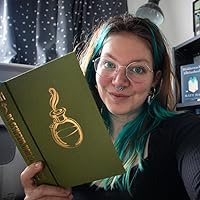
I really wanted to like this book. As a fan of philosophy, Darkborn Messiah's summary really caught my attention.
I was pretty quickly disappointed but chose to read on in hopes that it would get better. Let me start with my initial feelings about the first section of the book:
The main character, a wealthy white male with the perfect wife and two beautiful young kids has depression, anxiety, and suicidal thoughts. His feelings stem mostly from a childhood lacking in love, and from being raised by an angry and power-hungry father. The first chapters get annoying very quickly because he just drones on and on about how depressed he is. Does he see a therapist? No, of course not, because that would make too much sense.
"Hurry up? … Why? To rush into another day in the cage?" - One of the issues that the main characters bring up is that a normal 9-5 job is a "cage" and is essentially a way for the elite to control the masses. I found a problem with this idea because, even though William didn't like his job, it felt like he assumed that all careers were "cages". And it ignores the fact that we, as a society, used to work 60+ hours a week, including children! Yes, 40- hour work weeks can feel exhausting, but I will take that over the days of working in an unsafe factory for $2/hour for twelve hours a day.
I was also disappointed in the lack of other characters. His wife, kids, and employee have a couple of lines, but this book is clearly ALL ABOUT William and Milena.
In comes the drop-dead gorgeous "demon", Milena. She is here to shake things up, not just with the main character, but for all of humanity. Apparently, she is the kind of demon that wants to help humans. Her goal is to throw William into increasingly terrible alternate realities, where he will experience true pain, heartbreak, and disaster, either from the POV of his alternative self or from his alternate wife, child, etc.
To be honest with you, I was happy to see William go through these tough events. They made his depression and anxiety seem inconsequential and selfish. In those initial chapters, he only admitted once that there are people in the world who have it worse off than him, but that realization did nothing to help his character.
My first almost DNF moment came when the perspective shifted. Maybe because I read this book digitally, and not a physical copy, but there was no line break or signal to me that the perspective was changing. In one paragraph, we had William as our main character, then suddenly a new paragraph with a completely new location and random character begins. It took several pages for me to realize that this is an alternate reality and not a completely different book that had been accidentally combined with Darkborn Messiah. It was a shock, but it quickly became a pattern that I grew to accept. It also added to my own anxiety as a reader, which mimicked Williams's anxiety.
As a writing technique, Tyler Nomax did a great job keeping me, as the reader, on my toes.
I won't get into any spoilers, but there are back-to-back alternate realities that William must suffer through, and they get more and more unbearable. As I had hoped, the story did get better. I found myself looking forward to the next torture that Milena came up with. Throughout these events, William doesn't really learn anything. In fact, he just gets whinier.
One thing that consistently bothered me was the yelling. Milena and other characters seem to communicate solely through screaming and berating. God forbid any of the enlightened characters communicated in a humane way...
I won't get into the ending too much, but I was back to being very disappointed. William was pushed by Milena to be the savior of humanity, but the ideas on how to save the human race were 1-unoriginal and 2- not logically possible.
As a fan of philosophy, I personally found most of the concepts in this book to be basic and unextraordinary. Many of the points made throughout the story are ideas that you can find in every philosophical book, blog, article, or TedTalk.
Here are some of the things I did like, and why I am giving this book three stars instead of two:
- The conspiracy theories
- Philosophical debating
- Theology themes without actually being religious (something most books struggle with)
- An extreme arc for the main character
- Fast read
- Engaging
I recommend this book to anyone into sci-fi, stories surrounding mental health, philosophy, theology, and conspiracy theories.
Fair warning, there is a lack of feminism, equality in sexes and races, no acceptance for s*x work as a legit profession, or really anything that supports any other group besides "rich white straight male". Unfortunately, authors that fit that description sometimes tend to lack the ability to empathize with anyone "other".
I know this review reads more negative than positive, but, if you can push through the rough parts that I mentioned, this is a fairly enjoyable book.