Jump to ratings and reviews
Rate this book

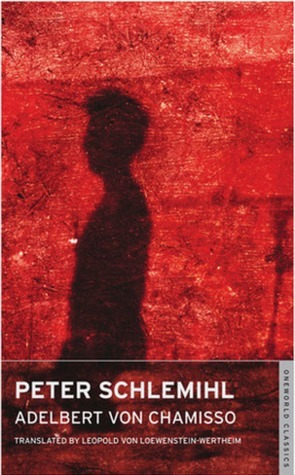
Peter Schlemihl

Rate this book
Unsuccessful in his ambitions, the young and naive Peter Schlemihl seals a pact with the Devil in which he exchanges his shadow for the purse of Fortunatus, thereby gaining everlasting riches. But when he is ridiculed, persecuted, and hated for being different from other men, he realizes that poverty is easier to bear than the loss of his peace of mind. Originally written as a cautionary tale for the children of Chamisso’s patron, this amusing and poignant tale was hailed by contemporaries as a masterpiece with a wide adult appeal.

125 pages, Paperback

First published January 1, 1814

73 people are currently reading
2150 people want to read

About the author

Adelbert von Chamisso

401 books43 followers
Louis Charles Adélaïde de Chamissot, best known as Adelbert von Chamisso, was an officer in the Prussian army and a poet, born at the ancestral seat of his family, the château of Boncourt at Ante, in Champagne, France. Driven out by the French Revolution, his parents settled in Berlin, where in 1796 young Chamisso obtained the post of page-in-waiting to the queen, and in 1798 entered a Prussian infantry regiment as ensign.
His family was shortly thereafter permitted to return to France; he remained in Germany and continued his military career. He had little education, but sought distraction from the dull routine of the Prussian military service in assiduous study. In collaboration with Varnhagen von Ense, he founded (1803) the Berliner Musenalmanach, in which his first verses appeared. The enterprise was a failure, and, interrupted by the war, it came to an end in 1806. It brought him, however, to the notice of many of the literary celebrities of the day and established his reputation as a rising poet.
He had become lieutenant in 1801, and in 1805 accompanied his regiment to Hameln, where he shared in the humiliation of its treasonable capitulation in the following year. Placed on parole, he went to France, but both his parents were dead; returning to Berlin in the autumn of 1807, he obtained his release from the service early the following year. Homeless and without a profession, disillusioned and despondent, he lived in Berlin until 1810, when, through the services of an old friend of the family, he was offered a professorship at the lycée at Napoléonville in the Vendée.
He set out to take up the post, but drawn into the charmed circle of Madame de Staël, followed her in her exile to Coppet in Switzerland, where, devoting himself to botanical research, he remained nearly two years. In 1812 he returned to Berlin, where he continued his scientific studies. In the summer of the eventful year, 1813, he wrote the prose narrative Peter Schlemihl, the man who sold his shadow. This, the most famous of all his works, has been translated into most European languages (English by William Howitt). It was written partly to divert his own thoughts and partly to amuse the children of his friend Julius Eduard Hitzig.
In 1815, Chamisso was appointed botanist to the Russian ship Rurik, which Otto von Kotzebue (son of August von Kotzebue) commanded on a scientific voyage round the world. His diary of the expedition (Tagebuch, 1821) is a fascinating account of the expedition to the Pacific Ocean and the Bering Sea. During this trip Chamisso described a number of new species found in what is now the San Francisco Bay Area. Several of these, including the California poppy, Eschscholzia californica, were named after his friend Johann Friedrich von Eschscholtz, the Rurik's entomologist. In return, Eschscholtz named a variety of plants, including the genus Camissonia, after Chamisso. On his return in 1818 he was made custodian of the botanical gardens in Berlin, and was elected a member of the Academy of Sciences, and in 1819 he married his friend Hitzig's foster daughter Antonie Piaste (1800-1837).
Chamisso's travels and scientific researches restrained for a while the full development of his poetical talent, and it was not until his forty-eighth year that he turned back to literature. In 1829, in collaboration with Gustav Schwab, and from 1832 in conjunction with Franz von Gaudy, he brought out the Deutscher Musenalmanach, in which his later poems were mainly published.
He died in Berlin at the age of 57. His grave is preserved in the Protestant Friedhof III der Jerusalems- und Neuen Kirchengemeinde (Cemetery No. III of the congregations of Jerusalem's Church and New Church) in Berlin-Kreuzberg, south of Hallesches Tor.

Ratings & Reviews

What do you think?
Rate this book

Friends & Following

Create a free account to discover what your friends think of this book!

Community Reviews

5 stars
859 (20%)
4 stars
1,478 (35%)
3 stars
1,406 (33%)
2 stars
374 (8%)
1 star
97 (2%)
Displaying 1 - 30 of 375 reviews
Profile Image for Orsodimondo.
2,457 reviews2,429 followers
September 5, 2022
STORIA PIÙ STRAORDINARIA CHE MERAVIGLIOSA

description
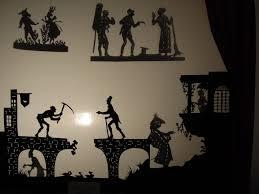
Teatro delle ombre

Peter Schlemhil non se la passa molto bene.
Infatti in tedesco schlemhil vuol dire disgraziato, sfortunato.
Ma neppure il diavolo che gli offre una borsa che genera monete d’oro all’infinito in cambio dell’ombra (sì, l’ombra, non l’anima – il Faust di Goethe era apparso qualche anno prima) se la passa granché: è un omino grigio, niente a che fare con Mefistofele.
Tutto sommato, è un povero diavolo.
Però, al momento di concludere il patto, tira fuori pergamena e penna per firmare col sangue, come rituale consolidato.
Comunque, Peter Schlemhil accetta.

Ma neppure tutto l’oro del mondo lo salva da quello che succede dopo: tutti lo evitano perché è senza ombra.
Anche la sua fidanzata, e la di lei famiglia, si tengono alla larga da Peter Schlemhil adesso che è senza ombra.
Un anno dopo il diavolo riappare e gli propone un nuovo patto: ti rendo l’ombra se tu mi dai l’anima.
Peter Schlemhil rifiuta e se ne va.

description
Il diavolo ripiega l’ombra e se la prende.

Finisce comunque bene: perché grazie agli stivali delle sette leghe riesce ad andare in lungo e in largo e scopre che la borsa d’oro che aveva regalato a uno dei suoi due servitori è stata usata per fare il bene.

Alcuni momenti particolarmente gustosi: Peter Schlemhil chiede a un pittore se sia in grado di dipingergli un’ombra finta, e quello gli risponde A mio parere, la cosa più sensata che possa fare chi non possiede l’ombra, è di non camminare al sole.
Un altro: il servitore che alla fine saprà valorizzare la borsa d’oro, per aiutare il padrone, siccome è più alto e robusto di Peter Schlemhil, lo accompagna e precede ovunque per coprirlo con la sua ombra.
E ancora: sopra gli stivali delle sette leghe si possono indossare le pantofole freni.

Storia “meravigliosa” nel senso di rara e insolita, più che di storia fantastica, magica.
C’è chi pensa che sia una favola per bambini, ma non lo è.
Anche se von Chamisso pare che la scrisse proprio per allietare i figli di amici che gli avevano offerto lavoro.

description
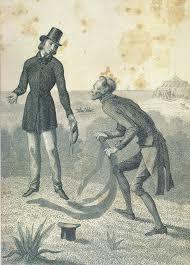
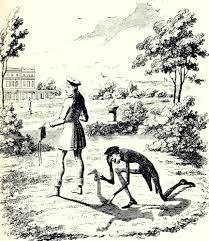
Anche questa è un’illustrazione di Emil Preetorius.

Nato in Francia come Louis Charles Adélaïde de Chamisso de Boncourt, a quattrodici anni si trasferì in Germania e quando iniziò a dedicarsi alla scrittura (poesia inclusa), lo fece in lingua tedesca.

L’ombra perduta è la sua lingua d’infanzia perduta, il senso di straniamento in terra straniera? L’uomo senza ombra è l’uomo senza patria?
Non saprei, ma mi pare una spiegazione un po’ tirata per i capelli.
E allora, visto che l’uomo senza ombra viene allontanato dai suoi simili, l’ombra è simbolo della solidità borghese e delle relazioni sociali? Ma alla fine Peter Schlemhil ritrova la serenità pur nella solitudine, dedicandosi allo studio della scienza.

Viene più facile credere che l’ombra è quella parte di noi a cui non si può rinunciare, che si nota quando scompare, ancora più dell’anima, che è comunque sempre invisibile.
E quindi, l’ombra è l’inconscio?

description
Ai piedi gli stivali delle sette leghe, in mano le pantofole freno.
Profile Image for Jim Fonseca.
1,163 reviews8,488 followers
January 5, 2019

A novella (really a long short story) that is an old European fable. The main character is a young man who sells his shadow to the Devil for a pouch that produces endless gold coins. But he finds that without a shadow, he is shunned -- an outcast. Women run from him; kids throw stones. His only friend becomes a faithful servant. Two women he loves reject him. The devil reappears and wants to trade his shadow back to him for his soul. This time the man rejects the offer. He becomes a loner; a naturalist; collecting flora and fauna from around the world, easily traveling around the globe in “seven-league boots” that he bought.

description

We’re told in the introduction that the author was a French aristocrat living in Germany after his family fled the guillotine. (The book was written in 1814, 15 years after the French Revolution.) He intended the book as a fairy tale for children. The story originates in Jewish culture – the Yiddish word ‘schlemiel’ means a bungler or someone incompetent. The book jacket tells us that the story was a precursor to works like those of Poe and Kafka.

The writing style is “old fashioned” of course – what you would expect from 1814. A sample from when the main character reflects back on life:

“Years later I finally made peace with myself. I first had to learn to respect necessity – what’s done is done, what’s happened has happened, the past is a fait acompli. And then I learned to respect this necessity in and of itself as the wise and providential force that holds sway over the whole grand scheme of things, the machinery in which we are but inconsequential cogs, driven and driving through no will of our own; what must be must be, and what had to happen happened, and all is governed by that providential force that I finally learned to honor as the master of my destiny and the destiny of those who crossed my path.”

I’m not sure why I read this book. I stumbled across it at a library book sale. It’s a bit repetitive - two women reject him because of his shadow; basically the same story twice. There are amazing coincidences that modern authors would not get a way with. And the fable of selling your soul combined with the fable of the boots seems contrived. But – this may have been ground-breaking originality back in 1814!

description

It’s interesting too that the author picked up the naturalist theme from his early scientific studies and went on to become a naturalist, writing the story of his participation on a scientific voyage around the world (1815-1818) and gaining fame later in life for his botanical publications.

Top image "Schlemihl's Stream" from Shadow Drawings by Alun Ward at alunward.co.uk
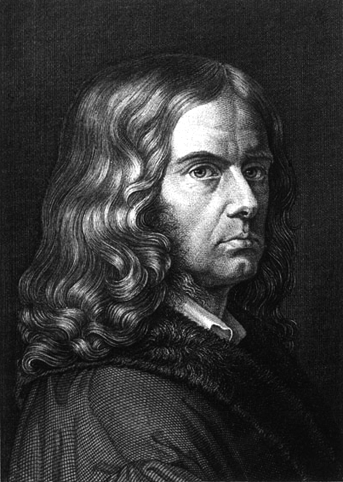
Sketch of the author from Wikipedia (gotta love that hair!)
Profile Image for Lea.
123 reviews892 followers
April 3, 2021
“I am a solitary wave in the dark and desolate sea: and the sparkling glass I drank was drugged with misery.”

Important European fable, a novella that influenced generations of writers and rise of magical realism - from Kafka, Poe to Calvino, who said that if he could claim one work as his own, it would be Peter Schlemihl. The story has a pleasurable mixture of realism describing the civil and rural life of the period and fairy-tale-like narration. Our main character, Peter Schlemihl, is an ordinary fellow who encounters “the man in gray suit“, obviously representing the devil himself, and makes a Faustian bargain with him, in selling his shadow for a bottomless wallet (the gold sack of Fortunatus). As always, a bargain appears to be perfect in theory, selling something inherent and seemingly insignificant for all the fortune in the world, but a disaster in reality, making Peter rich, but an isolated outcast, lost on the wrong path of life, unable to make things right again. The values that the devil provides are always made of illusion, idealization, dreams of happiness that never become reality. Here fortune, in Faust, knowledge, devil's goods inevitably leave a bitter aftertaste.

“My inward emotion suggested to me, that even as in this world gold weighs down both merit and virtue, so a shadow might possibly be more valuable than gold itself; and that, as I had sacrificed my riches to my integrity on other occasions, so now I had given up my shadow for mere wealth; and what ought, what could become of me?“

By renouncing his shadow Peter has lost something invaluable, part of his humanity he didn't appreciate, that made connection and relationship with other people possible. In the aftermath, he lives a rich, but miserable life and loses his true love. Here we can find an occurring theme of love of marked, persecuted, infamous, cursed towards an innocent and inexperienced girl from a peaceful and decent environment. The innocent young lady can be interpreted as a symbol of Peter's soul and moral values he loses and struggles to regain. The story has a twist in Peter accepting his suffering and moral responsibilities and declining further alliance with the devil and reaching a somewhat happy end.

Didactic and also symbolic, realistic with fantastical elements, this story is immensely charming and very enjoyable. The atmosphere and the moral of the story (as well as romantic drama) reminded me of one of my favorite plays, Peer Gynt, a more complex and elaborate work.

The edition I have has excellent passionate commentary by Thomas Mann, who was also invested in the theme and wrote Doctor Faustus.

“He who once permits himself thoughtlessly to deviate but one step from the right road, will imperceptibly find himself involved in various intricate paths, all leading him farther and farther astray.“
Profile Image for Mohamed Bayomi.
234 reviews166 followers
August 26, 2020
أما انت ياصديقي فإذا أردت أن تعيش بين الناس فتعلم ان تقدر ظلك اولا ثم المال ، أما أذا أردت أن تعيش لنفسك ولمنفعك فحسب فأنت لا تحتاج مني الى نصيحة>

بين مطرقة البشر و سندان الشيطان يتشكل بؤسنا ، البشر يحترمون من يملك المال ، هذه نصف الحقيقة فقط ، فالمال وحده لايكفي يجب ان تكون مثلهم ، شبيههم ، فإذا مثلا فقدت ظلك او استثمرته في صفقة ما فلن ينفعك المال ، والشيطان هو التاجر الخبير يريد روحك ، لكنه يقبل بظلك الان في مقابل ثروة لا تنضب ، فهو يعلم انك ستعود تطالب بظلك مستعدا ان تبذل ما هو أغلى.
Profile Image for Mahdi Lotfi.
447 reviews134 followers
August 15, 2019
شاميسو اين داستان را بر پايه ي مضموني پرداخت كه پيش از او نويسندگاني بسيار را به خود جلب كرده بود و با در آميختن آن با افسانه ي قرون وسطايي « هميان فورتو ناتوس » همياني كه هر چه زر از آن بر ميداشتند تمام نميشد، قصه اي آفريد كه به زبان رمز گوشه هايي از شخصيت و زندگي و روحيات خود او و نيز تفكرات و عقايدش را بيان ميكند .
Profile Image for Dhanaraj Rajan.
527 reviews362 followers
February 21, 2019
It began well, but ended in a vague way. I think the inclusion of the autobiographical details at the fair end of the novella spoiled the story. At least for me.

Otherwise it is a simple moral story told in an interesting manner. It is a moral story but it is not too moralistic. It is not preachy.

The Moral of the story is: Never sell yourself to the devil/money. Never trade your human worth for the money. The wealth, especially the ill attained wealth is equated with Satan in many places. It is through the wealth that the Satan gains access to your soul. Be honest and when you have failed be ready to repent even when it is difficult. The life will turn out well. Always listen to your heart's warnings. Treasure the exhortations of your conscience.
Profile Image for Mahmoud Masoud.
389 reviews699 followers
August 1, 2020
خلال 3 ساعات، هي عُمر رحلتي بالقطار ذهاباً وإياباً، قرأت تلك القصة العجيبة والمثيرة عن بيتر شليميل.. تدور أحداث الرواية حول بيتر شليميل ذلك الشاب الفقير، الذي قبل عرض من شخص مجهول مثير للريبة استطاع أن يحقق لكل من حوله أمانهيم وطلباتهم بطريقة عجيبة، كان العرض هو أن يشتري ذلك الشخص من بيتر (ظله) مقابل زكيبة من النقود التي لا تنفذ مهما أنفقت منها.. عرض مغري لا يمكن تفويته. لكن هل كل ما هو مغري وجذاب يكون في صالحنا؟ وأي ثمن يمكننا أن ندفع مقابل تلك الإغراءات التي تقابلنا؟

لا أريد أن أطيل في وصف الرواية حتى لا أحرق أحداثها، ولكن الرواية جميلة جدا و تدور حول فكرة فلسفية، وعلى الرغم من ذلك سنجد أسلوبها سهل وممتع، وأيضا لا تخلو من السخرية أحياناً ..

و أنا أقرأ تلك الرواية، تذكرت مشهد من فيلم الحب فوق هضبة الهرم، فيلم من قصة لنجيب محفوظ..
"- قولي بقى، إنت دلوقتي سعيد؟
- طبعاً سعيد، مش بقول لحضرتك إني هبقى من أصحاب الملايين!!
- إنت مسمعتش عن الناس اللي كسبوا الدنيا وخسروا نفسهم !!
- إزاي؟ ما أنا واحد منهم( بسخرية)
- يا إبني، خسارة النفس لا تعوض"


.
Profile Image for Yousra .
723 reviews1,374 followers
November 19, 2018
من الكلاسيكيات ✓
طريفة ✓
عجيبة ✓

إذن فهي بالتأكيد لي 😁😁

لا يخفى على أحد أنني أحب الكلاسيكيات جدا ... ابحث عنها واقتنيها لقرائتها ... أسعد إن كان الكاتب غير مشهور والقصة ممتعة ... وأسعد أكثر إن كان عدد قرائها قليل

ربما أسر قارئي هذة المراجعة بسرٍ جديد ... حينما أعاني الضيق، الضجر، أو القلق أقوم بنزهات غير مرتب لها بعدما أوصل صغاري إلى المدرسة فإن هاتفتني صديقتي تسألني أين أنا أقول لها أنني أهيم على وجهي فتفهم كل شيء ... غالبا ما اتوجه للمكتبات ... احدى مكتبتين تحديدا ... مكتبة الأسرة أو المركز القومي للترجمة

وعليه فإن زيارتي الأخيرة كانت لمكتبة المركز القومي للترجمة ...وفوجئت بخصومات تصل إلى ٧٠٪ ... أحب كثيرا كتب الأطفال في مكتبتهم ... رائعة وبخاصة المترجمة عن الروسية والألمانية ... وهكذا فقد خرجت بعدد من الكتب عظيمة بـ١٠٠ جنيه فقط منهم هذه الجميلة 😀

بيتر شليميل ... ذلك المسكين الذي خدع ففقد ظله وكاد أن يفقد روحه ... الذي عاش عمره يكفر عن ذنب صفقته التي استخف بها مع الشيطان

الشيطان يغويك ... الشيطان يجعلك أولا تتنازل عن التوافه التي لا قيمة لها بالنسبة إليك وبمنتهى الخفة فقط ليتركك بعدها نادما على ما تنازلت عنه حيث أنه لم يكن تافها جدا إلى هذا الحد! ... يحاصرك ... يزين لك مزيدا من التنازلات ... يا مسكين

رواية قصيرة كلاسيكة جميلة فعلا ... ظننت اولا أنها في قسم الـ٧٠٪ خصم لاعتقادي بأنها رواية ألمانية اخطأتها الفهرسة فكتب داخل غلافها فرنسية ... لم أعلم أن الكاتب فرنسي أصلا هاجر مع والديه لألمانيا واستقر بها وأبدع وجعلت هناك جائزة باسمه لإبداعات المهاجرين

جميلة فعلا ومسلية وغلافها رائع ... جذب الغلاف انتباه ابني الأكبر الذي أمسك بالرواية وهتف بدهشة: "ماما... هو أنا شايف صح؟؟ هو فيه عفريت في الضل بيسرق ضل؟؟" فأجبته أن نعم وأتمنى أن يقرأها يوما بعد كل هذا الفضول 😀
Profile Image for Oziel Bispo.
537 reviews85 followers
August 17, 2020
Escrito em 1813 , esse livro conta a história de Peter Schlemihl que faz um acordo com um estranho homem, trocando sua sombra por uma bolsa, com ouro infinito. Com o passar do tempo ele descobre que fez uma péssima troca, pois apesar de se tornar muito rico , Peter passa a ser ridicularizado e odiado por não ter sombra,e também é visto como amaldiçoado por todos os níveis da sociedade, não conseguindo usufruir da sua riqueza ,pois poderia comprar tudo o que quisesse, menos sua aceitação pela sociedade. Em razão disso, passa a viver triste e solitário até que se apaixona por Mina. Os pais de Mina percebendo que ele não tinha sombra se opõem à relação. Vendo que Peter está muito apaixonado e tentando tirar proveito da situação, o estranho homem retorna ,com uma nova proposta: sua sombra seria devolvida em troca da sua alma. Aceitará Peter trocar sua sombra por sua alma por amor à Mina?
Profile Image for Uroš Đurković.
900 reviews227 followers
July 28, 2024
Što se književnosti tiče, Šamiso je one hit wonder. Ali kakav! „Čudnovata povest Petra Šlemila” je remek-delo romantizma i jedan od retkih primera kako jedna napisana pripovetka može završiti u istoriji književnosti. Šamisoova biografija je neverovatno zanimljiva i prosto čudi kako nije nekome palo na pamet da na osnovu toga napiše roman ili snimi film. Rotekavši iz francuske porodice koja napušta domovinu nakon revolucije 1789. godine, Šamiso prisvaja pruski identitet, školuje se i piše na nemačkom jeziku. Bio je prirodnjak, svetski putnik i prvi proučavalac havajskog jezika. Jedno ostrvo na Aljasci (gde je, između ostalog, boravio), imenovano je po njemu. Bio je kustos Botaničke bašte u Berlinu i otkrio je mnoge biljne vrste, između ostalog, kalifornijski mak (Eschscholzia californica).

Čitalac, ipak, ne mora znati apsolutno ništa od ovoga da bi uživao u dogodovštinama Petra Šlemila, neobičnog junaka kojeg nepromišljenost dovodi do velike patnje, ali i ogromnih zadovoljstava, pa i lepote. Šlemilovo prokletstvo počinje kada prodaje sopstvenu senku misterioznom čoveku u sivom odelu. Zauzvrat dobija vreću bez dna (Fortunatova neiscrpna kesa) u kojoj je nepresušna zaliha zlatnika – motiv dobro poznat u bajkama. Iako ovo deluje kao dobra pogodba, okolina na čoveka bez senke reaguje sa gnušanjem. Toliko izraženim i, čini se nemotivisanim, da deluje potpuno fascinantno. Pitao sam se u nekom momentu kako bi izgledalo da zaista primetimo da neko ne može da ima senku, kako bismo reagovali? Bilo kako bilo, Šlemil pati i mnoga vrata mu se zatvaraju. Misteriozni čovek se pojavljuje opet, ali ovaj put sa opakijom, đavolskom ponudom: Šlemilu nudi prodaju duše. Nakon negodovanja i upornosti da se ono prevaziđe, Šlemil to, nažalost, ipak čini. Pokušavši da pronađe izlaz u putovanju, Šlemilove čizme od sedam milja vode ga na put kroz Kinu, Egipat, američke planinske masive i smisao svog života pronalazi u sticanju znanja o prirodi. 

Svako kome je na um pao Faust, bajke, avanturističke povesti, na dobrom je tragu. Ali Šamiso jednom nogom stoji u vremenu u kojem je, dok je drugom, svojom magičnom obućom, zakoračio duboko u XX vek, komunicirajući sa Kafkom, egzistencijalistima, Beketom, sa najzvučnijim imenima svetske književnosti. A ne znam kako koncept prodaje senke nije, imajući u vidu ono što je Jung pisao, još prepoznatljiviji u psihoanalizi. Ali znam da Šamisoovo delo može da bude zanimljivo i onima koji se interesuju za naratologiju (kao što možemo da vidimo netipično direktno obraćanje književnog junaka piscu), kao i onima koji uživaju u neobičnim detaljima, u kojima se prepoznaje iskorak i izuzetan talenat pisca, poput toga kako đavo uvija senku u svitak. Neverovatna imaginacija koja se izvrsno služi književnom tradicijom, donoseći nešto iznenađujuće i uzbudljivo!

A koga ovo sve zanima, može pogledati i priču Rastka Petrovića 'Putnik bez senke i drugi zapleti". Ali neću da otkrivam šta se tu dešava, biće prilike. Čudo je Rastko, čudo.
Profile Image for Zey.
226 reviews16 followers
May 18, 2020
Öykü etkileyiciydi; bazı şeylerin yok olunca değeri bilindiği, farklı olanın toplumda yerinin olmaması, insanoğlunun her şeye sahip olma isteği gibi eğilimlerini yazar çok güzel kaleme almıştı. Sade ve akıcı olması da kitabı hızlı okutuyor.

Hoşuma giden bir alıntı;
“Demir zincirlerle sımsıkı bağlanmış olan bir kimseye kanadın yararı olur mu? O, bu kanatlara karşın, hem de daha korkunç bir biçimde, umutsuzluğa düşer.”
Profile Image for Ivana Books Are Magic.
523 reviews301 followers
April 23, 2019
What a wonderful tale! Written by a writer from a German Romantic period, it captures the tone of the era beautifully. I must admit that I wasn't familiar with this writer before, despite my interest in this literary period. Adelbert Von Chamisso was a French nobleman by birth, but his family fled to Germany because of the French Revolution so he basically grew up in present day Germany. Von Chamisso was shortly an officer in Prussian army, a position he detested and compared it to selling one's soul for money. Von Chamisso's difficult social position (a French noble by birth, writing his works in German when Prussia was at war with France) didn't make it easy for him to gain acknowledgement as a writer. However, if this book is any judge, Von Chamisso was a brilliant writer. Peter Schlemihls wundersame Geschichte ( Peter Schlemihls wonderful history/story) is his only prose work, a fairy-tale novella. Originally written for children, this Romantic novella is easy to read but it leaves enough food for the thought. It's filled with wonderful subtle irony and humour. A very rewarding read!

It tells a story of young Peter, who being a penniless fellow falls under temptation to sell his shadow to a man in a grey suit. Despite the fact that the man gives him the creeps, Peter can't resist him because what he offers is- an endless source of gold. However, soon Peter regrets his decision bitterly. People turn from Peter in horror, the crowds abuse him in the streets, and he is forced to run for his life and live a life of seclusion. What is a man to do without his shadow?

Von Chamisso social critique is masterfully accomplished in this novella. He shows how materialistic our human society truly is. It is more than a simple children's story for sure. Some say that Von Chamisso used shadow as a metaphor for one's country (he was a man without a country), but whether that is true or not, what is certain is that he wrote an excellent tale. Supposedly, Von Chamisso himself valued his poems more than this novella. There is even a beautiful poem that precedes this novella, an introduction of sorts. However, I was greatly impressed with this prose work as such. I don't know why it doesn't get more hype, it has all the qualities of a genuine classic.

Here is a link to a free edition (English translation) by Gutenberg.

http://www.gutenberg.org/ebooks/21943...
Profile Image for Matt.
752 reviews625 followers
April 6, 2018
This is an engaging novella from the time of German romanticism (pub. 1813). I wouldn’t want to read such a text all day and every day, but from time to time it can lift me up quite well, although this here story is not exactly edifying. The “hero”, Peter Schlemihl, tells his story from way back to the author, Adelbert von Chamisso, in form of a notebook, and urges him to not share it with anyone. Luckily, for us, Chamisso ignores the request and passes the story on to his author friends Julius Eduard Hitzig and Friedrich Heinrich Karl de la Motte Fouqué. Fouqué has nothing better to do than to make the story publicly available and a mere two hundred years later I learned about this wondrous and quaint man Peter Schlemihl.

I’m not sure, but I think that not everything told here is 100% true. After a long and arduous journey by sea, Peter Schlemihl arrives in the city and meets a rich entrepreneur. Our hero hopes for support, but doesn’t get it. Feeling desperate, Schlemihl accepts the deal by a strange gray man () who offers him a bag with infinitely many pieces of gold in exchange for Schlemihl’s shadow. From now on he is infinitely rich, but without shadow and his life will soon turn out to be miserable.

The prose is rather typical for the time I would say. There’s lots of great emotions depicted. Big love comes and goes, hearts get broken, rage is raging, tears are flowing endlessly. But that’s exactly what I came here for. Chamisso also adds a lot of humor to his book (for the reader, not necessarily for his characters).

The story of Peter Schlehmil became quite popular, and the character reappeared in several other works by other writers: E.T.A. Hoffmann, Friedrich Förster, and Ludwig Bechstein all wrote stories featuring Schlehmil more or less prominently. Hans Christian Andersen adopted the motive of the lost shadow in one of his fairy tales. And there were songs and poems and even an opera about Schlemihl.

So yeah, it’s a good read for anyone who’s interested in this literay era.

PS. note to self – avoid deals with the devil if feasible.

PPS. Thanks to Czarny for the heads-up!


Creative Commons License
This work is licensed under a Creative Commons Attribution-NonCommercial-ShareAlike 3.0 Unported License.
Profile Image for Ferda Nihat Koksoy.
518 reviews28 followers
January 2, 2022
Klasik düzeyine varmış enfes bir masal; damgalanmışlığın toplum içindeki içler acısı halinin mükemmel bir anlatısı.
Ve berrak bir su gibi akan bir Murat Özbank çevirisi.

Adamın biri yanınıza gelip, elini her içine soktuğunda çil çil altın çıkardığı Talih Kesesi karşılığında sizden gölgenizi isteseydi ne yapardınız ?
Peki ya öldükten sonra ruhunuzu satar mıydınız?
Ya görünmez olabilseydiniz, gördükleriniz size neler hissettirirdi?
Ya da ayağınızda büyülü çizmeler olsa ve istediğiniz yere hemen ayak basabilseydiniz?

"Bir insan (yapılması gerekeni) vaktiyle iyilikle yapmazsa, önünde sonunda zorla yapar".
Profile Image for Sauerkirsche.
430 reviews79 followers
June 10, 2019
Ich mag klassische Kunstmärchen. Sie enthalten Fantasie, Unterhaltung, schöne Sprache und oft viele interessante Deutungen.
Zum Peter Schlemihl habe ich eine interessante Interpretation gelesen, die den verlorenen Schatten mit der verlorenen Nationalität des Autors gleichsetzt. In Frankreich geboren, später nach Deutschland gezogen hat er keine richtige Nationalität was ihn zum Außenseiter macht, besonders da zu dieser Zeit Frankreich mit Deutschland im Krieg war.
Aber auch ohne diese Deutung ist Peter Schlemihl ein schönes Märchen. Im Gegensatz zu Faust entgeht Peter dem Pakt mit dem Teufel indem er nach Wissen strebt und die Welt erkundet. Diese Variante gefällt mir persönlich viel besser als die Verteufelung des Wissensdurstes.
Profile Image for Sergio.
1,343 reviews133 followers
October 22, 2023
Questa piacevole prosa fu scritta nel 1814 da Adalbert Von Chamisso [1881-1938] ed è una lettura adatta sia ai giovani che agli adulti: non so cosa mi aspettassi da questo romanzo breve, forse effettivamente niente di più di una lettura leggera quale posso definirla senza andare a cercare profonde risposte interpretative che oltretutto non mi appartengono.
Profile Image for Mohamed Osman.
578 reviews473 followers
January 17, 2019
ربما أسعدني الإهداء للراحل الدكتور عبد الغفار مكاوي أكثر من القصة ذات نفسها
حتى الآن لا أعلم حب مترجمي المركز القومي للترجمة في حرق الأحداث في المقدمة، لذلك لاأنصح بقراءة كلمة المترجمة في البداية إلا بعد الانتهاء من قراءة تلك القصة الكلاسيكية الظريفة
Profile Image for Oblomov.
185 reviews71 followers
March 21, 2021
Peter Schlemihl (Yiddish for bungler, in a case of major spoilers) is a young man out to make his fortune and, as tends to happen in these older stories, he inevitably runs into the Devil almost immediately. For some reason the Dread Prince of Darkness is more than happy to cease corrupting mankind or stabbing Ivan the Terrible in the buttocks to try and claim the soul of the hapless Peter, and in what turns out to be a long game of bargaining, the Devil begins deceptively simple, offering the young man endless riches for the bargain price of his shadow.

What a perfectly bloody lovely tale; at least my books of 2021 are starting out well. This is wonderfully and atmospherically written, full of farce, fantasy, a sympathetic protagonist and many references to folklore, (invisibility clothing, magic boots, the Wandering Jew). While a distinctly moral tale, it does not finish on Deus Ex Machina, with lawyer angels screwing over the Devil on a technicality in the fine print, as I'd initially feared. Instead, the ending is about finding contentment with one's life and not falling prey to easy answers and quick fixes. It's about living with your mistakes, that good karma may take time to repay you and what seems the most insignificant part of yourself may actually be the most important.

A hugely likeable fable, give it a read.
Profile Image for Hulyacln.
987 reviews563 followers
September 24, 2018
Peter Schlemihl hikayesini yazıyor dostu Chamisso’ya.Gri redingotuyla dikkatini çeken bir adamla tanışıp,onunla ilginç bir pazarlık yapmasının ardından başına gelenleri..
.
1813’te yazılan eser için Thomas Mann ‘fantastik öykü’ terimini kullanmış.Ki ben de bu fikirdeyim.Masalsı özellikler taşısa da (özellikle bir mesaj niteliği taşıması bakımından) farklı bir tat var yazarın kelimelerinde.Gölgesini satan Schlemihl’in karşısına çıkan her zorlukta yaşadığı pişmanlık,bir anlık hatanın geri kalan hayatta ne denli erdemli yaşanırsa yaşansın unutulamayacağı basit ama etkili bir dille anlatılıyor.
Profile Image for huzeyfe.
578 reviews86 followers
August 19, 2017
Kisa ama etkileyici bir kitap. Hem oykunun kendisi hem de dili cok akici oldugundan bir cipida okuyabileceginiz bir kitap. Iki yuz yil once yazilmis bir oyku ama isledigi konu insan ve seytan arasindaki amansiz mucadele oldugu icin guncelligini her zaman koruyacak bir kitap.
Profile Image for Arthur.
25 reviews6 followers
February 25, 2009
Man trades his shadow for a never-emptying bag of gold, and soon regrets it, because of what people say. The deal with *a* devil (a clerk-like version of *the* devil) is hardly done or a woman is shouting after him about his lack of a shadow. And that's only the beginning. His fate becomes that of the painted bird or the golden ass. Once society finds out there's something different about him, it renounces him and he feels forced to move on, preferably when the sun doesn't shine.

At first I found it a bit odd and forced that those people make such a fuss about a mere shadow.It's the first thing they notice when they see him in bright light. It may be difficult to test this, but I don't think many people would notice if you walk around shadowless. Let alone that they would ostracize you for it.
Sure, this story was written in 1813, superstition was more widespread. But nobody calls the protagonist a demon or claims that he must be possessed by one.

Later on this overreaction from the populace becomes just one of many strange things, and it adds to the, surreal, nightmarish atmosphere of the book. I wouldn't be suprised if Breton had annexed him, like Achim von Arnim, as a precursor of surrealism.

Chamisso was certainly a pioneer by adding fairy tale elements to what's essentially an autobiographical story. Perhaps it's no coincidence that the most important of them all derive from Perseus' magical gear. The winged sandals became Perrault's seven-league boots, Hades' invisibility helmet became Alberich's Tarnkappe, and the kibisis became the magical satchel in Lafontaine. Chamisso uses them in a romantic, highly personal context.

Like the story of Perseus, this story begins when Schlemihl arrives in a strange place after a sea voyage. There he meets the equivalent of Polydectes, a filthy rich merchant named Thomas John. (This made me think that the unnamed town in the unnamed country was Great Britain, but his later wanderings, through equally unnamed places, made this impossible. This lack of geographical bearing reflects the protagonist's feeling of being lost. And it works the other way round as well, so I assume this was done deliberately.) Perseus' fate was sealed during a dinner party at Polydectes' house, Schlemihl's was sealed during a picnic in Thomas John's garden. Perseus went to fetch the head of Medusa and won Andromeda; Schlemihl went to, um, get his shadow back and won, um, a poodle. With this poodle he went to live in a rock hole in Thebes. A clear reverence to Andromeda's forced stay on the rocks of Ethiopia! Whatever.

Isn't Faust going to be mentioned in this review? Sure. Faust. And let's throw Theophilus of Adana into the bargain too.

Volumes have been written about the exact meaning of the sold shadow. My encyclopedia simply states 'fatherland'. Chamisso was born in France and belonged to the French nobility. He and his family fled to Germany when he was nine years old. When PETER SCHLEMIHL was written Germany was at war with France, making Chamisso's position more than a little awkward. When my encyclopedia says the shadow means 'fatherland', it suggests Schlemihl/Chamisso lost his fatherland, and that it's all about him and his loss. But Schlemihl wouldn't have felt any loss if it weren't for the outside world pointing it out to him. IMO, this is all about difference. Difference that really is as negligeable a quantity as a shadow, but is turned into something fundamental by others, in certain circumstances, like war.

Of course, the fact that the story refuses a single, victorious interpretation is an important reason for its durability. Chamisso must have read both Chretien de Troyes and Wolfrom von Eschenbach's grail stories. And Kafka too, if he had been born earlier.

One more word about Faust. In a sense Schlemihl is the anti-Faust. Whil Faust is doomed by his thirst for knowledge, Schlemihl is saved by it.

PS. Don't buy this cheap-ass edition. Get one with the Cruikshank illustrations!

This entire review has been hidden because of spoilers.
Profile Image for Czarny Pies.
2,828 reviews1 follower
November 2, 2016
Peter Schlemihl is a young man at the beginning of the tale. He travels to a new city where he intends to start his career. He is dazzling by the milieu that he wishes to enter. Hoping to acquire the means to to make a favourable impression he agrees to sell his shadow in exchange for infinite wealth. In his haste he fails to grasp that he is making a deal with the devil. The infinite wealth indeed makes him the subject of great adulation. However, Schlemihl cannot show himself in daylight as people become instantly very uncomfortable with him whenever they discover that he has no shadow. He becomes engaged to a woman whom he loves greatly but his secret comes out and he is chased from the city.
Schlemihl meets again with the Devil who offers him a second deal; he can have his shadow back but he must sign his soul over the devil. Schlemihl refusing the deal flees in horror. The devil pursues him but when Schlemihl throws away the bag with infinite wealth the devil abandons his pursuit. Schlemihl is left without his shadow. He acquires the boots of seven leagues which allow him to travel about the world making scientific studies. Because of a chance accident he winds up in a hospital bearing his name, that the fiancée that he lost has built with money that he left behind. Schlemihl takes comfort from the fact the woman he loves has chosen to honour him but he realizes that he cannot return to her world. He departs again for his life as a nomadic scientist.
Peter Schlemihl is a great story with multiple themes. It is about being a misfit and wanting to fit it. It is also about how decisions good or bad cannot be undone. Finally it is a statement that while opportunities to acquire material happiness are often permanently lost once squandered, there is always a means to attain moral redemption.


Profile Image for Aviendha.
316 reviews18 followers
June 18, 2021
Fantastik öğelerle harmanlanmış bir öykü kitabı. Oldukça akıcı. Arzular, kazanımlar, kaybedişler gibi pek çok değer üzerine çıkarımlar yapılıyor. Keyifli bir yolculuğu var, okurken sizi yormayacak kitaplardan.
Profile Image for Roger Brunyate.
946 reviews740 followers
June 18, 2017
An Autobiographical Faust

I came upon this intriguing novella, scarcely more than 100 pages, in a handsome paperback by OneWorld Classics, and could not help buying it. I had admired the author, Adalbert von Chamisso, as the poet of Schumann's song cycle Frauenliebe und Leben; I quickly saw that the translation by Leopold von Loewenstein-Wertheim was clear and direct, while preserving the period diction; the novella was written in 1813. And indeed it is a clear product of German Romanticism, the story of an unwise man ("schlemiel" in Yiddish means an unlucky fool) who sells his shadow to the Devil in return for bottomless wealth, only to find he cannot go out by day or moonlight for fear of ridicule or physical harm. When the Devil returns after the canonical period of a year and a day to offer to sell the shadow back, the price he demands is Peter's soul.

It is, of course, a variation of the Faust legend, with the additional detail of the shadow. And, as in Goethe's Faust, there is the same uneasy comradeship between Devil and victim, and the same love for an innocent maiden (here called Mina), whose adoration brings the situation to its first crisis. I was interested, though, to find how comparatively non-moralistic the story was in the telling. At first it seems like the kind of tall tale that might have been written by ETA Hoffmann. The man in grey who buys Peter's shadow is not identified as the Devil until almost the end (though of course we know), and there is virtually no mention of God or the Christian Church. If it is a morality, it engages us in humanistic terms, without a trace of cloying religiosity. It makes for a refreshing and enjoyable read.

In the last three chapters, though, Chamisso suddenly changes tack, switching to a different folk tale altogether, that of the seven-league boots. The narrator finds himself with the ability to travel all over the globe, studying its geology, fauna, and especially flora. It was not until I came back to read the translator's introduction that I realized that Chamisso was even better known as a botanist than a poet, joining luminaries like Alexander von Humboldt in the forefront of the German scientific Enlightenment. Though it makes Peter Schlemihl less successful as a novella, it opens up the exciting new territory of autobiography-as-myth. And the lost shadow becomes the perfect image for the author's rootlessness as a young man, as a Frenchman exiled to Germany, a soldier with the soul of a pacifist, and a scientific thinker among multitudes ruled by superstition and blind faith.
Profile Image for Grace Harwood.
Author 3 books35 followers
January 29, 2014
This is such a tiny novella and it will take you no time at all to read, and yet it is so worth reading just to learn about the author's own feelings of exile and insubstantial state. He was, he felt, to all, an outsider; and the shadowless man, Peter Schlemihl, the unfortunate fool who sells his shadow to the grey man in exchange for a bottomless purse, comes to represent himself: "And so the idea of the lost shadow came to stand in Chamisso's mind as a symbol for a man without recognized background and connections. "I am nowhere at home," he once wrote to Madame de Stael, "I am a Frenchman in Germany and a German in France. A catholic among Protestants, a Protestant among Catholics, a Jacobin among aristocrats, an aristocrat among democrats." He was convinced that he was condemned to remain a man without a home, despised and even persecuted. The world of science and of learning was the only one which had no national barriers and in which he could roam freely." (pp 8-9).

There are some wonderful themes in this little book - homelessness and exile, love and loss, youth and old age. Schlemihl himself comes to demonstrate remarkable wisdom in his resistance of the devil, even after his initial folly of the sale of his shadow. I loved his parting words to the grey man: "Well, then," I said, with a deep sigh, "I insist that we part. Do not bar my way any longer in a world which I trust is big enough for us both." (p 100) This is a very interesting read - definitely recommend it.
Profile Image for Soner Turgay.
101 reviews20 followers
March 4, 2019

Bazı eserler hiç tanımadığınız yerde bir kere yediğiniz, adını öğrenemediğiniz ama bir daha da karşılaşamayacağınızı bildiğiniz bir yemeğin lezzeti gibi... Tanımlamak zor , hayranlık yok ama bir şekilde de "tekrar bulsam da yesem" diyor, unutamıyorsunuz...

Borges'in fantastik öykü serisinin büyük bölümünü okudum, Katip Bartleby dışında Chamisso'nun bu uzun öyküsü kalitesinde ve kıvamında öykü yok. Öykü sonsuz servet karşılığında gölgesini satan bir adamın yolculuğunu konu ediyor. İmgelerle dolu bu yolculuk üzerine edebiyatçılar pek çok tartışma yürütmüşler.

Benim yorumum kendine ait en değersiz şeyi bile servet veya güç karşılığında vermemen gerektiği, nihayet hem servetten, hem de gölgesinden vazgeçtiğinde (yaptığı hatadan ancak böyle dönebiliyor) sonsuz bir merak ve özgürlük duygusuyla dolup taşıyor kahramanımız. Farkında olmadan sahip olduğu büyülü çizmeler istediği yere götürüyor onu ,özellikle de varacağı yer bilgelik...

Bir değil, bir kaç defa okumalık; küçücük bir şey zaten...
Profile Image for Nina.
42 reviews
March 12, 2016
Once I started reading it, I couldn't let it go off my hand. I must confess that I read it because I needed it for faculty and otherwise, I don't think I would have done that, especially that the title didn't seem captivating enough. But the story itself is very captivating. Even from the first lines when Chamisso tells how he got in possession of Peter Schlemihl's letters is interesting. But most of all, the theme. How the devil appears to the character under the image of an innocent, old man who is able to do unseen tricks. And how he manipulates him to accept the change of the shadow with some gold..
And who would have thought that because of giving away his shadow, people will start avoiding him, thus the character becoming an outsider of his own society? He tried to do good and help people and he even falls in love, but he's rejected and lives in darkness because of the fear of appearing in the sun and be judged.
Then after a year of torment, the devil reappears and proposes him a new concord: the shadow in change of his soul after death. Schlemihl realises that something is off the beam, so he does not accept, although the devil keeps on pushing and allures him through different methods. The woman he loves marries another man, he leaves his never-ending fortune behind (to his most humble servant, Bendel)and he starts wandering the world, contemplating the nature and he sends the devil away and throws in a gulch the last gold pennies he had, thus breaking the bond with the devil. In the end, he comes to see his good friends Bendel and Mina, now widowed.
All in all, the story basically turns around the concept of SHADOW which refers on one hand, in a Neoplatonic way, to the spirit (the conscience) and on the other hand, in a Christian way, to the soul itself (feelings). The shadow can be interpreted both as a negative side of the man and a positive one. The shadow is a projection of the soul in the physical world, so if the devil takes the soul, the development in the physical world is stopped. The devil takes his shadow thus gaining control over his image, over the world, and gives him instead never-ending gold, thus giving him control over the material world on earth.
In the end, Schlemihl realises the insignificance of material things and the big importance of life after death (he wasn't happy although he was the richest man). Schlemihl founds peace exactly where Chamisso refound himself, in the contemplation of nature.
Profile Image for Eduard Barbu.
72 reviews2 followers
May 15, 2017
A masterpiece! I have no words to describe this wonderful little story. Written by Adelbert von Chamisso , poet and botanist, an intriguing character itself, "Peter Schlemihl's Miraculous Story" transforms your life's moments between readings anticipating the next reading experience.
The work is open to many interpretations but I like a psychological one that sees in the "shadow" an inseparable part of humanity. Without his shadow Peter is an outcast, somebody that no longer can live in the human society.
Finally he finds salvation in the light of the knowledge arising from the exploration of nature. Reading the book is a contemplative experience, sometimes you should pause to breath in the open spaces between words.
This is not a just a fantastic story but a founding myth like those of old greeks or the Genesis.
5 stars +.
Profile Image for Enea.
219 reviews43 followers
February 11, 2020
A partir del Fausto, reescritura que ya había hecho anteriormente, el autor nos lleva por una pequeña fábula sobre la vida de un hombre extranjero que supedita el dinero a la integridad. En una escena memorable, un misterioso hombre de gris, le despega la sombra del suelo y, a cambio, le entrega una bolsa infinita de dinero.

Sorprende la importancia que da la gente a las personas que ven sin sombra. Pobre Peter, es millonario pero de nada sirve. No puede salir a la calle mostrando su dinero y conseguirse una linda novia.

Contrata sirvientes e intenta llevar una relación con una tal Mina, pero tarde o temprano su falta sale a la luz. Justamente, ¿no?

El hombre de gris regresa pero, a cambio de la sombra, le pide a Peter el alma y, entonces, nuestro protagonista ya no está tan seguro.

Sufre mucho, pobrecito. Hasta que, finalmente, da con unas botas mágicas y se dedica, como buen romántico, a investigar y documentar el mundo y vivir en paz en la Naturaleza. En su caso, la flora y la fauna de los lugares más remotos.

¡Oh, maldita modernidad! ¡Has corrompido a las más nobles almas!

Mina y uno de sus siervos pusieron un hospital en su honor con el dinero que habían hecho. Y él termina satisfecho con esa idea. Vuelve a su reclusión y es feliz, pero sin sombra.

La escritura de texto surgió como un pedido para divertir a los hijos y la mujer de un amigo.
Fue muy famoso en su época el texto y no me sorprende. Es divertido e imaginativo.

Parece que Chamisso sufrió la soledad de ser un extranjero en otras tierras. Y el relato se lee en cartas que Peter escribe a su amigo Chamisso.

“El mundo no ha tenido jamás un fundamento para quejarse de escasez de monarcas, por lo menos en nuestros días”.

¿Qué dicen los malos?
Una novela corta para que se entretengan aquellos que quieren decir que les gusta la literatura pero no se bancan un verdadero desafío.

¿Qué dicen los buenos?
Una novela corta y divertida que permite acercar el Romanticismo y los clásicos a las nuevas generaciones .

¿Qué digo yo?
Una novela corta y divertida con una imagen tan fuerte "la sombra despegada" que sobrevive al relato de su autor y se despega, jeje qué pillo que sos, de su intención con todo el final sobre el estudio del mundo.

Profile Image for Gale.
1,019 reviews21 followers
January 18, 2014
What Price--a Shadow?

Young Peter Schlemiel, marveling at the prodigal purse of a gray stranger he meets at a millionaire's party, eagerly agrees to trade his shadow (well--it's nothing substantial, so why worry?) in return for limitless wealth. Too naive to understand that he has no conception of the true value of an object so intangible, God's fool discovers to his deep sorrow that he's made a hellish bargain. He is soon shunned as a man accursed by all levels of society. The one thing he can not Buy (and therefore should never consider Selling) is unconditional acceptance by his fellow humans. Haunted by persistent and universal Superstition, he is forced to wander the globe in bitter loneliness.

Still wiser men than this simpleton have grappled with the loathsome stranger who used a man's shadow as a stepping stone to perdition; his ultimate ultimate goal was, of ocurse, Peter's fragile soul. Is there no way this naive fellow can dissovle the fiendish bond between them?

The novella is written in a romantic style, with an additional element of fantasy at the end. As a morality tale it loses some plot value in the latter chapters, but the premise remains tantalzying--both as pure literature and spirituality. The story is even mentioned in a tale by
that master of the macabre--ETA Hoffman, one of whose protagonists trade his ephemeral Reflection in a similiar demonic deal. Who can set a valid price on such an ephemeral--yet vital--endowment to mortal humanity? What is the real souce of human happiness--not to mention ultimate salvation? Ultimate loneliness is being rejected by all.

(October 16, 2012)
Displaying 1 - 30 of 375 reviews

Can't find what you're looking for?

Get help and learn more about the design.