Bond is back! After 10 years out of print, Titan Books is proud to present the return of the world's greatest secret agent, in a classic adventure! James Bond is dead! Or so his employers at MI5 believe until he attempts to assassinate his boss, M, because he's been brainwashed by the KGB! With his conditioning removed, M sends Bond on a deadly mission: to track down the sadistic killer Francisco Scaramanga - 'The Man with the Golden Gun'! But with a KGB agent and the usual quotient of beautiful, treacherous girls in his path, will Bond make it back? Features 'The Living Daylights' and an introduction by Lucy Fleming.
Librarian Note: There is more than one author in the Goodreads database with this name.
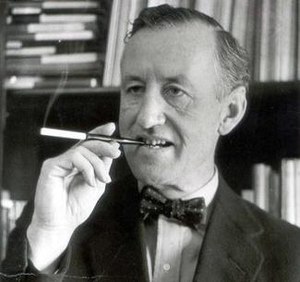
Ian Lancaster Fleming was an English writer, best known for his postwar James Bond series of spy novels. Fleming came from a wealthy family connected to the merchant bank Robert Fleming & Co., and his father was the Member of Parliament (MP) for Henley from 1910 until his death on the Western Front in 1917. Educated at Eton, Sandhurst, and, briefly, the universities of Munich and Geneva, Fleming moved through several jobs before he started writing. While working for Britain's Naval Intelligence Division during the Second World War, Fleming was involved in planning Operation Goldeneye and in the planning and oversight of two intelligence units: 30 Assault Unit and T-Force. He drew from his wartime service and his career as a journalist for much of the background, detail, and depth of his James Bond novels. Fleming wrote his first Bond novel, Casino Royale, in 1952, at age 44. It was a success, and three print runs were commissioned to meet the demand. Eleven Bond novels and two collections of short stories followed between 1953 and 1966. The novels centre around James Bond, an officer in the Secret Intelligence Service, commonly known as MI6. Bond is also known by his code number, 007, and was a commander in the Royal Naval Volunteer Reserve. The Bond stories rank among the best-selling series of fictional books of all time, having sold over 100 million copies worldwide. Fleming also wrote the children's story Chitty-Chitty-Bang-Bang and two works of non-fiction. In 2008, The Times ranked Fleming 14th on its list of "The 50 greatest British writers since 1945". Fleming was married to Ann Fleming. She had divorced her husband, the 2nd Viscount Rothermere, because of her affair with the author. Fleming and Ann had a son, Caspar. Fleming was a heavy smoker and drinker for most of his life and succumbed to heart disease in 1964 at the age of 56. Two of his James Bond books were published posthumously; other writers have since produced Bond novels. Fleming's creation has appeared in film twenty-seven times, portrayed by six actors in the official film series.
Just an okay Bond book. Shorter - so a quick read.
This book is late in the Ian Fleming Bond timeline, so this Bond shows a bit of age, some wear and tear, and is not quite as invincible as you would expect.
Also, if you are familiar with this title because of the movie - this book is very different from the movie. It makes me wonder because by the point this book was released, they were already making the movies. You would have thought that they might at least have tried to make them close to the book like the early movies were. But, that is okay - The Man With the Golden Gun is one of my favorite Bond movies.
Ian Fleming’s James Bond series has been up to now written with a Clint Eastwood terseness of expression interspersed often with existential emo angst. Although the thirteenth novel, 'The Man with the Golden Gun', published under Fleming’s name is posthumous, it is based on a draft manuscript found after Fleming's death. Honestly, I couldn't tell the difference between this novel's style of writing and the previous books in the James Bond series.
James Bond is trying to establish his identity at the beginning of his new adventure in this novel. In the previous book, Bond ended his assignment with no one, including the Secret Service, aware of what happened to him. After some shocking loose ends are cleared up from the previous case, Bond is given a new assignment!
A criminal mobster who often works as an assassin-for-hire has been responsible for the death of agents 267 (British Guiana), 398 (Trinidad), 943 (Jamaica), and 768 and 742 (Havana). Francisco "Pistols" Scaramanga, the assassin, also has demonstrated a wide streak of sadism in wounding 098 by bullets in both knees. Scaramanga has a unique identifying mark - a third nipple. Bond is assigned to kill him.
The flight to Jamaica is uneventful. However, his visit to a local brothel, 3-1/2 Love Lane, turns out to be explosive in more ways than one!
Almost none of the Bond novels are much like the movies, and this one is no exception. The only thing the books and the movies share is a lot of thrilling excitement and drama! But there is no cartoon fun in the novels - only deadly dangers....
I must admit that I have a real soft spot for Ian Fleming's final James Bond novel, which is why I treated myself to this Folio Society edition with wonderful illustrations by Fay Dalton. This was the first James Bond film that I saw at the cinema, aged 10, back in 1974. It was also the first Bond novel I ever read, & although it was a bit of struggle for my 10 year old self, here I am 47 years later still enjoying 007 in print & on film as much as ever. By the time Ian Fleming wrote this story he had been ill & was running out of ideas for his novels. The main villain, Scaramanga, is more of a gangster & a thug in the novel compared to Christopher Lee's smooth film version of the hit man. Lee, by the way, was Ian Fleming's step-cousin! The Jamaican setting in the novel is superbly realised & Fleming's minor characters are as well drawn as ever, especially Jamaican girl Tiffy & Bond's old CIA friend Felix Leiter. In a strange twist of fate Anthony Horowitz's next James Bond novel (to be published on Ian Fleming's birthday in May 2022) follows on directly from The Man With The Golden Gun. You just can't keep a good man down.
I felt generous. The 1974 film, which is what I'm rating, is more or less a 2-star experience. Oh me oh my...an AMC Hornet, an AMC Matador, Simon Templar....I mean Roger Moore!...wearing loser suits...I mean leisure suits!...and the most horrendously offensive Southern stereotype sheriff in the history of moviemaking adds up to some seriously noxious stuff. Then there's the damnfool idiot chop-socky pandering, and the concomitant "Oriental" stereotypes...ugh.
Maud Adams is GORGEOUS. She's just luminous in or out of her clothes. Tattoo from Fantasy Island is the houseboy to the baddie, resulting in a regrettable lack of hunky blond henchrats for me to ogle. Britt Ekland, Peter Sellers' ex, plays the stupidest secret agent imaginable, who manages to get herself locked in the trunk of the baddies' FLYING AMC MATADOR *oh dear goddesses please keep my dinner down* with the macguffin in her handbag which she hasn't had the common sense to drop...well, it's ridiculous even for a Bond movie.
The ending is...it's...epic. Titanic. So awful, so ridiculous, so completely...I...words do not exist yet for the sensation of revolted, horrified, amused, aesthetically affronted...well.
The title tune is sung by Lulu. I do not know why they chose this singer or this tune. It's just awful. Hideous.
I didn't lke 1974 the first time around, and I don't like it any better this time. Oh wait...Bond's Bangkok hotel room was way cool, turquoise shantung walls and marvelous decorative accessories and wonderful closets...you see where my mind was. The "story" (which doesn't resemble the novel too terrible much) sure as hell wasn't doin' it.
Going to use this same review for all the James Bond books I read several years ago. Why did I keep reading them if I hated them so much? Because I kept hoping for ONE good book with ONE woman valued for more than just her body. And anyone out there can tell me it was a reflection of the times, but I throw that argument out. I've heard it used a lot for slavery, for example, but that fails too because there were always abolitionists, just like there have always been feminists, even if that word didn't necessarily exist back then.
Amazon was practically giving away these Ian Fleming books, so I'd bought them all. And ultimately, I hated myself for it. They are such sexist filth. Sure, I like the "good guys" winning as much as the next, but in every one of them, it felt like it was at the expense of some woman (the "Bond girl's") identity where she's reduced to nothing but an objectified and glorified sexual being whose sole purpose is to make James Bond look good. Ew. I would've known better (I hope) had the cover been one of the more semi-pornographic ones that seem to be more common, but the Kindle series I'd bought had very unrevealing cover art. UGH. And remarkably, I hadn't watched any of the older Bond movies - only started with Daniel Craig versions which I thought was just dumb sexist typical Hollywood. In retrospect, I should've known better!
James Bond knew that he was not only disobeying orders, or at best dodging them, but also being a bloody fool.
I feel like the spark has gone out of this series. Ever since , things haven't been the same in Bond-world. We have a more muted, contemplative man in the place where Bond, once so full of life, stood.
We start out this novel with James Bond, who was missing and presumed dead after the events at the end of You Only Live Twice, showing up at the Secret Service HQ and demanding to see M. He looks wonky and no one trusts him. They beg M. not to see him. They are right, of course. James Bond after being sent blindly and with serious amnesia into Russia by that *&^%$ Kissy Suzuki, has been captured by the KGB and brainwashed. He attempts to murder M., and it's only due to good security measures that M. lives. M. declines to press charges or punish Bond in anyway. Instead, he sends Bond off to be "cured" by the eminent neurologist Sir James.
After months of counseling and electroshock therapy, Bond is back to loving queen and country. But (as mentioned earlier) no amount of electrotherapy could the zest and love for life that he once has. (Could this be a result of Bond's age? In this book he mentions Honeychile fondly and informs us that she is now married to a doctor and has 2 children. Bond was 34 in Doctor No. That would make him now... what? Mid to late forties?) In addition, Bond is very aware that he still has to make it up to M., and 'earn his spurs back.' As a result, M. chooses Bond for a very dangerous mission that is likely to kill him. Sound familiar? Like the last book? Well, it is.
This dangerous mission is to hunt down and kill Francisco Saramanga, a Cuban assassin who carries a golden gun and does a lot of freelance work for the KGB. He's quite the gunman, which MI6 psychology department chooses to interpret as "fetishist, possibly homosexual." Their top psychologist also adds the gem that Saramanga can't whistle, which is an indication that a man is homosexual. Seeing as psychology used to be involved in all sorts of messed up-fuckery, I'm not as surprised and shocked as you would think that apparently smart, top dog government men are taking this kind of bizarre idea seriously.
Bond goes to Jamaica to catch Saramanga. ...
JAMAICA Bond, as is well-documented now, loves the tropics and being near the sea. But it is obvious in how he acts in Jamaica that he is a shadow of his former self. He doesn't go to the beach or snorkeling or do any of the other things he loves to do.
TIFFY Bond meets Tiffy, a woman who runs a whorehouse and buys a beer from her. She has two pet birds she loves and feeds. Bond exhibits one of his greatest qualities in re: his treatment of women when he sits down and listens to Tiffy talk and tell Bond about herself. Is she important to the mission? Is she telling him anything he needs to know? No. But one of Bond's most attractive qualities (and one he pulls out every once in a while in order to impress me and keep me reading) is his willingness to listen to women and women's stories. He doesn't interrupt, he is a very good listener, and he pays rapt attention, even if (compared to his exciting life) the woman has a more tame tale to tell.
AND, this is important, he doesn't laugh at what they have to tell him. For instance, Tiffy's real name is Artificial. When she tells him this, she waits for him to laugh at her. She's used to being laughed at. Bond doesn't laugh at her.
I don't feel like any of this is artifice, I don't think Bond is putting on an act in order to win over women or get tips for his mission or anything. I think he is genuinely interested in getting to know (young, beautiful) women and I like how he takes the time to talk to them and learn about their experiences.
Then Saramanga comes down the stairs and everything goes to hell. This whole scene is really a case study in Bond, Bond's level of badassery and how he exhibits it, and what he values and doesn't value. Long story short, he leaves with Saramanga and never has sex with Tiffy - actually he never sees her again.
MARY GOODNIGHT Well, things are getting weird here. Mary Goodnight has been Bond's secretary since On Her Majesty's Secret Service, and while Bond has always been obviously capable of bedding her, he never did. In this book, they kiss for the first time and
Bond put his hand under the soft chin and lifted up her mouth and kissed her full on the half-open lips. He said, "Why didn't we ever think of doing that before, Goodnight? Three years with only that door between us! What must we have been thinking of?"
Well, Bond, you were courting / in love with Tracy during that time, don't you remember? And that's the point. Is Bond's amnesia totally cured? Or should I be worried when he says stuff like this? I honestly don't know.
I also don't know how to take Bond's sudden apparent fascination with Goodnight. He fantasizes about her on the job. When she's around, he tries to drink and smoke less. She's not Bond's usual type - she wants to get married and have a family. He knows this. And he knows she's not like the street/nature-smart women with exciting pasts that he usually dates. She is demure and blushes easily. This is bad. If you think Bond is going to settle down with someone motherly and uptight like Mary Goodnight, you're smoking something. So, I've got two pieces of advice for Bond, and he'd better listen up!
1.) Don't shit where you eat, Bond. Mary Goodnight isn't just "some girl" you met on one of your missions. She works for the Secret Service just like you do. A breakup is likely to be public and messy. You're going to be seeing this woman at work, and she might even work directly under you. This is a bad idea.
2.) Mary Goodnight is a proper, demure, respectable woman who's fantasies about Bond include (I am not joking) cooking for him and sewing buttons on for him. Bond knows this. He is perfectly clear with the type of woman Goodnight is and he is making the conscious decision to take her to bed anyway. Bond, you are a piece of shit. What the hell do you think you are doing? You might like pretty woman and sex, but you've never been this callous and heartless before. There is NO WAY Goodnight is going to come out of this unscathed. Sadder and wiser, maybe, but also hurt and crushed.
People wonder why Bond flirts with/teases Moneypenny but never gives in to her obvious hopes that he take her to his bed. But I don't wonder, in the books it's clear. She's off-limits because she a.) works at MI6 under M., and b.) she is a nice, respectable woman with dreams of husband and family. Bond taking Moneypenny to bed would be one of the cruelest and irresponsible things he could possibly do, WHICH IS WHY HE NEVER DOES IT. It's out of respect for her - she couldn't handle Bond's particular brand of loving. And out of respect for M., who relies on Moneypenny and sees her as a valuable and kind person. But Bond must've lost his damn mind in that accident because he is deliberately fucking with Mary Goodnight when he shouldn't be. It's like all his common sense has flown out the window. And he's ignoring my frantic begging not to get involved with this sweet, vulnerable girl.
Well, maybe he's changed, you think. Perhaps all the failure and sadness swirling around Bond lately has made him think of settling down with a 'nice girl.' To which I respond by looking at you as if you are a bit soft in the head. There's NO WAY that's happening.
Listen to this:
"What do you suggest?" "Well, er, I've got this little villa up by Mona Dam, James." Her voice hurried. "It's got quite a nice spare room looking out over Kingston Harbour. And it's cool up there. And if you don't mind sharing a bathroom." She blushed. "I'm afraid there's no chaperone, but you know, in Jamaica, people don't mind that sort of thing."
"What sort of thing?" said Bond, teasing her.
"Don't be silly, James. You know, unmarried couples sharing the same house and so on."
"Oh that sort of thing! Sounds pretty dashing to me. By the way, is your bedroom decorated in pink, with white jalousies, and do you sleep under a mosquito net?"
She looked surprised. "Yes. How did you know?" When he didn't answer, she hurried on. "And James, it's not far from the Liguanea Club, and you can go there and play bridge, and golf when you get better. There'll be plenty of people for you to talk to. And then of course I can cook and sew buttons on for you and so on."
Of all the doom-fraught graffiti a woman can write on the wall, those are the most insidious, the most deadly.
James Bond, in full possession of his senses, with his eyes wide open, his feet flat on the linoleum floor, stuck his head blithely between the mink-lined jaws of the trap. He said, and meant it, "Goodnight, you're an angel."
At the same time, he knew, deep down, that love from Mary Goodnight, or from any other woman, was not enough for him. It would be like taking 'a room with a view.' For James Bond, the same view would always pall.
In short, I am very angry with Bond about this.
FELIX LEITER Bond's old friend Felix Leiter of the CIA shows up on this mission. It's always great to see Bond and Leiter interact, they are dear friends.
Bond treasured his men friends and Felix Leiter was a great slice of his past.
This means they are always so happy to see each other and they call each other "bastard" a lot. :) LOL So cute.
Then again, it's fair to mention how worried I was when Leiter showed up - I wasn't sure if Bond would recognize him or not. Still not 100% certain that he's 'cured' of his amnesia.
VILLAIN/PLAN/SHOWDOWN I found Saramanga boring. He's just a flashy, cocky guy who's really good with a gun. Big deal. The gun is golden and shoots golden/silver bullets. Big deal. I was not impressed.
...
SUMMARY Bond's last good book was On Her Majesty's Secret Service. I feel like after that, these storylines took a real nosedive.
This was the last Bond book written by Fleming, and he died before it was ever published. I believe it was just a first draft.
Now the only thing I have to do is read the short story collection called Octopussy & the Living Daylights and I will be done with this trip down memory lane.
A close cousin of the adventure story is the western. This concept comes across strong in this last Bond novel completed during Fleming’s lifetime. (It was published eight months after his death in 1965).
Ian Fleming was a long time heavy drinker and smoker and these two poisons combined and contributed to his early demise. The creator of James Bond and the author of thirteen Bond books, Fleming died at age 56 in 1964. His last recorded words were an apology to the ambulance drivers for having inconvenienced them, saying "I am sorry to trouble you chaps. I don't know how you get along so fast with the traffic on the roads these days.”
In The Man with the Golden Gun, Bond is sent to confront a celebrated gun man and killer in Central and South America. Change the facts in this story just a little and this could have been set in 1870 and in the American west. Bond’s CIA friend Felix Leiter laments that romantics killed a criminal and then made him a hero. Historians can note the legends of Billy the Kid and Jesse James. Fleming’s 1950-60s gunman is Francisco Scaramanga – as scary a villain as any he’s written in the past.
Told with Fleming’s inimitable wit and charm, and with an adventurer’s style, this is maybe not one of the better Bond stories, but still very good in it’s own right.
Bond has arrived back in the UK after disappearing and being presumed dead. Well...a man claiming to be Bond has arrived. Once he has been vetted and found to be the real 007 he has an interview with M...and tries to kill him.
Now this is just the set up so don't worry, it's not a spoiler. This novel was published after Fleming's death and you can tell it's not as "finished" as the other novels. I go 4 stars (as I couldn't bring myself to go lower). Still I think the book is enjoyable and will please those who didn't care for the way the last book ended with Bond heading for the Soviet Union.
Here we have (as our melodramatic and megalomaniacal villain) a professional killer who as his trademark uses a Gold Colt .45 Peacemaker.
This bugs me a little as I like the gun.
Anyway the killer must be killed...and Bond recovering from being brainwashed...must use his 00 license to kill, to kill the killer.
M.’ s voice was gruff. ‘007 was a sick man. Not responsible for his actions. If one can brainwash a man, presumably one can un-brainwash him. If anyone can, Sir James can. Put him back on half pay for the time being, in his old Section. And see he gets full back pay and allowances for the past year. If the K.G.B. has the nerve to throw one of my best men at me, I have the nerve to throw him back at them. 007 was a good agent once. There’s no reason why he shouldn’t be a good agent again. Within limits, that is. After lunch, give me the file on Scaramanga. If we can get him fit again, that’s the right-sized target for 007.’ The Chief of Staff protested, ‘But that’s suicide, sir! Even 007 could never take him.’ M. said coldly, ‘What would 007 get for this morning’s bit of work? Twenty years? As a minimum, I’d say. Better for him to fall on the battlefield. If he brings it off, he’ll have won his spurs back again and we can all forget the past. Anyway, that’s my decision.’ There was a knock on the door and the duty Medical Officer came into the room. M. bade him good afternoon and turned stiffly on his heel and walked out through the open door. The Chief of Staff looked at the retreating back. He said, under his breath, ‘You cold-hearted bastard!’ Then, with his usual minute thoroughness and sense of duty, he set about the tasks he had been given. His not to reason why!
It is with a little bit of sadness as well as a little bit of relief that I am jotting down my notes on The Man with the Golden Gun, the last novel in the original Bond series.
The sadness is most definitely a result of reading the series with an awesome buddy, who never lost his patience when I needed to rant about the stupidity of the main character or of the author or both, and who is one of these awesome fans of the franchise that impart additional information about Fleming and the books, who was (at least seemed) happy enough to just geek out on some of the aspects of the stories, and without whom I would not have continued the series.
The relief is largely caused by the fact that, on the whole, the books are not great, and in some cases are just pure terrible and made me wish for brain bleach.
Of the 13 novels and 2 short story collections, I would only recommend two of the novels (Diamonds are Forever and Dr. No) in addition to the short stories to unsuspecting novice Bond readers. (Although, saying that, I recommended Dr. No to a colleague and he DNF'd it...because the racism was too much - I'm glad he didn't try Live and Let Die...)
Anyway, what about The Man With the Golden Gun?
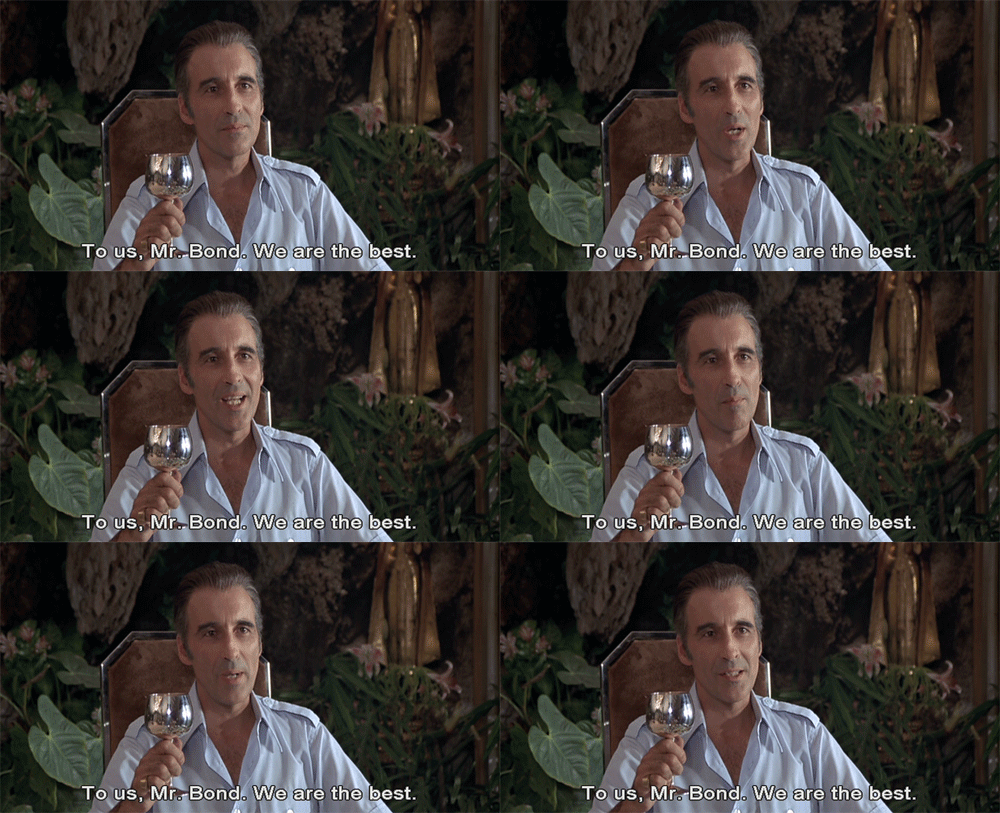
Well, the book Scaramanga is no Christopher Lee and there is no Nick-Nack (at all!!), but let's start at the beginning:
The Man with the Golden Gun was the last book written by Fleming and it appears that his writing process was to jot down the major plot, some random ideas and topics he may want to pick up on or not, depending on how he felt during the next rounds of edits. During subsequent revisions, he would perhaps also add the descriptions of characters and their natural surrounding which are always highlights of the Bond reading experience.
Unfortunately, Fleming died after he finished his first draft, and before he could add edits. I am not sure to what extent his publisher edited Fleming's text (there is one sentence about an em-dash which made me think an editor inserted it as a joke), but the book reads really disjointed. Well, like a rough draft.
Other parts read like Fleming - uncut:
"Distinguishing marks: a third nipple about two inches below his left breast. (N.B. in Voodoo and allied local cults this is considered a sign of invulnerability and great sexual prowess.) Is an insatiable but indiscriminate womanizer who invariably has sexual intercourse shortly before a killing in the belief that it improves his “eye”. (N.B. a belief shared by many professional lawn tennis players, golfers, gun and rifle marksmen and others.)"
This leaves us with a story of different parts. I believe there is a distinct difference between the first part in which Bond returns to London after being MIA. This part includes a quite thoughtful discussion of the Cold War, and especially of espionage during the time.
‘Well, if you found these people so reasonable and charming, why didn’t you stay there? Others have. Burgess is dead, but you could have chummed up with Maclean.’ ‘We thought it more important that I should come back and fight for peace here, sir. You and your agents have taught me certain skills for use in the underground war. It was explained to me how these skills could be used in the cause of peace.’
Fleming knew the Cambridge Spies, or at least he was friends at school with Kim Philby, but it is a reasonable assumption to say the Cambrigde Spies scandal was on his mind, considering he even put Bond in a situation where he, too, could be a double-agent.
And maybe it is this turn where Fleming chose to show M's true character (see opening quote), which by the way was so well played by Dame Judi Dench that I now cannot see anyone else in the role of M.
So, shorty after his return, Bond is sent to investigate the villain of the piece Francisco Scaramanga. Unlike the suave, intelligent villain portrayed in the film, the book Scaramanga is a modern day version of a Wild West gun slinger. And this is where the book quickly loses its original promise and descends into the Western genre, complete with the following scene:
The Rasta quickly pushed up the lever and the speed of the train gathered back to 20 m.p.h. He shrugged. He glanced at Bond. He licked his lips wetly. ‘Dere’s white trash across de line. Guess mebbe it’s some frien’ of de boss.’ Bond strained his eyes. Yes! It was a naked pink body with golden blonde hair! A girl’s body! Scaramanga’s voice boomed against the wind. ‘Folks. Jes’ a little surprise for you all. Something from the good old Western movies. There’s a girl on the line ahead. Tied across it. Take a look.
Yes, you read that right.
So, why did I still enjoy the book?
My main reason is that this last work of Fleming is so incredulously craptastic that I could not take it seriously. It is such a spoof Western that it was quite fun to try and predict which cliches Fleming was going to throw in there. And for this alone, I liked it.
She went towards him like the Queen Mother opening a bazaar, her hand outstretched.
But other than this, the book suffered from the same problems as any other Bond novel: The portrayal of women, Jamaicans, .... well, anyone who is not white, straight, male, and British or American is just plain awful. Now it may only be myth, and it is certainly not medical science, but there is a popular theory that a man who cannot whistle has homosexual tendencies. (At this point, the reader may care to experiment and, from his self-knowledge, help to prove or disprove this item of folklore! C. C.)’ (M. hadn’t whistled since he was a boy. Unconsciously his mouth pursed and a clear note was emitted. He uttered an impatient ‘tchah!’ and continued with his reading.)
But since I cannot take this book serious AT ALL, I am going to say that the main problem with The Man with the Golden Gun is that it lacks a certain Nick-Nack.
What can I say, I'm glad I've read them, and I have had fun with the quotes, but I look forward to kicking Bond into touch.
"The past could be forgiven, but not forgotten – except with the passage of time." - Ian Fleming, The Man with the Golden Gun
I can't really call this an unfinished novel. It was finished, just not by Ian Fleming. He wrote the first draft and died. So, this obviously is the last James Bond novel. I'm not enough of a Ian Fleming fan to recognize how/where/if the lack of Ian Fleming made a huge difference to the drafting. I think the end of the novel, with Jones refusing certain honors, may not have found their way into the final novel if Ian Fleming were in control through the whole process. It seemed too final, too sentimental.
This novel returns Bond to active duty after losing his memory in the last novel. It also sends Bond back to Jamaica. It was good Bond, just not great bond. Seemed like a comfortable Ian Fleming wrting from a confident spot. The shootout was a bit of a disappointment, but Scaramanga’s last few moments were spectacular.
The usual Bond stuff. A tough guy like Scaramanga is stupid enough in order to talk too much and hire (and trust...) an unknown person. Listening with a champagne(!) glass through the wall is more than hilarious, the plot is thin, the final too long. There is one interesting assertion, that persons who can't whistle have homosexual tendencies...
English author Ian Fleming had a very systematic and orderly routine that he employed in the creation of his 14 James Bond books (12 novels, plus two collections of short stories). Each winter, he would vacation at his Goldeneye retreat at Oracabessa, on the north shore of Jamaica, and write a bit each day; reportedly, around 2,000 words. As revealed in Raymond Benson's "James Bond Bedside Companion," Fleming would start the day with a swim and breakfast, followed by a few hours of work and then lunch, after which he took a nap and then wrote for another hour or so. He would write very quickly, which partially accounts for the fast-moving nature of his thrillers, and only after a first draft was finished would he go back, revise, and insert the copious details that are a hallmark of the series; the plethora of convincing minutiae that gave his tales such an air of verisimilitude; the so-called "Fleming effect." But what would have happened if one of his tales was released without that later revision, and the addition of all those trademark details? Well, such was exactly the case with the final 007 novel, "The Man With the Golden Gun." Written by Fleming in the winter of 1964, the initial manuscript was still in its incomplete state when the author died on August 12th of that year, at the age of 56. The publisher Jonathan Cape released the hardcover edition of Fleming's unfinished work in April '65, to middling reviews but huge sales. Benson, who I greatly respect and admire, has deemed the book "the weakest novel in [the] series," and he may well be right. Still, lesser Fleming, as it turns out, is still mighty good enough.
The book picks up around a year after the events of the previous Bond novel, 1964's "You Only Live Twice," at the end of which Bond had become an amnesiac, living in a Japanese fishing village, and venturing to Vladivostok to search for his identity. In "Golden Gun"'s memorable opening (so memorable, indeed, that this reader clearly recalled it from an initial reading, over 40 years earlier), a brainwashed Bond returns to London and attempts to assassinate his boss, M, with a cyanide pistol! He fortunately fails in this attempt, is deprogrammed by the British Secret Service, and then sent on a seemingly impossible mission as a means of determining whether he's still "got it." His task: to track down and exterminate the Spanish criminal/hitman Francisco Scaramanga, currently working for the Castro government in Cuba and responsible for the deaths of many British agents. Bond tracks his quarry to a brothel in Jamaica (Fleming knew the island well, of course, and had previously used it as a setting in "Live and Let Die" and "Dr. No," as well as in the short stories "For Your Eyes Only" and "Octopussy") and manages to get hired by the gunman as a personal assistant of sorts. It seems that the hitman has convened a small gathering of hoods (including representatives of the Mafia and K.G.B.) at a hotel that they are financing and erecting near Negril, and that Bond will be responsible for the entertainments at that bash....
It is difficult to deny Benson's assertion that the plot in this final book is thin, that the climactic battle between 007 and his adversary is not as exciting as it could have been, that Scaramanga makes some illogical decisions, and that the sections dealing with Bond's attack on M and subsequent rehabilitation are too brief. Still, I would disagree with Benson when he says that "Bond is robotlike in this novel," and that Scaramanga "is hardly adequate for a Bond villain." Indeed, there are numerous instances in which we are given a glimpse at 007's thought processes, and in which he displays a distinct, empathetic and feeling persona. Witness how decently he treats Tiffy in that Savannah La Mar brothel, and the fact that he cannot bring himself to shoot Scaramanga (twice) in cold blood. And as for Scaramanga, he may make some slips during the course of the book (such as hiring not only Bond, but also Bond's C.I.A. buddy, Felix Leiter, to work at his weekend shindig), but his conversations with the K.G.B. agent, Hendriks, regarding such matters as sugar plantation sabotage, drug smuggling, prostitution and high finance, reveal him to be a man of no small intellect. While reading the book, I couldn't help thinking that a better person to play Scaramanga on screen would have been the great character actor Dan Duryea, who sadly passed away six years before the film's 1974 release. (The film, the weakest of the 23 to date, for this viewer, completely jettisoned the novel's plot in favor of a Far East setting and "solex agitator," sci-fi story line.) Christopher Lee may have been a cousin of Fleming's, and certainly brings a lot of class to any production he appears in, but Duryea surely would have captured Scaramanga better as Fleming depicts him: nasty, snide and foul mouthed ("Okay, bimbo...Don't bust your stays getting through the window," he says to Bond's secretary, Mary Goodnight, in one suspenseful sequence).
"The Man With the Golden Gun" is interesting in that it finally reveals to the reader the real name of M, updates us on the fate of "Dr. No"'s Honey Ryder, tells us that the name of Bond's cover employer has been changed from Universal Exports to Transworld Consortium, and concludes with Bond being offered a knighthood, which he declines. It also features the least sex of any of the Bond novels--none, as a matter of fact, although Goodnight's offer to care for the wounded 007 at the book's tail end can easily be seen as a romantic promise. The action in the book is limited, as well: the assassination attempt, a gun battle aboard a moving train, and Bond and Scaramanga facing off in a deserted swamp. Still, the book is consistently suspenseful (at least, I found it to be so) and fast moving. And if all that great wealth of detail usually to be found in a Bond novel is largely absent here, well, there is still plenty enough ("On Her Majesty's Secret Service," for example, had sent me scurrying to the atlas and Interwebs to look up 285 references; the book in question, a "mere" 112); Mary doesn't just wear a blouse, but a "white tussore shirt." Fleming always was an elegant writer, and he surely is here, too, and yet, he unfortunately manages to use the word "mock" twice in two consecutive paragraphs ("mock-English" and "mock boisterous"), references Wilton carpets twice in two different abodes, and even gets one of his Caribbean facts wrong: Pitch Lake is in western Trinidad, not eastern. Still, he is capable of some wonderful foreshadowing (such as when Tiffy uses the expression "kill two birds with the same stone," just minutes before Scaramanga shoots two Jamaican grackles in her presence) and giving us some cool tough talk (practically everything that Scaramanga utters to Bond, not to mention my favorite line in the book, as spoken by one particularly nasty Rasta to 007: "Rass, man. Ah doan talk wid buckra." I urge you to read the book for the translation!) "The Man With the Golden Gun" may have ended this classic series on a weak note, but the book itself winds up with some wonderful summations of the Bond character, as Leiter cogently tells the agent "Pest control...It's what you were put into the world for" and Bond later dwells on how domesticity, for him, "would always pall." Ringing down the curtain on fiction's most famous secret agent, Fleming's final effort may not be his best, but it sure was good enough for this reader. One can only wonder how much better this work might have been, had time allowed its author to embellish it with his patented "Fleming effect"....
I mentioned in my last review that the Bond movies are often loosely based on the Ian Fleming novels. I believe the movie for this one took the title of the book annnnd... that's about it.
That's not true. Of course James Bond was in both the book and the movie. Silly.
And the villain, Scaramanga - he was in both too. And, okay, Bond's secretary, Mary Goodnight - she had some big parts in both.
But, here, watch the original trailer. There is nothing that happens in this trailer that actually happened in the book. Except, as previously stated, Bond and Scaramanga (who, I might add, is played by the cuddly Christopher Lee in the movie). There is no midget named Nick Nack in the book, there is no trip to Macau in the book, there is no Ko Tapu island in the book - in fact, the majority of the story takes place in Jamaica. Again. I'm getting tired of Jamaica. But even worse, there's no scene in the book where young Asian girls beat the crap out of a bunch of trained fighters.
On the other hand, there was no bumbling idiot American Sheriff by the name J.W. Pepper in the book. Why he's in some movies is beyond me, but he destroys the flow of the films and I am decidedly over him.
The movie involves this whole sequence in Saramango's Funhouse on his island which I was nerdily excited to see how that was translated from the book. Of course it's not even in the book. Don't read the book expecting there to be a Funhouse, because it's not there. You're welcome.
The theme song was particularly exciting. We're getting into a bit more funkiness; it is, after all, 1974. So here we have Lulu singing the theme song - you might remember her from To Sir With Love approximately seven years before she jumped into Bond's world. Lovely voice, no complaints. As much as I enjoy Shirley Bassey, I'm about over her as well. Give someone else a chance to sing, Shirley. Jeez.
All in all, I enjoyed this movie more than this book, but there are some good moments in both that I wished had been in the other. There's a lack of a Bond girl in the book, unless you count Mary Goodnight, which probably doesn't count because he doesn't try to get her in bed. Bond was practically celibate in this book. Very strange experience, actually. He became "aroused" at one point and he took at least two cold showers, but that's it. It's like he's not even himself this time. Which, actually, was sort of the point of the book and possibly somewhat a genius move on Fleming's part.
This is apparently the last and least developed novel of Flemming's lifetime. Published even though the author died before he could get past the first draft.
Fleming's final full length Bond novel may not be a classic, but it's still a fine read. I first struggled through this one when I was just ten years old after seeing the film version in 1974 & I've read it(& the other 007 thrillers) many times since. A taut story, good characterisation & the return of some familiar Fleming characters like Felix Leiter & Mary Goodnight.
Apparently there’s some debate as to whether this posthumously published book was actually finished by Fleming before he died, or completed by other hands. To me it does seem far less polished than any of the other James Bond adventures (but then the same could be said about Phillip Marlowe’s swansong ‘Playback’ and Chandler was alive when that came out). After a bizarre opening where is a hypnotised Bond tries to kill M (suggesting that ‘The Manchurian Candidate’ was on Fleming’s bookshelf), that idea is completely abandoned as Bond is packed off on a manhunt to the Caribbean.
It’s a different and almost flatter Bond in this book, one lacking the trademark cruelty or even his normal arrogance of class. He plods through the tale, without any of the dynamism of his earlier adventures. Scaramanga, the villain of the piece, is also below par. He’s almost a henchman promoted to main villain, there’s no spark to his character – and the two men just talk and talk, (largely about boring arrangements). Even the final confrontation is incredibly un-dramatic, with Bond lacking a killer instinct and Scaramanga not quite being the great hit-man we’d been led to expect.
Nothing comes to life in 'The Man with the Golden Gun' – not the characters, not the setting, not the plot. It’s a drudge of a read. Commentators often point out how close to parody Fleming could get in the later books, but even that seems lacking here. Truly, I’ve no idea whether Ian Fleming finished it or not – but if he did, then he did it as a writer who’d lost interest in the world of his most famous creation.
I haven’t said this about any of the others, but I’d rather watch the Roger Moore film.
This was the first 007 book I read what a surprise I got the books had nothing to do with the Movies the only thing the same was the name James Bond & Salamada & his golden gun solid gold. But as I was told by an expert no gun could be made of gold as gold would explode it's a soft metal far too soft to be made into a gun Bond is True blood English so Sean Connery is ghastly as he is Scottish & Daniel Craig has wrong colour hair & to small. and he does not smoke As you can tell I don't like him I loved Rodger Moore he was my favourite 007 even if wasn't right.
The final novel of the Fleming Bond series, there were a lot of interesting ideas that were executed unevenly. This is most likely due to Fleming’s passing where it is also likely the case that the book was completed by others. It feels like had Fleming been around for another couple of months, it could have been a great four or even five star book. But here we are.
The Man With the Golden Gun (1965) was the final full-length Bond novel by Fleming and it was published posthumously from his first draft, which shows when reading it. Rumor has it that Fleming generally filled in most details during his second draft and much of that is missing here.
The story opens with Bond mysteriously returning after having disappeared for a year behind the Iron Curtain, similar to Mickey Spillane’s Velda who disappeared for seven years behind the Iron Curtain (See The Girl Hunters). The reports assumed that Bond had expired and, when he calls, the switchboard operator says that it is another nut claiming to be James Bond. It has been, we are told, a year since James Bond’s death on a mission to Japan had been announced in the press.
The agency does not fully trust that this is actually Bond and are quite mistrusting of him, rightfully so since Bond attempts to murder M. Bond is shipped off to a clandestine psychiatric facility. But, then miraculously is cured when needed to undertake his next mission and no further mention is made of his having been brainwashed and turned into a KBG assassin.
The villain of this novel is one Francisco Scaramanga, a freelance assassin mainly under KGB control through Havana. Scaramanga is colloquially known as “The Man With the Golden Gun” since his main weapon is a gold-plated, long-barrelled single-action Colt .45 and he uses special bullets with a heavy, soft gold care jacketed with silver and cross-cut at the tip for maximum wounding effect. His distinguishing mark is a third nipple two inches below his left breast.
Bond is to head to Jamaica, where Fleming has his estate Goldeneye and which was the site of several earlier stories including Dr. No, and make contact with Scaramanga and insert himself into his staff. This, of course, assumes that Bond, now an international figure talked about in the press, can still travel incognito. Bond though is troubled by killing in cold blood and thinks it would perhaps be suicidal to draw against a man who was possibly the fastest gun in the world.
There is an interesting scene where Bond and Scaramanga board a sugar train where Scaramanga talks about seeing a rat and asks Bond if he would be interested in a little gunplay against the cattle. It gets even more interesting as Bond sees a naked pink body with golden blonde hair across the line ahead and Scaramanga says it is a surprise just like in the Western movies, that it is the girlfriend of a certain Mr. Bond, and her name is Mary Goodnight, and “It sure is goodnight for her. If only that fellow Bond was aboard now, I guess we’d be hearing him holler for mercy.”
There are scenes as the two great players square off against each other, clearly designed for filming although the movie was not released until nine years later in 1974, starring Roger Moore as Bond and Britt Ekland as Mary Goodnight and Herve Villechaize (Tattoo of Fantasy Island fame) as Nick Nack. The movie is quite a bit different from the novel and includes far more wide-ranging action across the world, particularly in the Far East and the adventure with a belly dancer in Beirut. At one point in the movie, Bond masquerades as Scaramanga complete with a fake third nipple. Also, absent from the movie is any sign that Bond had been brainwashed by the KGB.
This was the final James Bond novel written by Ian Fleming, published in 1965, just eight months after the author’s death. Fleming was never happy with the product and wanted to re-write the entire book, but the publishers wanted it published. Since he was already in poor health, he gave up on making it better and allowed it to be submitted for release. It’s not the most cohesive of the Bond series, but it’s still 007.
It starts quickly, as we learn that Bond suffered amnesia after destroying arch-villain Blofeld in Japan. Not knowing who he was, the British secret agent wound up in the old Soviet Union where he was brainwashed to kill his superior, M. However, MI6 de-programs him when he shows up for the killing and send him out to Jamaica to kill the devious Scaramanga, a Cuban enemy who has already murdered other British secret agents. James Bond will team up with Felix Leiter, the CIA ally and friend, to take down the notorious island villain.
The plot is typical Bond, although I did like the amnesia and the internal threat that Bond became to his own agency. But the writing is not like Fleming’s other books; it lacks details and seems to want to move quickly to a resolution. In researching why, it became clear that the failing health of the author meant he didn’t have time to do his customary follow-up draft. So, it’s still JAMES BOND and it’s still a neat thriller but without the oomph that the other James Bond titles have.
All the same, I did enjoy reading it. I’m not a big thriller fan anyway, but because I have read other Bond novels, I had a familiarity with the character. However, I would not recommend it for anyone trying out Bond for the first time in print.
Picture a open secret "gun for hire" character the diametric opposite of the seemingly suave and unflappable Christopher Lee in the film version and you will come close to the odious, loudmouthed and sadistic Scaramanga Fleming presents us with here.
Book Scaramanga would just as soon shoot your pet bird as toast you, alas.
This one, which I guess gets classed as a novella on account of it's brevity, opens intriguingly with Our Hero's return from his adventures in the Far East, seemingly as damaged goods in the "Manchurian Candidate" mold. This trauma and storypoint gets pretty summarily dropped, however, the moment he is tasked with "eliminating" the titular villain, which is a shame as it could have added an interesting degree of complexity to what was otherwise a fairly (by Bond standards) routine infiltrate-and-thwart mission back in Jamaica.
One more audiobook to go and then I think it will be adieu, Mr. Bond, adieu.
The final, and widely regarded as weakest of the Bond novels. Published after his death, it is also widely believed to have been 'finished' by Kingsley Amis. That said, while the book is a little easier going that previous Bond novels it's still an enjoyable book.
Bond returns to London a damaged man, attempts to kill M, but is given one last (again) chance to redeem himself. A suicide mission to assassinate Scaramanga: the man with the golden gun.
This installment of the Bond series fell a little flat for me. There wasn’t anything unique in the story that helped it stand out or feel exciting. I wonder if by this point, Fleming could see for himself that Bond’s stories were coming to an end. It was definitely an acceptable book, but nothing excellent/extraordinary.
A recently brainwashed James Bond is given an assignment to prove his worth, to kill international freelance hitman, Scaramanga.
This last Bond novel came out in 1965, the year after Fleming’s death. It’s regarded by many as the weakest in the series, the last tired gasp of a dying man. Until my latest re-reading I tended to agree. But having just finished it again I’d certainly raise it a notch, not to among the best, but better than the previous pantomime effort – You Only Live Twice. It’s to Fleming’s credit here that he’s gone smaller scale. There are no megalomaniacs trying to take over the world or hold it to ransom, it’s a simple and straightforward mission for Bond – to track down international hitman Scaramanga, and kill him.
Fleming is back in his beloved Jamaica and as usual creates his tropical world of zinging insects, endless showers to cool down and references to the Daily Gleaner. Again, there’s an array of memorable characters, from Scaramanga, to giving a much larger part to his secretary, Mary Goodnight. But my favourite character here is the bubbly Tiffy, who runs and works behind the bar of the remote brothel - where Bond first meets Scaramanga. The setting, history, and description of the building, the cheerful character of Tiffy, and finally the menacing arrival of Scaramanga easily make chapters five and six my favourite of the book.
Tiffy asks Bond on his arrival if he’d be interested in any business upstairs:-
‘There’s Lindy, but she’s engaged. She’s a big girl. If you like them big, she’ll be free in half an hour.’ She glanced at the kitchen clock on the wall behind her. ‘Around six o’clock. It’ll be cooler then.’
‘I prefer girls like you. What’s your name?’
She giggled. ‘I only do it for love. I told you I just manage the place. They call me Tiffy.’
‘That’s an unusual name. How did you come by it?’
‘My momma had six girls. Called them all after flowers. Violet, Rose, Cherry, Pansy and Lily. Then, when I came, she couldn’t think of any more flower names so she called me “Artificial”… When I went to school they all said it was a wrong name…and shortened it to Tiffy...’
And when Bond comments on the business:-
She laughed. ‘This ain’t no business Mister…Not while I’m running it. This is a public service, like water and electricity and health and education and…’
No, not a classic, but far from the damp squib it’s often been labelled as.
James Bond returns from the dead only to attempt to assassinate his boss M. It turns out that after the events in "You only live twice" James Bond suffered from memory loss and when he walked into Russian hands they decided to use the damaged man for their own purposes.
After being restored to health Bond is send on a mission to redeem himself or to get killed by one of the Cubans.Russians deadliest and efficient killers, Francisco "Pistols" Scaramanga. Scaramanga is known as "The Man with the Golden Gun" because his weapon of choice is a gold-plated Colt .45, which fires silver jacketed solid gold bullets.
So Bond returns to Jamaica to track down this killer, a familiar background to both Fleming & Bond. Here he meets his old secretary Mary Goodnight & his pal Felix Leiter.
At the end of the tale we have the return of the oldish 007 more or less. Before he met his wife.
At the same time, he knew, deep down, that love from Mary Goodnight, or from any other woman, was not enough for him. It would be like taking "a room with a view". For James Bond, the same view would always pall.
While this book lacks the polish from earlier Bond novels, as Fleming died before he could do it, the book has the strength and energy as only IF could give him. Even if this is considered one of the lesser Fleming novels it has enough to offer as it is an insight on the work process of Fleming. One might be tempted to try and imagene what Fleming would have done with this novel. As it is for me the epilogue and rebirth of James Bond 007.
I enjoyed reading Ian Fleming’s “The Man With the Golden Gun” immensely due to his in-depth style with detail background and good narrative based on his career as a journalist and wartime service experience in the Naval Intelligence Division in World War II (https://en.wikipedia.org/wiki/Ian_Fle...). First published in 1965, this novel starring James Bond as the once popular 007 secret agent has since suggested its seemingly contemporary linguistic usage in which we can see from the following extracts, for instance:
1) The post of ‘Personal Assistant’ in Chapter 8, that is, P.A. has long been in use in business administration, academia, etc. since 50 years ago.
2) The shortened monosyllable ‘Kay?’ from O.K. in Chapter 13 is extremely and wonderfully informal, the first one I’ve ever found in my long reading exploration.
3) From Chapter 16 I liked this sentence: She suddenly realized the fact, blushed furiously and stopped. Because this adjective ‘furious’ does not mean ‘very angry’ in this context, it means ‘with great energy, speed or anger.’
This was a fairly straight forward Bond story, almost like more of an undercover police story than a secret agent tale, but still good. He's out to take care of "The Man with the Golden Gun," a very high level assassin working for the bad guys. There's a big plot tying the KGB into the mob that Bond uncovers as well, leading to a climactic battle aboard a train.
I think some may not like this one as much due to its shorter length and somewhat simplified storyline, but to me it fit right in with the character. Too bad I only have one more book in the series to read as I've really enjoyed them.