

What do you think?
History of Imperial China #4
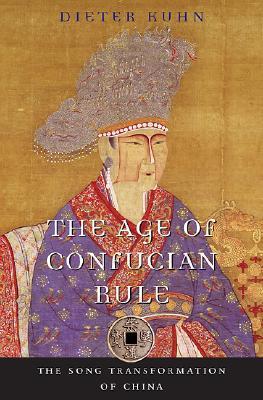
The Age of Confucian Rule: The Song Transformation of China
Just over a thousand years ago, the Song dynasty emerged as the most advanced civilization on earth. Within two centuries, China was home to nearly half of all humankind. In this concise history, we learn why the inventiveness of this era has been favorably compared with the European Renaissance, which in many ways the Song transformation surpassed.
With the chaotic dissolution of the Tang dynasty, the old aristocratic families vanished. A new class of scholar-officials--products of a meritocratic examination system--took up the task of reshaping Chinese tradition by adapting the precepts of Confucianism to a rapidly changing world. Through fiscal reforms, these elites liberalized the economy, eased the tax burden, and put paper money into circulation. Their redesigned capitals buzzed with traders, while the education system offered advancement to talented men of modest means. Their rationalist approach led to inventions in printing, shipbuilding, weaving, ceramics manufacture, mining, and agriculture. With a realist's eye, they studied the natural world and applied their observations in art and science. And with the souls of diplomats, they chose peace over war with the aggressors on their borders. Yet persistent military threats from these nomadic tribes--which the Chinese scorned as their cultural inferiors--redefined China's understanding of its place in the world and solidified a sense of what it meant to be Chinese.
The Age of Confucian Rule is an essential introduction to this transformative era. "A scholar should congratulate himself that he has been born in such a time" (Zhao Ruyu, 1194).
With the chaotic dissolution of the Tang dynasty, the old aristocratic families vanished. A new class of scholar-officials--products of a meritocratic examination system--took up the task of reshaping Chinese tradition by adapting the precepts of Confucianism to a rapidly changing world. Through fiscal reforms, these elites liberalized the economy, eased the tax burden, and put paper money into circulation. Their redesigned capitals buzzed with traders, while the education system offered advancement to talented men of modest means. Their rationalist approach led to inventions in printing, shipbuilding, weaving, ceramics manufacture, mining, and agriculture. With a realist's eye, they studied the natural world and applied their observations in art and science. And with the souls of diplomats, they chose peace over war with the aggressors on their borders. Yet persistent military threats from these nomadic tribes--which the Chinese scorned as their cultural inferiors--redefined China's understanding of its place in the world and solidified a sense of what it meant to be Chinese.
The Age of Confucian Rule is an essential introduction to this transformative era. "A scholar should congratulate himself that he has been born in such a time" (Zhao Ruyu, 1194).
368 pages, Hardcover
First published March 15, 2009
Ratings & Reviews
Friends & Following
Create a free account to discover what your friends think of this book!
Community Reviews
Displaying 1 - 24 of 24 reviews

February 18, 2019
I asked my father-in-law, an editor of a popular Chinese magazine in the '80s (and all-around brilliant man), 'What is your favorite dynasty?' He seemed slightly uncomfortable with my question, perhaps due to some aspect of his prior learning on the subject. Then he unequivocally endorsed the Song. 'Why'? I said, in my broken Chinese and with the halting help of Google Translate.
His answer was unclear due to my lack of language skills, but it had to do with the great advances in culture that occurred before the Mongol conquest of Kublai Khan in the 1250's. Science, technology, art and philosophy all had flourished. 'Neo-Confucianism?' I ventured. No, he said, that wasn't a popular subject during his period of education. I then surmised it didn't hurt that the later Southern Song were centered in Hangzhou, place of his birth, and the largest city on earth in the 13th century.
Dieter Kuhn's 'Age of Confucian Rule' is number 4 of 6 volumes in Harvard's recent History of Imperial China series. The series is available as a nicely made set of illustrated books (if you prefer your reading in analog) or in electronic versions (mysteriously stripped of their illustrations). That is all except for this volume, which has no e-book equivalent, for reasons unknown. Kuhn is something of an exception as well, a Chinese history professor at Wurzberg University, presumably writing in German and providing his own English translation. This extra measure of labor may speak to his once preeminence on the subject.
The book follows the now well tread way of the series, combining a 99 page chronological survey with an additional 8 topical chapters on literature, education, religion, art and architecture, industry and economy, and finally family life. Kuhn is a good writer, and his knowledge and enthusiasm for the subject is well conveyed, if somewhat encyclopedic in style. If you pair this work with Jacques Gernet's classic 'Daily Life in China on the Eve of the Mongol Invasion' you can't go wrong on most things Song.
His answer was unclear due to my lack of language skills, but it had to do with the great advances in culture that occurred before the Mongol conquest of Kublai Khan in the 1250's. Science, technology, art and philosophy all had flourished. 'Neo-Confucianism?' I ventured. No, he said, that wasn't a popular subject during his period of education. I then surmised it didn't hurt that the later Southern Song were centered in Hangzhou, place of his birth, and the largest city on earth in the 13th century.
Dieter Kuhn's 'Age of Confucian Rule' is number 4 of 6 volumes in Harvard's recent History of Imperial China series. The series is available as a nicely made set of illustrated books (if you prefer your reading in analog) or in electronic versions (mysteriously stripped of their illustrations). That is all except for this volume, which has no e-book equivalent, for reasons unknown. Kuhn is something of an exception as well, a Chinese history professor at Wurzberg University, presumably writing in German and providing his own English translation. This extra measure of labor may speak to his once preeminence on the subject.
The book follows the now well tread way of the series, combining a 99 page chronological survey with an additional 8 topical chapters on literature, education, religion, art and architecture, industry and economy, and finally family life. Kuhn is a good writer, and his knowledge and enthusiasm for the subject is well conveyed, if somewhat encyclopedic in style. If you pair this work with Jacques Gernet's classic 'Daily Life in China on the Eve of the Mongol Invasion' you can't go wrong on most things Song.
October 24, 2021
The Age of Confucian Rule is the fourth book in the History of Imperial China’s six-volume series. The book mainly deals with the rise of the scholar-officials class whose Confucianism ideal transformed the way Imperial China conducted their state policy which was putting the civil principle first over the military ones. This book can be considered partially as an illustrated history as well since the author supplied many photos of silk paintings, maps, and other illustrations as references. Apart from the Song, the author also discussed the nomadic states that surrounded Song China such as the Khitan, which founded the Great Liao dynasty, the Jurchen, which replaced Liao with their own dynasty—the Jin dynasty—, the Tanguts, which settled in the northwest of Song as Xi Xia dynasty, and briefly about the Mongols. Just like the previous volumes in this series, each chapter was dedicated separately to religious, education, civil, cultural, social, literary, artistic, scientific, architectural, agricultural, and economic studies in the Song period. This is a well-written and detailed book in terms of understanding the social and culture of Song China but still too brief when it comes to the actual history of the Song from its founding until its demise.
The most interesting part of this book was how the Confucian ideal of scholar-officials created a kind of coexistence policy with neighbouring states by paying them tribute annually because they’d rather avoid prolonged warfare and chose peaceful coexistence instead. Previously, the other states were the ones who paid tribute to China. While it’s true that Song China was able to afford to pay tribute because they’re substantially wealthy, they however, indirectly helped to subsidise and strengthen the other states’ militia. It's a double-edged sword because when these nomadic states broke the agreement, Song China was unable to defend itself against much more militarily superior states that they helped to bolster financially.
Not less intriguing than that is the loss of precious metals such as gold and silver due to them being used as one of the tributes to buy peace at the border will result in a flourishing ceramic industry in Song China. The shortage of precious metals turned people to seek different materials for everyday objects and luxury accessories. The city of Jingdezhen, dubbed the porcelain capital of China, started producing many types of porcelain such as the Qingbai ware and blue-white porcelain.
After finishing this book, I get a sense of how the Song’s Confucian ideology affected and transformed the Song society as a whole. Dieter Kuhn is very detailed in explaining all the social, cultural, and economic parts of this period but again, just like the previous volumes, this book is just too brief when it comes to the political and military history of the Song. Discussion of each emperor didn’t get the same equal treatment, only major ones. Yet, I think this book is still worth reading and quite good to be used as a social and cultural reference.
The most interesting part of this book was how the Confucian ideal of scholar-officials created a kind of coexistence policy with neighbouring states by paying them tribute annually because they’d rather avoid prolonged warfare and chose peaceful coexistence instead. Previously, the other states were the ones who paid tribute to China. While it’s true that Song China was able to afford to pay tribute because they’re substantially wealthy, they however, indirectly helped to subsidise and strengthen the other states’ militia. It's a double-edged sword because when these nomadic states broke the agreement, Song China was unable to defend itself against much more militarily superior states that they helped to bolster financially.
“Furthermore, the Song agreed that in the last month of spring, Jin envoys would arrive at the border town of Sizhou on the Huai River to receive tribute of 250,000 ounces of silver and 250,000 bolts of silk. This annual Song subsidy helped stabilise the finances of the Jin court and kept the Jurchen dynasty intact for almost a century.” ~Chapter 4: The Song in the South, page 78.
Not less intriguing than that is the loss of precious metals such as gold and silver due to them being used as one of the tributes to buy peace at the border will result in a flourishing ceramic industry in Song China. The shortage of precious metals turned people to seek different materials for everyday objects and luxury accessories. The city of Jingdezhen, dubbed the porcelain capital of China, started producing many types of porcelain such as the Qingbai ware and blue-white porcelain.
“But as the range of ceramics available on the market increased—from the attractive yellowish-brown coarseness of a bowl to delicate and refined wares suitable for a scholar’s studio or tea ceremony and precious enough to be collected—gold and silver wares no longer held the same sort of attraction and social prestige for their owners as they had in Tang times.” ~Chapter 12: Private Lives in the Public Sphere, page 255.

Song Meiping vase is a Qingbai ware type produced in Jingdezhen city, Southern Song (1127-1279) period. This particular vase was probably used as a bottle to hold plum wine.
After finishing this book, I get a sense of how the Song’s Confucian ideology affected and transformed the Song society as a whole. Dieter Kuhn is very detailed in explaining all the social, cultural, and economic parts of this period but again, just like the previous volumes, this book is just too brief when it comes to the political and military history of the Song. Discussion of each emperor didn’t get the same equal treatment, only major ones. Yet, I think this book is still worth reading and quite good to be used as a social and cultural reference.

September 12, 2017
The first book in this series to be written by a different author.
I don't like the organization as well as in the first three books, but it does contain a lot of interesting info.
How the measure of floor size was, prior to this time, in floor mats, and here is where chairs came in. The increasing number of concubines, even when the primary wife was not barren. The changes to the examination system, and how rich families would rise by marrying a daughter to a holder of an examination decree. How Confucianism, Daoism, and Buddhism changed and reacted to each other. And more.
I don't like the organization as well as in the first three books, but it does contain a lot of interesting info.
How the measure of floor size was, prior to this time, in floor mats, and here is where chairs came in. The increasing number of concubines, even when the primary wife was not barren. The changes to the examination system, and how rich families would rise by marrying a daughter to a holder of an examination decree. How Confucianism, Daoism, and Buddhism changed and reacted to each other. And more.
January 26, 2018
A very good introduction to a period I knew little about. Much easier reading than the earlier volumes in the series (all by Mark Edward Lewis); Kuhn includes masses of information, but it's well organized, and so you can skip paragraphs if you're not interested, safe in the knowledge that the point isn't buried in the middle somewhere. Kuhn describes the Song period (particularly the latter, Southern Song) as, essentially, a medieval version of our own world: monetized, slightly decadent, militarily unstable. But the Song, on his account, had first class administrators to see them through, and we have Trump, Putin, Erdogan and the Maybot.

March 26, 2022
I do like Harvard University Press’s History of Imperial China. They offer the only detailed multi-volume thematic overview of Chinese imperial history focused on capturing the situation during each dynasty/era. But they are horribly inconsistent. The first half of the series is all written by a single author: Mark Edward Lewis. His volumes have been consistently informative, even if they seem less and less novel as time goes on. With this book we step into the first book by a new author: Dieter Kuhn. The repetitive titles are gone, along with the fixed approach that made the first book so good and the second two so similar. This book feels different, which is perhaps just what this series needs.
A recurring theme with these books is that I find myself focusing a lot on how they balance the narrative sections with the thematic ones. Lewis’s volumes ignored narrative entirely where they could, confining it mainly to the introduction and conclusion. That means that his books are terrible starting places for people who want to learn about Han or Tang history. Read a general history and then come back to them. You’ll find them a lot more useful. But this book clearly decided that narrative is essential to understanding the Song. That’s not wrong. The Song dynasty collapsed midway through and was replaced by a smaller version of the empire centered in the southern half of their empire. It makes sense to distinguish the two and do so early. What this book does is make the first third into a narrative summary and then follow it up with thematic sections. At the risk of not sounding happy with anything, I’m not sure that fully works either. It just repeats the highlights of the emperors’ reigns. It’s fond of good stories and sometimes a bit credulous.
This book, like the previous ones, is very detailed. It is not, however, as insightful as I would like. For example, its chapter on the exam system tells you everything you might want to know about the way the exam was organized and run but doesn’t leave you with a clear idea what it meant. Same with the section on commercialization. Not that it ignores the big picture entirely, but the ties connecting the big picture to the detail seem rather loose. I did like the way it included a section asking the same questions about the Jurchen and Khitans that it asked about the Song, but these sections are (oft by necessity) vague. There were also two more chapters than in the other books. Not sure why. Do we really need a whole chapter on death and marriage? Topics such as this make the book feel like about a book about Chinese society that happens to focus on the Song than a book about the Song that happens to have a chapter on society. Not every chapter falls into this trap. The one on cities is great. It explains what changed, why, and what that meant. And it gives you a wonderful feel for what it was like in Kaifeng.
This was not my favorite of these books. Unlike China Between Empires (my previous least favorite) I really wanted to learn about the Song. But I feel this book could have done a better job explaining and synthesizing the information in here. It does provide a lot of detail and explains what made the Song different from everyone else, I just think it could have done more than state these facts. We never really get a feel for what that means.
A recurring theme with these books is that I find myself focusing a lot on how they balance the narrative sections with the thematic ones. Lewis’s volumes ignored narrative entirely where they could, confining it mainly to the introduction and conclusion. That means that his books are terrible starting places for people who want to learn about Han or Tang history. Read a general history and then come back to them. You’ll find them a lot more useful. But this book clearly decided that narrative is essential to understanding the Song. That’s not wrong. The Song dynasty collapsed midway through and was replaced by a smaller version of the empire centered in the southern half of their empire. It makes sense to distinguish the two and do so early. What this book does is make the first third into a narrative summary and then follow it up with thematic sections. At the risk of not sounding happy with anything, I’m not sure that fully works either. It just repeats the highlights of the emperors’ reigns. It’s fond of good stories and sometimes a bit credulous.
This book, like the previous ones, is very detailed. It is not, however, as insightful as I would like. For example, its chapter on the exam system tells you everything you might want to know about the way the exam was organized and run but doesn’t leave you with a clear idea what it meant. Same with the section on commercialization. Not that it ignores the big picture entirely, but the ties connecting the big picture to the detail seem rather loose. I did like the way it included a section asking the same questions about the Jurchen and Khitans that it asked about the Song, but these sections are (oft by necessity) vague. There were also two more chapters than in the other books. Not sure why. Do we really need a whole chapter on death and marriage? Topics such as this make the book feel like about a book about Chinese society that happens to focus on the Song than a book about the Song that happens to have a chapter on society. Not every chapter falls into this trap. The one on cities is great. It explains what changed, why, and what that meant. And it gives you a wonderful feel for what it was like in Kaifeng.
This was not my favorite of these books. Unlike China Between Empires (my previous least favorite) I really wanted to learn about the Song. But I feel this book could have done a better job explaining and synthesizing the information in here. It does provide a lot of detail and explains what made the Song different from everyone else, I just think it could have done more than state these facts. We never really get a feel for what that means.

July 4, 2012
The 10th to the 13th centuries in China saw impressive advancements in the economy, science and technology, the arts and other sectors of society. The Song dynasty was the era in which the Chinese invented and perfected, for instance, paper money, movable-type printing and vastly improved mechanized means of production, all underlain by a rationalistic Confucian philosophy and state ideology, and managed by a new class of officials, chosen by a set of competitive civil service examinations, which, in turn, encouraged printing, literacy and education. In the end, however, the Song were militarily inept, allowing northern China to be overrun by "barbarians" from Manchuria and eventually the country and dynasty were conquered by the Mongols. Professor Kuhn covers all this and more in his very readable survey of this fascinating era of Chinese history, when that country was far in advance of any other society or region on earth. Well worth the time taken to sit down and read.
November 23, 2012
This was written by a different person than the one I'm used to. The organization of the chapters is different and some parts are slightly too dense for my taste, but I enjoyed getting a basic look on lief during the Song Dynasty.

July 25, 2011
I must admit when I put this book on my wish list I hadn't paid very close attention. I thought it was going to be a scholarly, intellectual history particularly on the rise of neo-Confucianism in the Song dynasty. What it actually is, is a general history of the Song. The first half covers the political and military history of the dynasty (including the foreign dynasties in the North) and the second half is more of a social and economic history on different aspects of the dynasty. As such it wasn't all that useful for me, but is probably a good introduction to the dynasty, though not as interestingly written as Everyday life in China at the eve of the Mongol invasion. There is a little about printing (40-43)and the examination system that might be useful for my dissertation, but mostly for a general description on how the examination system works (3). There was an interesting couple of paragraphs about one of the Khitan Empresses who led warriors into battle and defied tradition instead of following her husband to the grave she tried to rule the Liao, cutting off her own hand and placing it in the tomb (23). In the discussion of religion what seems to be the author's prejudice against Taoism shows. He dismisses Taoist religious ceremonies as "theatre" and talks only about how Confucianism and Buddhism interact in the political arena which I thought was most disappointing (118-9) 166-167 discusses the most famous Song woman poet, Li Qingzhao which I found very interesting. 234 starts an interesting look at the printing of paper currency and the related problems of its use. This book is a good general introduction to the dynasty, it combines social and political history. But overall I found the style to be a bit dull and uninspiring. Still I think it was worth reading, and will be a good reference.

January 1, 2021
Another solid entry in this series, IMO, the best thus far. This volume covers China's Song Dynasties (Northern and Southern). The period seems to truly be China's renaissance, despite the outside pressures from the Jin, Khitan (Liao), and ultimately the Mongols. I would venture to say, that this period laid the groundwork for China today. No, I don't mean communism, but really the Chinese society. The Song featured the rise of Neo-Confucianism, and really the dominance of that thought in Chinese society. As usual in the series, there is a general historical overview for the first half, with the balance focusing a bit more intently on certain aspects of Chinese society. I recommend the series for the casual reader who is interested in discovering more about the history that has shaped China.

September 16, 2020
The highlights of the Song dynasty, as far as I gleaned from this book, were the capitals of the Northern Song and Southern Song, Kaifeng and Hangzhou, respectively. Kuhn describes these two cities in great detail, even naming many family restaurants such as the famous pancake kitchen of the Zhang family, located in one of Kaifeng's 121 wards. It was the first time I really appreciated how great was the potential of Chinese civilization so long ago. You have to wonder what would could have been if Kaifeng had not been overrun after 166 years by the Jurchen and the Mongols took control of Hangzhou, though peacefully.
Sometimes he is a bit sloppy with monetary issues, despite all the fascinating details he provides. For example, on p. 258 he says the money voucher replaced the exchange bill, but doesn't explain the difference between the two, though I might be able to guess. In the next paragraph, he refers to an increase in money vouchers "by 30% to 1,886,340 strings of cash" which later climbed to "an inflationary 5,886,340 strings." But it is very unclear how much of these strings of cash were unbacked by specie. Sometimes he does explicitly make the connection between inflation and unbacked currency but often he doesn't.
There is little true economic analysis beyond descriptions. At the end of chapter 10, Kuhn lists several factors (all in one single paragraph) which he plausibly claims accounted for the outstanding economic performance of the Song: (1) agricultural improvement (2) the concomitant technical improvements in tools (3) necessity of better mining (4) widely available coins fostering the national market. Commercial and proto-industrialization are huge topics which ought to engender far more than analysis. He does not say it, but the paragraph reads as if it were all a very straightforward, linear, and ultimately inevitable process, which of course it isn't.
It's interesting that the famed Chinese entrepreneurial spirit, really coming to the fore in Kaifeng and Hangzhou, did so to a great extent in spite of Confucian rule, based on Kuhn's account. Finally, he does spend quite a bit of time on the influence of Chinese culture on nomads, especially the powerful ones. It is part of the "Confucian Age," which is of course the title of the book, but at least for me, there was too much focus on the non-Chinese groups--the subtitle of the book after all is The Song Transformation of China.
Overall a great reference book which I'll definitely return too.
Sometimes he is a bit sloppy with monetary issues, despite all the fascinating details he provides. For example, on p. 258 he says the money voucher replaced the exchange bill, but doesn't explain the difference between the two, though I might be able to guess. In the next paragraph, he refers to an increase in money vouchers "by 30% to 1,886,340 strings of cash" which later climbed to "an inflationary 5,886,340 strings." But it is very unclear how much of these strings of cash were unbacked by specie. Sometimes he does explicitly make the connection between inflation and unbacked currency but often he doesn't.
There is little true economic analysis beyond descriptions. At the end of chapter 10, Kuhn lists several factors (all in one single paragraph) which he plausibly claims accounted for the outstanding economic performance of the Song: (1) agricultural improvement (2) the concomitant technical improvements in tools (3) necessity of better mining (4) widely available coins fostering the national market. Commercial and proto-industrialization are huge topics which ought to engender far more than analysis. He does not say it, but the paragraph reads as if it were all a very straightforward, linear, and ultimately inevitable process, which of course it isn't.
It's interesting that the famed Chinese entrepreneurial spirit, really coming to the fore in Kaifeng and Hangzhou, did so to a great extent in spite of Confucian rule, based on Kuhn's account. Finally, he does spend quite a bit of time on the influence of Chinese culture on nomads, especially the powerful ones. It is part of the "Confucian Age," which is of course the title of the book, but at least for me, there was too much focus on the non-Chinese groups--the subtitle of the book after all is The Song Transformation of China.
Overall a great reference book which I'll definitely return too.

May 23, 2025
"The Age of Confucian Rule" covers China's Song dynasty - my favorite major dynasty so far - and which was a period when nearly half of the globe's population lived in China. Like the other volumes in Harvard's History of Imperial China, the emphasis is on thematical over chronological history. Unlike the previous volumes, however, the first third of this book covers the history chronologically, giving a better and very helpful chronological overview of the dynasty.
While the Han and Tang dynasties were areas of territorial greatness, the Song dynasty was one of weakness. Having come out of the Zhou (renamed the Song) conquering territories following the Five Dynasties and Ten Kingdoms period, the dynasty was of more limited territorial extent than any of the major Chinese dynasties, bounded by the Liao/Khitans to the northeast as well as by the Tangut/Xi Xia. (The name "Khitan," by the way, was eventually transmitted to Europe as a name for all of "China"). In fact, rather than being the center of an East Asian order, Song China recognized the Khitans as equals and even paid tribute to them. The Jurchens/Jin dynasty (ancestors to the later Manchu) eventually took over the Khitans, and the Song choice to ally with the Jurchen in the hopes of taking Khitan territory became an own goal as the Jurchens turned on the Song, taking a significant part of northern China. This gave way to an even weaker Song dynasty, and marks the turning of the historical period from the Northern Song to the Southern Song (1126-27). This Jurchen expansion was repeated approximately a century later by the Mongols when they took over the Xi Xia in 1227 and the Jurchens in 1234 - before taking over Song China in the 1270s.
Just as the Song were less dominant in the geopolitical order, the government was less dominant in the domestic economic order. Song China saw a flourishing of the market economy, alongside advances in monetization and finance, commerce, science, mass printing (with the invention of movable type), and the arts, alongside a renewed emphasis on competitive civil examinations as the foundation of the political order. While the period shouldn't be overtly idealized - the government maintained monopolies on salt and other industries and elites still found ways to maintain power in spite of the theoretically even examination competition. But the period definitely has an aura that is much less authoritarian than the Qin, or even the early Han, and certainly significantly less so than today's communist China.
While the Han and Tang dynasties were areas of territorial greatness, the Song dynasty was one of weakness. Having come out of the Zhou (renamed the Song) conquering territories following the Five Dynasties and Ten Kingdoms period, the dynasty was of more limited territorial extent than any of the major Chinese dynasties, bounded by the Liao/Khitans to the northeast as well as by the Tangut/Xi Xia. (The name "Khitan," by the way, was eventually transmitted to Europe as a name for all of "China"). In fact, rather than being the center of an East Asian order, Song China recognized the Khitans as equals and even paid tribute to them. The Jurchens/Jin dynasty (ancestors to the later Manchu) eventually took over the Khitans, and the Song choice to ally with the Jurchen in the hopes of taking Khitan territory became an own goal as the Jurchens turned on the Song, taking a significant part of northern China. This gave way to an even weaker Song dynasty, and marks the turning of the historical period from the Northern Song to the Southern Song (1126-27). This Jurchen expansion was repeated approximately a century later by the Mongols when they took over the Xi Xia in 1227 and the Jurchens in 1234 - before taking over Song China in the 1270s.
Just as the Song were less dominant in the geopolitical order, the government was less dominant in the domestic economic order. Song China saw a flourishing of the market economy, alongside advances in monetization and finance, commerce, science, mass printing (with the invention of movable type), and the arts, alongside a renewed emphasis on competitive civil examinations as the foundation of the political order. While the period shouldn't be overtly idealized - the government maintained monopolies on salt and other industries and elites still found ways to maintain power in spite of the theoretically even examination competition. But the period definitely has an aura that is much less authoritarian than the Qin, or even the early Han, and certainly significantly less so than today's communist China.

September 7, 2026
A solid introduction to the Song dynasty. The first third was a narrative of the Northern and Southern dynasty, with the rest being thematic chapters around certain themes. Particularly enjoyable were the ones covering the examination system and its emergence alongside a new service aristocracy, which was not as large as I had thought it was (although, still utterly massive for a pre-modern state, with only the Late Roman state to compare).
There is a fair treatment of the Liao and Jin, although not the main focus, they get a mention occasionally as a sort of comparison between them and the Southern Song, how they changed and adapted to Chinese culture and their still largely nomadic lifestyle. A few times they show up to mention the fact that they are a blank for information such as on their own taxation, in part owing to being heavily subsidised by the Southern Song.
The chapter on private life, and especially the section on entertainment was fascinating, where officials would spend big for a night out at a wine restaurant or with their friends on their day off.
I dragged my robe to the residence of prominent people... We sang songs in the morning and made merry in the evening, passing the years and the months in drinking and play. We thought that man's life should be like this, not realizing that happiness in times of peace was difficult to come by.
The overall image of the Song dynasty and that of the officials who made it up was a wealthy, relatively open and self assured society which struggled to stand up militarily to their northern foes, eventually facing destruction at the hands of the Mongols.
There is a fair treatment of the Liao and Jin, although not the main focus, they get a mention occasionally as a sort of comparison between them and the Southern Song, how they changed and adapted to Chinese culture and their still largely nomadic lifestyle. A few times they show up to mention the fact that they are a blank for information such as on their own taxation, in part owing to being heavily subsidised by the Southern Song.
The chapter on private life, and especially the section on entertainment was fascinating, where officials would spend big for a night out at a wine restaurant or with their friends on their day off.
I dragged my robe to the residence of prominent people... We sang songs in the morning and made merry in the evening, passing the years and the months in drinking and play. We thought that man's life should be like this, not realizing that happiness in times of peace was difficult to come by.
The overall image of the Song dynasty and that of the officials who made it up was a wealthy, relatively open and self assured society which struggled to stand up militarily to their northern foes, eventually facing destruction at the hands of the Mongols.

November 27, 2020
Like the others in this series, this is a good introduction, but for me I was hoping for something a little more in-depth than what was delivered. While it is interesting to read about the social history of the period (especially to find out the origins of the practice of foot-binding), I’m also interested in the political history too which wasn’t really touched on.
December 15, 2025
kinda boring. also the subtitle is "the song transformation of china" but the book doesn't really argue that china was transformed. it more accurately argues for a combination of non-radical changes + continuity resulting in (or due to) a relatively peaceful relatively successful regime(s). overall, informative but yawn-inducing
November 12, 2019
Good presentation of difficult material.

March 28, 2023
not given enough info on the emperor's activities.
October 24, 2024
An in-depth look at the Chinese Song dynasty. Especially enjoyed the first hundred pages of this book charting the rise, consolidation, decline, and eventual ousting by the Mongols.
July 24, 2025
A Solid History of an important Era
This was a solid history of the Song period. Factual and readable with interesting detail. Part of a great series on Chinese history
This was a solid history of the Song period. Factual and readable with interesting detail. Part of a great series on Chinese history
January 22, 2026
Great Read. It offers new insights into understanding the Song dynasty.

December 5, 2024
Song China is seen as the technological highlights of imperial China. Not only this, it was one of the more forward in terms of financial and artistic movements. Coming from the long period of lack of unity following the fall of the Tang, Song China was one of the few periods in Chinese history of stability and unity. This is before the Mongol takeover. I found this edition to have more structure than previous editions. I highly recommend this book.

December 10, 2015
I have now read the books in this series covering the Qing, Ming and Song. The book on the Ming is far and away the best of the three. This one has some interesting elements, but it also delves frequently into lists of boring statistics. I know this is a super interesting historical period, so this could have easily been made more interesting (like the Ming book). Still, I learned a TON and I don't at all regret having read this. Next up: the Tang dynasty. Really looking forward to that one!

January 10, 2012
I doubt you can do better on the topic. Sensible, stuffed with information, and not off-putting to me, who's on the Mongols' side.
March 14, 2013
An extremely informative overview. Some of the bibliography and notes could be a little clearer, but overall the book is indispensable.

April 6, 2022
非常一般,应该是本系列中最差的一部。
Displaying 1 - 24 of 24 reviews