Frank Herbert’s original Dune novel was a groundbreaking sensation of cataclysmic proportions, marrying science fiction, economics, philosophy, and religion. Its powerful novel and extensive worldbuilding captured imaginations for decades. Frank Herbert followed that novel up with five sequels, Dune Messiah, Children of Dune, God Emperor of Dune, Heretics of Dune, and Chapterhouse Dune. For many the first three novels, forming the trilogy, will never be matched.
After Frank Herbert’s death, his son, Brian Herbert, and science fiction writer Brian J. Anderson followed up the original series with at least fifteen (and more coming) primarily prequels (but also some novels that fill in gaps in time between the original books in the series). Legends of Dune comprises the Butlerian Jihad, the Machine Crusade, and the Battle of Corrin. Prelude to Dune comprises the Houses series, of the House Atreides, House Harkonnen, and House Corrino. The Caladan trilogy features the Duke of Caladan, the Lady of Caladan, and soon, the Heir of Caladan. Others include Paul of Dune, the Winds of Dune, the Sandworms of Dune, and Hunters of Dune. While purists will never find that any additions to the series match up to the original, these new novels have created their own expanded universe that is at once dense, complex, and fulfilling.
Then, there is the trilogy relevant here: Mentats of Dune, Sisterhood of Dune, and Navigators of Dune, which explores a universe thousands of years after the Battle of Corrin and thousands of years before the original Dune novel, but chronicles the formation of many of the powers that reigned and battled in the time of the original Dune novel. Navigators continues the story from Mentats of Dune and the characters all carry over from that novel. Therefore, it is recommended that one reads that first. Nevertheless, there are now so many Dune novels that a new reader might be at a loss for where to start, particularly after the original trilogy.
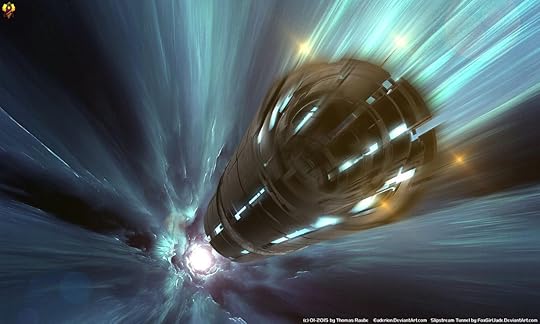
In Navigators, you learn the origins of the most fascinating grouping in the original novels and most mysterious: the navigators who live as blobs of flesh like octopuses in spice-filled tanks and can visit the entire universe. Barely even like human, the Spacing Guild has a monopoly on these beings whose mental journeys through space and time allow space travel across the imperium and without whom all of the universe would be confined to their little dust-moles of planets.
But it’s not so much an origins story as a story of the clashes of powers and interests, primarily here a three-way struggle between the Corrino Emperor, Joseph Venport and his technological marvels, and the Butlerian Jihad led by a leg-less man, Manfort, who has legions of crazed followers who want to destroy any thinking-machine technology, which is understandable after countless eons of the human race being subjugated by the thinking machines. It is a lopsided three-sided table that throughout the book leans first one way then the next.
The story is also about a struggle between technology and anti-technology forces and the two extremes. Counterbalanced against this endless war is what will it take for their to be peace in the imperium so that trade can progress and the human race can evolve and grow to the next level. We learn about different ways that evolution can take place and how unlike humans the melange-enhanced navigators become as well as how difficult it is for a thinking-machine to be human even if it looks like one.
Not only do we get these power struggles, but a continuation of the Hatfield and McCoys fued between the Atreides and the Harkonnens and the unlikely position of the Harkonnens at the top of the Bene Gesserit pyramid.
All in all, Navigators is a thoroughly-imagined expansion of the Dune universe, a compelling story, and a continuation of a universe that keeps filling up novel after novel.