Donald Richie has been observing and writing about Japan from the moment he arrived on New Year’s Eve, 1946. Detailing his life, his lovers, and his ideas on matters high and low, The Japan Journals is a record of both a nation and an evolving expatriate sensibility. As Japan modernizes and as the author ages, the tone grows elegiac, and The Japan Journals—now in paperback after the critically acclaimed hardcover edition—becomes a bittersweet chronicle of a complicated life well lived and captivatingly told.
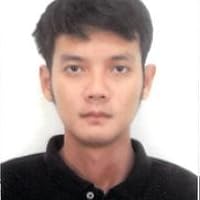
Donald Richie, the eminent film historian, novelist, and essayist, still lives in Tokyo.
Donald Richie is an American-born author who has written about the Japanese people and Japanese cinema. Although he considers himself only a writer, Richie has directed many experimental films, the first when he was 17. Although Richie speaks Japanese fluently, he can neither read nor write it.
During World War II, he served aboard Liberty ships as a purser and medical officer. By then he had already published his first work, "Tumblebugs" (1942), a short story.
In 1947, Richie first visited Japan with the American occupation force, a job he saw as an opportunity to escape from Lima, Ohio. He first worked as a typist, and then as a civilian staff writer for the Pacific Stars and Stripes. While in Tokyo, he became fascinated with Japanese culture, particularly Japanese cinema. He was soon writing movie reviews in the Stars and Stripes. In 1948 he met Kashiko Kawakita who introduced him to Yasujiro Ozu. During their long friendship, Richie and Kawakita collaborated closely in promoting Japanese film in the West.
After returning to the United States, he enrolled at Columbia University's School of General Studies in 1949, and received his Bachelor's Degree in English in 1953. Richie then returned to Japan as film critic for the The Japan Times and spent much of the second half of the twentieth century living there. In 1959, he published his first book, The Japanese Film: Art and Industry, coauthored with Joseph Anderson. In this work, the authors gave the first English language account of Japanese film. Richie served as Curator of Film at the New York Museum of Modern Art from 1969 to 1972. In 1988, he was invited to become the first guest director at the Telluride Film Festival.
Among his most noted works on Japan are The Inland Sea, a travel classic, and Public People, Private People, a look at some of Japan's most significant and most mundane people. He has compiled two collections of essays on Japan: A Lateral View and Partial Views. A collection of his writings has been published to commemorate fifty years of writing about Japan: The Donald Richie Reader. The Japan Journals: 1947-2004 consists of extended excerpts from his diaries.
In 1991, filmmakers Lucille Carra and Brian Cotnoir produced a film version of The Inland Sea, which Richie narrated. Produced by Travelfilm Company, the film won numerous awards, including Best Documentary at the Hawaii International Film Festival (1991) and the Earthwatch Film Award. It screened at the Sundance Film Festival in 1992.
Author Tom Wolfe describes Richie as: "the Lafcadio Hearn of our time, a subtle, stylish, and deceptively lucid medium between two cultures that confuse one another: the Japanese and the American."
Richie's most widely recognized accomplishment has been his analysis of Japanese cinema. From his first published book, Richie has revised not only the library of films he discusses, but the way he analyzes them. With each subsequent book, he has focused less on film theory and more on the conditions in which the films were made. One thing that has emerged in his works is an emphasis on the "presentational" nature of Japan's cinema, in contrast to the "representational" films of the West. His book, A Hundred Years Of Japanese Film includes a helpful guide to the availability of the films on home video and DVD mentioned in the main text. In the foreword to this book, Paul Schrader says: "Whatever we in the West know about Japanese film, and how we know it, we most likely owe to Donald Richie." Richie also has written analyses of two of Japan's best known filmmakers: Yasujiro Ozu and Akira Kurosawa.
Richie has written the English subtitles for Akira Kurosawa's films Kagemusha (1980) and Dreams (1990)[8].
In the 21st century, Richie has become noted for his erudite audio commentaries for The Criterion Collection on DVDs of various classic Japanese films, notably those of Ozu (A Story of Floating Weeds, Early Summer), Mikio Naruse (When a Woman Ascend
Donald Richie is not a Japanophile in the Ophelia style. Hamlet will never marry him and he doesn't want him to. He says... He says that he would not have been able to live in Japan if he was Japanese. The doomed romantic and broken hearted desire is to live as floating in the stream (no tangles? rootless?), skyline and country line passing by in fast forward freeze frames. But you can smell it, taste it, hear it all.
I'm an -ophile. I fall in love all of the time.
"We are born, so to speak, provisionally, it doesn't matter where; it is only gradually that we compose, within ourselves, our true place of origin, so that we may be born there retrospectively." This is Rilke, as quoted by Coetzee. I may have rejected the U.S.A where I was born, but I did not decide to be Japanese. That is an impossible decision, since the Japanese prevent it. Rather, I decided to decorate Limbo, and become a citizen of this most attractive, intensely democratic republic."
He looks for faces in faceless crowds... He is a romantic if he is not in love. Unlike other expatriates from his time (famous translator Meredith Weatherby stops speaking or reading Japanese altogether), Richie did not give up what he was searching for, not in his old age and his friends leaving him behind, even as the outward gaze turns inward and the strain of forever reaching for what continues to move. What was he searching for? It depends on which Richie (younger or older) you ask.
In his relationships with the men that would become his life long friends, he became a sort of parental figure that belies his total outsideness yet still keeps him removed. By choice? I felt heartbreak (but cannot see him with any of them forever). They would leave him either by marriage or distance (his Korean "boyfriend"). I know the claim is that in the usa of the '40s it was illegal to be homosexual. Japan tolerated it, etc. It's love! Legalities only do so much (if that was enough no one would ever cheat on their spouse. Hearts would never break). I don't think that was it. If anything, the parental turn might have doomed him with his younger lovers. That's distance. Besides, I know from reading Yukio Mishima that Japanese homosexuals didn't have it easy (I also know from Dazai that suicidals didn't have it easier. We versus them maybe isn't what it seems). Isn't it like comparing pain? Even your own? (Who can truly remember what their worst pain feels like, when it is gone?) There was more to it than Japanese boys crawling into his bed (it was not unconditional). I think I hear the echoes of a cash register (is it cha-ching! in Japanese?) and confusion and make believe.
But these are diaries and back and forth and deciding what you really mean, what are the matters gray area matters, probably goes with the territory (I haven't kept a diary in a long time). The Japan Journals: 1947-2004 is one of the few books I've read recently that was not translated from another language. It is, however, edited. Edited by Richie over the years, things scratched out, more scratched out later. Richie's friend Leza Lowitz included writings from other works by Richie to provide chronology where possible. (Speaking of translators, I'm more wary of them than ever after learning Richie's The Inland Sea's translator removed all mentions of the burakumin and lepers. I wonder how that goes the other way around? I don't have a choice but to trust them.) These are journals from days in Richie's life. Sometimes he worked things out for use in other writings. As he got older he wanted the journals for their own sake, to put down what could be important to him. They are not pictures of Japan. They are drawings in the making and the drawing is of Richie, if they are pictures. He did not like to overlap his writing and would not write about the same subject twice. They are not whole. Lowitz would include from others, all the same. I am going to have to read more of Richie. Particularly his film books on Kurosawa and Ozu. (I'm going to watch all of their films too.)
One of the things about Richie and his connective focus that I appreciated is his "sociological" bent was through an almost filmic minded lense. He recognizes that movies "heighten reality instead of being an alternative". I, too, have brought up my own world eyes from films. The outside of your own mind quality that artists must feel when something they made is outputted.
"And there were also many fewer close-ups than I was accustomed to in American films. The camera seemed always further away from the actors- as though to show the space in between. A character was to be explained in long shot, his environment speaking for him. Sometimes I could not even make out his face, but I knew who he was by what surrounded him." Richie wrote this about Japanese films. I think this is it. His written observations of Japan, sometimes what he wishes it was what once was, glimpses of it remain. Young kids again squatting on heels in the old fashion. A young man using his cell phone to keep his hand busy like someone long ago would have used a paper fan or pipe. He's looking for their enviroment to know who they are.
And the way in which she asks it, that half-hidden tone of longing, that self-deprecating shake of the head as though Tokyo has been often thought of, but- it is so far away, so expensive- always given up on. The two old ladies suddenly bark, and I suddenly see her life as she sees it. Then, with a show of vivacity, she asks, "And the Ginza? I was there once." And the spell is broken. I am on the outside again, looking in." Richie as an old man was drawing himself. This is an earlier entry in the diaries. I am stuck to it because that is what I search for. The seeing life as someone else sees it.
I'm interested in looking for patterns, in the inside feeling of holding off alienation that comes from having yourself. Like how learning dance steps doesn't feel like dancing regimented steps when it becomes second nature to move that way. The traditional and the elemental, together.
"Perhaps because, as for so many of my generation- those who, like me, had profitably spent their youth in the dark- films had become sacerdotal, something so out-of-body that they were no longer quite human."
I have to mention Yasanuri Kawabata now (I love him so much). Richie writes that he thinks of himself as the narrator of Kawabata's The Scarlet Gang of Asakusa (love this book too). They did not know each other all that well. Richie didn't yet know Japanese when they met. Kawabata connected to his enthuasism for Asakusa that he shared. The second time was all too brief. Kawabata tells Richie that they are alike. For all Richie's old man pinings careening towards gruminess about the changing of Japan from what it once was (I also envy him. I'll never see Izu as it used to be, apart from films), I think I know why Kawabata said that (Kawabata's pinings are more bittersweet, and last breaths). It's the waiting for them to get closer to you like in the Japanese films that Richie loves. It's holding out your palm and waiting for the bird to come and sit in it, if they will. The bird doesn't belong to you and you don't belong to it. But the hand is there. I don't buy in the not belonging to the hand (the world), however alone I so often feel. The importance is in that the chance to see how someone else lives is there.
"Wondering why I was so willingly wept along with them, I decided that the very fact that they were so far away, and crying for such a long time, compelled my moving nearer, and hence feeling more. So different from the big and demanding close-ups of Joan and Bette, their nostrils large enough to drive trucks into. Being apparently asked for nothing I gave more."
However, I was disappointed in Richie when he rereads The Sound of the Mountain and wonders how anyone would understand the book anymore and that young people don't care about flowers. Of all people, Richie should have understood that the strangers and strangeness is as important. Isn't that what he was looking for in Japan? Stripping away debts of society, family, big brother everything? What doesn't belong to you and letting it be that because it isn't yours to hold? The flowers weren't the fucking point. It pisses me off when people dismiss Kawabata because of what Japan looked like in his books. Richie seems like he gets it, all the same. People can come to you if you don't ask of them. Richie's friend, Yukio Mishima, he says states without revealing. He tells the reader everything without allowing the characters to speak for themselves. I have to agree with Richie on Mishima (based on the two I've read of his).
Whatever changes, distances that can be measured over night and those that you don't notice because it happens too slowly... What shouldn't change is just being able to listen to people. What I really like about Richie is that he doesn't stop listening to himself. He questions his own motives all of the time. He recognizes that he simultaneously is annoyed and proud of the tax man for standing up to a white man where he once would have been too scared to do so. He disliked that the united states was money obsessed when he left. Japan becomes so to his eyes (maybe it is, as a collective whole. Same as usa, as a collective). Is it his place to be sad that they are more first world than the usa now? (Mishima too longed for Japan before the war.)
Richie believes he can be in Japan because he cannot join. He left the United States and came to Japan while a medic for the navy in World War II (a means of getting out). He wanted to leave his birth place of hometown of Lima, Ohio from the age of seven. Japan was where he ended up. I find it hard to believe the "anywhere but here" posturing. He would have moved to any of the other places he visited. I read the pages from when he first arrived, trying to find a role model in fellow American, Eugene Langston. Only an outsider who wanted to belong would have been that open mouthed awed by the concious perfected imitation. He still didn't belong, that Langston (his sole goodreads credit is Japanese related). Universal acceptance doesn't exist anywhere. You can be an outsider and still be Japanese. He was attracted to someone looking like they know what they were doing. When in Spain I found myself envying everyone I saw because they had lives there. I didn't know how to do that myself. I'd start picturing what the homes of bus drivers looked like, everyone I saw seemed to have it made. "I'm sure she enjoys living by the sea," I'd think (I'm not that far away from the ocean either). Those lucky enough to already be there... Probably not? Richie had so many friends. What is belonging? Every face on the street is welcoming? (John Frusciante was famously scared by the looks of absolute devotion on the faces of his Japanese audience.) Richie compares Japan to the most intense of high schools. How to know which is the right drug store to purchase the cherry coke from (shows how long he was away from the Us, eh?). Is it an inate ability that belongs to the Japanese? (I think it only seems that way when you've no hope of sitting at the cool girls lunch table. [Do they still have those?]) I don't think so... There is still something romantic about people who seem to have an inborn sense of something else, and having it easy. I guess that's just how us outsiders feel. Where's the inside?
My least favorite parts of the journals were the "Harold Acton of Japan" stuff. Lots and loooots of famous people and Richie showed them around. I don't want a tour guide and I didn't care that Truman Capote acted like a bitch (he would have been worth knowing only if it were him writing this account. I do love how Capote wrote "stuff that happens"). I didn't care if Somerset Maugham acted like a bitch, either. Richard Brautigan was a bitch and then later was cool about it. I really didn't care that Sarah Gellis wasn't impressed (a member of the Mick Jagger troupe, apparently) with dx sex shows. There was way too much of this for a big chunk of the journals. I was starting to get the sense that Richie spent most of his life showing celebrities around Japan I was that bored these times. Some seemed like cool people to know, such as Francis Ford Coppola. I wish that they had formed their own opinions of Japan. They aren't fish in fish bowls and I am not the cat in the Lady and the Tramp (and Richie isn't the Cat in the Hat). (I should say that I didn't get a feeling that Richie was "Ooh famous people!" To him, they were people he knew. It must've been neat for him to feel more inside than they were. I don't want to sound like I'm accusing him of namedropping.) I stopped envying his life around this time.
"Literature," I replied, "has been for me the screen through which I view the world. It began very young when I discovered the public library and realized that I could control my world through the word. Reading was one way. Writing was even better. But," I continued, "in Japan I never learned to read or write. Hence all signifiers and no signified, just like Barthes." And this means "control without being controlled." Richie writes that he did not have to believe in something clearly defined, with only one meaning, not knowing how to read kanji. I feel like meaning slips through my fingers like star systems too tightly held by Grand Moff Tarkin in Star Wars (only without the tight grip). I feel like a kid banging away on the piano without ever learning Bach or Mozart. If I did, they'd sound good to me but I definitely couldn't make the same sounds. Maybe that's how it feels to live in Japan like Richie did in his "limbo". You can never learn the classics...
"Darrell also says that he cannot imagine my feeling "at home" in Japan because, "...it is hard to imagine sustaining that kind of detachment necessary to write, the kind of reflective commentary you do when you're at home." Maybe, but then I find anyone who is "at home" in this universe a person seriously deluded. I would hate to be at home. But I do sometimes now think of myself as a bridge. But what kind? Suspension? Single span? Draw? Arch" I liked it best when he's writing about what he thought about what meant something to him. Just recording it for himself to remember. The patterns and what is important comes later. Draw! Like a picture.
"I know what she is saying. It is true. I know because I can compare this to how it feels when I am free. This is when I am describing something. Myself gets left out- only it is there: the object regarded, delineated, limned. All of my best writing is then. This is also what stops the memoirs. I don't have the "software" to move me into position. I still care about appearance, about self, about the process. When an old man in the '00s, Richie wrote that he no longer cared what strangers, or people he knew, thought about him. He had no more future to worry about. It was there. I wonder if that carried over to writing about the past. I relate to feeling free when myself is left out. Still, I think the best writing is that with the feel of the heart and mind behind it. Not left out, just not the center of its universe. When I began these journals I was jealous of Richie. Now I feel like I wouldn't want his life in Japan. I'm sitting in the dark movie theater too.
I wish I knew Japanese to hear the unexpressed between the lines. According to Richie, there is no irony in Japanese. I know which I would rather have...
P.s. D'oh! Five stars because I was fascinated with Richie and Japan. It's a journal without all the way purpose just like a life of giving a shit and keen sense and eyes and heart. I love how he lives.
The opening passage of Donald Richie's Japan Journals begins with a poetic description of a 1947 firebombed Tokyo and the horrific aftermath that its citizens experienced. This is a fictional account, eventually used by one of his characters in his novel Where Are the Victors?. In 1947 Richie had just arrived in Tokyo from Lima, OH. Beginning as a typist for the U.S. Civil Service, he would eventually find work writing for The Pacific Stars and Stripes, an independent news source that operated from the United States Department of Defense. This is the paper that he would cut his teeth on, writing film reviews, and doing little pieces on life in Tokyo. He was twenty-three at this point, and led the richest life an American expatriate could possibly dream of in Japan.
Richie is well-known for his work as a film scholar whose focus is Japanese cinema, albeit he does know his fair share about the French director Robert Bresson. He has written definitive pieces on both Kurosawa and Ozu, and recorded numerous commentary tracks for the Criterion Collection, on such classics as Tokyo Monogatari (Tokyo Story), Mouchette, and Onna ga kaidan wo agaru toki (When a Woman Ascends the Stairs). His Hundred Years of Japanese Film is a masterful blend of erudition, cultural insight, and flawless historiography. And he has written numerous books on Japanese culture. In the American filmmaker Paul Schrader's words, "Whatever we in the West know about Japanese film, and how we know it, we most likely owe to Donald Richie." Richie stands as a marginal figure amongst most Japanese scholars, such as Donald Keene and Arthur Waley; seemingly less academic, but this may have something to do with the fact that Richie has lived a majority of his eighty-six year old life in Japan, and his observations are much less academically removed. If nothing else, he is America's preeminent scholar of Japanese film, and he presents this information with the theoretical agenda of a cineaste who finds importance in social and historical context.
Reading these entries opens the reader up to a breadth of knowledge that completely transcends that of mere film comment. The early entries make mention of such French writers as Andre Gide and Jean-Paul Sartre; both literary inspirations for Richie to begin keeping a journal of his own. As a young man, we come to understand that Richie didn't initially have a specific interest in Japan. Early on, he was motivated by the possibility of escaping the Midwest, as the Civil Service offered at the time. In 1947 the United States occupied post-war Japan, and many Americans took the opportunity to travel abroad. It's interesting reading about his first encounter with the famous Zen Buddhist Suzuki Daisetz bearing an offering of Ritz, Spam, and Velveeta (a contrived care-package from the PX). At this point he meets a few fellow expatriates by the names of Eugene Langston and Herschel Webb. Impressed by their ability to speak the language and talk at length about the arts and culture of the country (as well as their mutual adoration for Marcel Proust), Richie begins his own expatriate journey, making friendships with some of Japan's most famous and well-respected artists. Of course, timing was crucial because anyone who just happened upon the set of Kurosawa's Drunken Angel, was clearly in the right place at the right time. An interesting way of paraphrasing Richie's life in Japan would be to say that he is sort of like Japan's answer to Forrest Gump (sort of), yet far more articulate. He would become good friends with Mishima Yukio, enough so that he showed Mishima around New York the first time the author visited the states, and probably the only English speaking writer to comment upon the author's famously odd suicide. He was friends with Kawabata, showed an ungrateful Truman Capote around Tokyo (Capote complained of a lack of "Tenpenny's", in other words, too many small penises) as well as the Italian novelist Alberto Moravia (who spent most of his trip nauseous, longing for Italy), generally found himself surrounded by famous and talented personalities (from all over the world really), befriended directors Oshima Nagisa, Ozu Yasujiro, and Kurosawa Akira, experienced the political and social effects of the Aum terrorist attacks, won the Japan Foundation Award in 1995, and intently observed a poverty stricken, post-war Japan metamorphose into an economic superpower.
A majority of the journals present Richie as something of a cultural elitist. This characteristic snobbishness is, in so many ways, responsible for the sharp and perceptive insights that he has to offer on Japanese culture. Granted, many contemporary film critics have complained about Richie’s conservative and classicist bent. This attitude is most apparent in his entries throughout the nineties, as he constantly bemoans the seemingly tasteless departure from traditional Japanese values that he sees growing around him. So naturally, the go-to film scholar on Ozu, a youth of the American occupation of Japan, is going to frown on young Japanese walking while eating in public (once considered vulgar etiquette in Japan). He also has an almost obsessive problem with the technological introduction of the Walkman, complaining of young Japanese constantly ignoring or disrespecting their elders. Although, reading Richie, the somewhat conservative westerner (writing about complaints that occasionally sound Japanese), frown on this lack of reverence for tradition that he sees in contemporary Japanese public life is part of the beauty of his journals, as he laments his inability to accept one of his favorite Japanese philosophical and religious concepts, mono no aware*.
This nuanced awareness comes across through the sadness of reading about his close friends passing away as he grows older. Many of his close friends begin passing away in the nineties. Richie himself, has a bypass surgery due to Angina Pectoris, and is asthmatic (and so he must quit smoking). What’s truly interesting is to read a man coming to grips with death, one who has grown old in a culture that seems to accept the process of aging and decay in a much different light than his native country does. Of course, like many cinephiles and writers, he finds a certain consolation and source of solace in the endless supply of cultural beauty around him; in the films of Ozu, in the multi-personae, histrionic legacy of his close friend Mishima, in the subtlety of a Noh play, and in the abstract beauty to be found in the feeling of never truly being “at home”.
His personal life reveals itself with much more naked immediacy as he comes closer to the age of ninety. The biographical fact of his homosexuality was never revealed earlier in his life. Richie, always the lone escapist, doesn’t identify as a homosexual because the word has communal, or group connotations to it; he’d much prefer the epithet queer. A few raunchy episodes are narrated here and there, but there is very little emphasis placed on this aspect of his lifestyle. This contributes to Richie's inability to attach, or fall in love with just one thing or person.
Most telling are his views on being an American expatriate. There are several discussions that he has with his close friend such as Ed Seidensticker (who did a translation of Genji Monogatari (The Tale of Genji). They talk about what drew them to Japan in the first place. At first, Richie offers the vague explanation of the basic desire to travel, coupled with a fondness for Japan in particular, but as he ages along with the country itself, he rethinks this motivation. In a particularly insightful entry for January 25th, 2004 he explains in a very personal and profound way, the puzzling ironies inherent in the act people devoting themselves to a country that they were not born in, “But I never devoted myself. What I have done is to describe myself through Japan. People who do not read carefully still ask when I first fell in love with Japan. I never did. I liked the place from the first, but I fell in love with other places-Greece, for example; Morocco, for example. What I have done is to draw and redraw my portrait in front of the backdrop of Japan. I have exemplified what Helen Mears devoted Japan, Mirror for Americans to. You look into this country and find yourself reflected.” And so, in a 2004 interview, a young Japanese graduate seems to understand this explanation when she summarizes his relationship with Japan as such, “I now understand. You discovered the virtues of being an outsider. And you would not have had you not been excluded. It was the benefits of stigma that you discovered here.” Apart from his varied wealth of writings on Japanese art, Donald Richie has made his own life into a human masterpiece; a sad and moving account of a distant observer who is now closing in on his last days in a land that he can finally consider home.
*Literally translated as “the pathos of things”, or empathy toward things”. This concept was originally coined by the eighteenth century literary and linguistic scholar Norinaga Motoori. Mono no aware basically implies an acceptance of the transient nature of being. Richie most likely was introduced to it, and became fond of it, through his exposure to, and appreciation of, the films of Ozu Yasujiro because this concept permeates almost every Ozu film.
Round about p. 286, I thought I would give up on it. There were many interesting anecdotes, a lot of open talk about sex (homosexual) - and it really didn't add up to much. But then, as Richie aged, the book itself began to gather weight and gravity and a certain centeredness… and by the end, I had the feeling that I was in the presence of a work… indeed, a life -- of permanent value -- intelligent, feeling, yet utterly clear-eyed… almost visionary, as he glances, at the very end, at the sadly spectacular future that has NowAlready (jam tomorrow…) thus arrived…, even as he maturates in waves of memory about a past whose tender naturalism had so touched him during a long, rich life…
There is a lot frank discussion about his sexuality, and his experiences are described in great deal. Generally books like this -- like much contemporary ethnic literature -- serves only to balkanize…, to particularize… both the author… and his readers…. But Richie, quite amazingly, uses all his sex-talk much as Beethoven or Sebelius use a local German or Finnish folk tune… as a small bit of local coloring that reflects the universal aspects of the artist's genius…. It is really something….
And of course, much of it is just funny….
I've read very few (if any) journals…. but reading this, I now see some of the possibilities of the genre that had always escaped me -- and will read more when opportunity presents.
I thank Jimmy for tipping me off to this book, and keeping it on my to-read shelf.
Donald Richie lived such a fascinating life, my hero.
"1958. I am to meet Mishima at the Korakuen Gym for a workout in the late afternoon. Soon, much out of shape, I am sore, but I like the gym. The bodies are nice, but that isn’t it. Actually, a gym is rather like a butcher-shop—lots of good meat, but all this display does not whet the appetite. No, I like the gym because it is warm and friendly and everyone is doing the same thing and everyone is in a way, well, humble. No one is vainglorious of his body. That is saved for outside. The gym is the workshop. The worst body and the best are after all bodies and in that, they are alike. The best remembers when it was bad, and the worst can look forward to being better.
Tonight is crowded but Yukio is not yet here. He usually guides my efforts and originally got me accepted. I have often watched him work over the top half of his body and neglect the lower. Muscled torso on spindly legs. I am just as bad."
"29 september 1981. With Kurosawa to see a special showing arranged for him of Fellini’s La Citta della Donna—without subtitles. Thus I could understand it no better than he could, but was spared because he turned down explanations. “Gets in the way of watching the picture,” he said. We sat side by side, and I wondered what he was thinking of it—this most disciplined of directors watching two and a half hours by the most self-indulgent.
Afterward I asked him if he liked Fellini. “Well, I’ve seen almost everything,” he said, not answering the question. But why then had he wanted to see this new film? “Well, it’s this way. I’m going to Sorrento to pick up the Donatello Prize and Fellini is supposed to give it to me. Then we have to talk about something. So I thought I should see his new picture.”
Later, I went to the JAL party, a big buffet at the Otani. The special guest to lead the toast was Takamine Hideko. I had not seen her for years. She is now older—it shows in the shape of her face, the sharpness of her features. Old, and in the manner of Japanese women, angular. And, as old ladies are supposed to, she has developed a whole new set of public mannerisms: argumentative, forthright, and no-nonsense. She also cultivates that slight awkwardness that Japan finds winning in its aging famous, as though she is surprised at the fuss made about her. Her pre-toast speech was about how she lost her wedding ring down a JAL plane toilet and how kind the staff was in getting it back. Just the proper sort of story—down-to-earth, no-nonsense. She has grown to fit her role. Later, I talk with her, wanting to ask her about Naruse. “Oh, Naruse,” laughing heartily, “What a long memory you have.”
Later, at home, I started remembering her in Naruse’s Flowing, and in Yamamoto’s Horses, when she was still a child. Then I remembered that Kurosawa was assistant director on that latter film. And then I recalled the story that he had fallen in love with her, that he had wanted to marry her, that nothing came of this, and that he was not loved back. Now he is seventy-one and she must be in her sixties, and I had seen them both in the same day and they had not seen each other."
"17 june 1983. Dinner with Paul Schrader, in Tokyo for the Mishima movie that he will direct. Talks about difficulties with Mishima Yoko and her efforts to make her dead husband into something more fitting. We talk about Yukio. “That is undoubtedly him. And that is just what I can’t put into the movie, damn it. Not that we can’t, you know. We have not signed anything away. We want to make our kind of movie, not hers.” I say that Mishima himself would probably have sided with Paul; that he would not, I think, have approved of the amount of censorship that Yoko is exercising. He was enough of an exhibitionist to want to project a little of the truth at least—to tantalize his audience, if nothing else."
"11 december 2002. Being old is like being convalescent. People tell you how good you look, as though they are pleasantly surprised, had not expected you to look good at all. They also give you their seats and open doors for you. There is tendency to pat as well, as though you are not only convalescent but also a child, or a dog.
One of the best things about being old is that you are no longer expected to do your share. You may now drift down life’s stream and not wield the oar. Also, you are asked questions about the course of the river, the coming scenery, just as though you have taken the trip before. You are not, however, asked about the maelstrom at the end."
Come for Capote, Stravinsky, Francis Ford Coppola, Akira Kurosawa and, of course, Yukio Mishima ... but stay for Tani Hiraoka, Zushiden Tsukasa, Mizushima Fumio and Numata Makiyo. And for 24th September 1955.
I like to imagine that Marguerite Yourcenar looked like Charlotte Rampling. I know she didn't.
Good bits:
"Now the windows are rattling and there is the smell of brine in the room. The electric light flickers and Tani sits across from me, looking at what I write, wondering if it is about him, but not asking."
"New building, all completed, and then an argument about there being no drinking fountain outside the auditorium. 'No, no, no, [the architect] is supposed to have said, 'drinking fountains are hideous, they would spoil the line.' 'But people have to drink,' he was reminded. 'No, they don’t,' was the reply."
"From the conversations [at the wake for Fumio's younger brother], I learn that Fumio, in accounting for me in his life, has invented several stories. Unfortunately they have been varied, told to different people, and now all the people are in one room together and all meeting me. I learn that I am an English teacher and also a drama teacher, that I am at the same time somehow high in the Christian church, and simultaneously deeply interested in Buddhism; that I am still married but my wife cannot leave America; that I am also a widower with two children, also that my two children are quite dead - auto-accident. Fumio has been lavish with his accounting and now sits uncomfortably and listens to all of it. I acquit myself well and agree to all the accounts, offering connecting links when one or the other becomes too unlikely. Only Muss Shibuya [Fumio’s betrothed] knows the truth. I told Fumio to go see 'Sunday Bloody Sunday' because it was our story – his, hers and mine. He didn't go, but repeated what I had said to a classmate who had seen the film and thereafter gave Fumio strange looks and a wide berth."
"Then we remember 'Janet' with pleasure and reverence. She used to show us her organ while riding the revolving stage at the DX Gekijo, and one day, having often noticed us there, she leaned over as she went by and said, 'Isn't this the most boring thing you've ever seen?'"
"At Ise shrine she was invited to ask any question she wanted and so she, thinking of mystical Shinto, asked, 'Will there be peace in our time?' The shrine head looked uncomfortable and then said, 'Maybe you would like to ask something like how many priests there are here.'"
"[Ministry of Finance and Bank of Japan officials] always hang themselves, though why this is the method of choice I don't know. Last month three such officials went together to the same hotel; each booked a room and each hung himself, using sections of the same rope – jointly purchased and cut into three identical lengths."
"'Oh, [Kajima Shozo] says, 'but being "Japanese" is very Japanese of me. First we look West, then we grow up and look East. Think of Tanizaki and his Bunraku, think of Kawabata and bonsai. We can't help it. It is part of our national character.' 'I don’t believe in national characters,' I said. 'You ought to. You are the most American person I have ever met.'"
"Now, however, business is so bad that he passing foreigner is also accosted. You come my house? asks a hesitant lad in English. Why? I ask. Drink, he says. I shake my head. Fuck? he says, but so tentatively that it sounds like a conjuration, a spell or a hex."
I agree with Truman Capote, "cistern" sounds more beautiful than "cellar door".
"Donald Richie passed away on February 19, 2013. Many people knew him as the preeminent critic of Japanese film, bringing attention and exposure for directors like Akira Kurosawa and Yasujiro Ozu to Western audiences. “Whatever we in the West know about Japanese film, and how we know it, we most likely owe to Donald Richie,” director Paul Schrader declared. I became familiar with his work through his Japan Journals which was edited and compiled by Leza Lowitz, covering his life from 1947-2004. It’s a hybrid work that is in part autobiography, a compendium of Japanese culture, a menagerie of famous writers and directors, and a confessional."
"As a reader, you can pick up The Japan Journals and peruse any section without having to go from beginning to end. Every segment has something interesting (there’s also a very convenient index of names in case you want to read about any of the amazing figures in the Japanese arts scene). It reminded me of some of my favorite movies, where I could watch scenes multiple times and never get bored. I felt a same connection to Richie’s life, which was a rich and extraordinary one, transcending both film and writing."
Sipped and savored this slowly and really enjoyed it. Finished off the book today at the south end of Shinobazu Pond. Richie lived up on the 8th floor. The building separates two worlds he wrote about often, one the park and its denizens and the other Ueno’s mizu shobai backstreets. But these journals are filled with so much of Donald Richie. He was quite the guy, incredibly perceptive, humorous, and he packed so much into his life. I will go back to these pages.
I'm not putting this on the "currently reading" shelf but this is my current bedside read- wonderful so far-- I read a few entries before drifting off to the land of Nod. Richie comes off as a somewhat restrained aesthete at this early point in the diaries, but his correlating Baudelaire and Proust into war shattered Tokyo has its appeal, to me at least, and Mishima is a constant fixation and fascinating presence. Just now getting into some train trips out into the countryside and he has a definite skill evoking landscapes and the strange impressions being in transit elicits. Good stuff. It should be in your collection, dear Goodreaders...
Donald Richie is one of those remarkable guys who was in the right place in the right time. Meaning that he was an American who moved to Japan after the war - and eventually met every cool Japanese writer and filmmaker of the 20th Century. Everyone from Yukio Mishima to Kawabata to Ozu is in this book.
Richie is a remarkable writer and he really captures the essence of Japan. In fact, I would say he is the best Foreign (not being Japanese) writer writing about the Japanese arts. PERIOD!
I first read excerpts from Donald Richie’s journals in The Donald Richie Reader (2001). I thought that the collected bits and pieces from his writings were enough to get a picture of Richie’s Japan, but I realize that I am interested in reading more of his works. I recently saw an interesting quote from the journals somewhere (“Life here means never taking life for granted.”) along with the fact that he died this year in February, compelled me to read his journals. I know Richie primarily through his essays on different aspects of Japanese life and film. The journals are a fascinating look at life in Japan since the Occupation when Richie first arrived in 1947 where he recounts the devastation and poverty of postwar Japan. There are many observations about youth culture, the economy, the changing of Tokyo, and reflections of the economy in the number of homeless people in the parks. He seems particularly cognizant of the homeless since it was a story about a homeless man living under a bridge that started his journalistic career and becomes a theme he often returns to.
It seems that one of his loves is classical music and through that interest he met such famous composers as Fumio Hayasaka and Toru Takemitsu. Hayasaka was Akira Kurosawa’s main composer and he brought a young Richie onto the set of Stray Dog. Takemitsu worked with most of the best directors of the golden age of Japanese cinema and was a lifelong friend of Richie. Richie knows most of the people associated with the golden age of Japanese film and the new wave. Aside from championing Ozu and Kurosawa, he was friends with Toshiro Mifune, Nagisa Oshima, Hiroshi Teshigahara, Junzo Itami, Chisu Ryu, Susumu Hani and Sachiko Hidari among others. He was also friends with many of the many Japanologists and foreign experts on the country: Edward Seidensticker, Karel Van Wolfen, Ian Buruma, Alex Kerr, Allan Booth, and several others as well. He had friendships with literary giants Yasunari Kawabata and Yukio Mishima. In particular his close friendship with Mishima was interesting to hear Richie’s impressions of the writer. His writing reputation resulted in introductions from many cultural figures throughout the world that made their way to Japan. Perhaps they can be put into groups of those he liked and respected (Igor Stravinsky, Rudolf Arnheim, Lincoln Kirstein, Marguite Yourcenar, Isamu Noguchi, Richard Bratigan, Richard Avedon, Stephen Spender, Romola Nijinsky, Angus Wilson, Paul Schrader, Francis Ford Coppola, Susan Sontag, etc.) and those he didn’t (Truman Capote, Alberto Morovia, Philip Johnson, Sacheverall Sitwell, etc.).
Richie was quite frank when it came to sex and his interest in it, however, he does not like to be labeled a homosexual since he finds the term limiting, but it is clear that he clearly favored sex with men over women and had several long term relationships with younger men but was also married to a woman for a short period of time. He enjoyed cruising parks for action, live sex shows, dohan kissaten (public sex coffee shops—only in Japan), porno theaters, and discussing sex with friends. There is quite a lot of it at some points in his journal. Even though he doesn’t explicitly say it, I think this easy access to sex is one of the reasons he stayed in Japan. That being said, he is quite precise about what it is that he likes about Japan, he admits that he didn't fall in love with Japan, rather that he finds it a fascinating and interesting place where he maintains outsider status and is not expected to be a member of Japanese society and can live outside it. He admits that there are other places that he has fallen in love with, Morocco and Greece, but in Japan he lives in a kind of limbo. He equates this limbo with his existence in Japan as being a mirror where Japanese culture reflects his American culture. Near the end of the journals he often talks about his oncoming death, but he wasn't to die for another nine years—it makes me wonder if there any other journals or writings forthcoming. This journal suggests to me that it will be worthwhile to track down some of his other writings and The Inland Sea is at the top of that list.
Writer Donald Ritchie, an expert on Japanese film and a keen observer of that interesting country, has distilled nearly sixty years of life as an expatriate into these fascinating journals. Ritchie emerges as a deep thinker and lover of high culture who derives equal satisfaction from indulging his "taste for the mud" (it sounds much more poetic in French), which takes him to sex clubs, prostitutes, and other similarly disreputable places for which he holds a healthy admiration. His endless curiosity about matters and people both high and low is a strong point of this book, providing a well-rounded portrait of both a society and a man's life.
I enjoyed seeing Japan through Ritchie's eyes from his first days in the country during the American occupation up through the years of reconstruction, the boom years of the 80s, and the bursting of the bubble. He notes the many changes in the people and is quite honest about his own feelings concerning his privileged position as a foreigner, never fully accepted but also not subject to the same severe social strictures to which Japanese hold each other. Among the many highlights of this fine book are the long train trip across the country that Ritchie takes during the days of the occupation, his friendship with Yukio Mishima as well as many other distinguished people, and his closely observed opinions on the evolution of Japan's stance toward the foreigner. A fine read, particularly recommended to those with an interest in Japan.
Donald Richie came to Japan as a young merchant seaman in 1947 and never left. In the intervening years, he has become the West's preeminent expert on Japan: no other foreigner understands the social conditions, underyling tensions, filmmaking traditions, and sexual habits of its people better. Over the course of the book, Richie becomes good friends with filmmaker Yasujiro Ozu and novelist Yukio Mishima, leads people like Truman Capote, Igor Stravinsky, and Francis Ford Coppola on tours around Japan, and also hangs with a diverse array of bartenders, gangsters, and hookers. It's a pretty amazing document of a not-so-ordinary life.
I entered into this book, nearly 60 years of Donald Richie's journals, without any preconceptions or expectations - I had no idea who the man was. I think this worked to my benefit. In addition to some great observations of Japanese culture and the changes he witnessed over six decades, the book is an interesting sex-and-gender study as you piece together the author's self-discovery from his words both implicit and explicit.
People seem to hung up on the sex when they read Richie's journals, but they can't see the forest for the trees. As a whole, it is thought provoking not only for a gaijin in Japan, but also for anyone who is growing old and we all will some day. The added pleasure is watching Japan change through Richie's eyes as you read it. Reading the entries from 1990 onwards was especially interesting for me, as I have lived those same years in Japan.
It may be true that Ritchie was the Lafcadio Hearn of his generation. I could not put the book down. It was a vicarious travel back in time to Tokyo in the aftermath of WWII through the millennium. Ritchie knew so many Japanese and American cultural icons. Was sad when I came to the end of his journals - they were so interesting and made me more aware of the impact of the defeat and Occupation on Japanese society as reflected through its artists.
Writer Donald Ritchie, an expert on Japanese film and a keen observer of that interesting country, has distilled nearly sixty years of life as an expatriate into these fascinating journals. Ritchie emerges as a deep thinker and lover of high culture who derives equal satisfaction from indulging his "taste for the mud" (it sounds much more poetic in French), which takes him to sex clubs, prostitutes, and other similarly disreputable places for which he holds a healthy admiration. His endless curiosity about matters and people both high and low is a strong point of this book, providing a well-rounded portrait of both a society and a man's life.
I enjoyed seeing Japan through Ritchie's eyes from his first days in the country during the American occupation up through the years of reconstruction, the boom years of the 80s, and the bursting of the bubble. He notes the many changes in the people and is quite honest about his own feelings concerning his privileged position as a foreigner, never fully accepted but also not subject to the same severe social strictures to which Japanese hold each other. Among the many highlights of this fine book are the long train trip across the country that Ritchie takes during the days of the occupation, his friendship with Yukio Mishima as well as many other distinguished people, and his closely observed opinions on the evolution of Japan's stance toward the foreigner. A fine read, particularly recommended to those with an interest in Japan.
not the greatest autobio in the world, but a fascinating time/place/person. gay guy (expat) in japan. he does not talk about any 'modern' japanese films or directors though, just the older ones.
A curious experience to be given such an intimate insight into someone's life over a 60-year period. It's mostly very interesting, but I learned far more about Richie's sex life than I ever wanted to and some footnotes would have been nice - although anyone reading such a book probably knows who Toru Takemitsu, Yukio Mishima, Truman Capote and Susan Sontag are, some of the others Richie writes about are more obscure.
Record of the life lived by American Japanophile Donald Richie from the devastation of the post-war Japan to the recession of the 1990s, from his lubricious youth to middle-age respectability on to his life's twilight. You meet all the friends Richie made in his more than half a century exile in Tokyo from Mishima Yukio to Truman Capote to Kurosawa Akira. A remarkable record of a singular life.
Knew nothing of this author - who wrote a great deal on Japanese film and lived in Tokyo for most of his adult life - but somehow came across a book of his on Tokyo. This is a long book, makes for slow reading. But fascinating in his reflections on his life, the people he knew (everyone who mattered, it seems, in Japanese film and art and artists from all over the world) and a changing Tokyo.
Denied, fortunate foreigner, the tepid if comfortable bath which is daily life back "home," he cannot sink back and let the music flow over, mindless, transparent; he must listen, score in hand. .... In Japan I have lived my life in a state of consciousness. .... "It was the benefits of stigma that you discovered here."
Not so sure this was the place to start reading Richie's work. Enjoyed it, but I had a hard time getting into the scattered journal entries. Will definitely try to get into one of his more planned books soon.